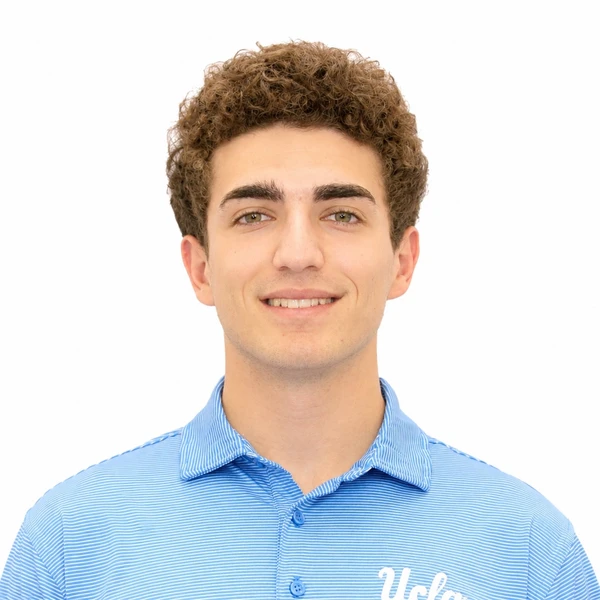
user profile avatar

Gavin Berke

1x

Finalist

1x

Winner

Bio

Engineering improves the world, plain and simple. When I become a mechanical engineer, I want my work to improve the lives of others. An engineering education will provide me the tools needed to fix problems in the world, whether it be improving medical equipment, solving environmental crises, or electrifying the automotive industry. These are all worthy goals that I can achieve through collaborative effort.  I plan to study engineering with an emphasis on entrepreneurship, blended with undergraduate research opportunities, so I will have experience with mathematical and worldly principles entering the next stage of my life. I seek to learn the tools to succeed in the ever advancing world of business and communication. Learning how to market myself and sell and distribute my services will broaden my outreach. Additionally, leveraging technology more effectively will elevate my ability to perform all functions of a business. Calculus defines the universe. Calculus captivates me because it bridges the gap between all things material and theoretical, laying the foundation for real-world change through engineering. I hope to perfect solutions and sketch a better world using calculus as my pen. As a future mechanical engineer, I’m deeply inspired to join the movement towards a better world and play my part in improving our communities through technology.

Education

University of California-Los Angeles

Bachelor's degree program
2026 - 2026
  • Majors:
    • Mechanical Engineering

San Ramon Valley High School

High School
2022 - 2026

Miscellaneous

  • Desired degree level:

    Bachelor's degree program

  • Graduate schools of interest:

  • Transfer schools of interest:

  • Majors of interest:

    • Engineering, General
    • Mechanical Engineering
    • Applied Mathematics
  • Not planning to go to medical school
  • Career

    • Dream career field:

      Mechanical or Industrial Engineering

    • Dream career goals:

      Engineer, Patent Attorney, Medicine

    • coach

      Diablo Scorpion Lacrosse Club
      2023 – 2023

    Sports

    Lacrosse

    Varsity
    2016 – Present10 years

    Arts

    • Doors to Music

      Music
      2014 – 2022

    Public services

    • Volunteering

      Peer Tutoring — Vice President
      2023 – Present
    • Advocacy

      Lacrosse the Gap — Co-Founder/President
      2024 – Present
    David Foster Memorial Scholarship
    "You have no idea how much poetry there is in a table of logarithms," said Carl Friedrich Gauss, one of the most prolific mathematicians in human history. For me, I find poetry in the work of two other great scientific minds: Sir Isaac Newton and Gottfried Wilhelm Leibniz. That work is calculus. From the moment I stepped into Mr. Meyer’s calculus class two years ago, I knew it was going to be something special. That first day something clicked in my brain: calculus was the order to the chaos that was the standard math curriculum since Algebra 1. I had always been told that there was a purpose to all of the seemingly random things I learned throughout my years; Mr. Meyer helped me discover that purpose. When I walked into the classroom at 10:52 am to when I left for lunch at 12:21 pm, I was engrossed. But looking back on my calculus class, I realize now that the best part wasn’t the math itself, but the transformative experience I underwent learning from Mr. Meyer. He changed the way I viewed school. Tasks were no longer formulaic; rather, they were each little puzzles that contributed towards my education as a whole. Learning became more enjoyable as a result. Homework would take much more time and energy and leave little room for my social life if I didn’t view it as such. This realization truly allowed me to progress in my own education with much greater success. Gone were the days of completing my “busy” work robotically without questioning why I did each thing. He taught me that failure was a positive experience, for each failure is a stepping stone towards success. However, he also taught failure is only beneficial if you actively seek benefit from it. As a result, I focus and learn from my past failures to increase my opportunity for success in the present. I’m active in my education and more outgoing in my personality. Whenever I encounter a new chapter in my life, I immediately think of applying Mr. Meyer’s teachings. I question the meaning behind each circumstance, plan my first course of action, and adapt to my initial failures to guarantee a positive, successful outcome. Without Mr. Meyer, I doubt that my work ethic and outlook on failure would be where it is today. As I progress through my journey as a current AP Calculus BC student in Mr. Meyer’s class, I continually learn more about myself as a learner and a person.
    Big Picture Scholarship
    I have very fond memories sitting, at different times and in different towns, with both of my grandfathers, watching comedy movies from a different era of filmmaking. Although each of them are from varied backgrounds, and me from a differnet generation, the common thread we all share is the belly-aching laughs, sharp wit and silly stories. As we approach the 100th birthday of Mel Brooks, who has been the creative force behind some of those favorites of my Grampa and Baba, and as I embark on a new chapter of my life in college, I find myself questioning which of my favorite jokes from these movies apply to my future life as an mechanical engineer. When I am frustrated solving an equation I can throw up my hands and shout: “I’ve lost the bleeps, I’ve lost the sweeps, and I’ve lost the creeps,” by Michael Winslow playing the radar technician in Spaceballs. When I need motivation and want to speed up my process during a late night study session, I hear the debate between Rick Moranis’ Dark Helmet and Geroge Wyner’s Colonel Sandurz in Spaceballs: Dark Helmet: No, no, no, light speed is too slow. Colonel Sandurz: Light speed, too slow? Dark Helmet: Yes, we're gonna have to go right to ludicrous speed. When I have completed a project and it’s a huge success I think: “It’s alive !!!!”, by Gene Wilder playing Dr. Frederick Frankenstein in Young Frankenstein. When I need to remind myself that as a team leader I need to be courageous, I remember the excahnge in Young Frankenstein when Marty Feldman as Igor tells Gene Wilder as Dr. Frederick Frankenstein: “Wait master might be dangerous. You go first.” And then, when I want to encourage my team to success, I recall Igor saying: “Walk this way.” As inspiration to always remember to get my projects and assignments done on time, I fondly recall Cloris Leachman as Nurse Diesel reminding everyone in High Anxiety: “Those who are tardy do not get fruit cup.” And lastly, to quote John Candy as the character “Barf” in Spaceballs, when he is asked to define what species exactly he is: “I’m a mawg - half man, half dog. I’m my own best friend.” The concept of being my own best friend holds true as I strive to be kind to myself, confident, trust in my abilities, and demonstrate resilience in adversity.
    Chi Changemaker Scholarship
    As lacrosse is one of the most expensive sports to get into, I needed to find a way to “Lacrosse the Gap” and founded an organization with one of my lacrosse teammates to do just that. Realizing the disparity in the opportunities to begin playing lacrosse and the difficulty of access for people in less fortunate communities due to the high cost of gear, Lacrosse the Gap (LTG) approached Shaughn Ryan, the head of the Alameda Lacrosse Club, a youth lacrosse program located in Alameda, California. Determined to collect money and lacrosse gear to help prospective players begin their lacrosse journey, I turned to the tight-knit network of current and former lacrosse players within our own and nearby communities for aid. We reached out, scheduled and executed equipment drives, inventoried gear, and distributed it based on need to a variety of locations. To date, LTG has raised over $1150 in monetary donations, 15 full sets of lacrosse gear (amounting to over $5000), athletic clothing, and other larger items used in playing or learning the game, like goals and rebounders. Fundraisers scheduled with local businesses have brought support to our community while bringing its members together. Our efforts, starting with Alameda, have allowed many new youth players in our community to start their lifelong journey in lacrosse when otherwise they might not have considered the sport. After my high school graduation, LTG will continue to flourish under the leadership of my brother Leo Berke (currently a sophmore) who shares the same passion for growing the game and helping others. One of the intiatives we have discussed is to expand our efforts by sending equipment to impacted communities internationally where there is a growing interest in the game (e.g., Jamaica, Columbia) who not only will benefit from the equipment donations, but also the collection of athletic clothing and shoes. As part of my college lacrosse career, I intend to stay relevant in the high school club as well as extend the mission of Lacrosse the Gap to my college team. Through local impact and with global reach, lacrosse is a powerful tool for connection, teamwork, and personal growth.
    Jimmie “DC” Sullivan Memorial Scholarship
    Lacrosse is my passion. Since I picked up my first lacrosse stick at the age of 8, I have been hooked. Through the years I have progressed from town recreational lacrosse to national club/travel lacrosse and high school Varsity lacrosse. I have also coached youth recreational players. I intend to continue the sport at whatever college I attend. I’m proud to have received both athletic (1st-Team All League) and academic awards (USA Lacrosse Academic All American), and while a youth player my club’s Cody Tatro Award, recognizing excellence on the field and dedication and contribution to the sport in Northern California. Continuing in the spirit of the Tatro Award, in my Junior year I realized that to impassion a more diverse and wider influx of new players there needed to be a change, starting at the local level. As lacrosse is one of the most expensive sports to get into, I needed to find a way to “Lacrosse the Gap” and founded an organization with one of my lacrosse teammates to do just that. Realizing the disparity in the opportunities to begin playing lacrosse and the difficulty of access for people in less fortunate communities due to the high cost of gear, Lacrosse the Gap (LTG) approached Shaughn Ryan, the head of the Alameda Lacrosse Club, a youth lacrosse program located in Alameda, California. Determined to collect money and lacrosse gear to help prospective players begin their lacrosse journey, I turned to the tight-knit network of current and former lacrosse players within our own and nearby communities for aid. We reached out, scheduled and executed equipment drives, inventoried gear, and distributed it based on need to a variety of locations. To date, LTG has raised over $1150 in monetary donations, 15 full sets of lacrosse gear (amounting to over $5000), athletic clothing, and other larger items used in playing or learning the game, like goals and rebounders. Fundraisers scheduled with local businesses have brought support to our community while bringing its members together. Our efforts, starting with Alameda, have allowed many new youth players in our community to start their lifelong journey in lacrosse when otherwise they might not have considered the sport. LTG is also bringing players together in my high school. The men’s lacrosse culture at San Ramon Valley High School has waned since the 2010’s. What was once a celebrated, championship-caliber program with an evident team feel had dwindled in reent years, through the impact of COVID and player recruiting. To help rebuild this culture and revitalize the program, the group needed a shared common goal. LTG fueled my teammates and I to form stronger bonds by working together to help youth players begin and succeed in the sport, and as a result, my teammates are closer than ever before. After my high school graduation, LTG will continue to flourish under the leadership of my brother Leo Berke (currently a sophmore) who shares the same passion for growing the game and helping others. One of the intiatives we have discussed is to expand our efforts by sending equipment to impacted communities internationally where there is a growing interest in the game (e.g., Jamaica, Columbia) who not only will benefit from the equipment donations, but also the collection of athletic clothing and shoes. As part of my college lacrosse career, I intend to stay relevant in the high school club as well as extend the mission of Lacrosse the Gap to my college team. Through local impact and with global reach, lacrosse is a powerful tool for connection, teamwork, and personal growth.
    Learner Calculus Scholarship
    When you think of stationery, two countries come to mind: Germany and Japan. Why? Meticulousness is a staple of these two cultures. The Germans need quality pencils and pens for creating designs and engineering schematics. The Japanese need quality pencils and pens for writing their language, a beautifully precise art. Stationery bridges German practicality with Japanese artistry. If stationery defines nations, then calculus defines the universe. Calculus captivates me because it bridges the gap between all things material and theoretical, laying the foundation for real-world change through engineering. When I solved my first related-rates problem, I felt the same thrill as nailing a three-pointer—the math actually moved me, and I’ve been in love with it ever since. My academic coursework laid the groundwork for my fascination. By sixth grade, it was clear my math ability excelled beyond the path laid out per educational standards. In eighth grade, I enrolled in Geometry, a sophomore-level class. I nailed Algebra 2 as a freshman among my junior classmates, crushed Honors Pre-Calculus in 10th grade, and smashed AP Calculus AB last year. I’m now enrolled in AP Calculus BC as a senior, where my strong math foundation has already paid off. I’ve also applied my knowledge in physics classes since last school year. The more I expose myself to STEM-related coursework, the more interested I become and the more prepared I feel to pursue a career in engineering. I also dove into the tools that engineers use to design the technology they create. I learned how to use the industry-leading OnShape computer-aided design software, which is used by the smartest, most curious minds to translate their ideas into tangible objects. I aim to hone my skills with this software, so I can confidently make my own ideas a reality. Beyond coursework and modeling tools, I wanted to dig deeper to understand what engineering looks like in action. In August 2024, I met Dr. Shankar Earni, a mechanical engineer in the Building and Industrial Applications Department at the Lawrence Berkeley National Laboratory. He focuses on improving energy efficiency and reducing carbon emissions in the commercial and industrial sectors. Dr. Earni and I spoke several times over the following months, and a year later, he invited me to shadow him at work. I observed in real time how he thought outside the box to turn complex calculus into direct impact through mechanical engineering. As he adjusted formulas to optimize airflow through a building system, equations became cooler, cleaner air. When he demonstrated how a simple adjustment cut a factory’s energy bill by 20 percent, I realized efficiency wasn’t abstract—it put food on tables and took smog out of the skies. Calculus meant a brighter, thriving future for global energy use and our natural environment. As a future mechanical engineer, I’m deeply inspired to join the movement towards a better world and play my part in improving our communities through technology. I want my work to follow the same problem-solving mindset engineers like Dr. Earni use daily. Just as Germany and Japan perfected stationery, I hope to perfect solutions and sketch a better world using calculus as my pen.
    Learner Math Lover Scholarship
    When you think of stationery, two countries come to mind: Germany and Japan. Why? Meticulousness is a staple of these two cultures. The Germans need quality pencils and pens for creating designs and engineering schematics. The Japanese need quality pencils and pens for writing their language, a beautifully precise art. Stationery bridges German practicality with Japanese artistry.  If stationery defines nations, then calculus defines the universe. Calculus captivates me because it bridges the gap between all things material and theoretical, laying the foundation for real-world change through engineering. When I solved my first related-rates problem, I felt the same thrill as nailing a three-pointer—the math actually moved me, and I’ve been in love with it ever since. My high school coursework laid the groundwork for my fascination, but I want to dig deeper. Engineering improves the world, and when I become a mechanical engineer, I want my work to improve the lives of others. An engineering education will provide the tools needed to fix problems in the world, whether it be improving medical equipment or solving environmental crises, these are all worthy goals that I can achieve through collaborative effort.  As a future mechanical engineer, I’m deeply inspired to join the movement towards a better world and play my part in improving our communities through technology. I want my work to follow the same problem-solving mindset. Just as Germany and Japan perfected stationery, I hope to perfect solutions and sketch a better world using calculus as my pen.