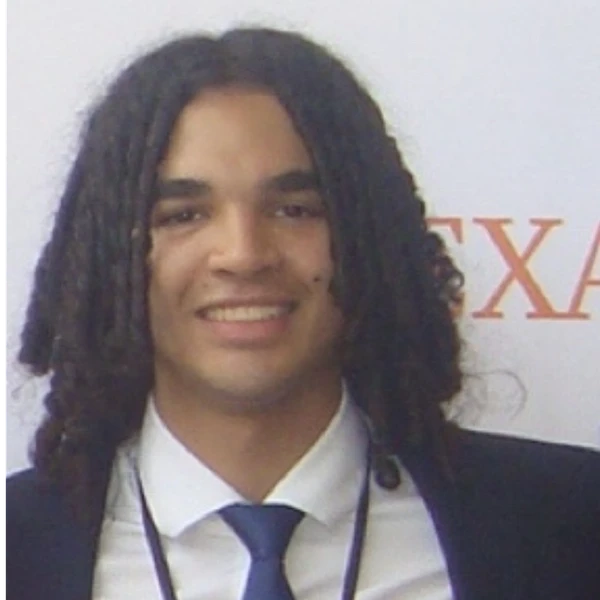
Gary Morgan
1x
FinalistGary Morgan
1x
FinalistBio
Hi, I’m Gary Morgan, a high school senior planning to pursue a career as a Certified Registered Nurse Anesthetist. I’m passionate about healthcare, sports, and helping others.
Education
Harmony School Of Innovation - Fort Worth
High SchoolMiscellaneous
Desired degree level:
Master's degree program
Majors of interest:
- Biological and Biomedical Sciences, Other
- Medicine
- Finance and Financial Management Services
- Health Professions and Related Clinical Sciences, Other
Career
Dream career field:
Medicine
Dream career goals:
Barista
Pjs Coffe2024 – Present2 years
Sports
Volleyball
Varsity2023 – Present3 years
Public services
Volunteering
VEX Robotics — Referee2024 – 2024
Desire To Inspire Scholarship
1.
My understanding of inspiration formed not through grand revelations but through a series of broken bones, which became gates into the deep secrets of healing, through four fractures and a series of hospital visits that should have left me afraid instead made me curious. Each fracture wasn’t just an injury, it was an invitation. An unexpected gateway into the intricate world of medicine where pain meets healing and questions spring up faster than answers.
At thirteen, during my arm surgery, I did not know who the anesthesiologist was. To me, he was just another doctor. He told me to count back from ten, I barely made it to eight. Then nothing. I woke up groggy, drifting in and out, not aware of how I had been kept safe. At the time, it felt like magic. Only later did I realize someone had been guiding me through that fragile state between awareness and unconsciousness. That experience planted the first seed of my interest in anesthesiology.
My journey took on a greater dimension through Mr. Dogan my biomedical teacher at Harmony who became my greatest inspiration. His unshakeable belief that he would see our whole class become doctors within the next decade turned class discussion intoa platform for medical dreams. “One day I’ll say I taught the next generation of doctors.” Not a suggestion. A promise. And somehow it made the dream feel less like a fantasy and more like a responsibility.
But at the core of it all? It was the doctors who saw me not as a case but as a kid. They never dismissed my curiosity. Instead, they dived in explained, encouraged, answered the same question twice if I needed. My doctors didn't just treat fractured bones, they also treated a frightened child who needed both their technical expertise and emotional support.
My research into anesthesiology revealed that anesthesiologists function as surgeons’ key partners that monitor vital signs and ensure patient safety throughout procedures. Rather then going into surgery I found my calling in this critical support role. The field’s complexity and split second decision making, perfectly matched my analytical nature and my desire to help others.
As a future pediatric anesthesiologist, I aim to use my platform to inspire the next generation by telling my story of how medical experiences can turn into a lifetime of service. I am most excited to treat patients who were once in my shoes, scared and afraid, and make the process smooth for them. Having been that frightened child myself, I understand the unique fears children face during medical procedures. I hope to kindle in young people the same profound sense of purpose that drives my own commitment to my future profession.
2.
My most profound journey in inspiring others emerged through an unexpected intersection of academic competition and urgent social responsibility. As I looked for topics for my HOSA PSA competition, the issue of fentanyl related deaths among teens was devastating. Behind each statistic was a story of untapped potential, dreams left unfulfilled, and families left broken by a synthetic drug that had invaded our communities with shocking speed. This wasn’t just an academic exercise it became a mission to take complex medical info and present it in a way that was accessible and life-saving.
The first PSA I made was on fentanyl’s hidden dangers, in particular its presence in counterfeit medications that unsuspecting young people might encounter. Instead of giving out abstract warnings, I told stories of the drug’s action in the body, and how its potency makes overdose tragically easy. The creative process was a balance between scientific accuracy and telling a good story, which got the point across of the immediate danger and the broader implications of this public health crisis.
The video's impact extended far beyond competition requirements. When we shared it to the school classrooms and on social media it sparked conversations among peers who had previously thought this info irrelevant to them. Students shared their own worries and expressed gratitude for information that might protect them or their friends.
Building on this success, my second year's PSA explored brain health maintenance, a topic equally crucial yet often overlooked by teenagers. I investigated the intricate relationships between sleep patterns, nutrition, physical activity, and cognitive function, translating complex neuroscience into practical strategies for academic and personal success. The creative challenge involved making brain health compelling to an audience more focused on immediate concerns than long-term neurological well-being.
The process taught me that effective health communication demands both technical accuracy and profound empathy for audience perspectives and concerns. Through these PSAs, I discovered that inspiration often emerges from addressing genuine community needs with authentic expertise and compassionate communication. The projects enabled me to combine my growing medical knowledge with creative problem solving, reaching audiences who might otherwise remain unaware of critical health information.
3.
This scholarship is the key that opens the door from just getting by in college to achieving the academic excellence required for medical school admission. As a senior, I must finance my own education and face the challenge of balancing intense pre-med coursework and the financial issues of independent study, a roadblock that may put a stop to my anesthesiology goals.
The scholarship would allow me to put forth minimal work effort during my undergrad years, which in turn would allow me to put maximum effort into the very demanding pre-med curriculum. Organic chemistry, advanced physics, and in depth biology classes, which require a great deal of lab time and very long study sessions, are almost impossible without complete focus. Extensive work schedules are necessary for basic survival expenses.
My very specific goal of pediatrics within anesthesiology requires outstanding academic performance and meaningful clinical experience. With the help of a scholarship, I could do clinical volunteer work in hospitals, shadow practicing anesthetists, and go on medical mission trips, all of which are very valuable experiences that will deepen my field study and confirm my specialty choice.
Beyond my growth, I would use this as a platform to inspire other students who are in the same financial boat as me. My story would demonstrate that economic barriers need not determine educational outcomes when talent encounters opportunity through scholarship support. I would be very active in mentoring programs and share my journey with younger students who dream of healthcare careers but are worried about financial issues.
Also, this support would allow me to continue in HOSA leadership without the constant financial stress, which in turn would allow me to mentor more students and show how dedicated people can overcome economic issues to go after meaningful careers. Ultimately this support transforms my educational trajectory from financial struggle to academic excellence, enabling me to become the exceptional anesthesiologist our healthcare system desperately needs.