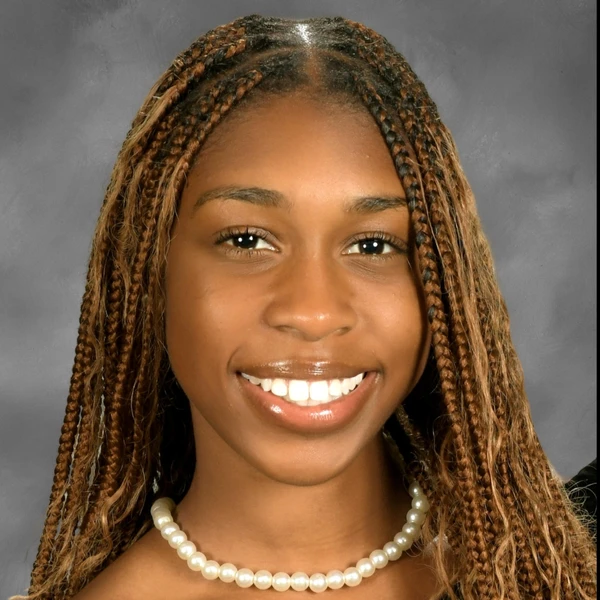
Anthony Belliamy’s life was characterized by his integrity, faith, and resilience; I believe my life has similarly shown these characteristics. I am a sophomore Chemical Engineering student with a minor in Chemistry and an emphasis in biomolecular science and engineering. I intend to go into the pharmaceutical sector and work in drug development research, with hopes of creating effective treatments that are more accessible to marginalized groups. There was a time when juggling a heavy courseload, organization meetings, and volunteering felt impossible due to my health, but I was able to overcome and grow from this challenge.
In my final years of high school, I watched quickly as my health began to decline. In junior year, I was diagnosed with anxiety, depression, and irritable bowel syndrome. That summer, a tumor was found in my thyroid. By senior year, recurrent pericarditis, an inflammatory heart condition, was added on top of everything. Before I knew it, I was seeing a cardiologist, endocrinologist, and seemingly every other “-ologist” in the book. My life became characterized by constant fatigue, various pains, and doctor’s appointments. Daily tasks were increasingly difficult, and I struggled to live up to the expectations I once set for myself. I had to make sacrifices in giving up sports, cutting back activities, and arguably the hardest, giving up a full ride.
As a National Merit Scholar, the University of Alabama gave me a full-ride scholarship. I was thrilled; however, my parents, doctors, and eventually I, concluded that dealing with several health issues while living eight hours away from all my specialists was unrealistic. As a result, I stayed in-state, accepting that I would have to work twice as hard to pay for school by applying for many scholarships and eventually paying student loans.
These health struggles did not just end when I graduated high school; they followed me into college life at Clemson. As I juggled a demanding engineering program, leadership positions in several campus organizations, and weekly volunteering, I had to deal with my inconsistent health as well. As time went on and as I adjusted to this new world, I began to adapt to my health obstacles rather than letting them stop me from achieving my goals. I learned how to advocate for my health, communicate with instructors proactively, and reorganize my time management and study strategies. Most significantly, I discovered that perseverance entails moving forward with integrity in the face of adversity.
My faith was central to getting me to this point, giving me a strong foundation and reminding me that hardship helps clarify my purpose. While I couldn’t do everything, I recognized I could still serve and lead others just as my faith guides me to, despite my health issues. Every Friday, I live out my purpose to serve by volunteering with children at a low-income apartment complex near my university. I work with other members of the Baptist Collegiate Ministry (BCM) to mentor and assist kids by offering a safe, supportive environment with a variety of sports and crafts. Developing consistent relationships with these kids who deal with little support has been one of the most significant aspects of my college experience. At one point, volunteering experiences like this felt like another obligation, but my refocus on life let me see the beauty in being able to do this despite my obstacles. Likewise, I had the opportunity to lead others as a senator in the Residence Hall Association, mentoring my peers and creating a fun, inclusive community for my dormitory. I continue to lead as a Serve Team member of BCM and a tutor for chemistry and calculus. It took a long time, but I have learned to manage my time to do these things, while still taking care of my body and health.
My health conditions have directly shaped my desire to work in pharmaceutical research. As a black female patient who has navigated multiple diagnoses and treatment plans, I know firsthand how life-changing effective medication can be, and unfortunately, how inaccessible it often is for marginalized communities. These experiences have pushed me towards drug development as I want to work “upstream,” creating treatments that are not only innovative but also practical and equitable. My obstacles did more than challenge me; they clarified my purpose. They strengthened my leadership, deepened my commitment to service, and solidified my desire to use STEAM skills to reduce suffering and expand access to care for those who need it most.