user profile avatar

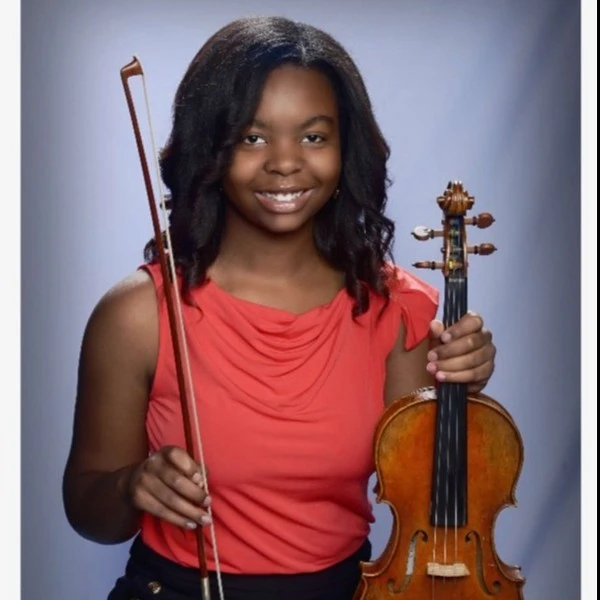
Gabrielle Smith

1x

Finalist

Bio

Gabrielle Smith (age 18) is a composer, singer, and violinist from Nanuet, New York. She is currently a freshman at the Juilliard School pursuing her Bachelors in Music Composition under Valerie Coleman. She has been composing since March of 2020, playing violin since 2015, and singing since 2021, and she aspires to be a professional composer. She previously studied under Trevor Weston at Juilliard’s Music Advancement Program. She has also studied with inti figgis-vizueta and Wang Lu. Gabrielle has recently performed with the New York Philharmonic, Renée Fleming, and Brian Stokes-Mitchel, and has had her works played at Juilliard, the Little Orchestra Society, the Brooklyn Conservatory of Music, and Wildflower Composers Festival. In addition to music, Gabrielle is immensely interested in psychology, neurology, and linguistics. In high school, she was an honors student and is a part of Math League, Academic League, Mu Alpha Theta, National Honors Society, Tri-M Music Honor Society, and has been a part of Science Olympiad and cross country. She integrates all of these interests into her music, as well as her daily life.

Education

The Juilliard School

Bachelor's degree program
2025 - 2029
  • Majors:
    • Music
  • GPA:
    3.9

Nanuet Senior High School

High School
2021 - 2025
  • GPA:
    4

Miscellaneous

  • Desired degree level:

    Bachelor's degree program

  • Graduate schools of interest:

  • Transfer schools of interest:

  • Majors of interest:

    • Music
  • Not planning to go to medical school
  • Career

    • Dream career field:

      Music

    • Dream career goals:

      Professional composer

    • Co Usher

      The Juilliard School
      2025 – Present1 year

    Sports

    Cross-Country Running

    Varsity
    2023 – 2023

    Arts

    • Little Orchestra Society

      Music
      2023 – 2023
    • Luna Composition Lab

      Music
      2022 – 2023
    • Juilliard's Music Advancement Program

      Music
      2021 – Present

    Public services

    • Volunteering

      Nanuet Public Library — Creator of garments
      2025 – Present
    • Volunteering

      People to People — Organizer
      2024 – 2024
    • Volunteering

      Nanuet Public Library — Distributor of prizes
      2022 – 2022
    • Volunteering

      Big Musicians — Mentor
      2021 – Present

    Future Interests

    Advocacy

    Volunteering

    Philanthropy

    Entrepreneurship

    Audrey Sherrill & Michael D'Ambrisi Music Scholarship
    I am an eighteen-year-old composer that is currently pursuing my Bachelors in Music Composition at the Juilliard School. I have been composing for five years, but my musical career began much earlier. I started playing the violin when I was eight. In the first two years of my education, I was very serious about improving, even sacrificing my lunch to play duets with my friend. By the time I was ten, I had managed to perform a solo at my state’s music evaluation festival. However, I moved to Florida that summer, away from my initial musical community, and performance opportunities were much more limited. I completely lost motivation in the three years thereafter. Right before the pandemic, I moved back to my hometown and was able to rejoin the community that I so missed, only to be torn away from it a couple of weeks later when we were thrust into quarantine. I still had orchestral rehearsals over Zoom, but it was not the same. Missing music, I enrolled in private violin lessons. My teacher was one of the kindest and most perceptive person I have ever interacted with. My lessons with her not only helped me with my technique; they also provided me with an introduction to composition. My teacher at the time asked me to write a short violin piece that would help me develop my technique. When I played it for her, she saw my potential and encouraged me to write a piano accompaniment for the piece. Since I had never written anything before and knew nothing about music theory, she taught me basic chord structures. Little did she know that she was unlocking a skill I did not know I was capable of cultivating. After that first piece, I became a voracious composer, writing daily. It was during this time that I discovered I had synesthesia. I named my first complete piece Indigo after the colors I sought to emulate. This piece was part of my first compositional portfolio, which allowed me to attend Juilliard’s MAP, a precollege program for minorities. I have since had many pieces performed, received paid commissions, and have collaborated with amazing musicians, and I never would have gotten to this point without that teacher that saw what I could be. I was elated when I was accepted into Juilliard’s undergraduate composition program, and I was even more overjoyed with the opportunity to study under Valerie Coleman. I go through my life being as observant, kind, and encouraging towards my colleagues as my teacher was to me. So far, I have encouraged my classmates to pursue performance opportunities that they would not have otherwise considered. I thank my first teacher for my and their growth. Music gave me a creative outlet. It gave me a career prospect. But most importantly, it gave me a community. It gave me something to love. This is what I want to give to my colleagues, my listeners, and future musicians. I am going to dedicate my career to cultivating a community and encouraging people to step outside of their comfort zone. With the help of this scholarship, I am going to use my expertise to help others find their voices just like my teacher helped me find mine.
    Pamela Branchini Memorial Scholarship
    Collaboration has always been the foundation of my musical pursuits. I started playing the violin in public school when I was eight years old. In the first two years of my education, I was very serious about improving, even sacrificing my lunch to play duets with my friend. Those mini performances were the highlight of my day and influenced the way I interact with music later in life. I am now an eighteen-year-old composer that is currently pursuing my Bachelors in Music Composition at the Juilliard School. I almost always write my compositions for people that I know so that I can work directly with the performers of my piece before starting, while composing, and during the rehearsals up to the premiere. I started to do this after a specific experience I had at Luna Composition Lab. When I was a mentee in Luna Lab, a program for young composers of marginalized genders, I composed or premiered a piece for flute, clarinet, violin, and cello. The performers had periodic workshops with the composers, so any components that did not work on an instrument or did not sound as expected could be changed before the performance. This experience was so enjoyable because I was able to collaborate with the people that knew their instruments best. There were specific multiphonics that I wanted to use on the flute, and talking to the flutist playing my piece was illuminating. I had not previously known how instrument-specific multiphonics could be. Conversations like these that I had with the performers allowed my music to be idiomatic, expressive, and clear to the performers while still being true to my artistic vision. Other composers are a major musical inspiration. Their music has created textures and sounds that I did not even know where possible on acoustic instruments. I experience this very vividly in every composers’ forum I attend in high school. Seeing my classmates’ compositional process and getting to hear how they think about and develop their music has given me perspective that I never would have gotten otherwise. The different methods of writing that different composers use has been both fascinating and instrumental in my development. For instance, a number of my classmates compose by frenetically sketching their ideas in their notebooks or notation programs, and that helps them avoid writer’s block. I have started implementing this in my own writing, to great success, and I attend these classes striving to inspire my colleagues in a similar way. Now that I am in college, I am surrounded by so many artists that also prioritize collaboration. A few friends of mine have even decided to form our own new music group, Ensemble of Art Resonance, in which I will compose music for my performer colleagues. I will continue to move through artist spaces with collaboration at the forefront of my mind. The entire purpose of creating art is to connect with people. Whether the people are the audience, creators, or performers, everyone that has interacted with the piece of art has been touched in some way. Art is a form of communication that steps in where language stops, and it only matters because of humans. That is why collaboration is so important to me: I want to be in the center of human interaction and to elicit emotions in as many people as possible.
    Kay Sykes Arts Scholarship
    I am an eighteen-year-old composer that is currently pursuing my Bachelors in Music Composition at the Juilliard School. I have been composing for five years, but my musical career began much earlier. I started playing the violin when I was eight. In the first two years of my education, I was very serious about improving, even sacrificing my lunch to play duets with my friend. By the time I was ten, I had managed to perform a solo at my state’s music evaluation festival. However, I moved to Florida that summer, away from my initial musical community, and performance opportunities were much more limited. I completely lost motivation in the three years thereafter. Right before the pandemic, I moved back to my hometown and was able to rejoin the community that I so missed, only to be torn away from it a couple of weeks later when we were thrust into quarantine. I still had orchestral rehearsals over Zoom, but it was not the same. Missing music, I enrolled in private violin lessons. My teacher was one of the kindest and most perceptive person I have ever interacted with. My lessons with her not only helped me with my technique; they also provided me with an introduction to composition. My teacher at the time asked me to write a short violin piece that would help me develop my technique. When I played it for her, she saw my potential and encouraged me to write a piano accompaniment for the piece. Since I had never written anything before and knew nothing about music theory, she taught me basic chord structures. Little did she know that she was unlocking a skill I did not know I was capable of cultivating. After that first piece, I became a voracious composer, writing daily. It was during this time that I discovered I had synesthesia. I named my first complete piece Indigo after the colors I sought to emulate. This piece was part of my first compositional portfolio, which allowed me to attend Juilliard’s MAP, a precollege program for minorities. I have since had many pieces performed, received paid commissions, and have collaborated with amazing musicians, and I never would have gotten to this point without that teacher that saw what I could be. I was elated when I was accepted into Juilliard’s undergraduate composition program, and I was even more overjoyed with the opportunity to study under Valerie Coleman. I go through my life being as observant, kind, and encouraging towards my colleagues as my teacher was to me. So far, I have encouraged my classmates to pursue performance opportunities that they would not have otherwise considered. I thank my first teacher for my and their growth. I am invigorated by my teachers, my colleagues, my friends, and my own inner world. I write to galvanize others and fill my own voracious hunger for creation. I will continue to grow in my creativity and foster a community of collaborative composers through my pursuits at Juilliard. I have met a group of like-minded musicians that want to create a new music ensemble called Ensemble of Art Resonance, where we want to create art that resonates both literally and emotionally. This is the kind of legacy I want to have as a professional composer: an artist that creates spaces made for building off of each other’s musical ideas.
    Lydia Fray Music Scholarship
    I am an eighteen-year-old composer that is currently pursuing my Bachelors in Music Composition at the Juilliard School. I have been composing for five years, but my musical career began much earlier. I started playing the violin when I was eight. In the first two years of my education, I was very serious about improving, even sacrificing my lunch to play duets with my friend. By the time I was ten, I had managed to perform a solo at my state’s music evaluation festival. However, I moved to Florida that summer, away from my initial musical community, and performance opportunities were much more limited. I completely lost motivation in the three years thereafter. Right before the pandemic, I moved back to my hometown and was able to rejoin the community that I so missed, only to be torn away from it a couple of weeks later when we were thrust into quarantine. I still had orchestral rehearsals over Zoom, but it was not the same. Missing music, I enrolled in private violin lessons. My teacher was one of the kindest and most perceptive person I have ever interacted with. My lessons with her not only helped me with my technique; they also provided me with an introduction to composition. My teacher at the time asked me to write a short violin piece that would help me develop my technique. When I played it for her, she saw my potential and encouraged me to write a piano accompaniment for the piece. Since I had never written anything before and knew nothing about music theory, she taught me basic chord structures. Little did she know that she was unlocking a skill I did not know I was capable of cultivating. After that first piece, I became a voracious composer, writing daily. It was during this time that I discovered I had synesthesia. I named my first complete piece Indigo after the colors I sought to emulate. This piece was part of my first compositional portfolio, which allowed me to attend Juilliard’s MAP, a precollege program for minorities. I have since had many pieces performed, received paid commissions, and have collaborated with amazing musicians, and I never would have gotten to this point without that teacher that saw what I could be. I was elated when I was accepted into Juilliard’s undergraduate composition program, and I was even more overjoyed with the opportunity to study under Valerie Coleman. I go through my life being as observant, kind, and encouraging towards my colleagues as my teacher was to me. So far, I have encouraged my classmates to pursue performance opportunities that they would not have otherwise considered. I thank my first teacher for my and their growth. I am invigorated by my teachers, my colleagues, my friends, and my own inner world. I write to galvanize others and fill my own voracious hunger for creation. I will continue to grow in my creativity and foster a community of collaborative composers through my pursuits at Juilliard. I have met a group of like-minded musicians that want to create a new music ensemble called Ensemble of Art Resonance, where we want to create art that resonates both literally and emotionally. This is the kind of legacy I want to have as a professional composer: an artist that creates spaces made for building off of each other’s musical ideas.
    Richard Turner Jr. Musical Gifts Scholarship
    Al Luna Memorial Design Scholarship
    I am motivated by everything around me to become a professional composer of concert music. My drive to create can be accelerated by so many things, whether it is nature, space, or psychology. My greatest motivation, however, is other artists, who I am surrounded by as a freshman pursuing a Bachelor’s in Music Composition under Professor Valerie Coleman. Teachers and mentors invigorate my creativity immensely. In fact, my first private teacher is who initially inspired me to compose. Her name is Ms. Perlman, and she asked me to write a short étude for solo violin. When I played it for her, she saw my potential and encouraged me to expand the piece. That encouragement was all I needed to become a voracious composer. My first composition teacher, Dr. Trevor Weston, has taught me to find my drive for growth inside of me. When I first started studying under him, I was writing what I thought a composer should write, which involved a lot of overly complicated counterpoint and unnecessarily difficult rhythms. The result of the music was somewhat interesting to me, but it was missing the kind of nebulous organic feeling that I get from my favorite music. I wanted to do better, but I did not have a clear path forward. I was feeling quite discouraged with my output, which was hindering my creative drive. While I thought that I would be more satisfied if I wrote even more complicated music, Dr. Weston encouraged me to simply write what I thought sounded good. My newer compositions still have some counterpoint and tend to have somewhat complicated harmonies, but they develop in a more organic manner. I enjoy the end results much better than my older music, since they are more coherent and well-developed. These newer pieces also leave much more room for interpretation from the performers than prior ones, which gives them the life that I was looking for before. With the help of Dr. Weston, I found my musical voice, and I am now dedicated to expressing that in the most authentic way possible. Other composers, especially those around me, are my primary inspiration. Their music has created textures and sounds that I did not even know where possible on acoustic instruments. I experience this very vividly in every composers’ forum I attend. Seeing my classmates’ compositional process and getting to hear how they think about and develop their music has given me perspective that I never would have gotten otherwise. The different methods of writing that different composers use has been both fascinating and instrumental in my development. For instance, a number of my classmates compose by frenetically sketching their ideas in their notebooks or notation programs, and that helps them avoid writer’s block. I have started implementing this in my own writing, to great success, and I attend these classes striving to inspire my colleagues in a similar way. I am invigorated by my teachers, my colleagues, my friends, and my own inner world. I write to galvanize others and fill my own voracious hunger for creation. I will continue to grow in my creativity and foster a community of collaborative composers through my pursuits at Juilliard. I have met a group of like-minded musicians that want to create a new music ensemble called Ensemble of Art Resonance, where we want to create art that resonates both literally and emotionally. This is the kind of legacy I want to have as a professional composer: an artist that creates spaces made for building off of each other’s musical ideas.
    James B. McCleary Music Scholarship
    I am an eighteen-year-old composer that is currently pursuing my Bachelors in Music Composition at the Juilliard School. I have been composing for five years, but my musical career began much earlier. I started playing the violin when I was eight. In the first two years of my education, I was very serious about improving, even sacrificing my lunch to play duets with my friend. By the time I was ten, I had managed to perform a solo at my state’s music evaluation festival. However, I moved to Florida that summer, away from my initial musical community, and performance opportunities were much more limited. I completely lost motivation in the three years thereafter. Right before the pandemic, I moved back to my hometown and was able to rejoin the community that I so missed, only to be torn away from it a couple of weeks later when we were thrust into quarantine. I still had orchestral rehearsals over Zoom, but it was not the same. Missing music, I enrolled in private violin lessons. My teacher was one of the kindest and most perceptive person I have ever interacted with. My lessons with her not only helped me with my technique; they also provided me with an introduction to composition. My teacher at the time asked me to write a short violin piece that would help me develop my technique. When I played it for her, she saw my potential and encouraged me to write a piano accompaniment for the piece. Since I had never written anything before and knew nothing about music theory, she taught me basic chord structures. Little did she know that she was unlocking a skill I did not know I was capable of cultivating. After that first piece, I became a voracious composer, writing daily. It was during this time that I discovered I had synesthesia. I named my first complete piece Indigo after the colors I sought to emulate. This piece was part of my first compositional portfolio, which allowed me to attend Juilliard’s MAP, a precollege program for minorities. I have since had many pieces performed, received paid commissions, and have collaborated with amazing musicians, and I never would have gotten to this point without that teacher that saw what I could be. I was elated when I was accepted into Juilliard’s undergraduate composition program, and I was even more overjoyed with the opportunity to study under Valerie Coleman. I go through my life being as observant, kind, and encouraging towards my colleagues as my teacher was to me. So far, I have encouraged my classmates to pursue performance opportunities that they would not have otherwise considered. I thank my first teacher for my and their growth. Music gave me a creative outlet. It gave me a career prospect. But most importantly, it gave me a community. It gave me something to love. This is what I want to give to my colleagues, my listeners, and future musicians. I am going to dedicate my career to cultivating a community and encouraging people to step outside of their comfort zone. With the help of this scholarship, I am going to use my expertise to help others find their voices just like my teacher helped me find mine.
    7023 Minority Scholarship
    I am an eighteen-year-old composer that is currently pursuing my Bachelors in Music Composition at the Juilliard School. I have been composing for five years, but my musical career began much earlier. I started playing the violin when I was eight. In the first two years of my education, I was very serious about improving, even sacrificing my lunch to play duets with my friend. By the time I was ten, I had managed to perform a solo at my state’s music evaluation festival. However, I moved to Florida that summer, away from my initial musical community, and performance opportunities were much more limited. I completely lost motivation in the three years thereafter. Right before the pandemic, I moved back to my hometown and was able to rejoin the community that I so missed, only to be torn away from it a couple of weeks later when we were thrust into quarantine. I still had orchestral rehearsals over Zoom, but it was not the same. Missing music, I enrolled in private violin lessons. These lessons not only helped me with my technique; they also provided me with an introduction to composition. My teacher asked me to write a short violin piece that would help me develop my technique. When I played it for her, she saw my potential and encouraged me to write a piano accompaniment. Since I had never written anything before and knew nothing about music theory, she taught me basic chord structures. Little did she know that she was unlocking a skill I did not know I was capable of cultivating. I was elated when I was accepted into Juilliard’s undergraduate composition program, and I was even more overjoyed with the opportunity to study under Valerie Coleman. It is truly the opportunity of a lifetime. I am so grateful for the preparation that the Juilliard’s Music Achievement Program afforded me over the last 4 years. I am my parents’ eldest child. They are first-generation college graduates and dedicated healthcare workers. Our family was recently impacted by Hurricane Melissa, and they have been donating their time and money towards helping our relatives rebuild their lives. My grandma is one of our relatives most directly impacted, and she recently broke her finger trying to rebuild her home. My parents work tirelessly to provide for my sister and me while also being financially responsible for our elderly and disabled family members. My father also just finished putting himself through school, and is currently repaying his student loans. Additionally, my father just had expensive knee surgery that he is also paying off. These financial responsibilities have resulted in a depletion of their savings. On top of all of this, my mother has had two unexpected major surgeries in the last four years and is currently contemplating an early retirement due to health concerns. She has to work so hard for my family, but that resulted in adverse health conditions. An overwhelming amount of barriers exist that makes the tuition at Juilliard out of our reach, but this scholarship would help. Music gave me a creative outlet. It gave me a career prospect. But most importantly, it gave me a community. It gave me something to love. This is what I want to give to my colleagues, my listeners, and future musicians. I am going to dedicate my career to cultivating a community and bringing the love of music to other people with my music. With the help of this scholarship, I am going to use my expertise to help others find their voices just like my teacher helped me find mine.
    Marshall and Dorothy Smith Music Scholarship
    I am motivated by everything around me to become a professional composer of concert music. My drive to create can be accelerated by so many things, whether it is nature, space, or psychology. My greatest motivation, however, is other artists, who I am surrounded by as a freshman pursuing a Bachelor’s in Music Composition under Professor Valerie Coleman. Teachers and mentors invigorate my creativity immensely. In fact, my first private teacher is who initially inspired me to compose. Her name is Ms. Perlman, and she asked me to write a short étude for solo violin. When I played it for her, she saw my potential and encouraged me to expand the piece. That encouragement was all I needed to become a voracious composer. My first composition teacher, Dr. Trevor Weston, has taught me to find my drive for growth inside of me. When I first started studying under him, I was writing what I thought a composer should write, which involved a lot of overly complicated counterpoint and unnecessarily difficult rhythms. The result of the music was somewhat interesting to me, but it was missing the kind of nebulous organic feeling that I get from my favorite music. I wanted to do better, but I did not have a clear path forward. I was feeling quite discouraged with my output, which was hindering my creative drive. While I thought that I would be more satisfied if I wrote even more complicated music, Dr. Weston encouraged me to simply write what I thought sounded good. My newer compositions still have some counterpoint and tend to have somewhat complicated harmonies, but they develop in a more organic manner. I enjoy the end results much better than my older music, since they are more coherent and well-developed. These newer pieces also leave much more room for interpretation from the performers than prior ones, which gives them the life that I was looking for before. With the help of Dr. Weston, I found my musical voice, and I am now dedicated to expressing that in the most authentic way possible. Other composers, especially those around me, are my primary inspiration. Their music has created textures and sounds that I did not even know where possible on acoustic instruments. I experience this very vividly in every composers’ forum I attend. Seeing my classmates’ compositional process and getting to hear how they think about and develop their music has given me perspective that I never would have gotten otherwise. The different methods of writing that different composers use has been both fascinating and instrumental in my development. For instance, a number of my classmates compose by frenetically sketching their ideas in their notebooks or notation programs, and that helps them avoid writer’s block. I have started implementing this in my own writing, to great success, and I attend these classes striving to inspire my colleagues in a similar way. I am invigorated by my teachers, my colleagues, my friends, and my own inner world. I write to galvanize others and fill my own voracious hunger for creation. I will continue to grow in my creativity and foster a community of collaborative composers through my pursuits at Juilliard. I have met a group of like-minded musicians that want to create a new music ensemble called Ensemble of Art Resonance, where we want to create art that resonates both literally and emotionally. This is the kind of legacy I want to have as a professional composer: an artist that creates spaces made for building off of each other’s musical ideas.
    Tawkify Meaningful Connections Scholarship
    I am an eighteen-year-old composer that is currently pursuing my Bachelors in Music Composition at the Juilliard School. I have been composing for five years, but my musical career began much earlier. I started playing the violin when I was eight. In the first two years of my education, I was very serious about improving, even sacrificing my lunch to play duets with my friend. By the time I was ten, I had managed to perform a solo at my state’s music evaluation festival. However, I moved to Florida that summer, away from my initial musical community, and performance opportunities were much more limited. I completely lost motivation in the three years thereafter. Right before the pandemic, I moved back to my hometown and was able to rejoin the community that I so missed, only to be torn away from it a couple of weeks later when we were thrust into quarantine. I still had orchestral rehearsals over Zoom, but it was not the same. Missing music, I enrolled in private violin lessons. My teacher was one of the kindest and most perceptive person I have ever interacted with. My lessons with her not only helped me with my technique; they also provided me with an introduction to composition. My teacher at the time asked me to write a short violin piece that would help me develop my technique. When I played it for her, she saw my potential and encouraged me to write a piano accompaniment for the piece. Since I had never written anything before and knew nothing about music theory, she taught me basic chord structures. Little did she know that she was unlocking a skill I did not know I was capable of cultivating. After that first piece, I became a voracious composer, writing daily. It was during this time that I discovered I had synesthesia. I named my first complete piece Indigo after the colors I sought to emulate. This piece was part of my first compositional portfolio, which allowed me to attend Juilliard’s MAP, a precollege program for minorities. I have since had many pieces performed, received paid commissions, and have collaborated with amazing musicians, and I never would have gotten to this point without that teacher that saw what I could be. I was elated when I was accepted into Juilliard’s undergraduate composition program, and I was even more overjoyed with the opportunity to study under Valerie Coleman. I go through my life being as observant, kind, and encouraging towards my colleagues as my teacher was to me. So far, I have encouraged my classmates to pursue performance opportunities that they would not have otherwise considered. I thank my first teacher for my and their growth. Music gave me a creative outlet. It gave me a career prospect. But most importantly, it gave me a community. It gave me something to love. This is what I want to give to my colleagues, my listeners, and future musicians. I am going to dedicate my career to cultivating a community and encouraging people to step outside of their comfort zone. With the help of this scholarship, I am going to use my expertise to help others find their voices just like my teacher helped me find mine.
    WoodaWorx Music Scholarship
    Jacob Kelly Memorial Scholarship for Arts and Music
    I am an eighteen-year-old composer that is currently pursuing my Bachelors in Music Composition at the Juilliard School. I have been composing for five years, but my musical career began much earlier. I started playing the violin when I was eight. In the first two years of my education, I was very serious about improving, even sacrificing my lunch to play duets with my friend. By the time I was ten, I had managed to perform a solo at my state’s music evaluation festival. However, I moved to Florida that summer, away from my initial musical community, and performance opportunities were much more limited. I completely lost motivation in the three years thereafter. Right before the pandemic, I moved back to my hometown and was able to rejoin the community that I so missed, only to be torn away from it a couple of weeks later when we were thrust into quarantine. I still had orchestral rehearsals over Zoom, but it was not the same. Missing music, I enrolled in private violin lessons. These lessons not only helped me with my technique; they also provided me with an introduction to composition. My teacher asked me to write a short violin piece that would help me develop my technique. When I played it for her, she saw my potential and encouraged me to write a piano accompaniment. Since I had never written anything before and knew nothing about music theory, she taught me basic chord structures. Little did she know that she was unlocking a skill I did not know I was capable of cultivating. I was elated when I was accepted into Juilliard, and I was even more overjoyed with the opportunity to study under Valerie Coleman. It is truly the opportunity of a lifetime. I am my parents’ eldest child. They are first-generation college graduates and dedicated healthcare workers. Our family was recently impacted by Hurricane Melissa, and they have been donating their time and money towards helping our relatives rebuild their lives. They also work tirelessly to provide for my sister and me while also being financially responsible for our elderly and disabled family members. My father also just finished putting himself through school, and is currently repaying his student loans. Additionally, we moved into a fixer-upper house a few years ago in an expensive neighborhood so that my sister and I could benefit from the education here. This sacrifice has propelled my career, but it has left them with significant bills from house repairs. Our heating system broke recently, and we have had to replace several broken utilities. These financial responsibilities have resulted in a depletion of their savings. On top of all of this, my mother has had two unexpected major surgeries in the last four years and is currently contemplating an early retirement due to health concerns. She has to work so hard for my family, but that resulted in adverse health conditions. An overwhelming amount of barriers exist that makes the tuition at Juilliard out of our reach, but this scholarship would help. Music gave me a creative outlet. It gave me a career prospect. But most importantly, it gave me a community. It gave me something to love. This is what I want to give to my colleagues, my listeners, and future musicians. I am going to dedicate my career to cultivating a community and bringing the love of music to other people with my music. With the help of this scholarship, I am going to use my expertise to help others find their voices just like my teacher helped me find mine.
    Pamela Branchini Memorial Scholarship
    Collaboration has always been the foundation of my musical pursuits. I started playing the violin in public school when I was eight years old. In the first two years of my education, I was very serious about improving, even sacrificing my lunch to play duets with my friend. Those mini performances were the highlight of my day and influenced the way I interact with music later in life. I am now an eighteen-year-old composer that is currently pursuing my Bachelors in Music Composition at the Juilliard School. I almost always write my compositions for people that I know so that I can work directly with the performers of my piece before starting, while composing, and during the rehearsals up to the premiere. I started to do this after a specific experience I had at Luna Composition Lab. When I was a mentee in Luna Lab, a program for young composers of marginalized genders, I composed or premiered a piece for flute, clarinet, violin, and cello. The performers had periodic workshops with the composers, so any components that did not work on an instrument or did not sound as expected could be changed before the performance. This experience was so enjoyable because I was able to collaborate with the people that knew their instruments best. There were specific multiphonics that I wanted to use on the flute, and talking to the flutist playing my piece was illuminating. I had not previously known how instrument-specific multiphonics could be. Conversations like these that I had with the performers allowed my music to be idiomatic, expressive, and clear to the performers while still being true to my artistic vision. Other composers are a major musical inspiration. Their music has created textures and sounds that I did not even know where possible on acoustic instruments. I experience this very vividly in every composers’ forum I attend in high school. Seeing my classmates’ compositional process and getting to hear how they think about and develop their music has given me perspective that I never would have gotten otherwise. The different methods of writing that different composers use has been both fascinating and instrumental in my development. For instance, a number of my classmates compose by frenetically sketching their ideas in their notebooks or notation programs, and that helps them avoid writer’s block. I have started implementing this in my own writing, to great success, and I attend these classes striving to inspire my colleagues in a similar way. Now that I am in college, I am surrounded by so many artists that also prioritize collaboration. A few friends of mine have even decided to form our own new music group, Ensemble of Art Resonance, in which I will compose music for my performer colleagues. I will continue to move through artist spaces with collaboration at the forefront of my mind. The entire purpose of creating art is to connect with people. Whether the people are the audience, creators, or performers, everyone that has interacted with the piece of art has been touched in some way. Art is a form of communication that steps in where language stops, and it only matters because of humans. That is why collaboration is so important to me: I want to be in the center of human interaction and to elicit emotions in as many people as possible.
    Diane Amendt Memorial Scholarship for the Arts
    I am motivated by everything around me to become a professional composer of concert music. My drive to create can be accelerated by so many things, whether it is nature, space, or psychology. My greatest motivation, however, is other artists, who I am surrounded by as a freshman pursuing a Bachelor’s in Music Composition under Professor Valerie Coleman.. Teachers and mentors invigorate my creativity immensely. In fact, my first private teacher is who initially inspired me to compose. Her name is Ms. Perlman, and she asked me to write a short étude for solo violin. When I played it for her, she saw my potential and encouraged me to expand the piece. That encouragement was all I needed to become a voracious composer. My first composition teacher, Dr. Trevor Weston, has taught me to find my drive for growth inside of me. When I first started studying under him, I was writing what I thought a composer should write, which involved a lot of overly complicated counterpoint and unnecessarily difficult rhythms. The result of the music was somewhat interesting to me, but it was missing the kind of nebulous organic feeling that I get from my favorite music. I wanted to do better, but I did not have a clear path forward. I was feeling quite discouraged with my output, which was hindering my creative drive. While I thought that I would be more satisfied if I wrote even more complicated music, Dr. Weston encouraged me to simply write what I thought sounded good. My newer compositions still have some counterpoint and tend to have somewhat complicated harmonies, but they develop in a more organic manner. I enjoy the end results much better than my older music, since they are more coherent and well-developed. These newer pieces also leave much more room for interpretation from the performers than prior ones, which gives them the life that I was looking for before. With the help of Dr. Weston, I found my musical voice, and I am now dedicated to expressing that in the most authentic way possible. Other composers, especially those around me, are my primary inspiration. Their music has created textures and sounds that I did not even know where possible on acoustic instruments. I experience this very vividly in every composers’ forum I attend. Seeing my classmates’ compositional process and getting to hear how they think about and develop their music has given me perspective that I never would have gotten otherwise. The different methods of writing that different composers use has been both fascinating and instrumental in my development. For instance, a number of my classmates compose by frenetically sketching their ideas in their notebooks or notation programs, and that helps them avoid writer’s block. I have started implementing this in my own writing, to great success, and I attend these classes striving to inspire my colleagues in a similar way. I am invigorated by my teachers, my colleagues, my friends, and my own inner world. I write to galvanize others and fill my own voracious hunger for creation. I will continue to grow in my creativity and foster a community of collaborative composers through my pursuits at Juilliard. I have met a group of like-minded musicians that want to create a new music ensemble called Ensemble of Art Resonance, where we want to create art that resonates both literally and emotionally. This is the kind of legacy I want to have as a professional composer: an artist that creates spaces made for building off of each other’s musical ideas.
    Vision of Music Scholarship
    I am motivated by everything around me to become a professional composer of concert music. My drive to create can be accelerated by so many things, whether it is nature, space, or psychology. My greatest motivation, however, is other artists, who I am surrounded by as a freshman pursuing a Bachelor’s in Music Composition under Professor Valerie Coleman.. Teachers and mentors invigorate my creativity immensely. In fact, my first private teacher is who initially inspired me to compose. Her name is Ms. Perlman, and she asked me to write a short étude for solo violin. When I played it for her, she saw my potential and encouraged me to expand the piece. That encouragement was all I needed to become a voracious composer. My first composition teacher, Dr. Trevor Weston, has taught me to find my drive for growth inside of me. When I first started studying under him, I was writing what I thought a composer should write, which involved a lot of overly complicated counterpoint and unnecessarily difficult rhythms. The result of the music was somewhat interesting to me, but it was missing the kind of nebulous organic feeling that I get from my favorite music. I wanted to do better, but I did not have a clear path forward. I was feeling quite discouraged with my output, which was hindering my creative drive. While I thought that I would be more satisfied if I wrote even more complicated music, Dr. Weston encouraged me to simply write what I thought sounded good. My newer compositions still have some counterpoint and tend to have somewhat complicated harmonies, but they develop in a more organic manner. I enjoy the end results much better than my older music, since they are more coherent and well-developed. These newer pieces also leave much more room for interpretation from the performers than prior ones, which gives them the life that I was looking for before. With the help of Dr. Weston, I found my musical voice, and I am now dedicated to expressing that in the most authentic way possible. Other composers, especially those around me, are my primary inspiration. Their music has created textures and sounds that I did not even know where possible on acoustic instruments. I experience this very vividly in every composers’ forum I attend. Seeing my classmates’ compositional process and getting to hear how they think about and develop their music has given me perspective that I never would have gotten otherwise. The different methods of writing that different composers use has been both fascinating and instrumental in my development. For instance, a number of my classmates compose by frenetically sketching their ideas in their notebooks or notation programs, and that helps them avoid writer’s block. I have started implementing this in my own writing, to great success, and I attend these classes striving to inspire my colleagues in a similar way. I am invigorated by my teachers, my colleagues, my friends, and my own inner world. I write to galvanize others and fill my own voracious hunger for creation. I will continue to grow in my creativity and foster a community of collaborative composers through my pursuits at Juilliard. I have met a group of like-minded musicians that want to create a new music ensemble called Ensemble of Art Resonance, where we want to create art that resonates both literally and emotionally. This is the kind of legacy I want to have as a professional composer: an artist that creates spaces made for building off of each other’s musical ideas.
    Neil Margeson Sound Scholarship
    I am a composer, singer, and violinist that is currently pursuing my Bachelors in Music Composition at The Juilliard School under Professor Valerie Coleman. In the future, I plan on writing concert music and teaching composition on the side. I have been composing for five years, but my musical career begins much earlier than that. I started playing the violin when I was eight. In the beginning of my education, I was very serious about improving, even sacrificing my lunchtime to play duets with my friend. By the time I was ten, I had managed to perform a solo. However, I moved to Florida that summer, away from my initial musical community, and performance opportunities were much more limited. My school there did not have a string program. I completely lost motivation in the three years thereafter. Missing music, I signed up for private violin lessons. These lessons did not only help me with my technique; they also provided me with an introduction to composition. My teacher had asked me to write a short piece for violin to help me develop my technique. When I played my piece for her, she saw my potential and encouraged me to write a piano part to accompany it. Since I had never written for piano before and knew nothing about music theory, she taught me about basic chord structures. Little did she know that she had unlocked a skill I didn’t know I was capable of cultivating. I became a voracious composer, writing daily. It was during this time that I discovered I had synesthesia. I named my first complete piece Indigo after the colors I sought to create. This piece was part of my first portfolio, which allowed me to attend Juilliard’s MAP, a precollege program for minorities. I have since had many pieces performed, received paid commissions, and have collaborated with amazing musicians, and I never would have gotten to this point without that teacher that saw what I could be. Music gave me a creative outlet and a career prospect. But most importantly, it gave me a community. It gave me something to love. This is what I want to give to my colleagues, my listeners, and future musicians. I am going to dedicate my career to cultivating a community and bringing the love of music to other people with my music. And I am going to use my expertise to help others find their voices just like my teacher helped me find mine.
    Bright Lights Scholarship
    I am a seventeen-year-old composer that will be attending Juilliard this fall, where I learn to write concert music and teaching composition. I have been composing for four years, but my musical career began much earlier. I started playing the violin when I was eight. In the first two years of my education, I was very serious about improving, even sacrificing my lunch to play duets with my friend. By the time I was ten, I had managed to perform a solo at my state’s music evaluation festival. However, I moved to Florida that summer, away from my initial musical community, and performance opportunities were much more limited. I completely lost motivation in the three years thereafter. Right before the pandemic, I moved back to my hometown and was able to rejoin the community that I so missed, only to be torn away from it a couple of weeks later when we were thrust into quarantine. I still had orchestral rehearsals over Zoom, but it was not the same. Missing music, I enrolled in private violin lessons. These lessons not only helped me with my technique; they also provided me with an introduction to composition. My teacher asked me to write a short violin piece that would help me develop my technique. When I played it for her, she saw my potential and encouraged me to write a piano accompaniment. Since I had never written anything before and knew nothing about music theory, she taught me basic chord structures. Little did she know that she was unlocking a skill I did not know I was capable of cultivating. I was elated when I was accepted into Juilliard’s undergraduate composition program, and I was even more overjoyed with the opportunity to study under Valerie Coleman. It is truly the opportunity of a lifetime. I am so grateful for the preparation that the Juilliard’s Music Achievement Program afforded me over the last 4 years. I am my parents’ eldest child. They are first generation college graduates and dedicated healthcare workers. They work tirelessly to provide for my sister and me while also being financially responsible for our elderly and disabled family members. My father also just finished putting himself through school, and is currently repaying his student loans. Additionally, we moved into a fixer-upper house a few years ago in an expensive neighborhood so that my sister and I could benefit from the education here. This sacrifice has propelled my career, but it has left them with significant bills from house repairs. Our heating system broke recently, and we have had to replace several broken utilities. These financial responsibilities have resulted in a depletion of their savings. On top of all of this, my mother has had two unexpected major surgeries in the last four years and is currently contemplating an early retirement due to health concerns. She has to work so hard for my family, but that resulted in adverse health conditions. An overwhelming amount of barriers exist that makes the tuition at Juilliard out of our reach. Music gave me a creative outlet. It gave me a career prospect. But most importantly, it gave me a community. It gave me something to love. This is what I want to give to my colleagues, my listeners, and future musicians. I am going to dedicate my career to cultivating a community and bringing the love of music to other people with my music. With the help of this scholarship, I am going to use my expertise to help others find their voices just like my teacher helped me find mine.
    Sewing Seeds: Lena B. Davis Memorial Scholarship
    I am a composer that will be attending Juilliard next fall. I plan on writing concert music and teaching composition on the side. I have been composing for four years, but my musical career begins much earlier than that. I started playing the violin when I was eight. In the beginning of my education, I was very serious about improving, even sacrificing my lunchtime to play duets with my friend. By the time I was ten, I had managed to perform a solo. However, I moved to Florida that summer, away from my initial musical community, and performance opportunities were much more limited. My school there did not have a string program. I completely lost motivation in the three years thereafter. Missing music, I signed up for private violin lessons. These lessons did not only help me with my technique; they also provided me with an introduction to composition. My teacher, Ms. Perlman, had asked me to write a short piece for violin to help me develop my technique. When I played my piece for her, she saw my potential and encouraged me to write a piano part to accompany it. Since I had never written for piano before and knew nothing about music theory, she taught me about basic chord structures. Little did Ms. Perlman know that she had unlocked a skill I didn’t know I was capable of cultivating. I became a voracious composer, writing daily. It was during this time that I discovered I had synesthesia. I named my first complete piece Indigo after the colors I sought to create. This piece was part of my first portfolio, which allowed me to attend Juilliard’s MAP, a precollege program for minorities. I have since had many pieces performed, received paid commissions, and have collaborated with amazing musicians, and now, I will be attending Juilliard for college. I never would have gotten to this point without Ms. Perlman, who saw what I could be. Music gave me a creative outlet and a career prospect. But most importantly, it gave me a community. It gave me something to love. This is what I want to give to my colleagues, my listeners, and future musicians. I am going to dedicate my career to cultivating a community and bringing the love of music to other people with my music. And I am going to use my expertise to help others find their voices just like my teacher helped me find mine.
    Pamela Branchini Memorial Scholarship
    I am a seventeen-year-old composer and violinist that will be attending the Juilliard School in the fall. As a musician, I am motivated by everything around me. My drive to create can be accelerated by so many things, whether it is nature, space, or psychology. My greatest motivation, however, is other artists. Teachers and mentors invigorate my creativity immensely. In fact, my first private teacher is who initially inspired me to compose. Her name is Ms. Perlman, and she asked me to write a short étude for solo violin. When I played it for her, she saw my potential and encouraged me to expand the piece. That encouragement was all I needed to become a voracious composer. Other composers are my primary inspiration. Their music has created textures and sounds that I did not even know where possible on acoustic instruments. I experience this very vividly in every composers’ forum I attend. Seeing my classmates’ compositional process and getting to hear how they think about and develop their music has given me perspective that I never would have gotten otherwise. The different methods of writing that different composers use has been both fascinating and instrumental in my development. For instance, a number of my classmates compose by frenetically sketching their ideas in their notebooks or notation programs, and that helps them avoid writer’s block. I have started implementing this in my own writing, to great success, and I attend these classes striving to inspire my colleagues in a similar way. I value collaboration and innovation over anything else. My most successful and enjoyable writing experiences were those where I knew my performers and worked with them, or at least kept them in mind. An example of this was when I was a mentee in Luna Composition Lab, a program for young composers of marginalized genders in which I premiered a piece for flute, clarinet, violin, and cello. The program was structured so that the mentees had periodic workshops with the performers, so any components that were not idiomatic to the instrument or did not have the expected result could be discovered before the final performance. This experience was so enjoyable because I was able to collaborate with the musicians that knew their particular instruments best, especially since I was working with multiphonics, which do not always work the same way on every instrument. The conversations that I had with the performers allowed the music to be as close to my original vision as possible while still being idiomatic and clear to the instrumentalists. Similarly, I enjoy performing the most when I treat my pianist as an equal part of the performance instead of just an accompanist. My performances given in this mindset are more musical and delightful for myself, my pianist, and the audience. The collaborative aspect of my performances give the music a life that makes up for any technical deficiencies I have. I am invigorated by my teachers, my colleagues, my friends, and my own inner world. I write to galvanize others and fill my own voracious hunger for creation. I will continue to grow in my creativity and foster a community of collaborative composers through my pursuits at Juilliard.
    WCEJ Thornton Foundation Music & Art Scholarship
    I am a composer that will be attending Juilliard next fall. I plan on writing concert music and teaching composition on the side. I have been composing for four years, but my musical career begins much earlier than that. I started playing the violin when I was eight. In the beginning of my education, I was very serious about improving, even sacrificing my lunchtime to play duets with my friend. By the time I was ten, I had managed to perform a solo. However, I moved to Florida that summer, away from my initial musical community, and performance opportunities were much more limited. My school there did not have a string program. I completely lost motivation in the three years thereafter. Missing music, I signed up for private violin lessons. These lessons did not only help me with my technique; they also provided me with an introduction to composition. My teacher had asked me to write a short piece for violin to help me develop my technique. When I played my piece for her, she saw my potential and encouraged me to write a piano part to accompany it. Since I had never written for piano before and knew nothing about music theory, she taught me about basic chord structures. Little did she know that she had unlocked a skill I didn’t know I was capable of cultivating. I became a voracious composer, writing daily. It was during this time that I discovered I had synesthesia. I named my first complete piece Indigo after the colors I sought to create. This piece was part of my first portfolio, which allowed me to attend Juilliard’s MAP, a precollege program for minorities. I have since had many pieces performed, received paid commissions, and have collaborated with amazing musicians, and I never would have gotten to this point without that teacher that saw what I could be. Music gave me a creative outlet and a career prospect. But most importantly, it gave me a community. It gave me something to love. This is what I want to give to my colleagues, my listeners, and future musicians. I am going to dedicate my career to cultivating a community and bringing the love of music to other people with my music. And I am going to use my expertise to help others find their voices just like my teacher helped me find mine.
    Nick Lindblad Memorial Scholarship
    I was a violinist long before I became a composer. I started playing when I was eight years old. In the first two years of learning, I was determined to improve, even sacrificing my free time between classes to play duets. By the time I was ten, I had performed a solo at NYSSMA, New York's music evaluation festival, and was accepted to their honors orchestra. However, I moved to Florida that summer, away from my musical community, and performance opportunities were much more limited. The school I attended did not have a string program. I lost motivation in the three years after, putting in minimal effort in my local youth orchestra. A few years later, I moved back to my hometown and was able to perform at school again, only to be torn away from it after a couple of weeks when we were thrust into quarantine. I still had rehearsals over Zoom, but it was not the same. Missing music, I signed up for private violin lessons. These lessons both helped me perform better and introduced me to composition. My teacher, Ms. Perlman, had asked me to write a short étude for solo violin. When I played it for her, she saw my potential and encouraged me to expand the piece. Little did Ms. Perlman know that she had unlocked a skill I did not know I was capable of cultivating. I became a voracious composer, writing almost every day. It was during this time that I discovered that I had synesthesia. I named my first complete piece, Indigo, after the colors I sought after creating. This piece was part of my first portfolio, which allowed me to attend Juilliard's Music Advancement Program, a precollege program for minorities, where I have been for the last four years. Here I study under Trevor Weston, and I have had lessons and masterclasses with Valerie Coleman and Alyssa Weinberg. I have also had many pieces premiered, received paid commissions, and have collaborated with many esteemed musicians, including performers at Juilliard, the Little Orchestra Society, and the Brooklyn Conservatory of Music. These experiences were transformative. After my first premiere, I knew that I wanted to write music and hear it performed forever. I would have never gotten to this point without Ms. Perlman, who saw my potential and nourished it. Although composition has been my main interest for the last few years, I also have a deep respect for instrumental performance and education. I have been a mentor for young violinists for four years in a program called Big Musicians. This program is run by my music directors, who pair high school instrumentalists with middle school students that want to improve on their instruments but may not be able to afford lessons. The lessons are mainly geared towards preparing the students' state examination solos, but I have taught them everything from pop tunes to music from different eras of time. This experience has solidified my interest in private teaching, which I hope to pursue after I graduate. I am a ravenous learner that is so excited to advance my knowledge through higher education. I cannot wait to pursue my musical career in addition to my extracurricular activities in university, and I hope to become a professional composer and private teacher.
    Marshall and Dorothy Smith Music Scholarship
    I was a violinist long before I became a composer. I started playing when I was eight years old. In the first two years of learning, I was determined to improve, even sacrificing my free time between classes to play duets. By the time I was ten, I had performed a solo at NYSSMA, New York's music evaluation festival, and was accepted to their honors orchestra. However, I moved to Florida that summer, away from my musical community, and performance opportunities were much more limited. The school I attended did not have a string program. I lost motivation in the three years after, putting in minimal effort in my local youth orchestra. A few years later, I moved back to my hometown and was able to perform at school again, only to be torn away from it after a couple of weeks when we were thrust into quarantine. I still had rehearsals over Zoom, but it was not the same. Missing music, I signed up for private violin lessons. These lessons both helped me perform better and introduced me to composition. My teacher, Ms. Perlman, had asked me to write a short étude for solo violin. When I played it for her, she saw my potential and encouraged me to expand the piece. Little did Ms. Perlman know that she had unlocked a skill I did not know I was capable of cultivating. I became a voracious composer, writing almost every day. It was during this time that I discovered that I had synesthesia. I named my first complete piece, Indigo, after the colors I sought after creating. This piece was part of my first portfolio, which allowed me to attend Juilliard's Music Advancement Program, a precollege program for minorities, where I have been for the last four years. Here I study under Trevor Weston, and I have had lessons and masterclasses with Valerie Coleman and Alyssa Weinberg. I have also had many pieces premiered, received paid commissions, and have collaborated with many esteemed musicians, including performers at Juilliard, the Little Orchestra Society, and the Brooklyn Conservatory of Music. These experiences were transformative. After my first premiere, I knew that I wanted to write music and hear it performed forever. I would have never gotten to this point without Ms. Perlman, who saw my potential and nourished it. Although composition has been my main interest for the last few years, I also have a deep respect for instrumental performance and education. I have been a mentor for young violinists for four years in a program called Big Musicians. This program is run by my music directors, who pair high school instrumentalists with middle school students that want to improve on their instruments but may not be able to afford lessons. The lessons are mainly geared towards preparing the students' state examination solos, but I have taught them everything from pop tunes to music from different eras of time. This experience has solidified my interest in private teaching, which I hope to pursue after I graduate. I am a ravenous learner that is so excited to advance my knowledge through higher education. I cannot wait to pursue my musical career in addition to my extracurricular activities in university, and I hope to become a professional composer and private teacher.
    Neil Margeson Sound Scholarship
    I am a seventeen-year-old composer that will be pursuing a degree of music next fall. I plan on writing concert music and teaching composition. I have been composing for four years, but my musical career began much earlier. I started playing the violin when I was eight. In the first two years of my education, I was very serious about improving, even sacrificing my lunch to play duets with my friend. By the time I was ten, I had managed to perform a solo at NYSSMA, my state’s music evaluation festival, and was deemed good enough to perform in their honors orchestra. However, I moved to Florida that summer, away from my initial musical community, and performance opportunities were much more limited. I completely lost motivation in the three years thereafter, though I put in minimal effort in my local youth orchestra. Right before the pandemic, I moved back to my hometown and was able to rejoin the community that I so missed, only to be torn away from it a couple of weeks later when we were thrust into quarantine. I still had orchestral rehearsals over Zoom, but it was not the same. Missing music, I enrolled in private violin lessons. These lessons did not only help me with my technique; they also provided me with an introduction to composition. My teacher had asked me to write a short violin piece that would help me develop my technique. When I played it for her, she saw my potential and encouraged me to write a piano accompaniment. Since I had never written anything before and knew nothing about music theory, she taught me basic chord structures. Little did she know that she was unlocking a skill I did not know I was capable of cultivating. I compose to collaborate. My most enjoyable writing experiences were those where I worked with my performers, or at least kept them in mind. An example of this was when I was a mentee in Luna Composition Lab, a program for young composers of marginalized genders, in which I premiered a chamber piece. The program was structured so that the mentees had periodic workshops with the performers, so any components that were not idiomatic to the instrument or did not have the expected result could be discovered before the final performance. This experience was enjoyable because I was able to collaborate with the musicians that knew their particular instruments best. The conversations that I had with the performers allowed the music to be as close to my original vision as possible while still being idiomatic and clear to the instrumentalists. Similarly, I enjoy performing the most when I treat my pianist as an equal part of the performance instead of just an accompanist. My performances given in this mindset are more musical and delightful for myself, my pianist, and the audience. The collaborative aspect of my performances give the music a life that makes up for any technical deficiencies I have. Music gave me a creative outlet. It gave me a career prospect. But most importantly, it gave me a community. It gave me something to love. This is what I want to give to my colleagues, my listeners, and future musicians. I am going to dedicate my career to cultivating a community and bringing the love of music to other people with my music. And I am going to use my expertise to help others find their voices just like my teacher helped me find mine.
    Richard W. Vandament Music Scholarship
    I am a seventeen-year-old composer that will be pursuing a degree of music next fall. I plan on writing concert music and teaching composition. I have been composing for four years, but my musical career began much earlier. I started playing the violin when I was eight. In the first two years of my education, I was very serious about improving, even sacrificing my lunch to play duets with my friend. By the time I was ten, I had managed to perform a solo at NYSSMA, my state’s music evaluation festival, and was deemed good enough to perform in their honors orchestra. However, I moved to Florida that summer, away from my initial musical community, and performance opportunities were much more limited. I completely lost motivation in the three years thereafter, though I put in minimal effort in my local youth orchestra. Right before the pandemic, I moved back to my hometown and was able to rejoin the community that I so missed, only to be torn away from it a couple of weeks later when we were thrust into quarantine. I still had orchestral rehearsals over Zoom, but it was not the same. Missing music, I enrolled in private violin lessons. These lessons did not only help me with my technique; they also provided me with an introduction to composition. My teacher had asked me to write a short violin piece that would help me develop my technique. When I played it for her, she saw my potential and encouraged me to write a piano accompaniment. Since I had never written anything before and knew nothing about music theory, she taught me basic chord structures. Little did she know that she was unlocking a skill I did not know I was capable of cultivating. I compose to collaborate. My most enjoyable writing experiences were those where I worked with my performers, or at least kept them in mind. An example of this was when I was a mentee in Luna Composition Lab, a program for young composers of marginalized genders, in which I premiered a chamber piece. The program was structured so that the mentees had periodic workshops with the performers, so any components that were not idiomatic to the instrument or did not have the expected result could be discovered before the final performance. This experience was enjoyable because I was able to collaborate with the musicians that knew their particular instruments best. The conversations that I had with the performers allowed the music to be as close to my original vision as possible while still being idiomatic and clear to the instrumentalists. Similarly, I enjoy performing the most when I treat my pianist as an equal part of the performance instead of just an accompanist. My performances given in this mindset are more musical and delightful for myself, my pianist, and the audience. The collaborative aspect of my performances give the music a life that makes up for any technical deficiencies I have. Music gave me a creative outlet. It gave me a career prospect. But most importantly, it gave me a community. It gave me something to love. This is what I want to give to my colleagues, my listeners, and future musicians. I am going to dedicate my career to cultivating a community and bringing the love of music to other people with my music. And I am going to use my expertise to help others find their voices just like my teacher helped me find mine.
    Diane Amendt Memorial Scholarship for the Arts
    I am a sixteen-year-old aspiring composer that will be pursuing a degree of music next fall. I plan on writing concert music and teaching composition on the side. I have been composing for about four years, but my musical career begins much earlier than that. I started playing the violin when I was eight years old. In the first two years of my education, I was very serious about improving, even sacrificing my free time between classes to play duets with my friend. By the time I was ten, I had managed to perform a solo at NYSSMA, my state’s music evaluation festival, and was deemed good enough to perform in their honors orchestra. However, I moved to Florida that summer, away from my initial musical community and performance opportunities were much more limited. The school that I enrolled in did not have a string program. I completely lost motivation in the three years thereafter, though I put in minimal effort in my local youth orchestra. Right before the pandemic, I moved back to my hometown and was able to join back into the community that I so missed, only to be torn away from it once again a couple of weeks later when we were thrust into quarantine. I still had orchestra rehearsals over Zoom, but it just wasn’t the same. Missing music and wanting to be challenged, I signed up for private violin lessons. These lessons did not only help me with my technique; they also provided me with an introduction to composition. My teacher had asked me to write a short piece for solo violin that would help me develop my technique. When I played my piece for her, she saw my potential and encouraged me to write a piano part to accompany it. Since I had never written for piano before and knew nothing about music theory, she taught me about basic chord structures. Little did she know that she had unlocked a part of me that I didn’t know I had, a skill I didn’t know I was capable of cultivating. I became a voracious composer, writing almost every day. It was during this time that I discovered that I had synesthesia. I named my first complete piece, Indigo, after the colors I sought after creating. This piece was part of my first portfolio, which allowed me to attend Juilliard’s Music Advancement Program, a precollege program for minorities. I have since had many pieces performed, received paid commissions, and have collaborated with Grammy Award-winning musicians, and I never would have gotten to this point without that teacher that saw what I could be. Music gave me a creative outlet. It gave me a career prospect. But most importantly, it gave me a community. It gave me something to love. This is what I want to give to my colleagues, my listeners, and future musicians. I am going to dedicate my career to cultivating a community and bringing the love of music to other people with my music. And I am going to use my expertise to help others find their voices just like my teacher helped me find mine.
    Everett J. Collins, Jr. Music Scholarship
    I am a sixteen-year-old aspiring composer that will be pursuing a degree of music next fall. I plan on writing concert music and teaching composition on the side. I have been composing for about four years, but my musical career begins much earlier than that. I started playing the violin when I was eight years old. In the first two years of my education, I was very serious about improving, even sacrificing my free time between classes to play duets with my friend. By the time I was ten, I had managed to perform a solo at NYSSMA, my state’s music evaluation festival, and was deemed good enough to perform in their honors orchestra. However, I moved to Florida that summer, away from my initial musical community and performance opportunities were much more limited. The school that I enrolled in did not have a string program. I completely lost motivation in the three years thereafter, though I put in minimal effort in my local youth orchestra. Right before the pandemic, I moved back to my hometown and was able to join back into the community that I so missed, only to be torn away from it once again a couple of weeks later when we were thrust into quarantine. I still had orchestra rehearsals over Zoom, but it just wasn’t the same. Missing music and wanting to be challenged, I signed up for private violin lessons. These lessons did not only help me with my technique; they also provided me with an introduction to composition. My teacher had asked me to write a short piece for solo violin that would help me develop my technique. When I played my piece for her, she saw my potential and encouraged me to write a piano part to accompany it. Since I had never written for piano before and knew nothing about music theory, she taught me about basic chord structures. Little did she know that she had unlocked a part of me that I didn’t know I had, a skill I didn’t know I was capable of cultivating. I became a voracious composer, writing almost every day. It was during this time that I discovered that I had synesthesia. I named my first complete piece, Indigo, after the colors I sought after creating. This piece was part of my first portfolio, which allowed me to attend Juilliard’s Music Advancement Program, a precollege program for minorities. I have since had many pieces performed, received paid commissions, and have collaborated with Grammy Award-winning musicians, and I never would have gotten to this point without that teacher that saw what I could be. Music gave me a creative outlet. It gave me a career prospect. But most importantly, it gave me a community. It gave me something to love. This is what I want to give to my colleagues, my listeners, and future musicians. I am going to dedicate my career to cultivating a community and bringing the love of music to other people with my music. And I am I am going to use my expertise to help others find their voices just like my teacher helped me find mine.
    Marshall and Dorothy Smith Music Scholarship
    I am a sixteen-year-old aspiring composer that will be pursuing a degree of music next fall. I plan on writing concert music and teaching composition on the side. I have been composing for about four years, but my musical career begins much earlier than that. I started playing the violin when I was eight years old. In the first two years of my education, I was very serious about improving, even sacrificing my free time between classes to play duets with my friend. By the time I was ten, I had managed to perform a solo at NYSSMA, my state’s music evaluation festival, and was deemed good enough to perform in their honors orchestra. However, I moved to Florida that summer, away from my initial musical community and performance opportunities were much more limited. The school that I enrolled in did not have a string program. I completely lost motivation in the three years thereafter, though I put in minimal effort in my local youth orchestra. Right before the pandemic, I moved back to my hometown and was able to join back into the community that I so missed, only to be torn away from it once again a couple of weeks later when we were thrust into quarantine. I still had orchestra rehearsals over Zoom, but it just wasn’t the same. Missing music and wanting to be challenged, I signed up for private violin lessons. These lessons did not only help me with my technique; they also provided me with an introduction to composition. My teacher had asked me to write a short piece for solo violin that would help me develop my technique. When I played my piece for her, she saw my potential and encouraged me to write a piano part to accompany it. Since I had never written for piano before and knew nothing about music theory, she taught me about basic chord structures. Little did she know that she had unlocked a part of me that I didn’t know I had, a skill I didn’t know I was capable of cultivating. I became a voracious composer, writing almost every day. It was during this time that I discovered that I had synesthesia. I named my first complete piece, Indigo, after the colors I sought after creating. This piece was part of my first portfolio, which allowed me to attend Juilliard’s Music Advancement Program, a precollege program for minorities. I have since had many pieces performed, received paid commissions, and have collaborated with Grammy Award-winning musicians, and I never would have gotten to this point without that teacher that saw what I could be. Music gave me a creative output. It gave me a career prospect. But most importantly, it gave me a community. It gave me something to love. This is what I want to give to my colleagues, my listeners, and future musicians. I am going to dedicate my career to cultivating a community and bringing the love of music to other people with my music. And I am I am going to use my expertise to help others find their voices just like my teacher helped me find mine.