Hobbies and interests
Community Service And Volunteering
Coaching
Babysitting And Childcare
Reading
Reading
Childrens
Academic
Education
Adventure
Book Club
I read books multiple times per week
Gabrielle Petro
1x
FinalistGabrielle Petro
1x
FinalistBio
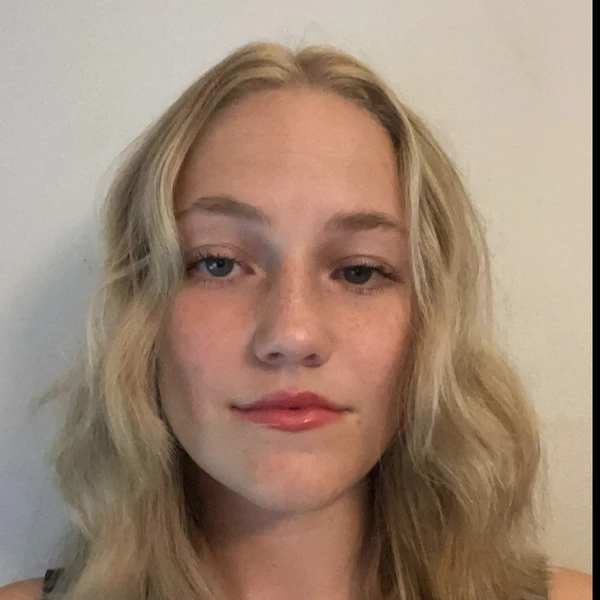
I am a student at the University of Delaware studying Early Childhood Education!! I'll be a senior starting Fall 2025 and graduating Spring of 2026! I love everything about my major! I am a very dedicated student along with working 2 or 3 jobs at one time to help me afford school and start my career as a teacher on the right footing.
Education
University of Delaware
Bachelor's degree programMajors:
- Education, General
- Special Education and Teaching
First State Military Academy
High SchoolMiscellaneous
Desired degree level:
Bachelor's degree program
Graduate schools of interest:
Transfer schools of interest:
Majors of interest:
- Special Education and Teaching
- Education, General
- Teacher Education and Professional Development, Specific Subject Areas
Career
Dream career field:
Education
Dream career goals:
Become a teacher
Teacher
UD lab School2023 – Present3 years
Sports
Cheerleading
Varsity2014 – 20206 years
Future Interests
Volunteering
Philanthropy
Entrepreneurship
RonranGlee Special Needs Teacher Literary Scholarship
When Professor Harold Bloom says, “The purpose of teaching is to bring the student to his or her sense of his or her own presence,” he is speaking to something far deeper than simply delivering knowledge. He’s describing the moment when a student realizes their value, voice, and individuality—when they come into awareness of who they are and recognize that their thoughts, feelings, and contributions matter.
For students with special needs, achieving this awareness is both essential and life-changing. My mission as a future educator is to help these students see themselves not by how the world defines them, but by the strength, creativity, and potential they carry within. I want to create an inclusive, affirming classroom where students feel safe enough to take risks, proud enough to express themselves, and supported enough to grow.
I will do this by:
Celebrating progress over perfection
Valuing all forms of communication and expression
Encouraging self-advocacy and emotional literacy
Creating accessible opportunities for leadership, storytelling, and choice
Ultimately, my goal is to help every student say, “I belong here. I matter. I can.”
🧚 Fairy Tale: Gabrielle and the Kingdom of Quiet Voices
Once upon a time in the Kingdom of Quiet Voices, there lived children whose thoughts were as bright as stardust but whose words often stayed hidden behind silence, stumbles, or stares. The people of the land did not know how to listen, so many children began to believe that their voices had no place in the world.
Then one day, a young teacher named Gabrielle arrived. She did not carry a sword or a spellbook, but something more powerful: a listening heart and an unshakable belief that every child had magic within them.
Gabrielle didn’t ask the children to fit into old stories. Instead, she handed each child a blank book and a mirror. “Your voice,” she said gently, “is the key to your story. Your presence is the beginning of something the world needs.”
One child painted their thoughts. Another danced their feelings. A third found their power in pointing to pictures and clapping twice for yes. Each day, Gabrielle encouraged them to share just one word or one dream. Slowly, the Kingdom of Quiet Voices began to glow.
By the end of the school year, the quiet voices had grown into confident storytellers—each one proud, seen, and standing tall. Gabrielle didn’t save the kingdom; she helped it remember its worth. And in doing so, she too found her presence—woven into every life she helped awaken.
And so they all continued their stories...
Not perfectly, but powerfully.
Not loudly, but clearly.
Together.
Rebecca Lynn Seto Memorial Scholarship
Working with a child who has a rare disorder like Rebecca Lynn Seto would begin with one word: understanding. Rebecca’s story deeply resonates with me as an aspiring early childhood educator with a minor in disability studies. Her life reminds us that communication isn’t limited to words, and that true progress comes when educators take the time to understand the whole child not just their diagnosis.
When supporting a child with a rare or unfamiliar condition, my first step would be to observe, listen, and learn from the child, their family, and any medical or educational records available. I would seek to understand not only the clinical aspects of the disorder but also the child's unique personality, likes, dislikes, and triggers. I believe that teaching doesn’t begin with a lesson plan; it begins with a relationship with every child and family that comes into my classroom.
One of the most important methods I would use is multi-modal communication, including tools like picture exchange communication systems (PECS), sign language, assistive technology, and gestures. If a child is non-verbal, that doesn’t mean they’re non-communicative! Just as Rebecca’s educators found innovative ways to connect with her, I would work to find the method that allows the child to express themselves comfortably and confidently.
Adaptability would also be key. No two children with the same diagnosis are alike especially with rare disorders. I would create individualized goals that are flexible and student-centered. These goals would be rooted in strengths rather than limitations and designed to build confidence and independence with navigating the world around them. I would use sensory-friendly strategies, hands-on learning, and interest-based activities to keep the child engaged and connected.
Collaboration with specialists such as occupational therapists, speech therapists, and physical therapists would be essential in building a well-rounded support system. I see these professionals not as outside help, but as team members, all working together to help the child reach their potential.
Most importantly, I believe that the family is the heart of the educational journey for any child but more so for a children with disabilities. As Rebecca’s story shows, her joy and success were most present when her family, school, and support team were united. Families know their child best they are the constant in the child’s life when teachers and therapists may change from year to year. I would prioritize regular communication with families, involve them in planning and decision-making, and always respect their insights and experiences. Together, we would create a learning environment that honors the child’s whole identity, including their cultural and emotional world.
Children like Rebecca are not defined by their disorders. They are full of personality, humor, creativity, and joy. My job as an educator is to see and celebrate that, and to never let a diagnosis overshadow the individual. I am committed to being the kind of teacher who sees the child first and tailors everything methods, goals, and approaches around their needs and dreams.
Rebecca’s legacy is a beautiful reminder that with love, creativity, and teamwork, every child can shine. It would be an honor to carry that spirit forward in my own work with children with disabilities.
Live From Snack Time Scholarship
From a young age, I’ve always been drawn to working with children their curiosity, energy, and honesty inspired me. But it wasn’t until I began volunteering in classrooms, coaching cheerleading and working with children of different abilities that I realized how critical the early years are to shaping a child’s future. That realization led me to choose Early Childhood Education as my major and Disability Studies as my minor at the University of Delaware. My goal is to support early childhood development by creating inclusive, nurturing environments where every child regardless of ability or background can thrive and love school and learning.
Early childhood is a foundational stage of life when children develop essential skills in communication, social interaction, problem-solving, and emotional regulation. As an aspiring educator, I plan to support this development in multiple ways. First, I want to create classroom spaces that are emotionally safe, accessible for children and their families, development appropriate and engaging. Children should feel valued, heard, and free to explore. This means building strong relationships with each and every child, understanding their individual learning styles, and using play-based, developmentally appropriate teaching strategies that encourage growth and creativity.
Second, I am passionate about inclusion. My studies in Disability Studies have taught me that children and families with disabilities often face barriers not just in learning, but in how they’re perceived. I believe it’s my responsibility to advocate for these children, ensure they receive the support they need, and help build classrooms that embrace differences. I plan to use individualized learning plans, sensory-friendly tools, and differentiated instruction to meet each child's unique needs.
I also believe family involvement is a crucial part of supporting early childhood development. Children learn best when their caregivers and teachers work together. I plan to communicate regularly with families, not just about academic progress, but also about the child’s social and emotional growth. I want parents to feel like partners in their child’s education, and I aim to build trusting relationships that support the whole child.
What made me choose this field wasn’t just a love for working with kids it was the moment I saw the impact a caring, skilled teacher could have on a child’s confidence. I was not given this opportunity as a young child starting my career as a student. So I made a pact to myself that no child wilI be left behind and forgotten bout like I was. Once I worked with a child who struggled with speech and often withdrew during group activities. With time, patience, and the right support, I watched that child begin to participate, smile, and connect with others. That experience confirmed that this is my calling.
Supporting early childhood development is more than a career goal it’s a personal mission. I want to be the teacher who notices the quiet child, who adapts the lesson for the one who learns differently, and who celebrates every milestone, big or small. I know the impact of early education lasts a lifetime, and I’m committed to giving children the strong start they deserve.
Wicked Fan Scholarship
I’ve been a fan of Wicked ever since I first heard the song “Defying Gravity.” That one performance opened up an entire world for me one filled with powerful music, strong characters, and deeper messages about identity, acceptance, and courage. Wicked isn’t just a musical it’s a story that stays with you, challenges the way you think, and inspires you to stand tall even when the world misunderstands you.
One of the biggest reasons I love Wicked is because of Elphaba. She’s not your typical heroine she’s different, strong-willed, and constantly judged for how she looks and what she believes in. I saw myself in her struggle to be accepted and understood. As a teenager, I often felt like I didn’t quite fit in, especially when I was discovering my own voice and values that differ from everyone around. me. Watching Elphaba stay true to herself even when it was hard gave me courage to do the same.
Another reason I’m such a fan is the music. Stephen Schwartz’s songs are powerful, emotional, and unforgettable. “For Good” always makes me tear up because it speaks to how people shape us, even if they’re only in our lives for a short time. And “Defying Gravity” is like an anthem for anyone who’s ever dared to rise above judgment, fear, or limitations. The music in Wicked makes you feel every emotion deeply from hope to heartbreak to triumph.
But beyond the characters and the music, what makes Wicked so special is the message it delivers. It challenges the idea of good versus evil, showing how people are often misunderstood and labeled without anyone really knowing their story. It asks us to look beyond appearances and assumptions to see people for who they really are. That message is so important, especially today, when many still face judgment or exclusion for simply being themselves.
As someone studying early childhood education and disability studies, Wicked also resonates with my passion for inclusion and understanding. It reminds me that every child every person deserves to be seen for their potential, not just their differences. I want to be the kind of teacher who encourages kids to “defy gravity” in their own way to be proud of who they are and believe in what they can become.
In every way, Wicked has made an impact on me. It’s more than just a musical it’s a story of self-acceptance, bravery, and the importance of friendship. It has inspired me to embrace what makes me different, to stand up for what I believe in, and to always lead with empathy.
That’s why I’m a fan, and always will be.
GUTS- Olivia Rodrigo Fan Scholarship
"I wanna be happy so bad / but I feel bad for feeling sad” – Olivia Rodrigo, "Pretty Isn’t Pretty"
This lyric from Olivia Rodrigo’s GUTS album powerfully captures a core contradiction that defined much of my teenage experience the intense desire to feel happy, while simultaneously being overwhelmed by guilt or confusion for not actually feeling that way. The line, “I wanna be happy so bad / but I feel bad for feeling sad,” isn’t just a catchy lyric; it’s a raw, honest expression of how complicated adolescence can be, especially in a world that constantly tells young people to smile through the struggles.
I was teenager when this song first came out and it really showed me that others felt the same way as I did. I often felt like I had to meet impossible expectations academically, socially, physically, and emotionally. From school, sports, and family to social media, there was pressure to look put together, stay upbeat, and seem like I had everything figured out. When I didn’t feel okay, I blamed myself. I’d ask, Why am I feeling this way? Shouldn’t I be grateful for all of these opportunities? Shouldn’t I be happy? That internal conflict the pressure to be cheerful while secretly struggling made it even harder to talk about what I was going through.
Olivia’s lyric resonates because it normalizes that emotional tug-of-war. It gives voice to what so many teens feel but don’t always know how to say. It shows that sadness isn't a failure it’s a feeling, and it’s okay to have it. By expressing that wanting to be happy and feeling sad can coexist, she speaks directly to the heart of adolescent confusion.
This line also touches on a broader issue many teenagers face: emotional invalidation. When young people are told to “just be positive” or “look on the bright side,” it can make sadness feel like something shameful. But ignoring or burying emotions only leads to deeper disconnection. Rodrigo’s lyric helped me, and many others, feel seen like we weren't alone in the messy, in-between place of trying to be okay while not quite getting there yet.
My experience with these feelings ultimately taught me the importance of emotional honesty not just with others, but more importantly with myself. I started learning to accept that it’s okay not to be okay, and that seeking support doesn’t make you weak. In fact, it makes you stronger in many ways. It’s a lesson I carry with me into adulthood and into my future career as a teacher, where I hope to create a space where young children feel safe expressing their emotions freely and without shame.
Olivia Rodrigo’s lyric captures the essence of adolescence: a time full of contradiction, pressure, and discovery. It reminds us that sadness doesn’t mean you’re broken it means you’re human! And for many teenagers, just knowing that is a powerful step toward healing.