Hobbies and interests
Acting And Theater
Music Theory
Music Composition
Cooking
Environmental Science and Sustainability
Education
Dance
Fashion
Modeling
Politics and Political Science
Reading
Classics
Gothic
Thriller
Drama
I read books multiple times per week
LOW INCOME STUDENT
Yes
Gabrielle Marques
1x
Nominee1x
Finalist1x
WinnerGabrielle Marques
1x
Nominee1x
Finalist1x
WinnerBio
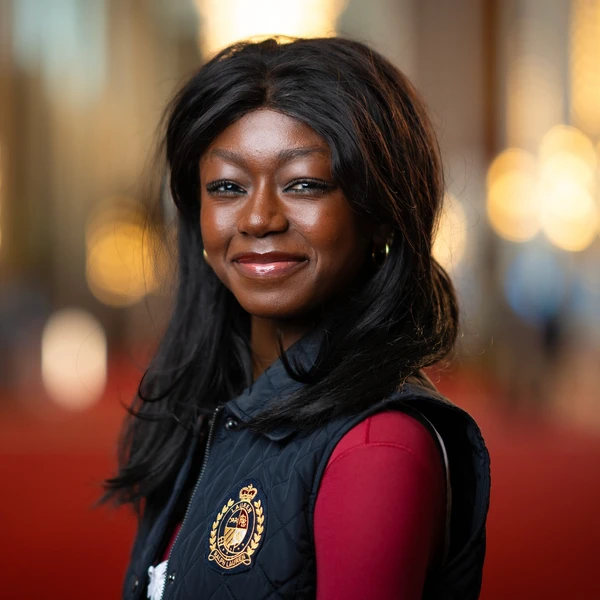
My name is Gabrielle Marques, but most people call me Brielle. My dream is to leave my mark on the world. Born with a love of the stage, I've worked tirelessly to accomplish my goals, even though the odds have been stacked against me. From growing up in a single-parent household, to losing both my parents in my teens, and facing the adult world alone, I have held on, wishing better for myself. Where doors were closed, I opened windows, finding my way into spaces that were closed off to people with my background. And once I succeed, I want to pass the wealth to others. I never want a little girl to give up her dreams because of the glass walls she was born outside of. From volunteering with low-income households to teaching young people about environmental consciousness, I will find a way to create equal opportunity for all.
Education
Howard University
Bachelor's degree programMajors:
- Drama/Theatre Arts and Stagecraft
Miscellaneous
Desired degree level:
Master's degree program
Graduate schools of interest:
Transfer schools of interest:
Majors of interest:
- Drama/Theatre Arts and Stagecraft
Career
Dream career field:
Performing Arts
Dream career goals:
Performing on Broadway, and eventually making my way to LA for a screen career!
Student Intern
Kennedy Center2025 – 20261 yearOffice Assistant
Howard University2025 – Present1 yearDance Instructor
RiseUp Stars2025 – 2025
Sports
Dancing
Club2012 – Present14 years
Awards
- Montclair State University Theatre Night Awards Outstanding Choreography
- Montclair State University Theatre Night Awards Outstanding Achievement by a Dance Ensemble in a Play
Arts
Villagers Theater
Theatre2023 – 2023BAC Community Players
TheatreSpring Awakening2024 – 2024PaperMill Playhouse
Theatre2022 – 2024
Public services
Advocacy
Planting Seeds of Hope — President2023 – 2024
Learner Mental Health Empowerment for Health Students Scholarship
Mental health has been central to my survival and growth, not just as a student, but as a person. I had my first therapy session at nine years old after a traumatic sexual assault by a family friend’s son. My school required counseling, and although my mother believed I was “possessed,” I didn’t see therapy as strange. It gave me a place to express feelings that had no room at home, where discipline was rooted in fear and religion, and where I often felt like my mind worked differently from everyone else’s. Therapy gave me language to understand emotions I hadn’t even known how to name. That early access to mental health care saved my life more than once.
As I moved into more academically intense environments, mental health became both more important and harder to manage. After earning a full scholarship to one of the top private day schools in the country, I finally felt like I had escaped some of the discrimination I’d faced at my small Catholic school. But I still carried the trauma, and things at home only got harder. My father died. Then, right before my freshman year, my mother was diagnosed with late-stage cancer. She passed away in January of 2022, and I became the only student living on campus alone. I had to suddenly figure out groceries, bills, grief, and schoolwork all at once, while being just fifteen.
In the absence of support systems, I spiraled. I developed a restrictive eating disorder. I self-harmed. I smiled in class while feeling completely alone. At seventeen, I finally saw a psychiatric nurse and began taking medication. It helped, but healing is not linear. I was hospitalized multiple times throughout high school and college—twice after suicide attempts, and twice for panic attacks and self-harm. Each time, I thought my story was over. But I kept waking up. I kept going. And therapy helped me find a way forward.
Mental health matters to me because it allowed me to survive school, performance stress, grief, and identity loss. As a student, it’s what enables me to engage fully and dream big even when life is hard. I’m proud not only of the grades I’ve earned, but of the fact that I am still here, still showing up, still learning how to live. I advocate for mental health by speaking openly about my story. Especially in the performing arts, where vulnerability is part of the work and rejection is constant, I believe it’s essential to create safe spaces. I regularly check in with classmates and castmates, speak about therapy and medication without shame, and remind others that healing is not weakness: it’s courage. When someone is struggling, I offer resources or just listen without judgment. I also push for more access to counseling on campus and advocate for inclusive support, especially for students from marginalized backgrounds who often feel unseen.
I believe everyone deserves the same chance I had at nine: to be heard, to be helped, to find words for what hurts. My mental health journey has shaped how I show up in classrooms, in rehearsals, and in community spaces. It’s why I study hard, perform with heart, and continue advocating for others who are still learning how to keep their light alive.
Diane Amendt Memorial Scholarship for the Arts
WinnerComing into a new school as an eager-eyed middle schooler is not for the weak. Especially if the school is New Jersey’s top private K-12 program, and the middle schooler is a low-income Black girl from a single-parent household. It’s pretty safe to say I had a rough adjustment. But as someone with big dreams to be on a Broadway stage, I never wavered. When I heard I would be required to take a dance class, I was overjoyed. Dance had become too expensive for my mother, so I had to quit. Being able to continue in any way sounded like a dream. Enter Ms. Wheeler, the grumpy old dance teacher whom the older kids warned me about. Coming from a studio where every instructor fit that description, I was prepared for the worst. What I found instead was one of the most kindhearted and eccentric women I’ve ever met, who shaped me not only as a dancer but as a human.
Going through her first class was a challenge. Her curriculum was built heavily on physical connection and playing with movement, which is a 12-year-old boy’s worst nightmare. On top of that, her tendencies to trail off, rant, and very severely reprimand sealed her reputation as one of the “worst teachers.” People often tried to mess with her, play mean tricks, or just straight up ignore her instructions. It was honestly painful to watch. In some ways, I related to her. Being an oddball is a target on your back, and it’s hard to share your passion with people who are convinced you have nothing interesting to offer. Personally, I loved her class. With the little background in dance I had, I was able to slip into my most authentic self, achieving movement in new ways. That fluidity spilled into my stage work, turning me into a proficient actor. Thanks to the building blocks her class provided, I was not only equipped to survive a dance call, but I also became recognized as a phenomenal actor and performer, even going on to win awards for my performances.
As I transitioned to high school, I saw her less and less, limited to her occasional choreography days (which everyone but me dreaded). Even though she wasn’t as involved in the shows, I found ways to connect with her. I started a dance team and had her come in to watch and critique. I volunteered to help with the middle school shows, turning into a choreographer and stage manager all in one. I even assumed Dance Captain roles for the high school plays and musicals, using my comfort with movement to create scenes and choreography that has also won me awards. And she continued to support me as well. She would always send me videos and fun techniques to further my understanding of movement. She was there to listen as my mom got sicker and sicker. She was at her funeral. And when I somehow survived to see the end of my senior year, she awarded me one of the most special gifts I’ve ever received: The SawZolli Dance Award, a school recognition for someone’s exceptionalism in dance. This meant so much, as a girl who was self-taught in an industry where everyone had access to years of formal classes. She taught me that my dreams can always be achieved, no matter my background. I continue to work hard at dance as a BFA Musical Theatre student. I may be a step behind, but it’s no matter. I know she has set me up for greatness better than any other professor could.
Ethel Hayes Destigmatization of Mental Health Scholarship
Having your first therapy session at nine years old messes with you. Especially when your mom becomes convinced you're possessed by the devil. After a traumatic sexual assault by a family friend’s son, my school required me to see a counselor. I didn’t see what was so strange about therapy. If anything, it was fun. I could talk about my big feelings to someone who didn’t connect everything to angels or demons, as my belief in either was already floating away. I talked about how it felt to be left out, not just because of my skin color but because my brain worked differently. As the only child of a single immigrant mother whose way of parenting leaned heavily on fear, I was more aware of dark topics than other kids. After the assault, I escaped into daydreams that blurred imagination and reality. I wasn’t exactly “playground buddy” material. But even then, I was lucky. That early access to mental health care gave me language and tools that would save my life later on.
Elementary school was only the beginning of a long, complicated relationship with mental health. When the discrimination at my small Catholic school became too much, my mom decided I needed a better environment. After two years of exam prep and interviews, I was accepted into one of the top private day schools in the country on a full scholarship. I thought I had escaped. It didn’t matter that I was slipping behind in math or that my new classmates avoided me once they learned I was poor. I had made it. But tension with my mom grew. As I started forming my own ideas, we clashed more often. That only got worse when we found out my father had died. Even though he had been absent for most of my life, I mourned him, imagining the loneliness of his final days. We returned to therapy, this time as a mother-daughter duo trying to understand the grief that neither of us could quite name. Then, right before my freshman year, my mom was diagnosed with stage 3 cancer. She worked a job with no benefits and couldn’t access much care. She died on January 31st, 2022. My world collapsed. I moved onto my school’s campus, alone, becoming the only student living there full time. I had to grow up overnight, and therapy had to wait. I didn’t have time to cry. I had to buy groceries, pay bills, and figure out what came next.
Without structure or support, I fell into one of the darkest periods of my life. I began self-harming. I developed a restrictive eating disorder that still lingers. I showed up to school each day with a big smile, but I was crumbling. No one knew how bad it had gotten. It wasn’t until I turned seventeen that I saw a psychiatric nurse and was prescribed medication for depression and anxiety. For a while, I felt like I could breathe. But healing is not a straight path. Throughout my senior year and first year of college, the eating disorder consumed my life. I lost interest in performing, my biggest joy. I lost hair. I lost friends. I stopped going to events and skipped appointments. I believed no one could help. I was hospitalized four times: twice for suicide attempts and twice for self-harm. I thought I had reached the end. I had no money, no family, no safety net. But somehow, I kept waking up. And I wondered why. I had always believed I would die young. Each day after turning 18 felt like I was on borrowed time. When people hear my story, they often ask how I survived. I usually shrug and smile, but the truth is that I do not know. And I have always worried that whatever invisible thing kept me alive might someday disappear.
My life has been a strange mix of chaos and hope, of pain and pure, childlike joy. The lows have dragged me down to places I never imagined. But each time I hit bottom, something pulled me back. I have survived abuse, grief, hospitalizations, and loneliness. And every time, I thought I was done. But something kept me here. Desperation is not pretty, but it means you still want something. You want to see what happens next. You want to sing again. You want to laugh with someone. That flicker of wanting can carry you through. Therapy taught me that asking for help isn’t showing weakness. It shows strength. I’m forever grateful I had access to it early on. It helped me accept medication, reach out for support, and step away from danger. And now, I try to pay that forward. As a performer, I know how emotions run high. I believe support systems are vital. I talk to classmates about therapy. I share resources. I make it known that mental health matters. I remind others that healing is never shameful. It is brave.
I know what it feels like to believe you cannot go on. And I know what it feels like to go on anyway. My story has not been clean or easy. I have lived through things that I do not always know how to explain. But I am still here. I still sing. I still dream. I still wake up wondering what comes next. That small, flickering light never really went out. It just needed care. Therapy gave me the tools to keep that light alive, and I believe everyone deserves the same chance. Whether they perform onstage or behind the scenes, whether they speak about their feelings loudly or quietly, they deserve to be seen. And they deserve to be helped. I am proud of the life I am building. Not just because I survived, but because I am learning how to live.