Hobbies and interests
Journaling
Writing
Reading
Advocacy And Activism
Foreign Languages
Community Service And Volunteering
Philanthropy
Bible Study
Poetry
Art
Coding And Computer Science
STEM
Photography and Photo Editing
Graphic Design
Liberal Arts and Humanities
Reading
Self-Help
Contemporary
Criticism
Novels
Humanities
Mystery
Philosophy
Social Issues
Art
Adult Fiction
I read books multiple times per week
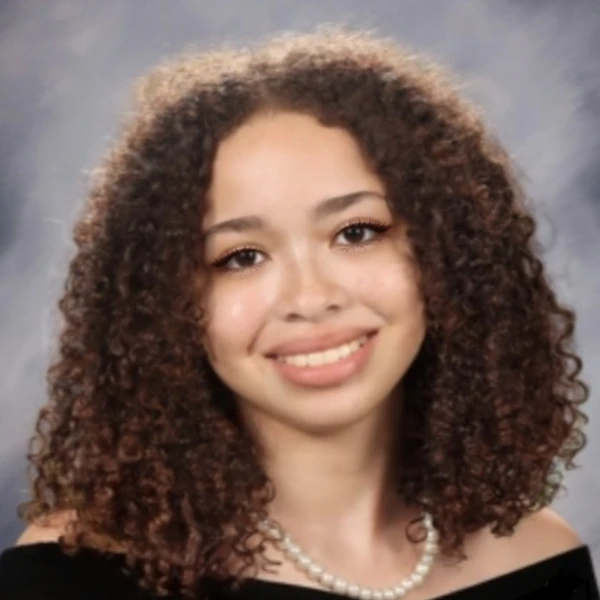
Gabrielle Manning
7x
Nominee2x
FinalistGabrielle Manning
7x
Nominee2x
FinalistBio
I am an aspiring programmer dedicated to creating accessible, user-centered digital experiences. My passion for programming, UI design, and web development drives my mission to empower underrepresented individuals, especially those who are neurodivergent, to navigate the digital world effectively.
As an autistic BIPOC individual, I leverage my attention to detail and pattern recognition skills to identify design flaws that might go unnoticed by others. I believe that thoughtful UI design can significantly enhance usability for everyone.
I am eager to expand my technical skills and advocate for inclusive technology through scholarship opportunities. My ultimate goal is to create impactful digital solutions, foster connections, and contribute to a more inclusive technology landscape for all.
Education
Kennesaw State University
Bachelor's degree programMajors:
- Computer Science
Minors:
- Computer Programming
Rome High School
High SchoolMiscellaneous
Desired degree level:
Bachelor's degree program
Majors of interest:
- Computer Programming
- Computer Science
- Computer Software and Media Applications
Career
Dream career field:
Computer Software
Dream career goals:
UI Developer / Web Developer
Freelance Blog Writer
Freelancing / Self-Employed2024 – Present2 years
Sports
Track & Field
Club2017 – 20247 years
Awards
- Ranked 7th in State ( Shotput Throw )
Arts
NWGHA ( Northwestern Georgia Housing Authority )
Visual Arts"What Home Means To Me" ( Placed 1st )2024 – 2025
Public services
Volunteering
RHS Writer's Club — Cofounder2024 – PresentAdvocacy
NWGHA ( Northwestern Georgia Housing Authority ) — Special Needs Advocate / Youth Ambassador2024 – Present
Future Interests
Advocacy
Volunteering
Philanthropy
Entrepreneurship
Scorenavigator Financial Literacy Scholarship
Every time I think about money, I feel the looming fear of losing everything && the struggle for survival. I remember when my family lost our home just as I was about to start high school. It was a tough time; stability felt out of reach, && I was scared of being separated from my family. That fear has shaped my understanding of how deeply money impacts our comfort, safety, && sense of belonging.
I often reflect on my mom, who had lupus && was exhausted all the time but never gave up. Despite our financial hardship, she made sure we had what we needed, carefully rationing every dollar. Her strength during those difficult times impressed upon me the importance of resilience and resourcefulness.
Looking back, those hard times taught me more about money than any book ever could. I learned the crucial difference between needs and wants. Money is not just for spending; it’s a tool for planning, protecting, && surviving. Understanding how to handle finances is essential for everyone.
Even during our darkest days, my mom continued searching for ways to improve our situation, staying up late to find solutions. She taught me that progress might not happen all at once, but perseverance is key. She was always looking for ways to ease our financial struggles.
Now, things are better. The lessons I learned about money are invaluable. I have jobs that support myself && my family, and each paycheck represents not just cash but also peace of mind. I’ve adopted budgeting habits && carefully consider every purchase because I never want to return to that difficult time. As I prepare for college, I know I must be even more diligent with my finances. I want to learn about student loans && avoid wasting money while building habits that ensure stability. My goal is not only to succeed academically, but also to create a future where financial stress doesn't overshadow my life. Taking care of myself && my family is my priority, && money management is crucial in achieving that.
Moreover, I aspire to help others who experience financial stress. Having lived through that uncertainty, I understand the burden it creates. I want to continue learning && use my knowledge to support my family && community in feeling more financially secure. Educating others on handling their money && finances is a mission I’m passionate about.
My journey with money began in fear && uncertainty but transformed into resilience and understanding. My mother taught me that even when everything seems to crumble, we can still build something strong. She instilled in me the value of education as a lifeline, a means to use money wisely && advance our situation.
Now, I am focused on creating a future where money isn’t solely about survival; it’s about rebuilding && thriving. I am determined to prove that stability, progress, && hope are achievable.
Code Breakers & Changemakers Scholarship
I never had a perfect, step-by-step plan for my future. No one in my family works in tech, and I didn’t grow up surrounded by engineers or programmers. What I did have, though, was curiosity. Whenever I used an app or website, I didn’t just think, *“Oh, that’s cool.”* I thought, *“How does this actually work?”* That simple question is what pulled me toward programming and eventually toward the STEM field.
At first, coding felt intimidating. Lines of symbols and brackets looked like a different language. But once I started learning, something clicked. I realized programming is really about logic and problem-solving. It’s about breaking big problems into smaller ones and figuring them out step by step. I loved the feeling of writing code, running it, and seeing something I created actually function. Even when it didn’t work, I liked the challenge of fixing it. Debugging didn’t feel like failure — it felt like solving a puzzle.
Being a first-generation college student has also shaped why I care so much about STEM. When I started thinking about college, everything felt confusing — financial aid forms, scholarships, deadlines, and requirements no one had explained to me before. I had to figure out a lot on my own while balancing school and work. There were times when it felt overwhelming, like I was trying to solve a problem without having all the information. But those experiences made me more determined. They taught me how to research, ask questions, and keep going even when I felt lost.
I’m also on the autism spectrum, which has influenced the way I see the world. Growing up, I sometimes felt misunderstood. Some people assumed I couldn’t handle challenges, while others thought I didn’t need support because I seemed “high functioning.” That in-between space was exhausting. Over time, though, I started to see that the way my brain works is actually a strength — especially in STEM. I notice patterns quickly. I pay attention to small details. I can focus deeply on a problem for hours. In programming, those traits aren’t weaknesses; they’re advantages.
What really motivates me is realizing how much technology shapes people’s lives. The systems that control education, financial aid, healthcare, and communication are all built with code. If those systems are confusing or poorly designed, people get left behind — especially students from underserved communities. I’ve experienced that confusion firsthand. That’s why I don’t just want to work in tech; I want to improve it.
I’m especially interested in creating tools that make complicated systems easier to understand. I want to help design platforms that are accessible, clear, and inclusive — especially for first-generation and neurodivergent students like me. Technology shouldn’t make people feel small or overwhelmed. It should empower them.
STEM isn’t just a career choice for me. It’s a way to solve real problems and create opportunities where there weren’t any before. I may be the first in my family to take this path, but I’m determined to make sure I’m not the last.
Laurette Scholarship
Growing up with autism has presented its fair share of challenges, particularly the constant comparisons to my peers who often perceived my way of thinking as different.
From a young age, especially after my diagnosis at the Marcus Institute when I was just 32 months old, I faced ridicule from those who lacked a true understanding of my experiences and capabilities. Initially, I thought I could bridge this gap by over-explaining myself, desperately seeking validation from those who couldn't place themselves in my shoes. Yet, by the end of my 8th grade year, spilling over into my freshman year of high school, I learned a powerful lesson: actions often speak louder than words.
Taking that lesson into account, I channeled my energy into establishing writing clubs at every school I attended. These clubs became a platform not only for my passion for writing but also a space for fostering creativity and self-expression among my peers. Balancing these responsibilities along with my coursework, I thrived academically, achieving exceptional scores on my AP exams.
The journey wasn’t always smooth, however. The frequent changes in my environment due to family circumstances brought chaos and uncertainty. But it was within it that I found my voice and learned to advocate for others, bringing writing to the forefront as a vital skill that can both make or break communities. And I chose the former.
This drive for advocacy and community building is deeply rooted in my own experiences. I stand as a testament to the achievements that can be unlocked with support, determination, and understanding. My diagnosis opened doors to therapeutic guidance that shaped me into who I am today. The encouragement from occupational and speech therapists illuminated my path, helping me confront and trump the limitations imposed by society's misconceptions about individuals on the spectrum.
As I embark on the next chapter of my education, I am eager to channel this experience into a broader narrative of advocacy for those like me who were constantly doubted.