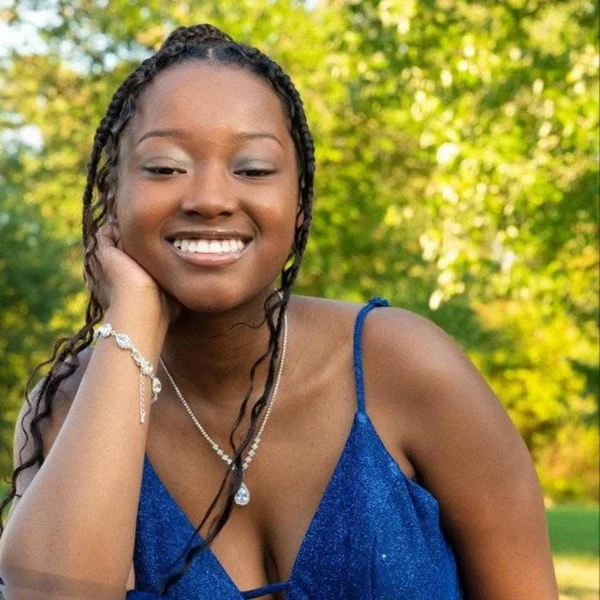
Age
18
Gender
Female
Ethnicity
Black/African
Religion
Christian
Church
Baptist
Hobbies and interests
3D Modeling
Coding And Computer Science
Business And Entrepreneurship
Gaming
Speech and Debate
STEM
Cybersecurity
Engineering
Mathematics
Volunteering
Robotics
Piano
History
Reading
Classics
Fantasy
History
Magical Realism
Action
I read books multiple times per week
Gabrielle Lewis
1x
Finalist1x
Winner
Gabrielle Lewis
1x
Finalist1x
WinnerBio
I am a senior from the Northern Neck of Virginia planning to study Computer Engineering at the University of Virginia. I am interested in cybersecurity and technology systems, and I want to use what I learn to improve internet and technology access in rural communities like mine.
As President of Beta Club and captain of my Scholastic Bowl team, I have developed leadership and teamwork skills while helping my teams perform well at the regional and state levels. I am also a 1st Place State Speech Champion and have earned other state-level recognition in U.S. History and engineering competitions. I completed a three-year engineering program at the Northern Neck Technical Center, where I learned CAD, robotics, and programming. I programmed a food-serving robot and worked with drones to map areas and create digital maps, and I competed at the state level as a lead programmer.
Outside of school, I taught myself how to build and upgrade computers and have helped people in my community fix and improve their devices. Growing up in a rural area with limited access to reliable technology has shaped my goals. In the future, I hope to use engineering and public policy to help expand access to technology and improve communities across Virginia.
Education
Rappahannock Community College
Associate's degree programMajors:
- Engineering Science
Rappahannock High
High SchoolMiscellaneous
Desired degree level:
Bachelor's degree program
Graduate schools of interest:
Transfer schools of interest:
Majors of interest:
- Computer Engineering
- Public Policy Analysis
Career
Dream career field:
Computer Software
Dream career goals:
Technology Policy Analyst
Barbershop Assistant
Slim's Barbershop2023 – 2023
Sports
Track & Field
Varsity2022 – 20242 years
Research
Computer Engineering
Northern Neck Technical Center — Independent Student Researcher2024 – 2025
Arts
360 Beauty Academy
Computer Art2024 – Present
Public services
Volunteering
National Beta Club — I am the President, and I lead and organize club meetings, plan and manage service projects, and support members in contributing to the school and community. I have contributed over 60 hours.2023 – PresentAdvocacy
Bill of Rights Institute — Fellow (1 of 20 students selected nationally)2026 – PresentVolunteering
National Technical Honor Society — Treasurer2024 – 2026
Future Interests
Advocacy
Politics
Volunteering
Philanthropy
Entrepreneurship
Patricia Lindsey Jackson Foundation - Eva Mae Jackson Scholarship of Education
Faith used to feel like the unknown to me. Whenever people talked about faith, I thought about not knowing what would happen next. My parents were separating, I was failing classes, and everything felt like it was falling apart. Looking back now, faith was the one thing telling me my life was bigger than that moment. By seventh grade I had nearly failed every class. I remember feeling embarrassed and stuck. My eighth grade year changed that. I learned how to calm the chaos inside of me. I relearned math. I started doing my work. I started believing my future was not already decided. Faith did not do my assignments or take my tests. It gave me a reason to keep trying when quitting felt easier.
That decision changed my life. I took a chance and applied to my local technical center for a three year engineering program. I walked in shy and quiet and left with confidence I never thought I would have. I learned to pilot drones, create aerial maps, code, and build robots. I became the lead driver for our robotics team and helped guide my team through competitions. I also learned how to lead under pressure and communicate with people I used to be too nervous to talk to. I turned piles of metal, wheels, wires, and batteries into robots that could serve food and drinks. Every skill showed me I was capable of more than I thought. Faith gave me the confidence to take opportunities I would have avoided before.
Engineering taught me to look at problems differently. Through drone work I started thinking about internet access in my community. I grew up in a rural area where some families still do not have reliable internet. Something as simple as homework or job applications becomes harder depending on where you live. That made me realize I do not just want to learn engineering. I want to use it to solve real problems that affect people like me. I hope to study how technology can help close gaps like this because no student should have fewer opportunities because of their zip code.
Faith also shaped how I see success. Success is not just a degree or a job. It is using what you learn to help someone else. Every year I help coach around ten YMCA basketball players between ages six and eight with my dad. I teach discipline, teamwork, and how to keep going when things get hard. I have seen kids go from giving up easily to finishing games with confidence. I also volunteer at elementary school dances and run the photography station. It may seem small, but I like helping create memories for kids and their families that last beyond the moment.
My family pushed me toward higher education more than anyone. Neither of my parents went to college. I watched them work long hours and sacrifice for our family. That made me want more, not to leave them behind, but to honor what they did for me and change what is possible for my future family. I want to become the first person in my immediate family to earn a four year degree and show younger people in my family that college is possible.
Two teachers changed my life. Mr. Brown taught me personal finance and how to make smart decisions early. Mr. Collins, my English teacher and Scholastic Bowl coach, changed something deeper. When I felt out of place or unsure about being one of the few Black women in engineering, he made me feel like I would fit in every room. He gave me books, introduced me to new writers, and showed me that my background did not limit where I could go.
That lesson stayed with me. I want to bring workshops, professionals, and job shadowing opportunities back to my technical center and community so students can see what is possible for them. Faith reminds me my story is not just about me. My education is giving me tools to help others. Mr. Collins made me feel like I would fit in every room. My goal is to spend my life helping other students feel like they belong in every room they enter.
Instagram: gabby_lewis_08
Facebook: gabby.lewis.739
Scorenavigator Financial Literacy Scholarship
Money was not something I paid much attention to when I was younger. My parents worked hard, and I assumed that was how life worked. Things changed after they separated. Financial challenges that had always existed became much more visible. My father struggled with credit card debt, while my mother faced student loans and other financial obligations after spending several years unable to work because of bipolar disorder and schizophrenia. Responsibilities continued to pile up even when circumstances made it difficult to earn an income. Watching both of my parents navigate those situations showed me how quickly financial stability can change and how long financial decisions can follow someone.
Those experiences shaped the way I viewed college. I have always wanted to become the first person in my immediate family to earn a bachelor's degree, but I knew paying for college would not be simple. My family lives largely paycheck to paycheck, so the cost of higher education often felt overwhelming. While many students focus on choosing a college, I spent a lot of time thinking about how I would afford one. Scholarship applications became a regular part of my routine because every award represented one less financial burden waiting for me after graduation.
This year, I enrolled in a personal finance course that changed the way I think about money and planning for the future. Before taking the class, terms like Roth IRA, investing, and credit utilization meant very little to me. My teacher made those concepts feel practical rather than intimidating. The class connected many of the financial situations I had seen growing up with the decisions people make every day. For the first time, I understood how small choices made early can affect opportunities years later.
My teacher also became an important mentor during my senior year. He regularly shared scholarship opportunities and encouraged me to pursue programs that I might have otherwise overlooked. Those conversations often extended beyond the classroom and gave me access to resources I did not know existed. As a first-generation college student, there was no guidebook sitting at home explaining scholarships, financial aid, investing, or long-term financial planning. Having someone willing to share that knowledge made a significant difference in how I approached my future.
This fall, I will attend the University of Virginia to study computer engineering. Financial education has influenced how I plan to approach that opportunity. My goal is to graduate with as little debt as possible, continue applying for scholarships, and make responsible financial decisions throughout college. The idea of investing early is something I plan to carry forward because I have seen what happens when financial planning is delayed or becomes impossible due to unexpected circumstances. Financial stability will allow me to focus on building a career, supporting my family, and creating opportunities that previous generations in my family did not have.
When I think about financial literacy, I think about opportunity. I think about the conversations I overheard growing up, the sacrifices my parents made, and the mentor who took the time to teach me things I had never learned before. Financial education has given me tools that many people do not receive early in life. I plan to use those tools to build a stable future for myself, help support my family, and ensure that financial barriers do not limit what I am able to accomplish.
Sgt. Albert Dono Ware Memorial Scholarship
When I think about service, sacrifice, and bravery, I think about the choices people make when there is no expectation of recognition. Those values are reflected in the life of Sgt. Albert Dono Ware, whose commitment to serving others left a lasting impact on his community and country. His legacy resonates with me because many of the most important lessons in my life have come from serving others, overcoming challenges, and working toward goals that extend beyond my own success. My experiences as a volunteer, student leader, and aspiring engineer have shown me that meaningful change often begins with ordinary people who decide to contribute where they can.
Service became important to me because of the community where I grew up. In Virginia's Northern Neck, people often rely on one another, and I learned early that strong communities are built by individuals willing to give their time and energy to help others. Through Beta Club and the National Technical Honor Society, I participated in service projects that ranged from helping at community events to organizing activities for younger students. I volunteered at elementary school dances, Christmas programs, and local gatherings where I served food, handed out prizes, and assisted families. I also worked with younger children through YMCA basketball and watched many of them become more confident over time. Most of these experiences were not large-scale projects, yet they taught me that service is often found in consistency. Showing up, helping others, and building relationships can strengthen a community just as much as any major initiative.
The value of sacrifice became clear during some of the most difficult years of my life. During the pandemic, my parents' separation and challenges at home affected nearly every aspect of my daily routine. My motivation disappeared, and I struggled academically. At one point, I failed almost every class because I had convinced myself that school no longer mattered. Eventually, I realized that the future I wanted would not be handed to me. Rebuilding my grades required discipline, persistence, and a willingness to hold myself accountable. Leadership roles, volunteer commitments, and academic goals demanded time and effort that could not be replaced by shortcuts. Those experiences taught me that sacrifice is not always dramatic. Sometimes sacrifice means choosing long-term growth over temporary comfort and continuing to move forward when giving up would be easier.
Bravery, in my view, is the willingness to confront challenges rather than accept them. One challenge that shaped me was growing up with unreliable internet access. Completing schoolwork could become frustrating when assignments would not load or submit because of connectivity issues. Over time, I realized that this was not simply an inconvenience. Access to technology often determines access to opportunity. That realization sparked my interest in computers and engineering. I began teaching myself how to build and upgrade computers, learning through research and experimentation. Eventually, that interest led me to the engineering program at the Northern Neck Technical Center, where I worked with robotics, programming, and drone technology. Solving technical problems showed me how innovation can improve people's lives and inspired me to pursue computer engineering at the University of Virginia.
My experiences have shaped how I view the challenges facing the African diaspora in the United States. One issue that stands out to me is unequal access to opportunity. Many students have the talent and determination to succeed, but their opportunities are often limited by factors outside of their control. Access to strong educational programs, reliable technology, mentors, and career exposure can vary greatly depending on where someone grows up. Having grown up in a rural community, I understand how easy it is for potential to go unnoticed when resources are limited. Many communities within the African diaspora face similar barriers that make it harder to access opportunities that others may take for granted.
Expanding educational and technological opportunities is one of the most important reforms our communities can pursue. Reliable internet access, STEM programs, mentorship initiatives, and career exploration opportunities can help students discover possibilities they may never have known existed. My own future changed when I enrolled in the engineering program at the Northern Neck Technical Center and gained hands-on experience with robotics, programming, and technology. More students deserve opportunities like that. I hope to use my education in computer engineering to help create pathways for students from underserved communities and show them that their goals are achievable regardless of where they come from. Access alone is not enough; students also need people who believe in them and help them recognize their own potential.
Creating lasting change requires people from many different backgrounds working together. Schools, community organizations, businesses, universities, and government leaders all have a role to play in expanding opportunities and supporting the next generation. Community members themselves should be included in those conversations because they understand their needs best. As a first-generation college student who plans to attend the University of Virginia, I hope to use my education to serve others in the same way so many people have invested in me. Sgt. Ware's legacy reminds me that service is measured by the impact we leave on others. Through leadership, community involvement, mentorship, and a career dedicated to helping people, I hope to honor those values of service, sacrifice, and bravery throughout my life.
Julia Elizabeth Legacy Scholarship
Diversity in STEM matters to me because it changes what problems get noticed, how they get solved, and who those solutions are actually built for. I didn’t really understand that at first. I just knew what it felt like to grow up in a place where internet connection wasn’t always stable. In the Northern Neck of Virginia, I got used to refreshing pages, redoing assignments, and hoping things would load when I needed them to. It was frustrating, but it was also normal. Over time, I started realizing that “normal” is different depending on where you live and that difference matters more than people think when it comes to technology.
This is one of the reasons I care about who is in STEM. In my experience at the Northern Neck Technical Center, I saw how much creativity comes out when you’re actually building things working with robotics, coding, and drones. I also noticed something else: the ideas we naturally think of are shaped by what we’ve lived through. For me, that meant thinking about access. That’s where my interest in using drones to help extend internet coverage in rural areas came from. It wasn’t a “big innovation idea” in my head it was more like, if I’m dealing with this problem every day, why wouldn’t I at least try to understand how it could be improved? That kind of thinking depends on lived experience, and when STEM doesn’t include people with different experiences, certain problems don’t get the attention they deserve at all.
Technology is often described as something that connects people, but I’ve learned it doesn’t automatically connect everyone equally. It reflects the people who design it. If most of the people building systems have similar backgrounds, then the same gaps tend to stay there. In my own life, unreliable internet didn’t just mean inconvenience it meant extra stress trying to keep up in school, even when I was doing everything right. I know that’s not just my experience. It’s something a lot of rural and underserved communities deal with quietly. That’s why representation matters. Not just in a surface-level way, but in a real, practical sense because it affects what problems get solved and who those solutions reach.
As a first-generation Black woman going into computer engineering, I don’t see myself as just entering a field I see myself stepping into a space where perspectives like mine are still not as common. I know that matters, not because it defines everything I do, but because it means I may notice things differently, ask different questions, and think about users who are often left out of the conversation. I don’t think representation alone fixes everything, but I do think it changes what is possible. It opens doors, not just for individuals, but for the kinds of ideas that get built in the first place.
To me, diversity in STEM is about whether the future we’re building actually reflects the world we live in. If it doesn’t, then important problems get missed. If it does, then technology becomes something that works for more people, not just some. That’s what I want to be part of building systems that feel a little more complete, because more voices were included in shaping them.
Anderson Engineering Scholarship
I grew up in the Northern Neck of Virginia, a place where most people around me worked long hours in blue-collar jobs and still struggled to stay ahead. That environment shaped how I view education. I want to be the first person in my immediate family to earn a bachelor’s degree, not only for my own future but to show younger family members that different paths are possible. Engineering became meaningful to me through real problems I experienced, not just something I read about in school.
Unstable internet access at home often made schoolwork stressful in ways that felt out of my control. I would repeatedly refresh pages while trying to submit assignments, hoping everything went through before deadlines. Around the same time, the Colonial Pipeline ransomware attack in 2021 showed me how deeply technology affects everyday life. Hearing that a cybersecurity issue could disrupt gas supply across the East Coast made me realize that engineering is not separate from daily life. It shapes how people live, work, and stay connected, even in ways most people do not immediately see.
That realization pushed me to start learning how technology actually works. I began building and upgrading computers on my own by researching parts, watching tutorials, and learning through trial and error. Installing RAM and an SSD in my own system was a turning point where I started to feel confident working with hardware. Over time, I helped others in my community fix slow or broken computers, which showed me how small technical improvements can make a real difference in someone’s daily life. Those experiences made me want to go deeper into engineering instead of just using technology.
My most meaningful hands-on engineering experience has come from the Northern Neck Technical Center engineering program, where I have studied CAD, robotics, programming, and drones. One of the most impactful parts of this program has been working with drones in a way that goes beyond just flying them. We completed mapping projects where I helped plan flight paths by considering altitude, coverage area, and environmental obstacles such as trees and uneven terrain. During flights, I monitored stability and camera feed to make sure the data being collected stayed accurate and consistent. Afterward, we analyzed aerial images to understand how land, distance, and structures appear from above. Seeing familiar areas from that perspective changed how I think about scale and problem solving, especially in rural environments like mine where geography directly affects connectivity and infrastructure.
That experience led me to think more deeply about how drones could help improve internet access in places with limited infrastructure. In rural communities, distance between homes, trees, and lack of strong infrastructure often weaken or block signals entirely. I started thinking about how drones could act as temporary signal relay points, positioned at higher altitudes to extend coverage into areas where traditional towers struggle. While this idea is still something I hope to develop further in college, it reflects how I approach engineering now, looking at real problems and thinking about practical, technology based ways to improve them. At the University of Virginia, I plan to study computer engineering so I can better understand how systems are built, how they fail, and how they can be improved for communities that are often overlooked. I also hope to represent students from backgrounds like mine in a field where we are still underrepresented, so others can see that engineering is a path they belong in too.
David Foster Memorial Scholarship
The first time I went to Scholastic Bowl practice, I buzzed in too fast and got the question wrong. The room went quiet for a second, and I remember wishing I hadn’t said anything at all. It would have been easy to just sit back and not try again. Mr. Collins didn’t make a big deal out of it. He just looked at me and said, “Try again next time.” That moment stayed with me more than getting the question right ever would have.
I met Mr. Collins in ninth grade in his English class, and he was also my Scholastic Bowl coach. At that time, I kept to myself. I paid attention, I did my work, and I stayed quiet. Speaking up felt like a risk I didn’t need to take. He noticed that without me ever saying it. Instead of letting me stay in that space, he kept pulling me into things I wasn’t sure I was ready for. Scholastic Bowl was one of them, even when I didn’t show up the first time he invited me.
In class, he didn’t teach like anyone else I had before. He brought in books from his own shelf and handed them to me like he expected me to understand them, even when I didn’t think I could. I read The Great Gatsby and Dandelion Wine earlier than I was supposed to, and most of the time I had to slow down and reread parts just to keep up. He also introduced me to artists like Rembrandt and Manet. That wasn’t something I had ever paid attention to before. Where I come from, those kinds of things aren’t really part of everyday conversation. He talked about them like they mattered, so I started to believe they did too. Over time, I went from not recognizing those names at all to being able to answer questions about them in competitions.
Practice started to feel different after a while. I stopped waiting for someone else to answer first. I started buzzing in even when I wasn’t fully sure. Some answers were still wrong, but that didn’t matter the way it used to. By my senior year, I was the one leading the team as captain. That didn’t feel like something that just happened. It felt like something he had been building in me from the beginning, even when I couldn’t see it yet.
The biggest moment came during the college application process. I remember sitting there thinking about where I come from and whether I really belonged at a place like the University of Virginia. That doubt felt heavy. Mr. Collins didn’t hesitate. He told me that if I didn’t get in, then they didn’t deserve me. That wasn’t just encouragement. It changed how I saw myself. When I got accepted, he was one of the first people I told. It felt right, since so much of that moment came from the way he had pushed me to think differently about what I was capable of.
Mr. Collins didn’t just teach English or coach a team. He changed the way I move through things. Taking chances feels different now. Staying quiet doesn’t feel safe in the same way it used to. There’s a difference between knowing something and believing you deserve to say it out loud. He helped me cross that line. That change is something I carry with me now, and it’s something I know will keep shaping the way I approach my life.
Lyndsey Scott Coding+ Scholarship
I want to study computer engineering because I’ve seen how much technology affects everyday life, even when people don’t realize it. Growing up in the Northern Neck of Virginia, my internet was not always reliable. I would finish assignments and just sit there hoping they would actually submit before the deadline, and sometimes they didn’t. It was frustrating, but it made me realize how something as simple as internet access can affect someone’s opportunities. Around the same time, I learned about the Colonial Pipeline ransomware attack, and it stuck with me because I realized a problem with computers could affect millions of people. That’s when I started paying attention to how important technology really is.
I didn’t start with a big plan. I just started learning. I taught myself how to build and upgrade computers through trial and error, and eventually I started helping people in my community fix theirs. Seeing someone’s computer finally work the way it should may seem small, but it made a real difference to them. At the Northern Neck Technical Center, I got more hands-on experience with programming, robotics, and drones. One project where we used drones to map an area really changed how I thought. It made me wonder if something in the air could help fix problems on the ground, like improving internet access in rural areas.
That idea stuck with me, and I started thinking about how drones could actually be used to carry or extend internet signals to places that don’t have strong connections. In rural areas, distance and terrain can block signals, but something above that could help reach more people. It’s not a perfect solution, but it could help students trying to submit work, families trying to stay connected, and communities that don’t have many options. My goal in computer science is to build systems like this that actually help people in real ways.
I plan to study computer engineering at the University of Virginia and eventually work in the tech field, possibly at a company like Nvidia, where I can help build systems people depend on every day. I am especially interested in cybersecurity because I’ve seen what can happen when systems fail. Outside of computer science, my interest in public policy grew through my experience in the Bill of Rights Institute Fellowship. Through this program, I learned about constitutional principles, civic responsibility, and how laws are created and applied. It made me realize that many decisions about technology, like internet access, cybersecurity laws, and infrastructure funding, are made by people who don’t fully understand how the systems actually work.
In the future, I want to combine both of these paths by using my technical knowledge and my understanding of policy to solve real problems. I don’t just want to build technology, I want to help guide the rules around it so they actually make sense. I want to be involved in shaping policies that improve internet access in rural areas, protect systems from cyber attacks, and make sure new technology is used in a fair and safe way. By understanding both sides, I can help bridge the gap between engineers and lawmakers. As a first-generation college student, this means more to me than just a career. I want to use what I learn to give back to my community and create opportunities for others like me.
Big Picture Scholarship
The movie that has had the greatest impact on my life is The Matrix. I first became familiar with it during a time when my life felt unstable and uncertain. During the pandemic, my parents were separating, my mom was struggling with her mental health, and I had lost focus in school. I failed nearly every class and started to believe that my effort did not matter. Everything around me felt out of my control, and I did not have a clear sense of direction.
After over a year apart, my mom and I finally reconnected. At the time, parts of our house did not have stable electricity, so we were limited to the living room. We would sit together with a small bin of DVDs and watch movies to pass the time. Out of all of them, The Matrix became our favorite. Watching it in that setting made it feel more meaningful than just entertainment. It became something we shared while rebuilding our relationship.
Watching The Matrix during that time gave me a different perspective. The idea that reality is not always what it seems, and that you have a choice in how you respond to it, stood out to me. Neo begins the story confused and unsure, but once he understands his situation, he has to decide whether he will remain stuck or take control. That idea connected directly to my own life. Even though my circumstances were difficult, I realized I still had control over my actions and my future.
Around that same time, my dad asked me a question that stayed with me: “Why does it matter now?” That moment forced me to reflect on my mindset. I began to see education differently. It was no longer just about completing assignments or earning grades. It became a way for me to prove to myself that I could improve and take responsibility for my future. I made the decision to change, and when school reopened, I committed to rebuilding my work ethic and pushing myself academically.
The Matrix also influenced my sense of direction. The film’s focus on intelligent machines and complex systems sparked my curiosity about how technology works. That curiosity led me to explore engineering, where I discovered my passion for computer engineering. I began taking engineering courses, working on robotics, and learning how systems are designed and controlled. Education became more than a requirement. It became a tool for growth and a way to turn curiosity into real skills.
Looking back, The Matrix had a lasting impact on how I see both my education and my future. It helped me understand that while I cannot control every situation, I can control how I respond. That realization pushed me to take ownership of my learning and to use education as a way to grow, lead, and create meaningful impact. I want to use what I learn not only to improve technology, but to give back to my community by helping others gain access to reliable systems and opportunities they may not otherwise have. My goal is to make sure that people are not limited by barriers like the ones I experienced, so they can succeed and reach their full potential.
Post Malone Fan No-Essay Scholarship
Chi Changemaker Scholarship
In my community in the Northern Neck of Virginia, unreliable internet access is a common problem that affects how people learn, work, and stay connected. I first noticed it through my own experience trying to complete schoolwork. Assignments would take too long to load or fail to submit, even after I had finished them. Over time, I realized this was not just my situation, but something many people around me faced, especially students trying to keep up with online work.
That experience motivated me to start addressing the issue in ways I could control. I began by teaching myself how to build and upgrade computers through trial and error. Once I understood more, I started helping others in my community. I have fixed slow computers, replaced parts like RAM and storage, and explained problems in simple terms so people could understand and solve them on their own. These efforts helped people use their devices more reliably for school, communication, and everyday tasks.
Through my engineering program at the Northern Neck Technical Center, I expanded my skills in robotics, programming, and drone technology. One project involved using a drone to map an area, which showed how something in the air could collect information and send it back to the ground. That experience pushed me to think about how drones could be used for more than mapping and how they could connect to real problems in my community.
I am now exploring how drones could act as temporary signal relays to extend internet coverage. A drone could carry communication equipment, connect to a strong internet source like a nearby tower or fiber line, and send that signal down to areas where it normally cannot reach due to distance, trees, or terrain. More advanced systems could use multiple drones working together to pass signals across a wider area, especially during outages or in places without strong infrastructure.
In college at the University of Virginia, I plan to go deeper into this work by studying computer engineering and focusing on communication systems and network design. I want to research how drone-assisted networks can be made more reliable, efficient, and practical for real-world use. So far, my impact has been at the individual level, but I plan to expand my efforts by organizing workshops to teach basic computer skills and continuing to develop solutions that improve internet access on a larger scale.
Jeannine Schroeder Women in Public Service Memorial Scholarship
WinnerA gas shortage is not supposed to start with code. In 2021, during the Colonial Pipeline ransomware attack, I remember hearing people around me talk about gas lines and shortages. At the time, I did not fully understand what had happened, but I learned that it started with a cybersecurity issue. That stuck with me. It was strange to think that something happening on a computer could affect people lining up at gas stations. It made me start paying more attention to how much everyday life depends on systems most people never see.
At the same time, I was dealing with my own smaller version of that problem. Growing up in the Northern Neck of Virginia, my internet was often slow or would cut out at the worst times. I would finish an assignment, hit submit, and then sit there hoping it actually went through. Sometimes I had to refresh the page over and over. Sometimes it failed anyway. It was frustrating in a quiet way, especially when there was nothing I could really do about it. Over time, I started to notice that this was not just my problem. It was normal where I lived.
I did not start with a big plan to fix it. I just started learning. I taught myself how to build and upgrade computers, mostly by trial and error. Once I got more comfortable, I began helping people around me. I fixed slow computers, swapped out parts, and explained what I was doing as I went so it made sense. People would come back and tell me their computer was finally working the way it should, and that stuck with me. It showed me how much something small could make a difference in someone’s day. At the Northern Neck Technical Center, I spent more time working with robotics, programming, and drones. One of our projects involved using a drone to map an area, and it showed me how something in the air could connect with what was happening on the ground.
That idea stuck with me, and I started thinking about how it could connect back to internet access. A drone could act like a signal point in the air, connecting to a stronger source nearby and sending that signal out to places that usually do not get it. In rural areas, distance and trees make it hard for signals to reach homes. A drone placed above that could help carry the connection over those gaps. A few drones working together could pass the signal farther across an area. It is not a perfect solution, and it would not replace regular infrastructure, but it could help students trying to complete assignments, families trying to stay connected, and communities that do not have many other options, especially when service goes down.
In college at the University of Virginia, I plan to keep working on this as a research focus in computer engineering. I want to learn how to design systems like this so they are more reliable and can actually be used in real communities. I also want to keep helping people in simple ways, like teaching basic computer skills or showing someone how to fix their own device. Those small moments matter to me, because I have seen what it feels like to struggle with something you cannot control. I want to keep building on what I have already started so that students growing up in places like mine have better access and fewer barriers than I did.
Sunshine Legall Scholarship
My motivation for pursuing higher education comes from a place I have seen up close for most of my life. I grew up watching people work hard every day and still struggle to stay ahead. In my family and in my community in the Northern Neck of Virginia, long hours do not always lead to stability. Basic things like saving money or planning for the future can feel out of reach. College has never felt like just another step to me. It feels like a chance to change direction. I want to be the first in my immediate family to earn a bachelor’s degree and show that something different is possible.
My interest in computer engineering became more meaningful when I started paying attention to how much technology shapes everyday life. In 2021, during the Colonial Pipeline ransomware attack, I saw how a cybersecurity issue could interrupt fuel distribution across the East Coast. That moment stayed with me because it showed how something most people do not fully understand can still affect millions of lives. It also made me think about how decisions related to technology are made and whether the people affected by those decisions truly have a voice in them. At the same time, I experienced challenges with unreliable internet while trying to complete schoolwork. I remember refreshing pages, hoping assignments would load or submit before deadlines passed. Sometimes they did not. That frustration showed me how internet access can limit what someone is able to do.
That realization pushed me to take action. I enrolled in a three-year engineering program at the Northern Neck Technical Center, where I explored different areas of engineering. I kept coming back to computers because I wanted to understand how they worked. I taught myself how to build and upgrade systems, installing parts like RAM and an SSD and learning how each change affected performance. I also worked on projects such as programming a food-serving robot and using drones to map areas. Solving those problems and seeing results made me want to keep learning more.
Higher education will allow me to take that interest further and turn it into something meaningful. I plan to study computer engineering at the University of Virginia, where I can focus on systems and cybersecurity. I want to understand how technology is built, protected, and maintained. I also want to understand how those systems connect to policy decisions and how those decisions affect people who may not have a voice in them. College represents more than education to me. It is a step toward stability and opportunity.
My reason for attending college goes beyond my own future. I want to use what I learn to give back to the community that shaped me. I have already started helping people fix and improve their computers, and I have seen how even small help can make a difference. I want to expand that impact by improving access to reliable internet in rural areas and creating opportunities for students to explore technology in a hands-on way. I also want to help people better understand how technology and policy connect so they are not left out of decisions that affect their lives. College will allow me to turn that understanding into action.