
Hobbies and interests
Art
Dance
Volleyball
Crocheting
Babysitting And Childcare
Community Service And Volunteering
Reading
Family
Action
Academic
Women's Fiction
I read books multiple times per month
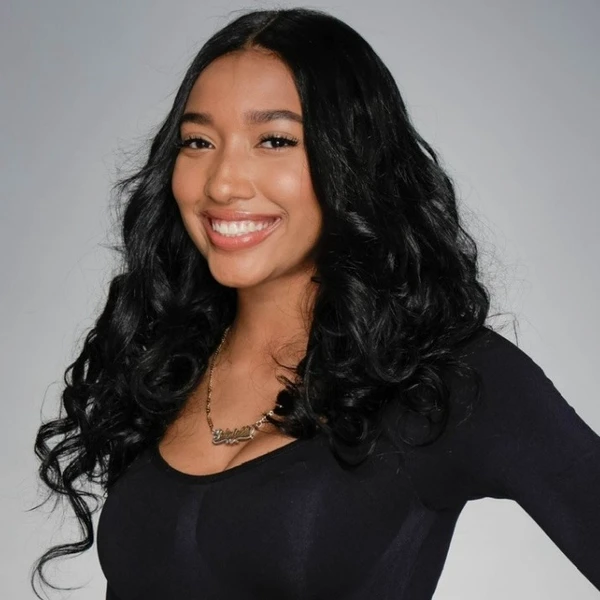
Gabriella Gilbert
1x
Nominee1x
Finalist
Gabriella Gilbert
1x
Nominee1x
FinalistBio
Eager and passionate student who loves to learn! Loves to volunteer and care for others. Want to succeed in the medical field!
Education
Tufts University
Bachelor's degree programMajors:
- Biopsychology
Minors:
- Mental and Social Health Services and Allied Professions
- Human Development, Family Studies, and Related Services
Success Academy High School of the Liberal Arts
High SchoolMiscellaneous
Desired degree level:
Doctoral degree program (PhD, MD, JD, etc.)
Graduate schools of interest:
Transfer schools of interest:
Majors of interest:
- Biological and Physical Sciences
- Biopsychology
- Work and Family Studies
Career
Dream career field:
Medicine
Dream career goals:
Cardiologist
Intern Nurse
Isabella Center for Rehabilitation and Nursing Cancer2023 – Present3 years
Sports
Volleyball
Club2021 – Present5 years
Research
Health and Medical Administrative Services
Luv Michael — Fundraiser Organizer2025 – PresentClinical/Medical Laboratory Science/Research and Allied Professions
American Cancer Society — Legislative Ambassador2023 – Present
Arts
School Club
Visual Artstheater production2021 – Present
Public services
Advocacy
Luv Michael — Fundraiser Organizer2025 – PresentVolunteering
Tutor Programming — Founder2021 – PresentVolunteering
American Cancer Society — Legislative Ambassador2023 – Present
Future Interests
Advocacy
Politics
Volunteering
Philanthropy
Entrepreneurship
Sola Family Scholarship
"¡Pa'lante es para allá!" Growing up, this was the defining anthem of our household. The phrase, meaning "the only way to go is forward," is the heartbeat of Dominican resilience, and it is the exact philosophy my single mother used to anchor our lives. Growing up as an only child under the care of a single mother means witnessing a masterclass in resilience every single day. For my mother, stepping up wasn’t a choice, it was a daily requirement. She bore the financial, emotional, and structural weight of our household entirely on her own shoulders, navigating obstacles with a quiet grace that became the blueprint for my own life. Watching her manage everything taught me early on that strength isn't the absence of hardship, it is the determination to forge ahead despite it..
This lesson became my armor when I entered the classroom. Growing up in predominantly white schools meant being surrounded by a bunch of children who grew up in traditional, two-parent households with generational safety nets. In that environment, the differences were stark. While my peers talked about family vacations and dual incomes, I went home to a mother who was quietly working miracles just to keep us afloat.
Initially, navigating those spaces felt isolating. However, looking at my mother’s journey reframed my perspective. Her sacrifices didn't just ensure my survival, they ignited my ambition. I realized that my background didn’t make me disadvantaged, it made me resilient. I learned to look at the gaps around me not as barriers, but as a call to take absolute charge of my own future.
My mother’s example taught me that true impact requires stepping into leadership. Witnessing her navigate complex institutional hurdles without a safety net inspired me to become a voice for others on campus. I poured my energy into community building and leadership, co-founding a cultural student association at my university to create a sanctuary of belonging for underrepresented students, while concurrently managing operational responsibilities as an officer for both our student medical society and my dance team. I chose to lead because my mother taught me that if a supportive space does not exist, you have the power and responsibility to build it yourself.
Ultimately, my background has entirely shaped my professional vision. Watching my mother handle systemic vulnerabilities alone, combined with my own experiences as a caregiver, fueled my desire to pursue a career at the intersection of healthcare, civic policy, and youth advocacy. I am dedicated to working within the nonprofit and public sectors to dismantle the deep-seated disparities that leave vulnerable families and single parents isolated.
My mother gave her all to ensure I could stand on a stage of opportunity. This scholarship would profoundly alleviate the financial pressures of my undergraduate education, allowing me to focus entirely on gaining the advocacy tools necessary to create a more equitable world. I am building a career dedicated to the public good because of her, to ensure that the systemic gaps my mother had to cross alone are bridged for the generations to come. A single mothers love is like no other, and I wouldn’t trade it for the world.
Charles B. Brazelton Memorial Scholarship
If you ever catch me walking across campus, there is a very high chance I am silently counting to eight over and over again, subtly twitching my arms or shifting my weight. My "awkward" thing is that I am a dancer who is constantly running choreography in my head, completely oblivious to my surroundings. To anyone passing by, I probably look entirely out of place. The process of learning dance is inherently clumsy; it requires making mistakes, looking ridiculous in front of massive studio mirrors, and failing repeatedly before a routine finally looks effortless. However, leaning into that vulnerability completely transformed my mindset. It taught me that growth requires you to embrace the awkward phases of life, and that true dedication means showing up and giving your all, even when you feel completely out of step.
This resilience became my anchor when my life suddenly demanded a much heavier balancing act. While navigating my undergraduate education, my family faced a profound shift as my grandparents required intensive care. Balancing a rigorous college schedule quickly turned into an exhausting, constant cycle of studying and traveling back home to act as a dedicated caregiver for them.
There were many moments where I felt entirely overwhelmed, caught between the ambitious world of a university student and the quiet, heavy realities of managing a loved one's declining health. Much like mastering a difficult piece of choreography, caregiving stripped away any room for passivity. It forced me to mature rapidly, demanding immense drive, strict time management, and emotional fortitude to ensure my family felt supported without letting my own future slip away.
Rather than letting the weight of these responsibilities break me, losing my grandfather and managing that grief ignited my professional ambition. Witnessing the structural vulnerabilities and complex institutional barriers my grandparents faced within the care system made me realize that community well-being requires fierce advocacy.
My experiences as a caregiver have fueled my desire to build a career at the intersection of healthcare, civic policy, and youth advocacy. I want to dedicate my life to working within the public and nonprofit sectors to dismantle the systemic inequities that leave vulnerable families behind. I want to ensure that comprehensive care and resource navigation are treated as fundamental rights, protecting families before they reach a point of crisis.
Charles B. Brazelton’s legacy is a reminder that our unique passions and the ways we show up for our communities matter deeply. This scholarship would greatly alleviate the financial pressures of my undergraduate education, allowing me to focus entirely on gaining the advocacy tools needed to create a safer, more equitable world. Embracing the messy, awkward parts of our journeys is what builds the strength to uplift others—and I am fully committed to using that strength to serve the public good.
Future Nonprofit Leaders Award
Dismantling systemic disparity is my professional blueprint. Growing up, I learned early on that true community support isn’t just about providing temporary relief: it is about building sustainable pathways for health, equity, and opportunity. This realization shaped my desire to pursue a career in the nonprofit and public sectors, a space where purpose-driven work directly translates into systemic change. By bridging the gap between clinical healthcare, civic policy, and youth advocacy, I hope to dedicate my professional life to dismantling the deeply entrenched disparities that affect vulnerable communities.
My commitment to this work is rooted in hands-on experience at the intersection of care and administration. Working as an intern at a nursing home and serving as a youth camp counselor taught me that community well-being requires both immediate empathy and structural support. At the nursing facility, I witnessed firsthand how systemic barriers and financial strains complicate resident care and strain families. Conversely, working with youth groups reinforced how early intervention, educational programming, and advocacy can radically alter a child's trajectory. These experiences showed me that the most effective way to protect public health and uplift families is through the holistic, community-first framework that nonprofit organizations provide.
I am pursuing a career in the nonprofit sector because it allows me to merge medicine, public health, and advocacy into a cohesive vehicle for social justice. Too often, healthcare is treated as an isolated biological issue, when it is deeply intertwined with law, civic policy, and socioeconomic status. I want to work within organizations that don't just treat symptoms, but actively investigate and solve the root causes of systemic inequality. Whether navigating complex public health policies or designing advocacy programs for underrepresented youth, my goal is to ensure that comprehensive care and resource navigation are treated as fundamental rights, not privileges.
Ultimately, I hope my work will create a tangible, lasting impact by transforming how communities access vital health and legal resources. I envision a career spent developing public health initiatives that empower marginalized groups, strengthening families from the ground up, and ensuring that youth from all backgrounds have the structural support needed to thrive. This scholarship would greatly alleviate the financial pressures of my undergraduate education, allowing me to focus entirely on gaining the skills, knowledge, and field experience necessary to become an effective, lifelong leader in the nonprofit sector. Uplifting others is not just a career path for me, it is a lifelong commitment to creating a more just, equitable, and compassionate world.
First Generation Scholarship For Underprivileged Students
"Dime con quién andas, y te diré quién eres.” Tell me who you walk with, and I’ll tell you who you are. Growing up in a Dominican household in a NYCHA housing project in New York City, I walked with the giants of my family—Afro-Latine women who traded the tropical sun of the conuco for the cold, gray winters of the North. My story as a first-generation student did not begin with a college acceptance letter; it began in 1990, the year my grandparents immigrated to the United States with a tireless work ethic. I grew up as their primary translator and caregiver, navigating a fragmented healthcare system that often felt like a foreign land. As a current freshman at Tufts University, I am the harvest of their grit, and my mission is to ensure that the "unspoken rules" of academia do not remain a barrier for those who walk behind me.
I plan to inspire and motivate other first-generation students by serving as a living "bridge" between the community and the classroom. Transitioning to an elite university felt like learning to speak a completely new language—one filled with academic jargon and networking protocols that felt worlds away from the shared survival of my neighborhood. In my household, I was the anchor, translating medical documents for my grandparents and supporting my mother. At university, I often felt the weight of "cultural stoicism"—the pressure to carry my burdens in silence to avoid appearing ungrateful for the opportunity. I plan to inspire others by being transparent about these challenges. I want to show other first-generation students that their unique background is not a deficit, but a specialized skill set in resilience and resourcefulness.
My academic goals in Biopsychology and Child Studies and Human Development are a direct "Plan of Action" to uplift my community. I am driven to research the biological mechanisms of resilience—how the brain adapts to environmental stressors like poverty and systemic neglect. I want to use my degree to become a researcher and advocate who develops trauma-informed policies specifically for immigrant and minority families. By pursuing a career in STEM, I am shattering the "glass ceiling" that often restricts the biological potential of children in underserved communities. I plan to motivate others by proving that we do not just belong in these spaces; we are necessary for the innovation and empathy that these fields currently lack.
I have already begun this work of inspiration through "remote leadership" by founding a faith-based tutoring and mentorship program directly within the walls of my NYCHA building. I saw brilliant children being sidelined by the same lack of resources I once faced, and I used my voice to create a sanctuary where academic help is paired with emotional encouragement. I tell my students that our zip code does not dictate our destiny. Managing this program while navigating my own rigorous curriculum is how I honor the legacy of my family’s 1990 arrival. I am teaching them that everything is "figureoutable" when you have a community that believes in your intellect.
Ultimately, I am dedicated to making the world a more equitable place, one act of mentorship and one discovery at a time. I move forward knowing that while the path toward higher education is steep for first-generation students, “poco a poco, se llega lejos.” Receiving this scholarship would provide the "unwavering support" necessary to ensure that I can continue to lead by
Harry & Mary Sheaffer Scholarship
“Dime con quién andas, y te diré quién eres.” Tell me who you walk with, and I’ll tell you who you are. Growing up in a Dominican household in a NYCHA housing project in New York City, I walked with the giants of my family—women who traded the tropical sun of the conuco for the cold, gray winters of the North. My story as a first-generation student did not begin with an academic degree; it began in 1990, the year my grandparents immigrated to the United States with a tireless work ethic. I grew up as their primary translator and caregiver, navigating a fragmented healthcare system that often felt like a foreign land. This role required more than just linguistic fluency; it required a radical empathy—the ability to stand between two worlds and translate not just words, but human needs.
I will use my unique talent for "bridging worlds" to build a more empathetic global community by working at the intersection of Biopsychology and public health advocacy. At Tufts University, I am studying the biological mechanisms of resilience—how the brain and body adapt to environmental stressors like poverty and systemic neglect. My unique skill lies in my ability to translate this high-level scientific data into compassionate, community-based solutions. I believe that a truly understanding global community is one that recognizes how our environments physically shape our potential. By pursuing a career as a researcher and healthcare provider, I plan to develop trauma-informed policies that ensure immigrant and low-income families are treated with the dignity they deserve. I want to ensure that the "healing" promised in my childhood rhymes, like “Sana sana, colita de rana,” is backed by both rigorous science and a system that actually listens to the patient.
My commitment to building empathy is not just a future goal; it is a current "Plan of Action." I have already begun this work through "remote leadership" by founding a faith-based tutoring and mentorship program directly within the walls of my NYCHA building. I saw brilliant children being sidelined by the same lack of resources and language barriers I once faced. I used my voice to create a sanctuary where academic help is paired with the emotional encouragement needed to break generational cycles. By teaching these children that their minds are capable of immense growth, I am fostering an environment of self-understanding and mutual support. Managing this program while navigating the rigors of an elite STEM curriculum has been a test of my "strong will," but it has taught me that the most impactful leadership is that which empowers others to find their own voices.
However, being a first-generation student from a lower socioeconomic background remains a significant adversity. The "hidden costs" of higher education—from textbooks to the travel required to care for my grandparents—create a constant financial shadow. This scholarship is critical because it provides the "unwavering support" necessary to ensure that I can remain focused on my mission of service rather than the immediate pressure of survival.
I am the product of my family’s 1990 arrival and their subsequent triumph. I am dedicated to making the world a more equitable and empathetic place, one act of translation and one discovery at a time. I move forward knowing that while the journey toward global understanding is long, “poco a poco, se llega lejos.”
Our Destiny Our Future Scholarship
“Dime con quién andas, y te diré quién eres.” Tell me who you walk with, and I’ll tell you who you are. Growing up in a Dominican household in a NYCHA housing project in New York City, I walked with the giants of my family—women who traded the tropical sun of the conuco for the cold, gray winters of the North. My story of community service did not begin with a formal non-profit; it began in 1990, the year my grandparents immigrated to the United States. I grew up as their primary translator and caregiver, navigating a fragmented healthcare system that often felt like a foreign land. Watching them struggle against language barriers and environmental stressors, I realized that making a positive impact on the world requires more than just good intentions—it requires a "strong will" to engineer systemic change.
I plan to make a positive impact on the world by working at the intersection of neuroscience and public health advocacy. I have chosen to major in Biopsychology at Tufts University because I am driven to understand the biological mechanisms of the very stressors I lived through. I am fascinated by how environmental neglect and socioeconomic instability physically impact neurodevelopment and resilience in children of color. My goal is to become a researcher and healthcare provider who develops trauma-informed policies that account for the unique realities of immigrant families. I refuse to let a child’s zip code dictate their biological potential. I want to ensure that the scientific innovations of tomorrow reach the public housing projects of today, providing a voice for those who have been historically silenced by the medical industry.
However, I believe that impact must be local before it can be global. This conviction led me to my most significant "Plan of Action": founding a faith-based tutoring and mentorship program directly within the common room of my NYCHA building. I saw brilliant children being sidelined by the same lack of resources and language barriers I once faced. I used my voice to create a sanctuary where academic help is paired with the emotional and spiritual encouragement needed to break generational cycles. Managing this program "remotely" while navigating the rigors of my own education has been a test of my character, but it has taught me that true leadership is about being a pillar of dedication for those who are still waiting for their opportunity.
My commitment to non-profit work extends beyond my own program. Whether I am raising funds for the American Cancer Society, serving as a Digital Advocate for Luv Michael, or volunteering at the Isabella Nursing Home, my mission remains the same: to provide "transformative solutions" for the vulnerable. I am a woman of the diaspora who carries the grit of the Dominican Republic and the ambition of a first-generation scholar. I move forward knowing that while the path toward a more equitable world is steep, “poco a poco, se llega lejos.”
I am the product of my family’s 1990 arrival and their subsequent triumph through faith and service. Receiving this scholarship would allow me to focus entirely on my research and mentorship, ensuring that my future career is a lifelong ministry of giving back. I am ready to use my education to build a world that is as compassionate as it is innovative.
Christian Fitness Association General Scholarship
“Dime con quién andas, y te diré quién eres.” Tell me who you walk with, and I’ll tell you who you are. This Dominican refrán was the first logic I ever knew, whispered to me in the crowded hallways of my NYCHA housing project in New York City. As a first-generation Afro-Latina student currently navigating my freshman year at Tufts University, this proverb has transformed from a simple childhood warning into a professional and spiritual mandate. I have chosen to walk with the giants of my family—women who immigrated from the Dominican Republic in 1990 with a tireless work ethic—and I have chosen to walk toward a future where my education serves as a bridge for those still waiting for their opportunity. I believe I should be considered for this scholarship not only because of my academic dedication in the face of significant financial adversity but because of my demonstrated commitment to using my privilege to uplift my community.
My story as a first-generation student is defined by the role of the "bridge." Since childhood, I have been the primary translator and navigator for my family, mediating between our home and a world that often felt inaccessible due to language and systemic barriers. While my peers focused solely on their homework, I was translating medical documents for my grandparents and helping my mother navigate the complex paperwork required to maintain our household. These responsibilities did not hinder my ambition; rather, they engineered a "strong will" and a deep curiosity about the biological foundations of human resilience. This curiosity led me to pursue a major in Biopsychology with a minor in Child Studies and Human Development. I am driven to understand how environmental stressors, like those found in underserved urban environments, physically impact neurodevelopment. My academic accomplishment is not just my enrollment at an elite institution like Tufts, but my ability to master a "new language" of academic jargon while remaining grounded in the survival-based language of my neighborhood.
However, the transition to college has been my greatest challenge to date. Moving from Harlem to Massachusetts meant leaving behind the family unit I have anchored for eighteen years. The "cultural stoicism" I was raised with taught me to carry burdens in silence, but the financial reality of elite tuition is a weight that cannot be ignored. Despite receiving financial aid, the "hidden costs" of higher education—from textbooks to travel expenses to care for my grandparents back home—create a constant, heavy shadow. I am a hard worker, but the math of low-income survival often forces a choice between academic focus and immediate financial necessity. This scholarship is critical because it would provide the "unwavering support" needed to ensure that I can remain in the lab and the library rather than being pulled away by the overwhelming pressure of bills that my family cannot shoulder.
My extracurricular activities are a testament to my belief that "making it out" of the projects is a hollow victory if I do not reach back to pull others pa’lante. This conviction led me to my most noteworthy accomplishment: founding a faith-based tutoring and mentorship program directly within the walls of my NYCHA building. I saw brilliant children being sidelined by the same lack of resources and language barriers I once faced. I used my voice to create a sanctuary where academic help was paired with the emotional and spiritual encouragement needed to break generational cycles. Managing this program "remotely" while maintaining my studies at Tufts is a test of my character and leadership. I also serve as the Secretary for the "Roti and Rum" dance team and co-founded the Dominican Student Association at my university, ensuring that our culture is not just a memory, but a visible and celebrated part of our academic environment.
Beyond my local community, I have extended my drive for service to national organizations. As a Digital Advocate and Research Assistant for Luv Michael, I helped raise over $1,000 to support the autistic community, and I have raised over $2,000 for the American Cancer Society. These activities reflect my "Plan of Action" to be a leader who doesn't just study science but applies it with empathy to change outcomes. Whether I am managing high school varsity basketball teams or volunteering at the Isabella Nursing Home, my goal is to provide "transformative solutions" for those who are historically silenced.
Ultimately, I plan to use my education to work at the intersection of neuroscience and public health advocacy. I want to become a researcher and healthcare provider who develops trauma-informed policies specifically for immigrant and minority families. I refuse to let a child’s zip code dictate their biological potential. I should be considered for this scholarship because I am not just a student; I am a social engineer in training. I am the product of my family’s 1990 arrival and their subsequent triumph through faith and grit. Receiving this support would allow me to honor their sacrifices and build a future that is as equitable as it is innovative. I move forward knowing that while the path is long and the barriers are many, “poco a poco, se llega lejos.”
Stephan L. Daniels Lift As We Climb Scholarship
“Dime con quién andas, y te diré quién eres.” Tell me who you walk with, and I’ll tell you who you are. Growing up in a Dominican household in a NYCHA housing project in New York City, I walked with the giants of my family—African American and Afro-Latina women who traded the tropical sun of the conuco for the cold, gray winters of the North. My journey into STEM did not begin in a laboratory; it began in 1990, the year my grandparents immigrated to the United States with a tireless work ethic. I grew up as their primary translator and caregiver, navigating a fragmented healthcare system that often felt like a foreign land. Watching them struggle against language barriers and the environmental stressors of public housing, I realized that STEM is not just a collection of data points—it is a tool for liberation.
I have chosen to pursue a degree in Biopsychology at Tufts University because I am driven to understand the biological mechanisms of the very stressors I lived through. I am fascinated by how environmental neglect and socioeconomic instability physically impact neurodevelopment and resilience in children of color. However, being a first-generation student in an elite STEM environment has been its own form of adversity. Transitioning to university felt like learning to speak a completely new language, one filled with academic jargon that felt worlds away from the shared survival of my neighborhood. Being far from home is a constant weight; I am used to being the anchor for my family, and the guilt of not being there to help at every step is a challenge I face daily. Yet, I have learned that being the "first" is a privilege. Every time I miss my family, I remember that I am mastering this scientific "tongue" to ensure our community's history is protected by modern research.
I plan to use my degree to uplift my community by working at the intersection of neuroscience and public health advocacy. I want to become a researcher who develops trauma-informed healthcare policies that account for the realities of immigrant and low-income families. I refuse to let a child’s zip code dictate their biological potential. By increasing Black representation in Biopsychology, I am ensuring that the "weathering" effects of systemic neglect on our bodies are no longer ignored by the scientific establishment. I want to be the "strategic mind" in the lab that provides transformative solutions for health equity, proving that diversity in STEM is not just a metric, but a necessity for innovation.
I have already begun this work through "remote leadership" by founding a faith-based tutoring and mentorship program directly within the walls of my NYCHA building. I saw brilliant children being sidelined by the same lack of support I once faced, and I used my voice to create a sanctuary where we combined academic help with emotional encouragement. By teaching these children that their minds are capable of immense growth, I am addressing the social determinants of health before they become systemic crises.
Receiving this scholarship would alleviate the financial barriers that often force students from the Black community to choose survival over their vision. I move forward knowing that while the path toward equity in STEM is long, “poco a poco, se llega lejos.” I am dedicated to making the world a more equitable place, one discovery and one act of service at a time.
7023 Minority Scholarship
“Dime con quién andas, y te diré quién eres.” Tell me who you walk with, and I’ll tell you who you are. Growing up in a Dominican household in a NYCHA housing project in New York City, I walked with the giants of my family—African American and Afro-Latina women who traded the tropical sun of the conuco for the cold, gray winters of the North. My story did not begin with me; it began in 1990, the year my grandparents immigrated to the United States with a tireless work ethic. Like Addie James Hamerter, who used her quiet strength to catalyze the Montgomery Bus Boycott, my family understood that progress is not given; it is engineered through persistent service and a "strong will." As a first-generation student at Tufts University, I am the harvest of their grit, and my mission is to ensure that the scientific innovations of tomorrow are used to protect the basic human rights of today.
I plan to make a positive impact on the world through my major in Biopsychology by working at the intersection of neuroscience and social justice. I am driven to understand the biological mechanisms of resilience—how the brain adapts to environmental stressors like poverty and systemic neglect. I chose this field because I believe that the next frontier of civil rights is health equity. I want to research how socioeconomic instability physically impacts neurodevelopment in children of color and use that data to advocate for trauma-informed policies. My career goal is to become a researcher and healthcare provider who ensures that a child’s zip code does not dictate their biological potential. I want to be a "strategic mind" in the lab, providing the transformative solutions needed to close the healthcare gaps that have historically silenced our communities.
To answer the prompt regarding the causes I support, I am most actively involved in the fight for educational access and youth mentorship. This cause is deeply personal to me because, as a first-generation student, I know that the transition to higher education can feel like moving to a foreign land. I have witnessed brilliant children in my neighborhood being sidelined by language barriers and a lack of resources. This conviction led me to my "Plan of Action": founding a faith-based tutoring and mentorship program directly within the walls of my NYCHA building. By creating this sanctuary, I am providing the same "unwavering support" I received from my mother. I use my voice to teach these children that their minds are capable of immense growth, addressing the social determinants of health and education before they become systemic crises.
If awarded this scholarship, it would be instrumental in helping me meet my educational goals by providing the financial relief necessary to focus entirely on my studies and my "remote leadership." Being far from home in Massachusetts while my family remains in New York is my greatest adversity; I am used to being the anchor for my family, and the financial strain of elite tuition is a weight we carry together. This support would allow me to stay in the lab and the community, rather than being forced to choose between my vision and my survival. I am dedicated to making the world a more equitable place, one act of service at a time. I move forward knowing that while the path toward justice is long, “poco a poco, se llega lejos.”
Pay It Forward Scholarship
“Dime con quién andas, y te diré quién eres.” Tell me who you walk with, and I’ll tell you who you are. Growing up in a Dominican household in a NYCHA housing project in New York City, I walked with the giants of my family—women who traded the tropical sun of the conuco for the cold, gray winters of the North. My journey into healthcare did not begin in a sterile clinic; it began in 1990, the year my grandparents immigrated to the United States with nothing but a tireless work ethic. I grew up as their primary translator and caregiver, navigating a fragmented medical system that often felt like a foreign land. Like the Paglias, who dedicated their lives to oncology and cardiology in NYC, my family understood that health is the foundation of dignity. As a first-generation student, I am the harvest of their grit, and my mission is to ensure that the scientific innovations of tomorrow reach the neighborhoods of today.
I am currently pursuing a degree in Biopsychology at Tufts University because I am driven to understand the biological mechanisms of the very stressors I lived through. I chose this field because I want to research how environmental neglect and socioeconomic instability physically impact neurodevelopment and resilience in children of color. I am fascinated by how the brain adapts to adversity and how trauma-informed care can transform outcomes. However, being a first-generation student from a lower socioeconomic background has been its own form of adversity. Transitioning to university felt like learning to speak a completely new language, one filled with academic jargon that felt worlds away from the survival-based language of my neighborhood. Being far from home is a constant weight; I am used to being the anchor for my family, translating medical documents for my grandparents and supporting my mother. I have learned that being the first in my family to pursue a medical degree is a privilege, and every time I face an academic hurdle, I remember that I am mastering this scientific "tongue" to protect my community.
In the future, I plan to use my degree to become a researcher and healthcare provider who bridges the gap between high-level neuroscience and community advocacy. I want to develop clinical interventions that are culturally competent and socioeconomically accessible, ensuring that a child’s zip code does not dictate their biological potential. I refuse to let the "glass ceiling" of established privilege restrict the health outcomes of immigrant families. I want to be the kind of physician the Paglias were: compassionate, intellectually fierce, and dedicated to uplifting the most vulnerable.
I have already begun this work through "remote leadership" by founding a faith-based tutoring and mentorship program directly within the walls of my NYCHA building. I saw brilliant children being sidelined by the same lack of support I once faced, and I used my voice to create a sanctuary where academic help is paired with emotional encouragement. Managing this program while navigating my own rigorous curriculum is my "Plan of Action" to honor those who walked before me with integrity.
Receiving this scholarship would alleviate the financial barriers that often force students from lower socioeconomic backgrounds to choose survival over their vision. I move forward knowing that while the path toward health equity is steep, “poco a poco, se llega lejos.”
Bulkthreads.com's "Let's Aim Higher" Scholarship
“Dime con quién andas, y te diré quién eres.” Tell me who you walk with, and I’ll tell you who you are. Growing up in a Dominican household in a NYCHA housing project in New York City, I walked with the giants of my family—women who traded the tropical sun of the conuco for the cold, gray winters of the North. My story did not begin with me; it began in 1990, the year my grandparents immigrated to the United States with a tireless work ethic. However, as I transitioned to Tufts University, I realized that to truly honor their sacrifice, I had to "build" more than just a career for myself; I had to build a bridge between the world of elite academia and the neighborhood that raised me.
What I want to build is a multi-dimensional infrastructure of opportunity. Physically and locally, I have already begun this by founding a faith-based tutoring and mentorship program within the walls of my NYCHA building. I saw brilliant children being sidelined by the same language barriers and lack of resources I once faced. By creating this sanctuary, I am building a "proof of concept" that shows my community that our zip code does not dictate our biological or professional potential. This program is a commitment to ensuring that the next generation of first-generation students does not have to navigate the "complex paperwork" of life in isolation.
Academically and professionally, I am building a career in Biopsychology and public health advocacy. I want to build a body of research that investigates the biological mechanisms of resilience—how the brain adapts to environmental stressors like poverty and systemic neglect. My goal is to use this data to build trauma-informed healthcare policies that account for the unique realities of immigrant families. I am not just studying the brain to understand it; I am building the scientific evidence needed to advocate for those who are currently silenced by the medical system. I want to build a future where the "healing" promised in my childhood rhymes, like “Sana sana, colita de rana,” is backed by rigorous science and accessible to all.
Building this future has not been without its challenges. Being far from my family in New York to pursue my education in Massachusetts has been my greatest adversity. I am used to being the anchor for my family, translating medical documents and navigating bureaucracy. The guilt of not being there to help is a weight I carry, but it is also the fuel for my "strong will." Every academic hurdle I overcome is another brick in the bridge I am building for my community.
Receiving this scholarship would help me build my future by alleviating the financial strain that often forces first-generation students to choose survival over their vision. I am dedicated to making the world a more equitable place, one discovery and one act of service at a time. I move forward knowing that while the bridge is long, “poco a poco, se llega lejos.”
Natalie Joy Poremski Scholarship
“Dime con quién andas, y te diré quién eres.” Tell me who you walk with, and I’ll tell you who you are. Growing up in a Dominican household in a NYCHA housing project in New York City, I walked with the giants of my family—women who immigrated in 1990 with a Bible and a tireless work ethic. But more importantly, I walk with a Christian faith that whispers that every life, regardless of its zip code or physical condition, is a masterpiece of divine design. My story did not begin with me; it began with a family that chose to value dignity over convenience. As a first-generation student at Tufts University, my faith is the architecture of my "strong will" and the primary driver behind my pro-life convictions and my future career in medicine.
I actively live out my faith by viewing my education as a form of stewardship. In the classroom, I major in Biopsychology because I believe that understanding the human brain is a way to honor the complexity of God’s creation. My support for the pro-life movement is rooted in this scientific and spiritual intersection. When I study neurodevelopment, I don’t just see cells and synapses; I see the "fearfully and wonderfully made" beginning of a human soul. My experiences as a caregiver for my grandparents, navigating the "complex paperwork" of a fragmented healthcare system, have influenced me to be pro-life by showing me that the vulnerable deserve a fierce advocate. I believe that protecting life means valuing it at every stage—from the womb to the natural end of life in a nursing home. My faith provides the "unwavering support" I need to stand for these values in an elite academic environment where they are often challenged.
My faith has profoundly impacted my future goals by transforming my career path into a calling. I am driven to research the biological mechanisms of resilience—how the brain adapts to adversity—to better serve children in underserved communities. I plan to use my education to enact change by becoming a researcher and healthcare provider who advocates for the most vulnerable. I want to develop trauma-informed policies that ensure every child, regardless of their health status or socioeconomic background, is given the chance to flourish. I refuse to let a diagnosis or a deficit dictate a person’s worth. Like Natalie’s mother, who chose to carry her pregnancy to term despite the diagnosis of anencephaly, I plan to use my medical career to champion the inherent dignity of life, even when the world suggests a "simpler" path.
Beyond the lab, I live out my faith through "remote leadership" by sustaining the faith-based tutoring and mentorship program I founded in my NYC building. I saw brilliant children being sidelined by language barriers, and I used my voice to create a sanctuary where we combined academic help with spiritual encouragement. By teaching these children that their lives have purpose, I am protecting the "future stages" of their lives. Managing this program while navigating my own rigorous curriculum is how I honor the legacy of those who walked before me with integrity.
Ultimately, I am the product of my family’s 1990 arrival and their subsequent triumph through faith. I move forward with the mission of making my Creator proud, knowing that while the path toward a culture of life is steep, “poco a poco, se llega lejos.” I am ready to use my voice and my science to ensure that the world values the sanctity of every human life.
Dinakara Rao Memorial Scholarship
“Dime con quién andas, y te diré quién eres.” Tell me who you walk with, and I’ll tell you who you are. Growing up in a Dominican household in a NYCHA housing project in New York City, I walked with the giants of my family—women who traded the tropical sun of the conuco for the cold, gray winters of the North. My story as a first-generation student did not begin in a classroom; it began in 1990, the year my grandparents immigrated to the United States with a tireless work ethic and the belief that education was the only key to a life of dignity. Like Dinakara Rao, who courageously pursued knowledge against immense odds, my family understood that success is a mountain climbed not just for oneself, but for the entire community.
My journey as a first-generation student at Tufts University has been defined by the challenge of "translation." Transitioning to an elite academic environment felt like learning to speak a completely new language—one filled with jargon and networking that felt worlds away from the shared survival of my neighborhood. In my household, I have always been the bridge, navigating complex paperwork for my mother and translating medical documents for my grandparents. Suddenly, at university, I was the one who needed a bridge. The "cultural stoicism" I was raised with made it difficult to ask for help, as I felt a deep pressure to carry the hopes and dreams of my lineage without faltering. Being far from home is my greatest adversity; the guilt of not being physically present to support my family is a weight I carry alongside my textbooks. Yet, I have learned that being the "first" is a privilege that requires a "strong will." Every time I face an academic hurdle, I remember that I am the harvest of seeds planted decades ago in Dominican soil.
This background is exactly what motivates me to pursue a career in Biopsychology and public health advocacy. I am driven to understand the biological mechanisms of resilience—how the brain adapts to environmental stressors like poverty and systemic neglect. I am fascinated by how we can use scientific data to protect the neurodevelopment of children in underserved communities. My career goal is to become a researcher and advocate who creates trauma-informed policies that account for the realities of immigrant families. I want to ensure that the "healing" promised in my childhood rhymes is backed by rigorous science and accessible to those who are currently left to navigate the world on their own. I refuse to let a child’s zip code dictate their biological potential.
I have already begun to "reach back" by founding a faith-based tutoring and mentorship program directly within the walls of my NYCHA building. I saw brilliant children being sidelined by the same lack of resources I once faced, and I used my voice to create a sanctuary where academic help is paired with emotional encouragement. Managing this program remotely while navigating my own rigorous curriculum is how I honor the legacy of leaders like Dinakara Rao. I believe that true success is measured by how many people we help climb alongside us.
I move forward knowing that while the path toward equity is long, “poco a poco, se llega lejos.” I am dedicated to making the world a more equitable place, one discovery and one act of service at a time.
Star Farm Scholarship for LGBTQ+ Students
“Dime con quién andas, y te diré quién eres.” Tell me who you walk with, and I’ll tell you who you are. Growing up in a Dominican household in a NYCHA housing project in New York City, I walked with the giants of my family—women who immigrated in 1990 with a tireless work ethic. But as a member of the LGBTQ+ community, I have also had to learn to walk alone, navigating a "cultural stoicism" that often leaves little room for identities that fall outside the traditional. My story is one of bridging worlds: between Harlem and Boston, between the laboratory and the community, and between my heritage and my authentic self.
My experience in the LGBTQ+ community has been one of navigating the "in-between." In my neighborhood, there was often a pressure to conform to rigid gender and cultural expectations to ensure safety and belonging. Coming out and living authentically meant risking the only support system I had. However, this challenge birthed a "strong will" within me. It taught me that kindness is a radical act of leadership. I see myself as someone who has already begun giving back. I founded a faith-based tutoring and mentorship program in my NYC building to create the sanctuary I lacked. I make it a point to be the visible, supportive elder for younger LGBTQ+ students in my community, showing them that their identity is not an obstacle to their academic excellence, but a unique vantage point for impact.
I am currently a student at Tufts University majoring in Biopsychology with a minor in Child Studies and Human Development. I chose this field because I am driven to understand the biological mechanisms of resilience, how the brain and body adapt to the specific stressors of marginalized identities. I am fascinated by how environmental neglect and social isolation physically impact neurodevelopment. My goal is to become a researcher and advocate who develops trauma-informed healthcare policies that specifically account for the needs of LGBTQ+ youth of color. I want to ensure that the scientific innovations of tomorrow reach the queer kids in the projects today, providing them with the mental health resources I once had to search for in silence.
To be completely transparent, my financial circumstances are a constant, heavy shadow over my education. Being far from home in Massachusetts is a significant adversity. I am used to being the anchor for my family, translating medical documents for my grandparents while my mother works tirelessly as a single parent. Living in a NYCHA project as a first-generation student means there is no safety net, no "Plan B" if a tuition bill goes unpaid. My family’s 1990 arrival was a triumph of spirit, but it did not come with generational wealth. Every semester is a battle of "complex paperwork" and financial aid appeals. The guilt of not being there to help financially is a weight I carry alongside my textbooks. This scholarship is not just a "boost"; it is the difference between staying in the lab and having to drop out to work multiple minimum-wage jobs just to survive.
Receiving this support would allow me to focus on my "Plan of Action"—engineering a future where healthcare is equitable and identity is celebrated. I move forward knowing that while the path toward equity is steep, “poco a poco, se llega lejos.”
Patricia Lindsey Jackson Foundation - Eva Mae Jackson Scholarship of Education
“Dime con quién andas, y te diré quién eres.” Tell me who you walk with, and I’ll tell you who you are. This Dominican refrán was the first logic I ever knew. Growing up in a NYCHA housing project, I walked with the giants of my family—women who traded the tropical sun of the conuco for the cold winters of the North. More importantly, I walked with a faith that whispered that my zip code did not define my destiny. My story began in 1990, the year my grandparents immigrated with a tireless work ethic and a Bible. As a first-generation African American and Afro-Latina student at Tufts University, faith is the architecture of my "strong will" and the driving force behind my goals.
Faith acts as an anchor, providing purpose amidst the turbulent waters of being a first-generation student. In a low-income environment, it is easy to succumb to a narrative of scarcity. However, my faith teaches abundance—that we are called to be "good stewards" of our talents and use education as a form of worship through service. This foundation was instrumental when I transitioned to university. Moving felt like learning a completely new language of academic jargon and elite networking. Being far from home is a constant weight; I am used to being the anchor for my family, translating medical documents and supporting my single mother. In moments of "cultural stoicism," where I felt pressured to carry burdens in silence, my faith provided the "unwavering support" I needed to realize my success is a collective triumph for my lineage.
This perspective has profoundly impacted my academic path. I chose to major in Biopsychology with a minor in Child Studies and Human Development because understanding the mind honors the complexity of God’s creation. I am driven to research the biological mechanisms of resilience—how the brain adapts to adversity and how to protect the neurodevelopment of children in underserved communities. My journey ensures that the "healing" promised in childhood rhymes, like “Sana sana, colita de rana,” is backed by both rigorous science and compassionate advocacy. I plan to develop trauma-informed policies that treat every individual with the dignity that Patricia Lindsey and Eva Mae Jackson stood for.
Beyond the classroom, my faith compelled a "Plan of Action" within my own community. I realized "making it out" was a hollow victory if I didn't reach back to pull others pa’lante. This led me to found a faith-based tutoring and mentorship program in the common room of my NYCHA building. I saw brilliant children being sidelined by a lack of resources and language barriers. I used my voice to create a sanctuary combining academic help with the spiritual encouragement I received at church. Managing this program remotely while navigating a rigorous curriculum has been a test of character, teaching me that true leadership is being a pillar for those still waiting for their opportunity.
The person who pushed me most is my mother. As a single parent who moved us from the Dominican Republic, she embodied the "Drive" this scholarship celebrates. She was my first teacher, showing me that a "forever student" mindset breaks systemic cycles. She taught me that education is a tool for liberation; her sacrifice is the fuel for my ambition. I also find inspiration in Eva Mae Jackson; her life reminds me that my goal is to inspire students to believe in their own academic destinies.
Ultimately, I will work at the intersection of neuroscience and public policy. I want to be a voice for the historically silenced and ensure a child’s zip code does not dictate their potential. I am the product of my family’s 1990 arrival. I move forward to make them—and my Creator—proud, knowing that while the path toward equity is long, “poco a poco, se llega lejos.” When you lead with integrity and faith, you can engineer a future that is as equitable as it is innovative.
LinkedIn: www.linkedin.com/in/gabriellagilbert12
Instagram: gabriellaleeanne
Let Your Light Shine Scholarship
“Dime con quién andas, y te diré quién eres.” Tell me who you walk with, and I’ll tell you who you are. Growing up in a Dominican household in a NYCHA housing project in New York City, I walked with the giants of my family—women who traded the tropical sun of the conuco for the cold, gray winters of the North. My journey toward entrepreneurship did not begin with a formal business plan; it began in 1990, the year my grandparents immigrated to the United States with a tireless work ethic. I saw my family navigate a world that often lacked the resources they needed, and I realized that to change the world, I couldn't just wait for a seat at the table—I had to build a new one. As a first-generation student at Tufts University, my legacy is not just my degree; it is the infrastructure of opportunity I am building for those who come after me.
I plan to create a legacy by becoming a social entrepreneur at the intersection of healthcare and education. Growing up in public housing, I witnessed the "weathering" effect that systemic neglect and financial instability have on the biological potential of a community. I realized that the most impactful businesses are those that solve the deepest human problems. My legacy will be a multi-disciplinary firm that develops trauma-informed educational tools and accessible healthcare interventions specifically designed for minority and immigrant families. I want to build a business that translates high-level Biopsychology research into actionable, low-cost resources for the very neighborhoods that raised me. I am not just studying the brain to understand it; I am studying it to engineer a future where a child’s zip code no longer dictates their neurodevelopmental success. This is the ultimate "ROI" I seek: the cognitive and emotional flourishing of underserved youth.
I "shine my light" by practicing the "remote leadership" required to sustain the faith-based tutoring and mentorship program I founded within the walls of my NYCHA building. While many students see volunteering as a line on a resume, I see it as a "startup" of hope. I saw a clear market gap in my community—brilliant children being sidelined by language barriers and a lack of mentorship—and I filled it. Managing this program while navigating the rigors of my own education has been a test of my character and my "strong will," but it taught me the most important lesson of entrepreneurship: resilience is more valuable than capital. By teaching these children that their minds are capable of immense growth, I am shining a light on a path they didn't know existed, proving that everything is "figureoutable" when you have a community behind you.
In the future, I hope to create a business that functions as a permanent bridge between elite academic institutions and underserved urban environments. I am a woman of the diaspora who carries the grit of the Dominican Republic and the ambition of a first-generation scholar. Receiving this scholarship would support my future plans by providing the financial relief necessary to focus on the "Drive" and "Passion" required to scale my community impact into a global solution. I am dedicated to making the world a more equitable place, one act of service and one social innovation at a time. I move forward knowing that the journey to change the world is a long one, but “poco a poco, se llega lejos.”
Curtis Holloway Memorial Scholarship
“Dime con quién andas, y te diré quién eres.” Tell me who you walk with, and I’ll tell you who you are. This is the refrán my mother lived by as she raised me in a NYCHA housing project in New York City. In a single-parent household, the air is often thick with a specific kind of pressure—the knowledge that there is no safety net, only the "strong will" of the person standing right in front of you. My mother is the champion who has supported my educational journey from its first day, and I honor her by turning her sacrifices into the foundation for my dreams.
My mother moved us from the Dominican Republic to the United States in pursuit of a dignity that her home country could not afford her at the time. As a single mother navigating an entirely new language and a complex social system, she embodied the very motto Curtis lived by: everything is "figureoutable." Whether she was working tireless hours to provide for us or acting as the anchor for our family as we cared for my grandparents, she never allowed our financial "need" to dictate my intellectual horizon. Her support shaped me by teaching me that resourcefulness is more valuable than resources. She drove me to be successful not by demanding high grades, but by showing me that a "strong work ethic" is the only bridge between a public housing project and a university like Tufts.
This support has been instrumental to me because, as a child in a single-parent household, you quickly realize that you are part of a team. There is a unique emotional and financial weight that comes with watching one person carry the load of two. My mother was my first teacher, my translator, and my moral compass. When I struggled with the "cultural stoicism" that often silences immigrant families, she was the one who encouraged me to find my voice. Her belief in me allowed me to navigate the transition to college—which felt like learning a third language—without losing sight of where I came from. She ensured that I didn't just "make it out" of my neighborhood, but that I had the tools to reach back and lift it up.
I build on her support today by pursuing a degree in Biopsychology with a minor in Child Studies and Human Development. I honor her by applying the same determination she used to keep our household running to my scientific research. My goal is to work at the intersection of healthcare and public policy, specifically focusing on trauma-informed care for families who, like mine, have had to "figure it out" against all odds. I am currently practicing this legacy of support through "remote leadership" by founding a faith-based tutoring and mentorship program in my NYC building. Just as my mother was my rock, I am striving to be a rock for the children in my community who are being raised by single parents or who are navigating the world with limited mentorship.
I am the product of my mother’s progress and triumph. Every discovery I make in the lab and every student I mentor in my building is a direct tribute to the woman who taught me that no wall is too high if you have the grit to climb it. I move forward with the mission of making her proud, knowing that while the journey is steep, “poco a poco, se llega lejos.”
Jeune-Mondestin Scholarship
“Dime con quién andas, y te diré quién eres.” Tell me who you walk with, and I’ll tell you who you are. Growing up in a Dominican household in a NYCHA housing project in New York City, I walked with the giants of my family—women who traded the tropical sun of the conuco for the cold, gray winters of the North. My journey into health science did not begin in a sterile laboratory. It began in 1990, the year my grandparents immigrated to the United States. I grew up as their primary translator and caregiver, navigating a fragmented healthcare system that often felt like a foreign land. Watching them struggle against language barriers and the environmental stressors of public housing, I realized that healthcare is not just a profession, it's a tool for social justice and a fundamental human right.
I have chosen to pursue a degree in Biopsychology at Tufts University because I am driven to understand the biological mechanisms of the very stressors I lived through. Growing up in an underserved urban environment, I saw firsthand how systemic neglect and financial instability impact the neurodevelopment and long-term wellness of a community. I am fascinated by how the brain adapts to adversity and how we can use that data to create better health outcomes. However, being a first-generation student in an elite STEM environment has been its own form of adversity. Transitioning to university felt like learning to speak a completely new language, one filled with academic jargon that felt worlds away from the shared survival of my neighborhood. Being far from home is a constant weight, I'm used to being the anchor for my family, and the guilt of not being there to translate at a moment’s notice is a challenge I face daily. Yet, I have learned that being the first to go to college is a privilege. Every time I miss my family, I remember that I'm mastering this scientific tongue to protect their legacy.
As a woman in the health science field, I hope to make a positive impact by bridging the gap between high-level neuroscience and community-based advocacy. My goal is to become a researcher and healthcare provider who creates clinical interventions that are culturally competent and socioeconomically accessible. I want to ensure that the "healing" promised in my childhood rhymes, like “Sana sana, colita de rana,” is backed by rigorous scientific evidence and a system that actually listens to the patient. I want to be a voice for those who have been historically silenced by the medical industry and to ensure that a child’s zip code does not dictate their biological potential.
I have already begun this work through remote leadership by founding a tutoring and mentorship program directly within the walls of my NYCHA building. Seeing children being sidelined by the same lack of support I once faced, I used my voice to create a sanctuary where we combined academic help with the encouragement I desired. By teaching these children that their minds are capable of immense growth, I am addressing the social determinants of health before they become medical crises.
I am the product of my family’s 1990 arrival and their subsequent triumph. My drive to pursue health science is fueled by a desire to honor their sacrifices and to be the representation I never saw in the doctor's office. I am ready to use my education to ensure that the world of health is as equitable as it is innovative. I move forward knowing that while the journey toward health equity is long, “poco a poco, se llega lejos.”
Minority Women in LAS Scholarship
“Dime con quién andas, y te diré quién eres.” Tell me who you walk with, and I’ll tell you who you are. Growing up in a Dominican household in a NYCHA housing project in New York City, I walked with the giants of my family—women who traded the tropical sun of the conuco for the cold, gray winters of the North. My educational journey did not begin in a classroom; it began in 1990, the year my grandparents immigrated to the United States. As a first-generation African American and Afro-Latina woman, my immigrant experience has been the defining factor in my ability to attain my educational goals, serving as both a formidable barrier and a relentless source of grit.
The most immediate way my immigrant experience affected my goals was through the role of the "bridge." Since I was a child, I have been the primary translator and navigator for my family. While my peers were focusing solely on their homework, I was translating medical documents for my grandparents and helping my mother navigate the complex paperwork of the city. Transitioning to Tufts University felt like learning to speak a completely new language—one without the familiar rhythm of Spanish or the shared understanding of my neighborhood. At an elite institution, the vocabulary is filled with academic jargon and networking, but back home, the language is one of survival and sacrifice.
Being far away from home to pursue my degree has been one of my greatest adversities. In immigrant families, success is often a collective effort, and the "cultural stoicism" we are raised with makes it difficult to leave the family unit to focus on individual goals. There is a constant, quiet weight in my chest, knowing I cannot be there to help my family at a moment’s notice. I have had to learn that being the first to go to college is a privilege, and every time I miss them, I remember that my academic success is a revolutionary act that honors their 1990 arrival.
Despite these challenges, my immigrant experience is exactly what fuels my passion for Biopsychology. I am driven to understand the biological mechanisms of the very stressors my community faces—how the brain adapts to the trauma of displacement and the pressure of systemic neglect. I am currently maintaining my grades because I know that my education is the only tool that can translate my family’s sacrifice into systemic change. I have already begun this work through "remote leadership" by founding a faith-based tutoring and mentorship program in my NYCHA building, ensuring that the next generation of immigrant children doesn't have to translate the world alone.
I believe I embody the spirit of Amabel because I refuse to let my background limit my reach. Like her, I am building my own community and using my voice to advocate for those who are still waiting for their opportunity. I am a woman in science who carries the grit of the Dominican Republic and the ambition of a first-generation scholar. I move forward knowing that while the journey toward my educational goals is long and filled with obstacles, “poco a poco, se llega lejos.”
Christina Taylese Singh Memorial Scholarship
“Dime con quién andas, y te diré quién eres.” Tell me who you walk with, and I’ll tell you who you are. Growing up in a Dominican household in a NYCHA housing project in New York City, I walked with the giants of my family—women who traded the tropical sun of the conuco for the cold, gray winters of the North. My story in healthcare did not begin in a classroom; it began in 1990, the year my grandparents immigrated to the United States. I grew up as their primary translator and caregiver, navigating a fragmented medical system that often felt like a foreign land. Watching them struggle against language barriers and the environmental stressors of public housing, I realized that healthcare is not just a profession—it is a tool for social justice.
I am currently a student at Tufts University, where I am pursuing a degree in Biopsychology with a minor in Child Studies and Human Development. I have chosen to go into the field of neuropsychology and trauma-informed research because I am driven to understand the biological mechanisms of the very stressors I lived through. I am fascinated by how environmental neglect and systemic barriers physically impact neurodevelopment and resilience in children of color. However, being a first-generation student in an elite STEM environment has been its own form of adversity. Transitioning to university felt like learning to speak a completely new language, one filled with academic jargon that felt worlds away from the shared survival of my neighborhood. Being far from home is a constant weight; I am used to being the anchor for my family, and the guilt of not being there to help at every step is a challenge I face daily. Yet, I have learned that being the first to go to college is a privilege, and every time I miss my family, I remember that I am making our legacy proud by mastering this scientific tongue.
As a woman in the healthcare field, I hope to make a positive impact by bridging the gap between high-level neuroscience and community-based advocacy. Like Christina Taylese Singh, who was dedicated to the hands-on service of occupational therapy, I believe that the most powerful healthcare is that which meets people exactly where they are. My goal is to become a researcher and practitioner who creates clinical interventions that are culturally competent and socioeconomically accessible. I want to ensure that the "healing" promised in my childhood rhymes, like “Sana sana, colita de rana,” is backed by rigorous scientific evidence and a system that actually listens to the patient.
I have already begun this work through "remote leadership" by founding a faith-based tutoring and mentorship program directly within my NYCHA building. I saw so many children being sidelined by the same lack of support I once faced, and I used my voice to create a sanctuary where we combined academic help with the spiritual encouragement I received at my church. By teaching these children that their brains are capable of immense growth, I am addressing the social determinants of health before they become medical crises.
I am the product of my family’s 1990 arrival and their subsequent triumph. My drive to pursue healthcare is fueled by a desire to honor their sacrifices and to be the representation I never saw in the doctor's office. I am ready to use my voice and my education to ensure that the world of medicine is as equitable as it is innovative. I move forward knowing that while the journey toward health equity is long, “poco a poco, se llega lejos.”
Julie Holloway Bryant Memorial Scholarship
“Dime con quién andas, y te diré quién eres.” Tell me who you walk with, and I’ll tell you who you are. This Dominican refrán was the first logic I ever knew. Growing up in a household in a NYCHA housing project in New York City, Spanish was my first language, the rhythm of my home, and the medium through which my family’s history was preserved. My story did not begin with me; it began in 1990, the year my grandparents immigrated to the United States. As a first-generation Afro-Latina woman, being bilingual has been my greatest challenge and my most profound skill, shaping my identity as a scholar and a leader.
The challenges of being a student whose first language is not English are often invisible to the outside world. From a young age, I was thrust into the role of the family "bridge." I wasn't just a child; I was a translator navigating a complex world of medical documents, legal paperwork, and social systems for my grandparents. This forced me to mature rapidly, as I had to understand adult concepts in two languages before I had even mastered them in one. Transitioning to Tufts University felt like learning yet another language—one of academic jargon and elite networking that felt worlds away from the survival-based Spanish of my neighborhood. Being far from home has intensified this; I am used to being the linguistic anchor for my family, and the guilt of not being there to translate at a moment’s notice is a weight I carry every day.
However, the benefits of being bilingual far outweigh the struggles. Speaking Spanish allows me to access a depth of "cultural stoicism" and communal wisdom that English cannot always capture. In my studies in Biopsychology, being bilingual gives me a unique vantage point on how language and environment impact the brain. I don't just see data; I see the human stories behind the biology. My ability to code-switch has given me a specialized form of empathy and the grit to navigate high-pressure environments. It has allowed me to connect with diverse communities, proving that multilingualism is not just about words—it is about the "intricacies of how each language conceptualizes life."
My post-graduation plans are to work at the intersection of neuroscience and public health advocacy. I intend to become a researcher who develops trauma-informed interventions for immigrant communities. My goal is to ensure that the "healing" promised in my childhood rhymes, like “Sana sana, colita de rana,” is backed by rigorous scientific evidence and accessible to those who are currently left to translate the world for themselves. I have already begun this work through "remote leadership" by founding a faith-based tutoring program in my NYC building, where I mentor children who are currently navigating the same language barriers I once faced.
Receiving this scholarship would recognize the strength it takes to pursue a degree in a second language while carrying the weight of a first. I am the product of my family’s 1990 arrival and their subsequent triumph. I am dedicated to making the world a more equitable place, one act of service and one translation at a time. I move forward knowing that while the path is steep, “poco a poco, se llega lejos.”
Lippey Family Scholarship
“Dime con quién andas, y te diré quién eres.”* Tell me who you walk with, and I’ll tell you who you are. Growing up in a Dominican household in a NYCHA housing project in New York City, I walked with the giants of my family—women who traded the tropical sun of the *conuco* for the cold, gray winters of the North. My story did not begin with me; it began in 1990, the year my grandparents immigrated to the United States with a tireless work ethic. However, my own journey was complicated by a silent challenge: a learning difference that made the traditional classroom feel like a foreign land. For a long time, I viewed my unique way of processing information as a deficit, a wall that would keep me from the high-level success my family had sacrificed so much for.
The challenge of navigating a learning difference while being a low-income, first-generation student is that there is often no safety net or roadmap. Transitioning to **Tufts University** felt like learning to speak a completely new language, one where the vocabulary was filled with academic jargon and the pace was relentless. In an elite environment, I often felt the weight of "cultural stoicism"—the pressure to carry my burdens in silence so as not to appear weak or ungrateful for the opportunity. Being far from home added to this adversity; I was used to being the anchor for my family, translating medical documents and navigating paperwork. Suddenly, I was the one who needed help navigating my own mind.
However, this challenge led to profound personal growth when I stopped trying to "fix" my brain and started trying to understand it. This shift in perspective is exactly why I chose to major in Biopsychology. I am driven to understand the biological mechanisms of resilience and how environmental stressors impact neurodevelopment. I realized that my learning difference wasn't a barrier to my education; it was a specialized lens that allowed me to see the world differently. It gave me the grit to develop my own study methods and the empathy to recognize that "hard work" looks different for everyone. My struggle became my strength, fueling a passion for advocacy.
I realized that if I was struggling to find my footing, the children back in my neighborhood were likely feeling the same isolation. This conviction led me to found a faith-based tutoring and mentorship program directly within the walls of my NYCHA building. I used my voice to create a sanctuary where we didn't just focus on grades, but on the "spiritual, emotional, and mental growth" of every student. I shared my own experiences with learning differences to show them that their unique minds are not "broken," but are instead powerful tools for innovation. Managing this program remotely while navigating my own rigorous curriculum has been a test of my character, but seeing those children believe in their own potential is my greatest triumph.
Ultimately, I plan to use my education and these lived experiences to make a tangible impact on health equity and educational access. I want to be a researcher who advocates for better accommodations and trauma-informed care in underserved urban environments. I am the product of my family’s 1990 arrival and my own internal battles, and I am dedicated to making the world a more equitable place where a learning difference is seen as a different path to the same destination. I move forward knowing that while the journey is long, *“poco a poco, se llega lejos.”
Women in STEM Scholarship
“Dime con quién andas, y te diré quién eres.”* Tell me who you walk with, and I’ll tell you who you are. Growing up in a Dominican household in a NYCHA housing project in New York City, I walked with the giants of my family—women who traded the tropical sun of the *conuco* for the cold, gray winters of the North. My journey into STEM did not begin in a lab; it began in 1990, the year my grandparents immigrated to the United States. I grew up as their primary translator and caregiver, navigating a fragmented healthcare system that often felt like a foreign land. Watching them struggle against language barriers and the environmental stressors of public housing, I realized that STEM is not just a collection of facts—it is a tool for liberation.
I have chosen to pursue a degree in Biopsychology at Tufts University because I am driven to understand the biological mechanisms of the very stressors I lived through. I am fascinated by how environmental neglect and systemic barriers physically impact neurodevelopment and resilience in children of color. However, being a first-generation student in an elite STEM environment has been its own form of adversity. Transitioning to university felt like learning to speak a completely new language, one filled with academic jargon that felt worlds away from the shared survival of my neighborhood. Being far from home is a constant weight; I am used to being the anchor for my family, and the guilt of not being there to help at every step is a challenge I face daily. Yet, I have learned that being the first to go to college is a privilege, and every time I miss my family, I remember that I am making our legacy proud by mastering this scientific tongue.
As a woman in STEM, I hope to make a positive impact by bridging the gap between high-level neuroscience and community-based advocacy. I’ve noticed that in many underrepresented communities, there is a profound lack of "translation" between scientific innovation and the people who need it most. My goal is to become a researcher and advocate who creates trauma-informed healthcare and educational policies that actually account for the realities of immigrant families. I want to ensure that the scientific breakthroughs of tomorrow are accessible to the public housing projects of today, rather than being another privilege that marginalized groups are denied.
I have already begun this work through "remote leadership" by founding a faith-based tutoring and mentorship program directly within my NYCHA building. I saw so many children being sidelined by the same lack of support I once faced, and I used my voice to create a sanctuary where we combined academic help with the spiritual encouragement I received at my church. By teaching these children that their brains are capable of immense growth and resilience, I am helping the next generation of women and minority students see themselves as future STEM leaders.
I am the product of my family’s 1990 arrival and their subsequent triumph. My drive to contribute to the STEM field is fueled by a desire to honor their sacrifices and to be the representation I never saw in the labs. I am ready to use my voice and my education to ensure that the world of science is as equitable as it is innovative. I move forward knowing that while the journey toward gender and racial equality in STEM is long, *“poco a poco, se llega lejos.”
Michele L. Durant Scholarship
“Dime con quién andas, y te diré quién eres.” Tell me who you walk with, and I’ll tell you who you are. Growing up in a Dominican household in a NYCHA housing project in New York City, I walked with the giants of my family—Black women who traded the tropical sun of the conuco for the cold, gray winters of the North. My story did not begin with me; it began in 1990, the year my grandparents immigrated to the United States. Like Michele L. Durant, who served in the Air Force and pursued multiple degrees to better her community, my family understood that education is the ultimate tool for liberation. As a first-generation African American and Afro-Latina student at Tufts University, I am the harvest of their grit, and my mission is to ensure that the sacrifices of the women before me result in a more equitable future.
I describe myself as a student of the diaspora who is constantly navigating two worlds. At university, I am a scholar in Biopsychology, mastering a "new language" of academic jargon and complex neurobiology. Back home in my NYC building, I am the translator, the caregiver, and the anchor for my family. Being far from home is my greatest adversity; I am used to being there at every step—navigating medical paperwork for my grandparents and supporting my single mother. I have learned that being the first in my family to pursue a degree is a privilege, and every time I miss them, I remember how proud I am to be the one expanding our legacy. I am navigating the "in-between" space where I am often seen as too Black for some spaces and too Hispanic for others, but I have learned to use that unique vantage point as a strength rather than a deficit.
I plan to make a positive impact on the world by working at the intersection of neuroscience and social justice. My passion for Biopsychology is rooted in a desire to understand the biological mechanisms of the very stressors my community faces. I want to research how environmental neglect and systemic barriers physically impact neurodevelopment and resilience in children of color. My goal is to become an advocate who translates high-level research into trauma-informed healthcare and educational policies that actually account for the realities of immigrant and low-income families. I want to ensure that the scientific innovations of tomorrow are accessible to the public housing projects of today.
I have already begun this work through "remote leadership" by founding a faith-based tutoring and mentorship program directly within my NYCHA building. I saw so many children being sidelined by the same language barriers and lack of support I once faced. By creating this sanctuary, I am helping the next generation find their voices and believe in their own academic destinies. Like Michele, I am a "forever student" dedicated to using my knowledge to heal and transform the systems that fail too many.
Receiving this scholarship would provide the financial relief necessary to focus on my research and leadership roles without the looming shadow of debt that disproportionately affects Black women. I am dedicated to making the world a more equitable place, one act of service and one discovery at a time. I move forward knowing that while the path is steep, “poco a poco, se llega lejos.”
Women in Healthcare Scholarship
“Dime con quién andas, y te diré quién eres.” Tell me who you walk with, and I’ll tell you who you are. Growing up in a Dominican household in a NYCHA housing project in New York City, I walked with the giants of my family—women who traded the tropical sun of the conuco for the cold, gray winters of the North. My journey into healthcare did not begin in a sterile clinic; it began in 1990, the year my grandparents immigrated to the United States. I grew up as their primary translator and caregiver, navigating a fragmented healthcare system that often felt like a foreign land. Watching them struggle against language barriers and the "cultural stoicism" that keeps many immigrant families from seeking care, I realized that healthcare is not just a profession—it is a tool for social justice.
I have chosen to pursue a degree in Biopsychology at Tufts University because I am driven to understand the biological mechanisms of the very stressors I lived through. Growing up in public housing, I saw how environmental neglect and financial instability physically impacted the well-being of my neighbors. I became fascinated by how the brain adapts to adversity and how trauma-informed care can transform lives. However, being a first-generation student far from home has been its own form of adversity. I am used to being the anchor for my family, and the guilt of not being there to translate medical documents or navigate paperwork is a weight I carry every day. Yet, I have learned that being the first to go to college is a privilege; every time I miss my family, I remember that I am earning the degree that will allow me to protect their legacy and others like them.
As a woman in the healthcare field, I hope to make a positive impact by bridging the gap between high-level neuroscience and community-based advocacy. I’ve noticed that in many Hispanic and African American communities, women are often the silent pillars of health, yet they are the ones whose needs are most frequently dismissed by the system. My goal is to become a researcher and healthcare provider who creates clinical interventions that are culturally competent and socioeconomically accessible. I want to ensure that the "healing" promised in my childhood rhymes, like “Sana sana, colita de rana,” is backed by rigorous scientific evidence and a system that actually listens to the patient.
I have already begun this work through "remote leadership" by founding a faith-based tutoring and mentorship program in my NYCHA building. By providing a sanctuary for children facing the same barriers I once did, I am addressing the social determinants of health before they become medical crises. Whether I am analyzing biological data in a lab or teaching language skills to preschoolers in Boston, I am fighting for a future where a child’s zip code does not dictate their health outcomes.
I am the product of my family’s 1990 arrival and their subsequent triumph. My drive to pursue healthcare is fueled by a desire to honor their sacrifices and to be the representation I never saw in the doctor's office. I am ready to use my voice and my education to transform healthcare into a space that is as equitable as it is innovative. I move forward knowing that while the journey toward health equity is long, “poco a poco, se llega lejos.”
Rose Ifebigh Memorial Scholarship
I describe myself as the harvest of seeds planted decades ago in Dominican soil. My identity is rooted in the "conuco"—the rural farmlands of the Dominican Republic where my ancestors toiled. As a first-generation African American and Afro-Latina woman, my values are built on the resilience of my mother and grandparents, who immigrated to New York in 1990. Growing up in a NYCHA housing project, I learned that my "strong will" was my most valuable asset. My interests in Biopsychology at Tufts University are a direct extension of my background; I am driven to understand the biological foundations of human resilience in communities that, like my own, have been shaped by the history of the African diaspora.
Living in a cultural environment different from where my family originated has taught me that identity is often a moving target. In many Hispanic spaces, I am seen as "too Black" to fully fit in, yet in African American spaces, I am often viewed as "too Hispanic." This experience of being a "foreigner" in both of my own communities has been one of my greatest challenges, but also my greatest source of growth. It has forced me to define myself from the inside out, rather than relying on the labels others place on me. Studying at an elite institution like Tufts has further expanded this, teaching me that my ability to code-switch and navigate different worlds is a specialized skill that allows me to build bridges where others see boundaries.
Through my educational journey, I have gained the perspective that being "in-between" is not a deficit, but a vantage point. The most meaningful lesson I have learned is that I don't need to "fit" into a box to have an impact. This realization was shaped by the "remote leadership" I practiced while being away from my family to attend college. Every time I miss my grandparents or feel the weight of being the first to pursue a degree, I remember that my success is a revolutionary act. I have learned that the grit required to navigate a NYCHA project and the complexity of a dual identity is the same drive required to master a STEM curriculum. I now see my uniqueness as a tool for empathy and a way to connect with others who feel misunderstood.
My academic interests in Biopsychology are inextricably linked to my goal of achieving health equity for immigrant and minority communities. I plan to use my career to develop trauma-informed interventions that address the biological impacts of the very stressors I have lived through. My "Plan of Action" has already begun through the faith-based tutoring program I founded in my NYC building, where I mentor children who struggle with their own sense of belonging. Receiving this scholarship would support my future plans by providing the financial relief necessary to focus on my research and advocacy. I am dedicated to making the world a more equitable place where no child feels they have to choose between their cultures to be successful. “Poco a poco, se llega lejos.”
Harry B. Anderson Scholarship
“Dime con quién andas, y te diré quién eres.” Tell me who you walk with, and I’ll tell you who you are. Growing up in a Dominican household in a NYCHA housing project in New York City, I walked with the giants of my family—women who traded the tropical sun of the conuco for the cold, gray winters of the North. My story in STEM did not begin in a lab; it began in 1990, when my grandparents immigrated to the United States with a tireless work ethic and a prayer that their sacrifices would bear fruit. I am the harvest of seeds planted decades ago in Dominican soil, and my passion for science is the tool I use to protect that legacy.
My passion for STEM stems from a desire to translate my family’s "cultural stoicism" into systemic solutions. Growing up as the primary caregiver and translator for my grandparents, I watched them navigate a healthcare system that felt like a foreign land. I saw how language barriers and environmental stressors in our public housing community physically impacted their well-being. This sparked a deep curiosity: I wanted to understand the biological mechanisms of resilience—how the brain and body adapt to adversity. Transitioning to college felt like learning a new language, but I’ve learned that being the first to go to college is a privilege; every time I miss my family, I remember how proud I am making them by mastering this scientific tongue.
This commitment to understanding the human experience led me to Tufts University, where I am a Biopsychology major with a minor in Child Studies and Human Development. Maintaining my grades in a rigorous STEM curriculum while being far from home is a test of my "strong will," but it is fueled by a clear purpose. My planned field of study allows me to analyze how biological processes dictate human behavior, specifically regarding developmental trauma. Like Harry B. Anderson, who used his engineering degree to build and serve the State of New York, I plan to use my degree to engineer better outcomes for underserved youth.
I intend to use my education to become a researcher and advocate for health equity. My goal is to develop trauma-informed interventions that address the biological impacts of poverty and systemic neglect in minority communities. I am already putting this into practice through my "remote leadership" in NYC, where I founded a tutoring and mentorship program in my building’s lobby. By providing a sanctuary for these children, I am ensuring they have the academic and emotional foundation to reach their fullest potential.
Ultimately, I plan to bridge the gap between high-level neuroscience and community-based care. Whether I am teaching language skills to preschoolers in Boston or researching neurodevelopment in a lab, my mission remains the same: to be the voice and the open door for those waiting for an opportunity. I move forward knowing that while the journey is long, “poco a poco, se llega lejos.”
Kristinspiration Scholarship
"Dime con quién andas, y te diré quién eres.” Tell me who you walk with, and I’ll tell you who you are. Growing up in a Dominican household in a NYCHA housing project in New York City, I walked with the giants of my family—women who traded the tropical sun of the conuco for the cold, gray winters of the North. My story did not begin with me; it began in 1990, when my grandparents left everything they knew in the Dominican Republic to seek a life of dignity in the United States. My mother, also born on the island, carried that same torch, moving through the world with a resilience that eventually paved the way for my own journey to Tufts University. I am the harvest of seeds planted decades ago in Dominican soil, but blooming in a new world has come with a price.
Education is important to me because it is the only "language" that can translate my family’s sacrifice into systemic change. Transitioning to college felt less like moving to a new city and more like learning to speak a completely new language—one without the familiar rhythm of Spanish or the shared understanding of my neighborhood. At university, the vocabulary is filled with academic jargon, but back home, the language is one of survival. Being far away from home has been a significant adversity; I am used to being there at every step—translating medical documents for my grandparents and helping my mother navigate complex paperwork. I’ve had to learn that being the first to go to college is a privilege, and every time I miss them, I remember how proud I am making the legacy.
The legacy I hope to leave is one of "remote leadership" and community elevation. I realized early on that "making it" wasn't enough if I didn't reach back to pull my community pa’lante. This conviction led me to found a faith-based tutoring and mentorship program directly within the walls of my NYCHA building. I saw so many kids who were being sidelined by the same language barriers and lack of support I once faced. I used my voice to create a sanctuary where we combined academic help with the spiritual encouragement I received at my church. My legacy is not just my degree; it is the success of the students in that common room who now believe they belong in higher education too.
In the future, I plan to use my education to make a tangible impact on health equity and educational access. My time volunteering—from managing my program in NYC to teaching language skills to preschoolers in Boston—has shown me that the most powerful tool for change is human connection. I want to be a researcher and advocate who creates policies that actually account for the realities of immigrant families. I am the product of my family’s 1990 arrival, and I am dedicated to making the world a more equitable place, one act of service at a time. I move forward knowing that while the journey is long, “poco a poco, se llega lejos.”
Goobie-Ramlal Education Scholarship
“Dime con quién andas, y te diré quién eres.” Tell me who you walk with, and I’ll tell you who you are. Growing up in a Dominican household in a NYCHA housing project in New York City, I walked with the giants of my family—women who traded the tropical sun of the conuco for the cold, gray winters of the North. My story did not begin with me; it began in 1990, when my grandparents left everything they knew in the Dominican Republic to seek a life of dignity in the United States. My mother, also born on the island, carried that same torch, moving through the world with a resilience that eventually paved the way for my own journey to Tufts University. I am the harvest of seeds planted decades ago in Dominican soil, but blooming in a new world has come with a price.
Transitioning to college felt less like moving to a new city and more like learning to speak a completely new language—one without the familiar rhythm of Spanish or the shared understanding of my neighborhood. At university, the vocabulary is filled with academic jargon and networking, but back home, the language is one of survival and sacrifice. Being far away from home has been one of my greatest adversities. I am used to being there at every step—translating medical documents for my grandparents, helping my mother navigate complex paperwork, and being the anchor for my family. Now, there is a constant, quiet weight in my chest, knowing I cannot be there to help at a moment’s notice. I’ve had to learn that my success is a different form of help, even if it feels like a distance I’m still learning to bridge. I’ve had to learn that being the first to go to college is a privilege, and every time I miss them, I remember how proud I’m making the family.
This "cultural stoicism" and the guilt of being away have only deepened my commitment to service. I realized early on that "making it" wasn't enough if I didn't reach back to pull my community pa’lante. This conviction led me to found a tutoring and mentorship program directly within the walls of my NYCHA building. I saw so many kids around me who were being sidelined by the same language barriers and lack of support I once faced. I used my voice to create a sanctuary where we combined academic help with the encouragement I received at my church. Managing this program remotely while navigating the rigors of my own education was a test of my character, but seeing those children believe in their futures was my greatest triumph.
In the future, I plan to use my education and these lived experiences to make a tangible impact on health equity and educational access. My time volunteering—from managing my program in NYC to teaching language skills to preschoolers in Boston—has shown me that the most powerful tool for change is human connection rooted in shared struggle. I want to be a researcher and advocate who creates policies that actually account for the realities of immigrant families who are often left to translate the world for themselves. I am the product of my family’s 1990 arrival and their subsequent triumph, and I am dedicated to making the world a more equitable place, one act of service at a time. I move forward knowing that while the journey is long, “poco a poco, se llega lejos.”
Simon Strong Scholarship
Adversity is often portrayed as a single, catastrophic event, but for many BIPOC students from underserved communities, it is a persistent, structural weight. Growing up in the Dominican Republic and moving within a NYCHA housing project in New York City, my adversity was the quiet, daily realization that the world often expected less of me because of my zip code. I saw the crumbling infrastructure of my neighborhood and the educational gaps in my local schools, and I realized that for a first-generation student, the path to a university like Tufts was not just a journey—it was a battle against the status quo.
The most significant adversity I faced was the "cultural stoicism" that permeates many low-income, immigrant communities. We are taught to be 'fuertísima'—to carry the weight of our families' dreams without complaint. During my transition to college, I struggled to balance the rigorous demands of a STEM curriculum with the financial instability of my household and the responsibility of caregiving for my grandparents. I viewed this pressure as a wall that might eventually break my "strong will." However, I overcame this adversity by shifting my perspective: I stopped viewing my background as a deficit and started viewing it as a specialized form of resilience.
I took action by founding a faith-based tutoring and mentorship program within my NYC housing project. I realized that the best way to overcome my own feelings of inadequacy was to empower the children around me who were facing the same barriers. By providing academic support and a safe space for growth, I turned my struggle into a service. This experience shaped me into a leader who understands that "making it out" is not enough; true success is measured by the bridges you build behind you. It also defined my academic path in Biopsychology and Child Studies and Human Development, where I now study the biological impacts of environmental stress to better advocate for trauma-informed care in minority communities.
If I were to give advice to someone facing the same circumstances, it would be this: Your background is not a burden; it is your greatest asset in the pursuit of justice. Do not be afraid to be the "first" in the room, and never feel the need to polish your story to fit a more privileged mold. The grit you develop navigating systemic adversity is a "Drive" that cannot be taught in a textbook. Use your voice, even when it shakes, and remember that your success is a revolutionary act that provides a roadmap for every person watching you from your community.
I believe I embody the legacy of Simon M. Humphrey because my ambition is fueled by a desire to ensure that access to education is a right, not a privilege. My work in the Boston and Somerville areas, teaching language skills to preschoolers, is a continuation of the mission I started in NYC. I am a first-generation student with a heart for service, and I am dedicated to using my education to ensure that the "tomorrow" promised to us is one where every BIPOC student has the resources they need to thrive.
Robert F. Lawson Fund for Careers that Care
Growing up in a Dominican household in a NYCHA housing project in New York City, my definition of a "career" was never just about personal success; it was about communal survival. I saw my mother work tirelessly as a single parent, and I watched my neighbors navigate a world that often felt indifferent to their struggles. In our community, the most valuable currency was not money, but the help we offered one another. This environment instilled in me a "strong will" and a deep-seated belief that any education I received was a tool meant to be shared. As a first-generation college student at Tufts University, my goal is to follow the example of Robert F. Lawson by using my career in healthcare and education to protect and empower the most vulnerable members of society.
My path to a career in service began with a specific plan of action in my own building. Recognizing the systemic educational gaps facing children in public housing, I founded a faith-based tutoring and mentorship program. I didn't just want to be a student who "made it out"; I wanted to be a leader who reached back. By providing academic support and a safe space for growth, I learned that a career in service requires more than just good intentions—it requires a disciplined commitment to the "spiritual, emotional, and mental growth" of others. This experience shifted my academic focus to Biopsychology and Child Studies & Human Development, fields that allow me to understand the biological and social foundations of human resilience.
In the future, I hope to make a positive impact on the world by working at the intersection of medical research and public policy. My background has given me an underrepresented perspective on the healthcare disparities that plague low-income and minority communities. I plan to use my degree to advocate for trauma-informed care and to develop interventions that address the biological impacts of poverty and systemic neglect. I want to ensure that the "healing" promised in the childhood rhymes of my youth, like “Sana sana, colita de rana,” is backed by modern medical advancement and accessible government resources. Whether I am working in a lab to understand neurodevelopment or in a government office drafting healthcare policy, my mission will remain the same: to be a voice for those who have been historically silenced.
Currently, I am already practicing this mission through my work in the Boston and Somerville areas, where I teach language and learning skills to preschoolers. This work reinforces my belief that the most impactful careers are those that prioritize human connection. Like Robert F. Lawson, who spent his life benefiting the world both in and out of the military, I am dedicated to a lifetime of service. I am not just chasing a degree; I am training to be an innovator who can bring health equity to the NYCHA projects of today.
I believe I am a strong candidate for this scholarship because my ambition is rooted in proven impact. I have raised thousands of dollars for advocacy organizations like the American Cancer Society and Luv Michael, and I have founded local initiatives that continue to thrive. This scholarship would alleviate the financial burden of my education, allowing me to focus my full energy on the research and service that will one day make the world a more beautiful and equitable place. I am ready to use my education to honor the legacy of those who fought before me and to build a brighter "tomorrow" for every child who is currently watching and waiting for their turn to lead.
Eric W. Larson Memorial STEM Scholarship
In the Dominican Republic, there is a specific kind of heat that stays with you—a heavy, humid warmth that makes every task feel like a test of endurance. As a child, I didn’t have a name for our financial circumstances. I only knew the rhythm of our days: the way we stretched every meal, the way my mother’s hands were always moving, and the collective strength of a community that survived on faith and ingenuity. We lived by the philosophy of “Sana sana, colita de rana, si no sana hoy, sanará mañana.” It was a rhyme for a scraped knee, but it became my first lesson in resilience. It taught me that while the pain of today is real, the healing of tomorrow is something you must actively work toward.
When we moved to a NYCHA housing project in New York City, the heat of the island was replaced by the cold gray of concrete and the biting winters of the North. It was here that the word "poverty" began to take shape in my mind. It was the sound of the radiator clanking but staying cold; it was the sight of my mother working tirelessly to provide while I stepped into the role of a caregiver for my grandparents. In these hallways, I realized that for a first-generation Afro-Latina woman, the road to success was not a paved path, but a mountain I would have to climb with my own two hands. My financial circumstances were a constant weight, a reminder that in the eyes of the world, I was often a statistic before I was a student.
However, amidst the struggle of living in an underrepresented urban environment, I discovered a safe haven: my own curiosity. While my external world was often defined by what we lacked, my internal world was becoming rich with questions. I became fascinated by the human mind and the biological processes that dictate our resilience. I wondered how the stress of our environment physically altered our brains and why some people, like my mother, could carry the weight of the world with such grace while others crumbled. This curiosity became my anchor. It was the flame that refused to go out, even when the lights in our apartment were flickering.
What I lacked in material resources, I made up for in a relentless drive to serve. I realized that if I wanted to see a "tomorrow" that was better than my "today," I had to build it for others as well.
This led me to found a tutoring and mentorship program directly within my NYCHA building. I saw so many children around me—brilliant, curious, and full of potential—who were being sidelined by a lack of academic support and the heavy stigma surrounding mental health in our community. I used my voice to create a sanctuary where we combined language skills with encouragement. Managing this program while maintaining my academics was a test of my "strong will," but seeing those children begin to believe in their own academic futures was my greatest triumph. I wasn't just a student anymore; I was a bridge-builder.
This passion led me to Tufts University, where I am currently a freshman majoring in Biopsychology with a minor in Child Studies and Human Development. Transitioning from a NYCHA project to an elite research institution was a culture shock that tested every ounce of my "strong will." I found myself in labs surrounded by peers who had never known the quiet hunger of a long winter or the pressure of being the "first" to carry their family’s dreams. Yet, I realized that my background gave me a perspective they didn't have. I understood the biological reality of adversity. I knew that STEM was not just a collection of facts, but a tool for liberation.
My passion for Biopsychology is rooted in the intersection of neuroscience and social justice. I am deeply intrigued by how environmental stressors—the very ones I grew up with—affect neurodevelopment and cognitive health. I want to understand the biological mechanisms of trauma and resilience, particularly in minority communities that are often overlooked by mainstream medical research. My academic work focuses on how we can use this scientific understanding to create better health outcomes for children in low-income areas. I don’t just want to study the brain; I want to use science to prove that the potential of a child in public housing is just as vast as a child in a penthouse, provided they have the biological and social support to thrive.
Through my future career, I intend to make an impact that bridges the gap between the laboratory and the community. I want to be a researcher who advocates for health equity, ensuring that the innovations of tomorrow reach the NYCHA projects of today. I plan to use my degree to develop trauma-informed interventions and to mentor the next generation of BIPOC women in STEM. I want to be the representation I never saw—a scientist who speaks Spanish, who knows the smell of a Dominican kitchen, and who understands that the grades I earned while caregiving is a testament to a drive that cannot be taught in a textbook.
Eric Larson believed in the presence of women in the sciences and the power of higher education to change lives. I am the embodiment of that belief. My journey from the Dominican Republic to the labs at Tufts has been fueled by a relentless ambition to turn my adversity into an advantage. I am not defined by the financial limitations of my past, but by the scientific contributions of my future. I am ready to use my voice, my mind, and my heart to ensure that the "tomorrow" promised in my childhood rhymes is a future built on equity, discovery, and a spirit that refuses to stop competing for a better world.
Tawkify Meaningful Connections Scholarship
Option One:
In the tight-knit rooms of our NYCHA apartment in New York City, I learned that human connection is not just a social luxury; it is a survival strategy. Growing up as the daughter of a single mother, my world was built on the strength of a singular, profound relationship. My mother did not just provide for me; she taught me that the quality of our connections determines the height of our reach. Her resilience in navigating the complexities of raising a first-generation student while maintaining our Dominican roots has shaped me into a leader who views every relationship as an opportunity to build a bridge.
My mother’s influence is the silent engine behind my "strong will" and my drive to succeed at Tufts University. In our community, she was the one who knew every neighbor’s story, who translated documents for elders, and who turned our small home into a sanctuary for those who felt overlooked. Watching her, I realized that authentic connection requires two things: active listening and the courage to be vulnerable. She didn't lead through authority; she led through empathy. This relationship influenced the way I build connections today, teaching me that to truly impact someone’s life, you must first understand the rhythm of their struggle and the melody of their hopes.
I applied these lessons directly when I co-founded the Dominican Student Association at my university. I saw many peers struggling with the same "cultural stoicism" I felt growing up—the idea that we had to carry our burdens alone to prove our strength. Drawing on the vulnerability my mother modeled, I worked to create a space where connection was rooted in shared identity and mutual support. By fostering this community, I wasn't just organizing meetings; I was building a familial structure for those away from home. I learned that when people feel seen and heard, their capacity for ambition grows exponentially.
Furthermore, my relationship with my mother inspired my commitment to the youth in my home building and the preschoolers I work with in Boston. In my Biopsychology studies and Child Studies minor, I focus on the "attachment theory"—the scientific validation of what I saw in my mother’s eyes every day. I understand that the foundation of all cognitive and emotional growth is a secure, supportive connection. My professional goal is to use my education to innovate in fields that prioritize human-centric care, ensuring that the technology of tomorrow never replaces the authentic touch of a mentor or a caregiver.
I believe I embody the "next generation of leaders" Tawkify seeks to support because my impact is measured in the relationships I sustain. Whether I am advocating for my peers as a student leader or teaching a child their first words in a new language, I am operating from the blueprint my mother gave me. I am a first-generation student with a heart for service, driven by the belief that the world becomes more beautiful when we fight to make it safer for everyone to connect. This scholarship would allow me to continue my education without the heavy burden of financial strain, enabling me to keep building the meaningful connections that change lives.
Sarah Eber Child Life Scholarship
Adversity is often viewed as a wall, but in my life, it has served as a bridge. Growing up as a first-generation Afro-Latina woman in a NYCHA housing project in New York City, my "formative years" were defined by navigating systemic barriers that many children never have to consider. My family faced significant financial instability and health challenges that frequently threatened our sense of security. I saw firsthand how a lack of accessible family services and pediatric healthcare could silence the potential of brilliant young minds. However, instead of allowing these obstacles to define me, I viewed them as a call to action—a reason to develop the "strong will" necessary to change the narrative for others.
The most significant adversity I faced occurred when my family’s health and financial circumstances reached a breaking point during my transition to higher education. While many of my peers were focusing solely on their college applications, I was balancing the weight of caregiving for my grandparents and supporting my single mother, all while living in an underrepresented urban environment. I viewed this period not as a burden, but as an essential lesson in human connection and responsibility. My plan of action was to turn my personal struggle into a professional mission. I refused to let my circumstances dictate my future, so I worked tirelessly to secure a place at Tufts University, knowing that an education in the health and family services sector was my only way to provide the "child life and family collaboration" my own community lacked.
This adversity fundamentally shifted my perception of life. It taught me that "giving back" is not something you do once you have achieved success; it is something you do while you are still in the fight. This realization led me to found a faith-based tutoring and mentorship program within my NYC housing project. I realized that the children in my building were facing the same childhood injuries of the spirit—stigma, poverty, and educational neglect—that I had survived. My plan was to provide them with a sanctuary of learning, ensuring they had a mentor who understood their background and believed in their capacity for growth.
Today, my academic path is a direct extension of this plan. As a Biopsychology major with a minor in Child Studies and Human Development, I am gaining the scientific and social tools to support children who have endured life obstacles similar to my own. My work in the Boston and Somerville areas, where I teach language and learning skills to preschoolers, allows me to apply Sarah Eber’s passion for family services every day. I see Sarah’s heart in the children I mentor; I see the importance of "family collaboration" when I speak with parents who are fighting for their children's futures against the same odds I once faced.
I believe I embody the "Ambition, Drive, and Passion" that this scholarship seeks to honor. My goal is to work in pediatric healthcare or social policy, creating trauma-informed systems that prioritize the well-being of displaced and vulnerable youth. This scholarship would alleviate the financial strain of my undergraduate journey, allowing me to focus my full energy on my research and my community service. Like Sarah, I am dedicated to making the world a more beautiful and safer place for children. I carry my past with me not as a weight, but as the fuel that drives me toward a future where every child—regardless of their zip code—has the support they need to thrive.
Dr. Nova Grace Hinman Weinstein Triple Negative Breast Cancer Research Scholarship
My journey into the world of medical research began not in a laboratory, but in the heart of my community in New York City. Growing up in a Dominican household within a NYCHA housing project, I witnessed firsthand how healthcare disparities can determine the survival of those we love. In my community, a diagnosis is often met with a cultural stoicism—the idea that one must simply "push through"—but I learned early on that resilience must be paired with scientific innovation to save lives. This realization ignited a "strong will" in me to pursue a career where I could use my unique perspective as an Afro-Latina woman to bridge the gap between high-level research and underserved populations.
My commitment to the fight against cancer was solidified through my volunteer work with the American Cancer Society, where I helped raise over $2,000 to support patients and their families. While this experience taught me the power of community advocacy, it also showed me the heartbreaking reality of those battling invasive diagnoses like triple-negative breast cancer. I saw how a lack of targeted treatments could devastate families, leaving them in a cycle of "unsuccessful treatments" and lost hope. This drove me to pursue a degree in Biopsychology at Tufts University, where I focus on the biological mechanisms that drive cellular behavior and the psychological impact of chronic illness.
My specific interest in breast cancer research is rooted in the alarming statistic that one in eight women will face this diagnosis in her lifetime. As a researcher, my goal is to investigate the intersection of genetics and environmental stressors—factors that are often heightened in low-income, urban environments like the one where I was raised. I am particularly driven to study how early detection and personalized medical interventions can be made more accessible to minority women, who often face higher mortality rates due to systemic barriers. My research goals are ambitious: I want to contribute to the development of targeted therapies that account for the biological diversity of patients, ensuring that a "cure" is not a privilege for the few, but a reality for the many.
Currently, I am leveraging my academic foundation to understand the complex pathways of disease. Whether I am analyzing neural and biological data in my Biopsychology labs or studying developmental impacts in my Child Studies and Human Development minor, I am constantly looking for ways to apply these findings to oncology. I believe that a cure for breast cancer will not just come from a microscope, but from a holistic understanding of the human experience—something my background in NYCHA and my work in the Boston and Somerville areas has uniquely prepared me to provide.
I chose to research a breast cancer cure because I want to be the innovator that families like Dr. Nova Grace’s deserve. I want to honor her memory by showing up boldly in the lab and advocating fiercely in the community. As a first-generation college student with a 3.0 GPA and a history of high-impact service, I have the drive to pursue this rigorous path. This scholarship would alleviate the financial burden of my education, allowing me to dedicate my full energy to the research that will one day ensure no more daughters, sisters, or friends are lost too soon. I am ready to use my voice, my mind, and my heart to fight for a future where breast cancer is no longer a death sentence, but a challenge we have finally overcome.
Forever90 Scholarship
First off, I want to thank you for the opportunity for this scholarship. My condolences to Mrs. Marion Makins family, I know more than anything she was a loving, caring spirit and her efforts shine through everyone. The life of Mrs. Marion Makins was defined by a profound commitment to education, faith, and the uplifting of others. Growing up in a Dominican household within a NYCHA housing project in New York City, I was raised with these same values. My mother taught me that a life of service is not a series of isolated acts, but a continuous way of being. It is the decision to use one’s "strong will" not just for personal advancement, but as a lever to lift an entire community. As a first-generation college student and an active member of my church, I embody a life of service by turning my academic and spiritual journey into a resource for the next generation.
My commitment to service began at home, where the needs of my community were most visible. In our NYC housing project, many families faced systemic barriers to education, exacerbated by language gaps and a lack of accessible mentorship. Inspired by the resilience of my neighbors and the values of my faith, I founded a tutoring and faith-based mentorship program within our building’s lobby. I didn't just want to help students with their homework; I wanted to create a sanctuary of learning and spiritual growth. By organizing these sessions, I learned that true leadership is found in consistency. Whether I was explaining a math problem or sharing a story of perseverance, my goal was to provide the same compassionate mentorship that Mrs. Makins offered to her church and community for ninety years.
This drive to serve did not pause when I moved to Boston to attend Tufts University. Instead, it expanded. Currently, I volunteer in the Boston and Somerville areas, where I teach language and learning skills to preschoolers. This experience has deepened my understanding of how early intervention can change the trajectory of a child’s life. Balancing the rigors of a Biopsychology major and a Child Studies and Human Development minor with these volunteer commitments requires immense discipline, but it is fueled by my belief that education is a tool for social justice. I am not just a student, yet a lifelong learner dedicated to the "pillars" of service that Mrs. Makins exemplified.
I plan to use my education to serve others on a systemic level. By studying the intersection of biological processes and developmental psychology, I am gaining the technical expertise needed to advocate for trauma-informed care and educational equity. My professional goal is to work in medical research or public policy, specifically focusing on how to better support children in underrepresented and low-income communities. I want to ensure that the "healing" I saw in my church and the "growth" I fostered in my tutoring programs are backed by innovative, scientifically grounded solutions.
I believe I am a strong candidate for the Mrs. Marion Makins Memorial Scholarship because my ambition is inseparable from my impact. I am a first-generation student who has founded local initiatives that continue to thrive. I haven't just raised thousands of dollars for advocacy organizations, yet raised confidence and faith in others. This scholarship would alleviate the financial burden of my undergraduate studies, allowing me to devote more energy to my research and my community outreach. I am committed to living a full and impactful life, using my education to ensure that the children of NYC and Boston know they are worthy of the bright futures they envision.
Gladys Ruth Legacy “Service“ Memorial Scholarship
Growing up as a first-generation Afro-Latina woman in a NYCHA housing project in New York City, I was often met with narrow expectations. I was told that to succeed in elite academic spaces, I might need to temper my vibrant Dominican roots or "polish" my story to fit a more traditional mold. However, I have found that my greatest strength lies in being unapologetically myself. My uniqueness is not a set of obstacles to be overcome; it is a specialized form of knowledge. It is the intersection of my cultural stoicism, my scientific ambition as a Biopsychology major, and my deep-rooted commitment to my community. I leverage these unique attributes every day to prove that you do not have to choose between your identity and your excellence.
I use my uniqueness to make a difference in the lives of the young people in my building—many of whom I have no idea are watching me. In a community where higher education can sometimes feel like a distant, unreachable dream, my presence as a student at Tufts University is a living testimony. I am unapologetic about where I come from. Whether I am coming home from a rigorous neurobiology lab or managing the faith-based tutoring program I founded in our building's common room, I carry myself with the confidence of someone who knows she belongs in every room she enters. By refusing to hide my background or downplay the realities of living in public housing, I provide a roadmap for the "silent observers"—the middle schoolers I pass in the hallway or the high schoolers waiting at the bus stop—who are looking for proof that their own stories have value.
I leverage my uniqueness by turning my personal journey into a bridge for others. In my tutoring program, I don't just teach math or language skills; I teach the children how to use their own "differentness" to their advantage. I share the childhood rhymes of the Dominican Republic, like “Sana sana, colita de rana,” to teach them about resilience and the promise of a better tomorrow. Simultaneously, I use my Biopsychology background to explain the science of growth—showing them that their brains are wired for adaptation and strength. I want them to see that being "different" in a systemic sense is actually a superpower. When I advocate for my community in NYC or volunteer with preschoolers in the Boston and Somerville areas, I am showing these young watchers that service is not a chore, but a natural expression of our power.
I believe I should receive the Gladys Ruth Legacy “Service” Memorial Scholarship because my ambition is fueled by a desire to be the representation I never had. I am not just working toward a degree for myself; I am working to ensure that every young person watching me from the shadows of our neighborhood knows that they, too, can be unapologetically themselves. My uniqueness is my most powerful tool for service, and I intend to keep using it to make a tangible difference in the lives of those who are looking for a reason to believe in their own potential. By honoring my roots while reaching for my future, I am showing the next generation that we don't just survive our circumstances—we lead through them.
Jeannine Schroeder Women in Public Service Memorial Scholarship
Growing up in a Dominican household in a NYCHA housing project in New York City, I learned early on that the world is not designed to be accessible for everyone. I saw firsthand how systemic barriers—language gaps, financial instability, and a lack of early childhood resources—could silence the potential of brilliant young minds before they even had a chance to speak. My journey has been defined by a "strong will" to break that silence. Like Jeannine Schroeder, who used her artistic talents to advocate for refugees and social justice, I believe in using my academic gifts to make the world more beautiful. For me, that beauty is found in creating a more inclusive and equitable educational landscape for underrepresented children.
I am currently addressing the critical social issue of educational inequity through a combination of community leadership and rigorous scientific research. In my community in NYC, I founded a tutoring mentorship program for children living in public housing. I recognized that many of these students were entering the school system already at a disadvantage, not due to a lack of inherent ability, but due to a lack of early intervention and cognitive stimulation. By providing free, consistent support within the safety of our own building, I am working to ensure that a child's zip code does not dictate their academic destiny. This wasn't just about homework, yet showing these children that they belong in the rooms where decisions are made.
This mission followed me to Tufts University, where I’m pursuing a degree in Biopsychology with a minor in Child Studies and Human Development. My interest in the STEAM fields is not merely academic; it is deeply personal and rooted in public service. I’m studying the neurological foundations of language acquisition and cognitive development to better understand how environmental stressors, such as systemic neglect, physically impact a child’s brain and their ability to learn. My goal is to use this lens to advocate for trauma-informed educational policies that support marginalized youth. I want to prove that with the right resources, any child can thrive.
Currently, I extend this work to local Boston areas where I volunteer my time teaching language and learning skills to preschoolers. This work is a revolutionary act of public service. By focusing on early literacy and communicative confidence, I am helping these children find their voices before the world tries to quiet them. Whether I am analyzing complex data in a Biopsychology lab or sitting on a colorful carpet reading to a four-year-old, I am working to dismantle the barriers that have historically kept minority and low-income students out of higher education.
I believe I'm a strong candidate for the Jeannine Schroeder Memorial Scholarship because my life reflects her passion for bold advocacy. As a first-generation college student and a woman in STEAM, I am not just pursuing a career, yet building a bridge for those coming behind me. I want to be a leader who combines scientific expertise with a heart for public service, ensuring that mental health support and quality education are treated as human rights rather than privileges.
If awarded this scholarship, I would use the funds to continue my research into developmental psychology and expand my community outreach efforts. I want to honor Jeannine’s legacy by showing up boldly in spaces where women of color are underrepresented and by never stopping my pursuit of a world that is as equitable as it is beautiful. My voice is a product of my community's resilience, and I intend to use it to ensure that the next generation of girls knows they are worth the investment.
Champions for Intellectual Disability Scholarship
My commitment to the intellectual disability community began not in a classroom, but through the power of human connection and advocacy. Growing up in a Dominican household in a NYCHA housing project, I learned early on that visibility is the first step toward justice. In my community, individuals with disabilities are often sidelined due to a lack of resources and systemic understanding. This sparked a "strong will" in me to not only support this community but to actively champion a world where they are centered rather than overlooked.
My inspiration to pursue a career in this field was solidified during my time as a Digital Advocate and Research Assistant for Luv Michael, an organization dedicated to providing meaningful employment for autistic adults. Through this role, I wasn't just raising funds; I was learning the stories behind the statistics. I saw how stable, supportive environments could transform lives, but I also saw the gaps in our current social and medical infrastructure that make such environments rare. This experience defined my academic path at Tufts University, where I am currently majoring in Biopsychology with a minor in Child Studies and Human Development.
By studying the intersection of biological processes and psychological behavior, I am gaining the scientific foundation necessary to understand the complexities of intellectual disabilities from a neurological perspective. My minor in Child Studies further allows me to explore how early intervention and developmental support can fundamentally change the trajectory for children with disabilities. Whether I am analyzing brain-behavior relationships in my Biopsychology labs or studying inclusive educational policies in my minor, my goal is to bridge the gap between high-level research and the daily lived experiences of the intellectually disabled.
My perspective has been further broadened through my engagement with the ASL community, specifically through events at Deaf, Inc. in Watertown. These interactions taught me that "accessibility" is not just about physical ramps; it is about cognitive and communicative design. It showed me that to truly serve this community, one must listen—sometimes in ways that don't involve sound. I hope to make a difference by pursuing medical research or public policy that prioritizes the autonomy of the individual, ensuring that the stigma often shadowing these diagnoses is replaced by a focus on potential.
I believe I am a strong candidate for this scholarship because my ambition is rooted in proven impact. From raising over $1,000 for autistic employment to maintaining a rigorous course load in the behavioral sciences, I have demonstrated the drive required to champion this cause. This scholarship would provide the financial support necessary for me to continue my studies, allowing me to be a voice—and an innovator—for a community that has for too long been left in the shadows.
Hearts on Sleeves, Minds in College Scholarship
In the heart of my NYCHA housing project in New York City, silence is rarely peaceful. It is often the silence of being overlooked by the city, the silence of underfunded schools, or the silence of residents who have grown tired of asking for change. Growing up as an Afro-Latina woman in this environment, I was taught the cultural value of respeto—to listen more than I spoke. For a long time, I struggled to use my voice because I didn’t think a teenager from public housing had anything to say that the world wanted to hear. However, my journey from that internal silence to becoming an advocate for my community has taught me that authenticity is the most powerful communication tool I possess.
A defining moment in my life occurred during my sophomore year of high school. I noticed that many of the younger children in my building were falling behind academically, and their parents—many of whom spoke only Spanish—felt powerless to navigate the complex school system. I felt a familiar tug of frustration, but this time, it was met with a new sense of responsibility. I realized that if I didn't use my voice to bridge this gap, no one else would. I decided to start a faith-based tutoring and mentorship program right in our building’s common area.
The first time I had to "use my voice" was not in a grand speech, but in a small, crowded room full of skeptical parents and restless children. My heart was racing, and my hands were damp. I struggled initially; I worried my Spanish wasn't "professional" enough or that the parents wouldn't take a teenager seriously. But as I began to speak, I chose authenticity over perfection. I spoke about our shared reality—the broken elevators, the lack of after-school programs, and the brilliant potential of the children sitting in that room. I told them, "Our children deserve a future that isn't defined by our zip code, and we are the ones who have to build the bridge to get them there."
In that moment, I learned that effective communication isn't about having the loudest voice or the most polished vocabulary; it is about speaking from a place of truth that resonates with others. When I spoke authentically about our community’s needs, the atmosphere changed. The parents didn’t see a "kid"; they saw a leader. That small meeting grew into a consistent program where we combined academic support with spiritual mentorship. By using my voice, I gave those parents a reason to use theirs, creating a ripple effect of advocacy throughout our building.
This experience fundamentally reshaped my confidence. It taught me that my perspective as an underrepresented minority is not a barrier to leadership, but a prerequisite for it. Now, as a first-generation college student at Tufts University majoring in Biomedical Engineering, I continue to use my voice in spaces where people who look like me are rarely seen. Whether I am advocating for better resources for my peers or teaching language skills to preschoolers in the Boston area, I communicate with the knowledge that my voice carries the weight of the community that raised me.
In the future, I hope to use my voice to shape a more inclusive world within the STEM fields. As a scientist and an engineer, I want to communicate complex technical ideas in ways that empower marginalized communities rather than exclude them. I want to be a voice for health equity, ensuring that the innovations of tomorrow reach the NYCHA projects of today. By wearing my heart on my sleeve and speaking with the authenticity I found in that NYC common room, I plan to continue opening doors for those who are still waiting to be heard.
My voice is no longer a whisper of survival; it is a declaration of impact. Through my education and my commitment to service, I will ensure that the silence of being overlooked is replaced by the clear, confident, and authentic call for a more just future.
Jim Maxwell Memorial Scholarship
Growing up in a NYCHA housing project in New York City, I learned early on that while our buildings were made of brick and concrete, our community was held together by something much stronger: faith. In a neighborhood where the "struggle" can often feel like an immovable ceiling, my Dominican roots and my relationship with God provided the ladder I needed to climb. I have always been the type to give back, volunteering at my church since I was a young girl—helping my mother organize food drives and assisting in the nursery. But as I grew older, I realized that the children in my own building needed a space where their spiritual and academic growth could flourish together.
The most defining chapter of my journey began when I decided to start a faith-based youth program right in the heart of my NYCHA project. I saw so many kids who, like me, were navigating the pressures of an underrepresented community without a compass. I didn't just want to tutor them in math; I wanted to mentor them in hope. I started small, gathering a group of neighborhood kids in a common area to share stories of resilience from the Bible and connect them to our own lives. We talked about having the "strong will" of David and the perseverance of Joseph. It was in these moments—watching a child’s eyes light up as they realized they were capable of more than their circumstances suggested—that I truly understood Jim Maxwell’s legacy of empowering youth.
This program became a sanctuary. It was a place where "unwavering faith" wasn't just a phrase we said in church on Sundays, but a tool we used on Mondays to tackle homework and personal challenges. Starting this initiative required immense drive; I had to navigate logistics, build trust with parents, and stay consistent even when my own academic load at Tufts University became demanding. Even now, while I am in Boston studying Biomedical Engineering and working with preschoolers in Somerville, I remain committed to the foundation I built back home. My faith has taught me that leadership isn't about leaving your community behind; it's about reaching back to pull the next generation pa’lante.
I believe I should receive the Jim Maxwell Memorial Scholarship because my life is a testament to the power of faith in action. My professional goal as a future engineer is to bring innovative solutions to underserved areas, but my personal calling will always be to nurture the "spiritual, emotional, and mental growth" of the youth around me.
This scholarship would ease the financial burden of my education, allowing me to pour more of my resources and energy back into the programs I lead. I am a first-generation student with a bold vision, guided by a God who has never failed me, and I am ready to reach even greater heights to honor the legacy of service that this scholarship represents.
Adam Montes Pride Scholarship
In my community, there is a common phrase often used to describe our resilience: “Pa’lante,” or "moving forward." For many of us living in NYCHA housing in New York City, moving forward is not just a goal; it is a necessity. As a first-generation college student and a proud member of the LGBTQ+ community, my path to higher education has been defined by a desire to take my community pa’lante with me. What makes my journey unique is not just the challenges I’ve faced, but the way I’ve chosen to turn those challenges into a foundation for others.
My journey as an educator began at home. Growing up in a NYCHA development in NYC, I witnessed the stark educational inequities that many underrepresented children face. I refused to let my neighbors be sidelined by a lack of resources, so I founded a tutoring program directly within my building. By providing academic support where it was needed most, I helped bridge the gap between potential and opportunity for students who, like me, were navigating an underfunded system. This program remains a point of pride for me; even while away at university, I continue to oversee its operations, ensuring that the "fighting spirit" of my home community stays alive.
When I moved to the Boston area to attend Tufts University, I knew I couldn't leave my passion for service behind in New York. I quickly sought out ways to impact my new surroundings, joining a program dedicated to teaching language and learning skills to preschoolers in the Somerville and Boston communities. Working with these young learners has reinforced my belief that the foundation for higher education begins long before a student enters a high school classroom. Whether I am helping a toddler master their first words or guiding a middle-schooler through a math problem, I am motivated by the same goal: to be the mentor I wish I had growing up.
My proudest accomplishment isn't a grade or a title; it is seeing a child in my program realize they can master a new skill. As a first-generation student, I understand the weight of being the "first," but through my tutoring, I am working to ensure I am not the "last." My motivation for seeking higher education is to gain the technical expertise to solve complex problems while maintaining my role as an advocate and educator.
I believe I should receive the Adam Montes Memorial Scholarship because my life reflects Adam’s own passion for supporting students and encouraging them to be their best selves. Like Adam, I view education as a tool for liberation and community building. This scholarship would not only alleviate the financial burden of my studies but would serve as an investment in the program I’ve built and the many students I continue to mentor. I am a bold advocate for my community, a dedicated student, and a firm believer that when one of us succeeds, we all move pa’lante.
Ella's Gift
Growing up in the Dominican Republic, there was a specific rhythm to overcoming hardship. It was often met with a kiss on the forehead and the familiar refrain: “Sana sana, colita de rana, si no sana hoy, sanará mañana.” While the rhyme is meant to soothe a scraped knee, it instilled in me a cultural stoicism—the idea that no matter the pain today, healing is an inevitability of tomorrow. However, as I navigated the complexities of my own mental health while transitioning to life in the United States, I learned that while the "tomorrow" of the rhyme always comes, true healing requires more than just a passing day; it requires a dedicated plan and an iron will.
My experience with mental health began in the high-pressure environment of navigating two worlds. Moving from the Dominican Republic to a NYCHA housing project in New York City, I carried an underrepresented view of the world—one where "struggle" was often defined by physical or economic survival. In my community, admitting to internal battles like depression or anxiety felt almost indulgent. You were expected to be fuertísima—strong enough to carry the weight of your family’s dreams without complaint. For a long time, I internalized this, believing that my "strong will" meant I had to suffer in silence.
The turning point came when I realized that my heritage wasn't just a source of pressure, but a well of untapped resilience. I began to view my mental health journey not as a sign of weakness, but as the ultimate "I do it myself" challenge. Just as I had worked to adapt to a new country and navigate the rigors of high-level academics, I had to apply that same "fighting spirit" to my internal well-being. I realized that sana sana isn't just a passive hope; it is an active commitment to wellness. True strength wasn't in hiding the struggle, but in the "internal drive" to face it head-on and seek the tools needed to thrive.
Today, my academic goals are a direct reflection of these experiences. As a Biomedical Engineering major, I am driven by a desire to understand the biological mechanisms of the human mind and how we can better support those facing mental health challenges. My background has given me a unique perspective on how healthcare systems often overlook minority communities. I want to use my degree to innovate in ways that make mental health resources more accessible and scientifically grounded, ensuring that the "healing" promised in my childhood rhymes is backed by modern medical advancement and empathetic care.
Managing my mental health is now a cornerstone of my daily life. My plan for continuing in my recovery involves a disciplined routine of mindfulness, regular engagement with support networks, and maintaining a transparent dialogue with mentors who understand my journey. I have learned that "doing it myself" doesn't mean doing it alone; it means taking the initiative to build a sustainable lifestyle that honors both my mind and my ambitions.
Ella’s story is a reminder that the drive to be better and do better is a lifelong flame. By pursuing my education in Biomedical Engineering, I am not just chasing a career; I am honoring the resilience of those who, like Ella, fought fiercely against the challenges thrown their way. I carry the lessons of my Dominican roots with me—the grit, the family devotion, and the unwavering belief that we can overcome. I am ready for my "tomorrow," and I am dedicated to making sure it is a future built on health, service, and a spirit that refuses to stop competing for a better life.
New Jersey New York First Generation Scholarship
By the time I was ten, I carried a ring of keys that felt heavier than they looked. There was the key to our apartment in the NYCHA housing projects, the key to my grandparents’ medicine cabinet, and the metaphorical key to my family’s future. In a household where Spanish was the first language and a college degree was a distant dream, I wasn't just a child; I was an interpreter, a caregiver, and a navigator of a world my parents hadn't been equipped to traverse. For me, being a first-generation college graduate isn't just about a cap and gown; it is about turning those heavy keys into a gateway for every person who comes after me.
Watching my mother’s tireless sacrifice and my grandparents’ resilience in the face of health disparities taught me that "giving up" was a luxury I could not afford. While my peers in high school were focused on social standings, I was focused on the survival of my community. This sense of responsibility is what shaped my involvement in extracurricular activities, turning them from mere hobbies into platforms for advocacy.
Co-founding the Dominican Student Association at my university was my way of building a sanctuary. I realized that for students like me, the hurdle isn't just financial, it is the feeling of being an "only." When I organize events or lead meetings, I am shaping myself into a leader who understands that representation is a form of service. Similarly, serving as the Secretary for the "Roti and Rum" dance team has taught me the discipline of balance. It is where I find the joy and rhythm of my culture, proving that resilience doesn’t always have to be heavy, it can also be found in the strength of a collective beat.
However, the activity that truly defined my purpose was launching a tutoring program in my NYCHA building. Sitting across from a ten-year-old girl who looked exactly like I did a decade ago, I realized that my education is a weapon against the statistics that say only 26% of us will make it. My work with Luv Michael and the American Cancer Society, where I helped raise over $3,000, further solidified my path. These experiences have molded me into someone who doesn't just study disparities in a textbook but actively works to dismantle them in the streets of New York and the communities of New Jersey.
To be a first-generation graduate is to be the "first," but my goal is to ensure I am not the "last." It means that the sacrifices made in the Dominican Republic and the late nights in a New York apartment were not in vain. It is the boldest statement I can make: that our history does not limit our potential, and that the keys I once carried to survive are now the keys I will use to open doors for an entire generation.
Legacy of Selfless Care Scholarship
In my New York City housing project, the walls are thin enough to hear the struggles of your neighbors, but thick enough to demand a certain kind of resilience to survive. My path toward nursing didn't begin in a classroom; it began in the quiet, often overlooked moments of caring for my grandparents. Navigating a complex healthcare system as a first-generation student—translating medical jargon, managing medications, and advocating for their dignity in crowded waiting rooms—revealed to me that nursing is far more than a clinical profession. It is a lifeline. This experience instilled in me a deep understanding of what it means to be a guardian for those at their most vulnerable.
Compassion and service have never been "extra-curricular" activities for me; they are the values that define my daily life. When I recognized that the children in my NYCHA building were falling behind academically, I didn't wait for a formal program to intervene; I co-founded a tutoring initiative to provide the support they were missing. This same drive led me to raise over $3,000 for the American Cancer Society and Luv Michael, and to intern at Isabella Nursing Home. In each of these roles, I learned that true service requires meeting people exactly where they are, whether that is in a moment of academic frustration or during the final stages of a life well-lived.
Resilience, to me, is the ability to turn obstacles into bridges. As a first-generation student from an underrepresented background, I have often had to navigate spaces that weren't built with my success in mind. However, I have used those challenges to fuel my ambition. I carry the tenacity of the Dominican Republic and the grit of New York with me in everything I do. Whether I am managing the high-pressure environment of my university’s dance team as Secretary or maintaining a high GPA while balancing caregiving responsibilities back home, I have proven that my commitment to my goals is unwavering.
As a future nurse, I hope to honor the legacy of Saraswathy Prabhakaran by bringing this same blend of cultural competence and fierce advocacy to my patients. I want to be the nurse who understands that a patient's health is inseparable from their community, their language, and their sense of belonging. I intend to work in New York’s underserved neighborhoods, ensuring that families like mine receive care that is not only medically sound but deeply empathetic. My career will be dedicated to proving that the most powerful tool in a hospital isn't just the equipment, but the resilience and compassion of the person holding the patient’s hand.
Lieba’s Legacy Scholarship
True bravery isn't always found in grand gestures. Sometimes, it is the simple, defiant act of standing on a chair to tell the world that a friend’s feelings matter. When I read about Lieba Joran’s life, I didn't just see a budding artist, I saw a "traditionally misunderstood" child whose intellectual depth was matched only by a sensitivity that made her a natural guardian for the vulnerable. My career goal is to protect children like her. By working at the intersection of psychology and community advocacy, I intend to ensure that gifted children from underserved backgrounds are not just celebrated for their intellect, but nurtured in their social-emotional development.
In the communities where I was raised, from the Dominican Republic to the project hallways of New York City, "giftedness" is often viewed through a narrow lens of academic performance, a one-dimensional ticket out of hardship. While the intellectual needs of these children are sometimes met with advanced coursework, their social-emotional well-being is frequently left behind. A gifted child may be able to solve complex equations, yet they are also the ones who feel the sting of an injustice across the room with a physical intensity. Without the proper psychological support, this profound sensitivity can lead to isolation, "masking," or the hardening of a heart that was meant to be empathetic.
My commitment to this mission is shaped by my work as a Digital Advocate for Luv Michael, an organization dedicated to providing meaningful employment and support for the autistic community. During my time here, I have seen firsthand the gap between a person’s immense talent and the world's ability to understand it. I advocated for a community that is frequently misunderstood, raising over $1,000 to support a space where their unique ways of thinking are not "problems" to be fixed, but gifts to be honored. This experience taught me that advocacy isn't just about speaking for people, yet about changing the societal structures that fail to see their humanity. It mirrors the moment Lieba stood up for the girl with Down’s Syndrome on the bus, affirming that every person is made exactly as they should be.
By pursuing a career in psychology, I want to develop school-based interventions that look beyond standardized test scores to find the "Liebas" of the world. I want to create sanctuaries for "twice-exceptional" children, those who possess brilliant minds but may face social challenges or learning differences that lead others to underestimate them. Specifically, I am interested in how the environment of a child, particularly in underfunded urban areas, affects the expression and protection of their giftedness.
In my own life, I have had to be the person who stands on the chair. Whether it was co-founding the Dominican Student Association at my university to create a home for my peers or launching a tutoring program in my NYCHA housing project, I have always sought to protect the potential of those around me. In my tutoring sessions, I don't just help kids with math, I listen to the gifted girl who feels she has to dim her own light to avoid being teased, and I remind her that her empathy and her mind are her greatest strengths.
Ultimately, I want to use my education to meet the needs of children who are traditionally misunderstood. I want to ensure that their sensitivity is viewed as a superpower and that their justice-oriented hearts are nurtured rather than calloused by a lack of support. By becoming a psychologist who specializes in child development and advocacy, I will devote my life to creating a society that is as kind, harmonious, and courageous as the one Lieba Joran championed.
GD Sandeford Memorial Scholarship
The elevator in my NYCHA housing project is frequently broken, but the community it houses never is. Growing up in a space where resources were thin but resilience was a currency, I learned early on that a degree is more than a credential, it is a toolkit for community survival. As a first-generation student, my pursuit of higher education is not just a personal milestone, yet a strategic mission to dismantle the systemic barriers that have long stood between my community and the quality of life they deserve.
In my home in New York City and in the neighborhoods surrounding my university, I have seen how civic disparities—housing instability, legal hurdles, and language barriers—inevitably flow into health disparities. I have watched my own grandparents struggle to navigate a healthcare system that treats them as a set of symptoms rather than a whole story. These experiences are why I am pursuing a degree that allows me to explore the intersection of the human mind and social policy. I am not just interested in the science of health, I’m obsessed with the justice of it.
I will use my degree to build a bridge between the clinical world and "el campo" wisdom of the diaspora. My goal is to work at the intersection of medicine and law, specifically advocating for marginalized families who are often silenced by the complexity of the systems meant to protect them. Whether it is through developing medical-legal partnerships or influencing public health policy, I intend to ensure that a patient’s zip code or immigration status is never a barrier to their survival.
My commitment to this work is already in motion. During my college breaks, I return to my housing project to lead a tutoring program I founded, ensuring that the next generation of students has the academic foundation I had to fight for. On campus, as a leader in the Dominican Student Association, I organize spaces that foster both cultural pride and community. I also work alongside local underrepresented communities in Somerville and Medford, addressing social issues and creating meaningful change to strengthen civic engagement at Tufts University. Off campus, I have raised over $3,000 for the American Cancer Society and Luv Michael because I believe that advocacy must be backed by action.
To be the first in my family to graduate is a bold undertaking, but my ambition is not limited to my own success. I will use my education to create a "pipeline of care" where underrepresented voices are the architects of their own health and legal solutions. By the time I’m finished, I want to ensure that for the kids in my old hallway, the broken elevator is a memory, and a college degree is an expectation, not a miracle.
Sgt. Albert Dono Ware Memorial Scholarship
The Dominican Republic is not just a place on a map, it is a rhythm of survival. When I arrived in the United States, I saw the privileges that weren’t seen back home. The privileges that should be rights. In el campo, the boundaries between families are porous, service is not a volunteer hour logged on a spreadsheet, but the quiet act of ensuring your neighbor’s pot is as full as your own. This is the vibrant, chaotic hum I carry with me, a philosophy of communal responsibility that I recognized immediately in the legacy of Sgt. Albert Dono Ware. He was a man who moved across borders, leaving behind the familiar to serve a vision of a better world. His life demonstrated a brand of bravery that I now carry as a first-generation student navigating the complexities of American systems. His story resonates with my own journey: a constant movement between worlds, always with the intent to protect the people within them.
Bravery, for me, isn't always a cinematic gesture on a global stage but the stubborn decision to return to my NYCHA housing project during college breaks while my peers are traveling or resting. It is the grit required to launch a tutoring program in those same brick hallways for children who are often told, implicitly and explicitly, that their zip code is a life sentence. I see Sgt. Ware’s values in my own reflection when I sit across from a student who feels "lost" in a school system that wasn't built for them. Sacrifice looks like the late nights spent organizing for the American Cancer Society and Luv Michael, where I helped raise over $3,000 for supporting workforce development for autistic adults and ending cancer by any means. These weren't just numbers to boast about, they’re a direct response to the faces of the families I’ve seen behind the health statistics. Families who look like mine, but who often lack the vocabulary or the legal standing to fight back against a terminal diagnosis.
This fire has followed me from the streets of New York to the campus of Tufts University, the quiet cities of Medford and Somerville. My personal journey has taught me that the most dangerous challenge facing the African diaspora isn't just a lack of funding, it is a fundamental lack of understanding from the institutions meant to serve us. I have witnessed how civic disparities flow directly into health disparities. When my grandparents struggle to navigate a healthcare system that doesn't speak their language or respect their history, their physical and mental health are the first things to erode. You cannot treat a person’s body without understanding the diversity and the struggle of the community they come from. My vision for the diaspora is a future where our "differences" are no longer used as excuses for inferior care, and where "el campo" wisdom of our elders—the herbal tea, the community prayer, the shared labor—is treated with the same respect as a medical chart.
To address the current challenges faced by the African diaspora, I believe the most critical reforms lie in integrating social justice directly into our professional pipelines. We must move beyond "charity" and toward systemic change. This begins with educational reform that prioritizes representation. Our children need to see people who share their history in positions of power—not just as tokens, but as architects of policy. Furthermore, we must push for "Medical-Legal Partnerships" that allow advocates to address the underlying social issues, such as housing instability or language barriers, that contribute to poor health outcomes. We need a system that doesn't just treat the symptom but heals the environment that caused it. These reforms cannot be driven by a single entity. They require a coalition of stakeholders who are willing to bridge traditional divides. We are the ones navigating two worlds daily, our multicultural insights and bilingual skills are not just "assets" yet are the keys to unlocking more equitable systems.
Sgt. Ware’s life is a reminder that true leadership is the willingness to carry the weight of your community’s future, even when that weight feels insurmountable. From the shores of the Dominican Republic to the project buildings of New York, my journey is fueled by that same immigrant resilience. I have been a caretaker for my grandparents, an organizer for my peers, and a witness to the strength of those who have been marginalized. I understand that my success is only real if it creates a pathway for those walking behind me.
By honoring Sgt. Ware’s legacy of service, sacrifice, and bravery, I am committing myself to a life of advocacy. I will continue to work in the underdeveloped communities of Boston and New York, not as an outsider looking in, but as a member of the diaspora who knows that our collective struggle is the foundation of our collective power. Whether I am shaping policy or working on the ground in a local clinic, I will carry his spirit with me: fighting for a world where justice and health are not privileges for the few, but a reality for every member of our community.