Hobbies and interests
Art
Dance
Engineering
Writing
Photography and Photo Editing
Environmental Science and Sustainability
Sustainability
Public Health
Reading
Action
Biography
Academic
Adult Fiction
Book Club
I read books multiple times per week
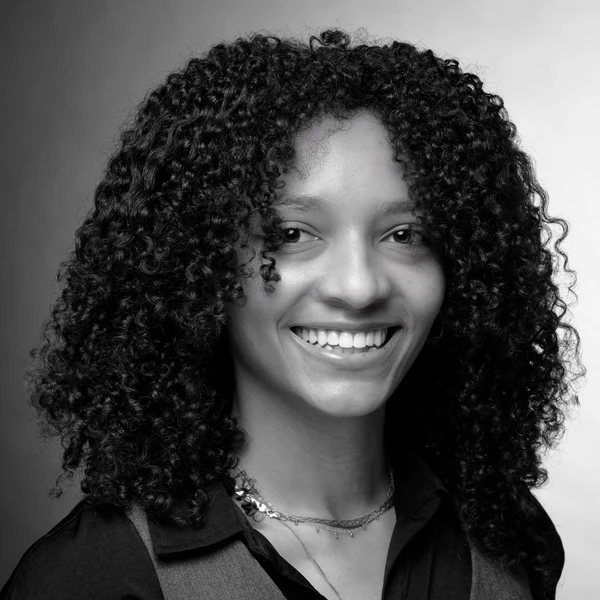
Gabriella Desch-Obi
2x
FinalistGabriella Desch-Obi
2x
FinalistBio
I’m a biomedical engineer and entrepreneur passionate about designing equitable and sustainable innovations in healthcare. I graduated from Northwestern University with a degree in Biomedical Engineering and a minor in Entrepreneurship, where I co-developed the Cesarean Delivery Glove, a low-cost device that helps physicians manage difficult deliveries in low-resource settings. We field-tested the device in Kenya, and it was recognised by the NIH-sponsored DEBUT competition.
My work sits at the intersection of technology, design, and impact. I’ve contributed to projects ranging from medical device development, always guided by the belief that innovation should wholistically serve people, not just profit from design to manufacturing. I care deeply about building solutions that are environmentally conscious, accessible, and rooted in empathy.
This winter, I’ll be attending the University of San Diego’s MESH (Master of Engineering, Sustainability, and Health) program to further explore how engineering can drive social and environmental equity. My goal is to continue developing products and systems that improve lives while honouring the planet we all share.
Education
University of San Diego
Master's degree programMajors:
- Biochemical Engineering
- Sustainability Studies
- Engineering-Related Fields
Northwestern University
Bachelor's degree programMajors:
- Biochemical Engineering
Minors:
- Business/Commerce, General
Miscellaneous
Desired degree level:
Master's degree program
Graduate schools of interest:
Transfer schools of interest:
Majors of interest:
Career
Dream career field:
Biotechnology
Dream career goals:
Company Founder
Student Manager
Northwestern Woman's Basketball2022 – 20242 yearsOperations Manager (contract as needed)
Full Cycle Recon2024 – 20251 yearProduct Manager for Property Design and Development
Brite Place2022 – 20242 yearsProject Manager Co-Op
Arthrex2023 – 2023Associate Product Manager
Medline2025 – Present1 yearSocial Video Manager Intern
Crunchyroll2022 – 2022
Sports
Dancing
Club2016 – Present10 years
Research
Accounting and Computer Science
Northwestern University — Researcher2023 – 2023
Arts
Independent
Acting2020 – Present
Public services
Volunteering
Black in Mayberry — Volunteer2021 – 2023Volunteering
Sweat Equity Alliance — Educational Reform2020 – Present
Future Interests
Advocacy
Politics
Volunteering
Entrepreneurship
Learner Tutoring Innovators of Color in STEM Scholarship
I grew up in motion. Where my only consistency was chaos, I learned early how to steady myself on a moving carousel. The same movement that expanded my worldview also meant instability. But school became the one stable place I could rely on amongst the chaos. It was the central place where I was rarely in survival mode and could just be a kid, so I clung to learning out of a desire to. Knowledge felt like a passport to understanding the world I was constantly being thrown into.
As a child, I often dismantled gadgets, sketched designs, or drafted plans for communities I dreamed of creating. What began as play soon became a lifelong fascination with how things work and how they might be improved. Recognising the impact I could make through engineering, I joined the engineering pathway, creating projects from hydro-drones to assistive devices that revealed how thoughtful design can serve people. This led me to study Biomedical Engineering and Entrepreneurship at Northwestern, where I embraced human-centred design, but also began to question how rarely engineering education integrates environmental awareness, long-term impact, and lived context.
In 2024, I found myself in a rural Kenyan hospital field testing a medical device I had co-developed: the Cesarean Delivery Glove. The trip reinforced my understanding of the importance of designing beyond technical functionality and instead considering a solution’s environmental constraints, affordability, and usability in different healthcare systems. I am conscious of the effects of our developments, but also of the benefits they can have for people. With a strong baseline of knowledge, engineering systems can evolve to measure long-term impact at every stage, from design to end-of-life, so that innovation uplifts communities rather than exacerbating inequities or environmental harm.
Too often, sustainability, health, and long-term impact are disregarded in favour of cost, speed, or convenience. Innovation becomes about what can be built quickly, not about what should be built thoughtfully. I want to push for initiatives that are inclusive in design and grounded in lived realities, aiming to tackle the root causes of real issues rather than layering temporary fixes on top of structural ones. Otherwise, we risk perpetuating the very problems we claim to solve. My path through biomedical, civil, and environmental fields has equipped me with a toolkit to implement real solutions, and my diverse background, abilities, and willingness to listen will enable me to build technology that actually serves people. With my understanding, I can recognise who potential solutions aim to serve, who they exclude, and the consequences of such.
I do not want to simply enter STEM spaces. I want to shift them. I want to ensure that the technologies we build are not detached from the communities they claim to serve, but accountable to them. I want to bridge engineering, equity, and global health, building solutions that genuinely address the interconnected challenges of today’s society rather than isolating them into convenient silos.
Dr. Samuel Attoh Legacy Scholarship
I grew up in motion. Chaos was my only consistency, and I learned early how to steady myself while everything around me shifted. When I look back, I do not remember every face or name, but I remember what people gave me. That is what legacy means to me. It is not permanent. It is the impression someone leaves behind and the way it changes how another person moves forward.
Throughout my childhood, people showed up for me in small but meaningful ways. A teacher offered me a ride instead of leaving me locked out of school. A family friend opened their home for what was meant to be a few nights. Strangers welcomed me into kitchens, classrooms, temples, and celebrations that were not mine by blood but made space for me anyway. Each of those moments gave me a sense of safety when I had little. Those moments taught me that attention and care can alter someone’s path.
Because I was always on the move, I learned to read people quickly. I learned how to listen. I learned how to ask questions before making assumptions. I also learned how much confidence can come from being noticed at the right time. There were moments when a small compliment or a few encouraging words gave me just enough belief to walk into an interview, a classroom, or a modelling session with my head held higher. That experience shaped how I interact with others now. I give compliments freely. I take time to talk to people. I make an effort to see them.
My upbringing also shaped how I think about responsibility. I grew up watching adults navigate financial stress, generational trauma, and systems that were not designed to support them. I saw how mass production, environmental damage, and exploitation often impact rural and marginalised communities first. Those experiences influence how I approach engineering. I want to design solutions that consider context, people, and long-term impact. I ask questions because understanding the story and environment matters. I want to build responsibly because I know how deeply systems affect real lives.
Legacy, to me, is a cycle. I received time, patience, and generosity when I needed it most. I choose to pass that forward. I invest time in my younger cousins and the kids I mentor because I know how much it meant when older people took me seriously. I listen because I remember what it felt like to be unheard. I stay curious because curiosity helped me survive and grow.
I know I cannot create the most significant change alone. I do believe in creating meaningful ones consistently. I hope to walk in a way that encourages people to feel capable and valued. If someone feels more confident, more understood, or more inspired after crossing my path, then the cycle continues.
That is the legacy I am choosing to build.
Elizabeth Schalk Memorial Scholarship
I grew up in constant motion. When I look back, the memories blur. My mother rushed out for another shift, telling me to start dinner. A teacher offered me a ride rather than leaving me outside a locked school again. A family friend turned a spare room into a temporary home that lasted longer than expected. My mom tried her best, but like sand that can burn at times, the authoritarian relationship was shaped by her own traumas and responsibilities she could not manage.
Growing up, I watched adults fight quiet battles with money and generational trauma. Other kids were shielded from those things, but I was not. I learned early that safety was not guaranteed and that being good was a kind of currency. I trained myself to read a room before I was tall enough to see over the kitchen counter. Tracking the rise in someone’s voice and often in their footsteps, I tried to be helpful, quiet, and invisible because I feared the repercussions of any misstep.
Meanwhile, my mind was always working overtime. I did not have a name for ADHD or anxiety; I just knew I could never calm down. I was constantly alert, waiting for something to go wrong because it often did. It became normal to manage other people’s emotions before they became my problem.
People assumed I was fine because I did well in school and adapted to wherever we went, so all my requests for help were always rejected. The constant dismissal of my feelings taught me to invalidate them and avoid seeking help from others. Therefore, I got good at pretending and smiling with anxiety in my chest and showing up even when I felt disconnected from everything around me.
The dissociation started slowly. By the end of high school, it was as if my body were there while I was not in it. I thought it was stress, so I started medication, but eventually numb became my default. I never thought I could go to anyone and burden them with what was going on, so I listened to their problems or isolated myself. The worse I got, the more I isolated, perpetuating the problem. I stopped feeling at all and was so desperate to develop any connection to my body or life that I engaged in self-sabotaging behaviour because I needed to feel something. Only pain and sadness were a relief from the numbness until that too stopped working, and the thought of being gone felt no different from my day-to-day.
I did attempt. I wrote out 88 letters, left my house, walked to a busy overpass, and sat for a long time. A single text pulled me out of it long enough to go home and cry for hours. The next morning, the warmth of the sun on my face and the song unwritten lulled me awake. I stopped taking the medication that numbed me and tried to ground myself in the little things.
Healing has not been easy; there are constant ups and downs dealing with the ADHD, depression, and CPTSD. But I give myself space to heal on my worst days, and in college, I found people who felt safe enough to be myself with, who can sit with me in my spiral. I do not feel alone. I doubt I will ever have perfect stability, but I am creating some consistency for myself. I have been falling in love with life again and with who I am in my authenticity.
Lotus Scholarship
A single mother raised me and was able to get us out of homelessness, but I was fortunate; we were rich in a community that opened their homes and offered support. That network held us up when larger systems failed to. But not everyone has that.
Coming from an immigrant family, I saw how the cultural values of collectivism shaped my trajectory. I also saw how systematic inequities, especially for single mothers, demand so much from them while simultaneously degrading them for being the parents who stay. Watching my mom shoulder everything taught me resilience and resourcefulness through exhaustion, but I refuse to accept that strength must be their only safety net. When systems fail mothers, the weight also falls on their children. Adultification was a quiet reality for me: cooking meals, navigating school alone, and feeling the burn of the generational trauma when my mother's emotions flooded through.
I’m working toward a world where community and equity are designed into every structure of society. I want to create access to and support systems for parents and children at every step, from birth through mentorship programs. I am actively working to sustainably rebuild educational access, community initiative systems, and medical devices. I am currently co-developing the Cesarean Delivery Glove to explore sustainable approaches to women’s health in underserved regions. I also mentor young women and entrepreneurs so they feel seen in spaces where representation is still scarce. I also love engaging in storytelling; Film, art, and community collaboration are how I honour lived experience and shift perspectives.
Everything I strive for is rooted in what I lived: resilience shaped by community, and privilege shaped by the people who refused to let me fall. My goal is to make sure that kind of support is not serendipitous but a built-in guarantee.
Dr. Jade Education Scholarship
I wake up to the warmth of the sun on my face; there is no rush. I ground myself in the mornings by connecting with loved ones and with myself, anticipating a day aligned with my values, my purpose, and the world I want to help build. It’ll be a long but fulfilling day.
By late morning, I’m in my office reviewing plans for a new urban development initiative. We’re transforming an old parking lot into a vibrant ecosystem for local businesses, community gardens, and green space. The design lowers energy costs, reduces heat islands, and reconnects people with their environment. The project reflects what I learned from studying successful models in places like Uruguay and Brazil: investing in inner cities through self-sustaining infrastructure that builds community and togetherness, boosts the economy, and reduces crime.
During a meeting, leaders from two local school districts share their excitement about integrating this development into their student work-study programs. High schoolers will get hands-on experience with gardening, entrepreneurship, and exposure to future careers in sustainable engineering and community planning.
In the afternoon, I meet with one of the young entrepreneurs I mentor to offer guidance and help bring her dreams to life. Later, I shifted to my own venture in women’s health, the Cesarean Delivery Glove, now approved and in use across Europe, which helps reduce the risk of harm to the mother and baby with deeply impacted fetal heads, reducing complications and empowering physicians around the world. But it’s just the beginning. Our team of engineers, midwives, and surgeons is developing a pipeline of accessible maternal-health tools that is grounded in women’s health research and prioritizes clinical benefits over convenience or profit margins.
We also consult with hospitals and ministries of health on sustainable healthcare solutions to reduce medical waste, optimize processes, and design products that can be repaired or reused safely in resource-limited settings. In partnership with Doctors Without Borders, we are preparing our next training trip to Madagascar to expand local surgical capacity and ensure long-term adoption, not reliance.
I end my day in conversation with mentors, innovators, and friends who challenge me to think bigger. We exchange ideas about the gaps in women’s healthcare and what bold solutions we can build next.
The life of my dreams is filled with purpose, community, creativity, and justice. A life where I wake up excited, never searching for an escape, because every day I get to do the things that fuel me. I get to think, problem-solve, connect, and learn while inspired by the people and world that I love.
Andrea Worden Scholarship for Tenacity and Timeless Grace
I grew up in motion.
Where my only consistency was chaos, I learned early how to steady myself on a moving carousel. When I look back, I see flashes of faces and places stitched together. My mother rushing out to another shift, asking me to start dinner. A teacher offering me a ride rather than leaving me outside a locked school again. A family friend setting up a room for “a few nights” that turned into weeks. The master of a dyeing martial art in Ecuador instructs me to keep my chin as my father jots down notes for his research. And the waves from the ocean soothing me as they dance to the rhythm that shaped my life.
The beach and I share a sense of duality, where two opposite worlds collide to create something unique yet beautiful. Like the tide, my dad comes and goes out of my life. Despite this, he has instilled in me a love of people, travel, and knowledge from our journeys to distant lands, where we live like locals while he conducts research in places from Colombia to Chengdu, China.
My relationship with my mom is predictable and sturdy like the sand under my feet. Like sand that can burn at times, the authoritarian relationship was shaped by her own traumas and responsibilities she could not manage. But, at the end of the day, she has taught me the traits of a survivor: diligence, perseverance, dependability, selflessness, and appreciation.
The same movement that expanded my worldview also meant instability. I grew up watching adults fight quiet battles with money and generational trauma. While other kids were shielded from those things, I was not. I learned early that safety wasn’t guaranteed, and that being “good” was a kind of currency. I trained myself to read a room before I was tall enough to see over the kitchen counter. Tracking the rise in someone’s voice and, often, in their footsteps, I tried to be helpful, quiet, and invisible when needed, because I feared the repercussions of any misstep.
When I was younger, I thought constant movement meant I didn’t belong anywhere. My inability for my immediate family to be a steady landing ground financially, or for my emotions, with the combination of a family of immigrants, exposed me to so many cultures and religions, and I felt like I never had a home. But slowly I realised I wasn’t rootless. I was welcomed everywhere. I was warmly greeted by my fifth-grade teachers in Buddhist temples with a sweet treat every Tuesday, was welcomed into Eid celebrations, taught all the family recipes of people who were not my blood, and was welcomed into kitchens full of scents and stories that weren’t mine but made room for me. Everywhere I went, someone offered me a plate of food, a bed, a story, a sliver of their world. They gave me anything they could, and I appreciated it more than gold.
My childhood wasn’t defined by instability alone, but by an abundance of opportunities to connect and learn. And that became the foundation of everything I am.
Interestingly, when I was young, school became the one stable place I could rely on amongst the chaos. It was the central place where I was rarely in survival mode and could just be a kid, so I clung to learning out of desire. Knowledge felt like a passport to understanding the world I was constantly being thrown into. I was the student who stayed after class talking to teachers, who joined every club I could, and maximised my time spent with friends of all ages on the playground.
As I hit middle school, my obsession with school stopped being an escape and became an intrinsic desire to expand access to knowledge and build the kind of world I imagined. That drive pushed me to make the most of every opportunity, so I started nonprofits teaching kids about cybersecurity and coding, led clubs for the newspaper and sustainability, and took on internships before I even understood how rare those chances were. I didn’t have the same safety nets or stability as many of my classmates, so I worked odd jobs throughout middle and high school to make my education possible. But that only deepened my determination.
That “something larger” eventually led me to biomedical engineering. I wanted to use science and design as tools to solve real problems for real people. Nothing crystallised that purpose more than field-testing my own device, the Cesarean Delivery Glove, in a rural Kenyan hospital. Standing in a labour ward and listening to surgeons describe the fear and urgency of deeply impacted fetal heads changed me. That project taught me that engineering must account for environmental constraints, cultural context, affordability, and usability. It showed me how design choices ripple into lives, and how innovation becomes meaningful only when it centres the people it claims to serve. At this point, my education wasn’t just for me; it was something I could leverage to uplift others.
Because of my humble beginnings, I never romanticised the “flashy solution”; instead, I appreciated sturdy, practical ones. That has shaped the engineer I am today. For me, engineering is about building whole-brain solutions that do not unintentionally harm the communities it intends to help. In a world overflowing with shiny solutions to non-existent problems, I aim to focus on designing substance that takes into account people and the planet’s real needs.
That commitment has led me to pursue a master’s in Engineering, Sustainability, and Health at USD. This program represents the convergence of everything that shaped me.
Today, I am still in motion, but now the motion feels purposeful. Not instability, but momentum.
STEAM Generator Scholarship
Once, during an internship interview, I was asked whether I believed I had made it as far as I had because of hard work or luck. I paused because, yes, I have worked relentlessly. As a young woman of colour moving through overwhelmingly white, male-dominated academic and professional spaces, I have had to prove myself over and over again. I have learned how to persevere, take up space, and succeed even when I was not expected to. But I am also deeply, undeniably lucky.
I am lucky because I come from an immigrant community that carried me long before I could carry myself. I was raised by immigrant women who left everything they knew behind to survive and start again in a foreign land, having to reinvent themselves, build relationships from scratch, and show me, by example, how to move through the world with strength and dignity. I did not grow up with generational wealth or institutional knowledge, but I grew up with faith, sacrifice, and shared struggle. The women and families around me pooled what little they had, whether it be time, childcare, food, or wisdom, so that I could chase opportunities they never had access to. I entered higher education not just for myself, but also to carry the torch of everyone who helped me get there.
That is why college was such a shock. For the first time, I had to carry that torch alone. I did not have the familial knowledge to navigate office hours, research pathways, networking, or financial aid systems. I did not have the financial cushion my peers relied on. Instead, I worked multiple jobs to survive while shouldering the quiet pressure of making every sacrifice that came before me “worth it.” I also learned quickly that I could not and would not take shortcuts. When I saw peers cheat or breeze through their education with safety nets beneath them, I knew I did not have that luxury. College was not a party for me. It was my pathway.
Being a first-generation immigrant has shaped my future in a way that is inseparable from my past. I do not seek success to rise but instead to give back because ignoring my responsibility would be ignoring everything I was taught. I want to be an engineer who understands systems deeply enough to challenge them. I need the platform I earn to serve the communities that raised me and the ones still waiting at the margins of opportunity. Even in college, I felt compelled to build support where it did not exist, mentoring younger students, creating spaces for those navigating the same isolation and uncertainty I once felt.
Yes, I worked hard. But I am here because a community carried me first. And everything I hope to become is rooted in the responsibility of carrying others forward. Community is a necessary part of the human experience, but especially for immigrants. That understanding shapes how I navigated college, always trying to be a soft spot for people to land and what I hopeto do.
Sabrina Carpenter Superfan Scholarship
Not Alone
When I think of Sabrina Carpenter, I'm taken back to 12-year-old me, a girl who felt so misunderstood, so unseen, and so alone in the world. Then, I saw Sabrina on Disney Channel, and something clicked. I didn’t just see her; I felt her. Through her role as Maya Hart in Girl Meets World, I saw my reflection of a girl navigating chaos, trying to stay hopeful, and fighting to be understood.
At that age, my family life felt complicated. My dad’s situation mirrored the brokenness of Maya’s, and my mom was working tirelessly to keep us afloat. I was surrounded by love, but not always by understanding. Watching Sabrina as Maya made me feel like someone finally got the confusion, longing, and hope beneath it all. Maya was challenging, funny, and creative, but she also carried pain. Seeing her evolve on screen helped me believe that my own struggles didn’t define me. They could, instead, shape me.
What inspired me most was how Sabrina Carpenter herself grew beyond the character that first introduced her to the world. She didn’t stop at being “the girl from Disney.” She became a powerful performer who built herself up from the ground up through talent, perseverance, and heart. She turned the lessons she’d learned as a character into the strength she carried as a person. That transition from a small-screen dreamer to a world-renowned artist reminded me that growth is possible, even when it feels unreachable.
I’ve always loved the arts. Music, dance, and storytelling have been ways for me to process emotion and create beauty from pain. Watching Sabrina pursue her passions so unapologetically encouraged me to also immerse myself in the healing, powerful, and transformative art. Every time I listen to the Girl Meets World soundtrack, I’m transported back to that young girl full of uncertainty but bursting with dreams. Then, when I look at who Sabrina has become today, I feel a renewed sense of possibility. She took the hope her character carried and made it real, reminding fans like me that we can, too.
Sabrina’s career has also shown me the importance of resilience. She’s faced criticism, comparison, and public judgment, yet she continues to shine even brighter. That strength has inspired me to stay true to myself and keep moving forward, no matter who misunderstands me or how hard the journey gets. There’s something profoundly moving about watching someone evolve publicly with grace and humour, turning challenges into art and heartbreak into songs that make millions feel seen.
In a world that can feel overwhelming and divided, Sabrina Carpenter has created a community built on understanding, connection, and shared experience. Through her lyrics, performances, and interactions with her fans, she reminds us that we are not alone in our emotions. She has inspired a cycle of belonging: one person reaching another through honesty, laughter, and creativity.
Future Green Leaders Scholarship
Sustainability should be a priority in healthcare because the health of people and the health of the environment are inseparable. No medical device, care model, or global health initiative exists in isolation as they all depend on supply chains, materials, infrastructure, and systems that either support long-term well-being or slowly undermine it. I’ve seen firsthand how fragile these systems can be. My mother grew up in rural Jamaica, where environmental degradation directly shaped access to clean water, consistent healthcare, and safe living conditions. And when I travelled to Kenya to present the Cesarean Delivery Glove we developed, I saw how resource limitations, waste systems, and local infrastructure determined whether a “good idea” was actually usable.
Those experiences taught me that sustainable design is not an optional add-on; it is the foundation of resilient healthcare. When products are made without considering their lifecycle, disposal, energy demands, or carbon footprint, we aren’t just harming the planet; we’re creating healthcare systems that are more expensive, more fragile, and more inequitable. Communities with the least resources often bear the biggest environmental burdens, from medical waste to water contamination to energy-intensive equipment they cannot maintain.
In my career, I hope to help shift the healthcare field toward sustainability not just through rhetoric, but through practical, systems-level change. As an engineer and product manager, I am already immersed in the development of devices and technologies used in long-term care settings. I’ve seen how something as seemingly small as the material selection for a brief, the battery life of a sensor, or the packaging of a trial kit can multiply into thousands of pounds of waste each year. These are design decisions and therefore, they are opportunities.
In the future, I plan to focus on integrating sustainability into every stage of healthcare innovation. That includes:
- Designing medical devices with circularity in mind, using recyclable materials, modular components, and repairable systems that extend lifespan and reduce waste.
- Developing digital health tools that decrease unnecessary resource use, such as technologies that reduce water consumption, cut down on disposable supplies, or optimize staff workflows to prevent overuse of materials.
- Working with global health partners to build solutions that fit local ecological and resource constraints, ensuring products are not only effective but environmentally feasible in low-resource settings.
- Advocating within organisations for sustainability metrics to be treated with the same urgency as clinical safety and financial viability.
My long-term goal is to work at the intersection of design engineering, global health, and sustainability, creating solutions that improve patient outcomes while reducing environmental impact. I see myself conducting feasibility studies for healthcare infrastructure in places like Madagascar, collaborating with hospitals to integrate renewable energy systems, and guiding product lines toward greener manufacturing and distribution.
Sustainability is not just a professional interest for me; it is a commitment shaped by my family, my values, and the communities I hope to serve. If we want healthcare to continue evolving, expanding, and healing, then it must also learn to protect the world it depends on. I want to be part of that transformation, building a future where caring for people and caring for the planet are the same goal, not competing ones.
Mohamed Magdi Taha Memorial Scholarship
Being an up-stander, to me, has never been about grand gestures or titles. It has always lived in the small, often invisible moments that shape how people feel, how they move through the world, and whether they believe they matter. I grew up in communities where the little things kept us going, a neighbour checking in, a teacher staying late, a stranger offering a kind word at the perfect moment. Those everyday acts taught me that impact doesn’t begin with a microphone; it begins with presence. And presence is something I try to offer in every space I enter.
I’ve learned that you never really know who you’ll inspire simply by taking one step forward. Sometimes that step looks like designing a medical device to make childbirth safer for women in low-resource settings, like the Cesarean Delivery Glove I co-developed and field-tested in rural Kenya. Sometimes it’s mentoring young women and first-generation students in STEM, helping them navigate the same doubts, pressures, and invisible barriers I had to overcome. And sometimes, it’s as simple as talking to the person sitting next to me on a plane or in an Uber and asking them how their day has been, really listening, and allowing their story to shift how I see the world.
I’ve always used my voice first as a tool for connection. I talk to people on buses, during late-night Lyft rides from the airport, in waiting rooms, and during long train rides across the Midwest. Each conversation expands my understanding of the people I hope to serve through my work. Listening is the foundation of community, and community is the foundation of change.
That belief drives everything I do. It’s why I’ve devoted myself to improving women’s health, from medical device innovation to addressing the gaps in maternal care. It’s why I co-founded programs like ESCEI to help kids access STEM education, and why I’ve spent years mentoring students who have the same eagerness, capability, and curiosity that I did at their age, wondering if there’s truly space for them in the fields they dream of entering. It’s why I work on technologies that enhance the dignity of older adults in long-term care, and why I continue to invest in community organisations that uplift immigrants, families in crisis, and young people finding their way.
Being an up-stander is not just about responding when something goes wrong; it’s about choosing, every day, to create an environment where people feel seen, protected, and encouraged to keep going. It’s noticing the quiet injustices that others miss. It’s checking on the friend who hasn’t said they’re struggling but doesn’t look like themselves. It’s speaking up for the colleague who isn’t in the room. It’s holding the door open just a little longer so someone else can walk through.
With my voice, I hope to continue building communities rooted in empathy, courage, and care. Whether through engineering solutions that address global health disparities, mentoring young women in STEM, or simply offering kindness to a stranger, not just when the moment demands it, but as a way of living. Because real change begins in the small places, and I plan to spend my life honouring them, I know how much those moments from others have helped me.
A Man Helping Women Helping Women Scholarship
My name is Gabriella Desch-Obi, and everything I do is shaped by the communities that raised me and the people whose lives have shown me both the failures and the possibilities of our healthcare and education systems. I was raised by a single mother and surrounded by strong female family members, teachers, and mentors who supported us, pushed us, and showed me what it looks like to pursue your dreams even when the world doesn’t make it easy. Their resilience became my model. Their belief in me became my fuel. And it’s why my life mission has always been to give back to the communities and women who shaped me.
At the core of elevating women, I believe it comes down to :
1. Ensuring they have community, people who protect, uplift, and advocate for them;
2. Investing in women’s health and research so they have the fundamental right to live and thrive.
Engineering became my way to do that. At Northwestern, I gravitated toward biomedical engineering because it allowed me to build tangible solutions for real human needs. One of the most defining projects of my life was co-developing the Cesarean Delivery Glove (CDG), a low-cost device designed to help physicians safely manage deeply impacted fetal heads during C-sections. Presenting and field-testing it alongside surgeons at Tenwek Hospital in Kenya opened my eyes to the global gaps in maternal care. It strengthened my commitment to improving women’s health outcomes and contributing to research that advances safe, dignified childbirth, especially in underserved communities.
My desire to create access and opportunity started long before I ever stepped into a college lab. In high school, I co-founded the El Segundo Cybersecurity Education Initiative (ESCEI), teaching kids from underrepresented backgrounds the foundations of coding and cybersecurity. That experience showed me how powerful STEM education can be when it’s accessible and culturally grounded. Since then, I’ve continued mentoring young women and students of colour entering the STEM, business, and entertainment fields, helping them navigate fields where representation, support, and belonging are still lacking.
Today, whether I’m working on digital continence care solutions, supporting clinical teams, leading operations for accident reconstruction cases, or volunteering in my community, my mission remains consistent: to design systems that treat people with dignity, improve health outcomes, and open doors for others. I want a career where engineering, global health, and social responsibility intersect, where I can build solutions that not only work, but work for the people who need them most.
Ultimately, I hope to make a positive impact by continuing to innovate in women’s health, expanding access to STEM education, and uplifting the next generation of young engineers, researchers, and community builders. Everything I’ve done so far has been grounded in the support I received from the women who raised me, and everything I hope to do is about carrying that support forward into the world.
Dr. Hassan Homami Memorial Scholarship
My interest in engineering has always been rooted in a simple but persistent instinct to understand how systems work and to imagine how they could work better for the people who depend on them. As a child, I spent afternoons dismantling small gadgets, sketching designs, and drawing entire communities I dreamed of building one day. That natural curiosity evolved into a passion for engineering that explores the intersection of human need, system design, and sustainability.
I became passionate about engineering the moment I realised that thoughtful design could change someone’s life. In middle school, I helped create a “Green Team” and introduced a composting initiative that reduced our school’s waste by 72%; even small systems, when intentionally designed, can transform a community. Since then, I’ve been drawn to engineering challenges that require both technical problem-solving and human-centred thinking.
That foundation eventually led me to co-develop the Cesarean Delivery Glove, a safe, sterile, low-cost device that helps physicians manage deeply impacted fetal heads during cesarean deliveries. Field-testing it in a rural Kenyan hospital pushed the boundaries of my understanding; responsible design must consider infrastructure limitations, supply chain fragility, cultural workflows, and environmental realities. A solution is only successful if it fits the context it enters; good engineering removes barriers, while unexamined engineering can create new ones.
This awareness is deeply personal. As the daughter of an immigrant mother from rural Jamaica, I grew up understanding how industrialization and poorly contextualized development can disproportionately harm low-resource communities. I’ve seen how design choices, intended to bring progress, can instead disrupt land, livelihoods, and generational stability. Loving engineering while loving communities like the one my mother came from forced me to broaden my perspective; I do not want to design for people without understanding the systems that shape their everyday lives. I want my work to support them, not become another layer of hardship passed down.
Although my training is in biomedical engineering, my interests extend into broader systems, especially transportation networks and the mobility infrastructures that determine access to health services. Transportation shapes maternal outcomes; it influences patient safety and emergency responsiveness; it dictates who receives care and when. I’m energised by the challenge of designing health and mobility systems that work in tandem.
To deepen this work, I plan to pursue graduate study focused on sustainability, global health systems, and infrastructure design. I want to build a wide-ranging understanding of how environmental, political, and engineering decisions shape community outcomes. I envision culminating my studies with a capstone focused on mobility and healthcare infrastructure in Madagascar; it will merge my device-design experience with my commitment to sustainable, community-grounded development. Like Dr. Hassan, I see engineering as a form of service. My story, my values, and my goals align with one mission: using design as a tool for access, justice, and dignity across the communities I hope to serve.