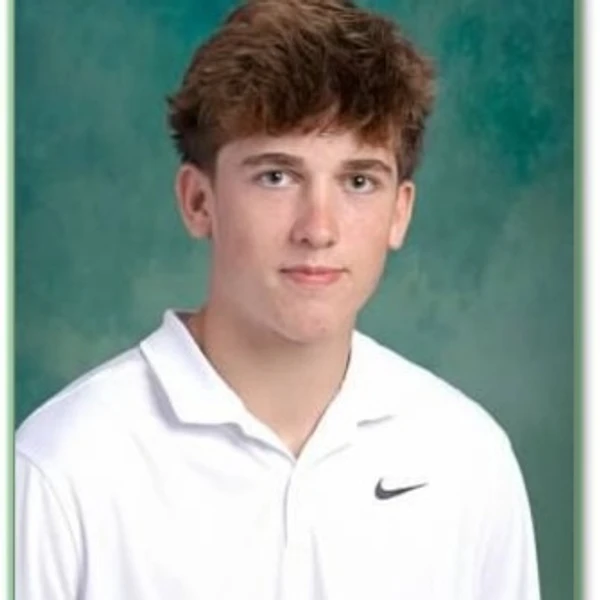
My name is Filip Szylow, and I am a junior at Eastern Technical High School in Essex, Maryland. At 16, I’m still trying to figure out exactly what I want to do in life, but one thing is clear: I am interested in how science and engineering can solve real world problems. Participating in the “Engineering Careers” Magnet Program at my school gives me an opportunity to get familiar with some general engineering concepts and tools. Engineering, math, chemistry, and physics are my favorite subjects at school. I also greatly enjoyed the AP Environmental Science class, particularly the hands-on experience on the canoeing field trip to Dundee Creek Marina at the Chesapeake Bay. We conducted many experiments including measuring the water salinity and pH levels and assessing eutrophication. I really enjoyed applying the classroom knowledge to the real-life experiment. The AP Environmental Science class made me aware of many environmental problems, both natural and human-made, and how important conservation and sustainability efforts are. This conviction was only reinforced when I started working at Conrad’s Crabs and Seafood Market and learned about the main local source of seafood in Maryland – the Chesapeake Bay. I was told that I should not eat the crab’s “mustard” (the organ responsible for filtering impurities from the crab's blood) because the water in the bay is not clean.
I consider a career in the STEM field to contribute to both ongoing and future conservation and sustainability efforts. Participating in the Army Educational Outreach Program (AEOP) Apprenticeships will help me understand the various duties for the STEM jobs and determine whether it's a job worth pursuing. I’m very enthusiastic about the possibility of getting research experience this summer. Getting experience in obtaining, analyzing, and interpreting the data will not only allow me to get an insight into the scientific world, but it will improve my critical thinking skills applicable across all areas of life.
(include an explanation of how this experience will contribute to your future education and career goals)
Though I am still exploring where my career path will lead, I know I want a career where I can combine my passion for STEM with making a difference. As I look to the future, I see a world full of challenges, from climate change to natural disasters and health crises. However, I also see endless opportunities for creative solutions. At 16, I may not have all the answers yet, but I’m ready to put in the effort, explore my interests, and work toward a future where I can succeed while making a difference.
xxx
At 16, I’m still trying to figure out exactly what I want to do in life, but one thing is clear: I am deeply interested in how science and engineering can solve real world problems. Watching the devastation caused by natural disasters on the news always leaves me inspired to find solutions that offer protection and create lasting change. I can’t stop thinking about how structures can be constructed and designed to withstand powerful forces. This curiosity fills my growing passion for engineering,particularly the challenge of creating structures that not only withstand disaster but are also sustainable. Recently, I’ve become increasingly intrigued by ocean engineering. The ocean covers more than 70% of our planet and holds incredible potential for innovation. With growing concerns about the availability of freshwater and the impact of rising sea levels, ocean engineering feels both urgent and exciting. From developing renewable energy systems like wave and tidal power to protecting coastal communities from flooding, this field offers endless possibilities to make a difference. I am also drawn to the excitement and challenge this work could bring, such as designing bridges over water systems or creating underwater structures that withstand the unpredictable forces of nature. Ocean engineering offers a unique opportunity to protect ecosystems while addressing important issues like coastal erosion and climate change. In high school, my passion for STEM has grown through courses in physics, math, and environmental science. These classes have helped me understand the principles behind how systems and structures work. I’ve also had opportunities to apply what I’ve learned through projects and field trip experiences. One of the most memorable moments was a field trip for environmental science to the Chesapeake Bay. We went canoeing and were collecting samples to study marine diversity. It was fascinating to see how many species are connected to maintain a healthy food chain. Being on the water was more than just fun; it felt like I was part of the environment. The way the boat moved with the waves gave me a sense of peace, but it also reminded me of the power and unpredictability of the ocean.This connection to water, combined with my growing interest in engineering, has made me eager to explore how I can make a positive impact on the marine environment. I want to work on solutions that protect both marine ecosystems and the people who rely on them. Whether it’s designing structures that can endure harsh conditions, creating renewable energy systems to harness the ocean’s power, or developing innovative ways to manage rising sea levels, I am excited about the possibilities.
At 16, I’m still trying to figure out exactly what I want to do in life, but one thing is clear: I am deeply interested in how science and engineering can solve real world problems. Watching the devastation caused by natural disasters on the news always leaves me inspired to find solutions that offer protection and create lasting change. I can’t stop thinking about how structures can be constructed and designed to withstand powerful forces.