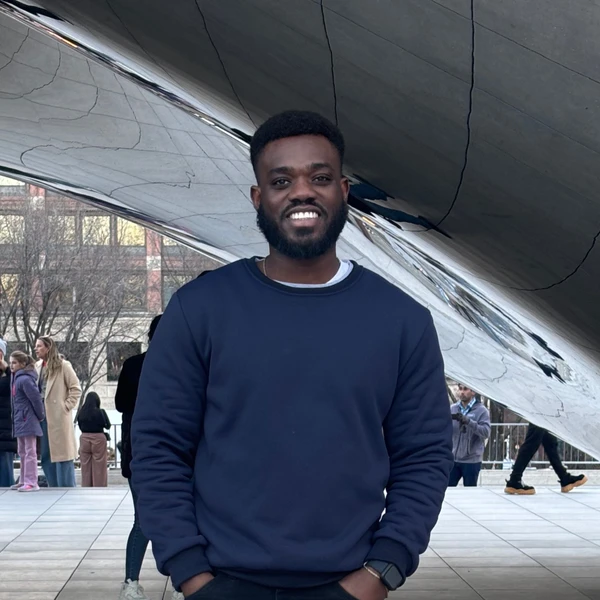
Growing up in Kasoa, a small town in Ghana, I learned engineering before I knew what engineering was. With limited resources, my childhood was filled with creativity born of necessity. I crafted toys from discarded cans, transforming waste into wonder. Those experiences taught me that engineering is about problem-solving, resourcefulness, and seeing potential where others see limitations. This foundation, combined with exposure to science fiction and technology in films, ignited my fascination with how humans have continuously innovated, from ancient metalworking to futuristic transportation systems.
My passion lies in Computational Materials Science, focusing on how manufacturing processes affect material properties and performance. During my undergraduate studies, courses in Materials Science and Manufacturing revealed the intricate relationship between how we make things and what those things accomplish. I became captivated by metal casting, one of humanity's oldest manufacturing techniques, which remains fundamental to modern transportation. Last semester, I took a metal casting course that profoundly deepened this interest, revealing the significant gap between theoretical simulations and actual foundry outcomes.
Currently in my second year of PhD studies in Mechanical Engineering at the University of Wisconsin Milwaukee, I am investigating the fatigue properties of Ti-6Al-4V titanium alloys, comparing HIPed samples versus heat treated samples through computational simulation. This research directly connects to transportation applications, where lightweight, high strength materials are critical for sustainable vehicle design. As a Teaching Assistant for Design of Machine Elements and Mechanics of Materials, I work daily with students analyzing cast components used in automotive and aerospace systems, helping them understand how material selection and manufacturing processes determine performance, safety, and efficiency. My commitment to this field has been recognized through the George J. Barker Memorial Scholarship, awarded for my research plans and career goals in the cast metals industry. As a member of the North American Die Casting Association, I am actively engaging with industry professionals to ensure my research addresses real world manufacturing challenges.
Academically, I am exploring physics informed neural networks that combine theoretical simulations with empirical data to create more accurate predictive models for casting processes. This approach could dramatically reduce research and development time and costs, making advanced materials more accessible to smaller manufacturers. The goal is to bridge the gap between cutting edge research and practical implementation, ensuring innovations reach the industries and communities that need them most. Professionally, I envision a career in research and development followed by education, where I can mentor the next generation of engineers while contributing to our understanding of materials for transportation and other critical applications.
Dr. Hassan's story resonates deeply with me as a first generation immigrant pursuing graduate education. Like him, I believe education is the most powerful tool for creating positive change. Growing up in Ghana, I witnessed how transportation infrastructure shapes economic opportunities and quality of life. I have seen how resource constraints drive innovation, and how sustainable engineering practices are necessities for communities like mine.
My vision is to contribute to transportation systems through innovative materials that prioritize both performance and sustainability. Whether developing lighter alloys that reduce fuel consumption, improving manufacturing efficiency through better computational tools, or mentoring students who will tackle tomorrow's challenges, I am committed to making engineering more accessible, sustainable, and impactful. Dr. Hassan dedicated his life to education and mentorship while advancing intelligent transportation systems. I aspire to honor that legacy by pursuing the same dual commitment: pushing the boundaries of Materials Science while empowering others through education, ensuring that the next generation has the knowledge and resources to build a more sustainable, connected world.