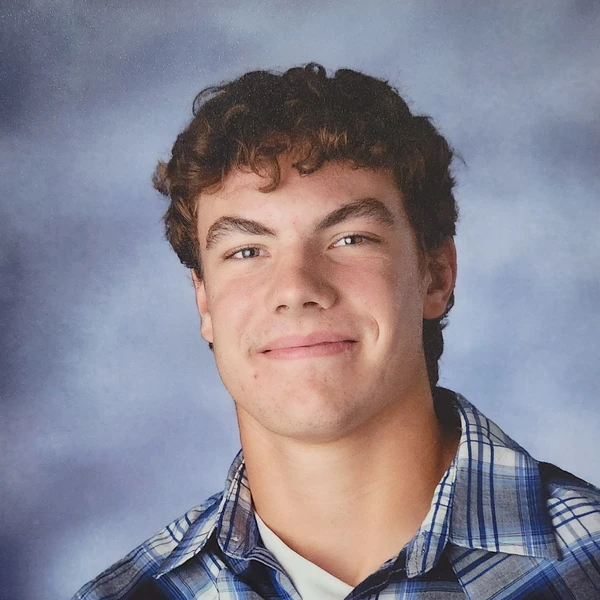
Hobbies and interests
4-H
Basketball
Football
Track and Field
Chess
Fred Thomas
1x
Finalist
Fred Thomas
1x
FinalistBio
Growing up in Casey, Illinois, I’m a multi-sport athlete and a member of Seaton Farms. While balancing two jobs and a 3.7 GPA, I’ve learned the value of hard work and staying disciplined. My goal is to head straight into trade school and become a journeyman power lineman.
Education
Casey-westfield Jr/sr High School
High SchoolMiscellaneous
Desired degree level:
Trade School
Majors of interest:
- Electrical and Power Transmission Installers
Career
Dream career field:
Power Line Installation
Dream career goals:
Sports
Track & Field
Varsity2025 – 2025
Basketball
Varsity2022 – 20264 years
Awards
- Varsity Letters: Earned Varsity Letters during my sophomore, junior, and senior years. JV Letter: Earned during my freshman year.
Football
Varsity2022 – 20253 years
Awards
- School Record Holder: Broke the school record for sacks. All-State Honors: IHFCA All-State Honorable Mention. All-Conference: 1st Team All-LIC (Offensive and Defensive Line) and Little Illini Conference second-team defensive lineman. Regional Recognition: Wabash Valley Football Coaches Association All-Illinois Team and All-Wabash Valley Team. Team Awards: Co-Defensive MVP, Brandon Brewer 12th Man on the Field Award, and Scout Team Play of the Year. Academic All-State: Recognized for maintaining high academic standards while playing. Varsity Letters: Earned Varsity Letters in Football for four consecutive years.
Public services
Volunteering
4-H/Football/School — As a community steward, I provided 54 hours of service through labor and youth mentorship. I strengthened Casey by leading youth sports and maintaining 4-H facilities for the next generation2022 – 2026
Future Interests
Advocacy
Volunteering
David Foster Memorial Scholarship
I didn’t realize how much a teacher could shape the way I see the world until my Spanish teacher, Beth Reynolds. At the time, Spanish really just felt like another required class I had to get through. I expected a few awkward attempts at speaking a language I barely understood, and then leaving. Instead, as time went on, that classroom started to feel fun and it became something I looked forward to too.
From the very first day, Señora made it clear that her class wasn’t just about learning Spanish; it was about learning how to learn something new and how to be open to new things. She also taught us all how to be kind by her example. She greeted everyone every day with a smile, and asked how we were doing. In her class, even the quietest of students looked like extraverts. It didn’t matter if you were struggling, tired, or having a bad day she always understood and gave a listening ear.
What stood out the most about Senora was how much she genuinely cared. Not just about grades, but about us as people. She was unlike any other teacher. If someone looked off, she noticed. If someone improved, even a little, she celebrated it. She had this way of making you feel like your effort mattered more than your outcome, and that stuck with me. It also made learning a foreign language way less stressful. Before her class, I was used to thinking in terms of black and white when it came to my school work. After being in her class, I started thinking, “Did I learn something?”
Senora also made class fun in a way that didn’t feel forced. We played games, acted out conversations, listened to music, and even had days where we just talked about life, sometimes actually in Spanish. It never felt like wasted time. Somehow, she tied everything back to learning, but it felt natural. That was probably the first time I realized that learning doesn’t have to be boring and it can actually be something you look forward to.
But the biggest thing Senora taught me wasn’t Spanish. It was how to view life more optimistically. She always found a positive outlook on things. If we complained about something being hard, or having too much work she’d reassure us that we could do it. If someone messed up, she’d remind us that mistakes are part of the process. She never let negativity sit in the room for long, she would always turn it into productivity.
At first, I didn’t think much of it. It just seemed like her personality. But over time, I realized it was something more. She chose to see things that way, deliberately, and she was teaching us how to do the same.
That mindset started to carry over into other parts of my life. When things don’t go my way, I now catch myself thinking, “This is just part of life.” I became more patient, not just with school, work, or sports, but with everything. I’m not going to remember every vocabulary word or tense she taught. But I’ll always remember how I felt in her class. I’ll remember feeling social, supported, and capable. More importantly, I’ll remember learning that your attitude can completely change your life.
Mrs. Reynolds didn’t just teach Spanish. She taught me how to approach challenges with a better mindset, how to stay positive even when things aren’t perfect, and how to appreciate the process instead of just the result. That’s something I’ll always carry with me. Thank you Senora.
Kalia D. Davis Memorial Scholarship
A legacy is often described as the mark we leave on the world, but in the context of the Kalia D. Davis Memorial Scholarship, I’ve learned that it is best defined by four pillars: Living, Loving, Laughing, and Learning. My own journey toward becoming a journeyman lineman has been a testament to these values, a path paved with hard work, a commitment to my community, and a relentless drive to excel even when faced with significant adversity.
From a young age, I realized that my goals would only be met through my own discipline. Growing up without financial support from my biological father, I didn't see a lack of resources as an excuse; I saw it as a call to action. Like Kalia, who was known for her impeccable work ethic and her reputation as a person of excellence, I have spent my high school years striving for the highest standard in everything I do. For the past three summers, I worked as a laborer for the City of Casey’s Street and Electric departments. This wasn't just a summer job; it was the foundation of my career. I saved every penny to fund my tuition deposit for the North American Line Training Center (NALTC), choosing to invest in my future through sweat and persistence.
My resilience was truly tested when I totaled my truck in a rollover accident shortly after receiving my license. It was a moment that could have derailed my plans, but I chose to respond with the "drive" that this scholarship seeks to honor. I returned to work, saving every cent once again to replace what was lost. This experience taught me that excellence isn't just about how you perform when things are going well, but how you pick yourself up when they aren't.
Beyond my professional aspirations, I find my greatest joy in service. Kalia was a person who could be counted on by her peers for encouragement, and I strive to mirror that kindness in my own community. To date, I have completed over 55 hours of community service. Whether I am cleaning and painting livestock barns for Clark County 4-H, supporting youth through the Casey Junior Football League, or organizing food drives with the Moriah Go-Getters 4-H Club, I believe that we are at our best when we are lifting others up. My involvement in sports and local organizations has taught me that being a "person of excellence" means showing up for your neighbors when they need you most.
Receiving the Kalia D. Davis Memorial Scholarship would be a transformative step in my journey. Because NALTC is a specialized trade school that does not participate in federal student aid, I am ineligible for Pell Grants or federal loans. Furthermore, my commitment to the trade is so immediate that I begin training on May 18, 2026, the day after my high school graduation. This leaves me without a summer to earn the remaining costs for my tuition and equipment.
This scholarship would do more than just alleviate a financial burden; it would serve as a powerful reminder to carry Kalia’s spirit of kindness and ambition with me as I climb my first utility poles. My goal is to become a journeyman lineman who doesn't just "keep the lights on" for my community, but who serves as a reliable, encouraging presence for my future crew and neighbors. By investing in my education, you are supporting a student who is dedicated to a life of learning, a career of service, and a legacy of excellence that would make Kalia proud.
Let Your Light Shine Scholarship
Building a Legacy of Power and Presence
A legacy is often misunderstood as something left behind in a will, a collection of assets or a name on a building. However, through my experiences in 4-H and manual labor, I have come to view legacy as a "living" entity: the standard of work you leave in every job and the stability you provide for the next generation. My path toward becoming a journeyman lineman is the first step in a lifelong mission to build a legacy of reliability, craftsmanship, and entrepreneurial mentorship in the electrical trades.
My plan to create a legacy begins with the physical infrastructure of my community. As a lineman, I will be responsible for the literal current that powers hospitals, schools, and homes. I want my legacy to be one of "unseen reliability." When people flip a switch in the middle of a winter storm and the lights flicker on, that is my work. By mastering the technical rigors of splicing conductors and maintaining the grid with uncompromising safety standards, I ensure that the community I love remains functional and safe. I want to be remembered as the craftsman who never took a shortcut, knowing that in high-voltage work, integrity is the difference between life and death.
Looking further ahead, I hope to translate my field experience into a specialized electrical contracting business. I envision creating a company that doesn't just provide services, but serves as an incubator for young tradespeople who, like me, may lack a financial safety net. Growing up without paternal financial support, I had to learn the hard way how to save, invest in my own tools, and bounce back from setbacks like my truck accident. My future business will prioritize "Apprenticeship with Advocacy", hiring local youth who show grit and discipline, and providing them with the mentorship and financial literacy training they need to achieve independence. My business legacy will be measured by how many young workers I help bridge the gap from laborer to master tradesman.
I "shine my light" by leading through action rather than just words. In a world that often prizes the loudest voice, I have found that true influence comes from being the first person on the job site and the last one to leave. I shine my light through my 55 hours of community service, whether I am painting livestock barns for Clark County 4-H or coaching the Casey Junior Football League. To me, shining a light means showing up for people when it isn't convenient. It means being the mentor who stays late to help a kid with their footwork on the basketball court or the neighbor who helps organize food drives for senior citizens.
Ultimately, my legacy will be defined by the intersection of my professional skill and my personal resilience. By overcoming the loss of my vehicle through sheer work ethic and transitioning directly from high school into the intense training at NALTC, I am proving that a lack of resources is not a lack of potential. I plan to spend my career ensuring that the lights stay on for my neighbors, while simultaneously lighting a path for the next generation of tradesmen to follow. In the end, I want my name to be synonymous with the steady, reliable power that keeps a community moving forward.
Valerie Rabb Academic Scholarship
My journey toward becoming a journeyman lineman didn't begin with a high school career fair or a job posting; it began in the third grade with a simple 4-H project. What started as a child’s curiosity about circuits transformed into a lifelong fascination with the power grid. To most, a power line is an invisible part of the landscape, but to me, it represents the lifeblood of a community. My path to this trade has been defined by a commitment to the craft, a self-reliant work ethic born of necessity, and a deep-rooted desire to serve my neighbors.
Growing up without financial support from my biological father served as an early lesson in accountability. I realized that if I wanted to reach the top of a utility pole, I would have to build the ladder myself. This realization fueled a disciplined approach to my future. For the past three summers, I have worked as a laborer for the City of Casey’s Street and Electric departments. While my peers spent their summers at the lake, I was in the trenches, learning the physical and technical rigors of municipal maintenance. I saved every penny of those earnings to purchase my own vehicles and cover my tuition deposit for the North American Line Training Center (NALTC).
However, my resilience was truly tested shortly after I received my driver’s license. I was involved in a severe rollover accident that totaled my truck, the very vehicle I had worked so hard to earn. It would have been easy to view this as an insurmountable setback, but I chose to see it as a test of my resolve. I immediately returned to work, doubled my efforts, and saved every cent a second time to replace what I had lost. This experience taught me that in line work, as in life, things can go sideways in an instant; what matters is your ability to maintain composure and get back to work.
Currently, I face a unique financial hurdle. Because NALTC does not participate in federal student aid, I am ineligible for Pell Grants or federal loans. Furthermore, my commitment to the craft is so immediate that I begin training on May 18, 2026, the very day after my high school graduation. This leaves me without a "gap summer" to earn the remaining funds needed for tuition and gear. I am quite literally transitioning from the classroom to the bucket truck without a financial safety net, relying entirely on my savings and my determination to succeed.
Beyond my professional drive, I believe that being a lineman is about more than just technical skill; it is about community stewardship. I have dedicated over 55 hours to community service, ranging from the physical labor of painting livestock barns for Clark County 4-H to mentoring youth through the Casey Junior Football and Youth Basketball leagues. Whether I am organizing food drives with the Moriah Go-Getters 4-H Club or preparing care baskets for senior citizens, I have learned that a community’s strength lies in the reliability of its members.
In the future, I envision myself as a certified journeyman lineman, the backbone of our infrastructure. Having already worked as an electrician’s helper, I am familiar with the grit required to splice conductors and climb poles in adverse conditions. My goal is to be the person who "keeps the lights on" during the darkest storms. By combining the technical training of NALTC with the discipline I’ve forged through personal adversity, I plan to make a positive impact by ensuring the safety, stability, and literal empowerment of the place I call home.
Aserina Hill Memorial Scholarship
My name is Fred W. Thomas IV, and I am a graduating senior at Casey-Westfield Jr/Sr High School with a singular, driving focus: a career as a journeyman lineman. My interest in the power grid was sparked in the third grade during a 4-H project, and I have spent every year since building the physical and mental discipline necessary to master this craft. Growing up without financial support from my biological father taught me early on that my goals would only be met through my own grit. To fund my future, I have spent the last three summers working as a laborer for the City of Casey’s Street and Electric departments. I saved every dollar from those long hours to purchase my own vehicles and cover my tuition deposit for the North American Line Training Center (NALTC).
My commitment extends far beyond my professional ambitions. I believe that being part of a community means actively strengthening it. I have completed over 55 hours of community service, ranging from the physical labor of cleaning and painting Clark County 4-H barns to supporting youth through the Casey Junior Football League and local basketball programs. Whether I am organizing food drives or assembling care baskets for seniors with the Moriah Go-Getters, I find purpose in ensuring my neighbors feel supported. On May 18, 2026, the day after graduation, I will begin my training at NALTC, taking the next step toward a career where I can literally "keep the lights on" for my community.
If I were to start my own charity, it would be called "Bridge the Gap." Its mission would be to provide financial, logistical, and technical mentorship to youth pursuing vocational trades who lack a financial safety net. I know firsthand the stress of realizing that federal aid often ignores trade schools. My charity would serve students from low-income or single-parent households who are ready to work but are held back by the high entry costs of specialized tools, certifications, or tuition deposits.
Volunteers for "Bridge the Gap" would perform three vital roles:
Technical Mentorship: Experienced journeymen would offer hands-on guidance, teaching students the "unwritten rules" of the job site and helping them navigate industry expectations.
Resource Logistics: Volunteers would manage a "tool library" or grant fund, helping students acquire expensive essential gear like climbing boots, FR clothing, or harnesses.
Resilience Coaching: Drawing from my own experience of having to replace a vehicle after a rollover accident, volunteers would help students build financial literacy and contingency plans for when life gets in the way of their training.
By supporting the next generation of tradespeople, "Bridge the Gap" would ensure that a student’s career isn’t stopped by a lack of initial capital, but is instead launched by their own hard work and the support of those who came before them.
Ava Wood Stupendous Love Scholarship
Prompt 1: Kindness in Action
For me, kindness isn’t just a polite gesture; it is the physical labor of showing up for your neighbors when they can’t do it themselves. Through the Moriah Go-Getters 4-H Club, I have spent years organizing food drives and assembling care baskets for senior citizens in Casey. However, the most meaningful moments of support happened away from the cameras, specifically while preparing the Clark County 4-H livestock barns.
While cleaning and painting these barns is "service," I saw it as a way to support younger members who, like my third-grade self, were just starting to find their spark. I remember a younger student struggling with the weight of their equipment and the daunting task of prepping for the fair. Recognizing the same lack of a "safety net" I felt growing up, I stepped in to help him finish his prep work. This moment was important because it bridged the gap between individual effort and community strength.
In the line trade, we talk about "brotherhood", the idea that your safety depends on the person next to you. By offering my time to help a younger peer succeed, I wasn’t just painting a barn; I was reinforcing the idea that no one in our community has to carry the heavy lifting alone. This commitment to "keeping the lights on" for others, both literally and figuratively, is the foundation of the man and lineman I am becoming.
Prompt 2: Boldly, Unapologetically Me
The pressure to conform in high school usually pushes you toward a traditional path: sports, social scenes, or heading off to a four-year university. However, I chose to be unapologetically focused on a goal that many of my peers didn't understand. While others spent their summers and weekends relaxing, I chose to work as a laborer for the City’s Street and Electric departments, often in the scorching heat or doing the "dirty work" no one else wanted.
Choosing the blue-collar path required me to resist the pressure to "take it easy" during my final years of youth. My resilience was truly tested after I totaled my truck in a rollover accident. The "easy" thing to do would have been to ask for a handout or let my goals slide. Instead, I stayed true to my disciplined nature. I returned to work immediately, saving every penny to replace the vehicle myself.
Starting at the North American Line Training Center (NALTC) just one day after high school graduation is the ultimate expression of being true to myself. I am opting out of the traditional "summer of fun" to dive straight into a bucket truck. This choice represents my identity: a man who values hard work, takes personal responsibility for his future, and isn’t afraid to get his hands dirty while others are still sleeping. I don't need a crowd to follow; I have a grid to maintain.
Henry and Cornelia Ritter Memorial Scholarship
Patriot Metals Future Builders Scholarship
My Journey to the Electrical Trade
My journey toward becoming a journeyman lineman began in the third grade with a simple 4-H project. The moment I connected a circuit to light a single bulb for the first time, a lifelong passion for the electrical trade was sparked. That early experiment taught me a fundamental lesson: I could use both my hands and my mind to create something functional and essential for society. What began as childhood curiosity has since evolved into a dedicated career path, reinforced by practical experience, a deep-seated work ethic, and a firm commitment to community service.
As I prepare to graduate high school, I am transitioning immediately into professional training, fueled by years of disciplined labor. The path to this point has not been without its challenges. The most significant hurdle I have faced is the total absence of financial support from my biological father. However, rather than allowing this to become a setback, I chose to view it as a crucible that forged my independence. To achieve my goals, I have relied solely on my own efforts, working for three years as a laborer and electrician's helper for the City of Casey. This experience taught me the value of a dollar and the importance of self-reliance; I treated every paycheck as a building block for my future, practicing meticulous budgeting to purchase my own vehicles and self-funding 100% of my initial tuition deposits, tools, and housing for line school.
My academic and extracurricular pursuits have been strategically aligned with my trade goals. High school vocational classes provided a foundation in wiring, safety protocols, and power tools, emphasizing the precision required in a field where small errors have significant consequences. Complementing this, physics classes gave me a deeper understanding of the laws governing circuits, voltage, and current, which will ultimately make me a safer and more effective worker. Beyond the classroom, earning the Illinois State Fair Grand Champion for my 4-H Electric Project served as a milestone that demonstrated my technical proficiency and ability to execute complex projects from start to finish.
Looking toward the future, my goal is to serve my community as a highly skilled journeyman lineman. I believe a career should be a form of service, and the role of a lineman is vital to ensuring that communities have the power they need to thrive. To reach this goal, I have chosen to attend the North American Lineman Training Center (NALTC), an intensive 13-week program covering over 528 contact hours. This training includes AC/DC fundamentals, Ohm's Law, wood-pole climbing, and obtaining industry certifications like the Class A CDL.
I am prepared to dedicate myself fully to this rigorous training to enter the workforce as an apprentice lineman at eighteen years old. Because I begin my training on May 18, 2026, which is the day after my high school graduation, I will not have the opportunity to earn a summer income to cover my remaining costs. My ultimate objective is to achieve a debt-free start in this critical industry, allowing me to focus entirely on my training and excel as a professional serving my community
Tammurra Hamilton Legacy Scholarship
To address the mental health crisis in my generation, we must recognize that the power of a community relies on the stability of its individuals. For my age group, mental health and suicide prevention are critical because we are the first generation to navigate a 24/7 digital landscape that often prioritizes appearance over authentic connection. We face unprecedented rates of anxiety, making advocacy a communal responsibility.
My experience with mental health was shaped by the weight of self-reliance and the silence of an absent father. By age fifteen, I was working for the City of Casey to fund my future. While this forged a strong work ethic, it also taught me how easy it is to fall into the "performance trap," the belief that value is only tied to productivity and the ability to tough it out.
This influenced my beliefs regarding the stigma of the stoic laborer. In the trades, there is a culture of silence. We are taught to be physically resilient, but the mental strain of high-pressure environments, such as working on high-voltage lines during storms, is rarely discussed. I believe true strength is the courage to acknowledge struggle. Suicide prevention is vital because the "tough guy" persona often acts as a barrier to seeking help.
In my relationships, I seek to maintain the connections that keep people grounded. Having lacked a supportive father, I intentionally seek mentors who value transparency. I have learned that checking in on your crew is as important as checking the tension on a wire. My goal is to provide a steady circuit of support for those around me.
As a future journeyman lineman, mental health is a guiding force. This is one of the most dangerous professions, requiring split-second focus. I know a distracted mind can be as fatal as a frayed wire. My aspiration is to be a leader who fosters mental wellness on the job site. I want to be an apprentice who understands that physical performance is impossible without mental clarity.
By attending the North American Lineman Training Center, I am preparing for a life of service. This scholarship would provide the bridge to complete my training debt-free, supporting a student who recognizes that the most important infrastructure we maintain is each other. Mental health is about keeping the light on in the darkest hours, a mission I will carry onto every pole I climb with absolute focus.
Grover Scholarship Fund
My career objective is to become a highly skilled journeyman lineman, a goal sparked in the third grade by a 4-H project that lit a single bulb and evolved into a lifelong commitment to the electrical trade. I have meticulously planned my entry into this high-demand industry, selecting the North American Lineman Training Center (NALTC) for its rigorous 13-week curriculum and 95% job placement rate. My immediate goal is to transition from high school graduation directly into professional training on May 18, 2026, earning certifications in OSHA 10-Hour, Pole-Top Rescue, and a Class A CDL. By age 18, I aim to enter the workforce as an apprentice, eventually achieving journeyman status and ensuring the reliability of the electrical infrastructure that powers our communities and fuels local economic growth.
My financial need arises from a unique set of circumstances that require total self-reliance. I have received zero financial support from my biological father, which forced me to view independence as a necessity rather than a choice. For the past three years, I have worked for the City of Casey at the Illinois state minimum wage for minors. Through disciplined budgeting, I have self-funded 100% of my initial tuition deposits, tools, and housing, while also purchasing and maintaining my own vehicle.
However, a significant gap remains. Because NALTC is a specialized trade program, it does not participate in federal student aid or Pell Grant programs. Furthermore, because I begin my training the day after my high school graduation, I will not have a summer window to earn the additional income required to cover my remaining costs. The program requires 528 contact hours with a grueling Monday-through-Friday schedule (7:00 AM to 5:30 PM), making outside employment difficult during training.
This scholarship is the final "bridge" I need to cover my $20,000 balance. Receiving this fund would allow me to focus entirely on mastering complex transformer configurations and field operations without the distraction of a mounting financial burden. It is an investment in a dedicated professional who has already proven his work ethic through the 4-H Electric program and the City of Casey’s maintenance department. By easing this burden, you are enabling a disciplined, debt-free start for a worker committed to keeping the lights on for others.
Joe Ford Trade Scholarship
1. Which trade are you going to pursue after graduation?
I am pursuing a career as a journeyman lineman in the electrical field.
2. Why are you interested in this particular trade?
My interest began in 3rd grade through a 4-H project where I connected wires to make a light bulb flicker to life. That "spark" grew into a passion for the electrical field. I am drawn to this trade because it combines physically demanding work with the essential mission of serving the community by keeping the power grid safe and operational.
3. A person entering the trades should be able to think outside the box, be creative, and problem solve. Give some specific examples of things you currently do or have recently done during your high school years that require these type of skills.
My experience with the City of Casey, IL, during my school-to-work program and summer employment, has required significant hands-on problem-solving in a municipal setting. Additionally, my extensive history with 4-H projects, livestock barn maintenance, and setting up community light displays has required me to be creative and resourceful when completing technical tasks and assisting with community infrastructure.
4. What is your plan and how far along are you in your plan?
I have already developed and executed several steps of my professional plan:
Research & Selection: I have selected the North American Lineman Training Center as the critical first step for my training.
Practical Experience: I have completed three summers of work and a school-to-work program with the City of Casey to gain firsthand industry exposure.
Financial Preparation: I have practiced strict financial discipline, using my earnings to purchase and insure my vehicles and save for my trade school tuition deposit, which I have already funded through my own efforts.
Current Status: I am now seeking scholarship support to finalize the funding for my training so I can begin this rigorous program without the burden of significant debt.
5. If I were to call an adult in your life that knows you well, why would they recommend you to receive this scholarship?
An adult who knows me would recommend me because of my strong work ethic, independence, and commitment to service. They would likely highlight my:
Reliability: Proven through my consistent work for the City of Casey and my academic and athletic achievements.
Character: Demonstrated by over 50 hours of community service and my willingness to take full responsibility for my own future.
Determination: Shown by my ability to plan ahead and remain focused on my goals despite personal challenges
Overcoming Adversity - Jack Terry Memorial Scholarship
Resilience Forged in the Face of Adversity
The life of Dr. Jack Terry is a profound testament to the endurance of the human spirit. Born Jakub Szabmacher in Poland, he was the youngest and only surviving member of his family following the horrors of the Holocaust. After being liberated from the Flossenbürg concentration camp at just 15 years old, he arrived in the United States with no family, no money, and no English. Despite these staggering odds, he transformed his trauma into a lifetime of service, becoming a geological engineer and later a psychiatrist to help other survivors heal. His story inspires me because it proves that our beginnings do not dictate our endings; rather, our response to hardship defines our character and our capacity to contribute to the world.
My own journey toward becoming a journeyman lineman has been defined by a similar commitment to resilience, though on a different scale. Growing up without financial support from my biological father, I realized early on that my future would be built solely on my own discipline. This reality instilled in me a deep sense of independence, leading me to spend the past three summers working for the City of Casey to fund my own vehicles, insurance, and trade school tuition. I have always understood that the most rewarding achievements are those earned through hard work and self-reliance.
The ultimate test of this resolve came just 39 days after I received my driver’s license. While driving on a slick gravel backroad, I swerved to avoid a deer, causing my pickup truck, the physical embodiment of a summer of grueling work and every penny of my savings, to flip and slide to a halt. Standing in the debris of my totaled vehicle, I faced a choice: succumb to the shock or move forward. I chose to view the wreck as a masterclass in accountability. Instead of blaming the environment, I took total control of my response, starting from scratch to work and saving all over again for a replacement. This experience stripped away any sense of teenage invincibility and replaced it with a profound respect for the high-stakes nature of the machinery we operate.
These trials have prepared me for the rigors of the North American Line Training Center and the power grid beyond. In the trades, a momentary lapse in judgment can be dangerous; my accident taught me the vital importance of being present, prepared, and protective of my equipment. Despite personal hardships, I have remained dedicated to serving my community, contributing over 50hours of service through local athletics and 4-H. I am not just a student seeking a career; I am a professional who understands the weight of responsibility.
Ultimately, I plan to use my studies to give back to society by ensuring the safety and reliability of our essential infrastructure. A scholarship would empower me to dedicate myself fully to this training, allowing me to transition into a life of service with the discipline forged in the face of adversity. Just as Dr. Terry used his survival to heal others, I intend to use my technical expertise and resilience to power and protect the community that has supported my growth.
Redefining Victory Scholarship
John Geremia Memorial Industrial Trades Scholarship
My name is Fred W. Thomas IV, and my journey toward becoming a journeyman lineman began with a 3rd-grade 4-H project that sparked a lifelong passion for the electrical field. I have spent the last three summers and a school-to-work program gaining hands-on experience in a municipal setting with the City of Casey, IL. I have been accepted to the North American Line Training Center, and I am currently seeking scholarship support to help cover the costs of this critical first step in my professional training. My goal is to apply the discipline and work ethic I have developed through my various achievements and community service to build a rewarding career serving my community.
Leadership isn't always about a formal title; it is about recognizing a need and ensuring a team reaches its goal. One instance where I took the lead was during a community service project with the Moriah Go-Getters 4-H Club, where we set up the community Christmas light display. This involved coordinating volunteers to move heavy displays safely and ensuring intricate wiring was handled correctly.
With a foundational understanding of electricity and a desire to serve, I stepped up to coordinate the layout and electrical connections. I realized that without a plan, the group might make errors leading to blown fuses or safety hazards. I divided our group into teams: one to handle physical placement and another to assist with wiring and power distribution. By communicating the plan and assigning responsibilities, I gained the respect of my peers and ensured we worked efficiently.
The outcome was positive. We completed the setup ahead of schedule, and the display functioned perfectly on the first try. More importantly, we finished without safety incidents. This experience taught me that in a team setting—much like a line crew—clear communication and a shared commitment are essential. It reinforced that while the work is demanding, seeing a project come to life for the community is worth the effort. Taking that responsibility ensured a successful project and strengthened my resolve to lead by example as a lineman.
Robert F. Lawson Fund for Careers that Care
My name is Fred Thomas, and I believe in earning everything through hard work. I wasn’t raised to think that success would just come my way. I've always known that if I want something, I have to work for it; physically, mentally, and financially. This mindset has shaped who I am and the career path I'm on. Right now, I am focused on becoming a lineman. What attracts me to this trade goes beyond the income potential, though I do appreciate that. I am drawn to the responsibility. Linemen keep the lights on. When storms hit and communities face tough times, they are the ones who step up. There is something important about doing work that is dangerous, challenging, and essential. It requires discipline, teamwork, and mental toughness. I try to build those traits in myself every day. I take pride in preparing for this responsibility now. Whether it’s working long hours, managing my money carefully, training physically, or learning the technical aspects of the trade, I approach everything with a long-term vision. I don’t just want a job; I want to master a craft. I want to be someone others can count on when times are tough. I plan to make a positive impact in three main ways. First, I want to serve communities during critical moments. Storm restoration does more than restore power; it brings back stability. Hospitals stay open, families feel safe, and businesses can reopen. Being part of this process means I can directly improve people’s lives when they need it most. Second, I want to lead by example within the trade. Skilled labor often goes unnoticed, but it is crucial for society. By pursuing excellence, I hope to show that blue-collar careers can be honorable and impactful. I want to create opportunities for others who are ready to commit to the discipline the trade requires. Third, I want financial stability not just for myself but for the freedom it brings. Building strong income and investing wisely will enable me to support a future family, give back where needed, and contribute to causes that strengthen communities. Money alone does not create impact, but how you use it can. At my core, I’m driven by growth. I challenge myself physically and mentally because I believe that struggle builds capability. The harder the path, the stronger you become walking it. My career as a lineman is more than just a paycheck; it is an opportunity to serve, lead, and create something lasting. I do not measure success only by income or titles. I measure it by reliability, resilience, and respect earned through consistent effort. Through my work ethic, discipline, and long-term vision, I plan to make a positive impact by keeping communities running, creating opportunities for others, and showing that hard work still matters.