
Hobbies and interests
Artificial Intelligence
Soccer
Tennis
Paddleboarding
Cooking
Running
Exercise And Fitness
Meditation and Mindfulness
Business And Entrepreneurship
Stocks And Investing
Reading
Business
Fantasy
Biography
Education
I read books daily
Florian Traebert
1x
Finalist
Florian Traebert
1x
FinalistBio
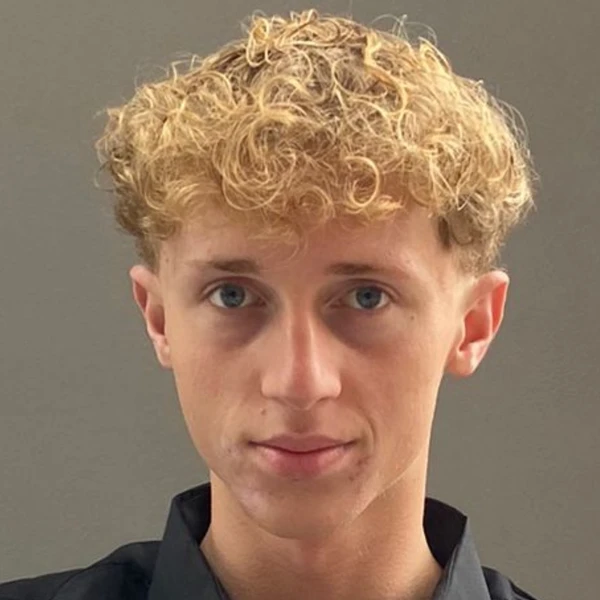
My name is Florian, I am a 21 year old student of Business Marketing at Pima Community College, competitive soccer player and stock trader. I'm originally from Germany and came to the US to study as an international student, so I have started everything from scratch. No family and no friends. Only a plan and the will to achieve it.
I have 14 years of playing soccer. I was the MVP of the German Junior Regional Cup, Top 3 Goalscorer for my league in 2022 and was part of the German FA's national scouting and elite training program. Currently, I play for the Pima Community College student roster competitively and have a full workload of college courses.
When I'm not on the pitch, I invest in the US equities market, also following a rules-based, multiple indicator approach - position sizing, risk management, trade journal. I do it like a second sport, not a hobby. My aspiration is to open a wealth management firm that gives people who haven't been able to build wealth a chance to start.
I spent a month in Costa Rica in 2023 - running basketball and volleyball clinics in low-income neighbourhoods. I also worked in the community as a fitness coach and web designer while I studied.
I don't compartmentalise my sports mindset from my studies. They both demand discipline, self-reflection and commitment even when it's easy to give up.
Education
Pima Community College
Associate's degree programMajors:
- Business, Management, Marketing, and Related Support Services, Other
Miscellaneous
Desired degree level:
Bachelor's degree program
Graduate schools of interest:
Transfer schools of interest:
Majors of interest:
- Business, Management, Marketing, and Related Support Services, Other
- Finance and Financial Management Services
Career
Dream career field:
- Financial Services
Dream career goals:
To build a financial advisory practice that provides accessible wealth-building strategies for young, underserved clients - while achieving consistent profitability as an independent trader.
Stock Trading / Technical Analysis
PJM - Die Investment Akademie2024 – Present2 yearsIntern
Dahm & Freunde2022 – 2022Fitness Coach
CleverFit Gym2023 – 20241 yearWebsite Designer
Surfing Gorilla2023 – 20252 years
Sports
Soccer
Club2010 – 202414 years
Awards
- German Junior Regional Cup MVP
- Top 3 Goalscorer in the League 2022
- Top 5 Goalscorer in the League 2021
- Selected as one of the top regional players for the German FA’s national scouting and elite training program.
Soccer
Varsity2024 – Present2 years
Research
Education, General
Carl-von Ossietzky Gymnasium — Student2020 – 2020
Arts
Surfing Gorilla
Designsurfing-gorilla.com (German Website)2023 – 2025
Public services
Volunteering
Experiment e.V. — Volleyball and Basketball Coach2023 – 2023
Future Interests
Advocacy
Volunteering
Entrepreneurship
Bulkthreads.com's "Let's Aim Higher" Scholarship
I am building a bridge.
Not literally - but the function is the same. A bridge between people who need financial guidance and a profession that has historically ignored them. My goal is to build a financial advisory practice that serves young people from underserved backgrounds - people who are working, earning, and still have no idea how to make their money grow because no one with the right knowledge has ever taken the time to sit down with them.
That gap is real and I have seen it from multiple angles.
I grew up in Germany, came to the United States alone as an international student - and built everything here from scratch. No safety net, no family nearby, no one to call when the decisions got hard. I learned quickly that financial knowledge is not equally distributed - and that the people who need it most are usually the last ones to receive it. I saw the same thing in Costa Rica in 2023 - where I spent a month organizing sports programs for kids in underserved neighborhoods. Talented, hardworking kids with no infrastructure around them to turn potential into something lasting.
That is the problem I am building toward solving.
I am currently studying Business Marketing at Pima Community College with a 3.6 GPA, competing on the varsity soccer team, and developing a systematic approach to trading the US stock market - journaling every position, managing risk with strict rules, treating it like a second discipline. All of it is preparation. The markets taught me that the difference between a good outcome and a bad one is almost never luck - it is process, discipline, and access to the right framework.
That is exactly what I want to bring to clients who have never had a financial advisor in their corner. Not complicated products or opaque fee structures - a clear process, plain language, and a plan that actually fits their life.
The advisory practice I want to build will specifically target first-generation wealth-builders. Young people who are the first in their family to earn real income and have no roadmap for what to do with it. Athletes transitioning out of sport with no financial identity beyond the game. Immigrants who understand hard work but were never taught how compound interest works.
This scholarship would support the education that makes that practice possible. Every course I complete moves me closer to the credentials and credibility to walk into a room and be taken seriously - so that the people I sit across from are taken seriously too.
I am not waiting until I graduate to start thinking this way. I am already building. This is just the next brick.
Michael Rudometkin Memorial Scholarship
Selflessness is not a personality trait. It's a choice you make over and over, it's an inconvenient choice, and it's very often a "no one's looking" choice.
I learned this in Costa Rica in 2023 - organized and ran basketball and volleyball classes for kids and young adults in underserved neighborhoods for a month. I planned the practices - ran the drills - kept showing up every morning. There was no grade attached to it, no line on a contract, no audience. Just a group of kids who needed someone to decide their afternoon mattered - and me deciding it did.
What I did not expect was how much it cost. Not financially - the financial sacrifice was manageable. What it cost was comfort. Showing up in a community that is not yours, earning trust from kids who have every reason not to give it, and maintaining structure and energy even on the days when nothing seemed to be working - that is the unglamorous reality of service. It does not feel noble in the moment. It feels like work. You do it anyway because the alternative is leaving a gap that no one else is filling.
That experience did not come out of nowhere. It came out of a version of my life where I was on the receiving end of something similar - where the people around me kept showing up even when I gave them little reason to. At sixteen I was dependent on drugs and close to losing my family. I did not deserve the patience that was extended to me during that period. I received it anyway. That is what selflessness actually looks like from the inside - not a grand gesture, but someone continuing to show up for you past the point where it is easy.
I have carried that forward in everything I do now. I am pursuing a Business Marketing degree at Pima Community College while competing on the varsity soccer team and building a career in financial advising. The throughline in all of it is the same question: who is being left out, and what can I do about it? My long-term goal is to build a financial advisory practice specifically for young people from underserved backgrounds - people who are working hard and earning money but have no access to the kind of guidance that helps it grow. That is not charity. It is what the profession should have been doing all along.
Michael Rudometkin understood something that takes most people a long time to learn: that a life measured only by personal achievement is a smaller life than it needs to be. Relationships, impact, showing up for people - those are not distractions from success. They are the point of it.
I am still early in building what I want to build. But I know the direction. Every practice I organized in Costa Rica, every conversation I have had with someone who needed a plan and had no one to help them make one, every moment I chose to stay when leaving would have been easier - all of it points the same way.
You find out who you are by what you give away when you do not have to.
RonranGlee Literary Scholarship
"Claim yourself for yourself, and gather and save the time which till lately was being stolen from you, or filched away, or simply lost. Make yourself believe the truth of what I write: some moments are torn from us, some gently removed, and others glide beyond our reach. The most disgraceful kind of loss, however, is that due to carelessness. Furthermore, if you will pay close heed to the problem, you will find that the largest portion of our life passes while we are doing ill, a goodly share while we are doing nothing, and the whole while we are doing that which is not to the purpose."
— Seneca, Epistulae Morales ad Lucilium, Letter I (c. 65 AD)
The Most Disgraceful Loss: Seneca on Time, Ownership, and the Cost of Carelessness
Seneca's opening letter to Lucilius is deceptively simple. On the surface it reads as practical advice about time management - save your hours, do not waste them. But the underlying argument is far more radical: that the failure to possess your own life is not a misfortune that happens to you, but a moral failure you commit against yourself. Seneca is not writing about productivity. He is writing about self-ownership as an ethical obligation, and the gradation of loss he describes reveals that the worst enemy of a meaningful life is not suffering or hardship but the quiet, careless surrender of attention.
The letter opens with a command - "claim yourself for yourself" - that is striking in its structure. The self appears twice - as both the agent and the object of the action. Seneca is not saying "protect your time" or "be more efficient." He states that the self is something that needs to be actively recovered – that it has already been given away. This is the framing of the central tension of the essay: a difference between the self as something you have and the self as something which has been scattered throughout the needings of others, the hours they waste, the way they live their lives without being conscious of it. Seneca is not giving any ideas about actual scheduling, but first he has identified the issue as an identity issue.
His taxonomy of lost time is where the argument becomes philosophically precise. He identifies three categories: time that is torn from us, time that is gently removed, and time that glides beyond our reach. The progression is deliberate. The first category - torn - implies external force, a violence done to us without consent. The second - gently removed - implies something more insidious: a loss we permit because it does not feel like loss. The third - gliding beyond reach - is almost imperceptible, the time that disappears simply because we were not paying attention. The reader realizes by the end of the novel why Seneca has arrived at the conclusion that the most disgraceful loss is one suffered by carelessness. Violence can be forgiven. Carelessness cannot, because it requires no external cause. It is a loss we author ourselves.
The word "disgraceful" is not incidental. Seneca is a Stoic, and for the Stoics, the only true good is virtue - the quality of one's character and choices. Wasted time is disgraceful not because it is inefficient but because it represents a failure of self-governance. To let time slip through carelessness is to demonstrate that you are not in command of yourself, that you are being lived rather than living. This isn't some basic categorization, it's moral. Seneca isn't disappointed in Lucilius; a manager isn't disappointed on a worker's failure to turn in a timely report. He is worried about Lucilius as a philosopher would be about a sleepwalker through his life.
The final sentence completes the argument with a devastating specificity. Life passes, Seneca writes, while we are doing ill, while we are doing nothing, and while we are doing that which is not to the purpose. Each phrase escalates. Doing ill is active - it is the misuse of time for destructive ends. Doing nothing is passive - the absence of meaningful action. But the third category is the most quietly damaging: doing that which is not to the purpose. This is not idleness or vice. It is busyness without direction, effort without intention, the appearance of a life without its substance. Seneca identifies this as consuming the whole - not a portion, but the entirety of a life lived without self-possession.
What Seneca is ultimately arguing is that time is not a resource to be managed but a medium through which character is expressed or abandoned. Every hour you do not claim is an hour in which someone or something else defines who you are. The letter's urgency comes from this understanding: there is no neutral position. Inattention is itself a choice, and the accumulation of careless hours is the accumulation of a careless life.
I encountered this passage at a moment in my own life when its meaning was not theoretical. I had spent years allowing time to be stolen from me - not by external forces but by my own carelessness, by choices that dispersed my attention and energy in directions that served nothing I actually valued. Seneca's taxonomy maps precisely onto that experience. There was time that was torn - genuine crises, things outside my control. There was time gently removed - social pressures, the slow drift toward habits that felt harmless. And there was time that simply glided away while I was doing that which was not to the purpose.
The line between the second and third categories is the most important distinction Seneca makes, and it is the one most easily missed. We recognize vice when we see it. We do not always recognize purposelessness dressed as activity. Seneca's warning is not primarily about the dramatic failures of a life. It is about the quiet ones - the hours that accumulate into years while we are technically present but functionally absent from our own existence.
To close-read Seneca is to understand that he is not writing a letter about time. He is writing a letter about the self - about what it means to possess one, and what it costs to lose it through nothing more dramatic than inattention. The claim he asks Lucilius to make is not complicated. It requires no special talent or circumstance. It requires only the daily, unglamorous decision to be present in your own life - to do that which is to the purpose - before the hours glide beyond reach entirely.
Sloane Stephens Doc & Glo Scholarship
My heroes are not celebrities. They're the kids I coached in Costa Rica in 2023 - teens who had no organized afternoon, no safe place, and no one who sat down with them and said: “Here, this is a plan for your life, and here's why you're worth making one for.”
I went out to provide basketball and volleyball coaching in underserved communities. I set up the practices, led the drills and kept the energy going. I didn't know how much it would make sense of my own path. Before that bunch of kids every day, I knew that I had been thinking about for years: The difference between the good and the bad in people is not usually their talent or their work. It is access. To structure, to knowledge, and to someone who takes their future seriously.
I am Florian, a Business Marketing student at Pima Community College in Tucson. I came here from Germany as an international student - alone, starting from zero, building everything without a local safety net. That experience made me allergic to the idea that opportunity is equally distributed. It is not. I have seen it from both sides.
My vision is specific: I want to build a financial advisory practice that serves young people from underserved communities - people who are working hard, making decent money, and still have no idea how to make it grow. The financial advisory industry as it exists today is largely built for people who are already comfortable. The minimum account sizes, the jargon, the implicit message that your money is not worth a professional's time - all of it functions as a wall. I want to tear that wall down.
Sloane Stephens built her foundation at twenty years old because she understood that access to sports and education changes trajectories. I understand that access to financial knowledge does the same thing. An athlete who retires at 30 with no financial literacy is just as vulnerable as a kid who never had a safe place to practice. The system fails people at every stage if no one builds the bridge.
Education is how I build the bridge. Every course I complete, every trade I analyze, every financial concept I internalize is preparation for sitting across from a first-generation wealth-builder and giving them the same quality of advice that wealthy families have always taken for granted. That is not charity. That is what the profession is supposed to be.
The people who inspire me are the ones who showed up before it was recognized - coaches in underfunded programs, advisors working in communities no one else would serve, grandparents who believed in education before anyone proved it would pay off. Sloane's grandparents Doc and Glo understood that. My own parents understood that, even when I gave them every reason to stop believing in me.
I am still building toward the person they saw coming. I do not plan to stop.
STLF Memorial Pay It Forward Scholarship
Back in 2023 I headed to Costa Rica without a script. I knew I wanted to help. I did not know exactly what that would look like until I was standing in front of a group of kids who had nowhere to be and nothing structured to do - and I realized that was exactly the problem I was there to solve.
I am Florian, a Business Marketing student at Pima Community College and a soccer player on the PCC team. I came to the US as an international student - alone, starting from zero, building everything here without a safety net. That experience made me 'allergic' to passivity. When I see a gap I want to fill it. Costa Rica was a gap.
My role there was not just showing up and joining in. I organized the practices. I planned the sessions, structured the drills, managed the rotations, figured out how to keep different age groups engaged at the same time. A lot of it I made up as I went, because that is what organizing actually looks like on the ground - you prepare what you can and adapt the rest. The goal was simple: give these kids a reason to come back tomorrow instead of spending the afternoon somewhere they should not be. Some days that worked better than others. All of it was worth it.
What I learned is that leadership through service is the only kind of leadership that actually means something. Anyone can lead when there is a title attached or a crowd watching. It is a completely different thing to show up for people who cannot do anything for you in return, in a place that is not yours, doing work that is not glamorous, because you decided it mattered. That version of leadership is harder to fake. And it builds something in you that no classroom or coaching session can replicate.
I carry that into everything else. On the soccer field, my effort affects the ten people around me whether I think about it or not - that is a form of service too. In my trading practice, I follow strict rules I set for myself in advance because self-discipline is the foundation before you can lead anything external. And my long-term goal - building a financial advising practice for young people who have been overlooked by the system - is entirely built on the idea that showing up for someone who has been written off is the highest-leverage thing you can do.
STLF believed in revealing leadership through service, relationships, and action. I think that is exactly right. Not leadership as a concept or a resume line - leadership as something you demonstrate by getting to the gym before everyone else and figuring out what the session needs to look like today.
That is what I did in Costa Rica. That is what I plan to keep doing.
Dream BIG, Rise HIGHER Scholarship
I did not come to the United States with a net. I came with an intention.
My name is Florian and I am a student at Pima Community College in Tucson, Arizona and I am a Business Marketing major. I was an international student, who came here, alone, out of home, in a country where I had to develop all the support systems that I needed. No family nearby. No financial cushion. Nothing in the hallway or on the other end of the phone to recognize the faces or voices who knew what it was like to be doing this. Only a plan, a list of aspirations, and the tenacious faith that the fact that I am right here and where I am going is within reach of a cover-up, provided I am prepared to put in the effort every single day, when no one is looking and anything is possible.
That was not something that was believed in the air. It was inspired by observing my family set a good example of what I did not know the name of until I was older dignified persistence. The type that makes no declaration. The type, which merely appears, again and again, irrespective of the situation. I took that over an ocean and it has been the best thing in my bag pack since then.
Education has not only helped me to define my aspirations, it has provided me with the words to express them. I was ambitious but lacked a structure prior to joining PCC. I had a desire to create something, to become economically self-sufficient, to make a life that I make myself. The thing my coursework in Business and Marketing provided me with was organization. It showed me the mechanics of the markets, scaling up of organizations, how decisions made on the highest level are funnelled down to actual individuals on the bottom. That was not something that remained in the classroom. I brought it to the markets, directly, - to create a systematic, rules-based procedure of trading the US stock market, and to use the same rubrics of analysis which I had studied in lecture rooms, on actual capital and actual risk. I research any trade as I study an exam: in a systematic, truthful and open-minded manner.
My hardships have not been melodramatic as people tend to make hardship appear. No one crisis, no point of breakdown that lends itself to a clean story. Only the daily burden of constructing life in a new world and keeping all the plates in the air was required. Playing on the soccer team at PCC and taking a full course load. Practicing a trading discipline - recording all my positions, examining all my losses, working on my strategy - when studying my exams, and reviewing the next game. Finding my way in the world of financial insecurity without having a family support system around to save me should I fall. Knowing, and at times having to learn the hard way that resilience is not an emotion. It is a decision that you make prior to the day - and reaffirm when it becomes challenging.
In summer 2023 I visited Costa Rica to volunteer in youth sports programs in underprivileged areas. I organized volleyball and basketball games with children and young adults who were living in the community where the lure of the streets was not the fig of speech, but the order of the day. What I found there made me strengthen what I already guessed, namely, that sport is one of the strongest means with which we can provide the youth with an incentive to appear somewhere safe, on a regular basis, surrounded by people who are concerned as to whether he or she will appear again to-morrow. I went to bring something. I came away having given much less than I got.
That experience solidified the idea of the goal of all I am creating. I wish to establish a financial advising firm that would work with individuals who resemble what I resembled when I moved to Arizona young, strong, under-estimated and absolutely without access to such financial advice that can alter the course of life. The income issue of wealth disparity in this nation is not merely an income issue. It is a knowledge problem, an access problem and a problem of who is taken seriously when they walk into a room. I will be the adviser in that room who will listen to them earnestly-who will come down to their level, to their world, and create a strategy that will work in their life.
The idea that hard work and self-confidence can unlock opportunities led to the creation of BlueHill REI and Harmony by EmmaSky. It is not an abstract notion to me. And it is the law of operation which I have been living by since the day I set foot here with a plan and nothing but a plan. The scholarship would not only help to cover my tuition fees but it would hasten a quest that had begun the moment I decided that distance, financial insecurity and beginning at the bottom of the ladder were not the reasons to make me slow down.
Reasons to move faster were they.
Our Destiny Our Future Scholarship
I traveled to Costa Rica in summer 2023 - with no plans other than to help out. I found myself doing something that was not expected: I saw sport save lives live.
I was volunteering at local youth programs in Costa Rica, where I collaborated with coaches and community organizers to conduct volleyball and basketball activities with children and young adults in communities with low access to services. It was a plain and yet no small mission, to keep the boys on the court, and off the street. In a society where the temptation of gang life and drug culture is not hypothetical but real and present, appearing with a ball and a time table is a defiance. I witnessed that. And it transformed my thinking of impact.
My name is Florian, and I am a competitive soccer player and a Business Marketing student at Pima Community College, an aspiring financial advisor. I live by discipline, which is taken up by systematic trade plans, high risk control, early mornings and late entries in the journal. Discipline without guidance is mere routine. Costa Rica provided guidance to me. It demonstrated to me that the competencies I am developing: financial literacy, critical thinking, capability to develop systems that operate under pressure are not only personal resources. They are instruments that I must share.
My idea to add a good difference to the world is not a one-time thing. It is a life-long commitment which is based upon two pillars.
The former is financial education targeting young people who never had such education. The income disparity in this country is not a mere income issue- it is a knowledge issue. Youth in disadvantaged communities are making financial choices daily without the constructs to make them effective. I am also planning to create easy-to-access resources, workshops, and, ultimately, a financial advising practice tailored to first-generation wealth-builders. Individuals who, as was the case with the children that I tutored in Costa Rica, have massive potential and practically no infrastructure to utilize it.
The second is the pillar of sport. I have observed the impact of an organized sporting atmosphere on a youngster who lacks any other ground. It develops identity, responsibility and sense of belonging - which is not possible in a classroom alone. I will collaborate with youth sports institutions as my career emerges to incorporate the financial literacy program into sports settings. Go to the youth at the point where they are. Gain their trust with the game, then educate them on how to create a life outside the game.
The woman in whose honor this scholarship has been established was quite aware of what most people can hardly comprehend in a lifetime, namely that, giving is not a deduction to your life but the point of it. I heard some form of that in a Costa Rican court, when a teenager decided to practice instead of the other. I am continuing to develop into the type of person who can put that choice on more people, more regularly, and more extensively.
That is my plan. It begins now and there is no end line.
Stephan L. Wolley Memorial Scholarship
There are those who have a calling in a classroom. I discovered mine in an acre.
My name is Florian, a Business Marketing major student in Pima Community College and a part of the PCC soccer team. I went to the United States to pursue two things concurrently; an education on a global scale and the opportunity to compete with the best of the best thus challenging what I believed I could have achieved. Each day I wake up realizing that either of those things is costly- energy, sacrifice and focus, which most people my age do not care to spend. I spend it anyway.
My family situation influenced all of that in terms of my approach to that. I have been raised in a family where attendance was mandatory - to practice, to school, to one another. I was not brought up by my parents to cut corners. They brought me up in the notion that those who love you the most are the ones that expect the most of you. That pressure was never a burden. It felt like fuel. The discipline which I bring to each trading session, each practice, each exam, I developed at home long before any coach or professor strengthened it.
I am currently studying a Business Marketing degree in financial markets and entrepreneurship. Beyond the classroom, I have been working to create a systematic process to stock trading, creating rule-based systems, recording all trades, and analyzing risk management as an athlete analyzes game footage. I do not distinguish my mental approach to sports and education. The same thing they both need is discipline in the face of pressure, honesty in evaluating oneself, and being able to lose without quitting.
Soccer has taught me lessons on the field that no textbook could. It has taught me how not to use words to communicate, how to trust members of your team whom you cannot control, and how to fight with everything you have when the scoreboard tells you that you are losing. Such lessons can be transferred. They are already transferring - into how I handle risk in the markets, how I would appear on my team when the season gets tough, how I would appear on client one day as a financial advisor who truly knows what it means to have something on the line.
The foundation of my future plans is one that Stephan Wolley would probably identify, namely family, competition, and meaning. My goal is to finish my degree, become a financial advisor, and, ultimately, develop tools and resources that could enable young people, particularly athletes leaving sport to develop real financial security. The whole life of athletes is based on telling them to trust the process. No one instructs them on what to do when the process is over. I would like to be the one who does.
This scholarship has a tangible weight since it has an actual name. Stephan was not a mere athlete, he was a son, father, brother. He realized that it is not about competition but the competitors you are competing with. I know that much.
I have the honor to apply, and I do not speak lightly that his family made sorrow generosity.
SIA Financial Planning Scholarship
Most people learn about personal finance from a textbook. I learned it from real losses. At nineteen, while balancing a full course load in Business Marketing at Pima Community College and competing on the PCC soccer team, I made a decision that most students my age never make: I started trading the US stock market with real money and a strict set of rules. Not because I had capital to burn, but because I understood that financial literacy - real financial literacy - only comes from skin in the game.
My trading framework is built around a core principle: risk management before reward. Every single trade I execute must have a defined stop-loss before entry. I cap my risk per trade at 0.5% of my portfolio and limit my position size to a maximum of 10%. I use a multi-indicator confirmation system - RSI, EMA crossovers, and ADX directional filters - with volume validation before any signal is acted on. I journal every trade. I review every loss. I am not speculating; I am engineering a process. That discipline is not just a trading strategy - it is a financial philosophy I intend to carry into a career advising others.
The financial advisory industry has a systemic problem that I have seen from both sides of it: the gap between those who understand money and those who simply have it. Wealth management, as it currently exists, is largely designed for people who are already wealthy. The minimum investment thresholds, the opaque fee structures, the industry jargon - all of it creates an invisible barrier that keeps first-generation wealth-builders locked out of the very services designed to help them. I want to tear down that barrier. My vision for the future of financial advising is one built on radical transparency, accessible education, and tools that meet clients where they actually are - not where advisors wish they were.
Specifically, I believe the next generation of advisors must embrace a hybrid model: combining quantitative, rules-based portfolio management with human behavioral coaching. Most clients do not fail because of bad strategies. They fail because of emotional decisions - panic selling, overtrading, abandoning a plan at the first sign of volatility. An advisor who can both design a sound risk-adjusted allocation and teach a client to trust the process is worth far more than one who simply manages assets. I am already building that dual skill set - running systematic trading strategies while studying the behavioral economics behind financial decisions.
This scholarship would directly fuel that mission. Without significant financial aid, the cost of a four-year finance education is a paradox that affects students like me most acutely - we are the ones who understand money well enough to know how much this costs, but do not yet have enough of it. Every dollar of scholarship funding is capital I can redirect toward my education, my tools, and ultimately toward serving clients who look exactly like me: young, ambitious, first-generation wealth-builders who deserve a seat at the table.
The financial system does not need more advisors who manage money for the already-comfortable. It needs leaders who can democratize wealth-building - who can sit across from a 25-year-old with $500 to invest and map out a path to generational security with the same rigor and care given to a high-net-worth client. That is the advisor I am training to become. I am not waiting until I graduate to start.
Charles B. Brazelton Memorial Scholarship
My "awkward" thing? It is all over my face--literally.
I have vitiligo. A disease in which patches of skin become depigmented, creating white spots all over your body like dots on a map that no one ordered. I began to mine when I was nine on my hands. By the age of twelve it had gone up my neck and sat upon my face.
You never forget the first time a child walks past and at you in school and says something about your skin. I never found a good enough answer. It is simply the way I never please anybody - not to mention me.
I was a master of long sleeves. Even in summer. Even in the Arizona heat that makes you question all the life choices. I would prefer to be hot in a hoodie than be subjected to questions that I did not want to answer.
Soccer changed that.
You can not conceal yourself on a pitch. Skin, short sleeves, shorts. The initial meetings with a new team were never easy - the stares, the side looks, the silent silence when a person finally gathered courage to ask. And then we would begin to play. And then it all did not count. What your skin should be like, the ball does not care. When you are making the right run, passing the right pass your teammates forget about it.
Sports offered me something that I could not find anywhere-- a place where I was not judged by my appearance, but by my abilities.
It was not really on a field where the turning point was. It was Tuesday morning the second year. Late rushing out the door I forgot my jacket. I was at school in a short sleeve shirt the first time in years. Nothing happened. Nobody stared. Or perhaps they did--and I was no longer as much interested.
I wrote to my mom: I forgot my jacket, I survived.
She returned three crying emojis and a voice message that I saved.
I will not say that I have some ultimate goal of self-acceptance. Mornings when I see myself in the mirror and have that old familiar tug-of-war, the desire that I would only appear normal, however that may be. But these things go by more quickly now.
The capacity to read a room is what vitiligo really provided me with, in my opinion. I was taught at an early age that there are things that people have that you can not see and thus you learn to be a little lighter, a little less impatient. I can tell when someone within a group does not fit, as I have been in those situations myself.
Arriving in the US, playing on a new team, being new in a new country, none of this was as scary as the first time I stepped into a high school cafeteria at fourteen and wished that no one would see my hands.
After that? All the rest seemed to be controllable.