
Hobbies and interests
Model UN
Student Council or Student Government
Running
Weightlifting
Finn Johnson
1x
Finalist
Finn Johnson
1x
FinalistBio
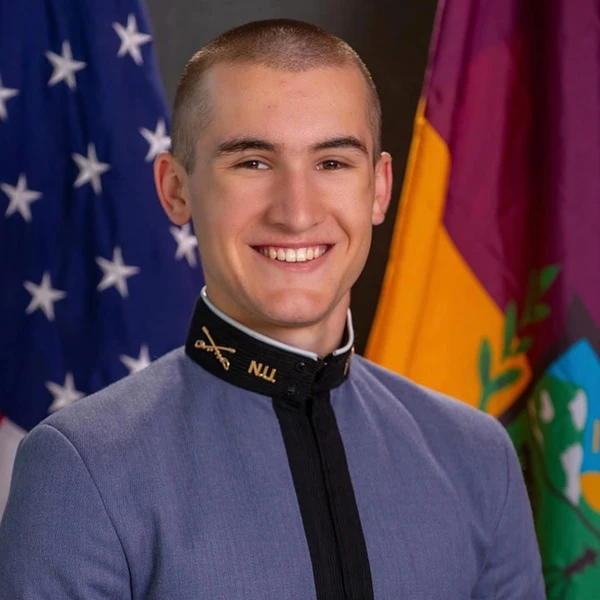
I am attending Norwich University, pursuing a commission into the United States Air Force as an officer, where I intend to pursue a career within Pararescue as a Combat Rescue Officer. I am driven, dedicated, compassionate, goal-oriented, and ambitious. I understand the weight of public service and what sacrifices are made within it. I value teamwork, kindness, and service before self.
I am an active participant in and hold leadership positions within the Norwich Student Government Association, NU Model United Nations, and Norwich Christian Fellowship.
Education
Norwich University
Bachelor's degree programMajors:
- Political Science and Government
Miscellaneous
Desired degree level:
Bachelor's degree program
Graduate schools of interest:
Transfer schools of interest:
Majors of interest:
- Political Science and Government
- Philosophy
Career
Dream career field:
Military
Dream career goals:
Achieve the position of Combat Rescue officer in Pararescue
Sports
Cross-Country Running
Varsity2025 – 20261 year
Future Interests
Politics
Volunteering
TAMIU ROTC Leadership Values Scholarship
One of the most valuable leadership lessons I believe ROTC has helped teach me is peer leadership, particularly leading individuals who may be older or more experienced than I am. During my first year of college, in a structured cadet environment, I was placed in situations that required me to demonstrate this ability. During my first year in college, participating in ROTC within the Corps of Cadets, I have been faced with the challenge of working closely with people from all walks of life, with different upbringings, values, and personalities. This environment presented me with a unique situation I had never faced before, in which I learned a form of leadership grounded in trust, communication, and consistency.
This lesson, however, is not just taught in a single training but over time, during which I had to learn to lead my peers effectively when given responsibility. And this was something I often encountered resistance with when stepping up or being chosen for a specific role, where people would be reluctant to follow me because I was their age, or they thought they could do a better job. I learned that I had to prove through my actions that I was reliable, prepared, and willing to listen as much as I directed. Going into ROTC, I had a decent grasp of how to lead and what actions were effective within peer leadership, but having these skills put into practice in this environment was the real test, and a hard one at that.
As I continued through these trainings, I learned how to approach peer-to-peer leadership effectively, as it's easy to say what is needed and harder to put those actions into practice. So, I learned how to refine my approach. I learned how to communicate expectations, listen to concerns and ideas, and build consistency in my character and in my leadership. And this allowed me to stand out within my platoon as someone reliable, easy to work with, a good follower and leader who blended with the team, and someone upper-level students would look to entrust with peer-to-peer responsibilities.
Peer leadership has been an invaluable lesson for me, one that I can and will actively apply in environments where leadership is not automatically determined by rank or title. Whether leading enlisted soldiers or working in a civilian organization, I will face people who are older or more experienced than I am. In those situations, I will be able to rely on the principle I have learned through my experience so far in ROTC: leadership is not about being the most authoritative or qualified person in the room, but about being the most dependable. By focusing on trust, communication, and steady example, I will better lead diverse groups of people in high-stress environments.