Hobbies and interests
Dance
Ballet
Art
Painting and Studio Art
Alpine Skiing
Camping
Biking And Cycling
Ice Skating
Drawing And Illustration
Ceramics And Pottery
Tap Dancing
Acting And Theater
American Sign Language (ASL)
Animals
Art History
Babysitting And Childcare
Community Service And Volunteering
Crafting
Fashion
Human Rights
Sculpture
Reading
Adult Fiction
Action
Art
Book Club
Contemporary
Crafts
Drama
Epic
Fantasy
Literary Fiction
Women's Fiction
Young Adult
Thriller
Suspense
Psychology
I read books multiple times per week
Finley Downum
1x
FinalistFinley Downum
1x
FinalistBio
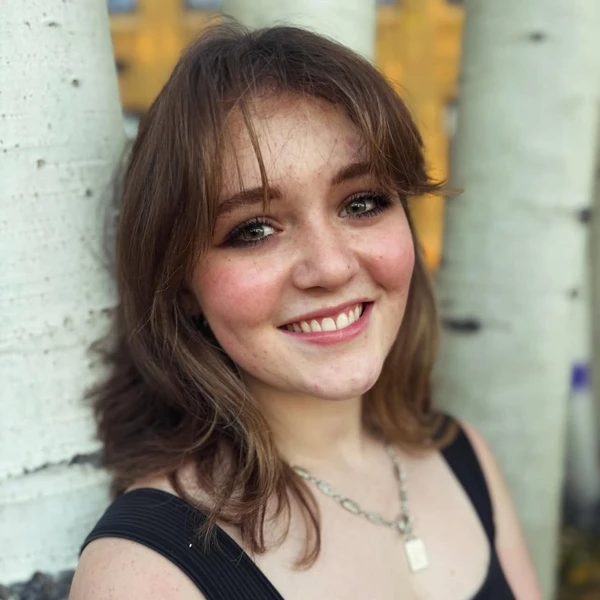
Hi! I'm Finley Downum, a rising senior from Gunnison, Colorado, with a lifelong passion for dance and studio arts. Creativity has always been central to who I am. Whether I’m choreographing on stage or painting with watercolor in my sketchbook, I find purpose through artistic expression.
I’ve been a competitive elite-level dancer for nearly a decade, training across styles and performing with intensity, discipline, and heart. Offstage, I create with my hands through drawing, painting, sculpture, comic illustration, and photography. Recently, I’ve been especially focused on portrait work and watercolor, where I explore identity and emotion through color and detail.
As the founder and president of my community’s chapter of the National Honor Society for Dance Arts, I’ve used leadership to celebrate creativity, encourage academic excellence, and connect students across disciplines. I’ve organized community dance events, coordinated volunteer efforts, and mentored younger dancers to help them find confidence and voice in their art.
I’m still discovering where my future will take me, but I know it will be centered around creativity, leadership, and impact. I come from a small town with limited access to advanced arts programs and financial resources, so scholarships are essential to help me reach the next level of my education and career.
I am committed to building a life rooted in artistic expression, empathy, and growth. I’m grateful for any support that helps make that dream possible.
Education
Western Colorado University
Bachelor's degree programGunnison High School
High SchoolMiscellaneous
Desired degree level:
Bachelor's degree program
Graduate schools of interest:
Transfer schools of interest:
Majors of interest:
- Visual and Performing Arts, General
- Dance
- Design and Applied Arts
- Environmental Design
- Visual and Performing Arts, Other
- Psychology, General
Career
Dream career field:
Arts
Dream career goals:
Children's Art Therapist
Teacher Assistant
High Attitude Dance Academy2019 – Present7 yearsHostess, Point-of-Contact
Harmel's Bites and Brews2025 – 2025Hostess, Point-of-Contact
Three River’s Smokehouse2024 – 20251 year
Sports
Alpine Skiing
Club2017 – 20203 years
Dancing
Club2010 – Present16 years
Awards
- Numerous top overall placements
- Judges awards
- Numerous scholarships for performance and artistry
Arts
Gunnison High School - capstone project
Visual Arts2023 – PresentMissoula Children's Theater
Acting2016 – 2020High Attitude Dance Academy
DanceFall Production, Spring Production, Competition Production2010 – PresentGunnison Arts Center
Visual Arts2025 – Present
Public services
Volunteering
Gunnison Health Care Center/NHSDA — Volunteer2025 – PresentVolunteering
Cards 4 Hospitalized Kids — Local Organizer and Leader2019 – PresentVolunteering
NHSDA — Project Organizer and Leader2025 – PresentVolunteering
Children's Hospital of Colorado — Organizer and Leader2025 – PresentVolunteering
Georgetown University Arts & Humanities Program — Local Project Leader2024 – PresentVolunteering
Gunnison Country Food Pantry - Food Drive — Leader2025 – PresentPublic Service (Politics)
National Honor Society of Dance Arts — Chapter founder, President2024 – PresentVolunteering
Soles4Souls - Shoe Drive — Leader2025 – Present
Future Interests
Advocacy
Volunteering
Entrepreneurship
Tawkify Meaningful Connections Scholarship
Relationships have played a major role in shaping both who I am and what I want to do with my life. Not just friendships or family relationships, but the connections I’ve built through dance, art, and service. These experiences have shown me that relationships are not just something you have, they are something you actively build, and they have the power to impact people in ways you don’t always see right away.
One of the most important places I’ve seen this is through my work with residents at a local assisted living center. I spend time sitting with them, talking, and creating portraits while they share their stories. At first, I thought I was just there to draw, but I quickly realized the drawing wasn’t the most important part. The connection was. Many of the residents don’t often have the opportunity to share their experiences in a meaningful way, and simply sitting and listening can mean more than I expected.
Those moments have shaped the way I approach relationships. I’ve learned that being present matters more than saying the perfect thing. It’s about paying attention, listening, and creating space for someone to feel seen. That understanding has carried into other parts of my life, especially in leadership.
As the founder of the National Honor Society for Dance Arts chapter at my studio, I’ve worked to build a community where dancers feel supported both on and off the stage. Dance can sometimes feel competitive and isolating, but I wanted to create something that focused on connection and service. Through projects like food drives, shoe donations, and outreach events, I’ve seen how working together toward something meaningful can bring people closer in a different way than performance ever could.
Looking ahead, relationships are at the center of my long-term goals. I plan to pursue a Bachelor of Fine Arts in Studio Art with a concentration in painting, along with a minor in psychology, and eventually become a licensed children’s art therapist. In that career, relationships will be everything. The ability to connect with a child, build trust, and create a safe space will determine how effective I can be in helping them express and understand their emotions.
Art, especially, is a powerful tool for connection. Not everyone can easily put their feelings into words, but through art, people can communicate things they might not even fully understand themselves. I’ve already seen this in small ways through my work, and it’s something I want to continue developing into a career.
In a world that is becoming more focused on quick interactions and surface-level communication, I think meaningful relationships are more important than ever. Real connection takes time, effort, and attention, and it’s something I value deeply because of the experiences I’ve had.
For me, relationships are not separate from my goals, they are the foundation of them. Everything I want to do in the future is centered around building connections, understanding people, and using those relationships to create something positive. Whether it’s through art, leadership, or everyday interactions, I want to continue creating spaces where people feel seen, heard, and understood.
Forever90 Scholarship
Service has become a central part of who I am, not because I was told to do it, but because I have seen firsthand how much it matters. Not because I want a line on my resume, but because I truly care about making a difference. Through my dance studio, I founded the first National Honor Society for Dance Arts chapter in my community, creating a space where dancers could be recognized not just for technical performance, but for leadership and service. What started as an idea has grown into something that impacts both our studio and the larger community.
Through NHSDA, I have helped organize and lead projects such as shoe drives for Soles4Souls, food collections for our local pantry, school supply drives, and creating cards for hospitalized children and nursing home residents. These projects may seem small on the surface, but I have learned that service is not always about large, visible acts. It is about consistency, effort, and choosing to show up for others.
One of the most meaningful forms of service I am currently involved in is working with residents at a local assisted living center. I spend time sitting with them, listening to their stories while I draw or paint their portraits. This experience has changed my perspective on both service and art. It is not just about creating something, it is about connection. Many of the residents I work with do not often have the opportunity to share their stories in a meaningful way. By taking the time to sit with them and listen, I am able to give them that space. The artwork becomes something deeper than a portrait. It becomes a reflection of their life and their voice.
Through these experiences, I have learned that service is not about recognition or obligation. It is about being aware of the people around you and choosing to contribute in a way that is meaningful. It has also shaped how I lead. As the founder of NHSDA, I have worked to create opportunities for other dancers to get involved in service, helping them realize that their time and effort can make a real difference. Watching younger dancers begin to step into leadership roles and take initiative has been one of the most rewarding parts of my experience.
After graduation, I plan to pursue a Bachelor of Fine Arts in Studio Art with a concentration in painting, along with a minor in psychology. My long-term goal is to become a licensed children’s art therapist. I want to use art as a way to help children express emotions they may not have the words for, especially those who are facing challenges or difficult circumstances.
The service I am involved in now directly connects to the work I hope to do in the future. My experience with the assisted living center has shown me how powerful art can be in creating connection and understanding. I want to bring that same idea into my career, using art as a tool to support, listen to, and uplift others.
I believe a life of service is not defined by one loud moment, but by the choices you make every day. It is about showing up, paying attention, and using what you have to help others. That is something I will continue to carry with me, both in my education and in the career I am working toward.
G.A. Johnston Memorial Scholarship
Watercolor is one of the mediums that has challenged me the most as an artist. It’s unpredictable and forces you to let go of control, which is something I’ve had to learn over time. Instead of trying to make everything perfect, I’ve learned how to work with the way the paint moves, building layers and letting the piece develop naturally. That balance between control and letting go is what draws me to watercolor. It is my absolutely favorite medium to use.
I plan to pursue a Bachelor of Fine Arts in Studio Art with a concentration in painting, along with a minor in psychology. My long-term goal is to become a children’s art therapist. I want to use art to help kids express emotions they might not have the words for, and watercolor feels especially connected to that because of how fluid and expressive it is.
The first piece I submitted, the crane, was inspired by the environment I grew up in and the constant presence of construction and change. I was interested in capturing something structured and industrial in a more loose and expressive way. I used light washes and sketch-like lines to soften the rigidity of the crane, turning something mechanical into something more atmospheric and almost calm.
The second piece, the alligator, was focused more on pushing color and texture. I wanted to experiment with layering and using unexpected colors to bring energy into the subject. I used bright, shifting colors and detailed textures to create movement and intensity. This piece was about letting the watercolor build depth over time and not over-controlling the outcome.
The third piece, the portrait, is the most personal. I’m really drawn to painting faces because of how much emotion they can hold. In this piece, I focused on vulnerability rather than perfection. I let the paint blend naturally, using softer edges and layered tones to create something that feels more raw and expressive instead of perfectly realistic. Portraiture is my specialty and what I love the most.
Together, these pieces show how I use watercolor not just to paint what I see, but to interpret it. I’m always trying to find a balance between control and letting the medium speak for itself. That’s something I will continue to develop as I grow as an artist and work toward a career where art can have a real impact on others.
Ryan Murray Red Canyon Scholarship Award
My path through high school hasn’t looked like what most people would consider “typical,” but it has pushed me to figure out exactly what I want and how to get there. After graduation, I plan to pursue a Bachelor of Fine Arts in Studio Art with a concentration in painting, along with a minor in psychology. My goal is to eventually become a licensed children’s art therapist, helping kids express and work through their emotions in a way that feels safe and natural for them.
A big part of what shaped my high school experience is dance. I train up to 20 hours a week, year-round, which means my schedule has never fit into a normal routine. Because of that, I’ve had to learn how to manage my time, stay organized, and hold myself accountable. There isn’t really room to fall behind, so I’ve had to stay on top of everything and take responsibility for my own success.
To challenge myself academically, I also took dual enrollment classes through Western Colorado University. That experience helped me see what college-level work is actually like and gave me confidence that I can handle it. It also helped me start focusing more seriously on art and what I want to do with it in the future.
Outside of school, I’ve worked to create opportunities for others, not just myself. I founded the first National Honor Society for Dance Arts chapter at my studio, which gave dancers a way to be recognized for more than just performing. Through that, I’ve helped organize service projects like food drives, shoe donations, and other community outreach. It showed me that leadership isn’t about being the loudest person, it’s about taking initiative and following through.
One of the experiences that impacted me the most has been spending time at a local assisted living center, where I draw and paint portraits of residents while talking with them. That completely changed how I see art. It made me realize that art can be more than just something you create, it can be a way to connect with people and make them feel valued. That’s what led me toward art therapy.
Ryan Murray’s story really stands out to me because it shows that success doesn’t have to come from a traditional path. My high school experience has been built around my passions and the choices I’ve made to grow, even when it wasn’t the easiest route. I am thankful that high schools are now moving more towards helping shape students around their passions and goals, because that flexibility has allowed me to balance dance, academics, and art in a way that truly prepared me for what will come next. Schools are taking notice that setting kids up for success hinges on what they are passionate about, not just assuming everyone brings the same thing to the table. I appreciate the shift, and hopefully it continues to grow so more students feel supported in building a path that actually fits who they are and where they want to go.
I may not have followed a typical path, but I’ve learned how to stay driven, take initiative, and keep working toward my goals. That’s something I’m proud of, and it’s what I’ll carry with me into college and my career.
Bulkthreads.com's "Let's Aim Higher" Scholarship
When I think about what I want to build, I do not picture a single object or achievement. I picture a space.
I want to build a safe, creative environment for children who feel overwhelmed, unheard, or unsure of themselves. My long-term goal is to become a licensed children’s art therapist. Through earning a fine arts degree in studio art and a minor psychology, followed by graduate school, I plan to build the education and training necessary to make that vision possible. But more than a career title, I want to build trust, consistency, and emotional safety for young people.
Art has always been a steady part of my life. During difficult times in my life, it gave me a way to process emotions that felt too complicated to explain. Painting allowed me to sit with my thoughts instead of avoiding them. I know there are children who carry heavy emotions without the language to express them. I want to build a space where creativity and art becomes their voice.
The foundation of that future begins with my education. I am not pursuing art casually. I am intentionally combining it with psychology so that my passion is supported by professional knowledge. I want to understand child development, trauma-informed care, and ethical practice. By building a strong educational base, I will be able to offer more than encouragement. I will be able to offer real tools for healing.
Beyond therapy, I also hope to build community-centered art initiatives. I have already spent time creating portraits of residents at a local assisted living center, listening to their stories while I work. Experiences like that have shown me how art can connect generations and preserve personal histories. In the future, I would love to organize workshops, outreach programs, or collaborative art displays that bring people together across age groups and backgrounds.
Building this future will take time. It will also take discipline and resilience. Graduate school is a financial commitment, and establishing a professional practice requires patience. But I am willing to invest that effort because I believe in the long-term impact. Helping one child develop confidence or emotional clarity can shift the course of their life. Supporting families and schools with accessible creative resources can strengthen an entire community.
What I want to build is a lasting foundation of support for young people who need it the most. I want to build a practice where children feel safe enough to be honest, creative enough to explore, and supported enough to grow. Through my education and service, I want to create something that strengthens families, supports schools, and encourages healthier communities. If I can help even one child feel understood in a moment when they might otherwise feel alone, then what I am building will matter.
Our Destiny Our Future Scholarship
For a long time, I thought making an impact on the world meant doing something large and highly visible. As I have grown, I have realized that impact often begins in smaller, quieter spaces. It begins with noticing people, listening carefully, and choosing to care when it would be easier not to.
Service has become one of the most meaningful parts of my life. I founded the first National Honor Society for Dance Arts chapter in my hometown through my dance studio because I wanted dancers to see that their influence extends beyond the stage. Through this organization, we have organized community drives, outreach projects, and volunteer efforts in our community. My goal was never just to build a resume. It was to create a culture where young artists understand that leadership includes responsibility to others.
One of the most impactful experiences for me has been volunteering at our local assisted living center. I spend time sitting with residents, listening to their stories while I draw or paint their portraits. Those afternoons have changed the way I see service. Many of the residents simply want someone to slow down and pay attention. By creating their portraits and planning to display them where they can easily access them, I hope to honor their lives and remind them that their stories matter. That experience has taught me that impact does not always look dramatic. Sometimes it just means showing up.
In the future, I plan to make a positive impact through both art and service. I intend to pursue a degree in studio art with a minor in psychology and eventually become a licensed children’s art therapist. My goal is to work with children and adolescents who are struggling with emotions they may not yet know how to express. Art has always been a way for me to process difficult times in my own life. I want to provide that same safe outlet for young people who need support. Helping a child feel understood and capable may not change the entire world at once, but it can completely change their world.
I also plan to continue leading service-oriented initiatives wherever I go to college. Whether through campus organizations, local nonprofits, or art-based outreach programs, I want to stay involved in community-centered work. I believe that creativity and compassion work best together. Art can bring attention to overlooked voices, preserve stories, and create connections.
Making an impact on the world, to me, means steady and intentional actions. It means choosing empathy in leadership roles. It means building programs that encourage others to give back. It means using my skills not just for personal success.
I may not change the entire world at once, but I am committed to improving the communities I am part of. Through service, leadership, and a career centered on healing through art, I plan to continue building a life that reflects compassion, responsibility, and a genuine dedication to others.
CollectaBees, LLC Golden Hive Gallery Art Scholarship
Pursuing art as a career can feel intimidating, especially when people talk about how hard it is to make a stable living. I understand that reality, but I also know that art is not something I can imagine walking away from. It has always been a steady part of my life. I plan to build my future around it in a way that is both practical and meaningful.
I want to earn a BFA in Studio Art with a concentration in painting, and then attend graduate school to become a licensed children’s art therapist. That goal is very clear to me. I do not just want to create art for myself. I want to use it to help children who may not have the words to explain what they are feeling. Art has helped me process emotions during difficult times of my life, and I know it can do the same for others. Becoming an art therapist gives me a way to combine creativity with a structured, sustainable profession.
I know graduate school is expensive, and I know that building a life in the arts will take work. Because of that, I plan to look for opportunities that keep me close to creativity while also helping me pay for my education. On campus, I would love to work in galleries, assist with exhibitions, or help in art departments. I would also look for jobs in schools or after-school art programs so I can start gaining experience with children while earning income. Even small steps like that will help move me toward my long-term goal.
Outside of traditional jobs, I plan to continue sharing my own work publicly. I have spent time drawing residents at a local assisted living center, and that experience showed me that art can connect people in powerful ways. I want to continue building a portfolio, applying to student exhibitions, and showing my work in local galleries when possible. I understand that recognition takes time, but I am willing to be patient and consistent.
Social media has also created opportunities for artists to support themselves. While promoting myself may not come naturally at first, I am open to learning. I would consider selling prints, taking portrait commissions, or creating an online space where people can view and purchase my work. It will take creativity and courage to put myself out there, but I am willing to try.
I know the arts are not always the easiest path, but I have a strong work ethic and a clear direction. My goal is not just to “be an artist.” It is to build a sustainable career where my creativity supports both myself and other people. With focus, flexibility, and determination, I know that I can make that future real.
Salt Lick on Salt Creek Dream Big Scholarship
Art inspires me because it allows people to be seen without having to fully explain themselves. I am inspired most by human expression, by the way posture, hands, and small details in someone’s face can reveal what they may never say out loud. I have always been drawn to portraiture for that reason. Recently, I have been visiting residents at our local assisted living center and drawing their portraits while listening to their life stories. Sitting with them has reshaped my understanding of what art can be. It is no longer just about proportion or realism. It is about presence. It is about honoring someone’s experiences and preserving a moment of their life with intention. Those quiet moments inspire me more than any trend or style ever could.
My dreams for my creative career extend beyond simply making art. I plan to pursue a BFA in Studio Art with a concentration in painting, along with a minor in psychology. After completing my undergraduate degree, I hope to attend graduate school to become a licensed children’s art therapist. Art has always been a space where I process emotions and make sense of difficult experiences. There have been times in my life when creating was the only way I could untangle what I was feeling. I want to provide that same opportunity to children and adolescents who may not yet have the words to describe their feelings. My goal is to build a career that blends technical skill with empathy.
People often describe what I create as thoughtful and emotionally focused. My work is rarely loud or dramatic. Instead, it is intentional and observant. I pay close attention to subtle expressions and body language because I believe those details carry meaning. When someone looks at my work, I hope they feel invited to slow down. I want viewers to feel the humanity of the person in the portrait rather than just see a technically accurate image. More than anything, I want the individuals I paint to feel respected and understood.
My creativity does not exist separately from my community. I contribute to my community through both art and leadership. I founded the first National Honor Society for Dance Arts chapter in my hometown through my dance studio. Through this organization, our team has completed multiple service projects, organizing outreach efforts and encouraging dancers to step beyond the studio and engage with the people around them. I also continue my portrait work with assisted living residents and plan to display those pieces within the facility and at our local art center so that their stories are accessible to others.
Art has shaped how I see the world and how I move through it. It has taught me patience, empathy, and the importance of paying attention. What inspires me most is not just the act of creating, but the connection that creativity makes possible. In the future, I hope to continue using art not only to express myself, but to help others feel seen, heard, and valued.
Al Luna Memorial Design Scholarship
I have been creating for as long as I can remember. Before I ever called myself an artist, I was the kid who always had a pencil in her hand, drawing faces and little moments from memory. I grew up in a small mountain town, and while I spend much of my time in the dance studio, visual art has always been the place where I slow down and think. It is where I process what I feel but do not always say out loud.
Most of my work focuses on portraits. I am drawn to faces because they carry emotion in such a quiet, powerful way. A tilt of the head or a slight smile can hold an entire story. My pieces are not just about how someone looks, but about what they have lived. I care more about capturing honesty than perfection.
Art has shaped how I move through the world. Through founding and leading my school’s chapter of the National Honor Society for Dance Arts, I have seen how creative spaces can make people feel safe and valued. We have organized service projects, outreach events, and ways for younger dancers to feel recognized in our community. I have noticed that the students who are quieter or more reserved often open up when they are creating. Art gives people permission to express what they might not have words for.
That belief is what guides my future plans. I intend to study studio art with a minor in psychology and eventually pursue art therapy. I want to work with children and adolescents, especially those who feel overlooked or overwhelmed. I know what it feels like to navigate hard seasons while still showing up every day. Creativity helped me rebuild confidence and identity during those times. I want to offer that same space to others, where healing can begin through drawing, painting, or simply creating without fear of judgment.
I also hope to use art outside of traditional therapy settings. In rural communities like mine, access to mental health resources and arts programs can be limited. I would love to organize community portrait projects, workshops, or collaborative murals that invite people to share their stories visually. Art should not feel exclusive or intimidating. It should feel accessible and inspiring.
Art has never been just a hobby for me. It has been a constant thread in my life, shaping how I see others and how I see myself. Through my artistic and future therapeutic work, I want to create environments where people feel understood, supported, and seen. If I can help even one young person feel less alone because they were given a paintbrush and the freedom to use it, then I will know I am making the kind of impact I set out to make.
STLF Memorial Pay It Forward Scholarship
Leadership, to me, has never meant standing in front of a group and giving directions. It means showing up, listening, and doing the work alongside others. It doesn't mean being the loudest, but the most real. My most meaningful volunteering experiences have come from organizing service initiatives rooted in the arts and community care, and participating fully in the service itself.
One of the most impactful large-scale volunteering efforts I organized was founding my school’s National Honors Society for Dance Arts chapter. I created this organization not only to recognize artistic and academic achievement, but to build a service-driven community where students could use their talents to give back. So many school-based clubs has required service hours, and I saw peers randomly choose things just to get their hours completed. I wanted my work to feel meaningful for those served as well as those serving. As founder and president, I have planned and led multiple outreach projects, including shoe, school supply, and food drives for local families, card-making initiatives for hospitalized children, and art-based service projects designed to bring connection and encouragement to people who needed it most. We have gathered gently used dance costumes to be donated to inner-city dancers and have made baby blankets for patients at our state children's hospital. We are working towards creating a local Free Little Library outside of our dance studio. We've raised money for Make-A-Wish, and created holiday cards for residents of our assisted living center. I coordinated logistics, recruited volunteers, communicated with local organizations, and worked alongside members to ensure the service was meaningful rather than symbolic.
In addition to organizing these efforts, I actively participated in every project. I believe leadership through service only works when leaders are willing to do the same work they ask of others. Whether that meant sorting donations, creating cards, or spending time mentoring younger dancers, I made sure my role was not just administrative, but personal. Being present matters. Service is not about checking a box, it is about human connection.
Outside of organized projects, I also volunteer within my dance community by mentoring younger dancers and assisting with teaching their classes. I support students who are struggling with confidence, pressure, or self-doubt, many of whom feel overwhelmed or unseen. Dance can be an emotionally vulnerable environment, and I work intentionally to create a space where younger dancers feel safe, supported, and encouraged. This kind of service may not always be visible, but it has a lasting impact. Small moments of reassurance can shape how someone views themselves for years.
Leadership through service is important because it shifts the focus away from recognition and toward responsibility. True leadership is about accountability. When leaders serve, they model empathy, humility, and action. They show others that change is possible through consistency, not just ideas. Service also builds relationships across differences, reminding us that leadership is strongest when it is shared.
Through my volunteer work, I have learned that leadership does not require perfection. It requires commitment. Organizing service initiatives taught me how to communicate, adapt, and problem-solve, but more importantly, it taught me how to listen. Volunteering alongside others has been an important part of my growth in leadership and service to my community.
The mission of Students Today Leaders Forever aligns deeply with how I understand leadership. Service reveals leadership because it demands presence, compassion, and follow-through. By organizing service projects and actively giving back, I hope to lead in a way that prioritizes people and impact.
Jeannine Schroeder Women in Public Service Memorial Scholarship
Access to creative expression and emotional support is an often-overlooked social issue, especially for young people in under-resourced or rural communities. I am working to address this gap by using art, leadership, and service to create spaces where individuals feel seen, supported, and empowered. For me, public service means meeting people where they are and using my skills to uplift others, particularly women and youth who are navigating isolation, mental health challenges, or a lack of opportunity.
Art has always been central to my life. It became especially meaningful during periods when I struggled to communicate what I was feeling. Dance and visual art gave me a voice when words were not enough. As I grew older, I began to recognize how many people around me lacked access to those same outlets. In small communities like mine, creative programs are often underfunded or treated as optional, despite their proven impact on confidence, emotional regulation, and mental well-being. This reality disproportionately affects young people who are already vulnerable.
To help address this, I founded my school’s National Honors Society for Dance Arts chapter. My intention was not only to honor artistic and academic achievement, but to build a service-oriented community that uses the arts as a tool for connection and care. Through NHSDA, I have led volunteer initiatives such as organizing shoe and food drives, creating cards for hospitalized children, and participating in community outreach projects. These efforts allow students to understand that art can be used to serve others, not just for performance or personal recognition.
In the dance studio, I also work directly with younger dancers, offering mentorship and emotional support. I make a conscious effort to notice the students who are quiet, uncertain, or struggling with confidence. Having experienced those feelings myself, I understand how powerful it can be when someone takes the time to listen and encourage. Creating a supportive environment in the arts helps young people build resilience, self-worth, and trust in their own voices.
My visual art reflects this same commitment. Much of my work focuses on portraiture, exploring memory, emotion, and identity. Faces hold stories that are often ignored, and my goal is to honor those experiences through careful observation and empathy. Sharing this work has shown me how deeply people respond when they feel recognized and understood. How deeply people respond when they fee seen.
Looking forward, I plan to study studio art with a minor in psychology and eventually pursue a master's degree for a career in art therapy. I hope to continue working in public service by creating accessible creative spaces where individuals, especially children and adolescents, can process emotions and heal through art. Addressing social issues does not always require grand gestures. Sometimes it begins with offering care, attention, and creativity. Through my work in the arts and community service, I am committed to doing exactly that.
Evan T. Wissing Memorial Scholarship
For most of my life, dance has been the place where I felt the most understood. I have trained seriously from a young age, and by the time I reached middle school and high school, I was spending up to twenty hours a week in the studio, and competing regionally as well as nationally. Dance gave me discipline, confidence, and a sense of purpose. It also became the space where one of my biggest struggles began.
During high school, I had a difficult experience with a former dance teacher who slowly broke down my confidence and mental health. Corrections turned into constant criticism, and support felt conditional. I began to feel like no matter how much effort I put in, it was never enough. At the same time, I lost my closest friends after a period of intense conflict and drama. What felt small to adults felt overwhelming to me. Almost overnight, I went from feeling supported to feeling completely alone.
That year was defined by showing up while feeling lost inside. I continued going to rehearsals, school, and commitments, but I was constantly questioning myself. I wondered if I belonged in the studio at all, or if the parts of me that once felt strong were actually weaknesses. I did not talk about it much. I learned how to keep moving forward without letting anyone see how much I was struggling, even though it felt exhausting to carry that weight every day. Eventually, the mental abuse stretched out even further beyond words.
What helped me begin to rise above that experience was learning that pushing harder was not the same as healing. Eventually, I reached a point where I knew I could not keep pretending everything was fine. I reached out for support and allowed myself to step back and reflect. I began spending more time creating visual art as a way to process what I could not explain out loud. Art gave me space to slow down, to feel without judgment, and to rebuild my confidence on my own terms.
That experience changed the way I see strength and leadership. I learned that the loudest voice is not always the strongest. I learned that resilience often shows up quietly. I became more aware of the people around me who were struggling silently, because I knew what that felt like. This perspective pushed me to create my school’s National Honor Society for Dance Arts chapter, so dancers in my community could feel recognized for more than just performance. I wanted to help build a space where effort, character, and kindness mattered.
I am still working to rise above the lasting impact of that time in my life. However, it no longer defines me in the way it once did. This is the most important part; it no longer defines me the way it once did. It taught me how to set boundaries, how to rebuild trust in myself, and how to lead with empathy instead of fear. Most importantly, it showed me that difficult experiences can shape who you become, not by breaking you, but by teaching you how to grow quietly and intentionally.
ADHDAdvisor Scholarship for Health Students
For as long as I can remember, creativity has been the way I understand myself and support others. Not only have the arts been a constant in my life and something I deeply enjoy, dance and art have helped me process difficult emotions when words were not enough. Those experiences have shaped how I show up for people, especially people who may be struggling quietly.
At my dance studio, I assist in teaching younger dancers. Some of them come into the room with anxiety, self-doubt, or pressure, even at a young age. I focus on creating an environment where they feel safe, encouraged, and seen. Sometimes that support looks like helping with technique, and other times it simply means listening or offering reassurance. I have learned that mental health support does not always require big conversations. Often, it starts with consistency, patience, and kindness.
I also founded my school’s National Honor Society for Dance Arts chapter to give dancers a sense of belonging and recognition. As chapter President, this organization has allowed me to uplift others through leadership, service, and community. I work hard to make sure my peers and teammates felt valued for who they are, not just how they perform.
I plan to study studio art with a minor in psychology and eventually pursue a graduate degree and career in art therapy. Through my education and future work, I hope to create safe spaces where children and adolescents can express themselves, feel understood, and begin healing through creativity. My goal is to give them a safe place to create, slow down, and feel understood. Art has helped me work through things I could not explain out loud, and I want to offer that same kind of support to others.
Emma Jane Hastie Scholarship
I am a high school senior growing up in the Rocky Mountains of Colorado, where community is something you participate in, and you don't take it for granted. In a small town, people rely on one another, and service is often quiet, consistent, and deeply meaningful. Those values have shaped who I am and the career path I hope to follow.
I plan to pursue a degree in Studio Art with a minor in psychology, with the long-term goal of getting a master's degree and becoming a children’s art therapist. While my path may look different from traditional service roles, it is rooted in counseling, care, and supporting others through emotional challenges. I want to use creativity as a tool to help children and teens process difficult experiences in safe, supportive ways.
One of the most meaningful ways I have served my community has been through founding and serving as President of my dance studio’s chapter of the National Honor Society for Dance Arts (NHSDA). When I helped create our chapter, my goal was to center service and compassion alongside artistic excellence. I wanted dancers to understand that leadership and talent come with responsibility, and that giving back should be part of who we are.
Dance is often a passion that exists outside of school walls and goes unnoticed or unrecognized, especially in small communities. I wanted to show how powerful and impactful dancer-athletes can be beyond the stage. Becoming a member of NHSDA requires excellence in academics, dance technique, leadership, and community service, and our chapter reflects those values through dedication, focus, consistent involvement and outreach.
Through NHSDA, I have organized and participated in a wide range of service projects. These include food drives for local families, collecting gently used shoes for Soles4Souls, creating baby blankets for infants at Children’s Hospital Colorado, making cards for hospitalized children and nursing home residents, and contributing artwork to Georgetown University Hospital through a Call for Art project. Each project required coordination, commitment, and follow-through, but more importantly, they required empathy and intention.
In addition to organized service projects, I also serve my community as a mentor and teaching assistant at my dance studio. I support younger dancers by helping them build confidence, feel included, and navigate challenges. This role has taught me that service often looks like presence, patience, and consistency, especially for young people who need support but may not ask for it directly.
These experiences have shaped my understanding of servitude as a lifelong commitment, not a one-time action. I am drawn to a future in counseling because I believe in meeting people where they are and helping them feel seen, heard, and supported. I am not the loudest person in the room, but I have learned that service is built through reliability, empathy, and showing up for others.
I am committed to building a career that serves others with intention, compassion, and quiet dedication, and I hope to continue carrying those values forward in everything I do.
Christal Carter Creative Arts Scholarship
I am passionate about painting because it is the most honest way I know how to understand people, including myself. Painting allows me to slow down and really look at the world around me. It gives me space to notice emotion, detail, and expression in ways that everyday life often moves too fast for. When words feel overwhelming, paint gives me a way to communicate thoughts and feelings that don’t need explanation.
I am especially drawn to portrait work because faces hold stories. A slight shift in someone’s eyes, the tension in their jaw, or the way light hits their skin can reveal emotion without a single word. When I paint portraits, I focus less on making something “perfect” and more on capturing what feels real. I work in layers, letting the image unfold naturally. As color builds and shapes settle into place, the personality of the subject slowly emerges. That process keeps me engaged and present, and it teaches me patience and trust in my instincts.
Painting has enhanced my life by giving me stability during times when I felt overwhelmed or unsure of myself. During challenging periods, art became a safe space where I could process emotion privately and honestly. Sitting with a canvas taught me how to stay with uncomfortable feelings instead of avoiding them. It helped me understand that growth does not always come from quick solutions, but from allowing time and attention to do their work.
My art has also impacted the people around me. When I share my work, especially portraits, people often tell me they feel seen or understood. That response means more to me than praise. It reminds me that art can create quiet connections between people, even without conversation. Recently, I have been developing a project focused on painting portraits of nursing home residents while listening to their stories. Through this work, I’ve seen how art can open space for reflection, dignity, and shared memory. For many of the people I paint, being asked to sit and be observed with care is meaningful in itself.
Painting has shaped how I interact with the world. It has made me more observant, more empathetic, and more intentional. I carry those skills into my relationships, leadership roles, and future goals. I plan to pursue a degree in Studio Art with a concentration in painting, along with a minor in psychology, with the goal of becoming a children’s art therapist. I want to use creativity as a way to help others express emotions they may not yet have the words for.
Art has given me clarity, confidence, and purpose. More than anything, it has taught me that art does not have to be loud to be powerful. Sometimes the most meaningful impact comes from quiet attention, careful observation, and just showing up.
Terry Masters Memorial Scholarship
The everyday world inspires me most through people. I’m drawn to faces, expressions, and the small details that others might miss. A slight shift in posture, or the way someone holds their gaze, can communicate far more than words. Portrait work allows me to study those moments and translate them into something that speaks to me.
I’m especially interested in how emotion can be conveyed through restraint. A loose brushstroke, an unfinished edge, or a visible drip can say as much as a polished surface. I don’t aim for perfection. I focus on capturing a feeling or internal state, even if the image feels quiet or unresolved.
The people around me, whether family, community members, or strangers, constantly influence my work. Their presence, stories, and expressions shape how I approach composition and technique. Creating portraits helps me slow down and really observe, and it pushes me to find meaning in subtle details that are easy to overlook in everyday life.
I work in layers, letting the image develop naturally instead of forcing it to look finished too quickly. As I build up color and shadow, the personality of the subject slowly comes through. Sometimes the story doesn’t reveal itself until late in the process, and that’s what keeps me engaged. I like watching how emotion appears gradually through marks, mistakes, and adjustments, rather than trying to control every outcome.
Ethel Hayes Destigmatization of Mental Health Scholarship
My experience with mental health has shaped nearly every part of who I am. From the way I set goals, to how I build relationships, to how I understand the world around me, mental health has somehow shaped each area. While my struggles were not always visible, they deeply influenced my confidence, sense of safety, and understanding of what it means to care for myself and others.
During high school, I experienced a period of emotional difficulty that began with the loss of a close group of friends. What felt sudden and confusing sent me into a spiral I was not prepared to manage on my own. I became withdrawn and overwhelmed, and teachers noticed the change in my behavior and mental state. It was physically obvious. Their concern eventually led to the school counselor becoming involved. At the time, it was frightening to realize how quickly my mental health had declined and how visible that struggle had become. Very visible. Looking back, I learned that those friendships were not as supportive or healthy as I once believed, and I am happier and more grounded now. Still, navigating that period was deeply unsettling and taught me how fragile mental health can be when support systems fall away. It is scary to know that people can be cruel just to harm others.
Not long after, I faced additional challenges within an emotionally unsafe environment in my dance community. Dance had always been my safe space, but constant criticism and dismissal caused me to internalize harmful beliefs about my worth and abilities. What once brought me confidence became a source of anxiety and self-doubt. Carrying that stress affected my academics, my relationships, and my sense of identity. I became quieter, more guarded, and hesitant to take up space.
These experiences reshaped how I approach relationships. I became more aware of the emotional weight people carry and more intentional about how I listen and respond. I learned that many struggles go unnoticed. I learned that empathy often begins with simply paying attention. As a leader and mentor in my dance studio, I now prioritize emotional safety and inclusion. I work to create environments where people feel supported rather than intimidated, because I understand firsthand how damaging it can be when that safety is missing. I never want someone to feel like I did due to hate and unkindness.
Mental health also clarified my goals. I plan to pursue a degree in Studio Art with a concentration in painting, along with a minor in psychology. My long-term goal is to become a children’s art therapist. Art has always been how I process emotion, and during difficult periods, creativity became a form of healing. I want to help children and teens express feelings they may not yet have the language for and provide them with healthy tools for emotional understanding. I want to help children through periods of grief, anger, and trauma.
Most importantly, my experience with mental health changed how I understand the world. I no longer believe strength means silence or endurance. I believe it means self-awareness. I know that it means compassion and the willingness to seek support. I understand that environments matter, words matter, and the way we treat others can have lasting effects.
Mental health shaped my values, my relationships, and my sense of purpose. It taught me resilience. It grew my empathy. It showed me the importance of advocacy. I am committed to carrying these lessons forward, using my education and experiences to create spaces that prioritize care, understanding, and growth. I might not be here if others hadn't helped me.
Ella's Gift
Mental health has played a significant role in shaping who I am, how I relate to others, and how I approach my future. My experiences were not always visible or easily defined, but they deeply affected my confidence, emotional well-being, and sense of safety. Through navigating these challenges, I have grown more self-aware, resilient, and committed to prioritizing healthy coping strategies, education, and long-term wellness.
Before many of my struggles became outwardly apparent, I experienced the sudden loss of a close group of friends. What felt confusing and isolating at the time sent me into an emotional spiral I was not prepared to manage on my own. I became withdrawn and overwhelmed, and teachers noticed the shift in my behavior and mental state. They noticed the physical signs. Their concern ultimately led to the school counselor becoming involved. At the time, it was frightening to realize how quickly my mental health had declined and how visible that struggle had become. It was frightening to admit what I was doing. Looking back, I learned that those friendships were not as supportive or healthy as I once believed. While navigating that period was scary, I am grateful to be on the other side of it now, stronger and more grounded.
Not long after, I encountered additional challenges within an emotionally unsafe environment in my dance community. Dance had always been my safe space, but constant criticism and dismissal caused me to internalize harmful beliefs about my worth and abilities. What once brought me joy became a source of anxiety and self-doubt. These compounded experiences taught me how easily mental health can deteriorate when support systems fail, and how important it is to address emotional struggles early rather than pushing them aside.
While I have not personally struggled with substance abuse, mental health challenges have shown me how closely emotional distress and unhealthy coping mechanisms are connected. I have seen how isolation, unmanaged stress, and lack of support can increase vulnerability to substance misuse, especially among teens. These observations reinforced my belief in prevention, education, and early intervention. I am committed to choosing healthy coping strategies and advocating for environments where emotional well-being is prioritized before harmful behaviors take root.
Personal growth came when I learned to ask for help and accept support. Reaching out to trusted adults was one of the hardest steps I have taken, but it became a turning point. I learned that strength is not defined by endurance alone, but by self-awareness and self-respect. Through therapy, reflection, and creative expression, I rebuilt my confidence and sense of identity.
Art became one of my most important tools for healing. Creating visual art allowed me to process emotions privately and honestly when words felt insufficient. This experience directly shaped my educational goals. I plan to pursue a degree in Studio Art with a concentration in painting, along with a minor in psychology. My long-term goal is to become a children’s art therapist. I want to help young people develop healthy emotional outlets and coping skills before stress or trauma leads to destructive behaviors.
My plan for continuing to maintain wellness is rooted in consistency and accountability. I prioritize open communication. I maintain creative routines. I actively check in with myself during periods of stress. I avoid environments that compromise my mental health and seek communities that value balance, respect, and support. I also create spaces of empathy and kindness, something that I longed for during these hard times. As I move into college, I plan to build strong peer connections and maintain structured routines.
Mental health challenges changed my path, but they also clarified my purpose. They taught me empathy, resilience, and the importance of proactive care. I am committed to using my education, experiences, and future career to promote mental wellness, reduce stigma, and help others build healthy foundations for their lives. Recovery is not a destination, but an ongoing process, and I am proud of the growth that has come from choosing to care for myself and move forward with intention. I'm glad I asked for help.
Elijah's Helping Hand Scholarship Award
Mental health has had a profound impact on who I am, how I learn, and how I relate to the world around me. While some of my challenges were not always visible, they shaped my confidence, my sense of safety, and my understanding of what it means to care for myself and others. Through my experiences, I have learned that mental health is not separate from daily life, but deeply woven into education, relationships, and personal growth.
For much of my life, the arts have been my emotional outlet. Dance and visual art were spaces where I felt grounded and understood. However, during high school, I later experienced a period in an emotionally abusive environment within my dance community. Over time, constant criticism and dismissal caused me to internalize harmful beliefs about my worth and abilities. What had once been a source of confidence became a place of anxiety and self-doubt. I became quieter, more hesitant, and unsure of myself, not just in the studio but in other areas of my life as well.
These experiences taught me how fragile mental health can be when support is missing. Emotional harm does not have to be dramatic or obvious to be deeply impactful. Carrying that stress affected my focus, motivation, and relationships. Eventually, reaching out to trusted adults and allowing myself to be supported became a turning point. Being listened to and believed helped me begin rebuilding my confidence and sense of self.
Working through these challenges changed how I view mental health. I learned that prioritizing emotional well-being is not selfish, but necessary. I also learned the importance of empathy, especially for people who struggle quietly. As a leader and mentor in my dance studio, I now work intentionally to create environments where people feel supported rather than intimidated. Through founding and leading my dance studio’s chapter of the National Honor Society for Dance Arts, I emphasize inclusion, balance, and service alongside artistic excellence.
Before the challenges I faced in my dance environment, I experienced a significant loss of a close group of friends. What felt sudden and confusing at the time sent me into a spiral I was not prepared for. These challenges expressed my struggles physically. It was scary. I became withdrawn, overwhelmed, and unsure of myself. Teachers noticed the change and grew concerned, which ultimately led to the school counselor becoming involved. At the time, it was frightening to realize how quickly my mental health had declined and how visible that struggle had become. Looking back, I learned that those friendships were not as healthy or supportive as I believed, and while it took time, I am happier and more grounded now. Managing that period and coming out on the other side was scary, but I am deeply grateful to be where I am today.
Mental health has also shaped my future goals. I plan to pursue a degree in Studio Art with a concentration in painting, along with a minor in psychology. My long-term goal is to become a children’s art therapist. Art helped me process fear, loss, and confusion when words were not enough. I want to offer that same outlet to children and teens who may feel overwhelmed, misunderstood, or alone.
Mental health challenges clarified my purpose. They taught me resilience, self-awareness, and compassion. I am committed to using my education and experiences to support others, create emotionally safe spaces, and help normalize conversations around mental health. I am grateful for how far I have come and hopeful for the impact I can make moving forward.
Learner Mental Health Empowerment for Health Students Scholarship
Mental health is important to me as a student because it directly affects how we learn, grow, and understand ourselves. Academic success, creativity, and relationships all depend on emotional well-being, yet mental health is often overlooked or minimized, especially for students who appear “high functioning.” Through my own experiences, I have learned that mental health is not separate from education, it is foundational to it.
As a student deeply involved in the arts, I have always been sensitive to my environment. During high school, I experienced a period in an emotionally unsafe setting that caused me to question my confidence and sense of self. Over time, constant criticism and dismissal led me to internalize harmful beliefs about my worth and abilities. While nothing about that struggle was visible, its impact followed me into school, relationships, and daily life. That experience taught me how easily mental health can be affected when students do not feel supported or heard.
On a personal level, managing my own mental health taught me how deeply emotions affect focus, motivation, and self-worth. There were times when simply getting through the day felt harder than any assignment or dance class. Experiencing that firsthand made mental health feel real. It changed how seriously I take emotional well-being as a student.
Working through that challenge also changed how I view myself as a learner. I learned that pushing through at all costs is not strength, and that asking for help is not failure. Prioritizing my mental health allowed me to regain confidence, reconnect with my creativity, and re-engage academically. It showed me that when students feel emotionally safe, they are more willing to participate, take risks, and grow.
Because of this, advocating for mental health has become an important part of how I show up in my community. In my dance studio, I serve as a mentor and leader, and I work intentionally to create environments where younger dancers feel supported rather than intimidated. I make a conscious effort to listen, validate concerns, and remind others that their feelings matter. I know firsthand how damaging silence can be, and I try to be the person I once needed.
Through founding and leading my dance studio’s chapter of the National Honor Society for Dance Arts, I have also helped promote balance between artistic excellence and well-being. Our chapter emphasizes service, inclusion, and recognition of the whole person, not just performance or achievement. By creating spaces where students are valued for more than one aspect of who they are, we help reduce the pressure that often harms mental health.
At home and among friends, I advocate by normalizing conversations around mental health. I believe that simply talking openly, without judgment or comparison, can make a meaningful difference. Letting people know they are not alone creates connection and trust.
Mental health matters to me because I have seen what happens when it is ignored, and how powerful it can be when it is supported. As a student and future mental health professional, I am committed to advocating for environments where emotional safety is prioritized. When students feel seen, respected, and supported, they are better able to learn, create, and thrive.
Autumn Davis Memorial Scholarship
Mental health has shaped the way I understand myself, relate to others, and imagine my future. I am a high school senior growing up in a small mountain town in Colorado, and while my life has been filled with creativity and community, it has also included moments of quiet struggle that deeply influenced who I am becoming. My experiences with mental health taught me that strength is not about perfection or endurance, but about awareness, compassion, and the courage to seek support.
For most of my life, the arts have been my emotional anchor. Dance and visual art gave me a way to express feelings I did not yet have language for. However, during high school, I experienced a period in an emotionally unsafe environment within my dance community. What was once a safe space became a source of anxiety and self-doubt. Over time, constant criticism and an emotionally unsafe environment caused me to internalize harmful beliefs about my worth and abilities. I became quieter, more guarded, and unsure of myself. That experience forced me to confront my mental health in a way I never had before.
Working through this challenge reshaped my beliefs. I learned that mental health deserves the same care and attention as physical health. I also learned that emotional harm can be invisible, but its impact is very real. Reaching out to trusted adults and allowing myself to be supported was one of the most difficult yet important decisions I have made. It taught me that asking for help is not weakness, and that healing begins when people feel heard and believed.
These experiences also changed how I show up in relationships. I am more attentive, empathetic, and intentional in how I interact with others. I have learned to listen deeply, especially to those who struggle quietly. As a leader and mentor in my dance studio, I strive to create environments where people feel emotionally safe and valued, knowing firsthand how damaging it can be when that safety is missing. Mental health awareness has become central to how I lead, communicate, and build trust.
My experiences ultimately shaped my career aspirations. I plan to pursue a degree in Studio Art with a concentration in painting, along with a minor in psychology. My goal is to become a children’s art therapist. Art has always been how I process emotion, and during difficult periods, creativity became a form of healing. I want to offer that same outlet to children and teens, especially those who feel overwhelmed, misunderstood, or unable to express what they are experiencing. I want art to help with grief, loss, and struggles.
Through a career in mental health, I hope to make a positive impact by creating supportive, creative spaces where young people can explore their emotions safely and without judgment. I want to help normalize conversations around mental health and remind others that their feelings matter. My journey taught me that healing is deeply personal, but it does not have to be done alone. By combining creativity, empathy, and education, I hope to help others feel seen, supported, and empowered to grow.
Gabriel Martin Memorial Annual Scholarship
The first day of my senior year was supposed to feel familiar and exciting, a milestone I had been looking forward to for years. Instead, it became the day my life shifted in a way I never expected. I had my first seizure and was then diagnosed with epilepsy, a condition I had never imagined would become part of my story. Receiving that diagnosis so suddenly forced me to confront uncertainty, fear, and vulnerability at a time when I thought I had everything mapped out. It also took away so much of my independence.
Epilepsy affected my life immediately, both practically and emotionally. I had to adjust to medical appointments, testing, and learning how to manage a condition that has no clear timeline or guarantees. The loss of control was one of the hardest parts. Simple things I had taken for granted, like independence, routine, and physical confidence, suddenly felt fragile. I became more aware of my body and its limits, and I had to learn how to prioritize my health while continuing to meet academic, creative, and personal responsibilities. I had to make a real change in my daily life and how I managed my health.
Emotionally, the diagnosis forced me to slow down. I had to learn patience with myself and accept that strength does not always mean pushing through without rest. There were moments of frustration and fear, especially knowing that epilepsy can be unpredictable. There were so many trips to the city for testing and so many classes missed. At the same time, it gave me a new perspective on resilience. I learned how to advocate for myself, communicate my needs, and trust others when I needed support. That shift was not easy, but it made me more self-aware and grounded.
Despite these challenges, epilepsy has not taken away my goals. If anything, it has clarified them. I plan to pursue a degree in Studio Art with a concentration in painting, along with a minor in psychology, with the long-term goal of becoming a children’s art therapist. Art has always been how I process emotion and make sense of the world, and during this period of uncertainty, creativity became even more important. It allowed me to express fear, frustration, and hope in ways words could not.
Living with a medical condition has also deepened my empathy for others, especially young people navigating challenges they did not choose. I understand how isolating it can feel to manage something invisible, and how important it is to feel seen rather than defined by a diagnosis. In my future career, I want to create supportive, creative spaces where children and teens can explore their emotions safely and honestly.
Epilepsy is now part of my life, but it does not define my limits or my potential. It has taught me resilience, self-advocacy, and compassion. My goals remain strong, and I am committed to using my education, creativity, and lived experience to make a positive impact. This diagnosis changed my senior year, as well as the rest of the years ahead of me, but it also strengthened my sense of purpose and my determination to move forward with intention.
Pamela Branchini Memorial Scholarship
For me, collaboration in the arts is about the space between people. The conversations, the trust, the shared breath before a performance starts. It’s more than working together to create something. It’s about building something with others that could never exist alone. In dance, visual art, and leadership, collaboration has shaped how I work, how I listen, and how I contribute to the communities that I care about.
I first started dancing at a very young age, but it wasn’t until I joined my studio’s elite competition team that I truly understood the depth of what it meant to collaborate. On a team like ours, it’s not enough to simply know your choreography. You have to match the energy and emotion of everyone around you. You have to show up fully, even when you’re tired or discouraged, because your presence matters to the group. You matter. Some of the strongest connections I’ve made in life have come from long rehearsals, problem-solving in a dressing room, or pulling each other back up after a rough competition weekend or a tough technique class. Those moments taught me that real collaboration comes from a place of mutual respect and shared commitment.
As the founder and President of our local chapter of the National Honor Society for Dance Arts, I’ve also had the opportunity to build a creative community from the ground up. I didn’t just want a title. I wanted to make space for other dancers to be recognized for more than just how high they could jump or how well they could turn. I wanted to show that academic excellence, leadership, and service belong in the conversation too, not just within the walls of our high school. Every meeting, every service project, every student performance we organize is a reminder that the arts are most powerful when shared.
One of the most meaningful collaborative experiences I’ve had happened outside the studio. I led a school-wide art drive for Georgetown University’s Arts and Humanities Program, asking students to create original collages that would be turned into cards for patients, caregivers, and hospital staff. I wasn’t sure how many people would participate, but the response was inspiring. I worked with teachers, gathered submissions, and handled all the logistics of mailing the artwork. It wasn’t flashy or public, but it was deeply fulfilling. That experience reminded me that collaboration often grows when others feel seen and included.
Another meaningful collaboration I experienced was bringing my NHSDA officers together to create baby blankets for our local children's hospital. Each person contributed in a different way. What mattered most was not only the finished product, but the shared intention. Seeing a group of dancers come together to support families they had never met reminded me how strong team effort can be.
In my future career, I plan to become a children’s art therapist. Working at the intersection of creativity and mental health, collaboration will remain at the center of everything I do. I strongly believe that meaningful collaboration begins with listening and grows through kindness. It requires patience, open-mindedness, and a willingness to let others shine. Through my experiences, I have learned that leadership is not about control, but about creating conditions where people feel safe to contribute and brave enough to grow. Art therapy is rooted in healing and growth, and neither can happen without trust, strong relationships, and true collaboration.
Collaboration in the arts is not just preparation for performances. It is preparation for life. It’s how we build trust, how we make meaning, and how we lift each other up along the way.
Valerie Rabb Academic Scholarship
I am a high school senior growing up in the Rocky Mountains of Colorado, where community, creativity, and resilience shape daily life. Art has been the most consistent and meaningful part of my life. It has guided both who I am and who I hope to become. I plan to pursue a degree in Studio Art with a concentration in painting, along with a minor in psychology. My long-term goal it becoming a children’s art therapist. I want to use creativity as a way to help young people express emotions they may not yet have the words for, especially during times of grief, stress, or transition.
Art has always been how I process the world. Painting allows me to slow down, observe closely, and communicate honestly. I am especially drawn to portrait work because it focuses on expression, identity, and the quiet moments that reveal who someone really is. Through art, I have learned patience, empathy, and the importance of sitting with difficult emotions rather than avoiding them. These lessons are central to how I want to make a positive impact through my future career.
One of the most significant adversities I have faced was navigating an emotionally unsafe environment created by a dance teacher I worked with during high school. Dance had always been my safe space, but under this teacher, it became a source of fear and self-doubt. I was frequently singled out and criticized in ways that crossed the line from tough instruction to personal harm. Over time, I began to internalize that treatment, questioning my abilities and my worth. Because I am naturally quiet, I felt pressure to stay silent and endure the situation rather than risk being dismissed or misunderstood.
Eventually, I realized that staying quiet was costing me my confidence and well-being. Reaching out to trusted adults and advocating for myself was one of the hardest steps I have ever taken, but it became a turning point. I learned that strength does not mean enduring harm. It means recognizing when something is wrong and choosing to protect yourself. That experience reshaped how I define success and resilience.
Overcoming this adversity deepened my empathy and reinforced my desire to work with children and teens who may be struggling silently. I never want anyone to feel the way I did during this time. It also influenced how I lead and serve others. I founded and serve as President of my dance studio’s National Honor Society for Dance Arts chapter, where we prioritize service, inclusion, and emotional safety alongside academics, leadership, and artistic excellence. Through community projects and mentorship, I work to create spaces where people feel seen, supported, and valued.
I am not the loudest voice in the room, but I know I can make a meaningful impact through intention and empathy. In my future career as an art therapist, I hope to create safe, supportive, and positive environments where creativity becomes a tool for healing. I want to help others find their voice, confidence, and sense of self. My experiences have shaped me into someone who leads with empathy. I am committed to using my education and career to make a positive difference in the lives of others by helping teens and children work through their emotions in healthy, creative ways.
Ava Wood Stupendous Love Scholarship
Creating Connection
Creating connection has been one of the most meaningful parts of my high school experience, especially through founding and serving as President of my dance studio’s National Honor Society for Dance Arts chapter. From the beginning, I wanted NHSDA to be about more than recognition or titles. I wanted it to be a space where dancers felt valued as whole people, and where we could use our shared passion for dance to give back.
Through NHSDA, we have organized and participated in a wide range of community service projects, including food drives, Soles4Souls shoe collections, baby blanket donations for children’s hospitals, cards for hospitalized children and nursing home residents, and artwork contributed to hospital programs. These projects brought dancers, parents, and community members together in ways that went beyond the studio. People who might not normally interact found common ground through service and creativity.
What mattered most to me was creating a sense of belonging. Dance environments can sometimes feel competitive or isolating, especially for younger students. Through NHSDA, I worked intentionally to make service inclusive, encouraging participation from dancers of all levels and personalities. I wanted everyone to feel like they had something meaningful to contribute.
Seeing dancers take pride in helping others, supporting one another, and connecting with people outside our studio showed me how powerful leadership can be. NHSDA became a place where kindness, collaboration, and service were just as important as technique. Creating that environment taught me that real connection comes from shared purpose, and that when people feel included, they show up more fully for each other.
Boldly, Unapologetically Me
One of the most difficult moments in my life was choosing to speak up about an emotionally unsafe environment created by a dance teacher I worked with. Dance had always been my safe place, but during this time, I felt singled out, dismissed, and constantly criticized in ways that crossed the line from instruction to harm. I am naturally quiet and very internal, and I felt pressure to accept the treatment rather than risk being labeled “difficult” or “too sensitive.”
For a long time, I tried to conform by staying silent and shrinking myself. I shut down. I convinced myself that enduring discomfort was part of being strong. Eventually, I realized that staying quiet was costing me my confidence, my joy, and my sense of self. Choosing to speak up went against everything I was afraid of, but it was also the moment I chose to be honest about who I am and what I deserve.
Reaching out to trusted adults and advocating for myself was terrifying, but it changed everything. I learned that being true to myself did not mean being loud or confrontational. It meant trusting my instincts and honoring my boundaries. That experience reshaped how I view strength. Strength is not endurance at any cost. Strength is knowing how to listen to yourself and trust that your feelings matter.
Choosing to speak up helped me reclaim my love for dance and showed me that my quiet voice still carries weight. Being unapologetically myself means leading with empathy, honesty, and self-respect, even when it is uncomfortable. I am not the loudest voice in the room, but I know that I can make big waves by staying true to myself and standing up when it matters.
Jacob Kelly Memorial Scholarship for Arts and Music
I am a high school senior in the middle of the Rocky Mountains of Colorado. Art has been the most consistent and meaningful part of my life, and I only intend to grow and expand my relationship with it as I continue learning and creating. I plan to pursue a BFA in Studio Art with a concentration in painting, along with a minor in psychology. My goal is to continue to graduate school to become a children's art therapist. Creating visual art is how I have always processed emotion, observed the world, and communicated ideas that were difficult to put into words. I want to use my passion to help children and teens express feelings they may not yet have the language for, especially during times of stress, loss, grief, or transition.
I am especially drawn to painting, particularly portrait work. I am interested in expression, identity, and the quiet moments that reveal who someone really is. Painting forces me to slow down and pay attention to details. Through my work, I aim to capture honesty rather than perfection. Art has taught me patience, discipline, and how to sit with complex feelings.
While I have explored many creative outlets, including dance and writing, visual art is where I feel most grounded. During challenging periods in my life, art became a form of stability and healing. It allowed me to express emotions privately and honestly, without needing to perform or explain them.
Art has also shaped how I see and interact with others. Spending time observing faces, posture, and emotion through portrait work has made me more aware of the complexity of people and the experiences they carry with them. This awareness has strengthened my empathy and reinforced my desire to work in a field that values emotional understanding as much as technical skill. I am drawn to environments where creativity and care coexist, and where art is used as a tool for connection.
I am currently finalizing plans to visit our local nursing home weekly to spend time with residents, listen to their stories, and paint their portraits. I have so many meaningful ideas for how to include both the residents and their families in my senior capstone project. My goal is to create work that honors their experiences, preserves their stories, and gives them something tangible to share with the people they love. This project matters to me because it brings art back to its most human purpose: connection. Projects like this reinforce why I am drawn to community-centered art.
This scholarship would help me continue developing my work by easing the financial burden of higher education and art-related expenses. Quality art supplies, studio materials, and course costs add up quickly, and support like this would allow me to focus more fully on growth and exploration. It would also help my family, who are supporting multiple children through college at the same time, while running a small business.
More than financial support, this scholarship would represent encouragement for my path as an artist. It would show that visual art matters, and that creatives deserve space and investment. I am excited to share my portfolio as a reflection of my growth and my commitment to creating work that is thoughtful, intentional, and honest. I am still learning and developing, and can’t wait to be amongst peers who recognize and value the same passions and goals as I do, and love me for who I am.
Pamela Burlingame Memorial Scholarship for Dance/Theater
Dance has been a part of my life ever since I can remember. It began with my first steps on stage with a yellow tutu, dancing to "You Are My Sunshine," when I was two-years old. Dance will always be part of my future. My goals in dance are rooted in staying connected to the art form while allowing it to evolve as I grow into adulthood. Dance allowed me to learn, create, and be a part of something bigger. I want dance to remain a space where I can continue to learn and create, teach, and give back.
I have been deeply involved in dance for all of my life, training at a competitive and elite level and spending countless hours in the studio rehearsing, performing, and competing. Dance shaped my discipline, work ethic, and ability to express emotion without words. It has been one of the most consistent and meaningful parts of my life, and that history continues to influence how I see myself as an artist.
I founded and now serve as President of our local National Honor Society of Dance Arts chapter, and our goals have grown into a strong focus on community service. While we consistently recognize academics, leadership, and technical ability, our true passion lies in using dance and the arts to connect with our community and extend that impact beyond the studio. I can't being to explain the joy serving others through dance has brought me over the last couple of years. Founding this chapter has been the biggest gift, and I am thankful that it has helped me with outreach that I never thought possible.
Looking ahead, one of my biggest goals is to regularly return to my hometown studio as a guest choreographer. That studio helped shape me, and I want to give back by contributing creatively to the place that gave me my foundation. I am especially excited about choreographing solos for my sister, who will still be dancing there for several more years. Being able to support her growth, while sharing my artistic voice, feels incredibly meaningful.
I also hope to teach dance classes during the summers and continue learning by immersing myself in new studio environments wherever I end up living. Finding a new studio to call home, building a new dance family, and setting new goals as an adult dancer is something I look forward to. I want to keep training, exploring movement, and discovering how my relationship with dance continues to grow.
The area of dance I feel most drawn to is expressive, storytelling-based movement, especially contemporary styles that prioritize emotion, musicality, and connection. I am interested in choreography that leaves an impression, work that feels honest and personal rather than purely technical. I am a creative at heart, and putting those feelings into movement is a powerful way to express vulnerability, connection, and truth.
A future with dance is a given, as it has shaped all that I have been in my youth. I can't see myself doing anything that doesn't circle back to dance and creative movement. Ultimately, I hope to give back to the dance world through teaching, mentoring, and guest choreographing. One of my long-term dreams is to travel, choreograph, and leave pieces of myself behind in each dance I create. Dance has inspired me completely in all that I do. Dance gave me a voice when words were not enough, and my future in dance is about honoring that gift while finding my place within it as both a creator and a mentor.
A Man Helping Women Helping Women Scholarship
My name is Finley Downum, and the two things that have shaped my life the most are art and dance. I have been an artist for as long as I can remember and a dancer since I was two years old. Both have pushed and helped me grow into someone who cares deeply about people and the spaces they move through. Dance taught me commitment, discipline, and leadership. Art taught me reflection, empathy, and the ability to communicate feelings that are difficult to say out loud. Together, they have shown me the kind of impact I want to make in the world.
My high school experience has not been the traditional story most people imagine. I train at an elite level, often spending hours in the studio every day while balancing school, dual enrollment, work, and community service. A difficult situation with a former dance teacher challenged my sense of self and made me question my worth, but it also taught me something important. I learned that kindness and high standards can coexist. I learned that leadership is not about being the loudest voice, but about being the person others feel safe around. That experience changed me. It showed me how deeply young people need environments that are healthy and supportive.
This realization is the reason I want to pursue a career in art therapy. I plan to study Studio Art with a concentration in painting and minor in psychology. I hope to earn a master’s degree in art therapy so that I can help children and teens learn to trust themselves, express emotion, and find confidence through creativity. I know what it feels like to feel invisible. I know what it feels like to be torn down by someone who should have been a source of encouragement. I want to be the kind of adult who does the opposite. I want to build safe, expressive spaces where young people feel seen and valued.
My leadership and service experiences have prepared me for this path. I founded and serve as President of my town’s National Honor Society for Dance Arts chapter. I led community projects including Soles4Souls shoe drives, food pantry collections, school supply drives, baby blanket making for our state children’s hospital, and a “Call for Art” project with Georgetown University’s Arts and Humanities Program. I mentor younger dancers, serve as co-captain of my elite team, and work hard to help create a studio environment that feels encouraging and joyful. These experiences have shown me that service is not always loud or dramatic. Sometimes it is steady, quiet, and rooted in compassion.
In the future, I hope to use my education to build programs that combine art, movement, and emotional support for young people who need it. I want to help them grow confidence the way I rebuilt mine. I want to bring creativity into communities where resources may be limited. Most of all, I want to help others feel seen in the way I once needed someone to see me.
I plan to make a positive impact on the world by using art to heal, encourage, and uplift the next generation. Creativity changed my life. I want to use it to change someone else’s.
Jimmie “DC” Sullivan Memorial Scholarship
My name is Finley Downum, and I am a lifelong athlete whose sport happens to be dance. I began dancing when I was two years old, and it has shaped almost every part of who I am today. Dance is often seen as only an art form, but the athletic side of it has taught me the same lessons many athletes learn on a field or court. It has taught me discipline, commitment, teamwork, flexibility, time management, and the importance of showing up for others even when you are tired. Most importantly, it has taught me that the way you treat people matters just as much as how hard you work.
I dance at an elite varsity level and serve as a co-captain for my team. I train five days a week, up to 5 hours per day. I perform, compete, and help lead a team of athletes who range widely in age and experience. Being a co-captain has shown me how to motivate younger dancers, how to set the tone in practice, and how to create an environment where everyone feels welcomed and supported. I have also served as a teacher assistant for youth classes, helping dancers build their technique while encouraging them through moments of self-doubt. Coaching in these small ways has shown me the impact a positive role model can have on a young athlete’s confidence and love for their sport.
My leadership also extends into community service. I am the Founder and President of my town’s National Honor Society for Dance Arts chapter, where I organize and lead service projects rooted in creativity and compassion. We have completed Soles4Souls shoe drives, food pantry collections, baby blanket projects for our state's children's hospital, school supply drives, and costume donation for underserved communities. Each project has taught me how to mobilize young athletes around a shared purpose and how to use what we know and love to give back.
A defining moment in my journey was experiencing a difficult and unhealthy coaching situation. Instead of building me up, this coach tore down my confidence and made me question my value. It took courage, honesty, and the support of trusted adults to understand that leadership built on fear is not real leadership. That experience changed me. It taught me the kind of coach, teammate, and leader I never want to be. It drove me to become someone who leads with empathy, patience, and encouragement. Young athletes deserve coaches who make them feel safe, supported, and capable, and I want to be that person for others.
Through my sport, I plan to continue making a positive impact on my community by mentoring younger dancers, creating supportive studio environments, and promoting leadership roles that focus on kindness as much as commitment. I want to help young athletes build confidence, not lose it. In the future, as I pursue a BFA in Studio Art and a minor in psychology, I hope to continue working with youth through dance and movement. I dream of guest choreographing youth dance routines and always having a place within the dance world wherever I end up. Eventually, I want to become an art therapist and work with children and teens, using creativity to help them grow emotionally, mentally, and socially.
Dance has shown me how powerful youth sports can be in shaping character. I want to use that power to help young people feel strong, valued, and supported, both in their sport and in their lives. I want to give back to my athletic community with the same love and support I needed.
Kalia D. Davis Memorial Scholarship
My name is Finley Downum, and I am a senior in high school who has grown up balancing academics, dance, leadership, and community service. I am someone who works hard not because I feel pressured to, but because I want to grow, support others, and become someone younger students can look up to. Reading about Kalia’s life, I recognized qualities that I strive to live by every day: dedication, kindness, joy, and a desire to make a positive impact on the people around me.
Dance has been the center of my life since I was two years old. It has taught me discipline, resilience, and how to push through challenges even when things get hard. I dance at an elite varsity level and serve as a co-captain, mentoring younger dancers and helping create a supportive studio environment. I am also a teacher assistant, helping lead youth classes and encouraging dancers who may feel unsure of themselves. Dance has shaped my character the same way sports shaped Kalia’s. It taught me that effort matters just as much as talent and that lifting others up is one of the most important parts of being an athlete.
Academically, I am a strong student who takes AP, honors, and dual-enrollment courses while maintaining a high GPA. I enjoy challenging myself and staying committed even on the busiest days. Outside of school, I founded and serve as President of my local National Honor Society for Dance Arts chapter. I lead weekly meetings and organize community service projects such as food pantry collections, school supply drives, Soles4Souls shoe drives, making baby blankets for our state children's hospital, collecting costumes for underserved communities, and creative outreach for Georgetown University Hospital. Giving back to my community is one of the most meaningful parts of my life.
In college, I plan to study get a BFA in Studio Art with a concentration in painting, with a minor in psychology and continue on to earn a master’s degree in art therapy. My goal is to work with children and teens and use creativity to help them express emotions, build confidence, and heal from difficult experiences. I want to make a difference in people’s lives through compassion, patience, and understanding, values that Kalia clearly understood and lived.
This scholarship would make a tremendous difference for my family. I have a sibling already in college and another who will follow me soon. My parents run a small business and work incredibly hard to support us. Receiving this scholarship would allow me to focus more on my studies, continue serving others, and move toward my goal of becoming an art therapist without adding financial strain to my family.
I am honored to apply for a scholarship that carries Kalia D. Davis’s legacy. Her life inspires me to continue striving for excellence, supporting the people around me, and living with kindness, joy, and purpose.
Allison Thomas Swanberg Memorial Scholarship
Community service has always meant showing up for people in ways that matter, even if the act seems small. Growing up in a small town, I learned that the things people do quietly often make the biggest difference. The loudest person isn't always the most capable. Service, to me, is about paying attention to what others need and using whatever abilities you have to help.
Most of my community service experience has come from the National Honor Society for Dance Arts chapter that I started at my studio, where I am also the president. I created the chapter because I wanted dancers and artists in my town to have more ways to get involved and be recognized for their leadership, creativity, and academics. Since then, service has become a regular part of my life. I help lead projects like Soles4Souls shoe drives, food pantry collections, school supply drives, making baby blankets for our children’s hospital, costume collection for underserved communities, and providing volunteers for our studio Booster Club whenever they need help.
These projects have taught me a lot. I’ve learned how to organize teams, how to encourage people to participate, and how to connect service to something that feels meaningful. When dancers can give back through creativity or movement, they feel like their talents matter in a different way. I think that is what makes service so powerful. It allows people to contribute in a way that reflects who they are.
Dance has also shaped how I think about helping others. After going through a very difficult year with a teacher who created an unhealthy environment, I realized how important it is for young people to feel safe in the places where they express themselves. That experience taught me that service is not only about organized projects. It is also about treating people with kindness, noticing when someone is struggling, and making sure you never make someone feel small or afraid. Now, as a co-captain at my studio, I try to be the leader that I needed. I encourage younger dancers, listen to them, and remind them that their feelings matter.
Art has been another way I’ve been able to give back. Through the Georgetown University Arts and Humanities Program, I helped lead a "Call for Art" in my high school that were turned into greeting cards for patients, families, and staff. That project made me realize how comforting creativity can be for people. Art can calm you, give you a voice, or help you express something you do not know how to say.
Because of all these experiences, I want to give back through my future career. I hope to study Studio Art and psychology, and later earn a master’s degree in art therapy. I want to work with kids and teens and help them use creativity to process emotions, build confidence, and feel understood. I want to bring these services to small or rural communities like mine, where good mental health resources often do not exist.
Community service has taught me that helping others is not about being perfect. It is about being present. Through my career, I plan to keep showing up for people with compassion, creativity, and an open heart.
J.Terry Tindall Memorial Scholarship
A situation where I repeatedly fell short of my own expectations happened during the hardest year of my dance career. I had a teacher who created an unhealthy and damaging environment. Instead of feeling supported, I often felt singled out, criticized, and made to believe that I was not good enough. Over time, I began to see myself the way she treated me. My real failure during that time was not a lack of ability. It was how quickly I lost confidence in myself. I failed to stand up for myself. I fell short in my own belief that I deserved kindness and respect. I failed to love myself.
I kept trying to meet expectations that constantly shifted. No matter how hard I worked, it never felt like enough. I pushed myself until dance stopped feeling like a place of joy and started feeling like a test I was always failing. I was yelled at and put down. I was berated in front of others. I swallowed my feelings and convinced myself that if I just worked harder, the situation would improve. Instead, it only made me question myself more. That mindset followed me into rehearsals, school, and even home. I felt like I was falling short in every part of my life, not just in the studio.
The hardest part was realizing how quickly my confidence had slipped away. Dance had always been where I felt most like myself. Losing that sense of belonging made me feel like I had lost a piece of my identity. There were days when I questioned whether I even belonged on the team anymore. Looking back, I see that the real shortcoming was not my skill, but the way I allowed someone else’s treatment of me to shape how I viewed myself.
The turning point came when I reached out to trusted adults who helped me see the situation clearly. They listened without judgment and reminded me that leadership built on fear is not real leadership. They helped me understand that harshness is not the same thing as high standards and that the way she treated me did not reflect my talent, character, or potential. They reminded me that I am enough. Their support allowed me to begin rebuilding the confidence I had lost.
Rebuilding took time. I had to relearn how to trust myself in the studio. I had to reconnect with the joy I used to feel every time I danced. I had to set boundaries and remind myself that I deserved to feel safe and respected. Slowly, I began to separate who I truly was from who she made me feel like. I learned how to recognize unhealthy dynamics. I had to repair friendships with my teammates after I pulled away.
I eventually overcame this issue by choosing not to let that year define me. I focused on growth instead of judgment. I now use that experience to guide how I support younger dancers, how I lead, and how I build safe spaces around me. I know now that my worth will never be determined by one person’s treatment of me. The best outcome of this experience is knowing that I will never let anyone else feel the way I felt during that year. I want the dancers around me to feel protected, encouraged, and seen. This experience reshaped my understanding of leadership and showed me that real leadership comes from love, patience, and empathy.
Chi Changemaker Scholarship
One issue in my community that I have taken the initiative to address is the lack of consistent opportunities for young people in the arts, to be recognized for their leadership, artistic talents, and academic achievements, especially in a small rural town like mine. Many of my teammate wanted to give back but did not know where to start, and there were very few programs that combined creativity, leadership, and community care. I realized there was a gap, and I wanted to help fill it. Our small school often looked for the loudest students to place in leadership roles, students who knew the teachers well and felt at ease moving into high school spaces.
This motivated me to start the National Honor Society for Dance Arts chapter through my dance academy. I founded the chapter in 2024 because I believed our dancers deserved a space where their creativity could become a form of service. I wanted young artists to see that they could make an impact, even in a small town. Since founding the chapter, I have led weekly meetings, organized project teams, and created a year-round schedule of service opportunities that focus on compassion, connection, and community need. Our chapter focuses on community service and we pride ourselves to always have some sort of project going on that gives back.
So far, we have completed multiple outreach projects including a Soles4Souls shoe drive, food pantry collections, school supply drives, baby blanket-making for our state children’s hospital, and a costume collection for underserved communities. Our members also take the lead on many aspects of our dance Booster Club, which relies on us for volunteer support throughout the year. These projects have engaged dozens of students who might not have otherwise participated in service and have given them a way to give back through a meaningful and inspiring platform they already know and love.
To expand our efforts, I hope to build partnerships with more organizations that serve youth, families, and healthcare communities. I would also like to create a mentorship model that connects older dancers with younger ones to encourage leadership, confidence, and service-minded thinking. My long-term goal is to establish creative outreach as a lasting part of my community, even long after I graduate. I would also love to help create a scholarship program that provides graduating dancers with financial support for their continuing education.
Aserina Hill Memorial Scholarship
I am a student who has always learned best through creativity, movement, and connection. I grew up dancing and drawing since before I can remember it specifically. Dance became the place where I learned discipline, resilience, and teamwork. Art became the place where I learned reflection, emotion, and the value of looking closely at the world. These two passions have shaped my identity throughout high school and continue to guide the choices I make for my future.
I dance at a varsity elite level, where the commitment is similar to a full-time activity. I practice five days a week, perform, compete, and serve as a co-captain for the team. I mentor younger dancers, teach youth classes, help with rehearsals, and work to create an environment that feels safe and uplifting for everyone. Outside of the studio, I am the Founder and President of our local chapter's National Honor Society for Dance Arts. I created the chapter from the ground up, and leading it has given me meaningful ways to serve my community. We organize food pantry collections, school supply drives, shoe drives, costume collection for underserved communities, and have hosted baby blanket-making nights for our local children’s hospital.
Alongside dance and service, I am deeply involved in the arts. I have contributed artwork to Georgetown University’s Arts and Humanities Program, and I take dual-enrollment art courses at Western Colorado University. I also serve as a Copy Editor for our yearbook, which lets me blend writing, design, and storytelling. Academically, I challenge myself with honors and AP classes and maintain consistent honor roll standing.
One of the most defining experiences in high school came from overcoming a difficult year with a harmful dance teacher. That experience taught me how important safe environments are, especially for young people who are trying to grow. It shaped the way I lead, the way I support others, and the path I want to follow after high school. I plan to pursue a degree in Studio Art with a concentration in painting, along with a minor in psychology. Eventually, I hope to earn a master’s degree in art therapy. My goal is to combine creativity with compassion and help young people express themselves, heal, and feel understood.
If I could start my own charity, it would reflect that purpose from my experiences. My mission would be to provide creative support and emotional tools for children and teens who do not feel heard or who have experienced difficult environments. I would serve youth in small or rural communities, where resources are often limited. Volunteers would help lead free art workshops, movement sessions, and mentorship programs that encourage expression, confidence, and connection. The charity would also partner with schools and community centers to create safe spaces where creativity and mental wellness are supported together.
Art has always helped me find my voice. My charity would exist to help others find theirs too.
Learner Math Lover Scholarship
I would not say I love math in the traditional way. I don't wake up excited for equations or feel inspired by long formulas. What I do appreciate about math is the way it challenges me to think differently than I naturally do. I am an artist first. My mind works in color and images and movement and metaphor. Math, on the other hand, asks for structure, logic, and patience. It asks me to slow down, to notice details, and to stick with something even when it does not come naturally.
In a strange way, math has taught me a lot about myself. It has taught me perseverance, because nothing about it comes easily to me. It has taught me how to break big problems into smaller steps, which is something I use in every part of my life, especially when I feel overwhelmed. It has taught me that something can feel frustrating and still be worth doing, simply because it strengthens your ability to think. Math has taught me to slow down, to check things I have already done, and be thoughtful. Math has taught me the importance of the little things.
I think the reason I “love” math, in my own way, is because it keeps me balanced. Art lets me be expressive and imaginative. Math brings me back to earth. It reminds me that growth often happens in the places where we struggle. And even though math is not my favorite subject, every time I get through a difficult lesson or solve a problem I did not think I could, it makes me feel capable. That's the part I love.
Harvest Scholarship for Women Dreamers
My “pie in the sky” dream is to become an art therapist who creates safe, healing spaces for young people. It is a dream that feels both huge and fragile. Scary and exciting. What sparked it was not a single moment, but a combination of experiences that shaped how I see people, creativity, and the need for kindness.
I grew up surrounded by the arts. I have been dancing since I was two. I have been drawing since I could barely hold a crayon. Creativity has always been part of the way I breathe, think, and understand the world. For most of my childhood, dance was a place where I felt confident and safe. That changed during a difficult season with a former dance teacher whose behavior created an environment of fear. It was confusing and painful to feel small in a space that had always brought me happiness. At the same time, it opened my eyes to how deeply young people can be affected by the adults who hold influence over them.
Rebuilding myself after that year was not simple. It required patience, self-reflection, and support from the adults who did step in to help. They helped me see that no one should have to go through what I did alone. I had to work to gain back my confidence and love for the studio. I realized that no one should ever feel the way I did during that year. That realization lit the spark that grew into my dream of becoming an art therapist.
My dream feels big because it asks me to blend creativity, emotional care, and academic knowledge into something meaningful. It asks me to grow into the kind of mentor and guide I once needed. It also feels out of reach sometimes because creating a career in art therapy requires a long path, like earning a studio art degree, completing the psychology coursework needed for graduate school, and eventually pursuing a master's degree in art therapy. It asks for years of study, self-awareness, and commitment. It asks me to stay open to learning about myself and others. It also asks me to be successful in class that might not come naturally to me.
The steps I need to take are challenging but exciting. I plan to study Studio Art with a concentration in painting, while also earning a minor in psychology. I want to strengthen my technical skills and learn how to use creativity with purpose. I want to study the science behind human behavior and develop the skills needed to support people with care and respect. After that, I plan to apply to a graduate program in art therapy and deepen my understanding of how art can support healing.
This dream asks me to be vulnerable. It asks me to use my own experience as motivation rather than something that holds me back. It asks me to trust that empathy can be powerful. It asks me to show that creativity can be more than art on a page or movement on a stage. It asks me to prove that art be a bridge.
My pie in the sky dream is to stand beside children and help them feel valued, understood, and safe. I want to give them what I once needed. And while it feels big, it also feels worth every step.
Dream BIG, Rise HIGHER Scholarship
Education has shaped my goals in ways I didn't always notice while they were happening. It has come from school classes, but also from the studio, the art room, and the community. Each space taught me something different about who I am and what I care about. Over time, these experiences helped me understand that I want a future where creativity and helping others come together. I have learned what brings me joy, what challenges me, and what feels meaningful and important. Education has helped point me to the bridge between art and compassion.
My education has been both traditional learning and creative environments. I have been a dancer since I was two and an artist for as long as I can remember. Art was my first teacher. Through drawing, painting, and movement, I learned how to observe the world, interpret emotion, and express feelings before I had the vocabulary to explain them. Art helped me say things that I didn't know how to explain with words. School helped me see learning as something that connects people and helps us understand ourselves. School helped me learn that leadership isn't always loud and in your face. I might not have been the number one kid in school. I wasn't Homecoming Queen or president of our Leadership Class. I wasn't in every AP class offered. But I cared and I showed up. I tried my hardest, even while navigating how difficult high school can be.
One of the experiences that shaped my direction the most happened outside of a classroom but influenced every part of my education. For a full year, I faced a painful situation with a dance teacher who created a discouraging and unsafe environment. Dance had always been my joy and my home, so the shift was scary. I carried fear into a place where I used to feel free. It started to affect my confidence in school too. I began questioning my worth and talent.
The turning point came when I finally reached out to trusted adults who listened, believed me, and helped protect me. Through that experience, I learned how to recognize harmful behavior and how to ask for help. I learned strength and resilience. More than anything, I learned how much safe and supportive environments matter for young people, especially those who rely on creativity to communicate. This experience changed me. It forced me to rebuild, and it shaped the goals I have today.
While I was trying to move forward from the experience, my education gave me something solid to hold onto. School became the one place where I still felt capable. Working hard in my classes helped me rebuild confidence. Being present help me realize I was still important and loved. These experiences helped me find direction and showed me that I want to use education to help others feel safe and supported.
Leadership also became a very meaningful part of my education. Founding and serving as President of my National Honor Society of Dance Arts chapter has taught me how to organize, communicate, and support others. I lead weekly meetings, guide dancers through the induction process, and create community service projects that combine creativity and compassion. Some of these include shoe drives, food pantry collections, school supply drives, baby blankets for our state's children’s hospital, and a collaborative “Call for Art” project where student collages became greeting cards for patients at Georgetown University Hospital. These projects showed me how much I value service, community, and creating opportunities for others to feel seen.
My leadership extends to the studio as well. As an elite-level dancer and co-captain, I mentor younger dancers, help with rehearsals, and work to create an environment that feels encouraging and uplifting. I also teach youth classes. My desire to build safe spaces for others comes directly from my own experiences. I learned how important it is to make sure no one feels invisible or unprotected. I want to make sure no one ever feels like I did.
My education also includes the practical lessons learned from balancing school, work, dance, concurrent classes, and responsibilities at home. Taking college courses while in high school strengthened my academic confidence and taught me how to manage my time. Working seasonal jobs taught me reliability, professionalism, and resilience. These experiences taught me how to stay steady, even when life becomes overwhelming.
Looking ahead, I want to use my education to create a better future for others. I want to use art as a way to help people understand their emotions and feel safe expressing themselves. I want to work with young people who need someone to listen. I want to create spaces where creativity is a tool for healing.
Education helped me find my direction. It helped me see that art and compassion can change lives. Now, I hope to use my education to help others feel supported, understood, and capable of healing through the arts.
Rooted in Change Scholarship
I live in Gunnison, Colorado, where the natural world is not just scenery. It is woven into every part of life. I’ve grown up surrounded by rivers, mountains, forests, open skies, and people who understand what it means to depend on the land. Living here has given me a deep appreciation for the environment, but also a close-up view of how it is changing. Our seasons are shifting, our water levels are inconsistent, and wildfires threaten more each year. As I’ve grown older, I’ve realized that protecting this place, and the planet, is not someone else’s job. It is mine too.
The environmental issue that speaks to me most is climate change, especially the emotional and psychological disconnect many people feel from it. We see statistics and headlines, but they often feel distant or impossible to solve. I believe the heart of the problem lies not only in science or policy, but in storytelling. People protect what they feel connected to. And that connection comes from emotion, empathy, and presence. This is where I believe I can help.
As a visual artist, dancer, and student leader, I’ve found that creativity can help people care in a way that numbers cannot. I want to use the arts to help people reconnect with the planet and with each other. I plan to study visual arts and community-based arts education, with a focus on environmental justice. My dream is to create community projects that give people a platform to process their fears, grief, and hopes around climate change. I want to help people express what they are losing, what they want to protect, and what kind of future they are fighting for.
One of the moments that sparked this passion was when I volunteered at a local river cleanup. I thought we would be collecting a few bags of litter. What we actually removed were years of forgotten objects: tires, broken glass, rusted metal. That experience stayed with me. I realized how easy it is for damage to accumulate when people stop paying attention. It also showed me how healing it can be to restore something, even just a small stretch of water. That physical act inspired me to think bigger. What if I could create art installations in spaces like that? What if people could see a wall of portraits of community members holding signs that say what they love about the earth? What if students could choreograph dance pieces that respond to climate data and perform them in public spaces?
These ideas are not just imagination. I’ve already begun taking action. As the founder and president of the National Honor Society for Dance Arts chapter at my elite competitive dance studio, I’ve organized outreach projects that blend art and service. We’ve used repurposed materials for creative projects and participated in donation drives that support both people and the planet. I also assist in teaching youth dance classes, where I make sure students understand that being a dancer also means being a leader in their community.
Financially, my family supports me in every way they can, but higher education will be a major challenge for us. I am dual-enrolled at Western Colorado University to get a head start and save on tuition, and I plan to work through college to continue supporting myself. Scholarships like this one make my goals more possible. They allow me to focus on learning and leading rather than just getting by.
In the future, I hope to work with nonprofit arts organizations or start my own initiative that uses art to promote environmental awareness and healing. I want to travel to small towns like mine and create opportunities for young people to process their emotions around climate change. I want to help them feel empowered, not helpless. I want to help them tell their stories.
What gives me hope is the creativity and compassion I see in others my age. We may not have all the answers, but we have ideas, questions, and drive. We are not afraid to care. I believe that if we are given the space to lead and the support to grow, we can change how the world sees itself—and protect what matters most in the process.
"Most Gen Z Human Alive" Scholarship
I am the multitasker of chaos. The curator of oddly specific playlists. My camera roll is a museum of memes I’ll never post but scroll through when I need comfort. My Notes app? A mix of grocery lists, dramatic one-liners, and deep thoughts like “Do clouds ever feel heavy?” Spoiler: I don’t know, but it felt important at 2:17 a.m. while binge-watching "How I Met Your Mother" for the seventh time.
I study for exams with seven tabs open—one for school, one for competition dance videos I claim are “research,” one for existential crisis Googling, and four I forgot to close from my sign language class. I communicate through song links and Pinterest boards, and I’ll 100% send you a Spotify playlist instead of explaining my emotions. “Here’s a moody alt-rock track. Please decode.”
Instagram is my therapist, escape room, and comedy club. My explore page somehow knows I need a reminder to drink water, learn new choreography, and cry to an audio clip all within five minutes. I have never felt more seen.
I believe in sending voice memos that start with “OK, ignore how I sound,” and end with unqualified life advice. I still screenshot texts I’m not sure how to respond to and ask my friends to co-write my replies like we’re on a sitcom.
Being Gen Z means knowing the internet can be a mess and still showing up with empathy. It means finding humor in hard moments, turning playlists into love letters, and making the most out of a group chat that’s half inside jokes, half survival guide. I may not be famous, but I’m fluent in this world. And I’m showing up exactly as I am to a soundtrack of The Beatles, Led Zepplin, Doechii, Sublime, and Pink Floyd.
Matthew E. Minor Memorial Scholarship
My name is Finley Downum, and I’m a student at Gunnison High School in Gunnison, Colorado, graduating in 2026. I’ve lived in a small mountain town my whole life, which means I’ve grown up surrounded by people who take care of each other. I’ve learned that even small actions can have a big impact, and I try to live that out in everything I do.
I’ve always been involved in both the arts and in community service. I’m a dancer on my studio’s elite competition team, and I also serve as the founder and president of my studio’s National Honor Society for Dance Arts chapter. Through that group, I’ve helped organize food drives, shoe drives, and art projects for hospital patients. I also assist in teaching dance classes for younger kids, helping them with choreography and making sure they feel welcome, safe, and supported. That matters to me more than perfect technique.
Outside of dance, I’ve volunteered with Cards for Hospitalized Kids and led a school-wide art submission for the Georgetown University Arts and Humanities Program. I love combining creativity with community care. For me, art is not just something I do. It’s how I connect with people, how I express myself, and how I give back.
My family works incredibly hard to support me and my siblings, but higher education is expensive, especially when there will be three of us in college at the same time. I am dual-enrolled at Western Colorado University while finishing high school, which helps me save money and get ahead, but tuition, travel, and living costs still are already adding up quickly. I plan to work during college and apply for every scholarship I can. Financial support would allow me to focus more on learning, creating, and giving back to others.
I’ve experienced bullying firsthand, both in school and in one of the places that’s meant to be my safe space: the dance studio. At school, I’ve been pushed to the outside of my social group and have had to navigate exclusion and rumors. At the studio, I once had a teacher who used fear, verbal threats, and physical violence to control us. It was subtle at first, but over time it affected my confidence and mental health. I kept showing up, but I began to doubt myself and question if I even belonged there. Eventually, I spoke up. And now, I’m more committed than ever to being someone who makes sure others don’t feel that way, especially young dancers who look up to older students like me.
As someone who spends a lot of time mentoring younger students, I take bullying very seriously. I’ve worked hard to be someone others can turn to. Whether I’m helping backstage at a recital or chatting with a classmate who seems off, I check in, listen, and try to lead with empathy.
Online, I help manage social media accounts for our dance team and honor society. I keep our pages positive and avoid content that can lead to comparison or insecurity. I’ve talked to younger dancers about how to stay safe online and how to step away when something feels toxic.
Moving forward, I want to keep building spaces where people feel safe and valued. I know what it’s like to feel invisible. And I also know how life-changing it is when someone notices.
That’s who I want to be.
Mad Grad Scholarship
My “why” is movement. My “why” is people. My “why” is truth.
What drives me is the need to tell stories. Real stories, through bodies, faces, and feeling. My passion lies in stage choreography that pulls emotion out of silence and turns it into something you can feel in your chest. I want to choreograph pieces that yell my story from the rooftops. Not with words, but with movement so raw and honest that you don’t need a single line of dialogue to understand.
I want to work intimately with dancers to shape every movement into something personal and human. I want each routine to feel like a confession, a prayer, a memory. I want to create performances that leave the audience breathless because they see themselves in what is unfolding on stage. Dance is how I process what I can’t explain, and choreography is how I share it with the world.
My vision is to travel. To meet dancers from all over the world and bring them into my story while learning theirs. There’s a rhythm to every city, every culture, and every person. I want to listen for it. I want to collaborate with artists from everywhere and build choreography rooted in collective experience. I don’t believe in one style or one voice. I believe in connection, and in telling the truth through movement.
At the same time, I want to paint people. I want to paint their joy, their pain, and their complexity. Portraits have always been my other language. Faces are their own kind of landscape, filled with tension and tenderness, pride and grief. When I paint someone, I try to read the words written on their face. Every crease, every shadow, every spark in the eyes tells part of their story. I want to build a body of work similar to Humans of New York, but instead of photographs and captions, I aim to create a painted archive of emotions. A study of humans. A visual anthology of what it means to be alive.
Even as technology evolves around me, with AI-generated art, digital animation, and automatic editing tools, my approach stays rooted in human connection. I am not afraid of technology. I’ll use what helps me elevate my work. But what matters most will always be the spirit behind the creation. No tool can replicate the feeling of working through choreography with another person in the room, sweating, laughing, and crying as we build something together. No machine can paint the moment someone lets their guard down and you see something real in their face for the first time.
Art, for me, isn’t just about output. It’s about presence. It’s about emotion, honesty, and trust. I want to build a creative life that lets me do this kind of work every day. I want to guide dancers toward something bigger than technique, capturing people’s truths through brushstrokes, and making audiences feel something they didn’t expect to feel.
I’ve already started laying the foundation. As a dancer and assistant teacher, I’ve seen how movement can give people the confidence to take up space. As a volunteer and organizer, I’ve used art to connect hospital patients, young students, and community members across generations. As a student, I’ve learned that observation and empathy are just as important as skill. And through all of it, I’ve discovered that my voice is strongest when I use it to uplift the stories of others, while still sharing my own.
What motivates me is the opportunity to create work that makes people feel seen. That is my “why.” I don’t want to make pretty things just for applause. I want to make meaningful things that hit your heart like a truth you didn’t know you needed.
I am not here to decorate the world. I am here to understand it, and to help others do the same.
David Foster Memorial Scholarship
Some teachers leave an impact because of what they teach. Others leave an impact because of how they make you feel. For me, that teacher is Mrs. Vokoun. My high school art teacher, mentor, and someone who showed up when I needed support the most.
I’ve always loved art, but my sophomore year was the first time I really felt seen as an artist. That was largely because of her. From the very first day in her classroom, Mrs. Vokoun treated me like someone whose work had meaning. She looked past what was on the page and noticed what was behind it. She saw potential in me, but she also saw pain. And instead of brushing it off or staying silent, she said something.
At the time, I was struggling with my mental health and stuck in a situation with people I had considered friends, but who were ultimately toxic and harmful. I was overwhelmed, anxious, and shutting down without realizing how far I was sinking. Mrs. Vokoun noticed. She didn’t make a scene. She didn’t label me or overstep. She just pulled me aside, told me she cared, and said that I deserved better. I deserved better people around me, better support, and better care for myself. That moment changed everything.
Because she reached out, I got the help I needed. I started healing. I began to understand that strength isn’t pretending to be fine. Strength is asking for help and choosing to walk away from what hurts you, even when it’s hard. I don’t know if she realizes just how much she helped shift my path, but I think about it all the time. Now, when I see someone else struggling or shutting down, I don’t ignore it. I speak up, check in, and try to be the kind of steady presence that she was for me. Her example taught me to lead with care and to trust that small actions can have a lasting impact.
Since then, our connection has only deepened. She is still my teacher, but she is also a friend, someone who believes in me as a person and as an artist. She doesn’t let me settle. She holds me to high standards, challenges me to explore new styles, and pushes me to take myself seriously. She reminds me that my voice matters. She treats me with kindness and respect, and in doing so, teaches me how to treat myself with the same care.
Mrs. Vokoun has created a classroom that feels like a safe place. It’s a space where students are allowed to grow, mess up, get better, and be human. She makes her expectations clear, but she meets each student with empathy. You always know where you stand with her, and that sense of security makes it easier to take creative risks. She’s the kind of teacher who notices when you’re off, checks in, and never makes you feel like you’re too much to handle.
Because of her, I’ve started to see myself differently. I’ve learned that being an artist isn’t just about what you create. It’s about how you carry yourself, how you show up for others, and how you push through hard seasons with grace. She taught me that real teachers don’t just help you pass a class. They help you grow into who you are becoming.
Mrs. Vokoun didn’t just change how I approach my art. She changed how I approach life. And for that, I will always be grateful.
Hilda Klinger Memorial Scholarship
My love of art began, like most meaningful things, quietly and instinctively. I don’t remember a time when I wasn’t creating something. As a kid, I was always drawing on scrap paper, making dollhouse furniture out of cardstock, sketching faces in the margins of my notebooks, or making cards for people just because I felt like they needed one. I constantly created comic strips about every funny thing I could think of. It wasn’t about being good at it, it was about the feeling. Creating helped me slow down, look closer, and connect with something inside myself that felt important.
Growing up in Gunnison, Colorado, I’ve been surrounded by beautiful landscapes. I appreciate them, of course. I spend time outside, watch the light change through the mountains, and understand why plein air painting is such a respected tradition here. But even in a town where nature takes center stage, I’ve always found myself drawn more to people. My art centers around human faces and stories, the kind of layered expressions that hold emotion, memory, and history all at once.
What I love about portraiture is that it requires presence. You have to really look at someone. You notice the way their eyes soften when they talk about something they care about, or how their expression shifts when they are caught off guard. I think there’s something sacred in that kind of observation. For me, painting a portrait isn’t about perfection. It’s about capturing something real. Something human.
My favorite artist is Alice Neel. She was known for painting people in their rawest, most honest states. She didn’t glamorize her subjects. She painted them sitting in chairs with tired eyes and wrinkled clothing, or looking directly at the viewer with an expression that felt uncomfortably real. Her work reminds me that truth in art is more powerful than beauty alone. I admire her not just for her technical skill, but for her courage. She painted people that society overlooked and made them visible. She made their humanity impossible to ignore.
That idea has stayed with me as I’ve continued to grow as an artist. I want my work to feel accessible and connected, not distant or polished beyond recognition. I want to create pieces that make someone stop and wonder what the subject is thinking or feeling. I want people to feel seen when they look at my art, even if it’s not a picture of them.
My love for art also deepened when I started organizing community-based projects, like the collage art drive I led for Georgetown University’s Arts and Humanities Program. I asked students at my high school to submit original collage artwork to be turned into cards for hospital patients, caregivers, and staff. It reminded me that art is not just personal. It’s generous. It can be shared, it can comfort, and it can connect people across distance and circumstance.
Working with Cards for Hospitalized Kids is another experience that has deepened the “whys” of my art connection. Creating cards that spark joy or offer comfort to a child in a hospital bed is a powerful reminder that even the smallest artwork can carry big meaning.
Art has always been my way of making sense of the world. Whether I’m painting someone I know, someone I’ve studied, or someone I’ve imagined, I feel grounded. My love of art didn’t come from one moment or one person. It came from a quiet accumulation of experiences, encouragement, curiosity, and the feeling I get when the world slows down and I start to create.
That feeling is what keeps me going.
Pamela Branchini Memorial Scholarship
For me, collaboration in the arts is about the space between people. The conversations, the trust, the shared breath before a performance starts. It’s more than working together to create something. It’s about building something with others that could never exist alone. In dance, visual art, and leadership, collaboration has shaped how I work, how I listen, and how I contribute to the communities that I care about.
I first started dancing at a very young age, but it wasn’t until I joined my studio’s elite competition team that I truly understood the depth of what it meant to collaborate. On a team like ours, it’s not enough to simply know your choreography. You have to match the energy and emotion of everyone around you. You have to show up fully, even when you’re tired or discouraged, because your presence matters to the group. You matter. Some of the strongest connections I’ve made in life have come from long rehearsals, problem-solving in a dressing room, or pulling each other back up after a rough competition weekend or a tough technique class, when we were all subjected to verbal abuse by a teacher who no longer works with our studio. Those moments taught me that real collaboration comes from a place of mutual respect and shared commitment.
One of the most meaningful collaborative experiences I’ve had happened outside the studio. I led a school-wide art drive for Georgetown University’s Arts and Humanities Program, asking students to create original collages that would be turned into cards for patients, caregivers, and hospital staff. I wasn’t sure how many people would participate, but the response was inspiring. I worked with teachers, gathered submissions, and handled all the logistics of mailing the artwork. It wasn’t flashy or public, but it was deeply fulfilling. That experience reminded me that collaboration often begins with a single invitation, and it grows when others feel seen and included.
As the founder and president of my dance studio's chapter of the National Honor Society for Dance Arts, I’ve also had the opportunity to build a creative community from the ground up. I didn’t just want a title. I wanted to make space for other dancers to be recognized for more than just how high they could jump or how well they could turn. I wanted to show that academic excellence, leadership, and service belong in the conversation too, not just within the walls of our high school. Every meeting, every service project, every student performance we organize is a reminder that the arts are most powerful when shared.
In my future career, whether I pursue arts education, nonprofit leadership, or creative direction, collaboration will remain at the center of everything I do. I believe that good collaboration starts with listening and grows through kindness. It takes patience, open-mindedness, and the willingness to let others shine. I’ve learned that leadership is not about control. It’s about creating conditions where people feel safe to contribute and brave enough to grow.
Collaboration in the arts is not just preparation for performances. It is preparation for life. It’s how we build trust, how we make meaning, and how we lift each other up along the way.
Diane Amendt Memorial Scholarship for the Arts
Arts education has shaped nearly every part of who I am. From a young age, dance and visual art gave me the space to express myself when words didn’t feel like enough. Over time, they’ve become more than hobbies. They are how I process the world, connect with others, and find my own voice.
Growing up in a small mountain town, I didn’t always have access to the same resources or programs as students in bigger cities. But what I did have was a supportive community and a dance studio that felt like home. Through years of classes, competitions, rehearsals, and performances, I learned not just how to dance, but how to work hard, how to lead, and how to keep going even when things got tough. Visual art became my other outlet, and I now spend hours painting portraits, telling stories through watercolor, and organizing creative projects with my peers.
Someone who has inspired me more than I can fully express is Ms. Lilyanna, one of my dance teachers and a graduate of High Attitude Dance Academy. I had the honor of dancing alongside her before she graduated, and now I’m lucky to be one of her students. She is the most heartfelt, honest, kind, and loving dance teacher I have ever met. The world is a much better place with her in it. She leads with care, teaches with patience, and encourages us to show up as our whole selves. She reminds me that art and kindness can coexist, and that being a powerful leader doesn't mean being loud or intimidating. It means seeing people, lifting them up, and creating a space where they feel safe to grow. Lilyanna is the epitome of kindness and inspiration. Her presence reminds me of the kind of artist and human I hope to become.
Her heart has meant even more to me because I have also experienced the opposite. There was a time in my dance training when I had to navigate an extremely unhealthy environment. Certain instructors used yelling, demeaning language, and even physical aggression to intimidate and control students. It was painful and confusing. But through it all, I kept showing up. I kept dancing. I reminded myself of why I love this art form and refused to let someone else's cruelty take that away from me. I also learned how important it is to speak up, set boundaries, and find the people who protect you and remind you of your worth. Lilyanna always welcomed me to class with a smile and understanding that I am wanted and loved. She was the reason why I continued showing up each day, especially when my mind wanted to quit.
Because of the arts, and Lilyanna, I have learned to show up for others, speak up for what matters, and trust that my perspective is valid. I founded my school’s chapter of the National Honor Society for Dance Arts because I wanted to create more opportunities for dancers like me to be recognized not just for how they perform, but for how they lead, serve, and grow through art. I also volunteer as a dance teacher, help organize outreach events, and continue my own training with a focus on giving back to my community.
Arts education gave me more than skill. It gave me purpose, resilience, and the ability to imagine a better world and take steps toward creating it. And I will carry that with me wherever I go next.
Deborah Thomas Scholarship Award
While I’m still exploring exactly where my career path will lead, I know that creativity, community, and service will always be at the heart of what I do. Whether through dance, visual art, or a future role in arts leadership or education, I plan to use my voice and talents to uplift others and create spaces where people feel seen, inspired, and empowered.
As both an artist and a dancer, I’ve experienced firsthand how creative expression can break down barriers, connect people from different backgrounds, and provide healing, hope, or even just a moment of joy. I’ve led my dance studio’s chapter of the National Honor Society for Dance Arts, where I helped celebrate both artistic excellence and academic achievement. I also organized a month-long shoe drive for Soles4Souls, collecting and shipping dozens of pairs of new and gently used shoes to help support women entrepreneurs in underserved communities. These kinds of experiences have shown me that art and service are not separate passions—they’re deeply connected, and when combined, they can create real, lasting change.
In the future, I hope to use my art—whether it’s through choreography, portraiture, or community storytelling—to advocate for causes I care about, like mental health awareness, youth empowerment, and equal access to arts education. I want to help break down the barriers that keep some young people from discovering their own voice. Art changed my life, and I want to pass that gift on to others. I cannot imagine a life without art, and I will bring my art with me in whatever role I find myself landing in.
I don’t yet know the exact form my career will take. I may curate community galleries, teach in schools or studios, lead nonprofit initiatives, or build creative programs that make the arts more inclusive and accessible. I might be a traveling choreographer or painter. But no matter what path I follow, I know my work will be rooted in service, creativity, and connection. And even before someone unravels the question of, "What are you going to do when you grow up?", you can start wherever you are, with whatever you have.
Ultimately, I want my career to be a bridge between imagination and impact; creativity and connection. I want art to not only be celebrated, but used as a force for social good. If I can help others see the value in their own creative voice, that will be the most meaningful legacy I could build.
Gregory Chase Carter Memorial Scholarship
My town is small—so small that community events are few and far between, and those we do have are modest in size. But that hasn’t stopped me from finding meaningful ways to engage and give back.
One local community event that stands out to me is a recent shoe drive that I organized at my dance studio in support of Soles4Souls, a nonprofit that provides shoes to people in need and helps single mothers start and sustain small businesses. Over the course of a month, we collected new and gently used shoes from our dance families and local community members. The more I researched their mission, the more inspired I became. It’s one thing to donate a pair of shoes—it’s another to realize that donation could empower a woman to earn a living, send her children to school, or support her family independently.
As donations steadily rolled in, I sorted, packaged, and shipped multiple boxes of shoes. The experience taught me the value of consistency and follow-through and how grassroots efforts can truly make a global impact. It might seem like something pretty small, just like my town, but I’m incredibly proud to have been a small part of something with such meaningful reach.
At the end of my shoe drive, I invited our community to participate during our studio’s spring recital. In this well-loved annual event, 130 dancers, ages 2 to 18, perform the routines they’ve worked all season to perfect. It’s a celebration of hard work, joy, and artistic expression. This year, we added another layer of meaning: audience members were asked to bring in a final shoe donation. Watching families walk in with bags of shoes while their children put on their costumes was powerful. It turned a local performance into a moment of shared generosity and community pride.
This event is meaningful to me not only because it made a difference elsewhere in the world, but also because it planted a seed in my own town. I saw how people were eager to help—they just needed a simple, accessible opportunity to do so.
Going forward, I hope this spirit of service continues to grow. I’d love to see more student-led initiatives that align with what we already love doing—whether it’s art, dance, or sports. I love that the idea of simplicity doesn't have to mean small. I want our dance studio to be more involved with giving back to our community on a regular basis. I recently founded our community's National Honor Society of Dance Arts chapter, and as president, I want to make sure that our chapter is directly involved with our community in regular ways, no matter how big or how small. This shoe drive showed me that our community shows up when asked, and we need to show up for them. When giving back becomes a natural part of our community’s rhythm, the impact will reach far beyond our town’s size.