user profile avatar

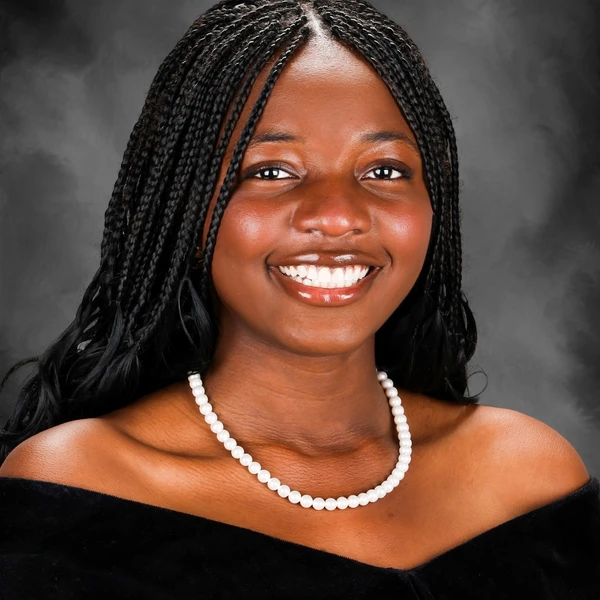
Ferrin Besong

1x

Finalist

1x

Winner

Bio

I am currently in 12th grade and have been attending American Heritage since 9th grade. I’m interested in law and plan on majoring in political science or public policy in college, before going to law school. While I’m not certain what type of law I may pursue, I know I want to be able to change people’s lives for the better. Throughout high school, one way I’ve looked to support others and help my community is through service and volunteering, as I’ve obtained over 600 hours of community service these last three years. As I join Hamilton College in the fall, I hope to further my knowledge of government while continuing my service work.

Education

Hamilton College

Bachelor's degree program
2026 - 2026
  • Majors:
    • Public Policy Analysis

American Heritage- Broward Campus

High School
2022 - 2026

Miscellaneous

  • Desired degree level:

    Doctoral degree program (PhD, MD, JD, etc.)

  • Graduate schools of interest:

  • Transfer schools of interest:

  • Majors of interest:

    • Law
    • Public Administration
    • Philosophy, Politics, and Economics
  • Not planning to go to medical school
  • Career

    • Dream career field:

      • Government Relations
    • Dream career goals:

      To earn my J.D. and become an attorney

      Sports

      Dancing

      Club
      2017 – Present9 years

      Awards

      • Most Improved Dancer

      Swimming

      Junior Varsity
      2022 – 20231 year

      Soccer

      Junior Varsity
      2023 – 20241 year

      Research

      • Cultural Studies/Critical Theory and Analysis

        Leadership Initiatives — Team Lead
        2024 – Present

      Arts

      • Falcon Cove Middle School

        Acting
        Matilda, Junior Thespians, African American History Month Showcase
        2019 – 2022
      • Studio 61

        Dance
        Annual Showcase
        2017 – Present

      Public services

      • Volunteering

        Building Blocks — Vice President
        2022 – Present

      Future Interests

      Advocacy

      Politics

      Volunteering

      Philanthropy

      Sabrina Carpenter Superfan Scholarship
      There have been few constants in my life. As a child, I moved from Pennsylvania to New York, New Jersey, Texas, and finally Florida. My interests shifted just as frequently, from loving competitive swimming to dreading it, enjoying spaghetti every day to growing tired of it, and hugging my stuffed animals before bed to eventually leaving them in the depths of my closet. It’s a normal part of growing up. Your goals, interests, and passions change as you do. It’s rare for something to last nearly 18 years, especially years as turbulent and confusing as these. Which only makes my love of Sabrina Carpenter’s music all the more impactful. I first became a fan of Sabrina when she was on Girl Meets World, like so many other girls my age. Her character, Maya Hart, instantly became my favorite, and not just because her first name matched my middle name. Maya was everything I aspired to be: witty, charismatic, and a fiercely loyal best friend. More importantly, Maya was like me. Raised by a single mom with the emotional support of her grandmother, Maya was the first depiction I saw as a child of a family situation that looked like mine. When I was younger, I felt insecure about it. Why do all my classmates have both their mommy and daddy living in the same house? Is it strange that I only live with my mom and grandma? Why can’t my dad pick me up from school too? I knew my mom loved me, and she did her best to provide for me, even on only one income. However, I had gotten so used to seeing “all-American” nuclear families on TV that it made me think something was wrong with my own family dynamic. Maya showed me that wasn’t true. She taught me to be assertive and self-assured. Despite her insecurities, Maya overcame them rather than letting them define her. Following her example helped me recognize my family was just different, not wrong, and stopped me from letting insecurity shape who I am. From watching Sabrina on the Disney Channel, I soon found myself exploring her music. This was a natural next step: “Eyes Wide Open” encouraged seven-year-old me to dream big no matter what. “Smoke and Fire” was on repeat, describing feelings of a romantic breakup I didn’t yet know myself. I marveled at the profound depth I perceived in the lyrics of “Thumbs.” But just as I matured, so too did Sabrina’s music. With each release, her artistic direction grew stronger and more confident. Songs like “Sue Me” helped me walk through middle school hallways with confidence, while “In My Bed” allowed me to cope with my own anxiety and overthinking. “Pushing 20” gave me the energy to push through many a study session, despite the fact that I was seven years away from pushing 20 myself. Sabrina’s evolution didn’t stop there. As her deal with Hollywood Records ended, Sabrina, now free of Disney, began speaking more openly about love and sexuality. This transition brought backlash from some, who expect every female pop star to cater to children with age-appropriate music. But Sabrina didn’t budge, and that’s what I respect the most about her. She unapologetically writes what she wants, sings what she wants, and wears what she wants, despite unfair expectations women in the music industry often face. As I enter the next stage of my life, I hope to carry this same unapologetic attitude into all my future endeavors—an attitude that refuses to tolerate any “Nonsense”… no pun intended.
      Love Island Fan Scholarship
      My challenge, “Crimes of the Heart,” reflects my passion for both Love Island and law. At first glance, these worlds seem like polar opposites: Love Island evokes colorful villas and tropical islands, while law conjures stuffy courtrooms and drowsy judges. Yet, despite these differences, the principles of loving relationships and those of law actually overlap more than one might expect. 1. Both Law and Love Require Clear Boundaries Our legal system is based on written and philosophical laws. Ideas such as natural rights, popular sovereignty, and the consent of the governed form the basis of modern democracies. Similarly, boundaries must be established for romantic relationships to flourish. From physical boundaries revolving around the need for personal space to digital ones, like agreeing neither partner goes through the other’s phone, healthy boundaries encourage mutual respect while preventing controlling behaviors. 2. Both Law and Love Are Rooted in Justice Speaking of mutual respect, justice is at the center of both worlds. While our legal system isn’t perfect and needs reform, it is, at its core, the pursuit of societal justice. Love requires justice through interpersonal equity. Mutual respect is the foundational bedrock of healthy, lasting romantic relationships. It requires recognizing your partner’s individuality, active listening, direct communication, empathy, and honoring boundaries. A relationship rooted in injustice only leads to toxic power dynamics. 3. Beyond Justice, both Law and Love Achieve Harmony The law is meant to establish societal harmony through a social contract. Citizens agree to surrender absolute freedom in exchange for social order, agreeing to follow the laws put in place. Through this, people of different backgrounds are united under one government. Love works similarly, bridging differences through mutual understanding. Two people can be polar opposites yet still love each other, creating a space where they feel emotionally safe enough to confide in one another. They bond through mutual understanding despite superficial differences. All of these parallels come together light-heartedly in my Love Island Challenge, which I know you’re waiting for me to reveal. “Crimes of the Heart” involves two rounds. In the first, the girls act as “officers” and the boys as “criminals.” After, the roles reverse. Each group receives costumes to fit their roles, adding to the fun. During each round, the “officers” get a stack of scenario cards describing different “crimes of the heart.” For each card, the “officers” must decide individually which “criminal” best fits the scenario described. Questions range from silly pet peeves to important relationship boundaries. Sample questions include: Which boy/girl in the villa is most likely to read private messages without permission? Which boy/girl in the villa is most likely to be a mediator in a heated argument? Which boy/girl in the villa is most likely to eat your leftovers without asking? After reading each scenario card, the “officer” places fuzzy toy handcuffs on the participant they select as the best fit. Each participant can receive handcuffs for multiple scenarios. At the end of both rounds, the girl and boy with the most handcuffs are labeled “most wanted” and are “placed behind bars,” which could mean a playful timeout or a silly penalty task. “Crimes of the Heart” perfectly balances what audiences want to see in a reality TV show with strengthening couples in the villa. These questions will create dramatic moments and intense conversations about why certain selections were made, while allowing couples to make their expectations for their relationship clear before connections deepen. Any working relationship requires clear “laws” to be established. My challenge allows couples to create these laws and build stronger connections in the process.
      Ani Porter Pre-Law Scholarship
      My love for law and advocacy is a constant source of inspiration, and I am determined to use it to make a positive impact on our legal system. I believe that our justice system is a powerful tool for change, and I am eager to dedicate my future legal career to public defense. With the knowledge and experience I plan to gain, I am confident that I can leave a lasting, equitable imprint on society by advocating for those who need it most. As a young girl, I was stubborn. While that word typically has a negative connotation, I always saw it as sticking up for what I thought was important. To me, advocacy, whether for myself or others, was the only thing that could prevent injustice. As I got older, I realized that advocacy could be a vessel for substantive justice in our country. This realization came from my family, with my aunt being a lawyer herself. Seeing her carefully craft cases in defense of clients showed me how I could put my “stubbornness” to good use. Additionally, my mom’s obsession with true-crime networks showed me how lawyers provide crucial protection for those falsely accused of crimes. Throughout school, my focus on advocacy informed my academic interests, and social studies quickly became my favorite subject. Civics and history taught me how society functions and how the law interacts with it. However, the root of my interest in law remained its potential impact on the community. This core belief was solidified through experiencing major public trials, which showed me how heavily people rest their hope and faith in our justice system, particularly marginalized communities that are more likely to be wrongfully prosecuted. My high school journey has been a platform to delve deeper into these intricacies. The law program at my school equipped me with knowledge in business law, evidence, and criminal procedure, where I won a student award for outstanding work. I have passed this knowledge down to underclassmen as a Secretary in my school's Pre-Law Society. I also joined moot court, competing at Yale and Santa Barbara. Seeing how different statutes can be interpreted has only deepened my appreciation for how beautifully complex and intellectually compelling the law can be. Furthermore, participating in mock trial enabled me to compete at prestigious institutions such as Harvard. In these competitions, I honed my skills as a witness, even winning the Outstanding Witness Award at the Providence Cup. Mock trial also allowed me to work one-on-one with experienced courtroom attorneys. One of my coaches had worked on a high-profile capital defense team. Working with her helped me realize that defense advocacy isn’t always easy and often involves making hard decisions despite public backlash. At the end of the day, a public defender must stand for what is right and guarantee due process for all. My short-term goals involve majoring in Political Science and Public Policy in college to learn how laws address public issues. Upon earning my undergraduate degree, my long-term goal is to attend law school, with a focus on criminal defense. Ultimately, my future career goal is to become a Public Defender. I want to stand in "the room where it happens" for individuals often overlooked by society, ensuring that the justice system is fair and equitable. Armed with my academic foundation and extracurricular experiences, this scholarship will help me pursue the education necessary to bring about desperately needed change.
      Clayton James Miller Scholarship
      “No! I could never kill my daughter!” There I sat on the witness stand, the entire courtroom staring at me—some faces filled with disgust, others with sympathy. In this moment, I was accused of the most heinous crime known to man: murder. But of course, it wasn’t really me being accused, but Pat Johnson, a witness I was playing at the Providence Cup Mock Trial competition, a role which would earn me an “Outstanding Witness” award. I’ve always been a bit of a “theater kid,” taking part in every stage production from Pre-K to 8th grade. When I was younger, I probably had a little too much energy–even when compared to the average child. It was an energy that attracted side-eyes and stares at family functions, church, and practically any social event where a child should be “seen and not heard.” Over time, I learned to repress the parts of myself that were viewed as “improper,” in fear of facing the wrath of social exclusion. Theater gave me a space where I could unapologetically be myself, a space where my rambunctious energy wasn’t viewed as a hindrance but a strength. I could be as weird and wacky as I wanted, knowing my classmates were just as weird and wacky as I was. There, my creativity was nurtured as I played a multitude of characters, from “Franny Frog” to Miss Trunchbull in Matilda. But there was still another hidden part of me. I was also a pretty stubborn kid. The word “stubborn” might have a negative connotation—and I’m sure my mom wished I were easier to deal with—but I always saw sticking up for what I believed was important. At the time, my advocacy was for frivolous things like negotiating a later bedtime, but as I matured, I realized advocacy could also be a vessel of change, for individuals and communities alike. To me, advocacy, whether for myself or others, was the only thing that could prevent injustice. So, as I entered high school, mock trial became my new pride and joy. I’ve been an advocate for the prosecution and defense alike, while also playing trial-defining witnesses and all their idiosyncrasies. In the process, I’ve also been able to create an accepting space for others, guiding underclassmen using my previous experiences—even including a sophomore who did theater with me in middle school. From cross-examination to witness characterization, I can answer their questions on anything and everything, seeing my former self behind their stressed faces. Through mock trial, I’ve been able to embrace every part of myself–from the chaotic and the theatrical to the stubborn and passionate. The world of mock trial, much like myself, is complex but beautiful, and has shaped my confidence in ways I’ll carry long after the competitions end.