user profile avatar

Felicity Vogl

1x

Finalist

Bio

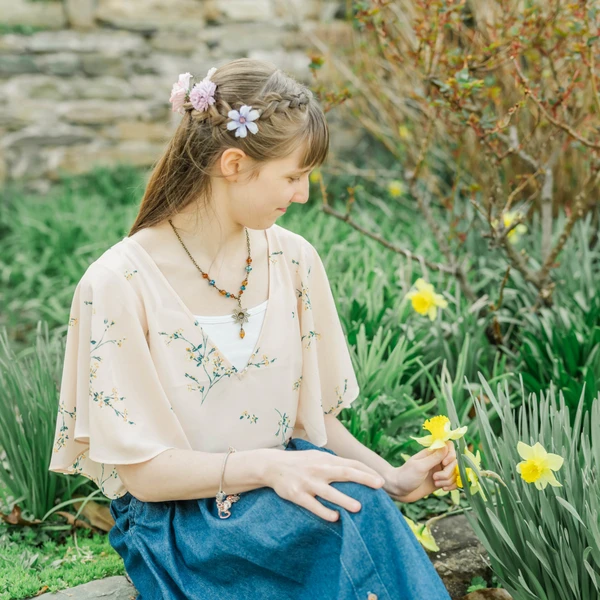
I am a Queer and Neurodivergent high school senior planning to double major in dance and psychology at Shenandoah University starting fall 2026. I hope to use my interdisciplinary education to become a dance therapist so I can promote healing and creative expression through dance in the same way the art form has done for me. I am also a creative writer and aspiring screenwriter who hopes to further representation of queer people –and especially the aromantic and asexual community that I belong to– in the media and storytelling, who have often had their voices excluded and erased from the conversation. I identify as an agender demi-girl, and I go by she/they pronouns. I am a teacher assistant for beginner ballet classes, and I also volunteer for my dance studio’s chapter of Darby’s Dancers, which is a non-profit program providing free dance classes to children and adults with special needs, particularly those who are autistic and/or have intellectual disabilities. I come from a single parent household (child of divorced parents) run by my amazing non-binary parent. I hope you will consider my education and goals as ones worth supporting.

Education

Virginia Virtual Academy

High School
2022 - 2026
  • GPA:
    3.8

Miscellaneous

  • Desired degree level:

    Master's degree program

  • Majors of interest:

    • Clinical, Counseling and Applied Psychology
    • Dance
    • Rhetoric and Composition/Writing Studies
  • Not planning to go to medical school
  • Career

    • Dream career field:

      Writing and Editing

    • Dream career goals:

      Screenwriting and Dance Therapy

      Arts

      • Various dance studios throughout the years

        Dance
        Nutcracker, Classical ballets, Spring recitals, Original ballets, Student choreography
        2016 – Present

      Public services

      • Volunteering

        Ashburn Academy of Dance — Teacher Assistant
        2024 – Present
      • Volunteering

        Ashburn Academy of Dance, Darby's Dancers — Teacher Assistant
        2024 – Present

      Future Interests

      Advocacy

      Volunteering

      Philanthropy

      Josh Barkley Memorial Scholarship
      The first time I became aware that I wasn’t considered “intelligent” by traditional standards was in kindergarten, when I ended up in a class where half the students were so-called “gifted” kids already reading chapter books, while the other half barely spoke English. Seeing as I didn’t fall into either extreme, I was practically ignored by my teachers, which only amplified my developmental delays. By second grade, I had been diagnosed with ADHD, and my parents enrolled me at a private Catholic school. This turned out to be a living hell for me due to the ridiculous, overwhelming curriculum, and me being a constant target of bullying. Out of desperation, my parents tried to have me repeat fourth grade at a prestigious, private all-girls school, but I had to take the Wechsler Intelligence Scale for Children to determine my eligibility to enroll. And it was through taking this test that the psychiatrist evaluating me diagnosed me as autistic, and I was not accepted to attend this exclusive school. So we were back to square one at my dreaded Catholic school, who agreed to give me accommodations to give me a fair chance at passing and to keep my family from leaving. But the damage had already been done. My experiences of being rejected from gifted programs and having my needs constantly ignored led me to believe that I was a failure in school. Even with my accommodations keeping my head above water, I was still being yanked around without any consideration for what I actually thought of any of this. I hated my Catholic school, but I probably would’ve hated an all-girls school even more, given my complicated relationship with being a girl, and public school had all but failed me. But what other options did I have? When COVID hit and my Catholic school refused to follow the basic health precautions, my parents enrolled me at Virginia Virtual Academy (VAVA) for the 2020-21 school year, and this turned out to be a blessing in disguise. Suddenly, I wasn’t being tormented by my peers all day long, and I had the freedom to work at my own pace and motivate myself. Suddenly, I wasn’t just barely passing school—I was succeeding. I came to realize that I wasn’t lazy or undisciplined, I had just been constrained by the rigid structure of traditional schools. I had finally found a school that worked for me, and now I was able to advocate for myself by making the choice to stay at VAVA through the rest of middle and high school. I even had my passion for writing recognized by my tenth grade English and later AP Language teacher, who actively nurtured my previously unrecognized talent. And since VAVA is a public charter school, I also qualified for an official 504 plan and accommodations. My journey navigating being neurodivergent in school has taught me that just because my learning style and talents don’t align with traditional measures of intelligence, that doesn’t mean I am lazy or incapable. If I had never learned to recognize the value in my unique talents, I don’t think I would’ve had the courage to take on AP and Dual Enrollment classes in high school, let alone consider taking on a double major in college. As I’m graduating from high school and transitioning into college, I want to continue advocating for myself by pushing for excellence in the things I know I’m strong in, while also giving myself grace in the things where I may need more assistance.
      Justin Burnell Memorial Scholarship
      If there’s one thing I knew from an early age, it’s that I wanted to write. When I was little, I spent my downtime during family summer vacations scribbling on blank picture book templates, recounting the highlights of our trip with a few embellishments. In third grade, I would turn mundane homework assignments from writing ten sentences using the vocabulary words on that week’s spelling list, to page-long short stories. This always annoyed my teacher at the time, since that wasn’t the point of the assignment, but I never understood what the problem was with being a little bit creative with my interpretation of the instructions. My elementary school fantasies probably weren’t the works of artistic genius that famous authors like George Orwell or Sylvia Plath came up with at that age, but there was always a new story idea marinating in my head that I would try to bring to life on a sheet of paper or when I was playing with my brother in the basement after school. But as much as I loved to write, I was never really an avid reader, mostly because it was hard for me to find a book with representation of people like me. I had quite a fondness for Percy Jackson and the American Girl Doll books in late elementary and middle school, but I’ve found most books I’ve read in the Young Adult genre since then to be just okay at best, to actively excruciating at worst. There are several reasons why I get turned off by so many YA books, but a big one is cliche romantic subplots of starry-eyed characters who will meet someone and just know from day one that they are in love. “Love at first sight” was always a foreign concept to me as someone who could never quite wrap my head around what romantic attraction was exactly, let alone if I even experienced it for myself. This was one among many reasons I discovered I am aromantic and asexual: someone who experiences little to no romantic or sexual attraction. Asexuality and aromanticism (or aro-ace for short) are identities under the queer umbrella that, for better or worse, do not get the mainstream attention and representation other identities such as “gay” or “transgender” do, which means the feelings I wrestle with as a queer person are less about being hated, and more about being invisible. I often find myself surrounded by people who claim to be allies of the LGBT community, but who are so often oblivious to the existence of aro-ace people; often dismissing my disinterest in romantic or sexual relationships as me having “not found the right person yet.” I’ve also struggled with my experiences as a femme-presenting agender demi-girl being dismissed in favor of the mainstream narrative of gender dysphoria and androgyny. Things like this, as insignificant as they may seem, slowly but surely eat me up inside everyday, to the point where I feel very, very small. That’s why writing has become ever more important to me as I’ve gotten older, because I believe there are a lot more interesting and thought-provoking stories we can tell when we see the world beyond the simplistic narratives and binaries presented in fiction; when we give a voice to the stories of people who have often been ignored and erased. Because I believe these stories can reassure others of a simple truth I wish I had known sooner: You are not alone.