Hobbies and interests
Volunteering
Reading
Academic
I read books daily
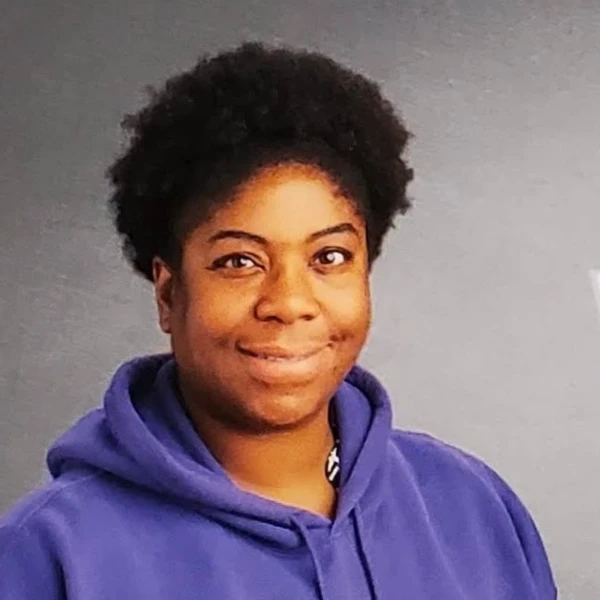
Felicia Jackson
1x
Finalist
Felicia Jackson
1x
FinalistBio
Greetings, I am in the process of obtaining my EDS, Mathematics Education from the University of Georgia. As a returning student after receiving my Masters' degrees earlier in life. Trained in Special Education to support scholars of various abilities in the elementary setting. I have a desire to support scholars in the educational field that need more assistance and supports then typical peers that might be on grade level. A faithful servant that is heavily engaged in my church, my family, and community.
Thank you for your time and assistance in my personal growth and development.
Education
University of Georgia
Doctoral degree program (PhD, MD, JD, etc.)Majors:
- Mathematics
Strayer University-District of Columbia
Master's degree programMajors:
- Health and Medical Administrative Services
Strayer University-District of Columbia
Master's degree programMajors:
- Business Administration, Management and Operations
University of South Carolina Aiken
Bachelor's degree programMajors:
- Sociology
Miscellaneous
Desired degree level:
Doctoral degree program (PhD, MD, JD, etc.)
Graduate schools of interest:
Transfer schools of interest:
Majors of interest:
Career
Dream career field:
Higher Education
Dream career goals:
Special Education Teacher
Clayton County Public Schools2022 – Present4 years
Public services
Volunteering
Easter Seals, Church, Special Olympics — Helper2010 – 2026
Future Interests
Advocacy
Volunteering
Debra S. Jackson New Horizons Scholarship
I still remember the moment a student who rarely spoke reached for my hand instead of shutting down. In that quiet exchange, I understood that education is not just about instruction, but is about presence, patience, and believing in someone before they believe in themselves. That moment, and many like it, ultimately led me back to higher education at this stage in my life.
My journey has not followed a traditional academic timeline. I entered adulthood focused on responsibility, service, and meeting the immediate needs of others; especially children and vulnerable adults who required additional support to succeed. Working in education, particularly with students with disabilities, exposed me to both the power of dedicated teaching and the systemic gaps that exist for underserved learners. Over time, I realized that passion alone was not enough; I needed deeper knowledge, stronger credentials, and expanded tools to better advocate for my students and my community.
These experiences have shaped my personal values of perseverance, empathy, and accountability. I have learned that meaningful change requires consistency and preparation, not just intention. Professionally, my career aspirations are rooted in becoming a highly effective special education teacher who not only supports students academically, but also helps them develop confidence, independence, and self-worth. I am especially committed to serving students whose disabilities and life circumstances often cause them to be overlooked or underestimated.
My commitment to community service extends beyond the classroom. Through collaboration with families, educators, and community partners, I strive to ensure students receive equitable access to resources and opportunities. I believe education is one of the most powerful tools for breaking cycles of limitation, and I am dedicated to being an advocate who bridges gaps between schools, families, and support systems.
Pursuing higher education now allows me to refine my instructional practices, strengthen my understanding of diverse learning needs, and remain effective in a profession that continues to evolve. I plan to use my education to improve outcomes for students with disabilities, mentor future educators, and contribute to school communities that value inclusion and growth.
This scholarship will directly support my ability to continue my education by easing the financial burden of tuition, books, and essential academic resources. More importantly, it represents an investment in my capacity to serve others more effectively. With this support, I can remain focused on my studies while continuing to positively impact the students and community I am committed to uplifting.
RonranGlee Special Needs Teacher Literary Scholarship
The first time I truly understood the weight and beauty of teaching special education was not during a lesson plan or a professional development session, it was in a quiet moment at a small table, when a student who rarely spoke looked up at me and said their own name with confidence for the first time. In that instant, nothing else mattered. No data chart, no pacing guide, no deadline. What mattered was that this child recognized themselves as present, capable, and worthy of being heard. That moment confirmed what my heart already knew: special education is not simply my profession; it is my calling.
I am passionate about special education because it exists at the intersection of humanity, equity, and purpose. Special education teachers do not just teach content; we teach identity, self-awareness, advocacy, and belonging. Every day, I work with students whose voices are often misunderstood, minimized, or overlooked. My role is to ensure that their differences are not seen as deficits, but as part of their unique presence in the world. I am driven by the belief that every student, regardless of ability, deserves to know who they are, what they can do, and that they matter.
Professor Harold Bloom’s statement, “the purpose of teaching is to bring the student to his or her sense of his or her own presence,” captures the heart of why I remain committed to special education. A student’s “sense of presence” is the awareness that they exist with value, agency, and the ability to influence their environment. For students with disabilities, this sense of presence is often disrupted by barriers: academic, social, emotional, sensory, or systemic. Many of my students have experienced school as something that happens to them, rather than with them. My mission is to change that narrative.
Before students can access academic content, they must first feel seen and safe. In my classroom, presence begins with relationship building and respect. I intentionally create an environment where students are allowed to show up as they are; whether that means communicating verbally, through gestures, assistive technology, behavior, or silence. I teach students that their voice does not have to look like anyone else’s to be valid. When students recognize that their way of being is accepted, they begin to take ownership of their learning and their identity.
Guiding students toward a sense of their own presence requires intentional instruction beyond textbooks. I embed self-awareness and self-advocacy into daily routines. Students learn to identify their emotions, sensory needs, strengths, and challenges. We practice naming what helps them learn and what doesn’t. When a student can say, “I need a break,” “I learn better with visuals,” or “I am proud of myself,” they are stepping into presence. They are no longer invisible participants in their education; they are active contributors.
My mission as a special education teacher is to empower students to recognize themselves as capable individuals who belong in every space they enter. This mission is grounded in patience, consistency, and high expectations paired with compassion. I believe deeply that students rise to the level of belief placed in them. While I differentiate instruction to meet diverse needs, I never lower my belief in my students’ potential. Instead, I adjust pathways, pacing, and supports so that success remains accessible.
Another critical component of guiding students toward presence is honoring progress, not perfection. Many of my students have been conditioned to view themselves through the lens of what they cannot do. I intentionally reframe learning by celebrating growth, effort, and resilience. When students see that their progress is meaningful, even if it looks different from peers, they begin to internalize confidence. Presence grows when students feel proud of who they are becoming, not ashamed of where they started.
Equally important is teaching students that their presence matters beyond the classroom. I work to connect learning to real life by teaching functional skills, communication, and social-emotional competence. Whether it is learning to navigate peer interactions, advocate during an IEP meeting, or problem-solve independently, these skills affirm students’ roles as active members of their communities. My ultimate goal is not just academic achievement, but lifelong self-determination.
Special education has taught me that teaching is an act of service and advocacy. In a system that often prioritizes compliance and standardization, I choose to prioritize dignity and individuality. I collaborate with families, therapists, and colleagues to ensure students receive holistic support. I also advocate fiercely for my students when policies or practices limit their access to meaningful learning. My passion is fueled by the responsibility to stand in the gap for students who cannot always speak for themselves, yet.
Fairy Tale: The Teacher Who Carried the Lantern
Once upon a time, in a school where hallways echoed loudly and expectations were written in stone, there lived a teacher who carried a lantern instead of a rulebook. Each child she met walked in partial shadow, some tripped over their words, some moved too slowly for the crowd, some reacted to the world in ways others did not understand. The villagers often whispered that these children were broken.
But the teacher knew better.
She did not rush them forward or demand they walk like everyone else. Instead, she lifted her lantern and said, “Stand here. Let me see you.” As the light touched each child, something remarkable happened; they began to see themselves. One child discovered their voice. Another realized their mind worked like a puzzle maker’s. Another learned that needing help was not weakness, but wisdom.
Over time, the children no longer needed the lantern. They carried their own light. They walked through the halls with confidence, leaving footprints where others once said they did not belong. And the teacher? She smiled quietly, knowing her true work was never about fixing children, but helping them remember they were already whole.
This is the heart of why I am passionate about special education. I carry the lantern until my students learn they are the light.