Hobbies and interests
Writing
Crafting
African American Studies
Advocacy And Activism
Blogging
Bible Study
Camping
Candle Making
Ethnic Studies
Child Development
Singing
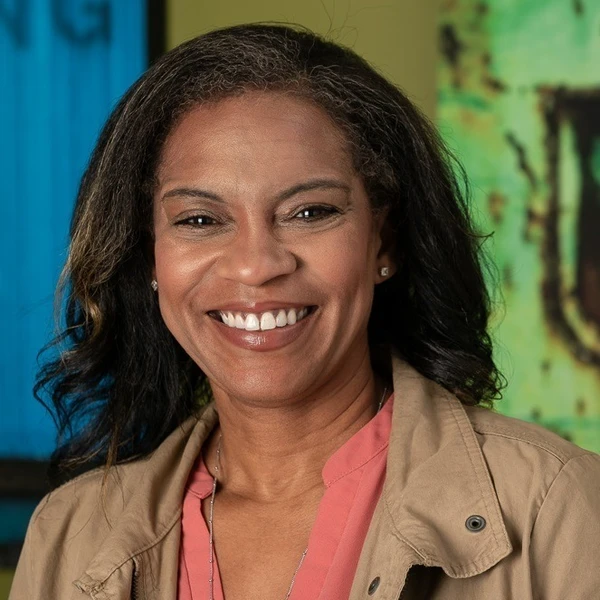
Fanisha Terry
1x
FinalistFanisha Terry
1x
FinalistBio
At 50 years old, I am proudly pursuing my Bachelor’s degree in Organizational Leadership and Change through College Unbound virtual program. Returning to school at this stage of life reflects both resilience and determination. My courage comes from the encouragement of mentors like Kelly Iverson and Camie Whidden, who helped me see that my leadership skills could be channeled into advocacy work. Their belief in me inspired me to take the leap and invest in my education.
My journey is also deeply personal. Five years ago, my father passed away without fulfilling his dream of finishing college. When he was laid off, he told me he felt “too old” to return to school. His words stayed with me, and I am determined to prove him wrong—not out of defiance, but out of love. By continuing my education, I honor his memory and show that it is never too late to chase dreams.
The support of my family fuels me daily. My adult children encourage me to keep going, while my nine-year-old and my grandchildren remind me of the legacy I am building. Each assignment I complete is not only for myself but also for them, a living example that perseverance and courage can reshape a future.
Balancing school, work, and family is not easy, but I lean on Maya Angelou’s wisdom: “Courage is the most important of all the virtues because without courage you can’t practice any other virtue consistently.” My education is more than a degree—it is a pathway to advocacy, leadership, and creating a better life for my family and community.
Education
College Unbound
Bachelor's degree programMajors:
- Work and Family Studies
- Community Organization and Advocacy
Kaplan University
Associate's degree programMajors:
- Social Sciences, Other
Minors:
- Social Sciences, General
Renton Technical College
Trade SchoolMajors:
- Allied Health and Medical Assisting Services
Miscellaneous
Desired degree level:
Master's degree program
Graduate schools of interest:
Transfer schools of interest:
Majors of interest:
- Psychology, Other
Career
Dream career field:
Mental Health Care
Dream career goals:
Employee Advocacy and Psychology
Public services
Advocacy
King County Housing Authority — Administrative Specialist2018 – Present
Future Interests
Advocacy
Volunteering
Entrepreneurship
Nabi Nicole Grant Memorial Scholarship
Faith has always been the anchor that steadies me when life feels overwhelming. One of the most defining moments in my journey came during my separation and divorce, when I found myself moving from place to place with my children. Each move carried uncertainty, new schools, new routines, and the constant question of how we would rebuild stability. In those moments, I leaned on my faith not as a general idea, but as a daily practice that gave me strength to overcome.
The challenge was both practical and emotional. I was raising my daughter and three granddaughters, two of whom are neurodivergent, while also returning to college to pursue my degree. At the same time, I was transitioning out of a demanding job, training my replacement, and trying to ensure stability for my household. The stress of juggling caregiving, academics, financial strain, and the instability of moving after divorce left me exhausted. I worried that I would fall short either for my family or for my education.
In that season, prayer became my lifeline. Each morning, before the chaos of the day began, I took a few quiet moments to center myself, asking for guidance and strength. My faith reminded me that I was not alone, that the obstacles before me were not insurmountable, and that perseverance would bear fruit. I leaned on scripture and the belief that my struggles had purpose—that they were shaping me into someone who could lead with empathy and resilience.
Faith also gave me the courage to ask for help. Instead of carrying everything in silence, I reached out to mentors, classmates, and community members. I trusted that God had placed people in my life to walk alongside me, and that humility in seeking support was not weakness but wisdom. That shift allowed me to share responsibilities, receive encouragement, and keep moving forward even when I felt depleted.
The Outcome With faith as my foundation, I completed my exhibition successfully, integrating insights from my focus groups into a presentation that reflected both my academic growth and my lived experience. More importantly, I showed my daughter and granddaughters that challenges, even moving from place to place during divorce, can be met with resilience and hope. My faith transformed what could have been a breaking point into a breakthrough. It reminded me that obstacles are temporary, but the lessons they teach endure.
Faith continues to shape my path. It guides my vision for the Employee Advocate Program, reminding me to center compassion and equity in every design. It strengthens me as I pursue my education, knowing that each step forward is part of a larger purpose. And it grounds me in the belief that my journey is not just about personal success, but about serving others, especially those who feel unseen or unsupported.
The time I relied on my faith to overcome the challenge of balancing caregiving, financial strain, education, and the instability of moving during divorce taught me that strength is not found in perfection, but in perseverance. Faith gave me clarity, courage, and community. It turned obstacles into opportunities and continues to guide me toward a future where I can uplift others. For me, faith is not just a belief; it is the foundation that makes every challenge surmountable and every victory meaningful.
Kim Moon Bae Underrepresented Students Scholarship
Growing up as a young Black woman in Section 8 housing, I learned early what it meant to be judged before being understood. As a single mother on welfare, I often felt the weight of stereotypes pressing against my assumptions about my worth, my abilities, and my future. Yet those experiences became the foundation of my resilience. My identity as a member of an underrepresented minority population has shaped not only how I see the world, but also how I fight to change it.
Impact on My Path So Far Being part of an underrepresented community has meant navigating systems that were not designed with families like mine in mind. I have faced barriers in housing, education, and employment, but each challenge taught me to advocate more fiercely. For example, when I worked as a compliance specialist supporting Section 8 families, I recognized the same stigma I once experienced. Instead of letting it discourage me, I used my lived experience to connect with families, reassure them, and ensure they received fair treatment. My identity gave me credibility and empathy, allowing me to serve others with compassion and dignity.
In leadership roles, such as serving as REDI Co-Chair and leading student organizations, my perspective as a Black woman has been essential. I have brought attention to inequities that others overlooked, ensuring that policies and programs reflect the realities of marginalized voices. My identity has taught me that representation matters: when people see someone who shares their struggles in leadership, they feel empowered to speak up and believe change is possible.
As I pursue my education at College Unbound and develop the Employee Advocate Program, my identity remains central to my vision. I understand the importance of workplace flexibility, emotional literacy, and equity because I have lived the consequences of their absence. My path forward is about transforming those lessons into structured programs that uplift caregivers, frontline workers, and underrepresented employees.
Being part of an underrepresented minority population means I carry both responsibility and opportunity. I know that my success is not just personal, it is communal. Every barrier I overcome becomes a blueprint for others. Every program I design is informed by the voices of those who have been silenced. My identity ensures that I will continue to center equity, resilience, and justice in all my work.
My identity as a Black woman from a low-income background has profoundly impacted my path. It has given me resilience in the face of judgment, empathy for families navigating systemic barriers, and determination to lead with equity. Moving forward, it will continue to guide my studies, my advocacy, and my leadership. I plan to use my experiences not only to achieve my own goals, but to open doors for others who share my struggles. For me, identity is not a limitation; it is a source of strength, vision, and responsibility. It is the compass that ensures my path leads toward justice and inclusion for all.
Emma Jane Hastie Scholarship
The most powerful lessons I’ve learned have come not from textbooks, but from my kitchen table. As a mother and grandmother raising children, including two who are neurodivergent, I’ve seen firsthand how families often struggle to find the support they need. That experience shaped my identity as a caregiver, advocate, and student determined to create change. I am someone who believes that servitude is not about titles or recognition, but about showing up for others in ways that leave a lasting impact.
I am a returning student at College Unbound, balancing academics with caregiving and community advocacy. My professional journey has included roles in compliance and housing support, where I worked closely with Section 8 families navigating complex systems. I’ve also served in leadership positions, such as co-chairing equity initiatives and leading student organizations. These experiences taught me how to blend organizational theory with lived experience and how to use my voice to amplify those who are often unheard. At my core, I am a problem-solver who thrives on building bridges between families, workplaces, and community systems.
A Time I Made a Positive Impact. One of the most meaningful moments of servitude came when I organized a focus group for caregivers and frontline workers in my community. Many participants felt invisible in their workplaces, struggling to balance family responsibilities with professional demands. I listened to their stories, documented their challenges, and created a space where their voices were valued. From that dialogue, I began shaping the Employee Advocate Program, a model designed to support caregivers by promoting workplace flexibility and emotional literacy.
The impact was immediate. Participants expressed relief at being heard, and several shared that the session gave them hope for change. One caregiver told me, “This is the first time I’ve felt like my struggles weren’t just mine to carry.” That moment affirmed the power of servitude: when we create spaces for others to be seen, we plant seeds of resilience and collective action.
Why It Matters This experience taught me that servitude is not about grand gestures, but about consistent, intentional acts of care. By facilitating conversations, I helped transform frustration into possibility. The focus group also informed my academic work, allowing me to connect theory with practice and demonstrate how organizational change can begin with listening. It was a reminder that positive impact often starts small with one conversation, one family, one workplace, and grows into something larger when nurtured with commitment.
I define myself as a caregiver, advocate, and student who believes in leaving spaces better than I found them. Through servitude, I have made a positive impact by listening, organizing, and building programs that center equity and compassion. My journey reflects resilience and a deep investment in community well-being. With continued support, I plan to expand these efforts, mentoring others and creating networks that empower families and workers. Servitude is my way of paying forward the lessons I’ve learned at my kitchen table: that every voice matters, and that true change begins when we serve one another with empathy and purpose.
Second Chance Scholarship
The turning point for me came one evening at my kitchen table. My daughter and three granddaughters were gathered around me, two of them navigating the world with autism. As I helped them with homework and daily routines, I realized how often families like ours are left to piece together support systems that don’t fully meet our needs. I saw the exhaustion in caregivers’ eyes, the frustration in children who felt misunderstood, and the gaps in workplaces that didn’t account for the realities of caregiving. That moment crystallized my desire to make a change not just for my family, but for others who face similar challenges. I want to transform lived experience into structured solutions that bring equity, compassion, and resilience into everyday systems.
To move from vision to action, I returned to school at College Unbound. There, I began developing the Employee Advocate Program, a project that blends organizational theory with real-world caregiving experience. I’ve facilitated focus groups to gather insights from workers balancing family responsibilities, and I’ve presented exhibitions that highlight both the struggles and strengths of caregivers. Beyond academics, I’ve taken leadership roles in community organizations, coordinated resources for families in transition, and created onboarding guides that merge compliance with compassion. Each of these steps has been deliberate: building skills, testing ideas, and refining models that can scale beyond my immediate circle. I’ve learned to balance storytelling with data, ensuring that the voices of caregivers are heard while also presenting practical, evidence-based solutions.
This scholarship would be more than financial support; it would be a vote of confidence in the work I am doing. It would allow me to dedicate more time to refining my project, gathering feedback, and preparing for exhibitions without the constant worry of financial strain. With stability, I could focus on scaling the Employee Advocate Program, ensuring it reaches organizations that need it most. The scholarship would also affirm that centering care and equity is not only valuable but necessary. That encouragement would fuel my commitment to continue pushing for systemic change, knowing that others believe in the vision I am pursuing.
I believe that true change is measured by how far it extends beyond ourselves. I plan to mentor other caregivers, students, and advocates who feel overwhelmed by systemic barriers. I want to create workshops that teach practical tools for resilience, resource mapping, and emotional literacy skills that can empower families and workers to navigate challenges with confidence. I also envision building networks where caregivers can share strategies, celebrate victories, and advocate collectively for workplace flexibility. Paying it forward means leaving spaces better than I found them, opening doors for others, and ensuring that the scholarship’s impact multiplies through the lives of those I support.
My journey began at a kitchen table, but it extends far beyond those walls. I want to make a change because I believe families and caregivers deserve systems that honor their realities. I have already taken steps through education, leadership, and program design to bring that vision closer to reality. This scholarship would provide the stability and affirmation I need to continue, and in return, I will pay it forward by mentoring, teaching, and building networks that empower others. Change is not a solitary act; it is a ripple. With your support, I can ensure that ripple becomes a wave of equity and resilience for families and communities everywhere.
Harvest Scholarship for Women Dreamers
Pie in the Sky Dream Essay
The first time I realized the power of advocacy was not in a classroom or a boardroom, but in a crowded welfare office. I was a young mother, balancing paperwork, childcare, and the weight of being judged for my circumstances. In that moment, I promised myself that if I ever had the chance, I would use my voice to change how systems treat people, especially caregivers and families who are too often overlooked. That promise became the spark for my “pie in the sky” dream: to build a national movement that transforms workplaces into spaces of dignity, flexibility, and emotional wellness.
This dream feels both inspiring and just out of reach because it requires shifting deeply entrenched systems. I imagine a future where organizations across the country adopt caregiver-friendly policies, trauma-informed leadership, and equity-centered practices. My Employee Advocate Program is the seed of this vision, but the dream is much larger: scaling it into a consulting practice, influencing public policy, and creating sustainable models that honor the full humanity of employees.
What makes this dream powerful is that it is rooted in lived experience. I have been both the recipient of Section 8 housing support and the compliance specialist enforcing federal regulations. I have been the caregiver, juggling school schedules and the advocate, rewriting charters for equity councils. These dual perspectives give me a unique lens to see both the gaps and the possibilities. My courage comes from knowing that I have survived systems that were not designed for me, and my creativity comes from reimagining those systems so they can serve others better.
The steps to reach this dream are clear, though not easy. First, I need to finish my degree at College Unbound, which is giving me the academic foundation to pair with my lived experience. Second, I must continue refining the Employee Advocate Program, gathering data from focus groups, and building evidence that shows its impact. Third, I plan to expand my network by connecting with leaders in organizational psychology, public policy, and caregiver advocacy. These relationships will help me scale the program beyond one workplace and into broader systems. Finally, I need to secure funding and resources to sustain this work, whether through grants, partnerships, or entrepreneurial ventures.
I know this dream is ambitious, but ambition is what drives change. What keeps me committed is the image of my daughter and granddaughters growing up in a world where workplaces honor their needs, rather than forcing them to choose between family and career. I want them to see that resilience is not just about surviving, but about reshaping the structures that make survival so hard.
In the end, my “pie in the sky” dream is about creating a legacy of care and equity. It is about proving that systems can be redesigned when we center the voices of those most impacted. It is about courageously stepping into spaces where change feels impossible and insisting that dignity and wellness are non-negotiable. This dream may feel just out of reach today, but with persistence, creativity, and community, I believe it can become reality.
Dream BIG, Rise HIGHER Scholarship
The glow of my computer screen lit up the room as I sat at the kitchen table late one evening, my nine-year-old’s school papers scattered beside me. She had just asked for help with her homework, sighing, “I’m just not good at this.” Without hesitation, I told her, “You can do hard things.” As the words left my mouth, I realized I needed to live them myself. That moment became the turning point the spark of courage that pushed me to return to school at 50 years old.
Education has given me more than knowledge; it has given me direction, purpose, and a renewed sense of identity. Enrolling in College Unbound virtual program for a Bachelor’s degree in Organizational Leadership and Change has reshaped how I see myself and my future. For years, I carried the quiet dream of finishing my degree, but life’s responsibilities raising children, working, and caring for family always seemed to take precedence. Now, education has become the compass guiding me toward advocacy, leadership, and the opportunity to create change not only for myself but for others.
The journey has not been easy. One of the greatest challenges I faced was overcoming the belief that I was “too old” to return to school. That belief was reinforced by my father’s story. He passed away five years ago, but his words still echo in my memory. When he was laid off, he admitted that he had once dreamed of finishing college but felt he was too old to go back. His resignation haunted me. I carry his story as both a reminder and a challenge. By returning to school at 50, I am proving him wrong not out of defiance, but out of love. I want to honor his memory by showing that it is never too late to chase dreams.
Another challenge has been balancing school, work, and family. Virtual learning has been a lifeline, allowing me to pursue my education while still caring for my nine-year-old and supporting my adult children and grandchildren. There are nights when exhaustion sets in, when I stare at a blank screen after a long day and wonder if I have the energy to finish. Yet, I remind myself that each assignment is not just for me it is for my children and grandchildren, who are watching closely. I want them to see that education is not bound by age, and that perseverance can reshape a future.
Encouragement from others has also played a critical role in shaping my goals. My supervisor, Kelly Iverson, and my colleague, Camie Whidden, saw potential in me that I struggled to see in myself. Kelly reminded me that leadership is not about titles but about impact, and Camie encouraged me to explore advocacy as a career path. Their belief in my ability to lead and to speak up for others planted the seed that education could help me transform my passion into purpose. Their encouragement gave me the courage to take the leap and invest in myself.
Education has sharpened my goals by giving me clarity about the path I want to pursue. Through my coursework in Organizational Leadership and Change, I have learned how systems work, how to identify barriers, and how to create strategies for improvement. These lessons have deepened my commitment to advocacy. I want to use my education to amplify voices that are often unheard, to stand up for those navigating challenges, and to help build structures that support equity and opportunity. My education is not just about earning a degree it is about equipping myself with the tools to make a meaningful impact.
I also lean on Maya Angelou’s wisdom: “Courage is the most important of all the virtues because without courage you can’t practice any other virtue consistently. You can practice any virtue erratically, but nothing consistently without courage.” Her words remind me that courage is the foundation for everything else resilience, integrity, and hope. Without courage, none of those can be sustained. Education has given me the courage to dream bigger, to push past fear, and to embrace the possibility of transformation.
Looking ahead, I hope to use my education to create a better future not only for myself but for my family and community. For my nine-year-old and my grandchildren, I want to be a living example that it is never too late to pursue education. For my adult children, I want my journey to inspire them to keep striving for their own goals. And for my community, I want to use my degree to advocate for change, to lead with compassion, and to help others see that their voices matter.
Education has shaped my goals by giving me direction, courage, and purpose. It has taught me that challenges can be overcome, that dreams can be reclaimed, and that leadership is about impact. Returning to school at 50 is not just about rewriting my story it is about building a legacy of determination for my children and grandchildren. When they face their own fears, I hope they will remember watching me step into virtual classrooms, balancing life and learning, and find the courage to step forward themselves.
Susie Green Scholarship for Women Pursuing Education
"You’re never too old to set another goal or to dream a new dream." — C.S. Lewis
At 50 years old, returning to school was not a decision I made lightly. For years, I carried the quiet dream of finishing my degree, but life’s responsibilities raising children, working, and caring for family always seemed to take precedence. What finally gave me the courage to enroll in College Unbound virtual program for a bachelor’s degree in organizational leadership and Change was a combination of encouragement from mentors, the unwavering support of my family, and the desire to honor my father’s legacy by proving that it is never too late to pursue education.
Virtual learning at College Unbound has been a lifeline. It allows me to balance coursework with the realities of my daily life, proving that education can adapt to meet students where they are. I remember the hesitation I felt before enrolling wondering if I could keep up with technology, manage deadlines, and juggle responsibilities at my age. But the flexibility of online learning gave me the confidence to take the leap. Each class reminds me that growth is possible at any stage of life.
Much of my courage came from the encouragement of my supervisor, Kelly Iverson, and my colleague, Camie Whidden. They saw potential in me that I struggled to see in myself. Kelly reminded me that leadership is not about titles but about impact, and Camie encouraged me to explore advocacy as a career path. Their belief in my ability to lead and to speak up for others planted the seed that education could help me transform my passion into purpose.
My father’s memory also fuels my determination. He passed away five years ago from cancer, but his story remains vivid in my mind. When he was laid off, he admitted that he had once dreamed of finishing college but felt he was too old to go back. As both a reminder and a challenge I am proving him wrong, not out of defiance, but out of love. I want to honor him by showing that it is never too late to chase dreams, and that courage can break through the barriers of age and circumstance.
My adult children have also been my greatest cheerleaders. They remind me constantly that it is never too late to pursue a dream. Their encouragement has been a steady source of strength, and I want my journey to inspire them as much as they inspire me. At the same time, I think of my nine-year-old and my grandchildren, who are watching me closely. I want them to see that education is not bound by age, and that perseverance can reshape a future.
There are nights when exhaustion sets in, when I stare at a blank screen and wonder if I have the energy to finish. In those moments, I lean on Maya Angelou’s wisdom: “Courage is the most important of all the virtues because without courage you can’t practice any other virtue consistently. You can practice any virtue erratically, but nothing consistently without courage.” Her words remind me that courage is the foundation for everything else.
Returning to school is about rewriting my story with resilience, honoring the encouragement of those who believe in me, and building a legacy of determination for my children and grandchildren. When they face their own fears, I hope they will remember watching me step into virtual classrooms, balancing life and learning, and find the courage to step forward themselves.