
Hobbies and interests
Cheerleading
JROTC
Babysitting And Childcare
Law
Faith Nevidomsky
1x
Finalist1x
Winner
Faith Nevidomsky
1x
Finalist1x
WinnerBio
I am a dedicated and driven student with a passion for leadership, service, and making a meaningful impact in my community. Throughout high school, I actively participated in Air Force JROTC, holding multiple leadership roles including Deputy Group Commander, Operations Flight Commander, Recruiting NCOIC, PT NCOIC, and Flight Staff. These experiences taught me discipline, communication, and the importance of leading with integrity.
I also served as a varsity cheerleader for 5 years for basketball and 3 years for football, developing strong teamwork and time management skills. Outside of school, I completed over 120 volunteer hours and worked during three of my four high school years, balancing academics, athletics, and employment—demonstrating my commitment and strong work ethic.
Looking ahead, I plan to major in Political Science with a minor in Child Care or Sociology, with the goal of becoming a family lawyer. I am passionate about advocating for children and families, and I want to use my education and experiences to support those navigating difficult legal and personal challenges.
Education
University of Wyoming
Bachelor's degree programMajors:
- Political Science and Government
Minors:
- Human Development, Family Studies, and Related Services
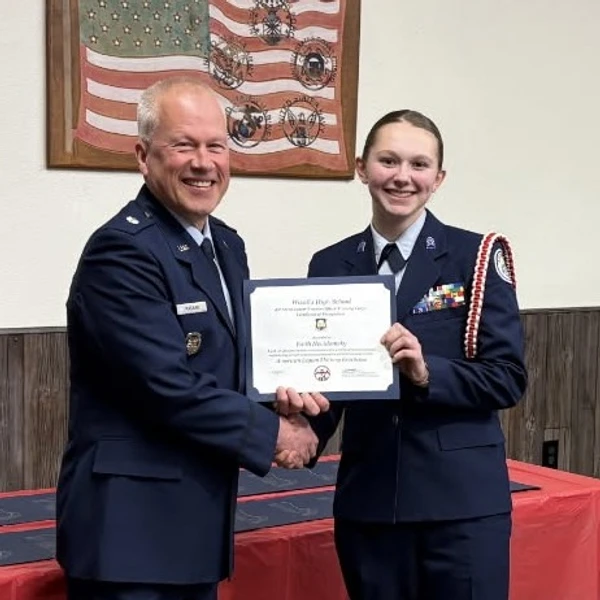
Wasilla High School
High SchoolMiscellaneous
Desired degree level:
Bachelor's degree program
Graduate schools of interest:
Transfer schools of interest:
Majors of interest:
- Political Science and Government
- Human Development, Family Studies, and Related Services
Career
Dream career field:
Law Practice
Dream career goals:
Sports
Cheerleading
Varsity2021 – 20254 years
Research
Human Development, Family Studies, and Related Services
Wasilla High School — researcher and data collecter2024 – 2025
Public services
Volunteering
AFJROTC — Cadet leadership2021 – 2025
Future Interests
Advocacy
Politics
Volunteering
Wesley Beck Memorial Scholarship
Hi, My name is Faith Nevidomsky and I am a student at the university of Wyoming. I plan to become a foster care attorney in the future and while my job won't explicitly work with those who have special needs I would be more than happy to help those in the foster care system who truly aren't getting what they need because the system is overlooking their needs solely because they are different than other peoples and providing that voice for them. The foster care system tends to have a very generic sent of families who are foster homes and while this is amazing to provide that resource not everyone is welcoming or is able to help those who are special needs or has disabilities, depending on the situation if they don't know how to help the child or teen with special needs or they don't have someone who would be able to hang out with them throughout the day to ensure they don't get hurt or need something that they need help completing or something more.
Through different volunteer experiences I've had I learned how to help different people no matter if its kids, adults, or elderly everyone has different wants and need along with different ways to get things done. Sometimes all someone needs is just someone to be there with them while they complete something or just a reminder on how something works. There's a common misunderstanding that people who are special needs in any capacity needs everything done for them or that they are "incompetent" and that's simply not true, majority of those with special needs just need a helping hand with the small things.
I do have financial need, while I am not homeless or starving I am needing scholarships to help me be able to afford to get an education to help those in the foster care system no matter if its the foster parents or the children being thrown around the foster system and speaking up for them, it matters. The foster care system no matter where someone is more often than not treats kids in the system like objects and like the are a hassle and not like they are literal children and teens going through some of the most traumatic time of their lives with little to no support. while they're are some good foster care situations majority of those in the system are shown no care towards them and are simply put provided very little resources. This being said that is why I need to get an education to go through undergraduate school along with law school.
Jack Saunders Memorial Scholarship
The biggest challenge I've faced in life was deciding my priorities during the school year. I've always wanted to be involved in everything I possibly could, in high school and college I was interested in so many clubs and sports but i also needed to still work a part time job to pay for things like insurance and still being able to have fun.
I've learned that as long as you communicate to others no matter if it's a teacher, boss, a peer who's in charge, communication is key to be able to enjoy everything you want to do. In high school especially I was involved with JROTC and Cheer and I truly enjoyed both but while enjoying them and wanting to do extra events through both I had to communicate with my boss at work so we knew when i could work.
On top of communication a skill that everyone should have is learning what is with their time and commitment and to learn how to spend their time well. No matter if you want to spend that time working or studying or if that time is used to create art or do something recreational it is important to make sure you are making the best of your time. The best way to recongize that I have learned is if it can make me happy for at least an hour afterwards it's worth at least an hour of my time.
Putting a price on your time truly helps with self-esteem and time management along with it forces you to put yourself in the right place at the right time. Examples of this making an impact is the saying "you are who you hang out with" so if you are spending your time with people who make you look bad or make you feel bad it is easier to recongize that maybe that event or that hangout isn't worth your time and you could use it on something that makes you feel happier or improves yourself in some way. This ultimately taught me how to choose my friends to make sure its people who support me instead of them dragging me down in any way along with it made me less likely to procrastinate assignments or responsibilities.
Overall knowing what your time is worth will make you look at life in such a different way and its a good learning experience for knowing what you want to do with your life.
Holden William Bettis Memorial Scholarship
From a young age, I’ve been deeply sensitive to the struggles of children who grow up without stability, safety, or the unconditional support every child deserves. As I got older and learned more about the challenges faced by kids in foster care and families headed by single mothers, I realized that I wanted to dedicate my life to making a difference in their lives. That’s what led me to pursue a career in family law—not just as a profession, but as a purpose.
Family law isn't just about legal paperwork, custody battles, or court hearings—it's about people. It’s about protecting the vulnerable, advocating for justice, and helping rebuild lives when families are fractured or at risk. I am especially drawn to cases involving foster care and single-parent households because these situations are often overlooked or mishandled in the legal system. Children end up feeling lost, unheard, and powerless. I want to be the person who stands beside them, who listens, who fights for what’s right—even when it’s difficult.
The foster care system, in particular, is full of good intentions but too often falls short in execution. Many children cycle through homes without ever finding stability or the love they need to grow into healthy adults. They may feel invisible, confused, or angry—not because they’ve done anything wrong, but because the system failed to protect them. As a family lawyer, I want to be a steady advocate for these kids. I want to ensure they have someone who sees them as individuals, not just another case number.
I’m also passionate about helping single mothers—women who, in many cases, are doing everything in their power to give their children a good life, often while facing judgment, financial strain, and limited legal support. Too many of these mothers are overwhelmed, misunderstood, and underserved. I’ve seen how the legal system can intimidate or dismiss them. I want to be the kind of lawyer who helps them understand their rights, navigate the system confidently, and come out stronger on the other side.
My passion for family law is rooted in empathy, but it’s driven by a desire for tangible change. I’ve volunteered with children’s organizations, participated in mentorship programs, and sought out opportunities to learn about the real-life impact of legal decisions on families. These experiences have only strengthened my belief that the law can be a tool for healing and empowerment—when it’s wielded by someone who cares deeply about the people behind the cases.
Becoming a family lawyer isn’t just my career goal—it’s my mission. I want to be a source of hope and clarity for kids in foster care, a fierce ally for single moms fighting for a better life, and a compassionate advocate who helps families find stability when everything around them feels uncertain. In a world where so many people go unheard, I want to make sure they are not only heard—but truly seen, understood, and protected.
Tawkify Meaningful Connections Scholarship
Human beings are inherently social, and much of what we aspire to achieve is influenced by the people around us. From an early age, relationships begin to shape our values, priorities, and sense of direction. As individuals grow and set long-term personal and professional goals, these relationships continue to play a defining role, offering both guidance and challenge. Understanding how relationships impact decision-making and ambition is essential for recognizing their importance in shaping a meaningful and successful life.
Relationships play a central role in shaping both personal and professional long-term goals, often in ways that are subtle but deeply impactful. Whether romantic, familial, platonic, or professional, these connections influence not only the direction individuals choose in life but also their ability to pursue and sustain their ambitions over time.
On a personal level, relationships help define what fulfillment and success look like. Romantic partnerships, for instance, often require compromise, shared decision-making, and mutual support. These dynamics can influence major life choices such as where to live, career paths, or lifestyle priorities. A supportive partner may encourage risk-taking and personal growth, making it easier to pursue ambitious or uncertain goals. Conversely, a relationship that lacks alignment in values or priorities can create tension, potentially limiting one’s willingness or ability to chase certain aspirations. In this way, romantic relationships can either expand or constrain long-term vision.
Family and friendships also play a crucial role by providing emotional grounding and stability. These relationships often serve as a source of encouragement during challenging times, helping individuals remain committed to their goals. For example, a student pursuing a demanding degree or a professional working toward a promotion may rely on their support system to stay motivated. Additionally, friends and family can offer perspective, helping individuals reassess goals when necessary and avoid burnout or poor decision-making. Their influence can reinforce positive habits and resilience, both of which are essential for long-term success.
In a professional context, relationships are equally significant. Career advancement is rarely achieved in isolation; it often depends on collaboration, mentorship, and networking. Mentors can provide guidance, share valuable experience, and help individuals navigate complex career paths. Colleagues and professional connections may introduce new opportunities, recommend one for positions, or collaborate on projects that lead to growth. Over time, these relationships form a network that can significantly impact career trajectory. In many cases, who you know and how you engage with others can be just as important as your skills and qualifications.
Beyond practical support, relationships also shape identity and mindset. The people one interacts with regularly influence attitudes, behaviors, and beliefs about what is achievable. Being surrounded by motivated, goal-oriented individuals can inspire higher aspirations and a stronger work ethic. On the other hand, negative or unsupportive relationships may foster self-doubt or complacency. This social influence plays a critical role in determining not only which goals are pursued but also the level of commitment applied to them.
In conclusion, relationships are deeply intertwined with long-term personal and professional goals. They provide support, open opportunities, and influence one’s sense of purpose and identity. Cultivating healthy, aligned relationships can enhance motivation and success, while misaligned ones may hinder progress. Therefore, being intentional about the relationships one maintains is essential for achieving meaningful and lasting goals.
Cooper Congress Scholarship
3.
To me, ensuring “everyone has a voice” means creating space for people to be seen, heard, and valued—especially those who are often overlooked, dismissed, or silenced. It’s about more than just giving someone a chance to speak; it’s about making sure their experiences and perspectives are respected and considered. It’s about equity, empathy, and empowerment. This value is deeply personal to me, and it shapes how I show up in every area of my life, from daily interactions to leadership roles.
Growing up, I often witnessed people struggle to speak up—whether it was a friend who didn’t feel smart enough to contribute in class, a student who didn’t speak English fluently, or a single mom who felt judged and unheard by the system. I realized that having a voice isn’t always about volume or confidence—it’s about access and support. Not everyone has the same platform or encouragement to share their truth, and I’ve made it a personal mission to help create those opportunities for others.
In my daily life, this means being intentional about how I listen. Whether it’s in a group discussion, a team project, or even a casual conversation, I pay attention to who isn’t speaking up—and I find ways to gently invite them in. Sometimes that looks like directly asking someone for their thoughts. Other times, it means slowing down a fast-paced conversation so quieter voices can contribute without being drowned out. I believe that making others feel safe and respected when they speak up is just as important as encouraging them to do so in the first place.
As a student and an athlete, I’ve carried this mindset into my leadership roles. On the field, I’ve seen how easy it is for some players to dominate conversations and decision-making while others fade into the background. As a team leader, I make it a point to check in with everyone—not just the loudest or most experienced teammates. I ask for input from those who might be hesitant to share, and I reinforce that every voice matters, regardless of position, seniority, or personality. This has created a stronger, more united team culture where people feel ownership and trust each other.
In school clubs and community service projects, I try to lead with inclusion and empathy. I’ve learned that leadership isn’t about having all the answers—it’s about creating an environment where others feel empowered to speak up, challenge ideas, and collaborate. I also try to use my voice to advocate for others when they can’t. That means speaking out against unfair treatment, standing up for classmates or teammates, and pushing for more representation in decisions that affect everyone.
Ultimately, ensuring everyone has a voice is about more than just words—it’s about dignity. It’s about showing people that their ideas, experiences, and identities matter. It’s about listening with intention, leading with compassion, and using any power or privilege I have to uplift others. Whether I’m in a classroom, on a team, or someday in a courtroom, I want to be someone who makes others feel heard and valued—because when everyone has a voice, we build stronger, fairer communities.
Holden William Bettis Memorial Scholarship
WinnerFrom a young age, I’ve been deeply sensitive to the struggles of children who grow up without stability, safety, or the unconditional support every child deserves. As I got older and learned more about the challenges faced by kids in foster care and families headed by single mothers, I realized that I wanted to dedicate my life to making a difference in their lives. That’s what led me to pursue a career in family law—not just as a profession, but as a purpose.
Family law isn't just about legal paperwork, custody battles, or court hearings—it's about people. It’s about protecting the vulnerable, advocating for justice, and helping rebuild lives when families are fractured or at risk. I am especially drawn to cases involving foster care and single-parent households because these situations are often overlooked or mishandled in the legal system. Children end up feeling lost, unheard, and powerless. I want to be the person who stands beside them, who listens, who fights for what’s right—even when it’s difficult.
The foster care system, in particular, is full of good intentions but too often falls short in execution. Many children cycle through homes without ever finding stability or the love they need to grow into healthy adults. They may feel invisible, confused, or angry—not because they’ve done anything wrong, but because the system failed to protect them. As a family lawyer, I want to be a steady advocate for these kids. I want to ensure they have someone who sees them as individuals, not just another case number.
I’m also passionate about helping single mothers—women who, in many cases, are doing everything in their power to give their children a good life, often while facing judgment, financial strain, and limited legal support. Too many of these mothers are overwhelmed, misunderstood, and underserved. I’ve seen how the legal system can intimidate or dismiss them. I want to be the kind of lawyer who helps them understand their rights, navigate the system confidently, and come out stronger on the other side.
My passion for family law is rooted in empathy, but it’s driven by a desire for tangible change. I’ve volunteered with children’s organizations, participated in mentorship programs, and sought out opportunities to learn about the real-life impact of legal decisions on families. These experiences have only strengthened my belief that the law can be a tool for healing and empowerment—when it’s wielded by someone who cares deeply about the people behind the cases.
Becoming a family lawyer isn’t just my career goal—it’s my mission. I want to be a source of hope and clarity for kids in foster care, a fierce ally for single moms fighting for a better life, and a compassionate advocate who helps families find stability when everything around them feels uncertain. In a world where so many people go unheard, I want to make sure they are not only heard—but truly seen, understood, and protected.
Female Athleticism Scholarship
Balancing varsity sports, academics, and personal life has shaped me into a stronger, more resilient woman, especially in a world where male dominance still often dictates the rules. Being a female athlete taught me more than just how to play a game—it taught me how to lead, push through adversity, and assert my worth in spaces where I’m not always expected to succeed.
Varsity sports are demanding. The practices are intense, the competitions fierce, and the expectations high. Add academics and a social life to the mix, and the pressure can feel overwhelming. But instead of backing down, I learned to adapt. I became efficient with my time, organizing my days down to the hour so I could meet deadlines, stay on top of schoolwork, and still give 100% on the field. That level of discipline translated into every part of my life. It helped me approach challenges with a clear head and a strong sense of purpose, even when others doubted me.
As a female athlete, I’ve had to constantly prove that I belong. There were times when our games didn’t get the same support or recognition as the boys’. We trained just as hard, if not harder, but the difference in attention was obvious. That imbalance opened my eyes to the deeper gender disparities that exist not just in sports, but in society as a whole. Rather than letting it discourage me, it fueled me. I became more vocal, not only advocating for my team but also for other young women who deserve to be seen and heard.
Sports gave me a sense of agency. I wasn’t just part of a team—I learned to lead, to communicate, and to hold myself accountable. I discovered how to carry myself with confidence even when I didn’t feel it yet. And slowly, that confidence became real. Competing taught me how to handle setbacks, how to lose with grace, and most importantly, how to keep going when things get tough.
These lessons have extended far beyond the field. In school, in jobs, and in everyday interactions, I’ve learned to stand up for myself and others. I understand now that strength isn't just physical—it's mental, emotional, and rooted in knowing your value even when the world doesn’t always affirm it. Varsity sports taught me how to compete, yes—but more than that, it taught me how to show up fully, persist relentlessly, and lead boldly.
In a male-dominated world, being a female athlete gave me the tools to break through. I don’t just want a seat at the table—I want to change the game.