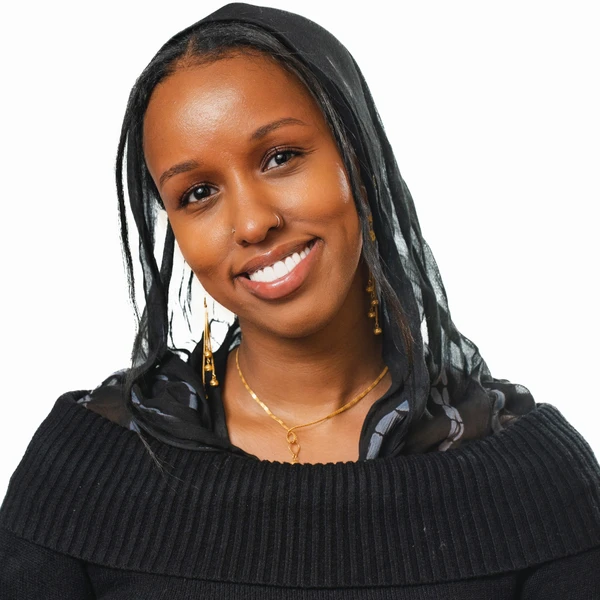
Gender
Female
Ethnicity
Black/African
Religion
Muslim
Hobbies and interests
Reading
Reading
Romance
I read books multiple times per week
US CITIZENSHIP
US Citizen
LOW INCOME STUDENT
Yes
FIRST GENERATION STUDENT
Yes
Fadumo Dahir
1x
FinalistFadumo Dahir
1x
FinalistBio
Hi, I’m Fadumo Dahir. I’m a first-generation college student and a junior nursing student at Utica University. I’ve always had a big heart for helping others, especially kids. I just want to be someone who makes a difference, even in small ways, and someone kids can feel comfortable and safe around. I work at a childcare center, and being around children every day has really shaped who I am. It’s taught me patience, love, and how important it is to make kids feel safe, heard, and cared for. That’s why I want to become a pediatric nurse.
Education
Utica College
Bachelor's degree programGPA:
4
Cayuga County Community College
Associate's degree programMajors:
- Registered Nursing, Nursing Administration, Nursing Research and Clinical Nursing
GPA:
3.5
Miscellaneous
Desired degree level:
Bachelor's degree program
Graduate schools of interest:
Transfer schools of interest:
Majors of interest:
- Registered Nursing, Nursing Administration, Nursing Research and Clinical Nursing
Career
Dream career field:
Hospital & Health Care
Dream career goals:
Assistant director
Primechildcare2021 – Present5 years
Sports
Soccer
Varsity2016 – 20193 years
Public services
Volunteering
Northside Learning Center — Teacher2020 – Present
Future Interests
Advocacy
Volunteering
Entrepreneurship
Wicked Fan Scholarship
I became a fan of Wicked for the same reason most people do, I expected a fun musical with catchy songs and maybe a little drama. What I did not expect was to sit there questioning everything I thought I knew about “good” and “bad.” Like, how did the “wicked” witch end up being the one I related to the most?
Elphaba honestly feels like that one person who just cannot catch a break. She is smart, passionate, and actually cares about doing the right thing, yet people judge her before she even speaks. Watching her story made me laugh at times, but it also hit a little too close to home. I’ve seen what it looks like when people are misunderstood or treated differently just because they don’t fit in, and it made me respect her even more. She didn’t change herself to make others comfortable and that takes real courage.
And then there’s Glinda. At first, she seems like the complete opposite popular, bubbly, and a little dramatic (okay, very dramatic). But their friendship is what really made me love Wicked. It’s funny, awkward, and honestly so real. They annoy each other, misunderstand each other, and still somehow grow together. It reminded me that friendships don’t have to be perfect to be meaningful.
What I also love about Wicked is that it lowkey calls out how fast society is to label people. One rumor, one misunderstanding, and suddenly someone is “the villain.” It made me think about how important it is to actually listen to people’s stories instead of just believing what’s easy. That’s something I carry with me, especially as I work toward becoming a nurse. I want to be the kind of person who sees people fully not just what’s on the surface.
At the end of the day, Wicked is more than just a musical to me. It’s funny, emotional, and a little too real sometimes. It reminds me that being different is not a flaw, that friendships can change you, and that sometimes the person everyone calls “wicked” is actually the one with the biggest heart.
Hearts on Sleeves, Minds in College Scholarship
Growing up, I didn’t always have the words but I always felt the weight of silence. When my family came to the United States as Black Muslims, everything was unfamiliar. The language barrier was one of the hardest parts. I watched my mother struggle every single day, especially in places where understanding matters most like hospitals and work. I remember sitting beside her while people spoke fast English, using words she didn’t understand, expecting her to just “figure it out.” Instead of helping, some ignored her. Others got frustrated. Some even made her feel small.
There were moments that stayed with me. Watching her get turned away at the hospital because she couldn’t properly explain what she needed. Seeing her managers hand her paperwork and expect her to complete it without explanation. Hearing people laugh or dismiss her because of her accent. In those moments, I felt helpless. I wanted to speak up, to defend her, to translate but I couldn’t. I didn’t have the language either. That silence hurt. It taught me what it feels like to not be heard, not be understood, and not have someone in your corner. It showed me how something as simple as communication can become a barrier to basic human dignity. And even though I didn’t fully understand it at the time, those experiences were shaping me. As I grew older, things changed. I learned the language. I found my voice. But more importantly, I understood the responsibility that came with it. Now, I’m determined to be the person my mother didn’t have.
As a nursing student, I carry those memories with me into every space I enter. Healthcare is supposed to be a place of healing, but for many people especially those who don’t speak English it can feel isolating and even scary. I never want a patient to feel the way my mother did: confused, ignored, or dismissed. I want them to feel seen, heard, and respected. Using my voice now means advocating for patients who can’t advocate for themselves. It means slowing down, listening carefully, and making sure they truly understand what’s happening with their care. It means making sure an interpreter is present, not as an afterthought, but as a priority. It means treating every patient with patience and compassion, no matter their background or language. I’ve learned that communication isn’t just about speaking it’s about understanding. It’s about empathy. It’s about making people feel safe enough to ask questions and strong enough to trust the care they’re receiving. The little girl who once sat quietly, wishing she could help her mother, is no longer silent. I’ve grown into someone who knows the power of her voice and isn’t afraid to use it. Every challenge my family faced gave me purpose. Every moment of helplessness turned into motivation.
In the future, I plan to continue using my voice not just as a nurse, but as an advocate. I want to be part of creating a healthcare system where language is never a barrier to quality care. I want patients from all backgrounds to look at me and feel hope to know that things can get better, that someone understands, and that they are not alone. Because I know what it feels like to need someone in your corner. And now, I’m ready to be that person for others.
VNutrition and Wellness Nursing Scholarship
As a future nurse, I believe improving nutrition is one of the most powerful ways to improve overall health. My understanding of this does not just come from textbooks it comes from my own Somali household. In Somali culture, food is love. It is hospitality. It is tradition. Meals are often prepared generously, with flavorful rice, meats, sauces, and plenty of oil. Sweet tea with sugar is a daily staple. Refusing food can even feel disrespectful. While these traditions are beautiful and meaningful, I began to notice how some of our eating habits were affecting my family’s health.
As I progressed in nursing school and learned about hypertension, diabetes, and heart disease, I started connecting what I was studying to what I was seeing at home. High oil intake, large portions, and sugary drinks were normal in our daily routine. No one questioned it because it was how we were raised. In immigrant families like mine, survival and affordability often come before nutritional balance. Conversations about food were about staying full and honoring tradition not about long term health outcomes.
Rather than criticizing my culture, I approached change with respect. I began suggesting small modifications at home. We started using less oil when cooking bariis and suugo. I encouraged baking or air frying instead of deep frying. I replaced sugary drinks with water more often and reduced the amount of sugar in shaah. These changes were not immediate or perfect, but they were realistic. Slowly, my family became more open. I learned that change works best when it honors culture instead of rejecting it. As a nurse, I plan to bring that same culturally sensitive approach to patient care. Many Somali and immigrant families may not respond well to strict dietary instructions that ignore tradition. Instead of telling patients to eliminate cultural foods, I will focus on healthier preparation methods, portion awareness, and moderation. Education must feel respectful and collaborative, not judgmental.
I also plan to advocate for preventative education in community spaces, especially within immigrant communities where healthcare can feel intimidating. Hosting workshops that incorporate culturally relevant examples and partnering with dietitians who understand diverse cuisines can create lasting impact. Patients are more likely to adopt healthier habits when they feel seen and understood. Watching my own family slowly shift their eating habits has shown me that small changes can protect long term health. Nutrition is deeply tied to identity, and true healthcare must acknowledge that. My goal as a nurse is not to erase tradition, but to help families adapt it in ways that preserve both culture and health. Improving nutrition is not about perfection it is about progress. Through education, empathy, and cultural awareness, I hope to empower families like mine to make choices that support a healthier future.
Legacy of Selfless Care Scholarship
Being a first generation college student and an immigrant has shaped every part of who I am and ultimately led me to nursing. I grew up watching my family navigate a system that often felt unfamiliar and overwhelming. Language barriers, cultural differences, and financial hardship made even simple tasks feel complicated. Doctor’s appointments were not just about health; they were about translating, advocating, and trying to understand instructions that were never fully explained in a way that felt accessible. From a young age, I became the bridge between my family and the healthcare system. In those moments, I realized how powerful knowledge and compassion can be.
As an immigrant, I learned resilience before I even had the words for it. Starting over in a new country means constantly adjusting new schools, new expectations, and sometimes feeling like you do not fully belong. As a first generation student, there was no blueprint for college. I had to figure out applications, financial aid, deadlines, and academic expectations largely on my own. There were moments of doubt, moments when the pressure felt heavy, and moments when I questioned whether I was capable. But I carried my family’s sacrifices with me. Their courage to build a new life gave me the strength to pursue a career that would allow me to give back.
My desire to become a nurse grew from watching how vulnerable my family felt in healthcare settings. I saw the difference it made when a provider took the time to listen, to explain, and to treat us with dignity. I also saw what happened when that compassion was missing. Those experiences stayed with me. I want to be the nurse who makes patients especially those from immigrant or underserved communities feel seen and understood. I understand what it feels like to sit in a room and not fully grasp what is happening. I understand the fear of asking questions. That perspective fuels my commitment to patient advocacy.
Compassion, service, and resilience are not abstract values in my life; they are survival skills that became strengths. Balancing school with responsibilities at home has required discipline and sacrifice. Pursuing nursing has meant long nights of studying, pushing through exhaustion, and staying focused even when financial stress weighed heavily on me. Still, every challenge has reinforced my purpose. Hardship did not discourage me it clarified my calling.
As a future nurse, I hope to use my experiences to create a safe and empowering space for patients. I want to advocate for clear communication, culturally sensitive care, and equity in healthcare access. I want patients to feel heard, respected, and confident in the care they receive. Being first-generation and an immigrant is not just part of my story it is the foundation of my strength.
Nursing, for me, is more than a profession. It is a way to honor my family’s sacrifices and serve communities that deserve compassionate, informed care. My journey has not been easy, but it has prepared me to lead with empathy, perseverance, and heart.
Healing Self and Community Scholarship
Mental health care should not be a luxury, yet for many people especially in low income and minority communities it still is. If I could make a unique contribution to the world, it would be to help create mental health services that are affordable, culturally sensitive, and easy to access for anyone who needs support.
As someone who grew up seeing how unaddressed stress, trauma, and financial hardship affect entire families, I believe that mental health care must be treated with the same urgency and respect as physical health. When I become a nurse, I plan to advocate for integrated care models that connect patients to counseling, support groups, and education right inside community clinics, childcare centers, and schools. I want people to receive help without being judged, dismissed, or unable to afford it.
In the future, I hope to expand community programs that provide sliding scale therapy, mental health workshops, and support specifically for caregivers, parents, and young adults. No one should feel like they have to suffer in silence because they cannot pay for help. My goal is to be part of a movement that reminds people that mental health is not a privilege it is a human right.
Qwik Card Scholarship
Growing up in a low-income household taught me early that money is not just about numbers it shapes opportunities, stability, and the way a family breathes through life. I remember watching my parents work hard, stretch every dollar, and still worry about things like rent increases or unexpected expenses. Seeing that motivated me to learn about credit and financial responsibility while I was still young. I didn’t want to repeat the cycle of surviving paycheck to paycheck; I wanted to build a foundation strong enough to change not only my life, but my family’s future as well. Building credit early is important to me because it means building options. I want to be able to buy a home one day, not just for myself, but to give my parents the security they never had. The idea of handing them keys to a house they can finally call their own is one of my biggest motivations. It’s more than a dream it’s a responsibility I feel deeply. Good credit is the first step toward making it real.
Along the way, I’ve made financial mistakes that taught me valuable lessons. When I first got access to credit, I didn’t fully understand interest rates or utilization, and I watched my score drop because of late payments and balances I didn’t manage well. It was frustrating and embarrassing, but it forced me to educate myself. I began reading about credit, budgeting, and saving. I learned how credit scores are built, how to keep utilization low, and how important it is to pay on time. I faced the consequences the hard way, but it made me more determined to take control of my financial life. One of the smartest financial moves I’ve made was creating a strict budget and sticking to it. I started using a simple rule: if I can’t afford to buy it twice, I can’t afford it right now. I also prioritized paying down debts and keeping a small emergency fund for unexpected situations. I’m still learning and growing, but I’m proud of how far I’ve come. My credit is improving, and I can see the progress month by month. It’s proof that you can recover, rebuild, and rise, even when you start with very little.
What motivates me the most is my family. My parents sacrificed so much so that I could have a better chance in life. They deserve to rest someday and not worry about housing or financial strain. I want to break generational cycles and create a different story for the family that comes after me. Money isn’t everything, but financial security brings peace, dignity, and the chance to breathe without fear. Taking control of my financial future is about empowerment. I plan to keep building my credit, saving, and making informed decisions. I want to continue learning about investments, homeownership, and long term wealth. My goal is not only to improve my situation, but to pass down knowledge to my future children, nieces, nephews, and anyone in my community who needs guidance. I come from a background where money was always tight, but that taught me resilience, resourcefulness, and the value of planning ahead. I don’t take financial literacy for granted because I know what it feels like to live without it. Building credit early is my way of rewriting my future and giving my parents the stability they always deserved.
MJ Strength in Care Scholarship
I didn’t always have the language to explain why I wanted to become a nurse. I just knew what it felt like to care about people so deeply that their pain sat on my heart like it was my own. Over time, through my work in childcare and my personal experiences with the medical system, I finally found the words for it: I want to be a nurse because I believe that care can change a life, and sometimes even save one.
My journey into caregiving started long before I ever imagined myself in scrubs. Working with infants and toddlers taught me that care is not just something you do, it’s something you give with your entire presence. I’ve held babies through fevers, listened to worried parents, and supported children through anxiety and developmental challenges. I learned how to read the needs that aren’t always spoken when a child needs comfort before they can communicate it, when a scared parent needs reassurance before information. Those same skills matter in nursing, where patients are often vulnerable and unsure, looking for someone who will not only treat their condition, but also treat them like a human being.
My motivation to pursue nursing also comes from watching the people I love try to navigate healthcare without always feeling heard. I have seen how overwhelming hospitals can be, especially for families who don’t know the right medical terms, who feel rushed, or who carry cultural or language barriers. I remember thinking, If someone could just slow down and explain things with empathy, this would feel a little less frightening. That is the kind of nurse I want to be someone who slows things down, listens, and stands beside patients when everything else feels unfamiliar.
As I continue my education, I’m especially drawn to pediatric and maternal health. There is something powerful about being present at the beginning of life and supporting families during some of their most emotional and meaningful moments. My experience in early childcare taught me a lot about infant development, family dynamics, and the importance of patient education. I can imagine myself helping a new mother learn to feed her baby, or calming nervous parents when their child isn’t feeling well. I want to be a nurse who creates safety, trust, and dignity for every family I care for.
Outside of school and work, I try to take care of myself so I can continue taking care of others. I love staying active walking, lifting weights, and keeping my body strong. I’m also a matcha lover, and there’s something peaceful about sitting with a warm cup and letting myself breathe for a moment. Community is also a big part of my life. I enjoy planning childcare events and finding ways to bring families together, because I’ve learned that healing doesn’t only happen in hospitals. Sometimes it happens through connection, laughter, and being surrounded by people who care.
Behind the scrubs I hope to wear, I am a person who leads with compassion. I am patient, I am gentle, and I do my best to understand others even when they cannot find the words. I know that nursing will be challenging, but I also know that I am ready for a life of learning, growth, and service. I want to make a difference not just through medication and procedures, but through presence, empathy, and respect.
Nursing, to me, is not just a profession. It is a calling that lives in how I show up for people every day. With the support of this scholarship, I will move closer to becoming the type of nurse who makes patients feel safe, who sees the person behind the diagnosis, and who brings comfort into rooms where fear once lived.
Sandy’s Scholarship
I was born into circumstances that most people can’t imagine. I came from a refugee camp that had nothing no reliable healthcare, no clean facilities, and very little hope. But even in that environment, I remember how people looked out for one another. When someone got sick, everyone came together to help in any way they could. Those moments showed me that care doesn’t always come from resources it comes from compassion. That’s something I’ve carried with me ever since.
When my family finally came to the United States, I saw a completely different world one where access to healthcare could save lives, but also where many still struggled to receive it. Watching that made me want to be part of the change. I wanted to be the person who could bridge that gap, bringing care and understanding to people who feel forgotten. That’s what inspired me to pursue nursing.
Running my childcare center has shaped that goal even more. Every day, I care for children from different backgrounds, and I see how much love and patience can impact a child’s well being. Working with infants and toddlers taught me to be calm, nurturing, and attentive qualities that are just as essential in nursing. I learned that sometimes, healing doesn’t start with medicine; it starts with someone who truly cares.
Seeing nurses care for my family members also strengthened my passion. They didn’t just treat illnesses they brought comfort and peace to people who were scared or in pain. That kind of compassion reminded me of the people who helped others back in the refugee camp, even when they had so little to give. Nursing, to me, is a way of continuing that same spirit of humanity on a greater scale.
Right now, I’m completing my Liberal Arts degree at Cayuga Community College and preparing to enter Utica University’s Accelerated BSN program in January 2026. My goal is to become a registered nurse, and eventually specialize in pediatrics or community health. I want to use my education to serve underrepresented communities especially immigrant and refugee families so they can receive the care, respect, and compassion they deserve.
Coming from a place with nothing taught me to appreciate everything. It taught me resilience, gratitude, and the power of kindness. Becoming a nurse isn’t just my career goal it’s my purpose. I want to bring hope, comfort, and healing to people just like the ones I grew up around, proving that no matter where you come from, you can become the person who makes a difference.
Community Health Ambassador Scholarship for Nursing Students
Honestly, I’ve always known I wanted to be in a field where I could help people. Ever since I was young, I’ve had a natural instinct to care for others whether it was comforting a family member, helping a friend through a hard time, or now, running my childcare center and caring for children every day. Over time, that desire to help people heal and feel supported grew stronger, and I realized that nursing was the perfect path for me.
For me, nursing is more than just a profession it’s a calling. It’s about being present for people during some of the most vulnerable moments of their lives and helping them find comfort, strength, and hope. Working in childcare has taught me patience, empathy, and leadership. Every child has their own needs and emotions, and I’ve learned that small acts of kindness like listening, reassuring, or simply showing compassion can completely change someone’s day. Those same values are what I plan to bring into nursing: the ability to make people feel safe, seen, and cared for, even in their hardest moments.
When I decided to apply for nursing school, I knew it wasn’t going to be an easy journey. But I also knew that this was where I truly belonged. Getting accepted into Utica University’s Accelerated Bachelor of Science in Nursing program starting in January 2026 feels like a dream coming true. It’s the start of a new chapter where I can combine my love for caring for others with the education and skills needed to make a real impact in healthcare. I know it’s going to be intense and challenging, but I’m ready to give it my all because nursing isn’t just something I want to do it’s something I feel called to do.
I’m especially passionate about serving families and children, because that’s where my heart has always been. I want to work as a registered nurse in pediatrics, maternal health, or community-based care. My goal is to help families who may not always have access to quality healthcare or who feel unheard in medical spaces. I believe everyone deserves compassionate, culturally sensitive care, no matter their background or situation. Nurses are often the bridge between patients and doctors, and I want to be the kind of nurse who listens, advocates, and makes sure no one feels overlooked.
In my community, there are so many families who struggle to find healthcare providers they can trust or relate to. As a nurse, I want to be part of the change to educate, empower, and support people who need it most. I’ve seen how fear, language barriers, and lack of understanding can stop people from getting care. I want to make healthcare feel more human, more welcoming, and more connected to the community it serves.
My long term goal is to open a family health practice that focuses on preventive care, education, and emotional support especially for children and parents. I want to create a space where people feel comfortable asking questions, learning about their health, and knowing they have someone who truly cares.
At the end of the day, nursing is about heart. It’s about showing up for people when they need it most offering not just medicine, but understanding and compassion. I want to be the kind of nurse who leaves a lasting impact, not just through the care I provide, but through the love, patience, and hope I bring to every patient I meet. Nursing is how I plan to serve, give back, and help my community heal one person, one family, one moment at a time.
Losinger Nursing Scholarship
1. I’ve always been the kind of person who wants to take care of people. Whether it was helping my family, looking after kids at my childcare center, or just being there for someone who’s having a rough day, I’ve always felt happiest when I’m making someone else feel better. Over time, that love for helping others turned into something deeper a calling to become a nurse.
Running my daycare taught me a lot about patience, responsibility, and empathy. Every child comes with their own personality, emotions, and needs, and I learned quickly that sometimes people don’t need you to fix everything they just need you to care. I’ve seen how a little kindness, understanding, or even a smile can completely change someone’s day. That lesson shaped how I view care and compassion not as small gestures, but as powerful acts of love that can make a real difference.
When I watched nurses care for my family members, I noticed how they did more than treat medical issues. They brought comfort, strength, and calm to people in scary moments. The way they held a patient’s hand, spoke gently, or took the time to explain something those were moments that truly inspired me. It showed me that nursing isn’t just about knowledge or training; it’s about heart.
Getting accepted into Utica University’s Accelerated BSN program for January 2026 feels like the start of something I’ve been working toward for years. Nursing, to me, is more than a career it’s a lifelong mission. My goal is to become a registered nurse, continue growing in my skills, and one day open my own healthcare practice that serves families and children in my community. I want to be the nurse who not only provides care but also makes people feel seen, safe, and cared for. My journey so far from childcare to nursing is all about showing love through service, and I plan to carry that same energy with me every step of the way.
2. The phrase “human touch” means showing care in a way that goes beyond medical skills it’s about treating people like people, not just patients. To me, it means empathy, patience, and genuine connection. The human touch is what reminds someone that they’re not alone while they’re scared, sick, or in pain.
In nursing, that human touch shows up in small ways holding a patient’s hand before a procedure, listening without rushing, or remembering their story beyond their diagnosis. It’s the simple things that make people feel valued and respected. I’ve seen firsthand how powerful that can be. When I was helping a child at my daycare who had separation anxiety, I learned how much comfort a soft voice and gentle reassurance can bring. It’s the same kind of presence I want to bring into nursing the kind that makes someone feel safe even when everything around them feels uncertain.
I think nursing is both a science and an art. The science is what helps you save lives, but the art the human touch is what helps you heal hearts. Anyone can learn how to give medicine or check vital signs, but not everyone can make a patient feel truly cared for. Patients remember how you made them feel long after they forget your name. That’s the kind of nurse I want to be one who treats every person with kindness, dignity, and compassion, no matter what they’re going through.
To me, the human touch also means understanding that healing isn’t just physical it’s emotional and spiritual too. It’s about creating a space where patients feel understood, respected, and loved. At the end of the day, the human touch is about being present mentally, emotionally, and physically. It’s about slowing down, listening, and letting someone know you care. That’s how I want to make my mark in nursing by combining skill with heart, and turning care into comfort.