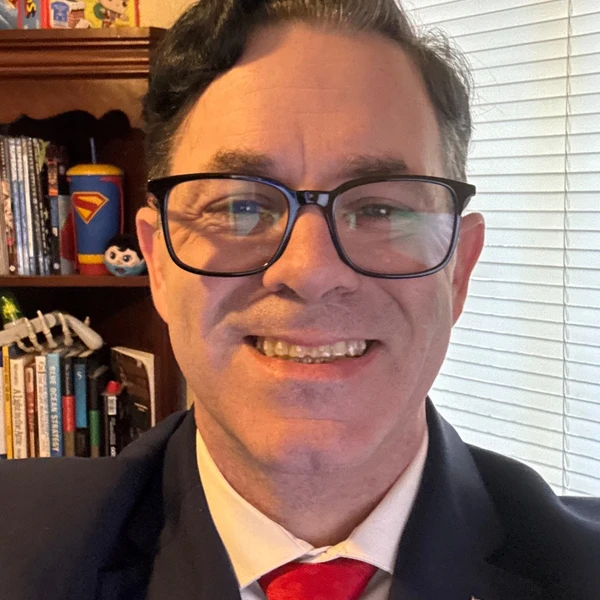
user profile avatar

Ezekiel Perry

1x

Finalist

General information

Hobbies & Interests

  • Accounting

Reading

  • Historical

I read books multiple times a week.

Bio

Ezekiel Perry is a Healthcare Government Compliance Analyst with extensive experience in regulatory oversight, data integrity, and financial process improvement. He is currently pursuing a Bachelor of Science in Accounting at the University of South Florida, with plans to obtain his CPA and continue into an MBA focused on Compliance, Risk Management, and Anti‑Money Laundering. With more than two decades of leadership across healthcare operations and international business, Ezekiel brings a disciplined, analytical approach to advancing accountability and operational excellence. He is committed to strengthening healthcare finance systems while modeling resilience, lifelong learning, and meaningful community impact.

Education

University of South Florida-St Petersburg

Bachelor's degree program

2025 – 2028

Majors:
  • Accounting and Computer Science

Daytona State College

Bachelor's degree program

2017 – 2019

Majors:
  • Business, Management, Marketing, and Related Support Services, Other

Daytona State College

Bachelor's degree program

2017 – 2019

Majors:
  • Business, Management, Marketing, and Related Support Services, Other

Miscellaneous

Desired degree level:
Master's degree program
Graduate schools of interest:
University of South Florida-St Petersburg
Desired degree modality:
Online
Medical school interest:
No

Career

  • Government compliance analyst

    Hospital & Health Care · BayCare

    Jan 2021 – Present

Miscellaneous

Dream career field:
Accounting
Work experience:
10+ years
Has nursing license:
No
Bulkthreads.com's "Let's Aim Higher" Scholarship
What I want to build is a future defined by stability, service, and generational impact — a future that did not come easily, but one I am committed to constructing piece by piece. After overcoming personal adversity, rebuilding my career, and returning to higher education as an adult student, I’ve learned that the most meaningful things we build are not physical structures. They are systems, opportunities, and legacies that outlast us. My goal is to build a career in healthcare finance and compliance that strengthens the organizations serving my community, while also building a foundation of educational and financial security for my family. The first part of this vision is professional. Working in healthcare compliance has shown me how deeply systems affect people’s lives — especially those who are vulnerable, overlooked, or navigating complex medical and financial challenges. I want to build a career where I can improve those systems from the inside. By completing my accounting degree, earning my CPA, and eventually pursuing an MBA in Compliance and Risk Management, I am preparing myself to take on roles where I can influence policy, strengthen financial integrity, and ensure that healthcare organizations operate ethically and efficiently. Building this career is not just about personal advancement; it is about creating safer, more transparent, and more equitable systems for the community I serve. The second part of what I want to build is a legacy for my family. As a father, I want my daughter to see that education, resilience, and service can transform a life. I want to build the financial stability that allows her to pursue her dreams without the barriers I faced. I want to model what it looks like to rebuild after loss, to rise after setbacks, and to keep moving forward with purpose. This commitment is not abstract — it shows up in the late nights studying, the disciplined financial planning, and the determination to turn every challenge into momentum. Finally, I want to build a sense of possibility for others in my community. Many people feel stuck between responsibilities, financial strain, and the fear of starting over. By sharing my journey — from losing my hand at eighteen, to reinventing my career, to returning to college in my forties — I hope to show that it is never too late to build something new. If my path encourages even one person to pursue education, seek support, or believe in their own potential, then the impact multiplies. What I am building is not just a career. It is a future rooted in service, resilience, and hope — one that strengthens my family, my community, and the systems that support us all.
Wicked Fan Scholarship
I have been a fan of Wicked for as long as I can remember, but my connection to it goes far deeper than enjoying a popular musical. For me, Wicked is woven into some of my earliest and most meaningful memories. As a child, I watched The Wizard of Oz with my mom countless times. It was our ritual — a shared world we stepped into together. The colors, the music, the sense of wonder, and the idea that ordinary people could find courage, heart, and wisdom all felt magical. When I discovered Wicked years later, it felt like returning to that world, but with a new understanding and a more mature perspective. It was like being handed the missing chapters of a story I had loved since childhood. What makes Wicked so powerful to me is the way it reframes a familiar tale. As a kid, I saw the Wicked Witch as a villain because that’s how the story presented her. But Wicked asks a deeper question: what if the person labeled “wicked” was misunderstood? What if the world judged her before it ever knew her? That idea resonated with me in ways I didn’t expect. Life teaches all of us that people are more complicated than they appear, and that assumptions can be unfair and damaging. Wicked captures that truth with honesty and compassion. The relationship between Elphaba and Glinda also mirrors something I learned from my mom: that real connection is built on acceptance, not perfection. Their friendship is messy, emotional, and transformative — just like the relationships that shape us in real life. Watching them grow, challenge each other, and ultimately change one another for the better reminds me of the way my mom guided me through childhood. She taught me to see people for who they are, not who the world says they should be. That lesson is at the heart of Wicked. As an adult, I appreciate the musical even more because of its themes of resilience, identity, and moral courage. Elphaba’s journey — standing up for what she believes in, even when it isolates her — reflects the kind of strength I strive for in my own life. She refuses to compromise her values, even when the world pushes back. That message is timeless, and it’s one I carry with me in my education, my career, and my personal growth. But beyond the symbolism and storytelling, Wicked brings me back to the feeling of sitting beside my mom, watching The Wizard of Oz and believing in magic. It reminds me of the comfort of those moments, the innocence of childhood, and the bond we shared through stories. Every time I listen to the music or think about the characters, I feel that connection again. I am a fan of Wicked because it bridges who I was as a child with who I am now. It honors the past while offering new meaning in the present. It reminds me that even in a complicated world, there is beauty in understanding, strength in compassion, and power in rewriting the story.
Frank and Patty Skerl Educational Scholarship for the Physically Disabled
Losing my left hand at eighteen years old changed my life in ways I could never have predicted. At that age, most people are just beginning to imagine their future. I was learning how to rebuild mine from the ground up. What felt like a devastating loss at the time eventually became one of the most defining sources of strength, clarity, and empathy in my life. Becoming part of the disabled community reshaped how I see the world, how I understand people, and how I approach every challenge that comes my way. Before my amputation, I moved through life with the unconscious ease that comes from having all abilities intact. Afterward, I learned what it meant to navigate a world that was not designed with me in mind. Simple tasks became complex. Everyday routines required creativity, patience, and problem‑solving. I had to relearn how to do things most people never think twice about. That process taught me humility, but it also taught me ingenuity. I discovered that limitations do not define a person — the response to those limitations does. Being part of the disabled community opened my eyes to the quiet strength so many people carry. I met individuals who faced challenges far greater than mine, yet moved forward with determination and grace. I saw how often society underestimates people with disabilities, not because of malice, but because of a lack of understanding. That realization changed me. It made me more aware of the barriers — physical, social, and emotional — that people encounter every day. It also made me more committed to breaking those barriers down. My experience taught me to see ability in a broader, more inclusive way. I learned that resilience is a skill. Adaptation is a skill. Creativity is a skill. These are strengths that the disabled community develops out of necessity, but they are also strengths that translate directly into leadership, problem‑solving, and innovation. They shaped the way I approach my education, my career in healthcare compliance, and my long‑term goals in business analysis and accounting. As I move forward, I intend to use my experience to positively impact every environment I enter. In healthcare, I bring a firsthand understanding of how policies and systems affect real people — especially those who are often overlooked. In business and leadership, I bring the ability to think differently, adapt quickly, and empathize deeply. I want to advocate for accessibility, fairness, and thoughtful design in the systems I help build and improve. Most importantly, I want to serve as an example for others who face adversity. Losing my hand did not limit my future; it expanded my capacity for resilience, compassion, and purpose. It taught me that challenges can become catalysts. It taught me that strength can come from unexpected places. And it taught me that the disabled community is not defined by what we lack, but by the extraordinary ways we rise.
Learner Calculus Scholarship
Calculus was the hardest academic challenge I have ever taken on, but it became one of the most transformative experiences of my education. After completing Calculus I and II, I gained far more than course credits. I gained a new way of thinking — one that now shapes how I approach problems in healthcare, business analysis, and financial modeling. For me, calculus is not just a STEM requirement; it is the intellectual foundation that allows complex systems to make sense. At its core, calculus is the language of change. Every field in STEM depends on understanding how things move, grow, shrink, accelerate, or interact. Whether analyzing the spread of a virus, predicting financial trends, optimizing a supply chain, or modeling patient outcomes, the underlying questions are the same: How is this system changing, and why? Calculus provides the tools to answer those questions with precision rather than guesswork. In physics and engineering, calculus is indispensable. Newton created calculus because the natural world demanded it — velocity, acceleration, force, and energy all rely on derivatives and integrals. Engineers use calculus to design bridges, simulate airflow, and ensure that structures and systems behave safely under stress. Without calculus, modern technology simply would not exist. But the importance of calculus extends far beyond traditional STEM fields. In today’s data‑driven world, calculus underpins machine learning, optimization algorithms, computer graphics, and artificial intelligence. Techniques like gradient descent — the backbone of modern AI — are built directly on calculus principles. Even industries that appear non‑technical on the surface now rely on calculus‑based models to make decisions, forecast outcomes, and manage risk. What surprised me most was how directly calculus connects to my own work in healthcare compliance and business analysis. Healthcare systems are dynamic and interconnected. Rates of change matter — changes in patient volume, reimbursement patterns, regulatory risk, or operational efficiency. Calculus trains the mind to break down complex problems, analyze relationships, and understand how small changes ripple through a larger system. Those skills are essential in compliance auditing, financial analysis, and process improvement, all of which require the ability to interpret patterns and anticipate outcomes. Calculus also strengthened my resilience. There were moments when I doubted whether I could finish the sequence, but pushing through taught me discipline, patience, and confidence. It proved that I can master difficult material through persistence and structured problem‑solving. That mindset now guides me as I pursue my Bachelor of Science in Accounting at the University of South Florida and prepare for the CPA. It also shapes my long‑term goal of advancing into leadership roles where analytical thinking and data‑driven decision‑making are essential. The Learner Calculus Scholarship supports students who recognize the value of calculus not just as a course, but as a gateway to deeper understanding. I am one of those students. Calculus changed how I think, how I solve problems, and how I approach my future. It gave me the intellectual tools to contribute meaningfully to healthcare, finance, and the broader STEM community. That is why every minute spent learning calculus was worth
Schlosser Healthcare Risk Equilibrium Scholarship
The healthcare problem I am committed to solving is the escalating cost of care driven by compliance failures, inefficient processes, and fragmented risk oversight. In my work as a Government Compliance Analyst, I see how small documentation errors, inconsistent workflows, and siloed decision‑making propagate downstream into denials, revenue leakage, and preventable patient delays. These failures are rarely isolated; they behave like networked risks, spreading through interconnected departments. That is why Mario Schlosser’s Healthcare Risk Equilibrium Theorem resonates deeply with me. It provides a mathematical lens for understanding how risk flows through a system — and how to stabilize it. Here’s a graph‑theory fix I stole from Mario’s brain, without his permission, for the good of humanity. The core idea I apply is that compliance risk behaves like a weighted graph: each node (department, process, or regulatory requirement) has a risk score, and edges represent how failures propagate. A coding error in the Emergency Department, for example, increases downstream risk in Billing, Utilization Review, and Compliance. Instead of treating these as separate issues, I model them as a connected system. Using Schlosser’s iterative risk‑propagation approach, I assign each node a baseline risk vector \( r_0 \). Then I apply a transition matrix \( T \), where each entry \( T_{ij} \) represents how much risk in node \( i \) influences node \( j \). Iteratively applying the update rule: r_{k+1} = T \cdot r_k reveals how risk amplifies or stabilizes over time. The equilibrium risk state — the “Schlosser equilibrium” — emerges when: r^* = T \cdot r^* This is the eigenvector associated with eigenvalue 1. In practice, this tells me which processes are true systemic risk amplifiers, not just local pain points. Here is a simplified Python prototype I use to model compliance‑cost propagation: import numpy as np # Baseline risk scores for: ED, Billing, UR, Compliance r0 = np.array([0.3, 0.2, 0.1, 0.4]) # Transition matrix representing risk influence T = np.array([ [0.6, 0.2, 0.1, 0.1], [0.1, 0.7, 0.1, 0.1], [0.2, 0.2, 0.5, 0.1], [0.1, 0.1, 0.2, 0.6] ]) # Iterative propagation r = r0 for _ in range(50): r = T @ r print("Equilibrium risk vector:", r) This equilibrium vector highlights where interventions yield the greatest reduction in system‑wide cost and compliance exposure. In real workflows, I use this logic to prioritize audits, redesign documentation processes, and identify where training produces the highest ROI. For example, when I modeled risk propagation for a recurring documentation error, the equilibrium analysis showed that the true leverage point wasn’t coding — it was inconsistent clinical documentation templates. Fixing that upstream reduced downstream denials by double digits. My long‑term goal is to formalize these models into a scalable risk‑equilibrium dashboard that healthcare systems can use to predict cost, compliance exposure, and operational bottlenecks before they occur. By combining accounting, compliance, and mathematical modeling, I hope to build systems that are not only compliant, but sustainably affordable. Mario Schlosser believes healthcare can be rebuilt through math, transparency, and courage. I share that belief — and I’m building the tools to help make it real.
Dream BIG, Rise HIGHER Scholarship
Education has been many things to me over the course of my life: a doorway, a lifeline, a compass, and at times, a quiet reminder that reinvention is always possible. I did not follow the traditional path of graduating high school, going straight to college, and building a career from a neatly mapped plan. My journey has been far more winding shaped by responsibility, resilience, and the determination to rise after every setback. But because of that, education has become even more meaningful. It has given me direction when I felt lost, purpose when I felt uncertain, and the confidence to dream bigger than the circumstances I once found myself in. My early adulthood was defined by service. I began my career in emergency medicine, working as an EMT and learning firsthand what it means to show up for people on their hardest days. Those years taught me that compassion is not a feeling it is an action. It is the steady hands that lift someone from a stretcher, the calm voice that reassures a frightened family, the willingness to keep going even when the shift is long and the emotional weight is heavy. I didn’t know it then, but those experiences planted the seeds for the kind of leader I would one day become. Life took an unexpected turn when I transitioned into entrepreneurship. For nearly two decades, I owned and operated a multi‑location gymnastics, acrobatics, and tumbling business across the United States and Europe. It was a chapter filled with joy, challenge, and growth. I coached children who walked into the gym timid and unsure, only to watch them leave with confidence they didn’t know they had. I learned how to lead teams, navigate cultural differences, and build community among people who shared nothing in common except a desire to belong. Those years taught me that leadership is not about authority it is about creating spaces where others can thrive. But when the COVID‑19 pandemic swept across the world, everything changed. Like many small business owners, I watched something I had poured my heart into slowly unravel. The closures, the financial strain, the uncertainty it all took a toll. Losing the business felt like losing a part of my identity. I had spent years building something from the ground up, only to watch it disappear in a matter of months. For a while, I felt unmoored, unsure of what came next. That is when education became my lifeline. Returning to college as an adult student, a parent, and a full‑time professional was daunting. I had responsibilities that didn’t pause for homework or exams. I had doubts about whether I could keep up academically after so many years away from the classroom. And I had the quiet fear that maybe I had missed my chance that education was something for people who had taken a more traditional path. But the moment I stepped back into my first class, something shifted. I realized that education wasn’t just about earning a degree it was about reclaiming my future. It was about proving to myself that growth doesn’t have an expiration date. It was about showing my daughter that resilience is not just something you talk about; it is something you live. Balancing work, school, and parenting has not been easy. There were nights when I studied long after everyone else was asleep, mornings when I woke up before dawn to finish assignments, and semesters where every credit hour felt like a mountain. Financial strain added another layer of pressure, forcing me to make careful decisions about tuition, textbooks, and household needs. But every challenge strengthened my resolve. Every class I completed reminded me that I was building something meaningful something that would change the trajectory of my life and my family’s future. Today, I am pursuing a Bachelor of Science in Accounting at the University of South Florida, with plans to earn my CPA and later an MBA in Compliance and Risk Management. My work as a Government Compliance Analyst in healthcare has shown me how deeply systems impact people’s lives. A single financial error can delay care. A poorly designed process can create barriers for families already under stress. A lack of oversight can widen disparities that should never exist. I want to be part of the solution. My goal is to use my education to strengthen healthcare systems through ethical accounting, financial transparency, and compliance leadership. I want to help organizations make decisions that honor both their mission and the people they serve. I want to build systems that are fair, efficient, and grounded in integrity. And I want to mentor others especially adult learners, working parents, and those rebuilding after loss showing them that it is never too late to rise higher. Education has given me direction, but more importantly, it has given me purpose. It has taught me that dreams do not shrink with age they expand with courage. It has shown me that setbacks are not endings they are invitations to begin again. And it has reminded me that the most powerful thing we can do is use our knowledge to lift others. The Dream BIG, Rise HIGHER Scholarship would not only support my academic journey it would help me continue building a future defined by service, leadership, and impact. With this support, I can focus more fully on my studies, accelerate my progress toward the CPA, and expand my ability to create meaningful change in the communities I serve. I am not just pursuing a degree. I am building a life that reflects resilience, purpose, and the belief that no dream is too big when you are willing to rise higher.
Robert F. Lawson Fund for Careers that Care
My life has been shaped by a simple belief: caring is not a soft skill it is a strategic one. It is the foundation of strong communities, ethical leadership, and systems that treat people with dignity. Every chapter of my journey, from healthcare compliance to international business ownership to returning to college as an adult student, has reinforced my commitment to building a career that improves lives through compassion, accountability, and service. I currently work as a Government Compliance Analyst in a major healthcare system, where I ensure that regulatory standards are followed and that patients especially the most vulnerable receive fair, accurate, and ethical care. This work has shown me how deeply systems affect people’s lives. A single error in documentation can delay treatment. A poorly designed process can create barriers for families already under stress. A lack of oversight can widen disparities that should never exist in the first place. My role allows me to protect patients by strengthening the integrity of the systems that serve them, and it has inspired me to pursue a long‑term career at the intersection of healthcare, finance, and ethical leadership. Before entering healthcare, I spent two decades running a multi‑location gymnastics and acrobatics business across the United States and Europe. That experience taught me how to lead diverse teams, communicate across cultures, and build environments where people feel safe to grow. I learned that caring for others is not limited to emotional support it includes designing structures that help people thrive. Whether coaching young athletes or mentoring new employees, I saw firsthand how encouragement, accountability, and empathy can transform someone’s confidence and future. Today, as I pursue a Bachelor of Science in Accounting at the University of South Florida and prepare for the CPA, I am expanding my ability to make a broader impact. Financial literacy, ethical accounting, and data‑driven decision‑making are powerful tools for creating fairness and transparency in healthcare. My long‑term goal is to become a leader who uses financial expertise to strengthen compliance programs, reduce waste, improve patient access, and support organizations that prioritize community well‑being. I plan to use my career to build systems that care systems that are equitable, efficient, and grounded in integrity. I want to help healthcare organizations make decisions that honor both their mission and the people they serve. I want to mentor future professionals, especially adult learners and those navigating career transitions, showing them that it is never too late to rebuild, grow, or lead. And I want to continue modeling the values that have guided me: service, resilience, and a commitment to lifting others. The Robert F. Lawson Fund for Careers that Care would support my ability to complete my accounting degree, earn my CPA, and continue building a career dedicated to improving lives. With this support, I will be able to focus more fully on my studies, accelerate my professional development, and expand my capacity to serve my community through ethical, compassionate leadership.
Harry & Mary Sheaffer Scholarship
Throughout my life, I have learned that empathy is not a passive feeling but an active discipline one that requires listening deeply, understanding context, and using one’s skills to create systems where people feel seen, supported, and valued. My unique combination of healthcare compliance expertise, cross‑cultural business experience, and a lifelong commitment to service has shaped my vision for building a more empathetic and understanding global community. I intend to use these talents to bridge gaps between people, institutions, and cultures in ways that elevate fairness, dignity, and human connection. My career in healthcare has taught me that empathy must be embedded not only in bedside interactions but also in the policies, financial systems, and operational structures that shape patient experiences. As a Government Compliance Analyst, I work to ensure that vulnerable populations receive equitable access to care and that regulatory standards protect not burden the people they are meant to serve. This work has strengthened my belief that empathy can be engineered into systems when leaders understand both the human and technical sides of healthcare. As I continue my education in accounting and pursue an MBA in Compliance and Risk Management, I plan to use my analytical skills to design financial and regulatory frameworks that reduce disparities and improve trust between communities and the institutions that serve them. Before entering healthcare, I spent two decades running a multi‑location gymnastics and acrobatics business across the U.S. and Europe. That experience exposed me to diverse cultures, languages, and perspectives. It taught me how to communicate across differences, how to lead with humility, and how to build community among people who may not share the same background but share the same hopes. Those years shaped my belief that empathy grows when people feel safe to express themselves and when leaders create environments where every voice matters. I carry those lessons into every professional and academic space I enter. I also bring a deep commitment to mentorship. Whether guiding new healthcare professionals, supporting fellow adult learners, or helping young athletes find confidence, I have always believed that lifting others is the most meaningful form of leadership. My goal is to expand this work globally by developing training programs that blend cultural awareness, ethical decision‑making, and data‑driven problem‑solving. By teaching others how to navigate complexity with compassion, I hope to multiply the impact of empathy across borders and generations. Ultimately, I want to build systems financial, operational, educational, and interpersonal that reflect the dignity of the people they serve. The Harry & Mary Sheaffer Scholarship would support my journey toward becoming a leader who not only understands global challenges but approaches them with humanity and purpose. With the skills I am developing and the values that guide me, I am committed to shaping a world where empathy is not an aspiration but a standard.
James T. Godwin Memorial Scholarship
Service is the thread that stitches my family together. It runs through generations of sailors, nurses, chiefs, and commanders people who chose duty over comfort, responsibility over ease, and country over self. I didn’t grow up hearing stories about fame or fortune. I grew up hearing stories about sacrifice, courage, and the quiet kind of strength that doesn’t need applause. Even though I never served due to an injury, the Navy shaped me long before I understood what service truly meant. One of my most vivid memories is of my father standing on the porch in his Navy uniform. I must have been six or seven. I remember tugging at his sleeve and asking why he had to leave again. He knelt down, looked me in the eyes, and said, “Because protecting others is how we show love.” At the time, I didn’t fully understand. But that moment planted something in me a belief that service is an expression of love, not just duty. My grandfather, a naval commander, carried himself with a kind of calm authority that made you feel safe just being near him. He had weathered storms literal and figurative that most people never see. Yet the story he told me most often wasn’t about battle or rank. It was about a young sailor who froze during a crisis. Instead of reprimanding him, my grandfather put a hand on his shoulder and said, “Courage isn’t the absence of fear. It’s choosing to act anyway.” That line has stayed with me through every setback, every challenge, every moment when life felt heavier than I expected. My grandmother, a naval nurse, taught me a different kind of bravery. She spoke about holding the hands of sailors who were scared, far from home, or grieving. She said the hardest part wasn’t the medical work it was carrying their stories with her. She taught me that compassion is a form of strength, and that service often looks like showing up for someone when they need it most. Her lessons echo in my work in healthcare today, where protecting patients and ensuring ethical practices is my own way of serving. And then there was my mother’s mother a Navy chief with a voice that could cut through any room and a heart that held our entire family together. She used to say, “Storms make sailors. Calm seas don’t.” She lived that truth. She taught me resilience not through lectures, but through the way she stood tall after every hardship. I never earned a uniform, but I carry their values every day. I support veterans because they are my family by blood, by legacy, and by the lessons they left me. This scholarship would help me honor them by completing my accounting degree and continuing a life built on service, integrity, and responsibility. Their stories shaped who I am. Their sacrifices shaped who I strive to become.
Poynter Scholarship
Balancing my education with my responsibilities as a parent is one of the most meaningful challenges of my life. Every class I take, every late-night study session, and every step toward my accounting degree is driven by a simple truth: my daughter is watching. She watches how I handle pressure, how I rise after setbacks, and how I keep moving toward a future that gives our family more stability and opportunity. I want her to see that growth is possible at any age, and that commitment to education is an act of love as much as ambition. My life as a parent and a student is built on intentional structure. I plan my semesters the way I approach my work in healthcare compliance—methodically, with clear milestones and honest accountability. I map out assignments, exams, and projects weeks ahead so I can protect the time my daughter needs from me. Our evenings often include a quiet moment where she does her homework while I do mine. Those shared moments remind me why I’m pushing forward: I want her to inherit not just the benefits of my degree, but the mindset behind it. Still, balance isn’t only about schedules. It’s about presence. When I’m with my daughter, I’m fully with her. When I’m studying, I’m fully committed to the work. That separation keeps me grounded and ensures that neither my education nor my family feels like an afterthought. Instead, they strengthen each other. My daughter’s belief in me fuels my discipline, and my discipline shows her what perseverance looks like in real time. The Poynter Scholarship would make a profound difference in this journey. As a working parent, financial strain is a constant companion. Tuition, textbooks, transportation, and the everyday costs of raising a child create a pressure that can easily pull focus away from academics. This scholarship would relieve a significant portion of that burden, allowing me to redirect resources toward my daughter’s needs while staying on track toward graduation. It would also reduce the need for extra work hours, giving me more time to study and more time to be present for my family. But the impact goes deeper than finances. Receiving the Poynter Scholarship would be a powerful affirmation that my efforts matter—that the long nights, the sacrifices, and the determination to build a better future for my family are seen and supported. It would reinforce the values I strive to live by: integrity, service, and a commitment to strengthening the systems that support our communities. As someone pursuing accounting with the goal of contributing to ethical financial practices in healthcare, I see this scholarship as an investment not only in my education, but in the work I hope to do for others. Ultimately, this scholarship would help me continue building a life where my daughter can see the direct impact of perseverance and purpose. With your support, I can move forward with confidence—earning my degree, advancing my career, and creating a stronger foundation for the family I love.
Special Delivery of Dreams Scholarship
Throughout my life, I have learned that the problems we overcome often become the foundation of the person we grow into. One of the greatest challenges I faced was rebuilding my life after a long period of instability financial, academic, and personal. For years, I carried responsibilities that pulled me away from my own goals. I worked multiple jobs, supported my family, and put my education on hold. Starting over as an adult student required humility, discipline, and the courage to believe that it was not too late to build something better. Returning to college while working full‑time demanded long nights, careful planning, and a willingness to push through doubt. But overcoming that challenge taught me resilience, patience, and the importance of steady progress. It also strengthened my commitment to helping others who feel overwhelmed by their circumstances. This scholarship would directly support my ability to give back to the community in meaningful ways. As I pursue my accounting degree and prepare for a career that blends financial literacy, compliance, and community service, I want to use my education to help families who struggle with the same challenges I once faced. Financial stress is one of the most common barriers to stability, and many people simply need guidance someone who can break down complex information into clear, manageable steps. With this scholarship easing my own financial burden, I can dedicate more time to mentoring students, volunteering with youth programs, and offering workshops on budgeting, scholarships, and long‑term planning. My goal is to create pathways for others to succeed, especially those who feel like their dreams are out of reach. By reducing my tuition costs, this scholarship allows me to invest more energy into serving the community rather than working extra hours to cover expenses. Stamp collecting has played a surprisingly meaningful role in shaping my character and perspective. What began as a simple hobby became a way to slow down, appreciate detail, and understand the world through small pieces of history. Each stamp represents a story cultures, milestones, achievements, and moments frozen in time. Collecting them taught me patience, curiosity, and the value of preserving things that matter. It also helped me develop an eye for patterns and organization, skills that now serve me well in both academics and professional work. More importantly, stamp collecting reminded me that even small things can carry great significance. That mindset influences how I treat people: every interaction, every encouraging word, every act of service can make a lasting impact. The challenges I’ve overcome, the lessons I’ve learned through stamp collecting, and my commitment to serving others all guide the path I’m building. The Special Delivery of Dreams Scholarship would not only support my education it would help me deliver opportunities, encouragement, and hope to the community that shaped me.
Travis Ely Collegiate Angler Memorial Scholarship
Fishing has always been more than a sport to me it has been a teacher. Every early morning on the water, every cast that comes up empty, and every moment of patience required to wait for the right strike has shaped my character in ways that extend far beyond angling. The lessons I’ve learned as an angler have become the same principles I bring into my community: humility, discipline, respect, and a commitment to doing things the right way even when no one is watching. Character, to me, is defined by consistency. On the water, that means respecting the environment, honoring the rules, and treating every competitor with dignity. I’ve always believed that a true angler leaves the water better than they found it whether that means picking up trash that isn’t mine or helping a younger angler untangle a line instead of focusing solely on my own catch. I’ve learned that integrity is measured in small decisions, and those decisions build the foundation of who you are. Sportsmanship is another value I take seriously. Fishing is unpredictable, and success can shift in an instant. I’ve celebrated big wins and accepted tough losses, but I’ve always done both with respect. When someone else lands the fish of the day, I’m the first to congratulate them. When I’m fortunate enough to succeed, I stay humble and grateful. I’ve also made it a priority to share knowledge with others teaching kids how to cast, helping new anglers understand local regulations, and encouraging anyone who shows interest in the sport. Passing on what I’ve learned is one of the most meaningful ways I can honor the fishing community that shaped me. My work ethic is rooted in persistence. Fishing demands patience, preparation, and the willingness to keep trying even when conditions are tough. I bring that same mindset into my academic and professional life. Whether I’m studying for my accounting degree at the University of South Florida, working in healthcare compliance, or supporting my community, I approach every responsibility with discipline and follow‑through. I believe in showing up early, staying late when needed, and giving my best effort regardless of the circumstances. In the community, I strive to be someone others can rely on. I volunteer my time, support local youth programs, and look for opportunities to help families and students who need guidance. I’ve learned that leadership isn’t about titles it’s about service. Just as on the water, I try to lead by example: staying calm under pressure, treating everyone with respect, and offering support without expecting anything in return. The values that define me as an angler character, sportsmanship, and work ethic are the same values I carry into every part of my life. They guide how I learn, how I work, and how I serve others. This scholarship honors an angler who embodied these principles, and I strive every day to live up to that same standard.
ADHDAdvisor Scholarship for Health Students
Throughout my life, I’ve supported others’ mental well‑being by creating environments where people feel seen, valued, and safe to express themselves. In my work, school, and community, I’ve learned that emotional support often begins with simple but intentional actions: listening without judgment, helping people organize overwhelming situations into manageable steps, and offering encouragement rooted in empathy rather than advice. Whether mentoring colleagues through stressful transitions, guiding students and families during difficult decisions, or helping friends navigate academic and financial pressures, I’ve focused on reducing anxiety by bringing clarity, structure, and compassion to moments that feel chaotic. My background in healthcare compliance and operations has also shaped how I support others. Working in high‑pressure environments taught me to recognize when people are carrying more than they say. I’ve helped teammates break down complex tasks, coached them through problem‑solving, and created a sense of stability by modeling calm, consistent communication. These experiences reinforced that emotional support isn’t about having all the answers it’s about helping people feel capable, respected, and not alone. As I continue my studies in accounting and prepare for a career that blends healthcare, finance, and organizational leadership, I plan to use my education to strengthen the emotional well‑being of the people around me. Understanding financial systems, compliance, and business operations allows me to reduce uncertainty for others something that directly impacts stress and mental health. In future leadership roles, I intend to build workplaces where transparency, fairness, and psychological safety are non‑negotiable. I want to empower teams by giving them the tools, information, and support they need to thrive, not just perform. Ultimately, my goal is to lead with empathy and integrity. Whether I’m analyzing data, improving processes, or guiding a department, I plan to use my skills to create environments where people feel supported both professionally and emotionally. My education is not just preparing me for a career it’s preparing me to be the kind of leader who strengthens the well‑being of everyone around me.
Elizabeth Schalk Memorial Scholarship
Mental illness has shaped my life in ways that are both deeply personal and profoundly motivating. It has affected my family across generations, influencing how we communicate, how we support one another, and how we navigate difficult seasons. Growing up in a family touched by depression, anxiety, and trauma meant learning early that emotional struggles are not always visible, and that the people we love can be fighting battles we don’t fully understand. Those experiences have shaped my character, my resilience, and my commitment to building a future defined by compassion, stability, and service. A bit about me: I am a first‑generation college student pursuing a Bachelor of Science in Accounting at the University of South Florida while working full‑time as a Healthcare Government Compliance Analyst. My path has not been linear. I experienced a partial amputation of my left hand at eighteen, rebuilt my life after losing my business during COVID‑19, and returned to higher education later in life with a renewed sense of purpose. Through all of these transitions, mental illness both my own struggles and those within my family has been a quiet but constant presence. In my family, mental illness often showed up as silence. It showed up in the form of loved ones who carried heavy emotional burdens but didn’t always have the tools or support to express what they were going through. As a child, I didn’t always understand the mood shifts, the withdrawal, or the emotional distance. As an adult, I’ve come to recognize these patterns for what they were: symptoms of untreated or under‑supported mental health conditions. That understanding has helped me approach my family with more empathy and patience, and it has pushed me to break cycles rather than repeat them. Mental illness has also affected me personally. The pressure of being a caretaker, a provider, and a stabilizing force in my family created seasons of stress and emotional exhaustion. There were times when I felt overwhelmed by responsibility, especially during major life challenges like my injury, the loss of my business, and the financial strain that followed. But those experiences taught me the importance of seeking support, building healthy coping strategies, and refusing to carry everything alone. They also taught me that strength is not about pretending everything is fine it’s about acknowledging when you need help and choosing to keep moving forward. These experiences have shaped my dreams and my purpose. I want to build a life defined by stability, service, and integrity. My long‑term goals earning my CPA, completing an MBA in Compliance, Risk Management, and Anti‑Money Laundering, and advancing into leadership roles are rooted in a desire to create systems that protect people, support communities, and promote ethical decision‑making. I also want to mentor others, especially nontraditional students and individuals navigating adversity, because I know how powerful it is to feel seen and supported. The Elizabeth Schalk Memorial Scholarship would help me continue this journey by easing the financial strain of balancing full‑time work, family responsibilities, and tuition. It would allow me to stay focused on my education and move closer to a future where I can use my experiences not as setbacks, but as tools to uplift others.
Sabrina Carpenter Superfan Scholarship
I am a fan of Sabrina Carpenter because she represents something rare in today’s entertainment world: a young woman who has grown, evolved, and reinvented herself without ever losing her authenticity. Watching her career unfold has been like watching someone step into their power one era at a time, and that journey has had a real impact on me. Sabrina’s confidence, humor, vulnerability, and work ethic have shaped the way I think about creativity, resilience, and the courage to be fully yourself. What first drew me to Sabrina was her voice—not just her literal singing voice, but the voice she uses as a storyteller. Her music blends sharp wit with emotional honesty in a way that feels refreshing and real. She can make you laugh in one line and hit you in the chest with the next. Songs like “because i liked a boy,” “emails i can’t send,” and “Feather” show how she turns personal experiences into art without bitterness or apology. She doesn’t hide from the messy parts of life; she transforms them into something empowering. That ability to take control of your own narrative is something I’ve carried into my own life. Sabrina’s career has also impacted me because of the way she handles pressure and reinvention. She started young, faced public scrutiny, and still managed to evolve into an artist who knows exactly who she is. Watching her navigate challenges with humor and grace has reminded me that growth doesn’t have to be perfect—it just has to be honest. Her journey encourages me to embrace my own transitions, whether in school, career, or personal life, without feeling like I need to have everything figured out at once. Another reason I admire Sabrina is her work ethic. Behind the playful personality and effortless stage presence is someone who clearly works incredibly hard. Her performances are polished, her vocals are consistent, and her songwriting continues to deepen with every project. Seeing someone so dedicated to their craft motivates me to approach my own goals with the same level of commitment. She proves that success isn’t just about talent—it’s about discipline, persistence, and believing in your own potential even when others don’t fully see it yet. Sabrina’s confidence has also influenced me in a meaningful way. She embraces her femininity, her humor, her boldness, and her softness without apology. She shows that you can be playful and powerful at the same time. That message has helped me feel more comfortable expressing myself authentically, without worrying about fitting into a mold or meeting someone else’s expectations. Ultimately, being a fan of Sabrina Carpenter means being inspired by someone who leads with heart, humor, and resilience. Her career has impacted me by reminding me that reinvention is always possible, that vulnerability is a strength, and that creativity can be a form of healing. She encourages me to pursue my goals with confidence, to stay true to myself, and to find joy in the process—not just the outcome.
Taylor Swift Fan Scholarship
Of all of Taylor Swift’s performances over the years, the one that moves me the most is her live performance of “All Too Well” not because it was the biggest, the loudest, or the most theatrical, but because it felt like watching someone stand in the center of their own truth and refuse to look away. As a fan, I’ve always admired Taylor’s ability to turn personal experiences into art, but this performance was the moment that made me understand just how powerful vulnerability can be. What struck me first was the simplicity. No elaborate staging, no dancers, no distractions just Taylor, a guitar, and a story she wasn’t afraid to tell. In a world where performances often rely on spectacle, she chose honesty. That choice made the entire room feel smaller, almost intimate, as if she were letting each of us sit with her in the memory she was singing about. I remember watching her voice crack slightly in places, not from lack of control, but from the weight of what she was reliving. It reminded me that strength isn’t always loud; sometimes it’s quiet, steady, and brave. What moves me most is how much of myself I see in that performance. Like Taylor, I’ve had moments in my life where I had to rebuild from the ground up moments where I felt the loss of something I poured my heart into, moments where I had to stand in the middle of my own story and decide who I wanted to become next. Watching her perform “All Too Well” felt like permission to feel everything fully, to acknowledge the pain without letting it define me, and to turn my own experiences into fuel for growth. That performance also captures what I love most about Taylor as an artist: her ability to make millions of people feel understood at the same time. She doesn’t just sing to her fans she sings with us. She turns her heartbreaks, her triumphs, and her transformations into something we can all hold onto. As someone who values storytelling, resilience, and emotional honesty, I’ve carried that lesson with me in my own life. It’s helped me stay grounded through challenges, stay open to learning, and stay committed to becoming someone who leads with authenticity. The Taylor Swift Fan Scholarship represents more than financial support it represents the spirit of what Taylor has built: a community of people who believe in growth, creativity, and the courage to reinvent yourself. This scholarship would help me continue my education and move closer to my goals, but it would also remind me of the very message that performance taught me: that even in the hardest moments, there is power in telling your story and stepping forward anyway. Taylor’s “All Too Well” performance moves me because it is a reminder that vulnerability is strength, storytelling is healing, and reinvention is always possible. And those are lessons I carry with me every day.
Bick First Generation Scholarship
Being a first‑generation student means carrying the hopes of my family while building a path none of us had the chance to walk before. It means learning how to navigate higher education without a blueprint, figuring out financial aid, academic expectations, and career planning through persistence, trial, and error. For me, it also means proving that where you start does not determine where you can go. Every class I take and every milestone I reach represents not just my progress, but the progress of everyone who came before me who didn’t have the opportunity. My journey has not been simple. I faced major challenges early in life, including a partial amputation of my left hand at eighteen. That experience forced me to grow up quickly and taught me resilience, discipline, and the ability to adapt under pressure. Years later, after building a successful multi‑location gymnastics and acrobatics business across the U.S. and Europe, I faced another life‑changing setback when COVID‑19 forced my business to close because it was not classified as essential. Losing my primary income source and the work I had poured myself into for years was devastating. But it also pushed me to rebuild, refocus, and return to higher education with a renewed sense of purpose. Today, I am pursuing a Bachelor of Science in Accounting at the University of South Florida while working full‑time as a Healthcare Government Compliance Analyst. My dream is to earn my CPA and later complete an MBA in Compliance, Risk Management, and Anti‑Money Laundering. I want to strengthen financial integrity and ethical practices within healthcare systems fields where strong leadership directly impacts patient care, community trust, and organizational transparency. What drives me is the belief that my education will allow me to create meaningful change, not just for myself, but for the communities I serve. Being a first‑generation student also means learning how to balance work, family, and school while carrying the financial weight of tuition on my own. The economic impact of losing my business during the pandemic still affects my household, and every semester requires careful planning and sacrifice. The Bick First Generation Scholarship would significantly reduce that burden. It would allow me to stay on track academically, focus more fully on my coursework, and continue moving toward my long‑term goals without the constant pressure of financial strain. This scholarship represents more than financial support it represents belief. Belief that first‑generation students can rise, lead, and create opportunities for others. Belief that determination matters. Belief that the obstacles we’ve faced do not define us, but prepare us. My dream is to build a life defined by service, integrity, and impact. I want to mentor other nontraditional and first‑generation students, help them navigate the challenges I once faced, and show them that it is never too late to pursue education or reinvent your future. With the support of the Bick First Generation Scholarship, I can continue that journey with confidence, purpose, and the determination to honor the opportunity I’ve been given.
John Nathan Lee Foundation Heart Scholarship
Growing up in a family deeply affected by cardiac disease meant learning early that life can change without warning. My parent and grandparents each faced serious heart‑related conditions, and those experiences shaped my childhood, my responsibilities, and ultimately my outlook on resilience, health, and purpose. While many people learn about cardiac disease from textbooks, I learned about it in hospital waiting rooms, through emergency phone calls, and by watching the people I loved fight for their lives. One of the greatest obstacles was the emotional weight of uncertainty. As a child and young adult, I often lived with the fear that a routine day could turn into a medical crisis. I learned to stay calm under pressure, to listen carefully to doctors, and to support my family through moments that felt overwhelming. Those experiences taught me maturity long before most people my age needed it. They also taught me compassion because when you’ve seen someone struggle to breathe, recover from surgery, or fight through cardiac rehabilitation, you understand how fragile and precious life truly is. Another obstacle was the shift in family roles. Cardiac disease doesn’t just affect the person diagnosed; it affects everyone around them. I often stepped into responsibilities earlier than expected helping manage appointments, supporting recovery routines, and taking on tasks that others my age never had to think about. These responsibilities shaped my work ethic and my ability to stay organized under stress. They also taught me the importance of being dependable, especially when others are counting on you. Financial strain was another reality. Cardiac disease brings medical bills, medication costs, and long‑term care needs that can stretch a family thin. Watching my family navigate those challenges taught me the importance of financial literacy, planning, and stability. It also influenced my decision to pursue accounting and compliance fields where I can help organizations operate responsibly and support families who depend on them. Perhaps the most lasting obstacle was learning to balance fear with hope. When cardiac disease runs through generations, it’s easy to feel like you’re living under a shadow. But instead of letting that fear limit me, I chose to let it motivate me. I became more committed to my own health, more intentional about my goals, and more determined to build a life defined not by risk, but by purpose. These experiences also shaped my desire to serve others. Whether through healthcare compliance, mentorship, or future entrepreneurial ventures, I want to create systems and environments that help people live healthier, more stable lives. I understand what it feels like to be the family in crisis, and I want to be part of the solution whether by improving healthcare processes, strengthening financial accountability, or supporting individuals who are navigating their own challenges. Cardiac disease brought obstacles, but it also brought clarity. It taught me resilience, responsibility, empathy, and the importance of building a life that supports others. Those lessons continue to guide my education, my career, and the impact I hope to make in the world.
Jessie Koci Future Entrepreneurs Scholarship
I am currently pursuing a Bachelor of Science in Accounting at the University of South Florida, a field I chose because it provides the financial, analytical, and regulatory foundation every successful entrepreneur needs. After years of working in healthcare operations, compliance, and business ownership, I learned that strong financial literacy is the backbone of sustainable growth. Accounting equips me with the tools to build businesses that are not only profitable but ethical, efficient, and resilient. It also prepares me for my long‑term goals of earning my CPA and completing an MBA in Compliance, Risk Management, and Anti‑Money Laundering credentials that will strengthen both my entrepreneurial ventures and my leadership within the healthcare industry. My career vision is intentionally hybrid: I plan to continue advancing professionally in healthcare compliance while simultaneously building entrepreneurial ventures that reflect my creativity, leadership style, and commitment to serving others. I spent two decades running a multi‑location gymnastics and acrobatics business across the U.S. and Europe, and that experience shaped my identity as an entrepreneur. I learned how to build systems, lead teams, manage finances, and create environments where people could grow. Even after COVID‑19 forced my business to close because it was not classified as essential, my entrepreneurial mindset never faded. Instead, it evolved. I realized that entrepreneurship is not just about owning a business—it is about solving problems, creating value, and adapting to change. I believe I will be successful in my future business endeavors because I have already overcome challenges that many entrepreneurs never face. At eighteen, I experienced a partial amputation of my left hand, which taught me discipline, adaptability, and the ability to perform under pressure. Later, losing my business during the pandemic forced me to rebuild my career from the ground up. These experiences strengthened my resilience and sharpened my ability to navigate uncertainty qualities that are essential for long‑term entrepreneurial success. Many businesses fail because their leaders are unprepared for adversity. I have lived through adversity, learned from it, and emerged with a clearer sense of purpose and a stronger foundation for future ventures. To me, a successful life is not defined solely by financial achievement but by impact, integrity, and growth. Success means using my skills to improve the systems around me whether in healthcare, business, or education. It means creating opportunities for others, mentoring those who are navigating their own challenges, and modeling resilience for my family and community. It also means continuing to learn, because knowledge expands our ability to innovate and serve. The Jessie Koci Future Entrepreneurs Scholarship aligns deeply with my goals. It supports individuals who are not only building businesses but building themselves leaders who understand that entrepreneurship is a long‑term commitment to growth, service, and possibility. With this scholarship, I can continue my education, strengthen my entrepreneurial foundation, and move closer to creating ventures that make a meaningful difference in the world.
Priscilla Shireen Luke Scholarship
Giving back has always been a defining part of my life, shaped by experiences that taught me resilience, empathy, and the importance of lifting others as we grow. Whether through mentorship, service, or leadership, I have always believed that meaningful impact begins with helping people feel supported, capable, and valued. My journey through healthcare, entrepreneurship, and now higher education has strengthened that belief and guided the way I contribute to my community today. In my current role as a Healthcare Government Compliance Analyst, I give back by helping ensure that healthcare systems operate with integrity and accountability. While my work is technical, its purpose is deeply human. By improving documentation practices, supporting ethical decision‑making, and helping teams understand complex regulatory requirements, I contribute to safer, more transparent care for patients across our community. I also mentor colleagues and new employees, teaching them how to navigate processes with confidence. Sharing knowledge, especially with those who are just beginning their careers has become one of the most meaningful parts of my work. My commitment to giving back extends beyond my professional responsibilities. After running a multi‑location gymnastics and acrobatics business for many years, I developed a passion for teaching and mentorship. Even after COVID‑19 forced my business to close because it was not classified as essential, I continued supporting families and former students by offering guidance, encouragement, and resources. Teaching has always been a natural extension of who I am. Whether I am helping a student master a skill, assisting a peer with coursework, or guiding a coworker through a difficult process, I find purpose in helping others succeed. Returning to higher education has also allowed me to support fellow nontraditional students. I share study strategies, help break down complex accounting concepts, and encourage others to stay focused on their long‑term goals. I believe education is a shared journey, and I try to create an environment where others feel capable of achieving more than they thought possible. Looking ahead, I plan to expand my impact through advanced education and leadership. I am pursuing a Bachelor of Science in Accounting at the University of South Florida, with plans to earn my CPA and later complete an MBA in Compliance, Risk Management, and Anti‑Money Laundering. With this training, I aim to strengthen financial integrity and ethical practices within healthcare organizations. I want to help build systems that protect vulnerable populations, reduce waste, prevent fraud, and ensure that resources are used responsibly. Strong financial stewardship directly affects the quality of care communities receive, and I am committed to being part of that solution. The Priscilla Shireen Luke Scholarship would help me continue this path by reducing the financial burden of tuition while I balance full‑time work, family responsibilities, and academic commitments. With this support, I can stay on track academically and accelerate my ability to serve my community at a higher level. My commitment to giving back is not temporary it is the foundation of my life’s work. With continued education and support, I plan to expand that impact and contribute to a more ethical, resilient, and compassionate world.
Debra S. Jackson New Horizons Scholarship
My life has been shaped by moments that required resilience, reinvention, and a deep commitment to serving others. At eighteen, I experienced a partial amputation of my left hand, an event that forced me to develop discipline, adaptability, and a determination to move forward despite significant challenges. That early experience taught me that setbacks do not define a person; how we respond to them does. It also sparked a lifelong love of learning, because I quickly realized that knowledge, skill, and mindset are the tools that allow us to rebuild, grow, and create new opportunities. Years later, after building a successful multi‑location gymnastics and acrobatics business across the U.S. and Europe, I faced another major turning point when COVID‑19 forced my company to close because it was not classified as essential. Overnight, I lost my business, my primary income source, and the stability I had spent years creating. The financial impact was significant and long‑lasting, and it required me to rebuild my career from the ground up. Yet even in that difficult moment, I found purpose in helping others supporting families, mentoring young athletes, and guiding staff through uncertainty. Teaching has always been one of the most meaningful parts of my life, and those experiences reinforced my belief that sharing knowledge is one of the most powerful ways to serve a community. These challenges ultimately led me back to healthcare and inspired my return to higher education. Today, I work as a Healthcare Government Compliance Analyst while pursuing a Bachelor of Science in Accounting at the University of South Florida. My goal is to earn my CPA and later complete an MBA in Compliance, Risk Management, and Anti‑Money Laundering. I am driven by a desire to strengthen financial integrity, regulatory accountability, and ethical decision‑making within healthcare systems areas where strong leadership directly impacts patient care, community trust, and organizational transparency. My love for learning has only grown stronger as an adult student. I approach every course, certification, and professional challenge with curiosity and a desire to master the material. Just as importantly, I enjoy teaching others whether mentoring colleagues, helping classmates understand complex concepts, or guiding teams through regulatory processes. I believe that knowledge should be shared, not guarded, and I hope to continue supporting nontraditional students and emerging professionals who are navigating their own transitions. As a full‑time employee, parent, and student still recovering financially from the loss of my business, the cost of tuition presents a significant barrier. The Debra S. Jackson New Horizon Scholarship would directly reduce this burden, allowing me to stay on track academically and focus more fully on my long‑term goals. Financial support is not simply helpful it is essential to ensuring that I can complete my degree, pursue advanced credentials, and step into leadership roles that allow me to make a meaningful impact. This scholarship would help me honor Debra S. Jackson’s legacy by using my education to uplift others, strengthening healthcare systems, expanding ethical practices, mentoring future leaders, and contributing to a more resilient, transparent, and community centered future.
Ezekiel Perry Student Profile | Bold.org