Oregon, WI
Age
18
Gender
Female
Ethnicity
Caucasian
Religion
Christian
Church
Lutheran
Hobbies and interests
Volunteering
Community Service And Volunteering
Sports
Volleyball
Softball
Art
Psychology
Babysitting And Childcare
Medicine
Health Sciences
Reading
Adult Fiction
I read books daily
US CITIZENSHIP
US Citizen
Evelyn LaVoy
1x
Finalist1x
WinnerEvelyn LaVoy
1x
Finalist1x
WinnerBio
I care deeply about people—about making them feel seen, supported, and safe. Whether I’m working in hospitality, volunteering, caring for children, or competing as a student-athlete, I show up with the belief that how we treat others matters. I value effort, kindness, and growth, and I care about leaving people better than I found them.
My goal is to pursue a career in family medicine, exercise science, or a related field where I can combine science with compassion. I want to make an impact that goes beyond “treating”—to truly understand, listen, and advocate for others.
As a student-athlete, softball has taught me discipline, teamwork, and perseverance—qualities I apply on and off the field. Volunteering has strengthened my leadership and deepened my desire to give back, especially in health and wellness.
I love being part of a team, and the idea of working in health care aligns with everything that drives me: meaningful connection, problem-solving, and helping people feel cared for and confident in their own wellness.
Balancing a 3.76 GPA with athletics, work, and service has made me organized, coachable, and adaptable. When I don’t know something, I learn. When it’s hard, I don’t quit. Scholarships would not only support my education—they would allow me to continue investing in others. I’m not just working toward a career. I’m working toward a life of service.
Education
Oregon High School
High SchoolMiscellaneous
Desired degree level:
Bachelor's degree program
Majors of interest:
- Medicine
- Biological and Biomedical Sciences, Other
- Psychology, General
- Health/Medical Preparatory Programs
- Alternative and Complementary Medical Support Services
- Medical Clinical Sciences/Graduate Medical Studies
Career
Dream career field:
Medical Practice
Dream career goals:
Barista and Host at two different restaurants
Bodihow and also at Seven Acres2024 – Present2 years
Sports
Volleyball
Varsity2022 – Present4 years
Basketball
Varsity2017 – 20247 years
Softball
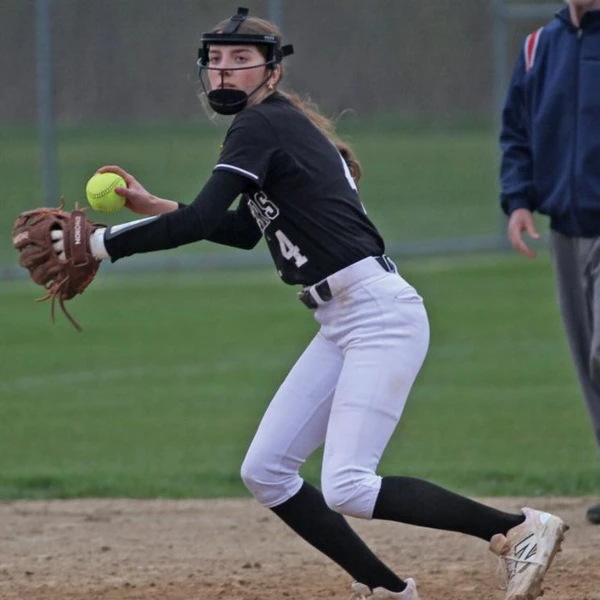
Varsity2017 – Present9 years
Public services
Volunteering
Oregon Youth Softball — volunteer2022 – PresentVolunteering
Oregon Area Food Pantry — Volunteer2022 – Present
Future Interests
Advocacy
Volunteering
Philanthropy
Entrepreneurship
Julie Adams Memorial Scholarship – Women in STEM
Although I am only just 18, I have learned in my life, and from lessons from my family and parents and teachers and coaches, that passion doesn’t always arrive as a loud, defining moment. Sometimes it builds quietly through our curiosity, and from lived experiences, and through the realization that what you choose to learn can one day become how you serve others! That's where I am at right now. My passion for pursuing a degree in biology comes from that exact place: a growing understanding that science is not just knowledge, but a pathway to care, impact, and change. I want to use biology and science to catapault me into a pre-med pathway and hopefully someday research diseases like ALS.
Biology, to me, is the study of life in its most intricate and meaningful form. It is the bridge between curiosity and compassion. I didn't always think that way, but my teacher this year, Mr. Johnson, has shown me how biology helps to ask questions like why and how, but more importantly, biology allows us to respond to those answers in ways that improve lives. Whether it’s understanding how the human body functions, exploring disease prevention, or contributing to medical advancements, biology gives me the tools to be part of something bigger than myself. This is very important to me so I'm happy to hvae had this lesson.
What draws me most to this field is the opportunity to help people in real and life-changing ways. I have always been someone who wants to show up for others—not just in words, but in action. A degree in biology opens doors to careers where that matters deeply, whether in healthcare, research, or community health. It’s not just about learning systems and structures; it’s about using that knowledge to advocate for people, to support families, and to make moments of uncertainty feel more manageable for those who need it most. Watching my grandmother go through ALS and then how my mom has navigated that world without her own mom and doing that while raising her own three kids, that has impacted me in this way. Why? How?
This is why the story of Julie Adams resonates so deeply with me. She dedicated her life to education, to her students, and to creating opportunities for others—especially young women—to step into spaces where they could grow, lead, and succeed. She believed in potential, even before students fully saw it in themselves. That kind of impact doesn’t disappear; it continues through the lives of those who carry it forward. I imagine you are just so sad without her, but also take comfort and peace in the many lives she impacted!
In many ways, pursuing a degree in biology feels like honoring that same spirit. STEM fields can be challenging, and at times, intimidating. This happened to me the first time I took a test in AP Biology - I thought I wasn't good enough. I realized I just needed to get over my pity party of "this is hard" and find a way to study differently, so I bought a life size skeleton and post it notes! I also formed a study group. This helped me really see that there will be moments where concepts don’t click right away, where the workload feels heavy, or where doubt tries to creep in. But those moments are not signs to stop—they are part of the process. Growth lives there. And what matters is continuing to show up, to learn, and to push forward anyway.
Julie Adams didn’t just teach math—she created pathways. She made space for students, especially young women, to see themselves in STEM fields. That matters because representation changes what feels possible. When you can see someone who believes in you, who looks like you, or who has walked a path before you, it shifts your perspective from “Can I?” to “I will.”
That is the mindset I carry with me as I pursue biology. I want to be part of a generation of women who not only enter STEM fields but thrive in them—who support one another, who challenge limitations, and who create environments where others feel they belong. My ambition is not just to earn a degree, but to use it with purpose: to contribute to healthcare, to support individuals and families, and to continue learning in a field that is constantly evolving.
There is also a personal layer to this passion. Life is unpredictable, and health can change in an instant. Stories like Julie Adams’ remind us of both the beauty and fragility of life. They remind us why science matters—why research, education, and healthcare advancements are so critical. They remind us that behind every diagnosis, every treatment, and every breakthrough, there are real people, real families, and real stories. As I mentioned, my grandmother died from ALS, and I've also had two grandfathers battle cancer (thanksfully, both successfully so far!) as well as many people in my life impacted by other health issues. So I know I want to be a part of that person on their health care team who stays curious about them and keeps heping to make life a little better for them. That understanding fuels my drive. It turns my interest into commitment. It's also why I chose to attend Lawrence University - I know they have an incredible program and a strong sytem to help me stay focused and successful - teachers just like Julie to help guide me.
I am passionate about biology because it allows me to be both curious and compassionate. It challenges me to think critically while staying deeply connected to humanity. It asks me to learn not just for myself, but for the people I will one day serve. And while I know the journey ahead won’t be perfect—there will be mistakes, setbacks, and moments of uncertainty—that’s part of becoming. Every challenge is shaping me into someone who is more prepared, more resilient, and more capable of making a difference. As a student athlete, I will have to find ways to get balance, form more study groups, and find time to take care of me as well. It's why I know I cannot work, and why every scholarship dollar means SO MUCH to me.
This isn’t just about earning a degree. Not to me. It’s about stepping into a field where knowledge becomes care, where learning becomes action, and where passion becomes impact. I want to do good things for others in this world! To me, this opportunity to study biology and then pre-med/research is about continuing a legacy—like Julie Adams’—of believing in possibilities, creating opportunities, and showing up for others in meaningful ways. And I am ready to begin. Thank you for considering me.
Tawkify Meaningful Connections Scholarship
The most meaningful relationship in my life is with my mom, Dr. Lynea LaVoy. Long before I understood what it meant to be a leader, an educator, or a professional, I watched her quietly model all of those things at once—often without recognition, and always with intention. She is the most real, most loving, most caring and most human-connection purposeful person I know and without her, I would not be pursuing a degree at Lawrence University in biology with a pre-medical track and a psychology minor, especially as a student-athlete. She has taught me, modeled for me, what we are capable of doing when we connect authetically with others and ourselves!
My mom is a first-generation college student who put herself through three degrees, ultimately earning her doctorate while raising three kids. When we were little, she worked full time, cared for us, and still found space—late at night, on weekends, and in between youth soccer and baseball and softball games—to write her dissertation. I remember sitting near her while she worked, the glow of her laptop open after long days, her determination steady even when she was exhausted. I would use my fake laptop to write my "bissertation" and she would ask me what I was writing about and why it mattered to me, even though I'm pretty sure I was writing about Sesame Street and who was my favorite, Cookie Monster or The Grouch. She didn’t talk much about sacrifice; she simply did the work because she believed education could change her life—and ours. And somehow she still found time to volunteer and show up for others, all while being the best and most involved mom ever. And without her own mom, who passed away from ALS when she was 61 and my mom was only 30.
Today, she lives that belief as a faculty member in the Hospitality Management department at Madison College. She is the ONLY person I know who truly loves her job. Her students love her because she sees them as whole people. She checks on in on them all the time, offering resources and support and a guiding ear. She focuses on high-quality teaching one student at a time, taking the time to understand what motivates them, what barriers they face, and how she can help them succeed. I’ve watched her advocate for students who felt unseen, celebrate those who doubted themselves, and hold high expectations while offering real compassion. She never gives up on anyone. This picture is my mom and just a few of her students who she sponsored at an event.
What stands out most to me is how inclusive and human her approach is. She doesn’t believe learning ends at the classroom door. She has invited international students—students far from home and family—into our house for holidays so they wouldn’t be alone. She advocated to start a food pantry at the college to help with student hunger. And she gives her time relentlessly in the tutoring areas. To her, connection isn’t transactional or performative; it’s personal. She teaches me, without ever saying it directly, that belonging can be created through simple acts of care.
That relationship has shaped how I build connections with others. I’ve learned that leadership isn’t about authority—it’s about presence. It’s noticing who’s quiet, who’s struggling, who might need encouragement. It’s showing up consistently, even when it’s inconvenient. Like my mom, I try to lead one connection at a time, whether that’s supporting a friend through mental health challenges, mentoring younger athletes, or serving in my community.
Her example has also influenced how I see my future. I want to build a life centered on meaningful, authentic relationships—especially in healthcare. Watching my mom truly know her students has shown me how powerful it is to treat people as individuals, not numbers or outcomes. Healing, learning, and growth all begin with trust, and trust is built through care and attention.
Most importantly, my relationship with my mom has taught me that success doesn’t have to come at the cost of compassion. You can work hard, aim high, and still lead with love. You can pursue big goals while staying grounded in service to others.
Because of her, I believe deeply in human connection—not as something abstract, but as something lived out daily through listening, empathy, and action. That belief shapes who I am today and guides how I will continue to build relationships that are authentic, inclusive, and rooted in care.
Sammy Hason, Sr. Memorial Scholarship
My desire to work in healthcare comes from a lifetime of watching how illness—especially rare, complicated illness—can reshape an entire family. My grandmother, Diane, passed away from ALS when I was only three. Even though I don’t remember the details of her illness, I grew up in its wake—watching my mom navigate grief, watching my family advocate for research and awareness, and learning very early that serious disease affects far more than the person diagnosed. It affects relationships, mental health, dignity, and hope.
Because of that, I don’t see healthcare as just a profession—I see it as a responsibility to honor the whole person. My goal is to become a physician and researcher who supports individuals with rare conditions, including lung diseases and neuromuscular illnesses like ALS, by combining evidence-based care with deep human compassion.
Rare and chronic respiratory conditions often take away more than breath—they take independence, confidence, and a sense of control. ALS does this too, slowly separating the mind from the body. Through my family’s experience, I’ve learned that patients need more than treatment plans; they need providers who listen, communicate clearly, and understand the emotional weight of uncertainty.
I plan to enter this field from two angles: clinical care and research.
As a future physician, I want to deliver care in a way that helps patients feel seen—not rushed, dismissed, or overwhelmed. I want to build trust by treating people as partners in their own care. This looks like explaining diagnoses in understandable language, asking what a patient values most in their daily life, and designing care plans around their goals—not just the disease. Especially for rare conditions, patients often spend years searching for answers. I want to be the kind of doctor who reduces that fear, shortens that search, and stands with patients through moments that feel too big to face alone.
Equally important to me is contributing to research, because families like mine deserve breakthroughs. ALS, idiopathic pulmonary fibrosis, and many rare conditions lack clear causes, cures, or even early detection tools. I hope to be part of the research that changes that. Whether through studying biomarkers, disease progression, or emerging therapies, I want to help bring the scientific community closer to treatments that preserve quality of life and extend time with the people we love.
My interest in psychology will support this work too. Patients with rare and chronic conditions often experience anxiety, depression, and identity loss. Their caregivers often struggle as well. Understanding the mind—and how illness affects a person’s emotional world—will help me become a provider who supports the whole family, not just the diagnosis.
I also carry lessons from being a student-athlete and a mentor for younger softball players. Softball taught me how to encourage others through frustration, how to build confidence step-by-step, and how to lead with empathy. These are the same skills I hope to bring into patient rooms, research labs, and conversations with families who need strength and understanding.
Ultimately, my vision is simple: I want to help people breathe easier—literally and emotionally. I want to give families the gift my own family needed when my grandmother was sick: clarity, support, and hope.
Healthcare is where my heart, my history, and my dreams come together. And I am committed to using my education, my empathy, and my determination to make life better for people living with rare diseases and the ones who love them.
Harvest Scholarship for Women Dreamers
My “Pie in the Sky” dream is to become a doctor and researcher who helps unlock breakthroughs for diseases like ALS—diseases that steal ability but never touch a person’s spirit. It feels inspiring and, at times, almost impossibly big. But it’s also the dream that has shaped my direction, my resilience, and my commitment to growth more than anything else in my life.
This dream began before I was old enough to understand its weight. When I was three years old, my grandmother, Diane, passed away from ALS. I don’t have clear memories of her, but I grew up in the echo of her life—through stories from my mom, who lost her mother far too young, and through the quiet grief and quiet strength that filled our home. Her story became the foundation of mine.
As I got older, our family became involved in ALS walks, fundraising, and advocacy. We didn’t just remember my grandma—we worked to make sure fewer families had to go through the same loss. Hearing other families’ stories of courage, struggle, and hope shaped me deeply. I realized that behind every diagnosis is a family trying their best to hold on to moments. I also realized how much work there is still left to do.
Those experiences, along with supporting my best friend through depression and self-harm, revealed the truth about health: it is physical, emotional, and profoundly human. That realization sparked my passion for both medicine and psychology. I want to understand the brain and body together, because healing has to honor both.
My dream feels big—huge, even—because researching neurological diseases means stepping into a field where answers come slowly and the work is demanding. Becoming a doctor requires years of study, discipline, emotional strength, and resilience. But every step I’ve taken has pulled me closer to that path instead of away from it.
I’ll be attending Lawrence University as a pre-med and psychology major while being a recruited softball athlete. Balancing Division III athletics with rigorous academics will not be easy—but sports have already taught me how to handle pressure, how to lead by example, and how to stay focused when the stakes are high. Softball grounded me in discipline and perseverance, and those same skills will shape me into the kind of doctor who doesn’t quit when answers are hard to find.
I also plan to continue volunteering—especially mentoring younger athletes in my community. Teaching them confidence, compassion, and resilience reminds me that leadership is not just about achievement; it's about lifting others up. Those skills matter in medicine too, because science means nothing without humanity.
To reach this dream, I will need to seek out research opportunities, push myself academically, stay curious, and maintain the emotional grounding that has shaped me. I’ll need to show up to labs, to classes, to clinical experiences with humility and determination. I’ll need to keep learning how to listen deeply—even when the stories are heavy—and to keep believing that progress is possible, even when it’s slow.
But most importantly, I’ll need to hold onto the heart of the dream: honoring my grandmother, supporting families like mine, and using both science and compassion to make life better for others.
My “Pie in the Sky” dream is big—but it’s the kind of big that pulls me forward. And every step I’ve taken so far has taught me that what feels “just out of reach” is often exactly what we’re meant to pursue.
Dream BIG, Rise HIGHER Scholarship
Education, for me, has never been just about grades or assignments—it has been the roadmap that helped me understand who I want to become and the anchor that kept me steady as I navigated loss, mental health challenges around me, and the responsibility of being the oldest child in my family. School has always been the place where my curiosity met purpose, where science became not just a subject but a language that helped me make sense of the hardest parts of life. It has shaped my goals, strengthened my empathy, and given me a sense of direction when I needed it most.
My educational journey began with a story I was too young to remember, but one that has shaped everything about the way I see the world—my Grandma Diane’s death from ALS when I was only three. I grew up hearing about her—her strength, her humor, the grace she held onto even as her body failed her. I also grew up watching how that loss shaped my mom. Grief became part of the fabric of our home, not in a heavy or hopeless way, but in a way that made kindness and mental health support normal topics, not hidden ones.
My mom never pretended to be “fine.” She talked openly about sadness, resilience, and coping. And she showed me what strength really looks like—not perfection or pretending, but getting up each day and choosing compassion and presence anyway. That openness at home shaped my understanding of emotional health before I even knew the word “psychology.” It taught me that the mind and heart are as real and important as anything you can see in a scan or lab report.
As I grew older, I realized how rare that kind of openness is. When my best friend began struggling with depression and eventually harming herself to cope, the signs didn’t shock me—because I recognized what hidden pain can look like. Supporting her through that period changed me. It taught me to listen more than I speak, to be patient with pain I can’t fully understand, and to encourage her toward professional help without judgment. I learned that “helping” doesn’t always mean fixing; sometimes it means sitting beside someone in the dark until they can see light again. That experience deepened my commitment to understanding mental health and using my education to support others.
School became my outlet—psychology, biology, and anatomy classes especially. I started seeing connections everywhere: between ALS and neurodegenerative pathways, between trauma and neural plasticity, between emotional regulation and physical wellness. Education gave me language for the things my family had lived through. It gave me clarity about the career I want to pursue: a life in medicine, grounded in research, psychology, and human connection.
Being the first-born added another layer of purpose. I’ve always felt a responsibility to show my younger siblings that education isn’t something we endure but something that expands who we are. I want them to see that we can come from loss, from challenge, from complicated mental health stories, and still choose a life of meaning and service. Going to college—being a pre-med and psychology major at Lawrence University while also balancing the role of a recruited softball student-athlete—is part of the example I want to set for them. I want them to see that you can be disciplined and compassionate, ambitious and grounded, a student and an athlete, all at once.
Sports, too, have been their own education. Softball has taught me discipline, perseverance, teamwork, and leadership. It has shown me that pressure reveals character, that people need encouragement more than criticism, and that confidence can be built one moment at a time. Being chosen as a sophomore to attend the WIAA Student Leadership Summit taught me that leadership is not about being the loudest voice on the field—it’s about consistency, empathy, and the ability to guide others through challenges.
Every winter, I volunteer with younger softball players, spending Sunday evenings helping them develop foundational skills and, more importantly, confidence. I’ve learned that building people up is one of the most meaningful forms of leadership. This has shaped my understanding of the kind of doctor or researcher I want to be—someone who sees the whole person, who understands that emotional well-being is inseparable from physical health, and who treats compassion as a clinical skill.
Education has given me direction by connecting my past to my purpose. It taught me that I can transform personal loss into motivation, that I can use my experiences with mental health to support others, and that being the oldest sibling means leading through example, not pressure. My goal is to use my education to create a future where I can contribute to ALS research, support patients and families navigating devastating diagnoses, and advocate for mental health as a vital part of medicine.
I hope to build a career that blends science with humanity—one where I can honor my grandmother, support people like my best friend, and show my younger siblings that resilience is not something you’re born with; it’s something you choose, over and over again.
A Man Helping Women Helping Women Scholarship
I’ve chosen to pursue a degree in healthcare because I’ve seen, again and again, how science and compassion can change lives. My understanding of what it means to care for others began early, when my grandmother, Diane, passed away from ALS. I was only three, but her story has been woven into my family ever since. Through my mother, I learned that illness isn’t only a physical experience—it touches every emotion, every relationship.
I grew up watching my mom carry both grief and grace. She turned loss into purpose, advocating for ALS research and participating in awareness walks every year. In our home, conversations about mental and emotional health were as natural as talking about school or sports. When life felt heavy, my mom reminded me that vulnerability isn’t weakness—it’s human. That foundation shaped my belief that medicine must treat both the body and the heart.
My understanding deepened when my best friend began struggling with depression and self-harm in middle school. She started cutting herself in seventh grade, hiding her pain behind long sleeves and quiet smiles. I didn’t know how to help at first, but I learned to listen—to show up without judgment or expectation. Over the years, as she’s continued to fight her way toward healing, I’ve seen how empathy can be just as powerful as treatment. That friendship taught me that being present can save someone’s life as much as any medicine can.
Together, my grandmother’s courage, my mother’s resilience, and my friend’s fight for stability have shown me what real care looks like. It’s not simply curing a symptom—it’s understanding a person. That’s why I’m pursuing a pre-med and psychology degree at Lawrence University in Wisconsin. I want to explore the connection between mental and physical health, to study the science of healing while keeping humanity at its center.
Sports have also shaped the way I lead and care. As a multi-sport athlete, I’ve learned that teamwork, discipline, and emotional intelligence matter as much as skill. You can’t tell a struggling teammate to “shake it off”—you have to notice, listen, and encourage. Being chosen as a sophomore to represent Oregon High School at the WIAA Student Leadership Summit taught me that leadership isn’t about being the loudest voice—it’s about being the most consistent one.
Every winter, I volunteer with younger softball players in my community, teaching them skills but also confidence and self-belief. I’ve learned that coaching, like healthcare, is about helping others see their own strength. Some of these girls arrive shy or unsure; by season’s end, they hold their heads higher. Those moments remind me why I’m drawn to helping people grow—physically, mentally, and emotionally.
As a woman entering the healthcare field, I hope to bring empathy and balance to spaces that sometimes forget the human side of science. Women have a unique ability to lead with both intellect and intuition—to advocate fiercely while nurturing genuinely. I want to be the kind of doctor who sees the person before the patient, who listens deeply, and who never loses sight of why I chose this path in the first place: to serve.
Healthcare isn’t just a career goal for me—it’s a calling born out of lived experience. I’ve seen what illness takes, but I’ve also seen what compassion gives back. I want to make that difference for others—to honor my grandmother’s legacy, my mother’s strength, and my friend’s courage by turning empathy into action.
Women in Healthcare Scholarship
I’ve chosen to pursue a degree in healthcare because I’ve seen, again and again, how science and compassion can change lives. My understanding of what it means to care for others began early, when my grandmother, Diane, passed away from ALS. I was only three, but her story has been woven into my family ever since. Through my mother, I learned that illness isn’t only a physical experience—it touches every emotion, every relationship.
I grew up watching my mom carry both grief and grace. She turned loss into purpose, advocating for ALS research and participating in awareness walks every year. In our home, conversations about mental and emotional health were as natural as talking about school or sports. When life felt heavy, my mom reminded me that vulnerability isn’t weakness—it’s human. That foundation shaped my belief that medicine must treat both the body and the heart.
My understanding deepened when my best friend began struggling with depression and self-harm in middle school. She started cutting herself in seventh grade, hiding her pain behind long sleeves and quiet smiles. I didn’t know how to help at first, but I learned to listen—to show up without judgment or expectation. Over the years, as she’s continued to fight her way toward healing, I’ve seen how empathy can be just as powerful as treatment. That friendship taught me that being present can save someone’s life as much as any medicine can.
Together, my grandmother’s courage, my mother’s resilience, and my friend’s fight for stability have shown me what real care looks like. It’s not simply curing a symptom—it’s understanding a person. That’s why I’m pursuing a pre-med and psychology degree at Lawrence University in Wisconsin. I want to explore the connection between mental and physical health, to study the science of healing while keeping humanity at its center.
Sports have also shaped the way I lead and care. As a multi-sport athlete, I’ve learned that teamwork, discipline, and emotional intelligence matter as much as skill. You can’t tell a struggling teammate to “shake it off”—you have to notice, listen, and encourage. Being chosen as a sophomore to represent Oregon High School at the WIAA Student Leadership Summit taught me that leadership isn’t about being the loudest voice—it’s about being the most consistent one.
Every winter, I volunteer with younger softball players in my community, teaching them skills but also confidence and self-belief. I’ve learned that coaching, like healthcare, is about helping others see their own strength. Some of these girls arrive shy or unsure; by season’s end, they hold their heads higher. Those moments remind me why I’m drawn to helping people grow—physically, mentally, and emotionally.
As a woman entering the healthcare field, I hope to bring empathy and balance to spaces that sometimes forget the human side of science. Women have a unique ability to lead with both intellect and intuition—to advocate fiercely while nurturing genuinely. I want to be the kind of doctor who sees the person before the patient, who listens deeply, and who never loses sight of why I chose this path in the first place: to serve.
Healthcare isn’t just a career goal for me—it’s a calling born out of lived experience. I’ve seen what illness takes, but I’ve also seen what compassion gives back. I want to make that difference for others—to honor my grandmother’s legacy, my mother’s strength, and my friend’s courage by turning empathy into action.
Ethel Hayes Destigmatization of Mental Health Scholarship
Mental health has shaped nearly every corner of my life—my relationships, my goals, even the way I see the world. It’s not just something I’ve read about or learned in a class; it’s something I’ve lived alongside the people I love most.
My best friend started cutting herself in seventh grade. At first, none of us knew. She hid it behind long sleeves, practiced smiles, and an “I’m fine” she used like armor. When I found out, I remember feeling everything at once—fear, sadness, confusion. Mostly, I felt helpless. I didn’t know how to fix it. But what I did know was that I wasn’t going to walk away.
I started sitting with her at lunch even when she didn’t want to talk. I texted her at night just to say I loved her, even when she didn’t answer. I learned to listen without trying to solve, and to speak carefully, knowing that words can either soothe or scar. There were days when she seemed okay and days when she would spiral again, cutting because it was the only way she felt in control. Through the years, from middle school to high school, I watched her fight invisible battles. I’ve seen her smile through tears and work toward healing one small step at a time.
Now, as seniors, she’s still battling—but she’s also surviving. She goes to therapy, talks to trusted adults, and lets people in more than she used to. There are still setbacks, but there’s progress too. I’ve learned that healing isn’t a straight line—it’s messy and full of grace. My role hasn’t been to rescue her but to walk beside her, reminding her that she’s not alone. That experience changed everything for me.
Through her journey, I began to understand how critical mental health support is, especially for teenagers. I saw how easily someone can slip through the cracks when people don’t ask or notice. It made me determined to be someone who does notice. It also made me passionate about pursuing a future where mental and physical health are treated as inseparable.
That understanding found a home in my own family. When I was three, my grandma—my mom’s mom, Diane—passed away from ALS. I don’t remember much, but her loss shaped my family. My mom was young when she lost her mother, and that grief left a mark. There are still days she misses her mom so deeply that it shows in her eyes. But instead of letting the loss harden her, she’s turned it into purpose—advocating for ALS research, walking for awareness, and sharing her story so others feel less alone.
In our house, talking about feelings has never been a weakness—it’s survival. My mom has always encouraged me to check in, to take a break when I need it, and to reach out when things feel too heavy. Watching her navigate grief while still being the most compassionate person I know has taught me that vulnerability and strength can live in the same heart.
That’s part of why I want to go into medicine. I’ve seen how the body and mind are intertwined—how a physical illness like ALS can devastate the spirit, and how emotional wounds like depression can affect the body. I want to dedicate my life to understanding both. As a future pre-med and psychology major at Lawrence University in Wisconsin, my goal is to bridge those two worlds—to study the science of healing while keeping humanity at the center of it. I want to become a doctor or researcher who doesn’t just see patients but truly sees people.
I’m drawn to the intersection of neuroscience and compassion because of what I’ve lived: a family shaped by loss, and a friendship shaped by survival. I want to contribute to research on neurological and psychological disorders—conditions that take so much from people but still can’t take their hope. I want to work toward prevention, treatment, and understanding. But just as importantly, I want to carry the lessons I’ve learned outside the lab: that kindness and listening can save lives too.
Sports have taught me that as well. As a multi-sport athlete, I’ve learned how mental health impacts performance, motivation, and teamwork. You can’t tell someone to “shake it off” when they’re struggling inside. You have to meet them where they are—with patience, understanding, and belief in their ability to rise again.
I was honored to be chosen as a sophomore to represent Oregon High School at the WIAA Student Leadership Summit. That recognition wasn’t about stats or wins; it was about heart. It taught me that leadership isn’t about standing in front—it’s about standing beside.
Every winter, I volunteer with younger softball players in my community. On the surface, I’m teaching them batting form and fielding drills, but really, I’m teaching them confidence. I’m showing them how to handle mistakes, how to trust themselves, and how to find joy in small victories. Some of those girls come to practice carrying worries they can’t quite name. My goal is to help them see what I’ve learned from my mom, my grandma, and my best friend—that asking for help is a sign of strength.
Balancing a 3.76 GPA, athletics, work, and community involvement hasn’t always been easy, but each piece of my life fits together around one purpose: to help people heal. My friend’s journey showed me the importance of empathy. My mom’s strength showed me the power of perseverance. My grandmother’s story showed me the urgency of science. Together, they’ve given me a vision for the future—a world where mental health isn’t separate from medicine but its heartbeat.
Mental health has shaped how I see people, how I lead, and how I dream. It’s taught me that healing happens when science meets compassion—and that sometimes, the smallest acts of kindness are what save lives. That’s the kind of doctor, researcher, and human I want to be.
Eden Alaine Memorial Scholarship
When people ask who has shaped my life the most, I think of my Grandma Diane. She passed away from ALS when I was only three years old—too young to understand, but old enough to feel that something important was missing. Her story has become a thread that connects generations of my family and inspires the way I see the world, the way I study, and the future I want to build.
I’ve learned about Grandma Diane through my mom’s stories. She describes her as kind, patient, and full of quiet strength—a woman who faced the cruelty of ALS with grace and courage. Even as her body weakened, she kept her spirit strong. My mom has told me how painful it was to watch her mother lose the ability to move or speak, and yet she also describes that time as one filled with love. Family, friends, and neighbors surrounded her with care—showing up with food, helping with daily needs, and sitting by her side when words were no longer possible.
Those small acts of kindness taught me something profound: caring for people is more than medical treatment. It’s about dignity, empathy, and human connection. The people who helped my family during my grandmother’s illness couldn’t take away the pain, but they made it bearable. That lesson has stayed with me and shaped both my character and my goals.
As I grew older, our family turned loss into purpose. Every year, we walk and raise funds for ALS research. My mom shares her story to spread awareness, and I’ve watched her transform grief into advocacy. Each event connects us to families still fighting this disease and reminds me that behind every statistic is a person—a voice, a story, and a legacy worth protecting.
That’s why I’ve chosen to study science and psychology. I want to understand not just how the body fails, but how people find hope in the midst of it. ALS is devastating because it leaves the mind aware while the body slowly shuts down. I want to dedicate my life to understanding diseases like it—to research their causes, discover treatments, and support families through the journey.
My grandmother’s story is also what fuels my compassion outside the classroom. As a multi-sport athlete, I’ve learned to lead through empathy and encouragement. I was honored to be chosen as a sophomore to represent Oregon High School at the WIAA Student Leadership Summit, an experience that taught me that leadership isn’t about titles—it’s about showing up for others. Every winter, I volunteer with younger softball players, helping them build confidence alongside their skills. I tell them what my grandmother taught me through her strength and my mom through her love: perseverance matters more than perfection.
Balancing academics, athletics, work, and volunteering has been challenging, but I see it as a reflection of what my family taught me—keep going, even when it’s hard. My 3.76 GPA represents more than grades; it represents discipline, resilience, and purpose.
If I could speak to my Grandma Diane today, I’d tell her that her strength still echoes through every choice I make. Her story continues through my mom, through our advocacy, and through my dream to become a doctor or researcher who blends science with compassion.
I want to be part of the change that gives families more time, more hope, and more healing. That’s the legacy I carry forward—for Grandma Diane, and for everyone still fighting.
ADHDAdvisor Scholarship for Health Students
Mental health has always mattered deeply to me because I’ve seen how much a single kind, steady presence can change someone’s day. Whether I’m volunteering, caring for children, serving guests in hospitality, or encouraging teammates after a tough game, I try to be that presence—someone who listens without judgment and reminds others that they’re not alone.
As a student-athlete, I’ve learned that strength isn’t just physical. It’s emotional. Sports can be full of pressure—performing well, balancing school, handling expectations—but they’ve also given me a platform to support others. When teammates struggle, I check in, remind them of their worth, and encourage them to take care of their minds as much as their bodies. During practices and tournaments, I’ve learned to lead through empathy—celebrating small victories, helping others find confidence again after setbacks, and showing that vulnerability is a kind of courage.
Outside of athletics, I give back by volunteering every winter with younger softball players in my community. Every Sunday, I help them build not only foundational skills but also self-belief. I tell them that the game will test them—but that they are always more than their performance. Many of these girls are learning how to manage frustration, comparison, and self-doubt. My goal is to help them see that confidence and joy are just as important as speed or strength.
My interest in family medicine or exercise science stems from that same desire: to help people feel seen, supported, and safe in their own wellness journey. I plan to combine science with compassion—listening before advising, understanding the emotional roots of physical health, and encouraging balance instead of burnout. I want to create spaces where patients, clients, or teammates feel heard, where health care is not just about curing but about caring.
Balancing a 3.76 GPA, multiple sports, work, and community involvement has taught me that resilience grows through connection. I’ve learned that mental health support doesn’t always look like therapy or medication—sometimes it looks like presence, patience, or a well-timed “you’ve got this.”
In my future career, I want to be that person: the one who listens deeply, leads with empathy, and reminds others that healing—like growth—takes time, but no one has to do it alone.
Leading Through Humanity & Heart Scholarship
1) I’m a student-athlete who believes that how we show up for people matters. Softball has shaped me into someone who keeps trying even when the count is full and the pressure is real. I’ve learned resilience, leadership, and how to build community—whether by choosing to stay with my Oregon team instead of joining elite club teams or by volunteering every Sunday in the winter to mentor younger girls in the program. Playing alongside my younger sister—who played up a level to join my team—showed me that sports can be a place of belonging, shared growth, and joy. These experiences have shaped my passion for human health and wellness. I’ve seen firsthand how confidence grows when someone believes in you, how movement can heal, and how feeling safe in your body matters. Balancing academics, work, athletics, and volunteerism has taught me discipline and empathy—two things essential for a career in healthcare or exercise science. I care about people. I care about making them feel seen, capable, and supported. My values—community, integrity, compassion, and effort—guide everything I do. I don’t just want a career in health and wellness. I want to help people feel whole.
2) To me, empathy is both an action and a posture of the heart. It is choosing to slow down long enough to understand what someone is feeling—not to fix their experience, but to honor it. Empathy says, “I’m here with you,” instead of, “Here’s what I think you should do.” It is presence over solutions, listening over assumptions, connection over convenience. Softball has been one of my greatest teachers of empathy. When you are part of a team, you learn to notice when a teammate’s shoulders drop or when their eyes avoid yours after a strikeout. You learn that courage doesn’t always look loud—it often looks like someone quietly choosing to try again. Empathy is what turns teammates into family. It’s what helped me support younger girls in our community program on Sunday nights, helping them build foundational skills—and the confidence to believe they belong. Empathy is also why I am drawn to a future in a health-related career. Health and wellness are deeply personal. People are more than symptoms, data, or performance metrics. They are stories, fears, hopes, and histories. To support someone’s health, I first need to understand their humanity. In healthcare, empathy matters because:
It builds trust.
It reduces fear and shame.
It strengthens the belief that healing is possible.
Too often people feel talked at instead of cared for. I want to be the kind of health professional who makes people feel seen—not rushed. Someone who remembers that every patient or client is a person long before they are a file. To ensure my work is always human-centered, I will:
1. Listen first.
Real listening means without interrupting and without preparing my response. Just being present.
2. Ask, not assume.
Instead of telling someone what they should do, I will ask what matters most to them. Health goals only work if they belong to the person, not the provider.
3. Acknowledge the whole person.
Human-centered care means seeing physical health, mental health, and emotional wellness as interconnected—not separate.
4. Encourage agency.
People deserve control over their own health decisions. My role is to empower, not overpower.
I believe that empathy isn’t just beneficial in health care—it’s necessary. Without empathy, care becomes mechanical. With empathy, care becomes transformational.
My goal is not only to improve health outcomes, but to help people feel courageous in their wellness journey. I don’t just want to treat—I want to support, uplift, and walk beside people as they heal and grow.
Because empathy is where healing starts.
Bre Hoy Memorial Softball Scholarship
WinnerSoftball has changed the way I understand courage, community, and who I am becoming. It has never just been a sport to me—it’s been a classroom without walls and a mirror that shows me what I am capable of when things get difficult.
The lessons began early. When I first stepped on the field, everything felt bigger than me—the bases, the expectations, the unknown. But the game taught me quickly that the most important thing isn’t perfection; it’s perseverance. Softball became the place where I learned to shake off mistakes, breathe through pressure, and meet challenges with grit.
Some of my favorite memories came from playing with my younger sister. She played up a level to join my team, and those seasons became some of the most meaningful moments of my life. Sharing the dugout, encouraging each other after strikeouts, celebrating every small win—those memories stitched us together in a way nothing else could. It didn’t matter who got the hit or the RBI. What mattered was that we were doing it side by side. Softball gave us more than a sport; it strengthened our bond as sisters.
As my skills grew, opportunities opened up. I was invited to play on competitive club teams with bigger platforms, college exposure, and louder recognition. But my teammates and I chose something different. We stayed with our Oregon community team—a team made of girls who genuinely loved the game and each other. We chose connection over clout, growth over pressure, and joy over ego. We chose to be well-rounded athletes and well-rounded humans, not just club softball players. I am proud of that choice. It taught me that the right path isn’t always the flashiest one.
A moment that affirmed who I was becoming as a leader was being selected by my softball coach—as a sophomore—to represent Oregon High School at the WIAA Student Leadership Summit. It wasn’t about being the strongest hitter or fastest runner. It was about character, work ethic, and the way I show up for others.
In return for all softball has given me, I now give back. Every winter, I spend Sunday evenings volunteering with younger girls, helping them build foundational skills—and confidence. I want them to feel seen, capable, and brave.
Now, I have the opportunity to continue my softball journey at Lawrence University. The sport that shaped me is becoming part of my future, and I carry its lessons everywhere: lead with heart, work with intention, and never give up on what sets your soul on fire.