user profile avatar

Evangeline Villavicencio

1x

Finalist

Bio

Since age six, I have navigated a complex medical system, growing from a confused child into a determined advocate. Chronic migraines made it hard for me to put my neurological pain into words—I could only tell my parents that my head hurt, while my face said what I could not. As the episodes became daily, I learned to carry my pain quietly and wear a mask of normalcy. Our family’s misunderstood medical history, with long drives to specialists and weekends in hospitals, taught me the heavy reality of invisible illness. These experiences shaped me into a resilient advocate and ignited a deep passion for nursing. Having been a patient in a high-stakes system, I want to offer the advocacy, empathy, and care that meant so much to me. My faith is the cornerstone of my calling to serve—a grateful response to the grace of my Lord and Savior, Jesus Christ. It strengthens my desire to practice a “ministry of presence” in hospice nursing, honoring the dignity of every person with Christ-like compassion. As an early college graduate, I completed high school with a 4.67 GPA and earned my Associate of Arts with a 4.0. However, financial barriers remain due to my mother’s disability, frequent medical travel, and the realities of private nursing school tuition at George Fox. Scholarships would be a vital bridge, allowing me to focus fully on the program without excessive debt or work hours, so I can enter the field ready to serve others with dedication and compassion.

Education

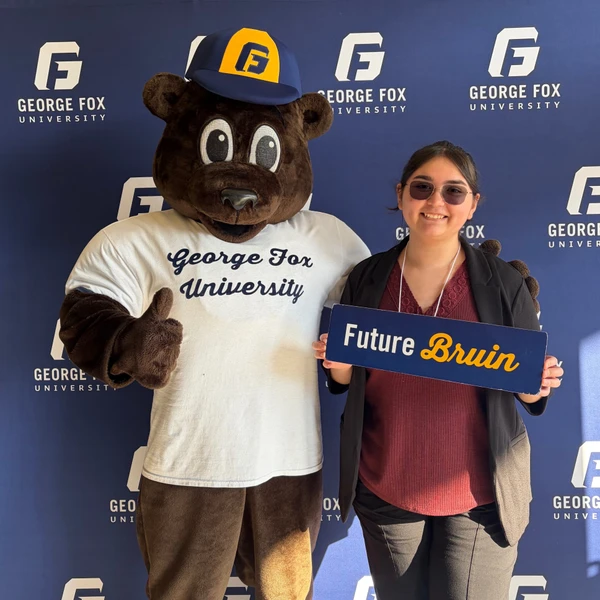
George Fox University

Bachelor's degree program
2026 - 2030
  • Majors:
    • Registered Nursing, Nursing Administration, Nursing Research and Clinical Nursing
Chemeketa Community College

Associate's degree program
2023 - 2026
  • Majors:
    • Health Professions and Related Clinical Sciences, Other

Baker Early College

High School
2022 - 2026

Miscellaneous

  • Desired degree level:

    Bachelor's degree program

  • Graduate schools of interest:

  • Transfer schools of interest:

  • Majors of interest:

    • Registered Nursing, Nursing Administration, Nursing Research and Clinical Nursing
  • Not planning to go to medical school
  • Career

    • Dream career field:

      • Medicine
    • Dream career goals:

      Hospice Nurse

      Public services

      • Volunteering

        Brookings Homeschool Co-op — Kajukenbo Teachers Assistant
        2023 – 2026
      • Volunteering

        First Baptist Community Church — Worship Team
        2024 – Present
      • Volunteering

        AWANA — Leader In Training
        2022 – 2026

      Future Interests

      Advocacy

      Volunteering

      Jules Ehlers-Danlos Syndrome Resilience Scholarship
      Since the age of six, I have navigated an overwhelming medical system—one that includes Ehlers-Danlos Syndrome, chronic intractable migraine disorder, and, at sixteen, Li-Fraumeni syndrome. What began as a puzzled child unable to articulate neurological pain became a journey that transformed me into a determined advocate. I could only tell my parents my head hurt, my face betraying the discomfort. When migraines struck daily and required week-long hospital stays, disclosing my pain invited social friction—peers bombarded me with questions or assumed I was upset because of my grimace. In response, I built quiet resilience. I put on a mask, concealing pain to present a facade of normalcy. That composure let me function in environments unsuited to my body, but it also taught me the profound weight of invisible suffering. My education mirrored these realities. In elementary school, I was mislabeled a "slow reader" due to undiagnosed binocular vision issues, compounded by migraines triggered by fluorescent lighting and the joint instability of EDS. The lack of understanding forced my withdrawal from traditional schooling. The transition to charter school unlocked my potential—grades rose from Cs to As and migraine frequency decreased. By ninth grade, I enrolled in dual-credit courses. Yet pursuing higher education has meant navigating rigid accommodation systems alongside frequent hospitalizations. One of the clearest tests came when I attempted a proctored exam while still inpatient. These experiences reveal the silent barriers chronically ill students face. Growing up with a family medical history that was widely misunderstood added another layer. I was jokingly asked if I was "contagious," and our home was governed by healthcare logistics—six-hour drives to specialists and weekends lost to appointments rather than childhood. I have come to view these hardships not as stumbling blocks but as a foundation. They gave me unique opportunities to connect with others and share my faith amid adversity. They taught me that, while I cannot control every symptom or unstable joint, I can control my dedication and impact. Despite it all, I completed my honors high school diploma with a 4.0 GPA as Valedictorian at Baker Early College and am on track to earn my Associate of Arts Oregon Transfer degree from Chemeketa Community College through dual enrollment. These accomplishments reflect a simple conviction: resilience is a discipline, not a moment. This fall, I will pursue a Bachelor of Science in Nursing at George Fox University, preparing for my calling in hospice and palliative nursing. My lived experience as a long-term patient taught me that even the hardest treatments can be brightened by family, chocolate, and a compassionate nurse. Volunteering at a local nursing home reinforced this—simple acts like puzzles or listening offered comfort medicine alone could not. I am driven to help patients "finish well" with dignity, comfort, and peace, and to advocate for those with invisible illnesses because I intimately understand their silent struggles. Receiving this scholarship would ease the financial burden of earning my BSN and allow me to focus more fully on my studies, clinical training, and health. It would also support my transition from patient to advocate. With this help, I can continue preparing to offer the same empathetic, knowledgeable care that has carried me through my own medical journey—and use my experiences to help others with chronic conditions feel seen, understood, and supported.
      Dashanna K. McNeil Memorial Scholarship
      My life has been defined by the intricate realities of chronic illness, a journey that began long before I could grasp its lifelong weight. When I was diagnosed with chronic intractable migraine disorder at age six, my childhood split into the "before" and "after" of persistent, life-altering pain. Since age twelve, I have lived with the same continuous migraine—day after day, endlessly. These attacks are debilitating neurological events that impair my vision and frequently require week-long hospital stays. Living in a body that registers pain differently has sharpened my mental fortitude into my greatest strength. At sixteen, I was diagnosed with Li-Fraumeni syndrome, a rare genetic mutation that carries a significantly higher lifetime risk of developing many cancers. In oncology, where early detection is the key to survival, my diagnosis becomes a life-saving advantage, granting clarity rather than fear. I intend to carry this same proactive mindset into my future practice—helping patients find agency and hope within their own medical journeys. Despite these health struggles, I have refused to let my circumstances define my potential. I completed my honors high school diploma with a 4.0 GPA, earning a Valedictorian position at Baker Early College, and I am on track to graduate with my Associate of Arts Oregon Transfer degree from Chemeketa Community College through dual enrollment. My academic success reflects a simple conviction: while I cannot control every physical symptom, I can control my dedication, work ethic, and impact. This conviction will carry me into George Fox University this fall, where I will pursue my Bachelor of Science in Nursing. While an associate degree would qualify me to sit for the NCLEX, the BSN is the credential that will allow me to practice at the full scope of my calling. I want the leadership training, research literacy, and population-health perspective that a bachelor's program provides. My lived experience taught me how to endure; my BSN will teach me how to translate that endurance into evidence-based care for others. Beyond the classroom, my resilience has fueled a deep commitment to serving others—especially the elderly. Volunteering at a local nursing home, I witnessed the profound vulnerability of loss: patients unable to leave their beds or even voice their basic needs. In those moments, I realized that the clinical task is only one part of the healer's role. Something as simple as doing a puzzle, playing bingo, or sharing stories offered emotional comfort that medicine alone could not. These experiences have solidified my specific career goal: hospice and palliative nursing. I am drawn to this field because of my own suffering, not despite it. As a long-term patient, I have learned that even the hardest treatments can be brightened by three things—family, chocolate, and a compassionate nurse. My own nurses' positive attitudes and their ability to bring a smile to my face during my hardest treatments inspired me to pay that kindness forward. My passion is not to ease pain, but to help patients "finish well"—providing dignity, comfort, and peace aligned with each person's values, family, and faith. I want to be the nurse who sits in the room when others cannot, who notices the small things that preserve a patient's joy, and who walks alongside families through life's most difficult transition. Having lived with chronic illness, I can empathize deeply and attend to the "little things" that make unbearable days bearable. I hope to help my patients finish well with the dignity, comfort, and peace they deserve.
      Wieland Nurse Appreciation Scholarship
      My life has been defined by the intricate realities of chronic illness, a journey that began long before I could grasp its lifelong weight. When I was diagnosed with chronic intractable migraine disorder at age six, my childhood split into the "before" and "after" of persistent, life-altering pain. Since age twelve, I have lived with the same continuous migraine—day after day, with no reprieve. In over a decade of life, I have counted fewer truly pain-free days than I can count on one hand. These attacks are not merely headaches; they are debilitating neurological events that impair my vision and frequently require week-long hospital stays for intravenous treatment. Living in a body that registers pain differently has taught me that suffering is relative—an ever-present force in every task, one that has sharpened my mental fortitude into my greatest strength. At sixteen, I was diagnosed with Li-Fraumeni syndrome, a rare genetic mutation that carries a significantly higher lifetime risk of developing many cancers. Rather than viewing this as a burden, I see it as a gift: a dedicated team of specialists and constant, proactive oversight. In oncology, where early detection is the key to survival, my diagnosis becomes a life-saving advantage, granting clarity rather than fear. I intend to carry this same proactive mindset into my future practice—helping patients find agency and hope within their own medical journeys. Despite these health struggles, I have refused to let my circumstances define my potential. I completed my honors high school diploma in February with a 4.0 GPA, earning one of the Valedictorian positions at Baker Early College. I am also on track to graduate with my Associate of Arts Oregon Transfer degree, maintaining a 4.0 GPA at Chemeketa Community College through a dual enrollment program. My academic success reflects a simple conviction: while I cannot control every physical symptom, I can control my dedication, work ethic, and impact. Beyond the classroom, my resilience has fueled a deep commitment to serving others—especially the elderly. While volunteering at a local nursing home, I witnessed the profound vulnerability of loss: patients unable to leave their beds or even voice their basic needs. In those moments, I realized that the clinical task is only one part of the healer's role. Something as simple as doing a puzzle, playing bingo, or sharing stories offered emotional comfort that medicine alone could not. My goal was to make the transition easier for both patients and families, ensuring no one felt alone in their final stages of life. These experiences have solidified my goal: hospice care. As a long-term patient, I have learned that even the hardest treatments can be brightened by three things—family, chocolate, and a compassionate nurse. My own nurses' positive attitudes and their ability to bring a smile to my face during my hardest treatments inspired me to pay that kindness forward. Having lived with chronic illness has given me a unique perspective, allowing me to empathize more deeply and attend to the "little things" that preserve a patient's joy and humanity. This fall, I will attend George Fox University to pursue my Bachelor of Science in Nursing. I am eager to bring my personal history of resilience and my academic standards to the bedside—to serve as a nurse who doesn't just treat a diagnosis, but who truly understands and honors the journey my patients are walking. My ultimate hope is to help my patients "finish well," providing them with the dignity, comfort, and peace they deserve. I found out about the Wieland Nurse Appreciation Scholarship through Bold.org.
      J&Y Law Yahouda Yahoudai Service Scholarship
      It's difficult to overstate the impact the community has on the way we grow up. J&Y Law's emphasis on compassionate service as the foundation for strong neighborhoods and supportive relationships resonates deeply with me. Consistent, intentional presence—especially for those facing vulnerability—has shown me firsthand how presence builds belonging, dignity, and resilience within a community. Service first took root through direct mentorship of the next generation. For several years, helping with Kajukenbo classes and teaching third- through fifth-graders in our local AWANA program has given me a window into the lives of youth carrying burdens far heavier than their years should hold. Many of the children face difficult home environments or emotional struggles that affect their ability to engage. Through genuine connection, consistent encouragement, and a respectful example, I aim to help build the kind of community that gives young people a steady source of support beyond their immediate families. Watching a reserved or hurting child gradually open up, participate, and gain confidence ranks among the most meaningful experiences of my life. Equally important, strengthening the community for the elderly has guided my service. While volunteering at a local nursing home, I spent time with residents who were often bed-bound or struggling to communicate their basic needs. Beyond any clinical tasks, I focused on simple but powerful acts of presence: working on puzzles, playing bingo, sharing stories, and sitting quietly beside them. Those moments provided emotional comfort and reminded both patients and their families that they were not alone during difficult transitions. Easing the isolation that often accompanies later stages of life helped create a more compassionate environment for residents and their loved ones. Supporting these efforts is a personal journey with chronic illness. After receiving diagnoses of chronic intractable migraine disorder at age six and Li-Fraumeni syndrome at sixteen, I have lived with constant pain and heightened health risks for most of my life. Personal hospitalizations and interactions with caring medical professionals have taught me how much a compassionate presence can transform hardship. Nurses who brought kindness, humor, and dignity to my darkest days showed me the healing power of human connection. From those nurses came a perspective that drives me to pay that kindness forward, especially toward those in their most vulnerable seasons. Academically, I have completed my honors high school diploma as valedictorian at Baker Early College and am pursuing an Associate of Arts Oregon Transfer degree through dual enrollment at Chemeketa Community College. I do not view these achievements as ends in themselves, but as preparation to serve my community more effectively. Beginning this fall, I will pursue a Bachelor of Science in Nursing at George Fox University. My goal is to become a hospice nurse who honors the full humanity of each patient by caring not only for medical needs, but also for the “little things” that preserve joy, dignity, and connection in life’s final chapters. Through mentoring children, supporting elderly residents, and preparing for a career in compassionate end-of-life care, I have sought to make a meaningful difference in the communities around me. As I continue this work, I hope to help create spaces where people feel valued, supported, and less alone. I am grateful for this opportunity and eager to carry forward the belief that deliberate, compassionate service can strengthen the communities we all depend on.
      Sara Jane Memorial Scholarship
      My life has been defined by the intricate realities of chronic illness, a journey that began long before I could grasp its lifelong weight. When I was diagnosed with chronic intractable migraine disorder at age six, my childhood split into the "before" and "after" of persistent, life-altering pain. Since age twelve, I have lived with the same continuous migraine—day after day, with no reprieve. In over a decade of life, I have counted fewer truly pain-free days than I can count on one hand. These attacks are not merely headaches; they are debilitating neurological events that impair my vision and frequently require week-long hospital stays for intravenous treatment. Living in a body that registers pain differently has taught me that suffering is relative—an ever-present force in every task, one that has sharpened my mental fortitude into my greatest strength. At sixteen, I was diagnosed with Li-Fraumeni syndrome, a rare genetic mutation that carries a significantly higher lifetime risk of developing many cancers. Rather than viewing this as a burden, I see it as a gift: a dedicated team of specialists and constant, proactive oversight. In oncology, where early detection is the key to survival, my diagnosis becomes a life-saving advantage, granting clarity rather than fear. I intend to carry this same proactive mindset into my future practice—helping patients find agency and hope within their own medical journeys. Despite these health struggles, I have refused to let my circumstances define my potential. I completed my honors high school diploma in February with a 4.0 GPA, earning one of the Valedictorian positions at Baker Early College. I am also on track to graduate with my Associate of Arts Oregon Transfer degree, maintaining a 4.0 GPA at Chemeketa Community College through a dual enrollment program. My academic success reflects a simple conviction: while I cannot control every physical symptom, I can control my dedication, work ethic, and impact. Beyond the classroom, my resilience has fueled a deep commitment to serving others—especially the elderly. While volunteering at a local nursing home, I witnessed the profound vulnerability of loss: patients unable to leave their beds or even voice their basic needs. In those moments, I realized that the clinical task is only one part of the healer's role. Something as simple as doing a puzzle, playing bingo, or sharing stories offered emotional comfort that medicine alone could not. My goal was to make the transition easier for both patients and families, ensuring no one felt alone in their final stages of life. These experiences have solidified my goal: hospice care. As a long-term patient, I have learned that even the hardest treatments can be brightened by three things—family, chocolate, and a compassionate nurse. My own nurses' positive attitudes and their ability to bring a smile to my face during my hardest treatments inspired me to pay that kindness forward. Having lived with chronic illness has given me a unique perspective, allowing me to empathize more deeply and attend to the "little things" that preserve a patient's joy and humanity. This fall, I will attend George Fox University to pursue my Bachelor of Science in Nursing. I am eager to bring my personal history of resilience and my academic standards to the bedside—to serve as a nurse who doesn't just treat a diagnosis, but who truly understands and honors the journey my patients are walking. My ultimate hope is to help my patients "finish well," providing them with the dignity, comfort, and peace they deserve.
      Our Destiny Our Future Scholarship
      Since I was six years old, I have had to navigate an often overwhelming medical system, growing from a confused child into a determined advocate. Living with chronic migraines taught me early what it means to carry invisible pain. I did not always have the words to explain what I was feeling, and I quickly learned that trying to describe my pain was often met with misunderstanding. Instead of speaking up, I learned to hide my discomfort, put on a brave face, and keep going. Those experiences, along with my family’s complex medical journey, did not break me—they shaped me into someone with deep compassion and a clear sense of purpose. These hardships have given me a perspective I will carry with me as a future nurse. I know how isolating chronic illness can feel, how easily patients and families can feel misunderstood, and how much compassionate care matters during life’s most vulnerable moments. This understanding has shaped my passion for hospice nursing. In hospice care, I see the opportunity to walk alongside patients and their families during their final chapter—not only by helping manage physical pain, but also by offering dignity, comfort, and peace. My faith is the foundation of this calling. As a follower of Jesus Christ, I see service not simply as a duty, but as a grateful response to God’s grace. My personal trials have taught me that true vocation is found in living for His glory. In hospice care, I hope to live out my faith through a “ministry of presence”—offering Christ-like love, respect, and empathy to every patient, regardless of their background or life story. I want to help individuals and families find peace and finish well, ensuring they feel seen, valued, and cared for during one of the most difficult seasons of life. Beyond direct patient care, I hope to make a broader impact by advocating for people with invisible illnesses. Because I have experienced the frustration of being misunderstood and the loneliness that can come with chronic pain, I am committed to educating others, reducing stigma, and improving the way patients are treated within the healthcare system. Whether I am providing compassionate bedside care, supporting families in crisis, or speaking up for better understanding of neurological and chronic conditions, I want to be a bridge between patients and a medical world that can sometimes feel impersonal. Ultimately, my desire is to make a positive impact on the world by bringing smiles and comfort to those facing life’s final chapter — just as the compassionate nurses did for me during my own hardest seasons. I want to turn my pain into purpose by walking alongside others through theirs, ensuring that their last memories are filled with warmth, dignity, and kindness rather than fear or isolation. Through hospice nursing, patient advocacy, and Christ-centered compassion, I hope to be the kind of nurse who leaves patients and their families with peaceful hearts and gentle, lasting smiles.
      EverGreen Trails of Service Scholarship
      Since age six, I have navigated a complex medical system, growing from a confused child into a determined advocate. Chronic migraines made it hard for me to put my neurological pain into words—I could only tell my parents that my head hurt, while my face said what I could not. As the episodes became daily, I learned to carry my pain quietly. Talking about it often led to questions from peers or misunderstandings from friends, so I learned resilience in silence. I wore a mask of normalcy to keep up in environments that were not built for my needs. That experience taught me the heavy reality of invisible illness, and it now shapes the way I care for patients. Our family’s misunderstood medical history added another layer of difficulty. We were sometimes asked if I was “contagious,” and much of our life revolved around long drives to specialists and weekends in hospitals instead of the activities most children get to enjoy. But I now see those experiences not as obstacles, but as the foundation that helped shape who I am. They gave me chances to connect with others, share my faith in difficult moments, and grow a deep passion for nursing. Having been a patient in a high-stakes system, I want to offer the advocacy, empathy, and care that meant so much to me. My faith is the cornerstone of my calling to serve. It is not simply duty, but a grateful response to the grace of my Lord and Savior, Jesus Christ. Through trials, I have learned that true vocation means living for His glory. This faith grounds me and strengthens my desire to practice a “ministry of presence” in hospice nursing. As both a believer and a patient, I hope to honor the dignity of every person with Christ-like compassion. In hospice, I can walk with patients and families toward peace, making sure they are seen, valued, and cared for as they complete their earthly journey. As an early college graduate, I completed high school with a 4.69 GPA and earned my Associate of Arts with a 4.0. I am grateful for these accomplishments, but they have also created financial barriers. My transfer status limits access to many freshman scholarships, and our family’s middle-class income on paper does not reflect our reality. With my mother disabled and both of us needing frequent, costly medical travel, healthcare expenses take up much of our resources. My father, an ER nurse, works hard, but private nursing school tuition is still out of reach. This scholarship would be a vital bridge, allowing me to focus fully on George Fox’s rigorous nursing program without taking on excessive work hours or growing debt. By easing this financial burden, it would reduce chronic stress, support my well being, and help me complete my degree with the same resilience my family has shown me. Most importantly, it would prepare me to enter the field ready to serve others with dedication and compassion.