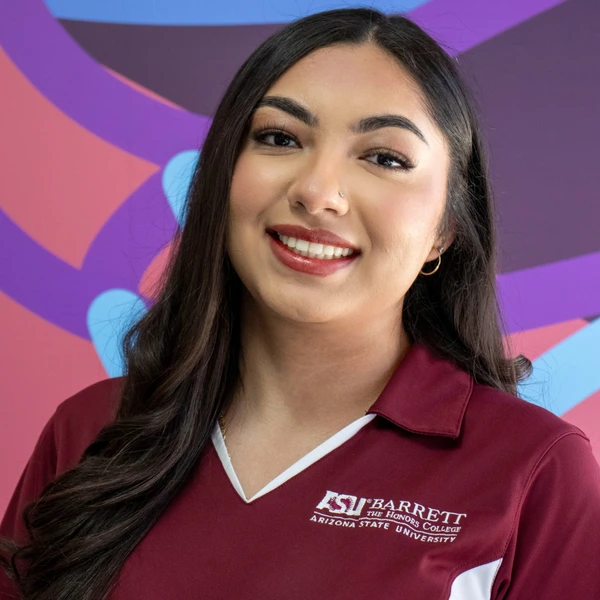
Being the first in my family to obtain a college degree means creating opportunities that my parents never had. Growing up in an underserved community as the only fluent English speaker in my household, I took on responsibilities at a young age that forced me to mature quickly. I translated conversations for my parents in stores, schools, and doctors’ offices long before I fully understood the responsibility that came with it. Over time, translating simple conversations became helping my family manage bills, schedule appointments, understand mortgage statements, and navigate systems that often felt inaccessible to non-English speakers. At the same time, I was also learning how to navigate higher education on my own. As a first-generation college student, there was no roadmap for applications, financial aid, scholarships, or college expectations. Although balancing school with family responsibilities was overwhelming at times, those experiences taught me resilience, independence, and the importance of advocating for others.
My experiences growing up shaped both who I am and what I want to pursue in college. I am currently pursuing a degree in Medical Studies on the pre-medical track because I want to help improve healthcare accessibility for underserved and bilingual communities. Watching my parents struggle to communicate during medical appointments showed me how language barriers and limited health literacy can directly affect patient care. Even when interpreters were available, there were moments when slang, regional dialects, or cultural phrasing were misunderstood, leaving patients feeling unheard or confused. Those experiences made me realize that healthcare is not only about treatment but also about ensuring patients feel understood and supported. Growing up, I rarely saw physicians with a background like mine; I hope to change that for future generations.
My passion for healthcare continued to grow through my work as a medical scribe. In this role, I observed patient care firsthand and saw how communication can shape healthcare outcomes. During one patient encounter, I noticed that the interpreter was not fully capturing the patient’s symptoms because of differences in dialect and phrasing. Although I hesitated to speak up, I thought about my own family and how easily important information can be lost in translation. After clarifying the patient’s concerns, the physician ordered an EKG that revealed signs of a heart attack. That experience reinforced my understanding of how important patient advocacy and communication are within healthcare.
My long-term goal is to become a physician who advocates for underserved and bilingual communities while helping patients feel heard, respected, and understood, regardless of their background or language. I hope to use both my personal experiences and medical training to improve access to healthcare and reduce barriers that prevent patients from receiving quality care. In the future, I also hope to take on leadership roles that allow me to contribute to improving healthcare systems and patient support services for immigrant and first-generation families.
More importantly, earning a college degree represents more than personal success to me. It represents stability, opportunity, and a new path for my family and future generations after me. Being a first-generation student has taught me perseverance, responsibility, and the value of using my experiences to help others facing similar challenges. I hope to show students from underrepresented backgrounds that even when the path feels unfamiliar, it is still possible to succeed and create meaningful change.