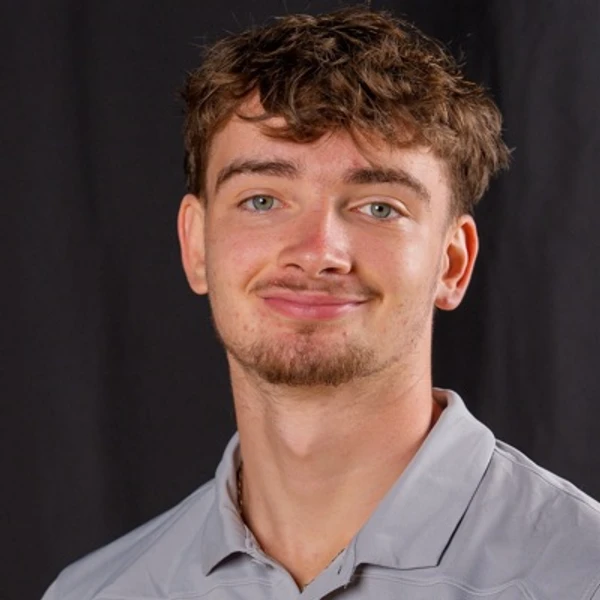
user profile avatar

Evan Lewis

1x

Finalist

Bio

I’m a very hardworking person and a great leader. I’m a captain for football, track, debate, UIL science, powerlifting, and esports. I love my family and my dog Charlie very much. I plan on studying cybersecurity in college and look forward to continue to pursue my interests

Education

Hillcrest H S

High School
2022 - 2026

Miscellaneous

  • Desired degree level:

    Master's degree program

  • Majors of interest:

    • Computer Science
  • Not planning to go to medical school
  • Career

    • Dream career field:

      Computer & Network Security

    • Dream career goals:

      Sports

      Track & Field

      Varsity
      2022 – Present4 years

      Awards

      • District Champion
      • State Qualifier

      Football

      Varsity
      2022 – Present4 years

      Awards

      • HSFA Academic All American
      • Team Captain
      • 3 Year Varsity Starter
      • 3x All District

      Research

      • Mechatronics, Robotics, and Automation Engineering

        VEX — Designed robots to compete in competitions
        2022 – Present

      Public services

      • Volunteering

        SPCA — Walking shelter dogs to provide exercise
        2022 – Present
      Taylor Swift Fan Scholarship
      The resonance of Taylor Swift’s career lies in her ability to transform personal vulnerability into a collective experience of catharsis. While her studio recordings provide the narrative framework for her artistry, it is in her live performances that the emotional weight of her songwriting is most fully realized. For me, the most moving performance remains her rendition of "All Too Well (10 Minute Version)" during the Eras Tour. This particular moment transcends the typical spectacle of a stadium concert; it represents a profound reclaiming of narrative and a testament to the enduring power of memory. As someone who balances the physical rigor of being a football and track captain with the analytical demands of a 4.2 GPA, I find a compelling parallel in Swift’s stage presence. To perform for over three hours with consistent precision requires an athletic level of endurance and a high degree of mental focus. In the ten-minute version of "All Too Well," Swift manages a difficult transition from quiet, acoustic vulnerability to a climactic, shared outcry. This mirrors the kind of emotional agility I strive for as a leader. Whether I am navigating the intensity of a debate round or the fourth quarter of a close game, I have learned that true strength is not found in a lack of emotion, but in the ability to channel that emotion into a disciplined and impactful performance. What makes this performance specifically moving is the visible connection between the artist and the audience. Swift creates a space where thousands of people can inhabit a singular story together. This mastery of human connection is something I deeply admire and hope to emulate as I move toward a career in computer science at Trinity University. While my professional future involves technical systems and cybersecurity, the ultimate goal of any leader is to build trust and foster community. Swift’s "All Too Well" performance is a masterclass in how to hold a crowd’s attention through sheer storytelling and authenticity. Ultimately, I am a fan because Swift demonstrates that one’s past—including its heartbreaks and setbacks—can be forged into a source of immense power. Her performance of this song serves as a reminder that persistence is rewarded and that our personal histories are worth the time it takes to tell them fully. As I transition into higher education, I carry this lesson with me: the most impactful work is often that which requires the most endurance and the most honesty.
      Ethel Hayes Destigmatization of Mental Health Scholarship
      In the high-pressure corridors of competitive athletics and academic rigor, mental health is often treated as a peripheral concern—something to be managed in private so as not to disrupt the momentum of performance. However, my experience as a student-athlete and leader has taught me that psychological well-being is not a distraction from excellence, but the very foundation upon which it is built. Having navigated the profound loss of my mother at the age of ten, I was forced into a premature confrontation with grief and the complexities of mental health. This journey has fundamentally recalibrated my understanding of strength, moving it away from a stoic suppression of emotion toward a more transparent and resilient model of leadership. The loss of a parent at a formative age creates a unique psychological landscape. In the immediate aftermath, I felt a significant pressure to appear unaffected, channeling my energy into football, track, and a 4.2 GPA. I believed that by achieving visible success, I could somehow outrun the internal weight of my loss. Yet, as I progressed into leadership roles—eventually captaining my school’s football, debate, and UIL science teams—I realized that the "toughness" I was projecting was incomplete. Authentic leadership requires an acknowledgment of one's own vulnerabilities to effectively support the vulnerabilities of others. This shift in perspective deepened my relationships, as I began to prioritize emotional intelligence and empathy within my teams. I stopped viewing my teammates merely as competitors or collaborators and started seeing them as individuals who, like me, might be navigating silent burdens. This experience has profoundly shaped my aspirations as I prepare to study computer science and cybersecurity at Trinity University. While the technical aspects of the field involve logic and data, the ultimate purpose of security is to protect people and their peace of mind. I am increasingly interested in how technology can be leveraged to support mental health, whether through developing secure platforms for anonymous support or using data to better understand the systemic triggers of anxiety and depression. I no longer see my academic goals and my personal history as separate entities; instead, I view my future career as a way to build systems that foster safety and stability for others. Ultimately, my journey has taught me that "bringing the darkness to light" is a prerequisite for sustained success. The resilience I have developed is not the result of ignoring my mental health, but of integrating it into my identity as a scholar and an athlete. By choosing to speak openly about the impact of loss and the importance of psychological support, I hope to honor the legacy of those we have lost—including the mother of this scholarship’s founder—by ensuring that the next generation of leaders views mental health as a vital component of a life well-lived. I am committed to using my platform at Trinity and beyond to advocate for a culture where seeking help is recognized as an act of courage, not a sign of weakness.
      Wicked Fan Scholarship
      The enduring resonance of *Wicked* lies in its sophisticated subversion of the traditional dichotomy between good and evil, offering instead a nuanced exploration of institutional power and individual agency. As a student-athlete who frequently navigates high-pressure environments, I find that the journey of Elphaba serves as a profound allegory for the challenges of principled leadership. Her narrative is not merely one of magical transformation but is a testament to the moral courage required to "defy gravity"—to stand in opposition to a popular but corrupt status quo even when the personal cost is significant. My appreciation for the musical is rooted in this theme of intellectual and ethical integrity. In my own life, balancing the physical demands of football and track with the academic rigor of a 4.2 GPA and a 1490 SAT requires a level of discipline that mirrors Elphaba’s commitment to her craft and her convictions. The song "Defying Gravity" is more than an anthem of empowerment; it is a declaration of independence from the expectations of others. As I prepare to study computer science at Trinity University, a field where ethical considerations are increasingly central to technical advancement, I am inspired by Elphaba’s refusal to remain "color-blind" to the injustices within the Wizard’s administration. She teaches us that true success is not found in the superficial approval of the masses, but in the alignment of one’s actions with their internal values. Furthermore, the relationship between Glinda and Elphaba offers a compelling look at the complexities of "human connection" and mutual growth. Despite their disparate backgrounds and conflicting ideologies, their bond facilitates a transformation that neither could have achieved in isolation. This dynamic reminds me of the synergy I experience as a captain, where diverse personalities must be synthesized into a cohesive unit. The finality of "For Good" resonates deeply with my own transition into higher education, acknowledging that every mentor and competitor has left a permanent imprint on my character. Ultimately, *Wicked* is special to me because it celebrates the "figureoutable" nature of identity. It suggests that while we may be cast in certain roles by society, we possess the autonomy to rewrite our own scripts. By embracing Elphaba’s resilience and Glinda’s eventual pursuit of meaningful leadership, I am better equipped to face the adversarial challenges of the cybersecurity world. This musical has taught me that standing tall against adversity is not about a lack of fear, but about the conviction that some things are worth flying for.
      Love Island Fan Scholarship
      In the ecosystem of "Love Island," the most effective challenges are those that bridge the gap between physical coordination and interpersonal psychology. Drawing upon my experience as a multi-sport captain and a debate competitor, I recognize that the show’s appeal lies in its ability to stress-test relationships under the guise of lighthearted competition. My proposed challenge, titled "The Cipher of Connection," is designed to move beyond the traditional slapstick physical humor and instead require a high-level synthesis of non-verbal communication and strategic trust. The objective of "The Cipher of Connection" is for couples to navigate a multi-layered sensory obstacle course while physically separated. The challenge would be structured into three distinct phases. In the first phase, one partner is placed in a soundproof glass booth with a complex, jumbled digital map of an "island" displayed on a screen. The other partner is positioned on the actual course, blindfolded and tethered to a series of physical puzzles. To advance, the partner in the booth must use a series of pre-approved, non-verbal signals—gestures, light switches, or symbolic icons—to guide their blindfolded counterpart through a maze of obstacles that trigger "bombshell" distractions, such as sudden bursts of foam or water. The second phase introduces a "Cyber-Security" element, reflecting my own academic interest in computer science. The couple must work together to crack a "Heart-Rate Code." The blindfolded partner must retrieve physical keys hidden in a pool, while the partner in the booth monitors their heart rate on a monitor. The code only unlocks when the partner in the booth successfully guides their partner to maintain a specific, calm heart rate despite the surrounding chaos. This phase tests the emotional regulation and calming influence partners have on one another, adding a layer of psychological depth to the physical exertion. The final stage involves a "Trust Fall" from an elevated platform into a pool, but with a twist: the partner catching must do so while facing away, relying entirely on a specific vocal cue from their partner to time the catch perfectly. This challenge adds excitement to the show by moving away from purely aesthetic competitions and focusing on the "figureoutable" nature of complex communication. It rewards couples who have invested time in understanding each other’s nuances and provides the audience with a high-stakes look at which relationships possess the structural integrity to withstand a lack of direct visibility. By requiring both tactical precision and emotional synchronicity, "The Cipher of Connection" honors the strategic spirit of the show while celebrating the resilience of human connection.
      Sabrina Carpenter Superfan Scholarship
      In the sphere of contemporary pop culture, it is rare to witness an artist navigate a decades-long evolution with the level of intentionality displayed by Sabrina Carpenter. My appreciation for her work is rooted not merely in the infectious nature of her discography, but in the sophisticated way she has managed her transition from a child actor to a dominant force in the global music industry. As someone who balances the physical demands of football and track with the cerebral requirements of a 4.2 GPA and a future in computer science, I find a profound parallel in Carpenter’s versatility. Her career serves as a masterclass in "pivoting"—the ability to reinvent one’s professional identity without sacrificing the core authenticity that established the initial connection with an audience. The impact of her career on my own perspective is most visible in the way I approach high-pressure environments. In her music, particularly in recent projects, there is a distinct blend of wit and vulnerability that suggests a deep understanding of one's own narrative. As a captain in both athletic and academic domains, I often grapple with the weight of expectation. Observing Carpenter’s journey has reinforced the idea that excellence does not have to be rigid or one-dimensional. She demonstrates that it is possible to be taken seriously as a professional while maintaining the humor and charisma that humanize a leader. This balance is particularly relevant as I prepare for a career in cybersecurity, a field that requires both technical precision and the ability to communicate with clarity and personality. Furthermore, Carpenter’s work ethic mirrors the "everything is figureoutable" motto that guides my life. Her path from the Disney Channel to the top of the charts was not an overnight phenomenon; it was the result of a persistent, incremental refinement of her craft. This commitment to long-term growth is instrumental to my own goals at Trinity University. By consistently embracing the challenge of new roles and sounds, she encourages her audience to pursue a "polymathic" approach to their own lives. I am a fan because she represents the success that follows when one refuses to be confined by a single label, proving that with enough discipline, one can master multiple disciplines while remaining remarkably true to themselves.
      Learner Math Lover Scholarship
      The appeal of mathematics lies in its unique capacity to provide a universal grammar for problem solving, offering a level of certainty that is rarely found in other disciplines. While much of the world is defined by ambiguity and shifting perspectives, math operates on a foundation of absolute logic where every challenge possesses a verifiable solution. This inherent order is what first drew me to the subject, particularly through my participation in UIL Science and my 1490 SAT preparation. For me, math is not merely a collection of formulas to be memorized; it is a mental framework that rewards persistence and rewards the "everything is figureoutable" mindset I have cultivated throughout my life. In my experiences as a captain in both football and track, I have often found that the strategic elements of sport are essentially applied mathematics. Analyzing the trajectory of a throw, calculating the optimal split for a sprint, or deconstructing an opponent’s defensive formation all require a rapid, subconscious processing of variables. This bridge between the physical and the cerebral is where my love for math is most evident. I enjoy the process of stripping away noise to find the underlying structure of a problem, a skill that has been instrumental in my success as a debate captain and as a student maintaining a 4.2 GPA. As I transition to Trinity University to study computer science, my relationship with math will evolve from a tool for academic competition to the primary engine of my career. In the realm of cybersecurity, mathematics is the ultimate defensive measure. Cryptographic algorithms and data modeling are the barriers that protect our digital infrastructure, and I find a profound sense of purpose in mastering the logic required to build those defenses. I love math because it empowers the individual to bring order to chaos, providing a reliable path toward innovation and security in an increasingly complex world.
      Tawkify Meaningful Connections Scholarship
      The following essay addresses Option 2, exploring the intersection of technological advancement and interpersonal authenticity. --- In the contemporary landscape of digital acceleration, the nature of human connection is undergoing a profound transformation. As a student preparing to enter the field of computer science at Trinity University, I am acutely aware of the paradox defining our era: we are more interconnected than at any point in history, yet we face a significant crisis of authentic engagement. The challenge for the next generation of leaders is not to reject technology but to reimagine it as a scaffold for, rather than a replacement of, genuine human relationship. My perspective on this issue is deeply informed by my dual identity as a technical scholar and a multi-sport captain, roles that have taught me that the most resilient systems are those built on trust and shared vulnerability. Authenticity in a world driven by technology requires an intentional return to the principles of presence. Throughout my time as a captain for football, track, and debate, I have observed that high-stakes environments demand a level of communication that digital interfaces often fail to capture. On the field, connection is felt through shared physical exertion and the silent synchronization of a team under pressure. In the debate chamber, it is forged through the rigorous, face-to-face exchange of ideas. These experiences have taught me that authentic connection is inherently messy and unoptimized. It requires the ability to read non-verbal cues and to sit with the discomfort of disagreement. To preserve these connections, we must cultivate "analog sanctuaries" within our digital lives—spaces where the objective is not to extract data or optimize a profile, but to simply be present with one another. However, preservation alone is insufficient; we must also reimagine how technology can facilitate deeper community building. In my pursuit of a career in cybersecurity, I view digital safety as a prerequisite for authentic connection. If people do not feel secure in their digital environments, they cannot be vulnerable, and without vulnerability, authentic relationship is impossible. Strengthening human connection in the future involves building platforms that prioritize ethical engagement over engagement metrics. We must shift the architectural focus of our social technologies away from addictive loops and toward tools that encourage meaningful, long-form collaboration. This reimagining is particularly vital for those in single-parent households or marginalized communities, where digital connection often serves as a vital lifeline to support networks that may not exist locally. My own upbringing, shaped by the loss of my mother and the unwavering support of my father, has been a masterclass in the power of resilient relationships. My father modeled a form of connection that was grounded in action and absolute reliability. He proved that the strength of a bond is measured by its capacity to withstand crisis. As I look toward my professional goals, I see my work in computer science as an extension of this familial commitment. I want to contribute to a future where technology serves to protect and uplift the human spirit rather than isolate it. This involves designing systems that respect human agency and foster the kind of community trust I have experienced on the track and in the locker room. Ultimately, the future of human connection will be determined by our willingness to treat relationship-building as a discipline worthy of the same rigor we apply to our academic or athletic pursuits. We must be as diligent in our communication as we are in our coding. By integrating the technical precision of computer science with the empathetic leadership required of a team captain, I hope to champion a future where technology acts as a bridge to, rather than a barrier from, our shared humanity. Authentic connection is the "figureoutable" puzzle of our time, and solving it is the most important goal I can pursue.
      Second Chance Scholarship
      In the narrative of any individual’s life, adversity often acts as a pivot point rather than a conclusion. For me, the desire to make a substantive change in my trajectory was born from the realization that my circumstances—specifically the profound instability of the foster care system and the early loss of a parent—did not have to dictate my potential. I wanted to move beyond a life defined by reaction and survival toward one defined by intentionality and leadership. This internal shift was not merely about personal comfort; it was about transforming from a recipient of social services into a contributor to the social good. I recognized that to break the cycles of volatility I had witnessed, I needed to anchor my life in the rigorous discipline of both physical and intellectual excellence. The steps I have taken to achieve this goal are manifest in the deliberate structure of my daily life. I chose to channel my energy into the demanding environments of football, track, and powerlifting, where I eventually earned the role of captain in each. These arenas provided a framework for accountability that was often missing in my domestic life. Simultaneously, I committed to a level of academic rigor that would ensure my future independence, maintaining a 4.2 GPA and a 1490 SAT while leading my school’s debate and UIL science teams. Each of these commitments was a calculated move toward a clear objective: securing a seat at Trinity University to study computer science. These achievements represent the foundational work of a "second chance" that I have built for myself through persistence and the "everything is figureoutable" mindset I carry into every challenge. This scholarship would be instrumental in bridging the remaining gap between my current reality and my collegiate ambitions. While I have developed the grit necessary to succeed, the financial obstacles inherent in a foster background can often undermine even the most disciplined efforts. Receiving this support would allow me to focus entirely on my transition into the rigorous computer science program at Trinity, ensuring that I can maintain the high performance required to eventually enter the cybersecurity field. Furthermore, I am deeply committed to the cycle of giving that Nelson Vecchione championed. I plan to pay this opportunity forward by leveraging my technical skills and my leadership background to mentor others who find themselves in similar circumstances. Whether through coaching youth sports or providing technical tutoring to students in the foster system, I want to demonstrate to others that a conviction for a better life can overcome any record of adversity. By succeeding in a field as vital as cybersecurity, I hope to serve as a tangible example of what is possible when resilience is met with a second chance. My goal is to eventually create a stable environment for others—just as my father did for me—thereby continuing the legacy of mentorship and advocacy that this scholarship seeks to honor.
      Strength in Adversity Scholarship
      In the context of the foster care system, resilience is rarely a choice; rather, it is a fundamental requirement for survival. Navigating a landscape defined by transient placements and the sudden dissolution of familial structures necessitates an accelerated maturity that most peers do not encounter until much later in life. For me, the moment that most poignantly illustrated this internal strength occurred during a period of significant institutional transition. While facing the logistical upheaval of moving between homes, I realized that while I could not control my external geography, I possessed absolute agency over my intellectual and athletic development. This realization allowed me to transform what could have been a paralyzing lack of stability into a rigorous pursuit of self-discipline. I am particularly proud of the resilience I displayed when I successfully balanced the physical demands of football and track with the heavy cognitive load of a 4.2 GPA and a 1490 SAT, all while navigating the uncertainties of my living situation. There was a specific evening during a placement transition when I found myself studying for a UIL science competition in a temporary setting with limited resources. Instead of succumbing to the exhaustion of the move, I utilized the analytical work as a form of grounding. I chose to view the complexity of the scientific concepts as a challenge that I was uniquely equipped to solve, applying the same "everything is figureoutable" mindset that has since become my guiding principle. That night, I proved to myself that my capacity for excellence was not contingent upon a stable environment but was an inherent part of my character. This experience fundamentally altered how I tackle subsequent challenges. It instilled in me a profound sense of "contextual adaptability," the ability to maintain high performance regardless of shifting circumstances. When I face adversity now—whether it is a grueling fourth quarter on the football field or a complex architectural problem in computer science—I do so with the knowledge that I have already survived much more profound disruptions. This perspective has removed the fear of failure. I understand that setbacks are merely data points in a larger process of growth rather than indictments of my potential. As I prepare to transition to Trinity University, I carry this resilience with me as a strategic advantage. The instability of my past has prepared me for the rigors of a degree in computer science, a field that demands constant troubleshooting and persistence in the face of systemic errors. My time in foster care did not diminish my ambition; it refined it. By succeeding in the classroom and on the field, I am not merely seeking personal advancement. I am demonstrating that the challenges of a foster background can be forged into a robust leadership style defined by grit, empathy, and an unshakable drive to succeed.
      Curtis Holloway Memorial Scholarship
      In the architecture of a high performance life, the most critical supports are often those that remain invisible until they are tested by profound loss. For me, this support has been anchored entirely in my father. After the loss of my mother when I was only ten years old, the traditional structure of my world shifted, leaving a void that could have easily derailed my development. However, my father chose to become a singular, unwavering pillar of stability. He did not merely provide for my basic needs; he modeled a philosophy of relentless problem solving that has become the foundation of my own identity. By observing his ability to navigate the complexities of single parenthood while maintaining a focus on my future, I learned that setbacks are not terminal but are instead puzzles waiting for a solution. I honor my father’s sacrifice by adopting his rigorous work ethic as my primary methodology. Whether I am leading on the football field, competing in track, or analyzing complex systems in UIL science, I carry the quiet understanding that my opportunities were bought with his persistence. To honor him is to refuse mediocrity. It means maintaining a 4.2 GPA and a 1490 SAT not as a matter of personal vanity, but as a testament to the high expectations he set. Every time I step onto the field as a three-time All-District player or prepare for a debate round, I am conscious of the fact that I am representing a legacy of resilience that began with him. His support has been instrumental specifically because it provided a sense of continuity in the wake of maternal loss. For a child in a single parent household, the margin for error often feels narrower. The emotional and financial backing my father provided acted as a protective buffer, allowing me to focus on high level academic and athletic pursuits rather than the anxieties of instability. This grounding presence shaped me into a leader who understands the value of grit. It drove me to excel because I recognized that his belief in me was a mandate to succeed. As I move toward my goals at Trinity University, I plan to build on this support by applying the "everything is figureoutable" mindset to the field of computer science. The challenges inherent in cybersecurity require the same tenacity my father displayed in his own life. By pursuing this degree, I am not just working toward a career; I am scaling the heights that his support made accessible. My ultimate goal is to utilize the education he made possible to secure a future for others, mirroring the way he secured a future for me. In doing so, I ensure that the lessons of resilience and hard work he instilled are not just remembered, but actively lived through my professional contributions and communal leadership.
      Dan Leahy Scholarship Fund
      In the context of a high-stakes competitive environment, leadership is often associated with physical presence and decisive action. However, my understanding of what it means to lead was fundamentally recalibrated by my father, who remains the person I admire most. He did not merely advocate for professional success; instead, he demonstrated a specific brand of quiet, persistent discipline that has shaped my own trajectory as a student and an athlete. His influence is the primary reason I have chosen to pursue a degree in computer science at Trinity University. He instilled in me the belief that higher education is not simply a path toward a career but a necessary foundation for contributing meaningfully to one's community. This sense of communal responsibility and the pursuit of intellectual symmetry motivated my decision to participate in speech and debate. At the time, I was already deeply immersed in the physical demands of being a football and track captain. While those roles provided a foundation of resilience and grit, I sensed a need to develop a different kind of strength, specifically the ability to navigate complex ethical landscapes through discourse. I chose to join the debate team because it offered a forum where victory could not be achieved through physical speed or raw effort. It required the patient deconstruction of opposing viewpoints and the articulation of cohesive, evidence based arguments. Engaging in debate has been a transformative experience that forced me to acknowledge the limitations of a purely physical perspective. As a captain of both the debate and UIL science teams, I learned that being an advocate for one’s community requires more than just a loud voice or a strong presence on the field. It requires the critical thinking skills necessary to understand the systemic roots of a problem. In a debate round, much like in the early stages of a scientific inquiry or a strategic play on the gridiron, one must remain agile and ready to pivot when a premise is proven faulty. The motivation behind my participation was never about adding another trophy to the shelf. Rather, it was about ensuring that my capacity for leadership was as well rounded as possible. I recognized that to be a truly effective leader in the future, particularly in a technical field like cybersecurity, I would need the rhetorical precision to explain vulnerabilities to those without a scientific background. By embracing the challenges of speech and debate alongside my athletic commitments, I have moved closer to the ideal of the citizen scholar. My pursuit of higher education at Trinity is an extension of these lessons, representing a commitment to lifelong learning and the belief that an articulate voice is a prerequisite for impactful service.
      Resilient Scholar Award
      The concept of "preflight" preparation is a recurring theme in my household, rooted in my father’s career in the United States Air Force. He taught me that in complex systems, whether a flight line or a computer network, the mission is won or lost in the invisible details that occur long before the moment of performance. This philosophy of meticulous, silent discipline became the foundation upon which I built my identity as a student-athlete. Growing up in a single-parent home, I observed the cognitive and physical load required to maintain a family’s stability on a solitary income. This environment necessitated an early transition to independence; while others might have relied on a broader support system, my journey was defined by a need to be self-reliant and productive from a young age. This background of high-stakes responsibility sharpened my drive to achieve a 1490 SAT and a 3.8 GPA, viewing academic excellence as a necessary contribution to my family’s future rather than just a personal milestone. However, a pivotal realization that redefined my understanding of myself occurred during my transition back to public school after two years of homeschooling. I initially struggled with a sense of isolation, operating under a "chess piece" mentality where I viewed social interactions through a purely functional lens. I assumed that because I was capable of managing my own burdens, I didn't need to concern myself with the internal worlds of those around me. The event that catalyzed a shift in this mindset was a specific moment of failure. I recall a situation in eighth grade where I acted with a defensive detachment that hurt someone else, and instead of taking responsibility, I pushed them away. That moment of looking in the mirror and realizing I had become unlikeable was a profound epistemological shock. I realized that "hard work" and "tenacity" are hollow if they are used as a shield against human connection. I understood then that my ambition had to be tempered with empathy—that the technical precision of a 2x HSFA Academic All-American is only valuable when it is used to build up a collective environment rather than just an individual resume. This realization has fundamentally shaped my aspirations as I prepare to attend Trinity University to play football, run track, and study Computer Science. I no longer see my athletic or academic statistics as isolated metrics of success. Instead, I view them as evidence of the discipline required to navigate and protect complex human and digital systems. My upbringing in a single-parent household taught me the "how" of persistence, but my personal failures taught me the "why." By pursuing a career in technology, I aim to translate the protective instincts I developed at home into digital solutions that safeguard communities. This scholarship would serve as a vital investment in that vision, allowing me to honor my father’s sacrifice by building a legacy of resilience and impact that justifies the challenges we overcame together.
      James T. Godwin Memorial Scholarship
      In our house, the stories of the United States Air Force were never about the adrenaline of the flight line or the prestige of the uniform. Instead, my father spoke about the "preflight"—the hours of meticulous, invisible preparation that occur long before an aircraft ever leaves the ground. He taught me that in the Air Force, as in life, the mission is won or lost in the details that no one else sees. This philosophy of quiet discipline became the foundation upon which I built my own identity as a student-athlete and a leader. One particular memory stands out, not from a grand ceremony, but from a mundane Saturday morning during my freshman year. I was frustrated, venting about a group project where I felt I was doing all the work. I was looking at my peers as "tools" or "chess pieces" rather than teammates, a mindset I struggled with before finding my footing in high school. My father sat me down and didn’t offer a platitude. Instead, he told me about the relationship between a pilot and the ground crew. He explained that a pilot might be the one in the cockpit, but their life depends entirely on the integrity of the airman who checked the hydraulic seals at three in the morning. "Leadership," he told me, "isn't about who gets to fly the plane. It’s about making sure everyone on the ground knows that their work is the reason the plane stays in the air." That story shifted my trajectory. It was the catalyst that took me from being an isolated eighth grader to a captain of four sports and a leader in academic clubs like UIL Science and Debate. When I stepped onto the football field as a three-time All-District player, I stopped looking for the spotlight and started looking for the "ground crew"—the teammates who were struggling, the freshmen who were quiet, and the peers who needed encouragement rather than criticism. During my senior year, when I sat with a nervous teammate before a playoff game, I wasn't just being a captain; I was practicing the "preflight" my father had described. I was ensuring that his mental "seals" were tight so he could perform when the moment grew large. My father’s service in the Air Force provided him with a decorated career, but his greatest legacy is the discipline he instilled in me. It is because of his influence that I maintained a 3.8 GPA and earned a 1490 SAT while balancing the physical demands of being a state qualifier in track and a powerlifter. He taught me that "hard work" is a silent requirement, not something to be bragged about. As I move forward to study Cybersecurity, I carry his stories with me. In a field dedicated to defending digital infrastructure, the "invisible" work is everything. I don’t want to be the loudest voice in the room; I want to be the person who listens, who prepares, and who understands that leadership is a form of service. My father taught me that the highest honor isn't the medal you wear, but the impact you have on the people standing next to you.
      Shanique Gravely Scholarship
      The person who has had the biggest impact on my life is a close family member I lost to breast cancer. Watching someone so strong, faithful, and full of life battle such a relentless disease changed me in ways I am still discovering. Before her diagnosis, she was the center of our family gatherings. She loved bringing people together, whether it was for holidays, birthdays, or simple Sunday dinners after church. She believed that time spent together was a blessing, and she made every event feel intentional and meaningful. When she was diagnosed with breast cancer, everything shifted. What once felt certain suddenly became fragile. I saw firsthand how illness can interrupt plans, careers, and routines without warning. Yet even during treatment, she remained rooted in her faith. She leaned on God with a strength that inspired everyone around her. Instead of allowing fear to define her, she focused on gratitude and encouraged us to do the same. She would remind us that faith does not mean the absence of hardship; it means trusting God in the middle of it. Her resilience reshaped my understanding of courage. I had always thought strength meant never showing vulnerability. But she showed me that true strength is continuing to love, serve, and uplift others even when you are struggling yourself. There were days when treatment left her exhausted, yet she still asked about my goals, my education, and my future. She consistently emphasized the importance of perseverance and faith-driven ambition. Losing her was one of the most painful experiences of my life. Grief forced me to mature quickly. I had to process not only the absence of someone I deeply loved but also the reality that life can change instantly. In the midst of that pain, I felt a calling to honor her legacy. She valued education, faith, and family, and I realized that pursuing my goals with determination would be one way to continue what she poured into me. Her passing also strengthened my desire to bring people together, just as she did. I have taken on a more active role in planning gatherings and supporting my church community. Whether organizing small family events or helping coordinate church activities, I try to create spaces where people feel connected and encouraged. In those moments, I see pieces of her influence reflected in me. Most importantly, her journey deepened my faith. Watching her trust God through uncertainty challenged me to strengthen my own spiritual foundation. I learned that faith is not passive; it requires commitment, prayer, and action. Her example motivates me to approach my education and future career with both ambition and humility. Although her life was cut short, her impact on me is lasting. She taught me resilience through suffering, faith in adversity, and the importance of unity within family and community. The pain of losing her will always remain, but so will the lessons she instilled in me. Because of her, I strive to live with purpose, serve others wholeheartedly, and pursue my dreams with unwavering drive.
      Julie Holloway Bryant Memorial Scholarship
      My first language is Spanish. It is the language of my childhood, my family, and my earliest understanding of the world. Before I ever stepped into a classroom, Spanish shaped how I expressed emotions, built relationships, and understood culture. When I began learning English in school, I quickly realized that being bilingual was both a challenge and a strength that would shape my academic journey and personal growth. Growing up in a household where Spanish was spoken at home and English was required in school meant that I was constantly switching between two worlds. In the classroom, I had to process lessons, complete assignments, and take exams in my second language. At times, I understood the concepts but struggled to express my thoughts clearly in English. This gap could feel frustrating because I knew I was capable, yet I had to work harder to prove it. Outside of school, I often acted as a translator for my family. Whether it was interpreting documents, attending appointments, or communicating in public settings, I carried responsibilities that many of my peers did not. While this role sometimes felt overwhelming, it also strengthened my confidence and communication skills. I learned how to listen carefully, interpret meaning accurately, and advocate for others. Those experiences developed maturity and leadership at a young age. Despite the challenges, being bilingual has provided invaluable benefits. Speaking two languages has expanded my perspective and deepened my cultural awareness. I have learned that language is more than vocabulary and grammar; it reflects how people view family, community, and identity. Being fluent in both Spanish and English allows me to connect with a wider range of people and understand diverse experiences. It has also sharpened my cognitive skills, improving my ability to think critically and adapt quickly in different situations. Academically, bilingualism has motivated me to pursue higher education with determination. I plan to continue my studies in a STEM-related field after graduation, where communication and problem-solving are essential. I want to use my bilingual abilities to bridge gaps in communities that may lack access to information or resources due to language barriers. Whether in healthcare, engineering, or technology, I hope to serve diverse populations and ensure that language does not limit opportunity. Being bilingual has taught me resilience. I have learned to navigate unfamiliar systems, ask questions without fear, and embrace growth through challenge. It has shaped my work ethic and strengthened my ambition. Instead of viewing language barriers as obstacles, I see them as experiences that prepared me for greater responsibility. As I move forward in my education and career, I carry both of my languages with pride. Spanish connects me to my roots and family, while English has opened doors to academic and professional opportunities. Together, they represent adaptability, perseverance, and cultural understanding. Being bilingual is not simply a skill on a résumé; it is a defining part of who I am and a foundation for the impact I hope to make in the future.
      Learner Calculus Scholarship
      Calculus is often viewed as one of the most intimidating subjects in mathematics, but its difficulty reflects its power. At its core, calculus is the language of change. It allows us to measure motion, growth, decay, and optimization—concepts that form the backbone of nearly every field within STEM. Without calculus, many of the technologies and systems that define modern life would not exist. In engineering, calculus is essential for designing safe and efficient structures. Civil engineers rely on it to calculate load distribution, stress, and material performance over time. Understanding rates of change allows engineers to predict how bridges respond to traffic or how buildings withstand environmental forces. These calculations are not abstract exercises; they directly impact public safety and infrastructure reliability. In computer science and information technology, calculus plays a critical role in optimization and algorithm development. Machine learning models, for example, depend heavily on derivatives to minimize error functions and improve predictions. Concepts such as gradients and integrals enable systems to learn from data and make accurate decisions. Even in cybersecurity and information security, calculus supports encryption methods and performance modeling that protect sensitive data. Physics and chemistry also depend on calculus to describe natural phenomena. Motion, energy transfer, fluid dynamics, and reaction rates are all expressed through differential equations. These equations allow scientists to move beyond observation and into prediction. By understanding how systems change over time, researchers can design experiments, develop medicines, and create sustainable technologies. Beyond its technical applications, calculus strengthens critical thinking. It teaches students to break complex problems into manageable parts, analyze patterns, and connect multiple concepts into one solution. The process of finding a derivative or solving an integral requires logical reasoning and persistence. These habits of mind are essential in STEM careers, where innovation often depends on approaching challenges methodically. Calculus also fosters precision. In STEM fields, small miscalculations can lead to significant consequences. Learning calculus trains students to think carefully about variables, assumptions, and outcomes. This discipline prepares future scientists, engineers, and technologists to handle responsibility with accuracy and confidence. The growing demand for STEM professionals further highlights the importance of calculus. As industries expand in areas such as computer support, information security, and civil engineering, the need for individuals who understand advanced mathematical principles continues to increase. Calculus provides the foundation upon which these careers are built. It equips students with the tools to adapt to new technologies and solve emerging problems. Although calculus may be challenging, its difficulty encourages growth. It pushes students beyond memorization and into conceptual understanding. Mastering calculus demonstrates resilience and intellectual ambition—qualities that are highly valued in STEM disciplines. Ultimately, calculus is important in the STEM field because it provides both the framework for understanding complex systems and the mindset required to innovate within them. It transforms abstract mathematical ideas into practical solutions that shape the world. By studying calculus, students are not simply completing a course requirement; they are developing the analytical foundation necessary to contribute meaningfully to scientific and technological progress.
      Best Greens Powder Heroes’ Legacy Scholarship
      Being the child of a military parent has shaped my understanding of discipline, sacrifice, and resilience from a young age. My father served in the United States Air Force, and while I did not wear the uniform myself, his service influenced nearly every aspect of our household. Military life does not only belong to the service member; it extends to the family who supports them. Growing up, I learned that structure was not optional. Time management, accountability, and respect were part of daily life. My father approached everything with intention, whether it was preparing for work or guiding me through school assignments. He carried the weight of responsibility with quiet strength, and that example set the standard for how I approach my own commitments. When he spoke about integrity, it was not theoretical. It was something he practiced consistently. There were also challenges that came with being part of a military family. The uncertainty surrounding deployments and demanding schedules created emotional strain. Even when my father was home, the reality of his service was always present. I became aware early that his job required sacrifice not only from him but from our family as well. There were moments when responsibilities at home felt heavier because of the demands placed on him. Those experiences taught me independence and adaptability. As the child of a military parent, I developed resilience by observing it firsthand. Military service requires mental toughness and composure under pressure. Watching my father navigate high expectations and long hours without complaint shaped my perspective on hardship. When I faced academic or personal challenges, I reminded myself that perseverance was part of my foundation. Complaining would not solve a problem; disciplined action would. Being part of a military family also strengthened my sense of gratitude. I understood that the stability I enjoyed came from sacrifice. That awareness made me more focused in school and more appreciative of opportunities. I did not view education as something guaranteed; I saw it as a privilege that required effort. My father consistently emphasized that education would provide me with choices and independence. His belief in preparation and readiness became central to my academic goals. The experience also shaped my leadership style. Military culture values teamwork and accountability. I learned that leadership is not about authority alone but about reliability. When others depend on you, you show up prepared. That mindset has influenced how I participate in team environments, whether in athletics, academics, or community involvement. Most importantly, being the child of a military parent has instilled in me a strong sense of purpose. Service does not always look the same for everyone, but contributing meaningfully to others remains a shared value. As I pursue higher education, I carry forward the discipline, resilience, and integrity that were modeled for me daily. Military families may not always be visible in uniform, but their sacrifices are real. My experience as the child of a service member has strengthened my character, clarified my goals, and taught me that perseverance is not optional—it is essential.
      Brent Gordon Foundation Scholarship
      Losing a parent changes more than your daily routine; it changes your foundation. When my parent passed away, I did not just lose a source of love and guidance—I lost the steady presence that had quietly shaped my understanding of security, discipline, and belief in myself. Grief entered my life in a way that felt disorienting at first. The world continued moving forward, but mine felt paused between memories and uncertainty. My dad was someone who valued hard work and quiet strength. They did not measure success by recognition but by effort and integrity. I remember the consistent encouragement to stay disciplined in school, to respect others, and to finish what I started. Even in moments when life felt difficult, they modeled resilience rather than complaint. At the time, those lessons felt like simple parental advice. After their passing, they became guiding principles I leaned on daily. The immediate aftermath of losing a parent is overwhelming. There is the emotional weight of grief, but there is also a shift in responsibility. I became more aware of practical realities—financial concerns, family adjustments, and the absence of daily support that once felt automatic. I had to mature quickly. While many of my peers were focused solely on academics and extracurricular activities, I was learning how to balance school with emotional processing and increased responsibility at home. There were moments when motivation felt distant. Concentrating on assignments while carrying grief required effort I had never previously needed. However, over time I realized that continuing my education was not only for myself; it was also a way of honoring my parent’s sacrifices. Every test I prepared for and every goal I set became part of a larger commitment to perseverance. Instead of allowing loss to halt my progress, I chose to let it refine my determination. Their absence has shaped my character in profound ways. I have developed a deeper sense of empathy, recognizing that many people carry invisible burdens. I have become more intentional with my time and relationships, understanding that life is not guaranteed. Most importantly, I have strengthened my resilience. When I encounter challenges now—academic, personal, or professional—I remind myself that I have already faced one of life’s most difficult experiences and continued forward. The loss also clarified my ambitions. I plan to pursue higher education with focus and purpose, using the discipline instilled in me to build a stable and meaningful future. I want my career to reflect the values my parent embodied: integrity, responsibility, and service. Their guidance may no longer be physically present, but it continues to influence my decisions. Grief does not disappear, but it evolves. It has become less about pain and more about perspective. Losing my parent reshaped my journey, but it did not define its limits. Instead, it strengthened my resolve to live intentionally and pursue opportunities with gratitude. Through perseverance and resilience, I carry their legacy forward in the way I study, lead, and plan for the future.
      Student Referee Scholarship
      One of my favorite memories as a referee came during a youth football playoff game that was far more intense than anyone expected. The score was close, the crowd was loud, and both teams were playing with everything they had. Late in the fourth quarter, a crucial pass play resulted in a contested catch near the sideline. From my position, I had a clear view of the receiver’s feet and the ball’s control. I ruled the pass incomplete. Immediately, coaches and fans reacted. It was a defining moment in the game, and I knew my call would directly impact the outcome. What stands out to me is not the pressure itself, but how I handled it. I stayed composed, communicated confidently with the coaching staff, and explained what I saw without becoming defensive. The game continued, and while one side was disappointed, the players adapted and kept competing. After the final whistle, a coach from the opposing team approached me and said, “I didn’t agree with every call, but you were consistent.” That comment meant more to me than praise. It confirmed that integrity and composure matter more than approval. Being a referee has strengthened my character in ways that extend far beyond the field. Officiating demands decisiveness. There is no pause button, no opportunity to consult outside opinions in most moments. You observe, process, and decide within seconds. That responsibility has sharpened my confidence and taught me to trust my preparation. At the same time, it has taught me humility. I have reviewed plays after games and recognized areas for improvement. Accountability is part of growth. Refereeing has also developed my leadership skills. As officials, we set the tone for the game. If we remain calm, players are more likely to remain composed. If we communicate clearly, misunderstandings decrease. I have learned that leadership is not about authority alone; it is about presence. By being consistent, fair, and respectful, I contribute to an environment where athletes can compete safely and confidently. Additionally, officiating has strengthened my emotional control. Sports can be intense, and criticism is inevitable. Early in my experience, negative reactions were difficult to ignore. Over time, I learned to separate emotion from responsibility. My focus shifted from seeking validation to upholding fairness. That shift has influenced how I handle challenges in academics and daily life. I approach stressful situations with a clearer mind and a stronger sense of responsibility. Looking ahead, I plan to continue officiating throughout college and potentially pursue higher-level certifications. I want to officiate more competitive games and mentor younger referees entering the field. Experienced officials once guided me through mechanics, positioning, and game management, and I hope to provide that same support to others. Refereeing has taught me that fairness is not passive; it requires preparation, courage, and consistency. My favorite memory reminds me that integrity is most important when it is most difficult. As I continue my education and personal growth, officiating will remain an important part of my journey, shaping me into a more confident, disciplined, and principled leader.
      Brooks Martin Memorial Scholarship
      Loss entered my life in a way that permanently altered how I see time, relationships, and purpose. When someone close to you passes away, the world does not stop, but it no longer feels the same. The routines that once felt normal suddenly feel fragile. I experienced the loss of a loved one who played a meaningful role in my life, and that absence forced me to confront emotions I had never fully understood before—grief, confusion, and the unsettling awareness that life can change without warning. In the immediate aftermath, everything felt heavier. Simple tasks required more effort. Academic responsibilities did not pause, yet internally I felt disconnected from the pace of everyday life. Grief is not loud all the time; sometimes it is quiet and persistent. It shows up in moments of silence, in memories triggered unexpectedly, and in milestones you wish that person could witness. Learning to move forward while carrying that weight required a level of resilience I did not know I possessed. Over time, I began to understand that loss does not only take; it also reshapes. It reshaped my priorities. I became more intentional with my time and more appreciative of the people around me. I stopped assuming that opportunities or conversations could be postponed indefinitely. The experience taught me that presence matters. Words matter. Effort matters. The loss also deepened my sense of empathy. Grief is a universal experience, yet it is often invisible. You rarely know what someone else is carrying internally. Having experienced that internal struggle myself, I became more attentive to others. I learned to listen more carefully and to approach people with patience rather than assumption. That shift has influenced how I lead, how I collaborate, and how I support friends and classmates. Academically and professionally, this experience strengthened my determination. When life feels uncertain, purpose becomes more important. I realized that the best way to honor someone’s memory is not through words alone, but through action. I committed myself to working harder, staying disciplined, and pursuing goals that create stability and opportunity. Challenges that once seemed overwhelming now feel manageable in comparison to the permanence of loss. The experience also changed my outlook on success. Achievement is meaningful, but relationships and integrity carry greater weight. I now measure progress not only by accomplishments but by growth in character. I strive to be dependable, compassionate, and resilient—qualities that endure beyond circumstances. Loss taught me that strength is often quiet. It is waking up and continuing forward even when motivation is low. It is choosing to invest in the future despite knowing that life is unpredictable. It is carrying memories not as burdens, but as reminders of why effort matters. Today, I live with greater awareness and gratitude. I approach my goals with urgency but also with perspective. The loss I experienced did not diminish my ambitions; it clarified them. It reinforced the importance of building a future grounded in purpose, empathy, and resilience. While grief never fully disappears, it has become a source of strength—reminding me daily that life is fragile, and therefore worth living with intention.
      RonranGlee Literary Scholarship
      **Selected Paragraph (from Plato’s *Republic*, Book VII – The Allegory of the Cave, translated by Benjamin Jowett):** “‘And now,’ I said, ‘let me show in a figure how far our nature is enlightened or unenlightened:—Behold! human beings living in a subterranean den, which has a mouth open towards the light and reaching all along the den; here they have been from their childhood, and have their legs and necks chained so that they cannot move, and can only see before them, being prevented by the chains from turning round their heads.’” Plato’s description of prisoners chained in a cave is not merely a metaphor for ignorance; it is an argument about the human condition and the responsibility that comes with education. My central thesis is that Plato uses the image of physical confinement to illustrate intellectual complacency, suggesting that ignorance is not simply a lack of knowledge but a condition reinforced by comfort, habit, and limited perspective. The prisoners are described as having been in the cave “from their childhood.” This detail is significant because it emphasizes that ignorance is often inherited and normalized. The prisoners do not recognize their condition as imprisonment because it is all they have ever known. Plato implies that much of what individuals consider truth is shaped by early exposure and social conditioning. The chains are not self-imposed, yet over time they become internalized. The inability to “turn round their heads” symbolizes more than physical restriction; it represents the refusal or incapacity to question assumptions. The cave itself is described as having “a mouth open towards the light.” The presence of light just beyond the prisoners’ vision suggests that truth is accessible but requires movement and discomfort to perceive. The prisoners’ fixed gaze “before them” reflects a passive acceptance of appearances. Plato is critiquing a life lived at the surface level—where individuals accept shadows as reality without investigating their source. In this way, the allegory becomes a commentary on intellectual laziness and societal conformity. The imagery of chains is especially powerful. Chains restrict motion, but they also imply weight and permanence. Plato suggests that ignorance is not always accidental; it can be maintained by systems, traditions, and even personal fear. To turn one’s head, even slightly, would disrupt the stability of the prisoners’ understanding. The act of questioning, therefore, is inherently destabilizing. Education, in Plato’s view, is not the passive transfer of information but a painful reorientation of the soul. Furthermore, the cave is “subterranean,” a space beneath the surface. This spatial description reinforces the idea that ignorance is a lower state of existence. Enlightenment, associated with light, is positioned above and beyond. Plato’s vertical imagery establishes a hierarchy of understanding: remaining below is easier and more comfortable, but ascending requires effort and courage. The allegory suggests that intellectual growth is not automatic; it demands intentional striving toward clarity. Importantly, Plato’s language does not blame the prisoners for their condition. Instead, he presents their situation as tragically human. This nuance indicates that ignorance is universal and that enlightenment is rare because it requires individuals to challenge deeply rooted beliefs. The allegory implies that education is transformative precisely because it disrupts inherited patterns of thought. In a broader sense, Plato is arguing that knowledge is inseparable from responsibility. To remain chained is to live passively, accepting the limits imposed by circumstance. To seek light is to accept discomfort in pursuit of truth. The underlying meaning of the passage is that intellectual freedom is not granted; it is achieved through deliberate questioning and reflection. Through the stark imagery of confinement and light, Plato challenges readers to examine their own assumptions. The cave is not a distant philosophical abstraction; it is a reflection of any environment where individuals mistake familiarity for truth. By portraying enlightenment as a movement toward light, Plato asserts that genuine education requires courage, humility, and the willingness to confront uncomfortable realities.
      Learner Mental Health Empowerment for Health Students Scholarship
      Mental health is important to me as a student because it directly affects how we think, perform, and see ourselves. Academic success is often measured by grades, awards, and achievements, but behind those outcomes are students managing pressure, expectations, and personal struggles that are not always visible. I have learned that mental health is not separate from education; it is foundational to it. Without stability, focus, and emotional well-being, it becomes far more difficult to reach one’s potential. As a student balancing academics, athletics, responsibilities at home, and planning for college, I have experienced periods of stress and self-doubt. Growing up in a single-parent household, I felt an internal pressure to succeed—not only for myself but to honor the sacrifices my father made. While that motivation pushed me to work hard, it also taught me how easily stress can build when expectations feel heavy. I realized that ignoring mental strain does not make it disappear; it intensifies it. Recognizing this helped me become more intentional about maintaining balance. Mental health matters because it influences decision-making, relationships, and resilience. When students feel overwhelmed or isolated, their academic performance often reflects that emotional weight. Conversely, when students feel supported and understood, they are more likely to take risks, ask for help, and persist through challenges. Creating an environment where mental health is openly discussed removes the stigma that prevents many students from speaking up. In my community, I advocate for mental health by leading through openness and awareness. In team settings and peer groups, I emphasize the importance of checking in with one another beyond surface-level conversations. Simple questions like “How are you really doing?” can create space for honesty. I also encourage teammates and classmates to use available school resources when they feel overwhelmed. Normalizing those conversations reduces the fear that seeking help is a sign of weakness. Additionally, I model balance by prioritizing organization and time management, which reduces unnecessary stress. When peers ask how I manage academics and extracurricular commitments, I share practical strategies such as structured schedules, breaking tasks into manageable steps, and allowing time for rest. While these habits may seem small, they promote healthier mindsets and prevent burnout. I also advocate by challenging harmful narratives around mental health. In competitive environments, there is often pressure to appear unaffected by stress. I actively push back against the idea that strength means silence. Strength, in my view, includes self-awareness and the willingness to seek support when needed. By speaking openly about stress management and emotional well-being, I aim to create a culture where vulnerability is respected rather than judged. Mental health is not a personal issue confined to individuals; it is a community responsibility. When schools foster empathy and understanding, students are better equipped to succeed academically and personally. As I continue my education, I plan to advocate for mental health awareness by supporting peer initiatives, promoting open dialogue, and encouraging balanced achievement. Ultimately, mental health is important to me because it sustains ambition. Success without well-being is unsustainable. By prioritizing mental health and encouraging others to do the same, I hope to contribute to a culture where students are empowered not only to achieve but also to thrive.
      Jessie Koci Future Entrepreneurs Scholarship
      I plan to study computer science because I am drawn to problem-solving, innovation, and the ability to build tools that impact people at scale. Technology shapes nearly every industry today, from education and healthcare to finance and national security. By pursuing computer science, I am not just learning how to code; I am learning how to design systems, analyze data, and think logically about complex challenges. That foundation is essential for anyone who wants to build a business in the modern world. A strong understanding of software development, cybersecurity, and systems design will allow me to create products that are efficient, scalable, and secure. I have chosen an entrepreneurial path because I want to build solutions rather than simply maintain them. Growing up in a single-parent household with a father who served in the Air Force, I learned early that stability is created through discipline and initiative. I watched my father carry responsibility with determination, and that example shaped my desire to carve my own path. Entrepreneurship represents ownership. It means taking responsibility not only for outcomes, but also for vision. I am motivated by the idea of identifying a problem, designing a solution, and building something from the ground up that creates real value for others. I am particularly interested in launching a technology-based company focused on educational software or cybersecurity services. Many schools and small businesses lack secure, affordable digital tools. By combining technical knowledge with entrepreneurial strategy, I can create products that strengthen communities and expand access to opportunity. Higher education will provide the technical depth and strategic thinking necessary to make that vision realistic rather than theoretical. I believe I will be successful in my business endeavors because I understand that ambition alone is not enough. Many businesses fail due to a lack of preparation, discipline, or adaptability. My upbringing has made me comfortable with challenge and uncertainty. I have learned to approach obstacles analytically rather than emotionally. When faced with difficulty, I break problems into manageable parts and focus on solutions. That mindset is critical in entrepreneurship, where setbacks are inevitable. Additionally, I value continuous learning. The technology industry evolves rapidly, and successful entrepreneurs must adapt. My commitment to education does not end with a degree. I plan to continually refine my skills, seek mentorship, and remain open to feedback. Humility and resilience are often the difference between those who succeed and those who give up too early. To me, a successful life is not defined solely by financial achievement. While financial stability is important, true success includes integrity, impact, and growth. A successful life means building something meaningful, maintaining strong character, and using one’s abilities to benefit others. It means creating opportunities not only for myself but also for employees, clients, and communities. Ultimately, I want to look back on my career knowing that I built solutions that made systems safer, education more accessible, or businesses more efficient. By combining higher education with entrepreneurial ambition, I am preparing myself not just to start a business, but to lead one with purpose, discipline, and long-term vision.
      Dream BIG, Rise HIGHER Scholarship
      Education has given me more than academic knowledge; it has given me structure, direction, and a sense of control over my future. Growing up in a single-parent household, I understood early that life does not always unfold in predictable ways. My father, who served in the Air Force, carried the responsibility of providing for our family while also guiding me with discipline and consistency. Watching him manage long hours, financial pressure, and the emotional weight of parenting alone shaped my understanding of sacrifice. However, it was education that transformed that understanding into a clear vision for my future. As a child, I did not fully grasp the challenges my father faced, but I recognized his determination. He emphasized accountability, time management, and effort in everything I pursued. When I struggled academically or athletically, lowering expectations was never an option. Instead, he encouraged me to adjust my preparation and mindset. That environment taught me that growth comes from persistence, not comfort. Education became the space where those lessons took form. During middle school and early high school, I was motivated but uncertain about my direction. I wanted success, yet I did not know what path would lead me there. As I progressed academically, particularly in math and technology-based courses, I discovered that I was drawn to logical thinking and structured problem-solving. Assignments that required analysis rather than memorization felt engaging rather than overwhelming. I began to see that education was not simply about earning grades; it was about developing the ability to think critically and solve meaningful problems. Balancing responsibility with ambition has been one of the greatest challenges in my journey. In a single-parent household, financial limitations and time constraints are constant realities. I became aware that pursuing higher education would require not only academic preparation but also strategic planning and financial awareness. There were moments when the uncertainty of college costs felt intimidating. However, those challenges strengthened my resolve. Education represented more than a degree; it symbolized independence, stability, and the ability to create opportunities that were not handed to me. Through my coursework, I developed a strong interest in computer science. Technology shapes nearly every aspect of modern life, from communication and healthcare to national security and education. As I learned the fundamentals of coding and computational thinking, I realized that software development is not simply technical work; it is creative problem-solving with tangible impact. A well-designed system can make information more accessible, protect sensitive data, or simplify complex processes for millions of people. That realization gave my education a deeper purpose. The obstacles I have faced have strengthened my resilience. Managing academics while supporting responsibilities at home required discipline and maturity. There were times when exhaustion or doubt made it tempting to lower my expectations for myself. Instead, I chose consistency. I developed study routines, sought help when needed, and reminded myself that temporary struggle leads to long-term growth. Each challenge became evidence that I am capable of more than I initially believed. Education has also shaped my character. It has taught me humility when I encounter material that does not come easily. It has shown me the importance of collaboration and learning from diverse perspectives. Working on group projects and participating in team environments reinforced that meaningful progress rarely happens alone. These lessons extend beyond academics; they influence how I approach leadership and service within my community. In the future, I hope to use my education in computer science to build technology that expands opportunity. I am particularly interested in developing educational platforms and cybersecurity systems. Many communities lack secure digital infrastructure and equitable access to high-quality learning tools. By creating systems that prioritize accessibility, security, and user empowerment, I can help reduce the technological divide that limits so many students. Additionally, I plan to mentor young people from single-parent households or financially challenging backgrounds. Representation matters. When students see someone who has faced similar obstacles pursue higher education and succeed, it reshapes what they believe is attainable. I want to be a source of encouragement and practical guidance for those navigating uncertainty. Education has given me direction where there was once ambiguity. It has transformed financial hardship into motivation and responsibility into ambition. Most importantly, it has shaped the person I am becoming—disciplined, solution-oriented, and committed to using knowledge as a force for good. By continuing to pursue higher education with purpose and perseverance, I aim not only to build a stable future for myself but also to contribute to systems and communities that empower others to do the same.
      Raise Me Up to DO GOOD Scholarship
      Growing up in a single-parent household shaped my understanding of sacrifice, responsibility, and resilience long before I fully understood those words. My father served in the Air Force and carried the weight of providing for our family while also being a constant source of discipline and encouragement in my life. Watching him balance long hours, financial pressure, and the emotional responsibility of raising a child on his own showed me what quiet strength looks like. He rarely complained. Instead, he focused on solutions. There were moments when money was tight and uncertainty felt heavy, but my father never allowed those challenges to define our household. He emphasized education, structure, and accountability. If I struggled in school or sports, he did not lower expectations; he helped me raise my effort. From him, I learned that circumstances do not excuse complacency. They demand growth. Being raised this way forced me to mature quickly. I learned how to manage my time, take ownership of my responsibilities, and understand the value of hard work. I also learned empathy. Seeing my father carry so much on his own made me more aware of what others might be facing privately. It taught me that everyone is fighting battles that are not always visible. His example directly influences my future goals. I plan to pursue a degree in computer science, a field that rewards creativity and persistence. Growing up in a single-parent household has made me comfortable with challenge. When problems arise, I do not immediately look for someone else to fix them. I analyze them, break them down, and commit to finding solutions. That mindset will guide me in my education and career. In the future, I want to use my talents in technology to create tools that expand access to opportunity. Whether through developing educational software, improving cybersecurity for small businesses, or building platforms that make information more accessible, I want my work to remove barriers rather than create them. I understand what it feels like to navigate limitations, and I want to design systems that help others overcome theirs. I also plan to mentor young students, especially those growing up in single-parent homes. Representation matters. When students see someone who shares similar circumstances succeed, it reshapes what they believe is possible. I want to be the example that proves background does not dictate outcome. Most importantly, I want to honor the sacrifices my father made by living with integrity and purpose. His perseverance built the foundation I stand on. Every achievement I pursue carries his influence. Being raised in a single-parent household did not limit my ambitions; it strengthened them. It taught me discipline without bitterness and independence without isolation. It showed me that success is not about ease but about endurance. In the future, I will use my skills, work ethic, and empathy to build solutions that uplift others—just as my father’s strength uplifted me.
      Arthur and Elana Panos Scholarship
      Faith has shaped the way I respond to pressure, uncertainty, and success. It has given me structure in moments when I could have chosen shortcuts, and it has reminded me that character matters more than recognition. Growing up, my faith was not just something discussed on Sundays. It was woven into daily decisions. My dad’s service in the Air Force showed me discipline and sacrifice. My faith helped me understand those qualities on a deeper level. It taught me that integrity is not situational. You do the right thing even when it costs you something. You work hard even when no one is watching. You treat people with dignity regardless of what they can offer you. There have been moments in my life where I faced setbacks in academics and athletics. In those moments, faith grounded me. Instead of viewing failure as final, I learned to see it as refinement. Prayer and reflection helped me slow down, take responsibility, and move forward with patience. Faith gave me confidence without arrogance. It reminded me that my worth is not defined by a scoreboard, a test score, or an outcome. My faith also shapes how I view leadership. I believe leadership is stewardship. Whether on a team, in a classroom, or in my community, I try to lead by serving first. That mindset comes directly from my belief that influence is a responsibility. If I am given opportunities, they are not just for personal gain. They are chances to create value for others. As I pursue a degree in computer science, I know I will enter a field that moves quickly and rewards innovation. Technology shapes how people communicate, learn, and live. With that influence comes ethical responsibility. My faith will guide me to build solutions that help rather than harm. It will push me to consider long-term consequences, not just efficiency or profit. In business and technology, it can be tempting to prioritize growth at any cost. My faith reminds me that success without integrity is hollow. I want to build a career where my work reflects honesty, accountability, and respect for others. That means writing secure code, protecting user privacy, collaborating with transparency, and refusing to cut ethical corners even when it is inconvenient. Faith also gives me resilience. Entrepreneurship and innovation require risk. There will be uncertainty, rejection, and failure. My belief in a purpose larger than myself gives me stability during those moments. It allows me to take calculated risks without fear controlling my decisions. I trust that hard work, guided by strong values, will lead to meaningful outcomes. Most importantly, my faith keeps my ambition aligned. I want to be successful, but not at the expense of my character. I want to build, create, and lead in ways that honor the values that shaped me. Faith has already helped me become more disciplined, more patient, and more intentional. I believe it will continue to guide my decisions as I grow professionally. Success can be measured in profit or position. For me, it will also be measured in integrity. My faith ensures that no matter how far I go, I remain grounded in who I am and what I stand for.
      STLF Memorial Pay It Forward Scholarship
      Service became real to me the first time I helped organize something instead of just showing up. During my junior year, I helped plan and lead a youth football skills camp for middle school students in my community. It started as a simple idea. Many younger athletes did not have access to private training, and some were already losing confidence because they felt behind. A few teammates and I decided to create a free weekend camp focused on fundamentals, mentorship, and encouragement. I took on the role of coordinating logistics. I secured practice space through our school, organized position-specific drills, created a registration form, and reached out to parents through social media and local contacts. I also assigned responsibilities to other volunteers so that each group of students had direct guidance and supervision. On the day of the camp, we focused on more than footwork and technique. We talked about discipline, grades, and character. Between drills, we shared our own experiences about balancing school, sports, and setbacks. Some of the younger players were quiet at first. By the end of the session, they were asking questions about high school, training routines, and how to handle pressure. Beyond the camp, I have volunteered regularly in community clean-up efforts and local youth events, helping with setup, organization, and mentorship. But organizing the camp changed my understanding of service. Volunteering is powerful. Leading volunteers multiplies that impact. Leadership through service matters because it shifts the focus from authority to responsibility. In sports, leadership is often associated with being the loudest voice or the most talented player. Service taught me that leadership is actually about awareness. It requires noticing who needs help, creating structure, and following through even when there is no recognition attached. Service-based leadership also builds trust. When younger students see someone give up their time without being required to, it communicates sincerity. That trust opens the door for influence. Advice is heard differently when it comes from someone who has invested time and effort into helping. Organizing the camp also required problem-solving. We adjusted drills based on skill level. We managed time carefully to keep students engaged. We ensured safety while maintaining energy and competition. Leadership in that setting was not about control. It was about adaptability and consistency. I believe service reveals character more clearly than titles ever could. It forces leaders to act, not just speak. It demands humility, because the focus is on outcomes for others rather than personal recognition. The most meaningful moment from the camp came weeks later when one of the middle school athletes approached me after a game and said he had been practicing the techniques we taught. He did not talk about winning. He talked about feeling more confident. That is why leadership through service matters. It creates tangible change in other people’s lives. It strengthens communities from the inside out. And it reminds leaders that their influence is measured not by position, but by impact.
      Richard Neumann Scholarship
      During my junior year, I noticed a pattern on our football team. We had the talent to compete at a high level, yet small mental mistakes kept costing us games. Players missed assignments not because they lacked ability, but because they struggled to visualize responsibilities under pressure. Film sessions were long and passive. Coaches talked. We listened. Then we repeated the same errors on Friday nights. I decided to build something simple but practical. Using basic coding knowledge and publicly available tools, I created a digital breakdown system that reorganized game film into short, position-specific clips. Instead of watching two hours of footage, each player received a focused reel highlighting only their assignments, common mistakes, and successful reps. I also added a shared feedback form where players could log what they noticed about their own performance and ask questions before practice. The system did not require advanced software. It required intention. By breaking complex plays into smaller components, players engaged more actively. Conversations in practice shifted from confusion to correction. While it was not a dramatic technological innovation, it addressed a real problem. Preparation became more efficient, and accountability improved because players saw their responsibilities clearly. That experience reinforced something for me: problem-solving is rarely about grand gestures. It is about identifying friction and designing clarity. If I had the financial resources and technical infrastructure, I would expand this idea into a larger platform designed to improve digital safety education for middle and high school students. As someone planning to study computer science with a focus on cybersecurity, I have become increasingly aware of how unprepared many students are to navigate online risks. Cyberbullying, phishing, and privacy breaches often occur not because students are reckless, but because they lack accessible education. My proposed solution would be an interactive cybersecurity literacy platform tailored for schools. The platform would include scenario-based simulations where students practice identifying threats in controlled environments. Instead of reading about phishing emails, they would analyze realistic examples and receive immediate feedback. Instead of hearing abstract warnings about social media safety, they would see how data spreads once posted. The plan would involve three stages. First, development of modular lessons aligned with school curricula, ensuring teachers can integrate content without replacing existing material. Second, creation of adaptive simulations that adjust difficulty based on student responses. Third, partnerships with school districts to pilot the program and collect feedback for refinement. Funding would support software development, cybersecurity consultants, and partnerships with educators to ensure content is age-appropriate and effective. Long term, the platform could expand to include parent resources, equipping families with tools to discuss online safety at home. I believe creativity lies at the intersection of structure and imagination. My initial film breakdown system solved a small but tangible problem through reorganization and clarity. With greater resources, I would apply the same mindset to a broader challenge: equipping young people with the knowledge to protect themselves online. Innovation does not always begin with invention. Sometimes it begins with noticing what is not working and deciding to build something better.
      Tebra Laney Hopson All Is Well Scholarship
      I am pursuing a degree in computer science with a focus on cybersecurity because I am drawn to problems that matter and systems that people depend on. In an increasingly digital world, nearly every institution relies on secure technology. Schools store student records online. Hospitals manage patient data electronically. Businesses operate through interconnected networks. When those systems fail, real people are affected. I want to build and protect the infrastructure that allows communities to function safely and efficiently. My interest in computer science grew from a broader curiosity about how things work. In high school, I gravitated toward challenging academic environments, serving as captain of UIL science and debate while balancing athletics as a football and track captain. Whether breaking down a complex physics problem or analyzing an opponent’s argument, I found satisfaction in structured reasoning. Computer science feels like a natural extension of that mindset. It requires precision, persistence, and the ability to think several steps ahead. Cybersecurity, in particular, appeals to me because it combines technical skill with responsibility. Writing code is powerful. Securing code is essential. As technology continues to evolve, so do the risks associated with it. Data breaches, cyberbullying, and digital fraud are no longer distant issues. They are everyday realities. I want to contribute to solutions that protect individuals, families, and institutions from preventable harm. Beyond career preparation, I am seeking this degree because education represents opportunity. I have worked hard to maintain a 3.8 GPA while competing as a three-time all-district football player and state qualifier in track. That balance has taught me discipline and time management, but it has also reinforced how much I value learning. I do not see college as simply a credential. I see it as an environment that will challenge me intellectually and expand my perspective. In the long term, I hope to combine technical expertise with leadership. My experiences as a captain in multiple organizations have shown me that knowledge alone is not enough. Impact comes from guiding teams, communicating clearly, and acting with integrity. In the cybersecurity field, where trust and ethics are paramount, those qualities are just as important as technical ability. I was not a student of Tebra Hopson, but I deeply respect the legacy she represents. A lifelong educator who believed in transforming young lives one at a time reflects the kind of influence I hope to have in my own field. Whether mentoring younger students interested in technology or contributing to initiatives that promote digital literacy, I want to carry forward that commitment to helping others grow. Ultimately, I am pursuing a degree in computer science not only to build a stable career, but to build systems that serve people well. Education has already opened doors for me. Through continued study, discipline, and service, I hope to open doors for others in return.
      Matthew E. Minor Memorial Scholarship
      During my eighth-grade year, I learned how isolating school can feel. After two years of homeschooling during the pandemic, I returned to a campus where familiar faces felt unfamiliar. I struggled socially, and at times I handled that insecurity poorly. Looking back, I recognize how easily hurt can turn into harm when it is not addressed. That experience reshaped how I treat people. It also shaped how I lead. Today, I am a senior with a 3.8 GPA, a 1490 SAT score, and leadership roles as captain of football, track, debate, UIL science, powerlifting, and esports. I am a two-time HSFA Academic All-American, a three-time all-district football player, and a state qualifier in track. Those titles matter, but what matters more is the responsibility that comes with them. Younger students watch how captains act. They notice who gets included and who gets ignored. In my community, I try to create spaces where people feel safe and respected. On my teams, I make it clear that jokes targeting someone’s appearance, background, or struggles are not acceptable. When I see a teammate sitting alone or being excluded, I step in. Sometimes that means inviting them into a drill group. Other times it means a private conversation reminding someone that leadership includes accountability. In debate and UIL science, I encourage collaboration over competition within our team. Success does not require tearing someone else down. Online safety is equally important. As someone planning to study computer science and cybersecurity, I understand how quickly online spaces can amplify harm. I talk openly with younger teammates about responsible social media use, emphasizing that screenshots are permanent and words carry weight even behind a screen. When I see harmful posts or group chats targeting someone, I do not ignore them. I report content when necessary and address behavior directly. Prevention often begins with culture. If respected peers refuse to participate in cyberbullying, it loses momentum. Financially, college represents both opportunity and challenge for my family. While my parents have supported me in every practice and competition, tuition costs are significant. I will be responsible for contributing to my education through scholarships and financial aid. This scholarship would reduce the burden of tuition and allow me to focus on internships, certifications, and service initiatives related to cybersecurity and youth digital safety. It would also ease pressure on my family as we transition into this next stage. My long-term goal is to work in cybersecurity, protecting systems that schools, hospitals, and families rely on. However, technical protection is only part of the solution. Education and awareness are equally critical. I hope to combine my technical training with outreach efforts that teach students how to navigate the internet responsibly and recognize warning signs of cyberbullying or harmful online trends. I know firsthand how quickly isolation can grow when people feel unseen. That is why I choose to lead differently now. Whether on a field, in a classroom, or online, I believe safety begins with accountability and empathy. As I enter higher education, I intend to carry that mindset forward, using both my voice and my future career to protect and uplift others.
      Kalia D. Davis Memorial Scholarship
      On Friday nights, I play under stadium lights. On weekday mornings, I sit in the front row of my classes. Both spaces demand something different from me, but they are connected by the same expectation I place on myself: show up fully, and do the work when no one is watching. I am a senior who has tried to live that standard consistently. I serve as captain of football, track, debate, UIL science, powerlifting, and esports. In football, I am a three-time all-district player and a two-time HSFA Academic All-American. In track, I qualified for state. In the classroom, I have maintained a 3.8 GPA and earned a 1490 on the SAT. Those numbers matter, but they are not what define me. What defines me is the discipline behind them. Balancing athletics, academics, and leadership has required careful time management and sacrifice. There were seasons when I left school after practice exhausted, knowing I still had assignments to complete or younger teammates to mentor. There were weekends spent preparing for debate tournaments or science competitions instead of resting. Yet those moments shaped my character. They taught me that excellence is rarely convenient. It is built in the margins, in the quiet hours when quitting would be easier. Service has also been central to my high school experience. Through volunteering and mentoring younger students, I have tried to model consistency and encouragement. As a captain, I have learned that leadership is not about recognition. It is about responsibility. It means noticing when a teammate is struggling academically or emotionally and stepping in without being asked. It means creating a culture where effort and integrity are expected from everyone, including myself. I plan to study computer science with a focus on cybersecurity in college. Technology increasingly shapes every part of modern life, from healthcare to national security. Protecting those systems requires precision, patience, and ethical judgment. My background in athletics has prepared me for that challenge. Competition taught me resilience. Leadership taught me accountability. Academics taught me discipline. Together, they form the foundation I will carry into my career. This scholarship would ease the financial burden of pursuing higher education and allow me to focus more fully on my studies and professional development. College represents not only academic growth, but opportunity. Reduced financial pressure would allow me to pursue internships, certifications, and research experiences that strengthen my preparation for the cybersecurity field. It would also lessen the strain on my family, who have supported me in every early morning practice and late-night study session. Kalia’s legacy reflects a commitment to excellence across every area of life. I strive to live in a similar way, holding myself to a high standard not for recognition, but because effort honors the opportunities I have been given. If awarded this scholarship, I would carry that responsibility forward, continuing to work with discipline, serve with integrity, and pursue my goals with the same drive that has shaped my journey so far.
      David Foster Memorial Scholarship
      During my sophomore year, I thought I understood what it meant to work hard. I had always been disciplined. I showed up early to practice, studied for exams, and pushed myself in competition. Effort, to me, meant endurance. Then I walked into Mr. Long, my UIL science coach’s classroom. He did not teach from the textbook the way most teachers did. Instead of giving us answers, he gave us problems that felt slightly beyond our reach. When we asked how to solve them, he would respond with another question. At first, it was frustrating. I wanted efficiency. I wanted the formula. What he demanded was something different. He wanted ownership. One afternoon, after I had rushed through a practice set and gotten half the questions wrong, he stopped me. He did not criticize my intelligence. He questioned my thinking. “You’re capable of more careful reasoning than this,” he said. “Slow down. Think about why.” That moment forced me to confront something uncomfortable. I had been relying on speed and confidence rather than depth. Under his guidance, I began to approach science differently. Instead of memorizing patterns, I started looking for underlying structure. Instead of treating mistakes as setbacks, I treated them as data. He reframed failure as feedback. Over time, I realized that his method was less about science and more about mindset. He was teaching intellectual humility. He was teaching us to challenge our first assumptions and to resist the easy answer. That shift affected more than my performance in competition. It changed how I lead. As a captain in football, track, debate, and UIL science, I now try to do what he did for me. I ask questions instead of giving immediate solutions. I push teammates to think through problems rather than depend on me. Leadership, I have learned, is not about having the fastest response. It is about creating conditions where others grow. His influence also shaped my academic goals. I plan to study computer science with a focus on cybersecurity. That field demands precision and skepticism. Systems fail when assumptions go unchecked. My teacher’s insistence on careful reasoning mirrors the habits required to secure networks and anticipate vulnerabilities. In both contexts, surface understanding is not enough. Perhaps the most lasting lesson he gave me was the courage to challenge the status quo, including my own habits. He modeled what it looks like to transcend the standard curriculum. He trusted us with complexity. That trust made me take myself more seriously. It made me believe that depth of thought is worth the extra time. When I think about how I approach life now, I see his fingerprints everywhere. I move more deliberately. I listen more carefully. I try to question my own certainty before questioning others. If I succeed in college and beyond, it will not simply be because I worked hard. It will be because one teacher taught me how to think hard.
      Lyndsey Scott Coding+ Scholarship
      The first time I realized code could change more than just a screen was during a cybersecurity workshop. We weren’t building a flashy app. We were patching vulnerabilities in a mock network. When we finally stopped a simulated breach, it clicked for me. The strongest systems are often invisible. When they work, no one notices. When they fail, everyone feels it. That responsibility is what drew me to computer science. I plan to major in computer science and focus on cybersecurity. My goal is to design systems that protect critical infrastructure, schools, small businesses, and public institutions from digital threats. As technology expands, so does risk. I want to work on the defensive side of that equation. I am especially interested in secure software architecture and ethical hacking, where the goal is to find weaknesses before someone else does. Long term, I hope to build or contribute to security tools that are accessible not just to large corporations, but to underserved communities that often lack protection. At the same time, my identity is not limited to a screen. Throughout high school, I have been deeply involved in athletics and leadership. I serve as captain of football, track, debate, UIL science, powerlifting, and esports. I am a two-time HSFA Academic All-American, a three-time all-district football player, and a state qualifier in track. Outside of competition, I care deeply about mentorship and team culture. Leadership, to me, is not about being the loudest person in the room. It is about paying attention and helping others grow. My non-computer science goal is to continue building communities where people feel supported and challenged at the same time. Whether that is through coaching, mentorship programs, or leading collaborative teams in the workplace, I want to create environments where discipline and empathy coexist. I also value communication, sharpened through debate and science competitions, because technology alone is not enough. If you cannot explain a system, advocate for funding, or build trust with a team, even the best code will sit unused. Computer science strengthens these goals rather than competing with them. Cybersecurity, in particular, is a team effort. It requires analysts, engineers, policy experts, and educators working together. My background in athletics and academic leadership has taught me how to function under pressure and how to support others in high-stakes environments. Those skills translate directly to incident response and security operations, where clarity and calm matter. I also believe diversity in computer science is not only about representation, but perspective. My experiences balancing sports, academics, and leadership roles have shaped how I approach problems. I think about systems in terms of both structure and people. Who does this protect? Who might it exclude? Who cannot afford it? Those questions matter when building technology meant to serve real communities. In the future, I hope to combine my technical training with outreach by mentoring students who may not initially see themselves in computer science. I want to show that you can be an athlete, a leader, and a coder at the same time. You do not have to choose one identity. Technology shapes our world quietly but powerfully. My goal is to shape it with intention, discipline, and a commitment to building systems and communities that are stronger because they include more voices, not fewer.
      Ben Brock Memorial Scholarship
      The first time I understood how invisible systems shape the world was when my dad explained what he did in the Air Force. He told me that behind every aircraft, every mission, and every decision was a network of technology making it all possible. The planes were visible. The code was not. That idea stayed with me. My father’s service in the Air Force shaped the way I think about discipline and responsibility. He approached his work with precision and quiet confidence. At home, that same mindset showed up in small ways. He fixed problems methodically. He asked questions before making decisions. He believed preparation was a form of respect. Watching him, I began to understand that technology is not just innovation for its own sake. It is infrastructure. It protects people. It supports missions. It carries weight. My interest in computer science grew from that foundation. At first, I was drawn to the logic of it. Writing code felt like solving a puzzle where every detail mattered. If something failed, there was a reason. If it worked, it was because the structure held. Over time, though, my curiosity expanded beyond syntax. I became interested in how software operates at scale and how digital systems influence national security, economics, and everyday life. In high school, I gravitated toward leadership roles in academically demanding spaces, including serving as captain of UIL science and debate. Those experiences strengthened my analytical thinking and taught me to approach complex problems from multiple angles. Science competitions trained me to value precision. Debate required me to anticipate counterarguments and defend positions under pressure. Both experiences reinforced skills that are essential in computer science: structured reasoning, adaptability, and attention to detail. At the same time, athletics shaped my discipline. As a football and track captain, I learned that leadership requires consistency. You cannot demand effort you are unwilling to give. Balancing academics and athletics forced me to manage time carefully and commit fully to each responsibility. That structure mirrors what I admire about my father’s military service. High standards are not optional. They are expected. I plan to study computer science at Trinity University, where I hope to deepen my understanding of cybersecurity and software systems. Given my father’s background, I am particularly interested in how technology intersects with defense and infrastructure protection. Modern security depends not only on physical strength but also on digital resilience. Cyber threats can disrupt hospitals, financial institutions, and government agencies. Protecting those systems requires both technical expertise and a sense of duty. My connection to the military is personal, but it is also philosophical. I grew up understanding that service means contributing to something larger than yourself. While I may not wear a uniform, I want my work to reflect that same commitment. Through computer science, I hope to develop tools and systems that protect critical information and strengthen national security. Ben Brock’s legacy of lifelong learning resonates with me. My father’s example taught me discipline. My academic and leadership experiences taught me persistence. Together, they have shaped my path toward computer science and my desire to use technology not only to innovate, but to serve.
      Valerie Rabb Academic Scholarship
      I learned early that growth rarely comes from comfort. Some of my most defining moments did not happen when everything was going well. They happened when I had to decide whether I would step forward or step back. I am a student who believes in discipline, leadership, and service. Throughout high school, I have committed myself fully to the activities I joined. I serve as a captain in multiple organizations, including football, track, debate, UIL science, powerlifting, and esports. Each role has required a different kind of leadership. On the field, leadership means setting the tone through effort. In debate and UIL science, it means preparation and calm thinking under pressure. In every setting, it means being dependable. Beyond school, I value community. Volunteering has allowed me to see how much small actions matter. Giving time, whether through local events or service efforts, has reinforced that leadership is not about recognition. It is about responsibility. I try to approach every opportunity with that mindset. I plan to pursue cybersecurity in college. Technology shapes nearly every part of modern life, from communication to national security. At the same time, it creates new vulnerabilities. I want to be part of the solution. My goal is to build a career protecting systems that people rely on every day. Cybersecurity is not just about code. It is about safeguarding trust. Hospitals, schools, businesses, and families depend on secure networks. Through my career, I hope to defend those systems and help create a safer digital future. One adversity I have faced is learning to balance high expectations with personal limits. As someone deeply involved in multiple leadership roles, there were times when I felt stretched thin. I wanted to excel in everything. There were moments when the pressure to perform, lead, and maintain strong academics felt overwhelming. Instead of stepping away, I learned to prioritize, communicate, and manage my time with discipline. I overcame that challenge by developing structure. I built schedules that held me accountable. I asked for help when I needed it. Most importantly, I shifted my mindset. I realized that leadership does not mean doing everything alone. It means building systems and trusting others. That lesson has shaped me more than any award or title. I am proud of what I have accomplished, but I am more proud of who I am becoming. I value hard work. I value loyalty to my team and my family. I value growth over comfort. These principles guide my decisions and will continue to guide me in college and beyond. Through cybersecurity, I plan to make a positive impact by protecting people and institutions from harm in an increasingly digital world. Through leadership, I will continue to invest in those around me. And through resilience, I will keep pushing forward when challenges arise. Adversity has not defined me, but it has refined me. It has strengthened my discipline, sharpened my focus, and deepened my commitment to serving others. That is the foundation I will carry into higher education and into the career I am working every day to build.
      John Woolley Memorial Scholarship
      I am someone who feels most at home in motion. Whether that is on a football field, in a classroom solving a problem, or standing quietly in nature, I am always looking to grow. What makes me unique is not one single achievement, but the way I approach life. I value discipline, curiosity, and loyalty. I try to leave every space better than I found it. Academically, I plan to study computer science. I am drawn to the logic behind it, the structure, and the way small lines of code can build something powerful. I enjoy solving problems that at first seem impossible. There is something satisfying about breaking down complexity into manageable steps and watching a solution take shape. That mindset carries into other parts of my life. When I face challenges, I focus on steady progress rather than quick results. Outside the classroom, athletics have shaped me. Sports have taught me resilience and accountability. Winning is important, but growth matters more. I have learned how to lead when things are difficult and how to support teammates when they need encouragement. That sense of partnership is something I carry with me. Success is rarely individual. It is built on trust. I also have a deep appreciation for the outdoors. There is clarity that comes from being outside, away from noise and distraction. Whether traveling, hiking, or simply spending time in open space, I am reminded that the world is bigger than my immediate concerns. Nature creates perspective. It challenges you to be present. It also carries responsibility. Preserving it is not optional. It is necessary. I want to live in a way that respects that balance. What makes me unique is the combination of structure and curiosity in how I live. I care about excellence, but I also care about experience. I want to build a career that allows me to create, explore, and contribute. I do not want success that exists only on paper. I want impact that lasts. If awarded this scholarship, I would use the funds to support my college education in computer science. Tuition, books, and required technology add up quickly. Financial support would allow me to focus more on learning and less on financial strain. It would also give me the flexibility to pursue internships, research opportunities, and projects that expand my skill set without being limited by cost. Long term, I hope to use my education to build tools that solve real problems. Technology shapes nearly every part of modern life. I want to contribute to that progress in a way that is ethical and thoughtful. At the same time, I plan to continue traveling, staying active, and appreciating the natural world. Achievement and adventure do not have to compete. They can exist together. I am driven by growth, grounded by discipline, and motivated by the desire to build something meaningful. This scholarship would not only support my education, but also strengthen my ability to pursue that purpose with focus and determination.
      George W. Jones, Jr. Memorial Scholarship
      Band has shaped my character more than any other activity in high school. What began as learning notes and rhythms became a lesson in discipline, humility, and teamwork. Through rehearsals, competitions, and performances, I learned that success is never individual. It is built on trust and shared commitment. One of my most memorable performances was at a UIL marching contest. Weeks of early morning practices led to eight minutes on the field. I remember the nerves before stepping onto the turf. Under the stadium lights, every movement and every note mattered. There was no room for hesitation. In that moment, I understood accountability. If I missed an entrance or lost focus, it affected more than just me. It affected the entire band. That performance taught me to prepare thoroughly and to respect the responsibility I carry within a group. Another defining experience was performing at our winter concert. Unlike marching season, concert band demands precision and emotional control. During one piece, there was a quiet section where my part carried the melody. The room was silent. I had to trust my preparation and stay calm under pressure. That performance strengthened my confidence. It showed me that leadership is not always loud. Sometimes it is steady and controlled. Band also shaped my work ethic. Long rehearsals after school required time management and sacrifice. Balancing academics with band forced me to become organized and disciplined. I learned to push through fatigue and focus on long term goals instead of short term comfort. That mindset carries into every part of my life. Beyond performance skills, band taught me how to lead and how to follow. Whether helping younger members with drill, sectionals, or music, I learned patience. At the same time, I learned to accept correction from directors and peers. Growth requires humility. George W. Jones, Jr. dedicated his life to mentoring musicians, and I have seen firsthand how powerful that mentorship can be. Directors do more than teach music. They build character. As I move into higher education, I plan to continue my involvement in band. I want to perform at the collegiate level and contribute to an ensemble that values excellence. Continuing in band will keep me grounded in discipline and teamwork while I pursue my academic goals. Music will remain a constant source of structure and community in my life. Long term, I anticipate band shaping my leadership style. The lessons of preparation, accountability, and unity will guide me in any career I pursue. I also hope to give back to music programs in the future, whether through mentorship, volunteering, or community ensembles. Band has given me confidence, resilience, and a sense of belonging. It is not just an extracurricular activity. It is a foundation that will continue to shape who I become.
      Cadets to Vets Future Leaders Scholarship
      Joining JROTC challenged me in ways I did not expect. I came in thinking it was about uniforms and rank. I quickly learned it was about discipline, accountability, and leading when things are uncomfortable. The biggest challenge I faced was learning to lead peers who were also my friends. Giving instructions, correcting mistakes, and holding people accountable felt awkward at first. I did not want to damage relationships. Over time, I realized leadership is not about being liked. It is about setting a standard and meeting it yourself first. That lesson changed how I approach everything. JROTC taught me that preparation prevents panic. Whether it is a drill competition, physical training, or planning an event, the details matter. I now apply that mindset in school. I prepare early for exams. I ask questions when I do not understand something. I hold myself to the same expectations I would set for my unit. Discipline stopped being something external and became internal. The program also strengthened my resilience. There were early mornings when motivation was low and practices that tested my endurance. Instead of quitting, I learned to lean into discomfort. Growth does not happen when things are easy. That mindset carries into my civilian goals. I plan to pursue higher education and eventually serve in the military. Whether I am in a classroom, a training environment, or leading a team, I know success depends on consistency and mental toughness. JROTC has also shaped how I interact with my community. Service is not optional; it is expected. Through volunteer events and community outreach, I learned that leadership extends beyond titles. It means stepping up when something needs to be done. It means representing something bigger than yourself. That perspective will guide me both in uniform and in civilian life. If I were the world’s next superhero, my theme song would be “Hall of Fame” by The Script. The message of that song is simple: greatness is earned through effort and belief in yourself. It is about pushing limits and refusing to settle for average. That reflects who I strive to be. I am not driven by recognition. I am driven by the idea that I can always improve and that my effort can impact others. The challenge of learning to lead peers taught me confidence. The discipline of JROTC taught me consistency. The service component taught me humility. Together, those lessons shape my goals. I want to become a leader who sets the standard, serves first, and never stops improving. JROTC did more than prepare me for a potential military career. It prepared me for life.
      Aserina Hill Memorial Scholarship
      The first lesson I learned about responsibility came from watching the people around me work without complaint. Effort was not something you talked about. It was something you showed. That mindset has shaped who I am as a student, athlete, and leader. I am currently a high school senior with a 3.8 GPA, balancing academics with athletics and extracurricular leadership. I serve as a captain for football, track, debate, UIL science, powerlifting, and esports. In football, I have been a three time all district player and a two time HSFA Academic All American. In track, I qualified for state. Each activity has demanded discipline, but more importantly, it has taught me how to serve others while pursuing my own goals. Community involvement, for me, often begins within the spaces I already occupy. I mentor younger teammates, organize study sessions before academic competitions, and stay after practice to help freshmen adjust to the pace and expectations of varsity athletics. Through debate and UIL science, I have helped students prepare who initially doubted whether they belonged. I understand how quickly someone can feel overlooked, and I try to make sure that does not happen on my watch. After high school, I plan to study cybersecurity in college. I am drawn to the field because it centers on protection. In an increasingly digital world, safeguarding information means safeguarding people. Cybersecurity combines analytical thinking with ethical responsibility, and I want to contribute to building systems that are secure and trustworthy. If given the opportunity to start my own charity, I would focus on educational access and mentorship for students who lack financial resources or structured guidance. The mission would be simple: close opportunity gaps by pairing financial assistance with consistent mentorship. Too often, students receive one without the other. The charity would primarily serve middle and high school students from low income backgrounds who show academic potential but lack support systems. Volunteers would include college students, professionals in STEM fields, and trained educators. Services would extend beyond scholarships. We would offer tutoring, SAT and ACT preparation, workshops on financial literacy, and career exploration programs, particularly in science and technology fields. Mentorship would be structured and ongoing, not occasional. Each student would be paired with a consistent mentor who tracks progress and provides accountability. In addition, the organization would host summer programs focused on cybersecurity fundamentals and digital literacy. Students would learn not only how to use technology, but how to understand and protect it. This approach would equip them with practical skills and expand their sense of what is possible. Aserina Hill’s legacy reflects sacrifice for the sake of someone else’s future. If I were able to build something lasting, I would want it to reflect that same principle. Education changes trajectories, but only when access and guidance are present together. Through leadership, discipline, and service, I hope to continue investing in others the way so many have invested in me.
      Ava Wood Stupendous Love Scholarship
      Kindness in Action Right before our first playoff game my senior year, I found one of our freshmen in the hallway outside the locker room. He was shaking. The nerves had gotten so bad that he had been throwing up. The stadium was full. The lights were bright. For him, the moment felt too big. I was nervous too. My hands were not steady. But I was a captain. I knew that how I responded would matter more than anything I said during the game. A few years earlier, I might have brushed it off or told him to toughen up. Instead, I sat down next to him. We slowed his breathing. I told him something I believed: the stage only felt big because he had earned it. Every early workout, every unnoticed rep had built toward this. We did not talk long. He nodded, wiped his face, and walked out with the rest of us. He played well that night, but what stayed with me was not his performance. It was the trust in that moment. Kindness did not require a speech. It required presence. That experience reminded me that leadership is not measured by volume or visibility. It is measured by whether someone feels steadier because you showed up. Creating Connection When I entered high school, I understood what it felt like to be isolated. I had struggled socially before, and I knew how quickly someone could feel invisible in a crowded building. Because of that, when I stepped into leadership roles across football, track, debate, UIL science, powerlifting, and esports, I made connection a priority. Connection begins with attention. On the football field, I learned names quickly and noticed who stayed quiet in team huddles. In debate and science, I paired experienced competitors with new students so no one prepared alone. I started informal study sessions before competitions, not just to improve performance, but to create space for conversation. Over time, I saw friendships form between students who might not have interacted otherwise. Inclusivity, in my experience, is rarely dramatic. It looks like inviting the freshman to sit with seniors at lunch. It looks like checking in on a teammate who seems withdrawn. It looks like making sure the esports player feels as valued as the varsity starter. By being consistent in those small choices, our teams became more unified and more confident. I cannot control every culture around me. But I can influence the spaces I occupy. If someone leaves a practice, meeting, or classroom feeling seen rather than overlooked, then I have contributed to something meaningful. Connection does not happen by accident. It happens when someone decides that belonging is worth building.
      Stewart Family Legacy Scholarship
      During my junior year, I watched a teammate panic before a major competition. He had the talent, but he doubted himself. As a captain, I stepped in, not with a speech, but with preparation. We broke down the material piece by piece until his confidence matched his ability. That moment reminded me that leadership and science share something fundamental. Both require clarity, discipline, and the willingness to solve problems when pressure is high. Science shapes our future because it transforms uncertainty into understanding. Every breakthrough in healthcare, cybersecurity, engineering, or environmental research begins with someone asking a precise question and refusing to settle for incomplete answers. Scientific progress improves quality of life, strengthens infrastructure, and protects communities. In cybersecurity, the field I plan to pursue, scientific thinking safeguards the systems that power hospitals, businesses, and governments. As technology expands, so do vulnerabilities. The future will depend on individuals who can think critically, anticipate risk, and design secure solutions before problems escalate. Leadership determines whether scientific progress benefits everyone. Innovation alone is not enough. It must be guided by ethical responsibility and collaborative effort. Leaders set direction, establish standards, and ensure that knowledge is applied wisely. In my experience as a captain in football, track, debate, and UIL science, I have seen how preparation and accountability elevate a team. The same principle applies in laboratories, research institutions, and technology firms. Scientific advancement requires teams that trust one another and leaders who value integrity over recognition. When leadership and science work together, impact multiplies. Science provides tools and discovery. Leadership provides vision and structure. Without leadership, innovation can lack direction. Without science, leadership lacks solutions. Together, they address global challenges such as data security, public health, and environmental sustainability. As I pursue a degree in cybersecurity, I aim to combine disciplined scientific inquiry with principled leadership. The future will not be shaped by ideas alone, but by individuals willing to guide those ideas responsibly. By strengthening both my technical expertise and my ability to lead, I hope to contribute to a future that is not only advanced, but secure and ethical as well.
      Summer Chester Memorial Scholarship
      The first time I truly understood what it meant for someone to give to me was after a tough practice my sophomore year. I had stayed late, frustrated with how I was playing. One of my coaches could have gone home. Instead, he stayed. He walked through film with me, corrected small mistakes, and reminded me that growth is rarely dramatic. It is repetitive. Quiet. Earned. That night did not just make me a better player. It showed me what investment in someone else looks like. My parents have given to me in a different way. They have given consistency. Long days at work, steady encouragement, and the expectation that I use my abilities fully. They never allowed me to treat school or sports casually. Because of them, I learned discipline early. Even small things, like coming home to my dog Charlie after a long day, remind me that support is not always loud. Sometimes it is simply presence. Teachers and mentors at my school have also shaped me. In debate and UIL science, coaches spent hours helping me refine arguments and understand complex material. They did not just want me to win competitions. They wanted me to think clearly and act with integrity. On the field, assistant coaches held me accountable when my leadership slipped. Instead of letting me rely on talent, they demanded character. Those expectations helped me earn roles as captain across football, track, debate, UIL science, powerlifting, and esports. But more importantly, they gave me a standard to live up to. Financially, I recognize that pursuing higher education will require sacrifice. My family has done everything possible to position me for success, but college brings real costs. Their willingness to shoulder that burden motivates me to pursue scholarships and to work hard so that their investment in me is not wasted. Because others have given to me so intentionally, I feel a responsibility to do the same. In the present, I try to pay that forward by mentoring younger teammates and classmates. I stay after practice to help freshmen adjust to varsity expectations. I organize study sessions before competitions. When someone doubts their ability, I share the same patience that was shown to me. Leadership, to me, is an extension of gratitude. Looking ahead, I plan to study cybersecurity. That field is centered on protection. It requires vigilance, preparation, and a commitment to safeguarding others. I see it as a practical way to serve. As technology becomes more integrated into daily life, protecting data and systems becomes a way of protecting people. I want to use my education to build solutions that keep individuals and organizations secure. Beyond a career, I intend to remain involved in mentorship and community outreach wherever I am. I benefited from adults who chose to invest time and belief in me. I plan to do the same for students who may not yet see their own potential. Others have given to me through time, discipline, belief, and sacrifice. Paying that forward is not optional. It is the standard I was raised with, and it is the standard I intend to uphold.
      Mrs. Yvonne L. Moss Scholarship
      The first time I realized I wanted to pursue higher education was not in a classroom. It was late after practice, sitting in the locker room, finishing homework while my teammates slowly filtered out. I remember thinking that if I could handle this level of pressure and expectation now, I wanted to see how far I could push myself next. Attending my high school has shown me that growth is intentional. Nothing meaningful is handed to you. Academically, I was surrounded by teachers who expected effort and accountability. Classes demanded preparation, not shortcuts. Through debate and UIL science, I learned how to think critically, speak with clarity, and stay composed when the stakes were high. Those experiences reshaped how I viewed education. College stopped feeling like an obligation and started feeling like an opportunity to engage more deeply with ideas that matter, especially in a field like cybersecurity where precision and responsibility are essential. Athletics reinforced that mindset every day. As a captain for football and track, I learned what it means to lead while being held to a standard myself. Practices were demanding, and results were earned through consistency. Becoming a three time all district football player and a state qualifier in track was not about talent alone. It was about discipline, reflection, and showing up prepared even when motivation was low. That environment mirrors what I expect from higher education. Challenging, structured, and rewarding for those willing to commit fully. My school also gave me space to make a real impact on my community. I currently serve as a captain for football, track, debate, UIL science, powerlifting, and esports. In each role, my focus is the same. Serve first. That often means staying late to help a teammate understand material, organizing study sessions before competitions, or checking in on someone who feels overlooked. Leadership, as I practice it, is not about visibility. It is about responsibility. Beyond formal roles, I try to lead by example. Maintaining a 3.8 GPA while balancing academics and athletics was important to me not just personally, but culturally. I wanted younger students to see that commitment to school and extracurriculars does not require choosing one over the other. I make time to help classmates prepare for debate rounds or science competitions when they doubt themselves. Watching their confidence grow has been one of the most meaningful parts of my high school experience. Attending my high school inspired me to pursue higher education because it showed me what happens when people invest in you and expect you to rise to the challenge. It taught me that learning, leadership, and service are connected. As I look toward college, I plan to continue contributing to my community, pushing myself academically, and using the skills I develop to create impact beyond myself.
      Matthew Hoover Memorial Scholarship
      I learned early that time is the one thing you never have enough of. Football practice ended after dark. Homework did not care. Neither did early morning lifts, track workouts, or debate prep. For a long time, balancing school and sport felt less like a skill and more like a test I was constantly retaking. Football was the center of my schedule. As a captain, I was expected to be early, prepared, and accountable, even on days when my body felt empty. Film sessions ran long. Practices were intense. Friday nights came with pressure that did not fade when the lights shut off. But academics were never optional. I cared too much, and I had goals that demanded consistency. Keeping a 3.8 GPA while preparing for a 1490 SAT score meant learning how to work when I was tired, not just when I felt motivated. At first, I tried to separate the two parts of my life. School was for grades. Sports were for competition. That approach failed quickly. There were nights I stared at a physics problem after practice and realized brute force would not work. I needed efficiency. I needed structure. Slowly, the habits I built on the field carried into the classroom. I planned my weeks the way we planned game film. I broke assignments into pieces. I learned when to push and when to recover. That mindset helped earn recognition as a two time HSFA Academic All-American, but more importantly, it gave me control over my time. Leadership made the balance harder and more meaningful. As a three time all district football player, I was expected to perform. As a captain in football and track, I was expected to notice others. That meant staying late with a younger teammate or checking in on someone struggling, even when I still had studying to do. Track season tested this balance again. Qualifying for state required precision and discipline, but it overlapped with some of my most demanding academic weeks. There were mornings I studied vocabulary between sprint reps and nights I reviewed notes on the bus ride home. What surprised me most was how much my academic leadership reinforced this balance. Serving as debate captain and UIL science captain forced me to think clearly under pressure and explain complex ideas simply. Debate sharpened how I prepared. Science taught me patience when results did not come immediately. Those roles did not compete with athletics. They complemented it. Each demanded preparation, accountability, and follow through. The impact of balancing all of this was not just personal. Teammates saw that it was possible to take school seriously without stepping away from competition. Younger students asked how I managed my time. I did not give them shortcuts. I told them the truth. You choose what matters, and then you show up for it every day. I am ambitious, but not because of titles or statistics. I am driven because I have learned how much growth happens when pressure is constant and excuses stop working. Balancing sport and school taught me how to commit fully, even when it was uncomfortable. That lesson will stay with me long after the seasons end.