Hobbies and interests
Babysitting And Childcare
Bible Study
Child Development
YouTube
Clinical Psychology
Artificial Intelligence
Community Service And Volunteering
Cognitive Science
Counseling And Therapy
Education
Global Health
Mental Health
Neuroscience
Health Sciences
Occupational Therapy
Foreign Languages
Social Work
Teaching
Reading
Academic
Education
Health
Psychology
I read books daily
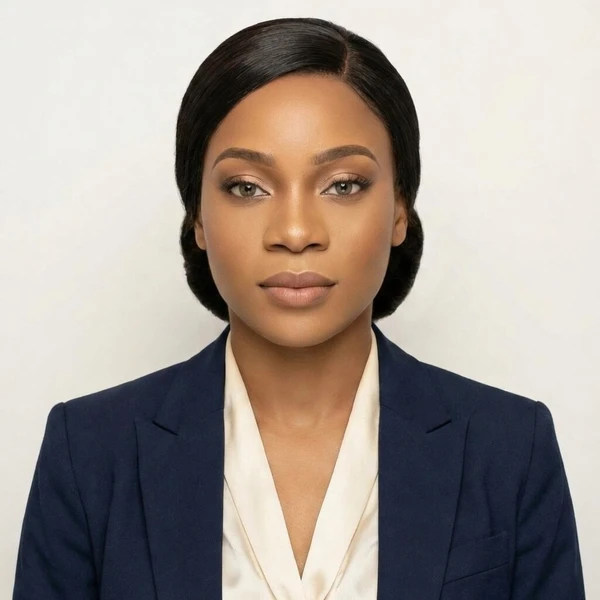
Eunice Chikezie
1x
FinalistEunice Chikezie
1x
FinalistBio
I am a Nigerian student currently pursuing my B.Sc. in Health Science at the University of the People, driven by a deeply personal mission to reform mental health accessibility. As a survivor of narcissistic abuse recovering from PTSD, I experienced firsthand the devastating reality of needing therapy but lacking the financial means to access it. This adversity ignited my passion for human development, behavioral analysis, and special education. My ultimate life goal is to earn a Doctorate in Clinical Psychology so I can provide accessible, specialized care to vulnerable and misunderstood individuals—particularly women healing from trauma. I am an excellent candidate for financial aid because a investment in my education is an investment in a future advocate who will turn personal survival into a lifetime of community healing, advocacy, and affordable mental health support.
Education
University of the People
Bachelor's degree programMajors:
- Allied Health Diagnostic, Intervention, and Treatment Professions
- Rehabilitation and Therapeutic Professions, General
- Mental and Social Health Services and Allied Professions
- Teaching English or French as a Second or Foreign Language
- Foreign Languages, Literatures, and Linguistics, Other
- Education, Other
- Special Education and Teaching
- Psychology, Other
- Psychology, General
- Human Biology
- Health Professions and Related Clinical Sciences, Other
- Gerontology
- Behavioral Sciences
Miscellaneous
Desired degree level:
Bachelor's degree program
Graduate schools of interest:
Transfer schools of interest:
Majors of interest:
- Behavioral Sciences
- Biopsychology
- Education, Other
- Special Education and Teaching
- Human Development, Family Studies, and Related Services
- Gerontology
- Clinical, Counseling and Applied Psychology
- Clinical/Medical Laboratory Science/Research and Allied Professions
- Cognitive Science
- Health Professions and Related Clinical Sciences, Other
- Social Work
- Public Health
Career
Dream career field:
- Mental Health Care
Dream career goals:
Volunteer Curriculum Editor
Online Educational Resource Volunteer2022 – Present4 years
Sports
Sprint
Varsity2008 – 20146 years
Awards
- Relay Team Lead
Research
Teaching English or French as a Second or Foreign Language
Nigerian French Language Village (NFLV) — Lead Researcher2019 – 2021
Arts
Ciel's Couture
Design"The Lagos Heritage" Runway Series2014 – Present
Public services
Volunteering
University of the People — International Student Ambassador2026 – Present
Future Interests
Advocacy
Volunteering
Entrepreneurship
Charles B. Brazelton Memorial Scholarship
The Strength in the Quiet: Reframing My "Awkward" Observation
Growing up, my "awkward" trait was my absolute, intense quietness. In a vibrant, loud world, I was the eccentric child who preferred to stand perfectly still on the periphery, intensely observing human behavior instead of jumping headfirst into the playground noise. Peers often teased me for being "too serious," "robotic," or strangely detached, as if my silence meant I was entirely missing the joy of youth. What they did not understand was that my quietness was not a social deficiency; it was my sanctuary and my sharpest tool. Navigating an unpredictable childhood and recovering from the complex PTSD of past narcissistic abuse, my analytical stillness became my psychological defense and my way of understanding a chaotic world.
Instead of breaking my spirit, being the "strange, quiet kid" ignited my unyielding, lifelong passion for human development, behavioral analysis, and special education. I realized early on that my ability to quietly perceive what others missed—a sudden shift in a person's posture, an unspoken pocket of emotional distress, or a subtle cognitive barrier—was a gift. Today, I have turned that exact childhood quirk into my academic anchor. I am a low-income Nigerian student pursuing a B.Sc. in Health Science at the University of the People, and I no longer apologize for my quiet intensity. It is the very engine driving my ultimate life goal: earning a Doctorate in Clinical Psychology to provide accessible, specialized mental health care to vulnerable, traumatized, and misunderstood individuals.
My hyper-observant nature has also driven me to step boldly into community leadership. As a teacher volunteer outside of school, I have channeled my analytical focus into organizing and facilitating localized behavioral workshops for parents and educators navigating early childhood development. To scale this impact, my immediate milestone is completing the MTCNE AMI Montessori orientation programs for levels 0–6 and 6–12. The Montessori framework perfectly mirrors my natural inclination—observing a child’s unique rhythm without loud interference to safely guide their special education.
However, acute financial restraints heavily hinder my progress. Surviving on a tight budget makes extra educational fees an impossible barrier; I am completely unable to afford the $1,800 USD registration fee required to complete these vital Montessori certifications. When you are already struggling to finance basic undergraduate healthcare tuition, an extra expense of that magnitude stalls the community healing you are capable of providing.
The Charles B. Brazelton Memorial Scholarship represents the exact catalyst needed to bridge my practical reality with my academic ambitions. The $500 award will immediately alleviate the financial pressures stalling my degree advancement and specialized training. Charles found his true rhythm when he stepped into the pool, turning away from expectations to embrace his unique strength. Similarly, I have embraced my quiet, analytical mind. An investment in my education is an investment in a resilient, first-generation advocate who will spend a lifetime turning a childhood "awkwardness" into a profound instrument for community psychological healing.
TOMORROW X TOGETHER (TXT) MOA Scholarship
1. I found TXT back in 2020 during the The Dream Chapter: ETERNITY era. It was a really dark, isolating year globally, and finding their music felt like finding a safe haven when everything else felt chaotic.
2. I think the most important characteristic of a MOA is profound empathy. TXT’s music handles heavy, vulnerable concepts like growing pains, loneliness, and emotional scars. Because of that, the fandom attracts people who genuinely care about mental health, support one another, and want to make the world a kinder place.
3. Yes, my bias is Soobin! I chose him because his leadership style is deeply rooted in gentleness, quiet strength, and emotional intelligence. As someone who values introverted leadership and empathy, seeing him take care of the group inspires me every day.
4. Soobin is actually my ultimate bias across all of K-pop. His comforting presence and down-to-earth personality make him stand out to me above anyone else.
5. My favorite TXT song is "0X1=LOVESONG (I Know I Love You)." The raw emotion and rock energy perfectly capture the feeling of trying to find hope and healing when you feel completely broken or lost in a chaotic world. It has been a huge source of comfort for me during my recovery from trauma.
6. No, I haven't had the chance to see them live in concert yet. Living in Nigeria, global tour stops are out of reach for me, but I consistently watch their live stages, comebacks, and streaming concerts online whenever I can.
7. My favorite album concept is the "Fight" version from The Chaos Chapter: FIGHT OR ESCAPE. I love the skater, rebellious aesthetic mixed with the deeper meaning of fighting against your circumstances and refusing to give up, even when things look incredibly bleak.
8. Right now, I am struggling to pay for school completely out-of-pocket as a low-income student. I have severe financial constraints that make it incredibly hard to consistently fund my degree progress, and I am constantly worried about how I will cover the next set of expenses.
9. This scholarship would completely change my academic journey by filling critical financial gaps. Specifically, I am currently stalled because I cannot afford the $1,800 USD registration fee required to complete the MTCNE AMI Montessori orientation programs (levels 0–6 and 6–12) which are vital for my degree progress and career goals. This fund would directly clear that barrier, allowing me to focus entirely on my studies without financial panic.
10. TXT has influenced me by showing me how to turn personal vulnerability into art and strength. Recovering from the complex PTSD of past narcissistic abuse left me feeling broken, but TXT's music helped me process my trauma. They inspired me to be bold about my experiences and fueled my passion for human development, behavioral analysis, and mental health advocacy.
11. I am pursuing a B.Sc. in Health Science at the University of the People, with the ultimate life goal of earning a Doctorate in Clinical Psychology. I will use my education to do good by providing accessible, specialized mental health care and special education to vulnerable, misunderstood individuals—particularly women and children healing from trauma. Just like TXT uses music to heal comfort fans, I will use my clinical training to build affordable community healing networks.
Jean Ramirez Scholarship
Echoes of Loss, Voices of Hope: Navigating Grief through Purpose
Losing an immediate family member to suicide shatters your world in a way that words can rarely capture. It leaves behind a complex, heavy blanket of ongoing grief, unanswered questions, and a profound silence that threatens to swallow your future. As a Nigerian student pursuing a B.Sc. in Health Science at the University of the People, my journey as a suicide loss survivor has been a rigorous testament to human endurance. Navigating the paralyzing aftermath of this family tragedy, while simultaneously recovering from the complex PTSD of past narcissistic abuse, forced me to confront the absolute deepest depths of psychological pain. Yet, it was within that very darkness that I discovered my life's calling.
The initial challenges of my grief journey were defined by isolation and financial helplessness. In many communities, suicide is deeply misunderstood, leaving survivors to carry their emotional burdens in secret. Experiencing firsthand the devastating reality of needing specialized clinical support during this trauma, but completely lacking the financial means to access it, was agonizing. However, this adversity did not break my spirit. Instead, it taught me that the only way to honor my loved one’s memory was to become the advocate they desperately needed. It ignited my unyielding passion for human development, behavioral analysis, and specialized care, transforming my grief into a powerful sense of mission.
My ultimate life goal is to earn a Doctorate in Clinical Psychology so I can provide accessible, specialized care to vulnerable, traumatized, and misunderstood individuals—ensuring that no one faces mental health crises alone simply because of their socioeconomic status. In the short term, a critical milestone for my career is completing the MTCNE AMI Montessori orientation programs for both the 0–6 and 6–12 levels. I deeply believe that suicide prevention and psychological resilience begin with early childhood intervention and healthy cognitive development.
Unfortunately, acute financial restraints are heavily hindering my undergraduate degree progress and blocking these necessary accomplishments. Surviving on an incredibly tight budget makes extra educational and certification fees an impossible barrier. Currently, I am completely unable to afford the $1,800 USD registration fee required to complete these essential Montessori orientation programs. When you are already struggling to finance basic tuition, an extra expense of that magnitude stalls the progress you are capable of making for your community.
The Jean Ramirez Scholarship would be a monumental catalyst for my ongoing healing and education. The $500 award would immediately alleviate the financial pressure currently stalling my academic advancement, helping me cover degree requirements and specialized certifications. An investment in my education is an investment in a resilient survivor who will turn a profound family tragedy into a lifetime of community healing, advocacy, and affordable mental health support. With your support, I can carry my loved one's legacy forward, proving that hope can emerge from the ashes of heartbreak.
Jill S. Tolley Scholarship
Purpose in Parenthood: Why I Pursue Higher Education
My "why" for pursuing higher education is rooted in a profound transition from survival to purposeful service. As a low-income Nigerian student and a single mother, my daily life is defined by a rigorous juggling act. I hold the sole emotional, financial, and physical responsibility of raising my child while pursuing a B.Sc. in Health Science at the University of the People. This path is undeniably challenging, but my motivation is fueled by a deeply personal history. Having recovered from complex PTSD after surviving narcissistic abuse, I experienced firsthand the devastating reality of needing specialized clinical support but lacking the financial means to access it. This adversity ignited my unyielding passion for human development, behavioral analysis, and special education. I am pursuing higher education because it is the only vehicle that will allow me to turn my personal survival into a lifetime of community healing.
My ultimate life goal is to earn a Doctorate in Clinical Psychology so I can provide accessible, specialized care to vulnerable, traumatized, and misunderstood individuals—particularly women and children who have faced systemic or domestic hardships. I want to build a career that dismantles the financial barriers to mental health support, ensuring that a person's socioeconomic status never dictates their psychological wellness or quality of life. To maximize my impact, my immediate short-term milestone involves bridging healthcare with early childhood development. I am working toward completing the MTCNE AMI Montessori orientation programs for both the 0–6 and 6–12 levels, which will equip me with advanced educational and behavioral frameworks to support special education and early cognitive intervention.
I am uniquely deserving of the Jill S. Tolley Scholarship because an investment in my education does not stop with me; it directly impacts my child and the vulnerable community members I am training to serve. While conventional students balance classes and personal time, my time is meticulously divided between my academic obligations and being a reliable, solo provider for my family. This dual responsibility has not weakened my resolve—it has forged an unbreakable work ethic, deep emotional resilience, and an unwavering clarity of purpose. I am not merely seeking a degree for personal gain; I am building a legacy of advocacy and demonstrating to my child that adversity can be transformed into a catalyst for global good.
However, acute financial restraints are currently hindering my academic progress and blocking these necessary milestones. Surviving on a tight budget as a single mother makes extra educational and certification fees an impossible barrier. Currently, I am completely unable to afford the $1,800 USD registration fee required to complete the essential Montessori orientation programs. When you are already working tirelessly to finance standard undergraduate tuition, an extra expense of that magnitude stalls the progress you are capable of making.
The Jill S. Tolley Scholarship would be a vital catalyst for my journey. The $500 award would immediately alleviate the financial pressures currently stalling my academic advancement, helping me bridge the gap toward my degree requirements and specialized certifications. With your support, I will continue to overcome the immense hurdles of solo parenthood, complete my training, and dedicate my life to providing affordable, compassionate care for those who need it most.
Beyond The Ride Scholarship
Carrying the Quiet Weight: Love, Loss, and Legacy
Losing my sibling in a sudden ATV accident shattered the predictable rhythm of my childhood, leaving behind a heavy, quiet grief that completely altered how I move through the world. Navigating the quiet emptiness of that loss, while watching my parents retreat into survival mode to endure the unimaginable, forced me to grow up almost overnight. This profound heartache, combined with my personal survival as someone recovering from complex PTSD, deeply opened my eyes to the invisible psychological wounds people carry. It ignited my unyielding passion for human development, behavioral analysis, and special education.
Today, I am a Nigerian student pursuing a B.Sc. in Health Science at the University of the People. My ultimate life goal is to earn a Doctorate in Clinical Psychology so I can dedicate my life to providing affordable, specialized mental health care to vulnerable, traumatized, and misunderstood individuals. To better serve my community, my immediate short-term goal is completing the MTCNE AMI Montessori orientation programs for levels 0–6 and 6–12.
However, acute financial restraints heavily hinder my academic progress. Surviving on a tight budget makes extra educational fees an impossible barrier; I am currently completely unable to afford the $1,800 USD registration fee required for these essential Montessori certifications.
The Beyond The Ride Scholarship would be a monumental turning point for my future. The $1,000 award will immediately alleviate the financial pressures stalling my degree requirements and specialized certifications. An investment in my education is an investment in a resilient advocate. By funding my studies, you help me carry my sibling’s memory forward into a lifetime of community healing, turning a tragedy of insurmountable grief into a legacy of affordable, compassionate mental health care for those who need it most.
Jerrye Chesnes Memorial Scholarship
Balancing Parenthood and Purpose: My Journey Back to School
Returning to higher education as a less conventional student with a child is a profound test of endurance. It requires a daily juggling act where time, energy, and financial resources are constantly stretched to their absolute limits. For me, the decision to return to school was not just about career advancement; it was a necessary step toward fulfilling a deeply personal mission. As a Nigerian student pursuing a B.Sc. in Health Science at the University of the People, my academic journey is fueled by survival. Having recovered from complex PTSD caused by past narcissistic abuse, I experienced firsthand the devastating reality of needing specialized care but lacking the financial means to access it. This adversity ignited my passion for human development, behavioral analysis, and special education, prompting my return to school to build a better future for my family.
The primary challenge I face in returning to school is managing the immense, dual responsibility of sole caregiving and rigorous academic demands. Unlike conventional students, my study hours cannot be neatly scheduled. They are carved out in the quiet, late-night moments after my child is asleep or early in the morning before the day's parental duties begin. Foregoing social elements, networking events, and standard extracurricular opportunities is a sacrifice I willingly make because my family depends on my success. This experience has forced me to develop rigorous time-management skills, emotional resilience, and an unwavering focus. Balancing my studies with raising a child has taught me the true meaning of selfless caregiving, a trait that directly enhances my empathy as a healthcare student.
My ultimate life goal is to earn a Doctorate in Clinical Psychology so I can provide accessible, specialized care to vulnerable and misunderstood individuals, particularly women and children healing from trauma. In the short term, a critical milestone for my career and life goals is completing the MTCNE AMI Montessori orientation programs for both the 0–6 and 6–12 levels. This specialized training is vital to my goals, equipping me with advanced frameworks to support early childhood intervention and special education.
However, acute financial restraints are heavily hindering my degree progress and blocking these necessary accomplishments. Surviving on an incredibly tight budget as a parent returning to school makes extra educational and certification fees an impossible barrier. Currently, I am completely unable to afford the $1,800 USD registration fee required to complete these essential Montessori orientation programs. When you are already struggling to finance basic undergraduate tuition while providing for a household, an extra expense of that scale becomes an insurmountable hurdle.
The Jerrye Chesnes Memorial Scholarship would be a monumental catalyst for my education. The $1,500 award would immediately alleviate the severe financial pressure currently stalling my academic advancement, allowing me to bridge the gap toward my degree requirements and specialized certifications. An investment in my education is an investment in a future advocate who will turn personal survival and the challenges of parenthood into a lifetime of community healing, advocacy, and affordable mental health support.
RonranGlee Literary Scholarship
Chosen Text
"It is not that we have a short time to live, but that we waste a lot of it. Life is long enough, and a sufficiently generous estimate has been given to us for the highest achievements if it were all well invested. But when it is wasted in heedless luxury and spent on no good activity, we are forced at last by death’s final constraint to realize that it has passed away before we knew it was passing. So it is: we are not given a short life but we make it short, and we are not ill-supplied but wasteful of it."
— Seneca, On the Shortness of Life (1st Century AD)
The Architecture of Intentionality: Close Reading and Community Healing
In his foundational essay On the Shortness of Life, the Stoic philosopher Seneca argues that the perceived brevity of human existence is not a design flaw of nature, but a direct consequence of fragmented human agency and poor temporal stewardship. His central thesis asserts that life possesses an inherent, expansive elasticity capable of accommodating the loftiest of human achievements, provided that an individual's temporal resources are intentionally harvested rather than passively squandered. This concept of deliberate, targeted investment over passive drift speaks directly to my own academic journey in Health Science and my ultimate life goal of reforming mental health accessibility. To truly honor Seneca’s text requires a deep exploration of behavioral intention, the paralysis of systemic constraints, and the moral imperative of turning lived adversity into purposeful, community-centered action.
Deconstructing the Economy of Time
Seneca’s vocabulary in this excerpt relies heavily on economic and structural metaphors: words like "invested," "ill-supplied," and "wasteful" frame human existence not as a fleeting vapor, but as a defined capital asset. When Seneca notes that life is "long enough" for the "highest achievements," he is challenging the psychological tendency to blame external destiny for internal failures of focus. In behavioral science, this mirrors the concept of an internal locus of control. The text implies that human beings suffer from a cognitive dissonance where they complain about scarcity while actively participating in the devaluation of their own time. Seneca strips away the comfort of victimization regarding time, forcing the reader to confront how much of their mental energy is "spent on no good activity."
For a survivor of trauma, this text carries a profound, secondary layer of underlying meaning. As a Nigerian student pursuing a B.Sc. in Health Science at the University of the People, and as a survivor of narcissistic abuse recovering from complex PTSD, I have intimately known what it feels like to have years stolen by circumstances outside of my control. Trauma, by its very nature, fragments a person's temporal reality, keeping them trapped in past psychological survival loops. Reading Seneca through the lens of psychological recovery reveals that reclaiming one's life is the ultimate form of "well-invested" agency. It requires a deliberate decision to stop the internal waste of cognitive energy on past trauma and instead redirect that energy toward human development, behavioral analysis, and special education. My personal survival did not break me; it localized my focus, transforming a broad existential concept of time into a precise, targeted mission to provide clinical psychology services to vulnerable, misunderstood individuals—particularly women healing from trauma.
The Contrast of Constraint vs. Waste
A critical nuance in Seneca’s argument lies in the distinction between self-inflicted wastefulness and genuine, systemic constraints. Seneca writes that humans are "not ill-supplied," assuming a baseline of baseline autonomy where choices can freely be made. However, when applied to modern global dynamics and economic realities, a close reading forces us to re-examine what constitutes "waste." For many brilliant, driven individuals in underrepresented communities, time is not wasted on "heedless luxury," but is instead consumed by the exhausting infrastructure of survival.
This is where my academic aspirations collide directly with severe financial roadblocks. To achieve the "highest achievements" Seneca references—specifically, earning a Doctorate in Clinical Psychology and building accessible mental health networks—I must systematically secure foundational building blocks. In the short term, a vital milestone for my career is completing the MTCNE AMI Montessori orientation programs for both the 0–6 and 6–12 levels. This specialized training is essential to my goals, equipping me with the behavioral and developmental frameworks required to support early childhood intervention and special education.
Despite having the intense internal drive and ambition that Seneca advocates for, I am facing acute financial restraints that are actively hindering my degree progress. I am currently completely unable to afford the $1,800 USD registration fee required to complete these two Montessori orientation programs. When an undergraduate student is already struggling to finance basic degree requirements under severe economic pressures, an extra expense of that magnitude becomes an absolute systemic barrier. It is not that my time or ambition is being wasted; rather, my path is being artificially choked by financial limitations.
Leadership through Intentional Investment
The RonranGlee Literary Scholarship represents the exact external catalyst needed to bridge the gap between Seneca’s philosophical ideal and my practical reality. The $2,000 award would completely eliminate the immediate financial burden stalling my academic progress, directly funding the $1,800 USD needed for my specialized Montessori orientation programs and unlocking my ability to keep moving forward without delay.
Ultimately, Seneca’s text teaches us that a well-spent life is measured by its impact, depth, and structural integrity. An investment in my higher education is an investment in a future clinician and advocate who understands the true value of time and opportunity. By supporting my academic journey, you are empowering a student who will turn personal survival into a lifetime of community healing, ensuring that the time granted to me is profoundly, deliberately invested in lifting up the most vulnerable minds in our world.
WCEJ Thornton Foundation Low-Income Scholarship
Education as a Catalyst for Collective Healing
The pursuit of higher education is often viewed as a path toward personal success, but for me, it is the essential vehicle for a deeply personal mission of community transformation. As a low-income Nigerian student currently pursuing a B.Sc. in Health Science at the University of the People, my academic journey is fueled by my survival. Having recovered from complex PTSD caused by past narcissistic abuse, I experienced firsthand the devastating reality of needing specialized mental health care but completely lacking the financial means to access it. This profound adversity did not break me; instead, it ignited my passion for human development, behavioral analysis, and special education. Attending higher education is the only way I can acquire the clinical framework necessary to turn my survival into a lifetime of community healing and accessible mental health support.
My higher education journey will directly facilitate what I hope to achieve by providing the formal credentials, scientific training, and research capabilities required to disrupt systemic barriers to care. My ultimate life goal is to earn a Doctorate in Clinical Psychology. Through this advanced education, I plan to create a positive impact by establishing affordable, specialized psychological networks dedicated to vulnerable and misunderstood individuals—particularly women and children healing from trauma. Without the foundation of my undergraduate degree in health science, gaining entry into doctoral-level clinical training would be impossible. Higher education bridges the gap between my raw passion for advocacy and the licensed authority needed to safely diagnose, treat, and protect marginalized populations.
Beyond the classroom, my commitment to service is already reflected in my volunteer work outside of school. I have actively worked as a teacher volunteer, organizing and facilitating community workshops designed to provide parents and caregivers with free, accessible guidance on positive behavioral intervention and early childhood support. This hands-on experience taught me that true impact begins with early intervention. To maximize the reach of my service, my current short-term milestone is completing the MTCNE AMI Montessori orientation programs for both the 0–6 and 6–12 levels. This training is vital to my goals, equipping me with specialized behavioral and educational frameworks to support special education and healthy cognitive development in vulnerable children.
However, acute financial restraints are heavily hindering my undergraduate degree progress and blocking these necessary milestones. As a low-income student, surviving on an incredibly tight budget makes extra educational and certification fees an impossible barrier. Currently, I am completely unable to afford the $1,800 USD registration fee required to complete these essential Montessori orientation programs. When you are already struggling to finance basic degree requirements, an extra expense of that magnitude stalls the progress you want to make for your community.
The Thornton Foundation Low-Income Scholarship would be a monumental catalyst for my future. The financial assistance would immediately alleviate the severe economic pressure stalling my academic progress, allowing me to bridge the gap toward my degree requirements and specialized certifications before August 2026. An investment in my higher education is an investment in a resilient advocate who will spend a lifetime transforming personal survival into affordable care, empowering vulnerable minds, and creating lasting community healing.
First Generation College, First Generation Immigrant Scholarship
As a first in my family to attend college, higher education was never a guaranteed path—it was a battleground. Navigating an unfamiliar educational landscape from a low-income background, while recovering from the complex PTSD of past narcissistic abuse, shattered my world but forged my absolute sense of purpose. I experienced firsthand the devastating reality of needing specialized clinical support but lacking the financial means to access it. This profound adversity taught me that vulnerability without an advocate leads to silent suffering. It ignited my unyielding passion for human development, behavioral analysis, and special education.
Currently pursuing a B.Sc. in Health Science at the University of the People, my ultimate life goal is to earn a Doctorate in Clinical Psychology. I am driven to provide accessible, specialized care to misunderstood individuals, particularly women healing from trauma. In the short term, I am fighting to complete the MTCNE AMI Montessori orientation programs (levels 0–6 and 6–12) to bridge healthcare with early childhood development.
However, acute financial restraints heavily hinder my progress. Surviving on a low income makes extra educational fees an impossible barrier; I am completely unable to afford the $1,800 USD registration fee required for these essential Montessori certifications.
The James Hong Scholarship would be a monumental catalyst for my journey. The $2,000 award will immediately eliminate the financial roadblocks stalling my degree and certifications. An investment in my education is an investment in a resilient first-generation advocate who will turn personal survival into a lifetime of community healing.
Kaprieasha Tyler Healthcare Scholarship
Resilience in Care: Balancing Parenthood and Purpose
Navigating higher education as a single parent while recovering from the complex PTSD of past narcissistic abuse has been the ultimate test of my resilience. Balancing the sole emotional and financial responsibility of raising a child alongside my studies means that time and money are constantly stretched to their absolute limits. Yet, these challenges have not deterred me; instead, they have fueled my determination to build a stable, impactful future for my family and my community.
I am currently pursuing a B.Sc. in Health Science at the University of the People. My lived experience with trauma and the stark reality of needing care but lacking the funds to afford it ignited my passion for human development, behavioral analysis, and special education. My ultimate goal is a Doctorate in Clinical Psychology to provide affordable, specialized care to vulnerable individuals, particularly women healing from trauma. In the short term, I am striving to complete the MTCNE AMI Montessori orientation programs (levels 0–6 and 6–12) to bridge healthcare with early childhood development.
However, acute financial restraints heavily hinder my academic progress. As a single parent, surviving on a tight budget makes extra educational expenses an impossible barrier. Currently, I am completely unable to afford the $1,800 USD registration fee required for these essential Montessori certifications.
The Kaprieasha Tyler Healthcare Scholarship would be a powerful catalyst for my journey. The $500 award will immediately alleviate the financial pressures stalling my academic advancement, helping me cover degree requirements and specialized training. An investment in my education is an investment in a frontline healthcare advocate who will turn personal survival into a lifetime of community healing and affordable care.
STLF Memorial Pay It Forward Scholarship
Leadership in Action: Healing Communities Through Education
True leadership is not found in a title; it is forged through service and born from a personal commitment to leave the world better than you found it. As a Nigerian student pursuing a B.Sc. in Health Science at the University of the People, my dedication to community service is deeply personal. As a survivor of narcissistic abuse recovering from PTSD, I experienced firsthand the devastating reality of needing specialized psychological and educational support but lacking the financial resources to access it. This adversity ignited my profound passion for human development, behavioral analysis, and special education. Rather than remaining a bystander to this systemic gap, I chose to step up as a teacher volunteer and organize a community initiative to provide free, accessible guidance to vulnerable families.
To give back to my community, I organized and led a weekend volunteer initiative called the "Nurturing Minds Workshop." This event was designed to support parents, caregivers, and local educators who accommodate children with unique learning needs and behavioral challenges. As the organizing teacher volunteer, I designed basic curriculum outlines centered on positive behavioral intervention, emotional regulation techniques, and inclusive learning strategies. I spent the weekend facilitating sessions, answering questions from struggling parents, and providing actionable resources to help them create trauma-informed, supportive environments at home. By utilizing my background in health science and behavioral analysis, I was able to offer these families specialized knowledge that they otherwise could never afford.
This experience solidified my understanding of the immense importance of leadership through service. To me, service leadership means recognizing a painful void in your community and using your skills, education, and lived experiences to fill it. It is about empowering others, amplifying the voices of the misunderstood, and dismantling barriers to critical resources. When we lead through service, we create a ripple effect; by educating a single parent or caregiver on how to support a vulnerable child, we protect that child’s future psychological and academic development. Leadership through service transforms personal survival into a collective tool for community healing.
My ultimate life goal is to earn a Doctorate in Clinical Psychology so I can provide permanent, affordable, and specialized care to vulnerable individuals, particularly women and children healing from trauma. In the short term, a critical milestone for my career and community work is completing the MTCNE AMI Montessori orientation programs for both the 0–6 and 6–12 levels. This training is vital to my work as an educator and advocate, equipping me with advanced frameworks to expand my volunteer workshops and better serve special education needs.
However, acute financial restraints are currently hindering my academic progress and blocking these necessary accomplishments. Due to severe financial limitations, I am completely unable to afford the $1,800 USD registration fee required to complete these Montessori orientation programs. When you are already working tirelessly to finance standard undergraduate tuition, an extra expense of that scale becomes an impossible barrier.
Winning this scholarship would be a monumental catalyst for my journey. It would immediately alleviate the financial pressure stalling my academic and volunteer advancement, allowing me to pay for my degree requirements and specialized certifications. An investment in my education is an investment in a leader who will spend a lifetime turning personal survival into community empowerment and affordable care.
EverGreen Trails of Service Scholarship
Compassionate Action: A Lifelong Dedication to Chronic Care
My journey into the healthcare field was forged through profound personal adversity, which ultimately shaped my commitment to serving patients navigating chronic, life-altering conditions. As a Nigerian student currently pursuing a B.Sc. in Health Science at the University of the People, my dedication to medicine is deeply personal. As a survivor of narcissistic abuse recovering from complex PTSD—a severe, long-term chronic condition—I have experienced firsthand the devastating reality of managing a chronic health struggle without the financial means to access specialized care. This adversity did not break me; instead, it ignited my passion for human development, behavioral analysis, and specialized healthcare.
My planned specialization within the broader healthcare ecosystem focuses on holistic patient wellness, behavior modification, and early childhood intervention for individuals dealing with chronic developmental and psychological traumas. True, comprehensive healthcare requires an understanding of how chronic illnesses disrupt both the physical body and the nervous system. I have chosen to work with patients experiencing long-term chronic health and developmental challenges because I understand the exhausting, daily vulnerability these conditions impose on individuals and their families. My ultimate goal is to earn a Doctorate in Clinical Psychology so I can stand in the gap for these misunderstood individuals, turning my survival into a blueprint for affordable community healing.
To effectively serve my chosen demographic, I am working to bridge healthcare and early childhood special education, firmly believing that chronic symptom management and resilience begin with early intervention. A critical short-term milestone for my career is completing the MTCNE AMI Montessori orientation programs for both the 0–6 and 6–12 levels. This specialized training is vital to my goals, equipping me to support children facing chronic behavioral and cognitive challenges.
Unfortunately, acute financial restraints are currently hindering my degree progress and blocking these necessary accomplishments. Due to severe financial limitations, I am completely unable to afford the $1,800 USD registration fee required to complete these Montessori orientation programs. When you are already struggling to finance your standard undergraduate healthcare tuition, an extra expense of that magnitude becomes an impossible barrier, halting the progress I desperately want to make for my patients.
The EverGreen Trails of Service Scholarship would be a monumental catalyst for my journey. The $1,050 award would immediately alleviate the financial pressure stalling my academic advancement, allowing me to pay for my degree requirements and bridge the gap toward my specialized certifications. An investment in my education is an investment in a dedicated healthcare advocate who will spend a lifetime providing compassionate, affordable care to those battling chronic adversity.
Robert F. Lawson Fund for Careers that Care
From Survival to Service: A Mission of Care
Choosing a career dedicated to helping others was not just a career choice for me; it was a calling born out of profound personal adversity. As a Nigerian student and a low-income undergraduate pursuing a B.Sc. in Health Science at the University of the People, my life has been shaped by a deeply personal mission to reform mental health accessibility. As a survivor of narcissistic abuse recovering from PTSD, I have experienced firsthand the devastating reality of needing specialized care but lacking the financial means to access it. This experience did not deter me; instead, it ignited a lifelong passion for human development, behavioral analysis, and special education.
My ultimate life goal is to earn a Doctorate in Clinical Psychology so I can provide accessible, specialized care to vulnerable and misunderstood individuals—particularly women healing from trauma. Through my career, I plan to make a lasting, positive impact on the world by bridging the gap between healthcare and education. I want to build a practice and advocacy network that ensures no one is denied the psychological support they need simply because of their socioeconomic status. True care means standing in the gap for those who cannot advocate for themselves, transforming systemic neglect into spaces of community healing.
In the short term, I am working diligently to gain the specialized skills necessary to support early childhood development and special education, as I believe true mental health care begins with foundational, early intervention. A critical milestone for my career is completing the MTCNE USA AMI Montessori orientation programs for both the 0–6 and 6–12 levels. This training is vital to my goals, equipping me with the tools to guide young minds and support healthy cognitive frameworks.
However, severe financial restraints are currently hindering my undergraduate degree progress and blocking the necessary accomplishments I need to make in connection with my life goals. Due to these acute financial limitations, I am completely unable to afford the $1,800 USD registration fee required to complete the MTCNE AMI Montessori orientation programs. When you are already struggling as a low-income student to finance basic degree requirements, an extra expense of that magnitude becomes an insurmountable barrier, stalling the progress I want to make for my community.
The Robert F. Lawson Fund for Careers that Care would be a vital catalyst for my education. The $500 award would immediately alleviate the financial pressure currently stalling my academic progress, helping me bridge the gap toward my degree requirements and specialized certifications. Robert F. Lawson used his life to help those in need, and I intend to carry that same torch of service forward. An investment in my education is an investment in a future advocate who will turn personal survival into a lifetime of community healing, advocacy, and affordable mental health support.
Noah Jon Markstrom Foundation Scholarship
Healing Minds, Nurturing Futures
My inspiration to pursue a career dedicated to pediatric healthcare stems from a profound understanding of how early adversity shapes a child’s entire life. As a Nigerian student and a survivor of narcissistic abuse recovering from PTSD, I know firsthand the devastating impact of trauma. I also know the agonizing reality of needing specialized care but lacking the financial means to access it. This personal survival did not break me; instead, it ignited an unyielding passion for human development, behavioral analysis, and special education. It made me realize that the most vulnerable patients in our healthcare ecosystem are children, whose developing brains and spirits require deeply specialized, compassionate intervention.
My ultimate life goal is to earn a Doctorate in Clinical Psychology to provide accessible, specialized care to misunderstood individuals, particularly children and young women healing from profound trauma. True pediatric medicine and care must treat the whole child—not just the physical body, but the psychological framework that dictates their quality of life. I am driven to enter this field because I want to ensure that sick, traumatized, or vulnerable children do not have their potential choked out by their circumstances. I want to be the advocate who steps into a child's life during their darkest medical or emotional battles and helps them build a foundation for lifelong healing.
To turn this vision into reality, I am currently working to bridge healthcare and early childhood development. A critical milestone in my journey is completing the MTCNE AMI Montessori orientation programs for both the 0–6 and 6–12 levels. This specialized training is vital to my pediatric career goals, equipping me with the behavioral and educational frameworks necessary to support special education and healthy cognitive development in young children.
Unfortunately, severe financial restraints are currently hindering my undergraduate degree progress at the University of the People and blocking other accomplishments necessary to achieve my life goals. Due to these acute financial limitations, I am completely unable to afford the $1,800 USD registration fee required for the MTCNE AMI Montessori orientation programs. When you are already struggling to finance basic degree requirements, an extra expense of that magnitude becomes an impossible barrier, stalling the progress I want to make for the children who need this expertise.
The Noah Jon Markstrom Foundation Scholarship would be a monumental catalyst for my education and career. The $5,000 award would completely alleviate the financial burdens currently stalling my academic progress, allowing me to pay for my degree requirements and immediately fund my specialized pediatric orientation programs. An investment in my education is an investment in a future pediatric healthcare advocate. With your support, I will turn my personal survival into a lifetime of community healing, providing affordable, specialized mental health and developmental care to vulnerable children.
SigaLa Education Scholarship
Transforming Trauma into Community Healing
Choosing to study Health Science at the University of the People was not just an academic decision for me; it was a lifeline and a calling. As a Nigerian student and a survivor of narcissistic abuse recovering from PTSD, I experienced firsthand the devastating reality of needing mental health care but lacking the financial means to access it. This profound adversity ignited my passion for human development, behavioral analysis, and healthcare. Driven by this personal history, my long-term goal is to earn a Doctorate in Clinical Psychology so I can provide accessible, specialized care to vulnerable and misunderstood individuals, particularly women healing from trauma.
In the short term, I am working tirelessly to maximize my foundational training by bridging healthcare, behavioral science, and early childhood development. I deeply understand that trauma prevention and mental wellness begin in early childhood. To that end, a critical short-term milestone for me is completing the MTCNE AMI Montessori orientation programs for both the 0–6 and 6–12 levels. This specialized training is vital to my career goals, equipping me with the skills needed to support special education and healthy cognitive development.
However, being an underrepresented minority in the STEM and healthcare sectors presents unique challenges that directly impact my journey. In Nigeria, systemic financial limitations and a lack of institutional infrastructure often choke out the ambitions of aspiring researchers and clinicians. Furthermore, representation matters; minority women are severely underrepresented in global psychological research and advanced clinical practices. This disparity fuels my determination. Coming from an underrepresented background means I carry a unique perspective on cultural trauma, but it also means I face severe systemic roadblocks. My background affects my goals by making me hyper-aware of the gap in affordable care, transforming my academic pursuit into a mission to diversify and democratize mental health support.
Currently, acute financial restraints are hindering my degree progress and blocking the necessary accomplishments I need to make in connection with my life goals. I am completely unable to afford the $1,800 USD registration fee required to complete the MTCNE USA AMI Montessori orientation programs. When you are already struggling to finance your standard undergraduate tuition, an extra expense of that magnitude becomes an impossible barrier.
The SigaLa Education Scholarship would be a monumental catalyst for my education.
The $1,000 award would immediately alleviate the financial pressure currently stalling my academic progress, allowing me to bridge the gap toward my degree requirements and specialized certifications. An investment in my education is an investment in a future advocate who will turn personal survival into a lifetime of community healing. With your support, I can overcome these financial barriers, complete my training, and dedicate my life to providing affordable, high-quality mental health advocacy for those who need it most.
Poster Studio Express Visual Education Scholarship
The Psychology of the Visual Classroom
As a first-generation Nigerian student pursuing a B.Sc. in Health Science at the University of the People, my dedication to K-12 education is rooted in survival. Having overcome narcissistic abuse and PTSD, I experienced firsthand how traditional, rigid environments fail vulnerable minds. This adversity ignited my passion for behavioral analysis and special education. My ultimate goal is a Doctorate in Clinical Psychology to provide specialized care to trauma-affected children. To truly support youth, we must bridge the gap between STEM and accessible learning. Currently, severe financial restraints hinder my degree progress; I am unable to afford the $1,800 registration for the MTCNE AMI Montessori orientation programs (levels 0–6 and 6–12). This specialized training is a vital milestone for my goals, making resources like this scholarship crucial to my mission of community healing.
To connect behavioral science with classroom accessibility, my poster design targets the Next Generation Science Standards (NGSS) for Middle School Life Science: **MS-LS1-8, which requires students to gather evidence that sensory receptors respond to stimuli by sending messages to the brain for immediate behavior or storage as memories. I chose this standard because understanding the nervous system empowers students—especially those from traumatic or neurodivergent backgrounds—to grasp how their own minds and bodies interact with the world.
The visual strategy of my poster leverages deliberate color theory, layout, and typography to maximize comprehension. The layout utilizes a left-to-right sequential flow, mimicking natural reading patterns. On the left, high-contrast, warm colors (reds and oranges) depict external stimuli, such as a hot surface or a bright light, immediately drawing the eye. Moving toward the center, a cool blue nervous system acts as the pathway, utilizing calming tones to represent the transmission of data. The right side features a vibrant, stylized brain graphic divided into clear, color-coded functional zones.
Typography is restricted to two clean, sans-serif fonts to ensure readability for students with diverse learning needs, including dyslexia. Key vocabulary terms like *Stimulus*, *Receptor*, and *Response* are highlighted in bold, heavy weights, while arrows physically connect the words to their corresponding anatomical images. This imagery simplifies complex biological pathways into an intuitive, scannable map, enabling students to instantly anchor abstract physiological terms to concrete visual representations.
Visual learning is absolutely critical in modern K-12 classrooms. Traditional, text-heavy instructional models frequently alienate students who process information differently or carry emotional and cognitive cognitive strains that impair focus. Visual aids bypass cognitive overload by encoding information into long-term memory more efficiently than words alone.
By integrating color theory and structured layouts, educators create an equitable environment where complex STEM concepts become universally accessible. Winning this $750 scholarship will directly alleviate the financial burdens halting my academic milestones, allowing me to advance toward a career dedicated to designing trauma-informed, visually accessible education for every misunderstood child.
First Generation Scholarship For Underprivileged Students
Lifting as I Climb
As a first-generation Nigerian student pursuing a B.Sc. in Health Science at the University of the People, my academic journey has been defined by navigating uncharted territory without a map. My passion for human development, behavioral analysis, and special education is not just an academic interest; it is a deeply personal mission born from survival. As a survivor of narcissistic abuse recovering from PTSD, I experienced firsthand the devastating reality of urgently needing mental health support but lacking the financial means to access it. This profound adversity ignited my ultimate life goal: to earn a Doctorate in Clinical Psychology and provide accessible, specialized care to vulnerable and misunderstood individuals, particularly women and youth healing from trauma.
However, the path of a first-generation student is rarely smooth, and I am currently facing severe financial restraints that threaten my academic and professional momentum. I am currently unable to complete my registration for the MTCNE AMI Montessori orientation programs for levels 0–6 and 6–12, which cost $1,800 for both courses. This specialized training is a vital milestone needed to connect my degree to hands-on therapeutic advocacy, yet these financial hurdles are actively hindering my degree progress. Without a family safety net or generational wealth to rely on, navigating these socioeconomic barriers can feel incredibly isolating.
It is this exact struggle that equips me to inspire and motivate other first-generation students to pursue higher education. I believe the most powerful way to inspire others is through transparent, lived vulnerability. I plan to use my platform and my future career to show incoming students that their trauma, background, and financial limitations do not dictate their capacity for impact.
Post-graduation, I intend to launch mentorship initiatives specifically designed for first-generation BIPOC students navigating higher education. By partnering with non-profits and university networks, I will demystify the "unspoken rules" of academia—from applying for scholarships like this one to finding mental health resources on campus. I want to build the community of mentorship that I had to build for myself from scratch.
Furthermore, my long-term goal to establish affordable mental health clinics will serve as a tangible blueprint for what is possible. By openly sharing my story of turning personal survival into a lifetime of community healing, I will prove to other underprivileged students that higher education is a powerful mechanism for breaking generational cycles.
Winning this scholarship will directly alleviate the immediate financial strain slowing down my degree progress. An investment in my education is an investment in a future clinician and mentor who will spend a lifetime proving to other first-generation students that they belong in academia, helping them turn their own survival into success.
Marie Jean Baptiste Memorial Scholarship
Turning Survival Into Community Service
Growing up, I learned early that the true measure of a person is not what they acquire, but how they lift others up. As a first-generation Nigerian student pursuing a B.Sc. in Health Science at the University of the People, my educational journey is fueled by a deeply personal mission to reform mental health accessibility. Having survived narcissistic abuse and walked the long road of recovering from PTSD, I experienced firsthand the devastating reality of urgently needing therapeutic support but lacking the financial means to access it. This adversity did not break me; instead, it ignited a lifelong passion for human development, behavioral analysis, and special education.
My commitment to my family and community is rooted in this lived experience. Within my family, I act as a pillars of emotional support and a champion for education, breaking cycles of trauma by fostering open dialogues about mental well-being. Externally, I dedicate my time to volunteering and community service, focusing on grassroots mental health advocacy and supporting individuals who, like me, have been marginalized by systemic barriers. I believe that healing is a communal responsibility, and I actively work to create spaces where vulnerable individuals—particularly women and misunderstood youth—feel seen, heard, and protected.
However, my path to creating a broader impact is currently facing severe financial restraints. I am currently unable to complete my registration for the MTCNE AMI Montessori orientation programs for levels 0–6 and 6–12, which cost $1,800 for both courses. This specialized training is a critical stepping stone for my work in childhood trauma and special education, yet financial limitations are hindering my degree progress and blocking the vital accomplishments I need to advance. My ultimate life goal is to earn a Doctorate in Clinical Psychology so I can provide free and affordable, specialized care to trauma survivors.
Post-college, my plans for sustained community involvement are unshakeable. I intend to establish non-profit mental health clinics that offer accessible behavioral analysis, trauma-informed therapy, and special education advocacy for low-income families. Just as Marie Jean Baptiste tirelessly nurtured her family and community without formal schooling, I want to use my formal education as a weapon against accessibility gaps.
Winning this $1,000 scholarship will directly alleviate the financial strain holding back my academic progress. An investment in my education is an investment in a dedicated advocate who will turn personal survival into a lifetime of community healing, fulfilling a legacy of service that would make Marie Jean Baptiste proud.
Zelaya Creativity Scholarship
The War of the Missing Commas
The cursor blinked at me like a tiny, mocking neon sign. On my cracked laptop screen sat the application page for the MTCNE AMI Montessori orientation programs. For a Health Science undergraduate at the University of the People, these certifications for levels 0–6 and 6–12 are the vital bridges connecting my STEM degree to my dream of specializing in childhood trauma and special education. But there was a wall standing between me and my future: a $1,800 tuition fee that I simply do not have.
This current financial restraint doesn't just block a certificate; it actively threatens my ongoing degree progress and the necessary milestones I need to reach my ultimate goal of earning a Doctorate in Clinical Psychology. As a first-generation college student from Nigeria and a survivor of narcissistic abuse recovering from PTSD, I know what it means to face devastating, systemic barriers. I know the pain of needing mental health support and being priced out of healing. My life’s mission is to become the advocate I never had, providing affordable, specialized care to vulnerable women and children.
Yet, as I stared at the screen, suffocated by the heavy reality of a $1,800 deficit, my brain decided to hyper-focus on an entirely different, incredibly trivial catastrophe: a missing comma in my application bio.
For two agonizing hours, my world shrunk down to a single punctuation mark. The grand, urgent crisis of my empty bank account was temporarily dethroned by a grammatical existential crisis. If I place a comma here, do I sound too clinical? If I remove it, am I erasing my own voice? I began debating the merits of the Oxford comma with myself as if the fate of global mental health reform rested upon a curved dot on a page.
My roommate watched in sheer bewilderment as I paced the room, passionately arguing that a semicolon might misrepresent my entire psychological philosophy. To anyone else, it was a microscopic piece of ink. It was a trivial, absurd thing to obsess over when my actual education was at a standstill due to a lack of funding.
But as a future behavioral analyst, I realized my obsession wasn't about the comma at all. It was my mind's creative defense mechanism. When the macroeconomic realities of being an underfunded, first-generation student trying to change the world became too heavy to bear, my creativity allowed me to shrink the giant monster of financial hardship into a tiny, manageable grammar problem I could actually solve.
I eventually hit "save," leaving the comma exactly where it was.
An investment in my education through the Zelaya Creativity Scholarship is an investment in a future clinician who uses creativity not just as an escape, but as a tool for survival. Winning this $1,500 award will directly alleviate the financial strain halting my degree progress, bringing me one step closer to transforming my personal survival into a lifetime of community healing and accessible mental health advocacy.
Sandy Jenkins Excellence in Early Childhood Education Scholarship
Rooted in Resilience: Shaping the Future Through Early Childhood Education
My passion for early childhood education stems from a deeply personal understanding of human development and a mission to build resilient generations. As a survivor of narcissistic abuse recovering from PTSD, I know firsthand how deeply early experiences shape a person’s life. This adversity did not defeat me; instead, it ignited my passion for human development, behavioral analysis, and special education. Today, as a Nigerian student pursuing my B.Sc. in Health Science at the University of the People, my ultimate life goal is to earn a Doctorate in Clinical Psychology. However, I recognize that true community healing and mental wellness must begin at the very root: early childhood.
Early childhood education is far more than basic schooling; it is the critical window where a child’s cognitive, emotional, and social foundation is built. By intervening early with specialized, compassionate education, we can provide children—especially vulnerable or misunderstood individuals—with the tools to navigate trauma, build emotional intelligence, and unlock their full potential. I am deeply passionate about this field because I want to ensure that children have the supportive, psychologically informed educational environments they need to thrive before difficulties become deep-seated struggles.
To turn this passion into tangible community action, I aim to integrate specialized early childhood teaching methods with psychological advocacy. My goal is to work extensively within the nonprofit and educational sectors to implement accessible, trauma-informed support systems for young learners. However, my immediate progress is currently hindered by severe financial constraints. These financial restraints are actively impacting my ability to progress smoothly through my undergraduate degree and have forced me to halt other critical, career-defining accomplishments.
Specifically, I am currently unable to complete my registration for the MTCNE AMI Montessori teacher training program for both the 0–6 and 6–12 levels due to a lack of finances. This training is a vital milestone for my goals, as the Montessori method aligns perfectly with my vision of fostering independence, emotional regulation, and specialized care in early development. Without financial backing, this essential stepping stone toward my career in early childhood special education remains entirely out of reach.
Sandy Jenkins dedicated over fifteen years to leading with passion and making a tangible difference in the lives of children. I share that exact determination to serve the public good and shape future generations of healthy, great students.
Receiving the Sandy Jenkins Excellence in Early Childhood Education Scholarship would do far more than just ease my current financial strain; it would be a direct investment in a future advocate. By helping me overcome these immediate financial roadblocks, this scholarship empowers me to complete my health science degree and eventually acquire the specialized Montessori training necessary to make a lasting impact. I am fully committed to turning my personal survival into a lifetime of community healing, specialized early childhood support, and educational advocacy, ensuring that financial limitation is never a barrier to a child’s bright future.
Future Nonprofit Leaders Award
From Survival to Service: Transforming Trauma into Public Good
My dedication to the nonprofit sector stems from a deeply personal mission: to reform mental health accessibility and support vulnerable, misunderstood communities. As a survivor of narcissistic abuse recovering from PTSD, I know firsthand the devastating reality of desperately needing psychological support but lacking the financial means to access it. This severe adversity did not defeat me; instead, it ignited my lifelong passion for human development, behavioral analysis, and special education. Today, as a Nigerian student pursuing a B.Sc. in Health Science at the University of the People, my ultimate life goal is to earn a Doctorate in Clinical Psychology and establish a nonprofit organization dedicated to providing accessible, trauma-informed care to individuals who have been left behind by traditional systems—particularly women healing from trauma.
To truly revolutionize community healing, I believe in addressing development from its absolute roots. This is why I aim to integrate specialized education with psychological advocacy, implementing holistic, accessible support systems within underserved communities. However, my immediate progress is currently hindered by severe financial constraints. These financial restraints are actively impacting my ability to progress smoothly through my undergraduate degree and have forced me to halt other critical, career-defining accomplishments.
Specifically, I am currently unable to complete my registration for the MTCNE AMI Montessori teacher training program for both the 0–6 and 6–12 levels due to a lack of finances. This training is a vital credential for my long-term vision, as it would allow me to seamlessly combine early childhood development, special education, and behavioral analysis within my future nonprofit work. Without financial backing, these essential stepping stones toward my career goals remain entirely out of reach.
The nonprofit sector is the only space where purpose-driven work takes absolute precedence over profit, making it the perfect vehicle for the systemic change I want to enact. I do not seek a flashy career; I seek a rewarding experience where I can make a tangible, lasting difference in the lives of others.
Receiving the Future Nonprofit Leaders Award would do far more than just ease my current financial strain; it would be a direct investment in a future advocate. By helping me overcome these immediate financial roadblocks, this scholarship empowers me to complete my health science degree and eventually acquire the specialized Montessori and psychological training necessary to serve the public good. I am fully committed to turning my personal survival into a lifetime of community advocacy, affordable mental health support, and localized healing. With your support, I will bridge the gap between trauma and recovery for those who need it most, proving that financial limitation should never be a barrier to human resilience.
Ethel Hayes Destigmatization of Mental Health Scholarship
Turning the Tide: From Silent Survival to Clinical Advocacy
Nearly five decades ago, Ethel Hayes faced a battle that was fought in the shadows—a battle that many in the Black diaspora still face today. In my own life, growing up in Nigeria, I learned early on that mental health was a subject often shrouded in silence, dismissed as a spiritual failing or a lack of willpower. My journey with mental health began in the aftermath of prolonged narcissistic abuse, which left me navigating the debilitating landscape of Post-Traumatic Stress Disorder (PTSD). For a long time, like many in my community, I suppressed my pain, fearing the stigma that accompanies a "broken" mind. However, it was through this very darkness that I found my life’s most profound purpose.
My experience with PTSD has fundamentally reshaped my understanding of the world. I used to view the world as an inherently predatory place, a perspective shaped by the hyper-vigilance and anxiety that trauma creates. However, as I began my own healing journey, I realized that the world isn’t just a place of struggle; it is a place of untapped resilience. I learned that trauma is not a life sentence, but a physiological and psychological wound that requires professional, compassionate care. This shift in perspective allowed me to see others not through their symptoms, but through their survival. I realized that millions are suffering in silence, not because they are weak, but because they lack the "light" of a supportive dialogue.
These mental health challenges have also deeply influenced my relationships. Trauma can often lead to isolation, but in my recovery, I have learned the power of "intentional listening." I have become a source of support for other women in my community who are dealing with toxic environments. By being open about my own struggles with PTSD, I have seen the "darkness fade" for others. I have learned that honesty is the most potent weapon against stigma. When we speak our truths, we give others permission to do the same, creating a community of healing rather than a culture of suppression.
My career aspirations are now entirely dedicated to this cause. As a Health Science student at the University of the People, I am building the academic foundation necessary to become a Clinical Psychologist. My goal is to return to my community with the clinical tools to dismantle the stigmas that took the life of women like Ethel Hayes. I want to establish trauma-informed clinics that specialize in behavioral analysis and special education, ensuring that the next generation of youth doesn't have to suppress their feelings until they reach a breaking point. I want to ensure that mental health care is seen as a fundamental human right, not a luxury or a source of shame.
The need for this scholarship is both urgent and transformative. Pursuing an American degree from Nigeria during an unprecedented economic crisis means I am fighting a daily battle against financial instability. The volatile exchange rate has turned my modest assessment fees into a monumental barrier, threatening to halt my education just as I am gaining the tools to make a difference. This scholarship would be the "light" I need to clear my academic path, allowing me to focus entirely on my mission to heal.
By investing in my education, you are supporting a future clinician who understands that "bringing the darkness to light" is the only way to save lives. I am ready to turn my survival into a professional legacy of destigmatization, ensuring that the courage of Ethel Hayes lives on through the healing of others.
Hazel Joy Memorial Scholarship
Grief does not speak, but it echoes through the quiet corners of a home, reshaping everything it touches. For me, that silence began the day my sibling passed away. As an older brother, my natural instinct had always been to protect, to guide, and to build a future where my siblings and I would thrive together. Losing them felt like having a piece of my own identity abruptly torn away. The heavy burden of that loss altered the trajectory of my life, turning an immense personal tragedy into a lifelong mission to protect and preserve human life.
In the wake of this profound loss, navigating daily life in Nigeria became an uphill battle. As a Health Science student at University of the People, my academic journey is already defined by strict perseverance. I study under the constant weight of a harsh economic climate, unstable electricity, and skyrocketing foreign exchange rates that make even the most basic educational resources difficult to afford. In the darkest moments, when the financial strain feels overwhelming, the memory of my sibling becomes my anchor. I realize that I am no longer just studying for my own future; I am carrying the dreams and the missing potential of the one we lost.
My grief directly inspired my passion for healthcare. Witnessing firsthand how fragile life is, and experiencing the agonizing pain that families go through when a loved one passes, completely reoriented my ambitions. I chose to study Health Science because I want to be on the frontlines of public health, working to prevent manageable illnesses and improving community care. Every lecture I read on disease prevention and healthcare management is personal to me. My dedication to my studies is fueled by a desire to ensure that fewer older brothers have to sit in the quiet aftermath of a preventable loss, wondering what more could have been done.
Moving forward from tragedy does not mean forgetting; it means carrying the love you had for them into everything you do. By pursuing my degree despite the economic barriers surrounding me, I am honoring my sibling’s memory through action. I strive to lead with empathy, to look at patients not just as cases, but as someone’s cherished brother, sister, or child.
Receiving the Hazel Joy Memorial Scholarship would provide the critical financial relief I need to weather the crushing exchange rates and continue my education without interruption. This investment will not just fund a degree; it will support an older brother who is dedicated to turning personal heartbreak into a legacy of community healing and public health impact.
Patricia Lindsey Jackson Foundation - Eva Mae Jackson Scholarship of Education
Every time I log onto my virtual classroom portal, I am reminded that my education is both a privilege and a battlefield. As a Health Science student at University of the People living in Nigeria, pursuing a degree online means navigating unstable electricity, unpredictable internet connectivity, and an unforgiving economic landscape driven by skyrocketing foreign exchange rates. On paper, the odds are heavily stacked against me. Yet, when my resources run thin, my faith steps in. For me, faith is not a passive emotion; it is an active, anchoring force that transforms my daily economic struggles into a purposeful preparation for leadership.
My faith teaches me that I am called to be a good steward of my talents and a source of healing in a broken world. This spiritual conviction directly shapes my academic journey and future aspirations in the healthcare sector. Studying Health Science is not just a path to a career; it is my response to a divine calling to alleviate suffering in my community. In Nigeria, public health challenges are vast, and access to quality medical education is limited. My faith fuels my ambition to become a community health advocate who builds sustainable health initiatives, educates underserved populations on disease prevention, and leads healthcare teams with absolute integrity. It reminds me that honesty in leadership is non-negotiable, especially when managing public health resources that people’s lives depend on.
While my internal faith keeps my vision clear, it was my mother who first ignited the fire to pursue higher education. Growing up, I watched her make countless sacrifices with a selfless heart, always prioritizing the welfare of our family and neighbors despite having very little. She taught me that education is the greatest equalizer and the most effective tool for uplifting a community. Her unwavering belief in my potential, even when the fluctuating economy threatened to stall my academic progress, pushed me to look beyond my immediate environment. She embodied the exact values of dedication and community uplifting that Patricia Lindsey Jackson and Eva Mae Jackson stood for. Her resilience taught me that a true leader does not wait for perfect conditions to create an impact.
Receiving this scholarship would be a profound answer to prayer and a vital lifeline. It will directly alleviate the crushing financial pressure of degree costs amplified by the exchange rate, allowing me to focus entirely on mastering my health science curriculum and implementing volunteer health clean-ups in my local neighborhood. Like Eva Mae Jackson, who dedicated her life to inspiring students, I intend to use my education to inspire other young Nigerians facing economic hardships, showing them that faith and focus can break down structural barriers. Supported by this honor, I am ready to step forward as an honest leader, fully committed to creating a healthier, more equitable world.
https://www.youtube.com/@sharp4cu
Bulkthreads.com's "Let's Aim Higher" Scholarship
Building a Foundation for Global Healing
What I want to build is not a structure of brick and mortar, but a sustainable foundation of mental resilience and clinical support for vulnerable women in Nigeria. As a Health Science student at the University of the People, my vision is to construct a trauma-informed framework that bridges the gap between survival and wholeness. This commitment is born from my own history as a survivor of narcissistic abuse and my recovery from PTSD. I am building a future where mental wellness is not a luxury for the few, but a accessible foundation for all.
My blueprint for this future involves the establishment of community-based behavioral health centers. In my community, mental health is often an invisible struggle, silenced by cultural stigma and a lack of affordable care. By pursuing my degree, I am acquiring the technical and clinical tools to build programs that specialize in trauma recovery and special education. I want to build a space where women and children can find the language to process their experiences and the clinical support to reclaim their lives.
Building this future has significant personal and communal impacts. On a personal level, it allows me to transform my past adversity into a professional vocation, proving that a history of trauma can be the cornerstone of a career in healing. For my community, this "build" provides a long-term solution to the cycles of misunderstood mental health. By providing early intervention and support, I am helping to build a more productive, empathetic, and healthy society where individuals are empowered to reach their full potential.
The urgency of this project is currently met by a monumental financial hurdle. Pursuing an American degree from Nigeria means I am navigating an unprecedented economic crisis, where volatile exchange rates have turned my tuition into an immense burden. Receiving this scholarship would be a vital "structural support" for my education. It would provide the $515 necessary to clear my current assessment fees and keep my registration on track. By investing in my education, you are helping me build the clinical expertise required to uplift my community. I am ready to aim higher, building a legacy of health that will stand for generations to come.
Our Destiny Our Future Scholarship
The Architecture of Compassion: A Global Mission of Healing
I believe that our purpose is not something we wait for; it is something we build through the deliberate acts of service we provide to others. As a Nigerian woman currently pursuing a B.Sc. in Health Science at the University of the People, my life’s mission is to be a healing presence for those who have been silenced by trauma and neglected by systemic barriers. My plan to make a positive impact on the world is rooted in a simple but profound principle: that every individual, regardless of their age or financial status, deserves to live with dignity and mental wholeness.
My passion for community service was forged in the crucible of personal survival. Having navigated the complexities of Post-Traumatic Stress Disorder (PTSD) as a survivor of narcissistic abuse, I experienced the isolating reality of needing clinical support but lacking the financial means to access it. This void did not defeat me; it redirected my vocation. I realized that my survival was not just for me—it was a preparation for a career in Clinical Psychology where I could become the lifeline I once desperately needed. My impact will be felt through the establishment of accessible, trauma-informed mental health frameworks that provide subsidized care for vulnerable women and children.
Beyond clinical aspirations, my commitment to service is reflected in my work as an educator. With a background in Montessori methods, I have dedicated myself to understanding human development at both ends of the life spectrum. I have volunteered my time to support intergenerational learning, believing that the wisdom of our elders and the curiosity of our youth can be harnessed to create a more compassionate society. By integrating behavioral health into educational settings, I intend to help children from toxic backgrounds find their voices before their trauma becomes their identity. This is how I plan to "pay it forward"—by breaking the generational cycles of misunderstood mental health.
The need for this scholarship is both urgent and mechanical. As an international student, I am currently self-funding my education amidst a severe economic crisis in Nigeria. The volatile exchange rate has transformed my assessment fees into a monumental barrier, turning my pursuit of a degree into a daily battle for financial survival. Receiving this $1,000 scholarship would be a transformative catalyst, ensuring that I can clear my academic debts and focus entirely on my rigorous health science curriculum.
By investing in my education, you are not just funding a student; you are empowering a future clinician and educator dedicated to the "Our Future" philosophy. I am a person of quiet strength and strategic mind, ready to use my education to uplift the misunderstood and the underserved. My calling is to heal, and with your support, I can ensure that the future of my community is defined by resilience, health, and a lifelong commitment to service.
Deanna Ellis Memorial Scholarship
The Architecture of Empathy: Healing from the Roots Up
Every person has the opportunity to be a healing presence in the lives of others, not despite their circumstances, but often because of them. As a Nigerian woman currently pursuing a B.Sc. in Health Science at the University of the People, my life’s trajectory has been irrevocably shaped by the pursuit of restorative justice for the vulnerable. My dedication to healthcare is not merely an academic choice; it is a clinical response to the cycles of trauma and substance abuse I have witnessed in my community and navigated in my personal life.
My perspective on substance abuse is deeply influenced by my journey as a survivor of narcissistic abuse and my ongoing recovery from Post-Traumatic Stress Disorder (PTSD). Through this lens, I have come to understand that substance abuse is rarely an isolated choice; it is often a desperate attempt to quiet the echoes of untreated trauma. I have seen how individuals in my community, lacking access to mental health resources, turn to substances to mask the pain of their circumstances. This realization transformed my beliefs. I no longer see addiction as a moral failing, but as a physiological cry for help—a cry that I am determined to answer as a future Clinical Psychologist.
My career aspirations are focused on the intersection of trauma recovery and behavioral health. I intend to use my degree to establish accessible counseling frameworks that treat the root causes of addiction. By providing trauma-informed care, I aim to help individuals replace maladaptive coping mechanisms with sustainable healing. My relationships have been strengthened by this mission; I have learned to listen with an "intentional ear," much like the namesake of this scholarship, ensuring that those who feel misunderstood finally have a voice in their own recovery.
The need for this scholarship is underscored by the current economic crisis in Nigeria.
The volatile exchange rate has made self-funding an American degree an immense burden, as my tuition costs have effectively tripled in local currency. This $500 award would be a transformative lifeline, allowing me to clear my assessment fees and focus on my mission to serve. Like Deanna Ellis, I believe in giving to others regardless of the struggles I face. Receiving this support would not only stabilize my academic path but would empower a future clinician to bring light and healing to those lost in the darkness of substance abuse.
Stephan L. Daniels Lift As We Climb Scholarship
Breaking Barriers: From Global Resilience to Community Healing
The pursuit of a STEM degree is often described as a journey of logic and innovation, but for a Black woman from Nigeria, it is an act of profound social and economic reclamation. My dedication to Health Science at the University of the People (UoPeople) was forged in the intersection of personal survival and a glaring systemic void. As a survivor of narcissistic abuse recovering from PTSD, I experienced firsthand the silence that surrounds mental health in my community and the devastating lack of accessible clinical resources. I am pursuing a career in STEM not just to understand the biological mechanisms of trauma, but to build the infrastructure of healing that my community currently lacks.
The statistics surrounding Black representation in STEM are a call to action. Currently, Black workers make up only 8.2% of the STEM workforce, despite comprising 11% of the total workforce. Furthermore, Black women represent less than 10% of the total STEM workforce, a gap that directly impacts the quality of healthcare and innovation available to our communities. When our perspectives are missing from the laboratory and the clinic, the resulting "solutions" often fail to account for our lived experiences. I want to change this by becoming a Clinical Psychologist who uses behavioral analysis and health science to create trauma-informed care that is both culturally relevant and financially accessible.
My plan to uplift my community is rooted in intergenerational healing. I intend to use my degree to establish mental health clinics that specialize in supporting women and the elderly—populations that are often misunderstood or overlooked in the traditional healthcare framework. By integrating STEM-based behavioral analysis into grassroots community support, I want to dismantle the stigma that prevents people from seeking help. I want to prove that mental wellness is a fundamental human right, not a luxury reserved for the affluent. My goal is to create a "Lift As We Climb" mentorship network, where I can guide other young Black women into the STEM pipeline, ensuring they have the clinical and emotional tools to thrive.
The need for this scholarship is both urgent and mechanical. As an international student at UoPeople, I am self-funding my education amidst an unprecedented economic crisis in Nigeria. The volatile Naira-to-Dollar exchange rate has effectively tripled my tuition costs in local currency, turning my "low-cost" assessment fees into a monumental barrier. Every late-night lecture is a battle against financial uncertainty. Receiving the $5,000 Lift As We Climb Scholarship would not just pay a bill; it would secure my academic future and allow me to focus entirely on my rigorous coursework.
By investing in my education, you are supporting a future clinician who is dedicated to ensuring that the Black community’s contribution to STEM is defined by excellence, representation, and a commitment to global health. I am ready to be the bold representative this scholarship seeks, turning my past survival into a future of community-wide restoration.
Kristinspiration Scholarship
Legacy of Resilience: Breaking the Cycle through Education
Education, to me, has never been a mere sequence of lectures and exams; it is the architect of freedom. Growing up in Nigeria as a first-generation student, I was raised with the understanding that knowledge is the only inheritance that cannot be taken away. However, I also learned that for a woman in my position, pursuing a degree is an act of defiance against a cycle of limited opportunity and entrenched gender expectations. My education is important to me because it represents the transition from being a victim of my circumstances to being the active author of my own narrative. It is the tool that allows me to turn my "once was" into "who I am becoming."
My journey toward a B.Sc. in Health Science at the University of the People has been defined by the pursuit of a dream against a backdrop of severe, systemic economic hardship. Currently, Nigeria is facing unprecedented inflation and a volatile exchange rate that has transformed my academic costs from manageable fees into a monumental financial burden. Every dollar required for my assessment fees represents a significant sacrifice in local currency. Navigating this as a first-generation student means I lack a familial roadmap for academia; I am learning to navigate the world of higher education entirely on my own. Yet, I carry the weight of being the first to break new ground, knowing that my footprints will serve as a guide for those who follow. Every late-night study session, fueled by candlelight or a flickering internet connection, is driven by the knowledge that my success is the only way to ensure my family’s future generations do not face the same closed doors I have encountered.
The legacy I hope to leave is one of "Resilient Healing." This mission is deeply personal. Having survived narcissistic abuse and navigated the complexities of Post-Traumatic Stress Disorder (PTSD), I am pursuing Clinical Psychology to provide the mental health resources I lacked when I needed them most. In many parts of my community, mental health is still a taboo subject, often dismissed or misunderstood. My legacy will be a world where vulnerable women no longer suffer in silence because of financial barriers or societal stigmas. I want to build a career that proves trauma does not have to be a life sentence, but can instead be a catalyst for profound community impact. By combining my Health Science foundation with a future doctorate, I intend to establish accessible clinics that specialize in behavioral analysis and trauma recovery.
Receiving this scholarship would be a transformative lifeline for my academic career. It would provide the $1,000 necessary to clear my current assessment fees and secure my registration for the upcoming term—a feat that has become nearly impossible to achieve through self-funding alone due to the current economic crisis. This support does more than just pay a bill; it protects the dreams of a woman determined to pave a way where there was none. By investing in my education, you are supporting a future clinician dedicated to ensuring that her family’s legacy is defined not by the hardships we endured, but by the healing we provided to others. I am ready to turn my resilience into a resource for the world.
7023 Minority Scholarship
From Survival to Service: A Vision for Global Healing
My journey toward a career in healthcare began not in a classroom, but in the quiet, resilient spaces of my own recovery. As a Nigerian woman currently pursuing a B.Sc. in Health Science at the University of the People, my life has been shaped by the intersection of profound personal adversity and an unyielding commitment to community service. Having survived narcissistic abuse and navigated the complexities of Post-Traumatic Stress Disorder (PTSD), I realized that the greatest injustice in the world is the lack of access to mental health care for the vulnerable. This realization has fueled my ambition to become a Clinical Psychologist dedicated to restorative justice through mental wellness.
My plan to make a positive impact on the world is rooted in my chosen major. Through Health Science, I am building the clinical foundation necessary to dismantle the stigma surrounding mental health in the African diaspora. My goal is to develop accessible, trauma-informed frameworks that provide subsidized therapy for women and misunderstood populations who have been silenced by domestic or societal trauma. I believe that peace is not just the absence of conflict, but the presence of mental wholeness. By establishing community-based behavioral health centers, I intend to provide the "transformative solutions" that Addie James Hamerter so strongly believed in.
Involvement and Advocacy
The cause I am most actively involved in and support is mental health advocacy and community volunteering. This is deeply important to me because, during my own darkest hours, I lacked the financial means to access professional therapy. I have dedicated my time to volunteering for initiatives that provide emotional support to women in toxic environments and creating awareness about behavioral health. I believe that volunteering is an act of strategic listening; by being present for the vulnerable, we identify the gaps in our healthcare systems. My volunteer work has taught me that empathy, when paired with clinical knowledge, can quite literally save a life.
The Path Forward
If awarded this scholarship, it would be the vital bridge I need to meet my educational goals. Currently, the economic landscape in Nigeria presents a staggering hurdle; the volatile exchange rate has turned my modest tuition into a monumental financial burden. Every dollar of this $500 scholarship would go directly toward my assessment fees, ensuring that I can remain enrolled and focused on my studies rather than the fear of financial withdrawal.
Receiving this support would allow me to honor the legacy of Addie James Hamerter by continuing my pursuit of academic excellence. Like Mrs. Hamerter, I am a pioneer for humanity who believes that education should be accessible to all, regardless of their financial background. Winning this scholarship isn't just about clearing a debt; it is about empowering a future clinician to turn her survival into a lifetime of service for the misunderstood and the underserved. I am ready to lead, ready to listen, and ready to heal.
Rose Ifebigh Memorial Scholarship
Scholarship Essay: Resilience, Education, and the Mission to Heal
1. About You (Identity & Background)
I am a Nigerian woman and a resilient scholar who believes that our deepest trials often forge our greatest purposes. Growing up in Lagos, I learned the value of community and the strength of the African spirit, but I also witnessed the silent struggle of those facing mental health crises without support. My identity is defined by my journey as a survivor of narcissistic abuse and my ongoing recovery from PTSD. These experiences, paired with the current economic volatility in Nigeria, have shaped my values of empathy, perseverance, and advocacy. I am driven to turn my history of survival into a professional career that restores dignity to those who have been overlooked.
2. Learning Across Cultures
Studying at the University of the People—an American institution—while living in Nigeria has provided me with a unique "global classroom" experience. Navigating an American curriculum has taught me the importance of diverse perspectives in healthcare. Being an international student in a digital environment has required me to be exceptionally disciplined and adaptable, especially when balancing my studies with the daily realities of fluctuating exchange rates and local infrastructure challenges. This experience has expanded my worldview, teaching me that while cultural contexts differ, the human need for compassionate health services is a universal language.
3. Perspective & Growth
My educational journey has completely shifted my perspective on what it means to be a "healer." I once viewed my struggle with PTSD as a barrier; today, I see it as my greatest academic asset. I have learned that true clinical impact requires both scientific knowledge and lived empathy. Personally, I have grown to understand that vulnerability is not a weakness but a bridge to connecting with others. The most meaningful lesson I have gained is that education is not just about personal advancement, but about acquiring the tools to dismantle the stigmas—such as those surrounding mental health in the African diaspora—that prevent people from seeking the help they deserve.
4. Education & Future Direction
My academic interest in Health Science is the foundational step toward my ultimate goal: becoming a Doctor in Clinical Psychology. I am passionate about behavioral analysis and special education, and I intend to use my degree to create accessible, trauma-informed mental health resources for women in Nigeria. Currently, the extreme rise in exchange rates has made self-funding my American degree an immense burden. Receiving this scholarship would be a transformative lifeline, ensuring that I can clear my assessment fees and continue my studies without interruption. By supporting my education, you are investing in a future clinician who is dedicated to paying her healing forward and creating a legacy of mental wellness in her community.
Taylor Swift Fan Scholarship
Taylor Swift’s twelfth studio album, The Life of A Showgirl, is a profound exploration of the duality between public strength and private survival. As a fan who has found solace in her discography—from the rebellious spirit of Reputation to the raw vulnerability of Evermore—I find that her career mirrors a journey I know all too well: the courageous act of reclaiming one's voice after it has been silenced.
The performance of Taylor’s that I find most moving is not a single award show appearance, but rather her entire "Eras Tour" sequence for the song "Clean." Watching her perform this track, which centers on the clarity that comes after a long struggle, resonates deeply with my life as a survivor of narcissistic abuse. For a long time, I lived in the shadow of Post-Traumatic Stress Disorder (PTSD), struggling to find the financial and emotional resources to heal. Taylor’s performance of "Clean" serves as a biological and psychological anthem for me; it captures the exact moment the "rain stops" and you finally feel like yourself again.
Her transition into the Showgirl era reinforces my own professional drive. Just as Taylor navigates the complexities of the spotlight with grace, I am navigating my path toward becoming a Doctor in Clinical Psychology. Currently studying Health Science at the University of the People, my goal is to provide the mental health access for others that I lacked when I needed it most. I am passionate about behavioral analysis and human development because I want to help misunderstood and vulnerable women understand that their "performance" of strength is valid, but their internal healing is the priority.
Taylor Swift’s career has impacted me because she proves that you can be "the showgirl"—polished, professional, and ambitious—while still honoring your deepest, most painful truths. This scholarship would be a vital financial bridge, allowing me to continue my education so I can turn my survival story into a clinical practice that empowers others to find their own "Clean" moment. By supporting my studies, you are investing in a future clinician dedicated to creating mental health awareness and restoring dignity to those who have been overlooked.
Love Island Fan Scholarship
As a dedicated fan of Love Island, I am constantly fascinated by the complex behavioral dynamics that unfold when individuals are forced to navigate vulnerability in a high-stakes environment. My proposed new challenge, "The Mirror of Truth," is designed to test emotional intelligence, communication, and the strength of a couple’s "spark" beyond mere physical attraction.
The Rules & Objectives
The objective is simple but psychologically intense: Islanders must successfully navigate a three-part communication course while physically tethered together, but with a twist.
Phase One (The Silent Maze): One partner is blindfolded, and the other must guide them through an obstacle course using only specific, non-physical verbal cues. They cannot use names or common directions; they must use "love languages" or shared memories to navigate.
Phase Two (The Heartbeat Hot Seat): Couples are seated in the "Mirror Room." They are asked deep, probing questions about their partner’s goals, fears, and past. Here is the catch: both are wearing heart-rate monitors projected on a screen for the whole villa to see. The goal is to see whose heart truly skips a beat—or stays calm under pressure.
Phase Three (The Future Vision): Each couple must work together to build a physical representation of their "dream life" outside the villa using limited materials in under five minutes.
How it Adds Excitement
This challenge adds a new layer of "iconic drama" to the show because it moves beyond physical slapstick and enters the territory of emotional compatibility. It forces Islanders to show how much they actually know about the person they are "coupled up" with. It creates tension—nothing is more dramatic than seeing a heart-rate monitor spike when a "bombshell" enters the room or seeing a couple fail to communicate during the maze.
Why This Matters
As a Health Science student focused on human development and behavioral analysis, I love Love Island because it is a fascinating "social lab." This challenge showcases my understanding of the show’s unique blend of entertainment and human connection. Winning this scholarship would be life-changing, providing the financial support I need to continue my studies so I can one day apply my understanding of behavioral health to help others in the real world. This challenge represents the creativity, drive, and passion I bring to everything I do—both as a fan and as a future healthcare professional.
Sabrina Carpenter Superfan Scholarship
I am a fan of Sabrina Carpenter because her career is a masterclass in resilience and the courageous reclamation of one’s own narrative. To many, she is a global pop icon, but to me, as a woman in Nigeria navigating the complex journey of recovery from narcissistic abuse and PTSD, her music has served as a vital soundtrack to my healing.
What impacts me most about Sabrina’s career is her transition from the scripted roles of her Disney Channel beginnings to the unapologetic, witty, and deeply human artist she is today. In songs like "Please Please Please" and "Espresso," she showcases a woman who is in total control of her story—someone who can acknowledge the messiness of relationships while maintaining her own power and sense of self. For a survivor of trauma, seeing a woman move from being "defined by a role" to "defining herself" is incredibly moving.
Her evolution has been instrumental in my own path toward becoming a Clinical Psychologist. When I was at my lowest, lacking the financial means for therapy and feeling misunderstood by the world, her artistry reminded me that it is okay to be vulnerable and that our "evolution" is never truly finished. She uses her platform to address important issues and stay authentic to her true self, which is exactly what I intend to do through mental health advocacy. I am currently pursuing a B.Sc. in Health Science to eventually provide for other women the very support system I lacked.
Sabrina Carpenter teaches her fans that you can face public scrutiny or personal setbacks and still come out the other side with your wit, your dreams, and your dignity intact. This scholarship would be a significant catalyst for my education, helping me bridge the financial gap as I work toward my goal of creating mental health awareness and accessible therapy for the vulnerable.
I am not just a fan of the music; I am a fan of the message that we have the right to own our stories. Like Sabrina, I am dedicated to turning my past experiences into a platform for empowerment, ensuring that my future patients can also find the strength to "dream big and embrace their true selves.
Sharra Rainbolt Memorial Scholarship
On January 30, 2026, a devastating silence fell over my family when my beloved cousin lost his battle with Stage IV colorectal cancer at just 33 years old. He was more than a relative to me; he was a brother, a confidant, and one of the closest pillars of support in my life. Watching someone so young, vibrant, and full of potential slowly get consumed by a disease that is rapidly becoming an aggressive crisis among young adults in Nigeria was a life-shattering experience. The emotional turmoil of standing by his bedside, witnessing his pain, and navigating the helplessness of his rapid decline left a deep, permanent scar on our hearts.
Beyond the overwhelming grief, his battle exposed the stark, harsh realities of navigating a chronic health crisis in an under-resourced environment. Colorectal cancer is one of the most frequently diagnosed and deadly cancers in Nigeria, yet the lack of public awareness, widespread diagnostic screening, and specialized oncology infrastructure means it is routinely detected too late. The compounding financial exhaustion of seeking advanced treatments and palliative care stripped away our family's resources, leaving us to grapple with both emotional emptiness and severe financial strain. For a long time, the weight of this loss made the future feel heavy and uncertain, making it incredibly difficult to find the strength to continue pursuing my own academic dreams.
However, surviving this tragedy ultimately taught me that grief can either paralyze you or become the very catalyst that drives you forward. My cousin’s passing did not defeat my spirit; instead, it clarified my life’s purpose and ignited an unyielding determination within me. It taught me that health advocacy and early medical intervention are not distant policy issues—they are matters of immediate life and death for families just like mine. I realized that the best way to honor his memory is to dedicate my life to bridging the gaps in healthcare and psychological support that fail so many patients.
This profound experience directly aligns with my current studies and long-term career goals. I am currently pursuing a Bachelor of Science in Health Science at the University of the People, specializing in human development and community healthcare. My cousin’s battle showed me firsthand that fighting cancer requires more than just medication; it requires empathetic healthcare professionals who look at patient care through a holistic lens, providing vital mental health support to both the vulnerable individuals suffering from the illness and the families caring for them.
The Sharra Rainbolt Memorial Scholarship represents the crucial support system I need to keep moving forward. Financing a college education while recovering from the emotional and financial aftermath of a family medical crisis is an immense hurdle. Receiving this funding will directly alleviate my educational expenses, ensuring that my financial constraints do not hinder my academic progress. I possess the drive of a survivor and the ambition to create a tangible social impact in healthcare. With your support, I will transform the pain of January 30th into a lifelong mission to advocate for patients, support grieving families, and build a healthier, more compassionate world.
Tawkify Meaningful Connections Scholarship
Human connection is not merely a social luxury; it is the fundamental framework through which we heal, grow, and discover our purpose. For a long time, however, my understanding of connection was dictated by fear. As a survivor of severe narcissistic abuse recovering from Post-Traumatic Stress Disorder (PTSD), I experienced firsthand the devastating impact of a relationship designed to isolate, diminish, and silence. In Nigeria, where specialized clinical mental health care is restricted by severe financial barriers and cultural stigma, I had no access to the therapy I desperately needed. I had to navigate the confusing labyrinth of trauma entirely alone. Yet, it was through this deep isolation that my ultimate professional purpose was born. My experience forced me to realize that the brokenness of human connection cannot be ignored—it must be intentionally rebuilt through empathy, science, and advocacy.
Today, my personal journey of recovery serves as the driving engine behind my long-term academic and professional goals. Instead of allowing trauma to dictate my limitations, I have channeled it into an ambitious mission to serve the most vulnerable, misunderstood, and underserved communities—specifically neurodivergent individuals, children with special needs, and the women who carry the emotional weight of caregiving without support. My ultimate professional goal is to become a Doctor of Clinical Psychology, specializing in behavioral analysis and inclusive early childhood frameworks.
To achieve this, I am currently pursuing a Bachelor of Science in Health Science at the University of the People. Because a master's degree in special education, an Association Montessori International (AMI) Diploma (6 to 12), and an eventual doctorate require rigorous preparation, I am proactively building my clinical toolkit. I am currently enrolled with the Autism Partnership Foundation studying behavioral analysis, alongside completing specialized certifications in Early Childhood Care, Development, and Education (ECCDE & EYFS), Montessori education, and Special Education Needs (SEN).
For me, relationships play a dual role in these long-term milestones. Conceptually, my past relationship serves as a stark reminder of what happens when human interaction lacks empathy and emotional safety. It is the reason I am so deeply passionate about mental health awareness. Professionally, the therapeutic relationships I plan to build in my future clinical practice are the very mechanisms through which I intend to make a lasting social impact. By integrating applied behavior analysis with clinical psychology, I will establish safe, compassionate spaces where children with unique developmental needs are truly understood rather than managed, and where traumatized individuals can find easy, uninhibited access to evidence-based healing.
My commitment to this career path requires absolute resilience, but my progress is currently bottlenecked by financial limitations. The document I have attached to this application from my University of the People student portal highlights the immediate financial hurdles I face regarding course assessment and credit transfer processing fees. As a self-governed student striving to break regional barriers, balancing these necessary academic costs with specialized professional training is an uphill battle.
The Tawkify Meaningful Connections Scholarship represents the vital bridge that will enable me to maintain my momentum. Winning this scholarship will directly alleviate these immediate academic pressures, allowing me to focus entirely on my rigorous coursework and specialized training. I possess the drive of a survivor who refused to stay broken, the ambition to pursue advanced doctoral studies, and a clear vision for creating community-centered social impact. By investing in my education, you are not just funding a degree; you are empowering a future clinician dedicated to repairing fractured human connections and ensuring that the most vulnerable among us are given the voice, care, and dignity they deserve.
Special Needs Advocacy Inc. Kathleen Lehman Memorial Scholarship
True advocacy is born at the intersection of personal resilience and professional purpose. My journey into health sciences and behavioral analysis did not begin in a classroom; it began in the painful realization of what it feels like to be completely misunderstood, vulnerable, and without a safety net. As a survivor of severe narcissistic abuse recovering from Post-Traumatic Stress Disorder (PTSD), I intimately understand the paralyzing weight of trauma and the devastating lack of accessible mental health resources. In Nigeria, where I am from, seeking therapy is often hindered by systemic barriers and heavy cultural stigma. Experiencing this void firsthand did not break me; instead, it ignited an unshakeable determination to become the lifeline I desperately needed but never had.
Today, my personal healing fuels my professional mission to serve the most vulnerable and misunderstood populations, particularly individuals with neurodevelopmental and special needs, alongside the women and families who care for them. To transform my passion into measurable systemic impact, I am currently pursuing a Bachelor of Science in Health Science at the University of the People. Simultaneously, I am building a highly specialized, multidisciplinary toolkit. I am training with the Autism Partnership Foundation in behavioral analysis and have earned professional certifications in Early Childhood Care, Development, and Education (ECCDE & EYFS), Montessori education, and Special Education Needs (SEN).
However, foundational knowledge is only the starting point for the level of social impact I intend to make. Society remains largely inaccessible to individuals with unique developmental needs due to a severe shortage of trained specialists and a lack of inclusive infrastructure. To dismantle these barriers, my immediate academic roadmap includes pursuing a BCBA/QABA Reegistered Behavior Technician Certification, Master’s degree in Special Education and earning the prestigious Association Montessori International (AMI) Diploma for ages 6 to 12. Ultimately, my long-term career ambition is to obtain a Doctorate in Clinical Psychology.
With this advanced training, my career will be dedicated to a dual-pronged approach to social impact. First, I will establish community-centered mental health and behavioral clinics that offer easy, direct access to evidence-based therapies for neurodivergent children and individuals suffering from trauma disorders. By integrating applied behavior analysis with clinical psychology, I will provide holistic, compassionate care that treats the whole person, not just a diagnosis. Second, I plan to launch robust mental health awareness and advocacy campaigns to eradicate the stigma surrounding neurodiversity and mental illness in underserved communities, ensuring that vulnerability is met with supportive infrastructure rather than isolation.
The Kathleen Lehman Memorial Scholarship represents the critical bridge between my current preparation and this future reality. By alleviating the financial burden of my upcoming graduate studies, this funding will allow me to maintain my relentless drive and focus entirely on mastering the clinical and educational skills necessary to serve. I possess the ambition to envision a more inclusive world, the resilience of a survivor, and the academic drive to see it through. With your investment, I will dedicate my life to ensuring that those with special needs—and those recovering from deep trauma—are no longer hidden, but are instead empowered to thrive.
Pay It Forward Scholarship
I chose the field of healthcare because I believe the deepest wounds are often the ones hidden from plain sight, requiring a delicate intersection of clinical expertise and profound human empathy. My dedication to health sciences was forged in the crucible of personal adversity. As a Nigerian student navigating the painful aftermath of severe narcissistic abuse and recovering from Post-Traumatic Stress Disorder (PTSD), I experienced firsthand the isolating reality of mental health crises. During my darkest moments, when I desperately needed professional therapy, I lacked the financial means to access it. This profound void did not defeat me; instead, it ignited a lifelong passion to become the lifeline I never had for myself.
Currently pursuing my B.Sc. in Health Science at the University of the People, I view my undergraduate education as the essential foundation for a larger medical mission. My academic interests extend deeply into human development, behavioral analysis, and special education. I am fascinated by how behavioral intervention can reshape cognitive patterns in trauma survivors. However, studying these concepts has also highlighted a stark global disparity: for millions of vulnerable individuals, particularly women facing psychological trauma in underserved communities, mental health care is a luxury they cannot afford. I am driven to dismantle this barrier.
My ultimate life goal is to earn a Doctorate in Clinical Psychology and establish an accessible behavioral health framework that caters to the misunderstood and marginalized. I want to use my degree to bridge the gap between clinical psychology and public health awareness. In the future, I aim to create subsidized, trauma-informed therapy clinics that specialize in PTSD recovery, behavioral rehabilitation, and support systems for survivors of emotional abuse. Furthermore, I intend to utilize behavioral analysis to design special education tracks that protect and support children caught in toxic domestic environments.
By integrating mental health awareness into foundational healthcare systems, we can remove the deep-rooted societal stigmas that keep vulnerable individuals suffering in silence. I want to build a practice where women who have been systematically silenced can find their voices, receive evidence-based clinical treatment, and reclaim their autonomy regardless of their financial status.
This scholarship represents the critical catalyst needed to advance my academic journey. As a first-generation student balancing the challenges of lower socioeconomic realities, the financial barriers to higher education can feel insurmountable. However, my drive to serve is unyielding. Receiving this funding will allow me to focus entirely on my rigorous health science curriculum and prepare for my doctoral pursuits.
The "Pay It Forward" philosophy perfectly aligns with my life's trajectory. I am not merely seeking an education to build a career; I am acquiring knowledge to transform it into a shield for the vulnerable. By investing in my academic journey, you are empowering a resilient future clinician who will spend her life ensuring that no trauma survivor ever has to suffer alone simply because they cannot afford the price of healing.