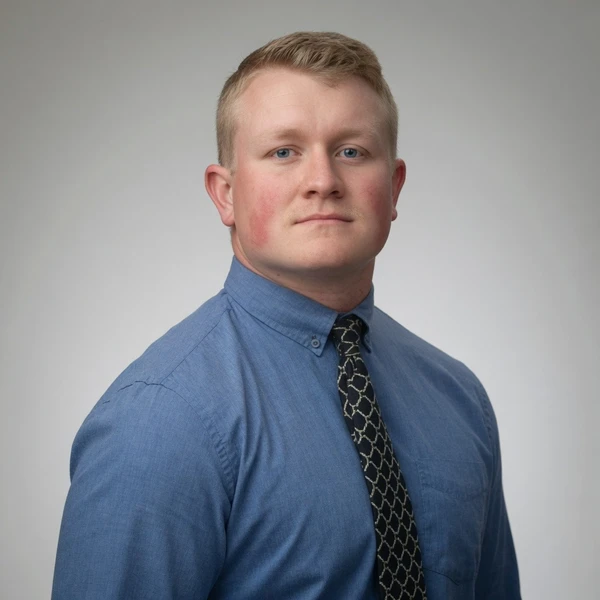
user profile avatar

Ethan Humphries

1x

Finalist

Bio

I am a Centre College graduate with a degree in Behavioral Neuroscience and a Master of Healthcare Administration from Liberty University. As a former Centre football team captain and Phi Delta Theta chapter president, I have developed a strong foundation in leadership, service, and accountability. I have worked in orthopedic patient care as a Durable Medical Equipment Coordinator and founded Sentri Biotech, where I am developing a patent-pending orthopedic rehabilitation monitoring device. I have been accepted to D’Youville University College of Osteopathic Medicine and plan to pursue a career as a physician focused on patient-centered care, healthcare innovation, and community impact.

Education

D'Youville College

Doctoral degree program (PhD, MD, JD, etc.)
2026 - 2030
  • Majors:
    • Medicine

Liberty University

Master's degree program
2024 - 2025
  • Majors:
    • Health and Medical Administrative Services

Centre College

Bachelor's degree program
2020 - 2024
  • Majors:
    • Neurobiology and Neurosciences

Miscellaneous

  • Desired degree level:

    Master's degree program

  • Graduate schools of interest:

  • Transfer schools of interest:

  • Majors of interest:

  • Not planning to go to medical school
  • Career

    • Dream career field:

      Medicine

    • Dream career goals:

      Attend D'Youville College of Medicine and become a Physician.

      Sports

      Football

      Varsity
      2020 – 20244 years
      Christian Fitness Association General Scholarship
      I believe I should be considered for this scholarship because my path has been shaped by perseverance, leadership, service, and a clear commitment to using my education to improve the lives of others. I have recently been accepted to D’Youville University College of Osteopathic Medicine, where I will begin training to become a physician. This opportunity represents years of growth, reflection, and preparation, and this scholarship would directly support my ability to pursue that calling with focus and purpose. Academically, my journey has not been perfect, but it has been deeply formative. I graduated from Centre College with a Bachelor of Science in Behavioral Neuroscience, a field that strengthened my interest in the relationship between the brain, behavior, health, and human experience. After undergrad, I completed a Master of Healthcare Administration through Liberty University, earning a high in an accelerated program. That experience was especially meaningful because it demonstrated the type of student I have become: disciplined, structured, and capable of performing at a high level when given a clear mission. It also gave me a broader understanding of healthcare systems, leadership, operations, and the way administrative decisions affect patient care. My professional experiences have further shaped my goals. I worked as a Durable Medical Equipment Coordinator in orthopedic medicine, where I helped patients with bracing, mobility support, documentation, insurance approvals, and recovery after injury or surgery. That role placed me directly between patient care and healthcare operations. I saw how medical decisions, insurance barriers, communication, and patient trust all influence outcomes. It taught me that healthcare is not only about treatment, but about advocacy, patience, and helping people navigate moments when they feel vulnerable or overwhelmed. In addition, I founded Sentri Biotech, where I have been developing a sensor-integrated orthopedic brace designed to monitor biomechanics and rehabilitation progress. This work led to a provisional patent filing and reflects my desire to combine medicine, innovation, and patient-centered problem solving. I do not want simply to enter healthcare; I want to help improve it. My long-term goal is to become a physician who combines clinical excellence with systems awareness and practical innovation to better serve patients. Extracurricular leadership has also been central to my development. At Centre College, I was elected captain of the football team, which taught me discipline, sacrifice, accountability, and how to lead through example. Athletics shaped my understanding of commitment and resilience in a way that still affects how I approach challenges today. I also served in several leadership roles within Phi Delta Theta, including Philanthropy Chair, Chaplain, and Chapter President. As Philanthropy Chair, I helped organize fundraising and service efforts supporting the LiveLikeLou Foundation and ALS research. As Chaplain, I helped lead brotherhood initiatives focused on mental health, wellbeing, and chapter values. As President, I led during a difficult period, helping guide the chapter through financial strain, organizational rebuilding, and cultural growth. During that time, our chapter earned Silver Star recognition and raised more than $20,000 for philanthropy in one year. I was also honored to be named Sophomore of the Year by Phi Delta Theta, receive the James D. Jobson Kentucky Alpha-Delta Award, and become an Iron Phi after raising more than $1,000 for ALS research and completing a physical endeavor through a backpacking trip in Red River Gorge. These recognitions matter to me not because of the titles, but because they represent service, perseverance, and accountability to something larger than myself. One of the greatest challenges I faced during school was learning how to succeed when life did not slow down for academics. My undergraduate years began during the COVID-19 pandemic, which created isolation, uncertainty, and disruption during a critical transition into college. At the same time, I was navigating personal learning challenges that I did not yet fully understand. Later, my family faced serious health crises, including my mother suffering a life-threatening horseback accident that required significant recovery and my father being diagnosed with kidney cancer. I was also pulled into helping with my family’s HVAC business during a time of financial uncertainty. At first, I did not have the structure, maturity, or academic systems needed to manage all of those responsibilities well. That was difficult to accept because I knew I was capable of more. The hardest part was recognizing that effort alone was not enough; I needed discipline, organization, and a better understanding of how I learned. Over time, I began to take ownership of that reality. I stopped waiting for circumstances to become easier and started building systems that would allow me to perform regardless of pressure. My graduate performance became proof of that growth. Completing an accelerated master’s program while continuing to pursue clinical and professional goals showed me that I had become a different kind of student. I learned to plan intentionally, study consistently, ask for help when needed, and approach challenges directly rather than avoiding them. That transformation has prepared me for the demands of medical school. This scholarship would support a student who has been tested, who has grown, and who is committed to using his education in service of others. My journey has taught me that leadership is not about being perfect; it is about taking responsibility, learning from adversity, and continuing forward with purpose. I am proud of where I am now, but I am even more focused on where I am going. As a future physician, I hope to serve patients with humility, competence, and compassion while continuing to build solutions that improve care for the communities around me.
      Ethel Hayes Destigmatization of Mental Health Scholarship
      Mental health has shaped my life in ways I did not always recognize in the moment. For much of my life, I understood strength through the lens of discipline, toughness, and responsibility. I grew up playing sports, eventually becoming a college football player and team captain, and in that environment, people often learn to measure strength by how much they can carry without showing it. I still value discipline and resilience deeply, but my experiences with mental health have taught me that strength is not only the ability to endure hardship. Sometimes strength is the willingness to speak honestly, to ask for help, and to notice when someone else may be carrying more than they can handle alone. This lesson has become even more real recently after losing someone close to us to suicide. That kind of loss leaves behind grief, confusion, and questions that do not have simple answers. It also forces you to confront how much pain people can hide. Someone can be loved, talented, surrounded by others, and still feel isolated in ways that are difficult to see from the outside. That realization has changed how I think about relationships. It has made me more aware that checking in on people cannot be superficial. Asking someone how they are doing only matters if we are willing to stay long enough to hear the real answer. Through this experience, I have learned that mental health is not separate from the rest of a person’s life. It affects how people see themselves, how they relate to others, how they make decisions, and how they move through the world. It is influenced by family, faith, trauma, stress, biology, environment, and the support systems available to a person. This has helped me understand people with more patience and humility. It has reminded me that everyone has a story beneath what is immediately visible, and that the most important wounds are not always the ones people openly show. My own leadership experiences have also shaped how I view mental health. As Chaplain of my Phi Delta Theta chapter, I organized brotherhood events centered on mental health, well-being, and peer support. At the time, I understood that young men needed spaces where they could talk honestly and be held accountable in a healthy way. Looking back now, I understand the importance of that work even more. Many men are taught to minimize pain, laugh things off, or wait until things become unbearable before reaching out. I believe part of leadership is helping create a culture where people do not have to perform strength at the expense of their own well-being. Mental health has also affected my goals in medicine. I have learned that treating a person well requires seeing the whole person, not just the symptom that brought them into the room. During my clinical experiences in orthopedic care, I saw how physical injury often carried emotional weight. Patients were not only dealing with pain or mobility limitations; they were also dealing with fear, frustration, uncertainty, financial stress, and changes in identity. A brace fitting or treatment plan could appear simple on paper, but the person sitting in front of me often had far more going on than the injury itself. Those experiences reinforced that healthcare must make room for both physical and emotional realities. As a future physician, I want to be someone who pays attention. I want patients to feel that they are worth my time, not rushed through a system or reduced to a diagnosis. Mental health has taught me that listening is not passive. It is an active choice to notice, to ask better questions, and to create enough trust that someone feels safe being honest. I know that I will not be able to solve every problem for every patient, but I can be the kind of physician who takes their concerns seriously and helps connect them with resources, support, and appropriate care. This experience has also reshaped how I approach my personal relationships. I want to be more intentional with the people I care about. I want to check in more directly, listen more carefully, and make sure the people around me know they are not burdens. Losing someone to suicide has shown me that love cannot remain assumed. It has to be expressed. Support cannot only exist in principle; it has to become action. My understanding of the world has changed because I now see more clearly how fragile people can be beneath the surface, and how much responsibility we have to one another. Mental health struggles are not signs of weakness. They are human realities that deserve compassion, attention, and care. This has made me more committed to building a life and career grounded in service, presence, and advocacy. Ultimately, my experiences with mental health have taught me that people need more than achievement, advice, or encouragement from a distance. They need connection. They need spaces where honesty is safe. They need others who are willing to notice when something is wrong and stay present through discomfort. These lessons will stay with me as a friend, leader, family member, and future physician. They have deepened my empathy, strengthened my sense of responsibility, and reminded me that caring for others begins with the willingness to truly see them.
      Sharra Rainbolt Memorial Scholarship
      My family was affected by cancer when my father was diagnosed with kidney cancer. The diagnosis came during a period when our family was already carrying significant responsibility, and it immediately changed the emotional atmosphere around us. Even though his treatment process moved quickly, the weight of hearing the word “cancer” was impossible to ignore. It introduced a type of uncertainty that my family had not fully experienced before. One moment life felt normal, and the next we were trying to understand scans, surgery, prognosis, recovery, and what the future might look like. What stood out most was how quickly cancer forces a family to confront vulnerability. My father has always been one of the strongest and most dependable people in my life. He is blue-collar, steady, and the type of person who takes pride in working hard and taking care of others. Seeing him become the patient was difficult because it challenged the role he had always held in our family. It reminded me that illness does not care how strong someone is, how hard they work, or how much others depend on them. Cancer can interrupt anyone’s life without warning. Through that experience, I learned the importance of presence. In moments like that, families do not only need medical information; they need steadiness, reassurance, and people who are willing to walk through uncertainty with them. I saw how much trust families place in physicians and healthcare teams during the most frightening moments of their lives. The technical aspects of care mattered deeply, but so did communication, clarity, and compassion. A physician’s ability to explain what is happening, answer questions honestly, and treat the patient as a whole person can profoundly shape how a family experiences illness. My father’s diagnosis also deepened my appreciation for early detection, access to quality care, and the emotional burden carried by patients and caregivers. Even when treatment is successful, cancer leaves an imprint. It changes how a family thinks about time, health, and responsibility. It made me more aware of how many families live with that uncertainty for far longer than we did, and how important it is to support cancer patients not only through treatment, but through recovery and life afterward. This experience strengthened my desire to pursue medicine. It showed me that being a physician is not simply about diagnosing disease or performing procedures. It is about entering people’s lives at moments when they are afraid and helping them find direction. My family’s experience with cancer taught me humility, gratitude, and the importance of compassionate care. It reminded me that every patient has a family, a story, and people depending on them. As I move toward medical school, I carry that lesson with me: medicine is at its best when it combines skill with presence, and treatment with humanity.
      Ethan Humphries Student Profile | Bold.org