user profile avatar

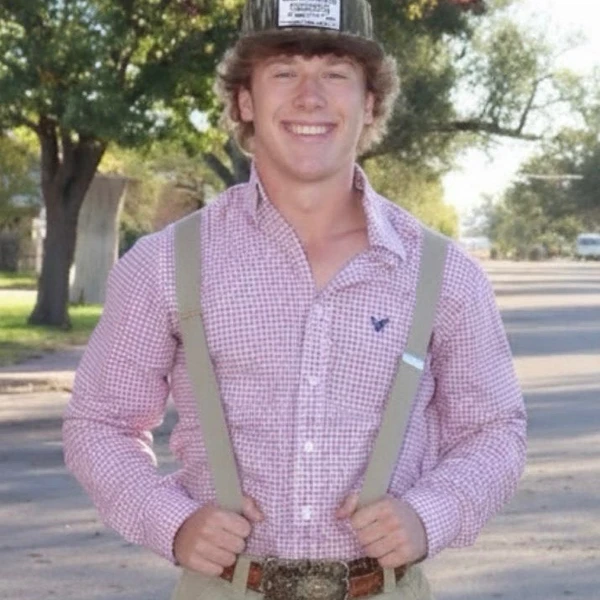
Ethan Durbin

1x

Finalist

Bio

I am seventeen years old, and my singular ambition is to become a professional welder. I intend to master every process—GTAW, GMAW, SMAW, blueprint reading, metallurgy—so thoroughly that an employer will sponsor my entire education and apprenticeship, leaving me debt-free. Upon certification, my first objective is to purchase a home of my own: a modest house with a workshop where I can continue to refine my craft. Once that foundation is secure, I plan to start a family, providing my future wife and children with the stability and opportunities that steady, skilled trade income can supply.

Education

Texhoma Hs

High School
2021 - 2026

Miscellaneous

  • Desired degree level:

    Trade School

  • Majors of interest:

    • Petroleum Engineering
  • Not planning to go to medical school
  • Career

    • Dream career field:

      Welding

    • Dream career goals:

    • Manager

      Cowhand
      2022 – 20264 years

    Sports

    Baseball

    Varsity
    2012 – 202614 years

    Awards

    • MVP
    • Pitcher of the year

    Research

    • Business, Management, Marketing, and Related Support Services, Other

      Shopify — Manage it
      2026 – Present

    Arts

    • Art

      Visual Arts
      No
      2026 – Present

    Public services

    • Volunteering

      Church — helper
      2025 – Present
    Uniball's Skilled Trades Scholarship
    What trade are you pursuing and why are you passionate about it? I’m enrolling in welding school this fall, but the spark hit me long before the paperwork. My first taste came helping a neighbor fix a cracked hay feeder in his barn. He handed me a hood, said, “Hold it steady, don’t look at the light,” and walked away. I struck that arc, watched the pool freeze into a silver ribbon, and felt something click—like the world had handed me a language I could speak with my hands. Since then I’ve burned maybe fifty rods on weekends: patched a rusted flatbed, rebuilt a smoker grill, even helped my cousin brace the frame on his mud truck. Every bead is ugly compared to what the pros lay down, but each one held, and that’s what hooked me. Welding doesn’t care where you went to high school or how polished your résumé sounds; it cares about steadiness, angle, and heart rate. I like that the metal tells the truth. When I finish the program I want to walk onto a job site with a hood under my arm and know my work will still be holding bridges, boilers, or somebody’s front gate together long after I’m gone. That kind of legacy feels reachable with a torch in my hand. What are your future plans after trade education? First goal is a union apprenticeship—steady paycheck, real benefits, and journeymen who won’t let me repeat the sloppy habits I’ve taught myself in the barn. I’ll bank every overtime hour, live on the cheap, and aim for a three-bedroom ranch on the edge of town: nothing fancy, just a roof that answers to my name on the deed. Once the mortgage is safer than the welds I lay, I’ll swap the overtime for Friday-night tee-ball games and Saturday morning pancakes. I want kids who know dad’s hands smell like metal and mom’s laughing because the porch light actually works—because I wired it, welded the bracket, and paid the bill without flinching. Long-term, I’d like to test for my CWI so I can teach night classes the way someone once taught me: hand a nervous kid a hood, say “Hold it steady,” and watch the arc light up a whole new path. Describe a time you overcame adversity. Two winters ago the plastics plant I’d swept floors at for four years shut down with zero notice—one Friday handshake, a severance check that barely covered January rent, and a pink slip that felt like a punch in the ribs. My truck’s transmission was slipping, my savings sat at $212, and the job listings all started with “experience required.” I could’ve spun in self-pity, but desperation is a heck of a motivator. I borrowed a 110-volt flux-core machine from a neighbor, dragged it into my unheated garage, and posted on Facebook: “Broken gates, cracked trailers, busted grills—I’ll weld it for gas money.” Phone buzzed all weekend. I worked in a parka, fingers so cold the rod felt like a Popsicle, laying beads that looked like chicken tracks—but they held. A local farmer paid me $150 to fix a corn wagon; I used the cash to buy thicker gloves and a better lens. Word spread, calls kept coming, and within six weeks I’d paid February rent, rebuilt the truck’s clutch with YouTube and stubbornness, and—more importantly—proved to myself that my hands could earn freedom. The anxiety didn’t vanish, but every bead became a tiny deposit against despair. That winter taught me that skill plus hustle beats luck every time, and it’s the reason I’m walking into welding school
    Lynn Welding Next Generation in Welding Scholarship
    The path that led me to welding started in the most ordinary place possible: my uncle’s backyard shed. I was twelve, handing him wrenches while he patched a cracked trailer frame. When he fired up the old buzz-box welder, the whole shed lit up like a miniature sun. I remember the hiss of the rod, the way the molten pool crawled across the rusted steel, and the smell of hot metal that stuck to my hoodie for days. More than the sparks, though, I noticed how calm he looked behind that mask—like the world’s noise couldn’t touch him. That moment lodged itself in my head and quietly steered every big decision that followed. School never felt like my game. I could sit through a lecture on polynomials or Shakespeare, but my mind was back in that shed wondering how thick the trailer tongue really was, or why the weld didn’t warp even though the metal got cherry-red. Freshman year I signed up for a vo-tech exploratory program. They let us rotate through carpentry, auto tech, and finally welding. The first time I struck an arc on my own, the instructor nodded and said, “You’ve got steady hands, kid.” I’d never been told I was naturally good at anything academic, so that sentence hit harder than any report-card A. From that day on, I spent lunches in the weld booth, laying bead after bead until my gloves turned stiff with splatter. Each pass felt like a conversation between me and the steel: I give you heat, you give me strength. It was the first honest trade-off I’d ever experienced. What cemented welding as a career choice was watching the news during junior year. A bridge in a neighboring county closed because a support girder cracked; commuters were stuck driving an extra forty-five minutes each morning. The reporter interviewed a state inspector who said, “We simply don’t have enough certified welders to keep up with maintenance.” Right there I realized this skill isn’t just art or hobby—it’s infrastructure. It’s the invisible glue holding together the world we take for granted. Every skyscraper, wind-turbine, farm tractor, and hospital oxygen line depends on someone willing to crawl into tight spaces and fuse metal so the rest of us can move, eat, heal, and breathe safely. Today, welding plays an outsized role in society because everything “future-proof” still starts with molten joints. Solar arrays need trackers welded to survive hailstorms; electric-car plants need robotic weld cells maintained by humans who understand both code and puddle behavior; even SpaceX rocket bodies are spun from welded stainless-steel rings. Climate change demands stronger levees, taller sea-walls, and retrofitted buildings—jobs that create immediate work for welders. Meanwhile, the average age of a certified pipe welder keeps climbing past fifty. The industry isn’t disappearing; it’s starving for younger hands that can pass a bend test and read a WPS without squinting. Choosing welding feels less like picking a job and more like answering a nationwide SOS. On a personal level, the craft satisfies two cravings I can’t shake: the need to see tangible results and the desire to stay mobile. I don’t want to spend decades pushing paper under fluorescent lights; I want to finish a shift, look up at a beam I joined, and know it will outlive me. Welding also travels. Whether it’s a shutdown at a Gulf Coast refinery, a new semiconductor plant in Arizona, or a pipeline in North Dakota, the work follows national priorities. That means I can choose a region where housing costs line up with my goals, put down roots, and still
    Russell Koci Skilled Trade Scholarship
    I’m on my way to becoming a welder because metal makes sense when nothing else does. Steel doesn’t care if you’re tired, broke, or had a rough day; it only cares that you show up, set the heat right, and move your hands steady. I chose welding because it’s the perfect mix of science, sweat, and instant payoff—strike the arc, fill the joint, and you can actually see the strength you just created. The first time I watched two plates fuse into one solid piece I thought, “If I can control fire and make it stick things together forever, maybe I can stick my own life together too.” That feeling hasn’t left me. I planned a career in welding for three reasons: demand, mobility, and freedom. Every town I’ve ever driven through has a factory, a shipyard, a farm, or a pipeline that needs welded. That means I can live where I want, not where the office towers are. It also means I’m not staring at a screen eight hours a day; I’m breathing sparks, solving problems, and using my body. I like finishing a shift with dirty boots and a clear head, knowing the beam I welded today will hold up a hospital, a bridge, or somebody’s kid on a roller-coaster. Work feels honest when you can point to it twenty years later and say, “I did that.” I’ll be successful because I’m stubborn about details. I’ll grind a bevel three times until the fit-up is money, and I’ll run a root pass as slow as it takes to keep it sterile. I actually enjoy the repetition—every electrode is a fresh chance to beat my last bead. I’m also not too proud to ask the old-timers why my puddle looked like Swiss cheese; I treat every critique like free tuition. Add the math classes I’m taking at night so I can read blueprints without guessing, and I’ve got a recipe for a kid who won’t stay at the bottom of the pay scale very long. To me, a successful life is waking up without an alarm because I’m excited to get to the shop, coming home to my own roof, and grilling burgers while my future kids chase the dog in a backyard I paid off early. It’s having enough left over to help a buddy fix his truck and still tuck something away for Mom’s birthday. I’ll be successful because the trade rewards exactly what I’m willing to give: consistency, pride, and the guts to flip that hood down one more time when the day is hot and the steel is thick.
    Judah Spinner Scholarship
    The first time I flipped my hood down and struck an arc, the bright blue flash felt like lightning I could control. That's the moment I knew trade school was for more. I'm not into lectures or sitting still, so the idea of learning with my hands, getting dirty, and actually building something I can stand back and look at is a way more exciting than any classroom. I'm pursuing welding because its honest work metal doesn't lie and if you do it right it lasts forever. After I graduate I want to get hired fast, even if its grinding down metal or sweeping at first I just want to be around people who know more than me, soak it all up, and earn my spot once I've got steady hours and a decent paycheck, I'm saving for a house not anything fancy just a place with a little yard and a garage where I can work on my own stuff eventually I want to come home to someone who's proud of what I do, maybe raise couple of kids who'll grow up knowing what real work looks like. Trade school feels like the first real step towards all of that, and I'm ready to get started.