Hobbies and interests
Ice Hockey
Community Service And Volunteering
Astronomy
Biology
Dance
Medicine
Reading
Romance
Science Fiction
Fantasy
Humanities
Health
I read books daily
Estrella Mercado-Jaimes
1x
Finalist
Estrella Mercado-Jaimes
1x
FinalistBio
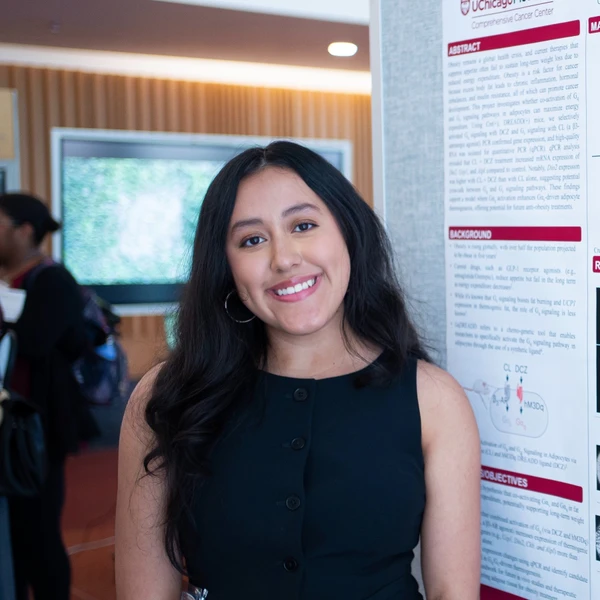
I am a first-generation, low-income student raised in a close-knit Hispanic community, where my early experiences shaped my commitment to education, advocacy, and healthcare equity. Growing up in a family that faced systemic barriers to medical care inspired my interest in public health and medicine, and motivated me to seek opportunities that would allow me to better understand both the science and the human impact of health disparities.
I am on the pre-med track with a strong passion for chemistry and biomedical research. I have participated in cancer research, metabolic research, and pipeline programs designed to support students from underrepresented backgrounds in STEM. Through laboratory work and volunteer experiences, I have developed a deep appreciation for how scientific discovery connects to patient care and community health.
I hope to become a physician who not only treats disease, but also advocates for families like my own by addressing inequities in the healthcare system. My goal is to bridge research, public health, and clinical practice to help create a more just and accessible healthcare system.
Education
J Sterling Morton East High Sch
High SchoolMiscellaneous
Desired degree level:
Doctoral degree program (PhD, MD, JD, etc.)
Majors of interest:
- Biological and Biomedical Sciences, Other
- Biochemistry, Biophysics and Molecular Biology
Career
Dream career field:
Hospital & Health Care
Dream career goals:
Paid Intern
University of Chicago2025 – Present1 year
Sports
Ice Hockey
Club2015 – 202510 years
Research
Biochemistry, Biophysics and Molecular Biology
University of Chicago — Intern2025 – Present
Public services
Volunteering
Morton East — Student Volunteer2023 – Present
Richard Neumann Scholarship
One problem I have noticed in my own life and in my lab work is how difficult it is to track subtle, real-time changes in metabolism and energy use in humans and animals. Most current methods rely on indirect measurements, such as blood tests or calorimetry, which are often slow, expensive, or invasive. These limitations make it hard to understand the immediate effects of diet, exercise, or other interventions. If I had the money and resources, I would create a wearable metabolic tracker that combines miniaturized sensors, biochemistry, and artificial intelligence to monitor how the body burns fat and carbohydrates throughout the day without interfering with daily life.
The device would be compact and non-invasive, similar to a smartwatch, but far more advanced. Instead of simply tracking steps, heart rate, or calories, it would measure biomarkers in sweat or interstitial fluid that correlate with energy expenditure, hormone fluctuations, and thermogenesis. By analyzing molecules like glucose, lactate, and fatty acids in real time, the tracker could provide a precise picture of how the body is using energy in response to different activities or foods. AI algorithms would model a person’s metabolism over time, learning from individual patterns to make personalized recommendations. The system would predict how specific meals, workouts, or environmental conditions affect energy balance and suggest optimized routines to improve health, performance, and overall well-being.
I would begin by designing highly sensitive sensors capable of detecting these molecules accurately. Next, I would integrate the sensors with machine learning models trained on large datasets of metabolic responses from diverse populations. Finally, I would develop a user-friendly app that turns the complex biochemical data into clear and actionable insights. The app could visualize energy usage throughout the day, show how different choices impact metabolism, and allow users to experiment with interventions in a safe, evidence-based way.
This invention could solve problems for a wide range of people. Athletes could optimize their training and recovery. People trying to improve their health could understand their metabolism on a deeper level. Researchers like me could gain access to real-time data that would make studies on thermogenesis and adipose tissue more precise and meaningful. For me personally, this device would allow a detailed understanding of how lifestyle choices and experimental interventions affect energy use, making it easier to connect molecular mechanisms in the lab to practical outcomes in the real world. Developing it would combine my curiosity about chemistry, biology, and technology in a way that solves a problem I care about deeply.