user profile avatar

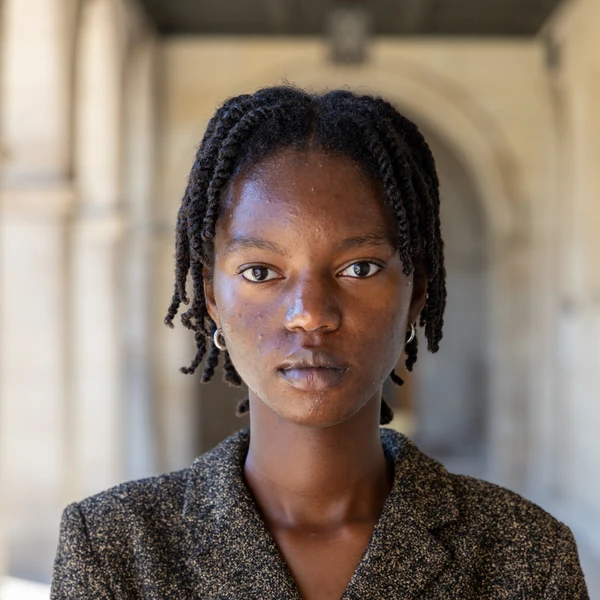
Esperance Bukenya

1x

Finalist

1x

Winner

Bio

My life goal is to become a physician-scientist, working with a team to prioritize excellent patient care in the hospital as well as conducting research to better understand pathologies of the brain. I am also interested in cancer research. I am the right candidate for this scholarship, because I am passionate about medicine and delivering on the core competencies of healthcare.

Education

Washington University in St Louis

Bachelor's degree program
2025 - 2029
  • Majors:
    • Neurobiology and Neurosciences
  • Minors:
    • Chemistry
    • Drama/Theatre Arts and Stagecraft

Miscellaneous

  • Desired degree level:

    Doctoral degree program (PhD, MD, JD, etc.)

  • Graduate schools of interest:

  • Transfer schools of interest:

  • Majors of interest:

    • Biological and Biomedical Sciences, Other
  • Planning to go to medical school
  • Career

    • Dream career field:

      Medicine

    • Dream career goals:

    • Undergraduate Research Assistant (Summer Position)

      WashU
      2026 – 2026
    • Undergraduate Research Assistant

      WashU
      2026 – Present7 months
    • Theatre Team Member

      Cinemark
      2025 – 2025
    • Customer Sales Associate

      Dollar Tree
      2024 – 20251 year

    Research

    • Research and Experimental Psychology

      WashU — Undergraduate Research Assistant
      2026 – Present

    Arts

    • WashU

      Animation
      2026 – Present

    Public services

    • Volunteering

      Solace Hospice — Providing companionship to terminally ill patients
      2026 – Present
    • Volunteering

      Deer Park High School- South — Library Assistant
      2023 – 2025

    Future Interests

    Advocacy

    Volunteering

    Philanthropy

    Learner Calculus Scholarship
    Do not drink and derive. That is the last thing my high school calculus teacher taught me and tried to get on our senior class t-shirts much to the dismay of our small-town Texas school board. Our teacher acquiesced, but fortunately, our shirts still met at a humorous middle ground: "Calculus is sec(c))" in a cursive red font against a black solid t-shirt. Soon, I start my sophomore year of college and looking back on the time I spent in that classroom, I feel a newfound sense of appreciation for the class, the content, and the insane lengths our teacher went to make sure we learned calculus (which involved a whole lot of character work, surprisingly). Calculus aids in the understanding of some of the data encountered in research and pushes your academic capacity. Calculus is especially relevant in research analysis. Recently, in my summer internship at WashU Med, I presented a paper in journal club about vagal nerve stimulation (VNS), a treatment used to treat chronic migraines and refractory, or treatment-resistant, epilepsy. One of the numerous experiments in this paper (Tang et. al (2026) for the curious) found that VNS decreased the response of pain-related neurons when experiencing pain. In order to interpret VNS's regulatory role in pain regulation, one had to be able to interpret the AUC, or area under curve, graphs that integrated neural response curves, highlighting the difference between the neural response when pinched vs when pinched and experiencing VNS, the pain-regulating treatment. Understanding statistics in research has been constantly stressed but seeing the integration and AUC graphs used throughout this article showed me just how relevant the truism 'Math is the language of science.' Calculus is the study of how things change. In the neuroscience field, we often study neural systems governed by neurotransmitters, or chemical messengers, and how these systems transform and develop across time. Calculus is an essential tool in modeling the changes we see in the brain due to age, stress, and other environmental factors. What a gift it is to be given the language to the dynamic state of universe in and around us! On the subject of change, calculus induced severe academic growing pains within me. I thought I had developed a pretty solid study routine for other classes before I took AP Calculus, but I quickly realized calculus, as with any new subject material, requires constant practice in order to achieve content mastery. Luckily, my teacher, Mr. Mckee brought an unparalleled enthusiasm to his role as a math educator. In order to provide his students a good mnemonic to remember second derivatives' relation to concavity, 'Concave-man' subbed for Mr. McKee for a week. "Concave down, maximum,' Concave-man grunted while tapping the top of his head with his club. I watched on in awe. "Concave up, minimum," he continued, grunting while pointing to the floor. McKee had many a creative substitute on stand-by to teach us the principles of calculus. His various 'substitutes' as well as genuine encouragement and want for us to succeed have truly made me believe that I am both capable of conquering demanding coursework and a career in neuroscience research. I still murmur the concavity mnemonic to myself not because I need it but because it reminds me of the class that taught me that I am capable of anything (and because sometimes I forget, kind of like reciting the months to yourself when you encounter numbered dates). Calculus both describes and elicits change in and around you. It is a tool for communication and reflection. Remember: drinking and deriving costs you math problems.
    WCEJ Thornton Foundation Low-Income Scholarship
    When I was thirteen, my mother died of breast cancer. Her death shaped much of my adolescence as I had to deal with the grief of losing the only parent in my life as well as teh grief of totally losing financial stability. What followed was a childhood defined by instability: my auntie became my guardian, who loved me unconditionally but carried her own health burdens, and we lived paycheck to paycheck on my mother's survivor benefit. I learned early what it means when the system fails you. Once, when my aunt had a serious health episode, we did not call an ambulance. We had called one before. The bill made that impossible to do again. Not calling the ambulance in the event of a serious health emergency is not at all a unique experience of mine, it is an American one. I am pursuing a multidisciplinary path in philosophy, neuroscience, and psychology because I believe that fixing health inequity requires more than clinical skill. Understanding health inequity requires understanding how people think, how systems are built, and how power determines who receives care and who goes without. I want to be part of the research that reframes those questions — work that does not just treat disease but dismantles the conditions that make disease so much more deadly for people who look like my family. Higher education is not an abstraction for me. It is the direct path between where I come from and the researcher I am working to become. This scholarship would allow me to purchase required course materials and enroll in summer classes, so I can deepen my academic foundation and to strengthen my GPA for medical school. My GPA did not start where I wanted it to. That is partly the honest cost of being a first-generation student navigating college without a financial safety net. I worked as a sales associate at Dollar Tree and a team member at Cinemark during my senior year of high school, but the savings from those jobs were not sufficient to cover the costs of living in college. Though, these jobs did not relieve the financial burden of paying for college, they taught me reliability, customer service under pressure, and the dignity of showing up. I hope by taking these extra classes I can learn what med school and truly adult life is like in general, balancing education with a multitude of other responsibilities. The impact I hope to create is not distant or theoretical. I want to contribute to research on health access and disease outcomes with the lived understanding that statistics are people. Behind every data point on delayed care or untreated illness is a family doing the math at a kitchen table, deciding what they can and cannot afford. I carry my mother with me into every class I take. I carry my aunt too. This scholarship would help me carry them further. By applying for this scholarship, I am asking for the chance to prove that where you start does not determine where you land, and that the students who have seen the system fail up close are often the ones most driven to change it.