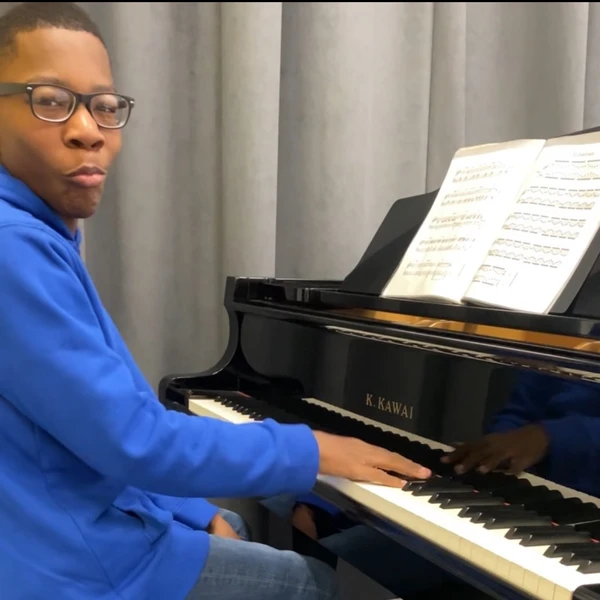
Music is far more than just entertainment—it is a critical tool for survival, identity, and growth.
During the high school years, music typically serves three fundamental roles: it acts as an emotional regulator during high-stress periods, a social currency that helps define peer groups, and a cognitive booster that supports academic performance.
High school is often a time of intense emotional volatility. Research shows that teens listen to music for an average of ~4 hours a day, often using it to "modulate" their mood. Upbeat tracks are used to energize before social events, while sad or aggressive music can provide a safe outlet for catharsis during difficult times. Biologically, listening to music has been proven to lower cortisol (stress hormone) levels, acting as a natural anxiety reducer.
The Badge of Identity: Musical preference is one of the first ways teens assert independence from their parents. Wearing a band/rap artist t-shirt or sharing a specific playlist signals "this is who I am" to the world.
Finding "Your People": Music creates subcultures (e.g., school bands, theater kids, metalheads, K-pop stans, rap stars, beat makers) that provide a sense of belonging. Joining a choir or band fosters deep social bonds through shared goals and discipline.
Social Signaling: Using headphones in public spaces (like the school hallway) is a universally understood signal for "I need space," allowing students to manage social battery and privacy.
Contrary to the idea that music is a distraction, active engagement in music education is strongly correlated with academic success. Students involved in music programs consistently outperform their peers in standardized testing and graduation rates.
SAT Impact: Music students score an average of 107 points higher on the SAT than non-music students.
Graduation Rate: 90.2% in schools with music programs vs. 72.9% in those without.
Cognitive Skills: Playing an instrument improves working memory and spatial-temporal skills, which directly aids in math and science comprehension.
For high school students, music is not just a background soundtrack—it is a neurological and social survival mechanism.
During these formative years, music acts as a primary tool for emotional regulation (lowering cortisol levels), a cognitive accelerator (boosting executive function), and a social beacon that defines peer groups. It physically alters the developing brain, creating stronger connections between the hemispheres.
Contrary to the stereotype of the distracted teen, engagement with music—especially playing an instrument—is one of the most reliable predictors of academic success. Research indicates that highly engaged music students are effectively one academic year ahead of their peers in math, science, and English.
-Morning
Mood Modulation: Students often use high-energy tracks to wake up and establish a positive baseline for the day, actively managing their dopamine levels before entering the school environment.
-School Day
The Privacy Shield: In crowded hallways or cafeterias, headphones serve as a "Do Not Disturb" sign. This creates a personal micro-environment, allowing introverted students to recharge their social battery amidst chaos.
-Evening
Emotional Processing: Sad or aggressive music allows for "safe" catharsis. By listening to lyrics that mirror their struggles, teens validate their emotions, which lowers cortisol (stress hormone) levels and aids sleep.
Music is the primary "badge" teenagers use to signal who they are to the world. Shared musical tastes form the foundation of peer groups (the "subcultures"), providing a crucial sense of belonging during a time of identity formation.