Hobbies and interests
Culinary Arts
Music Composition
Music Production
Saxophone
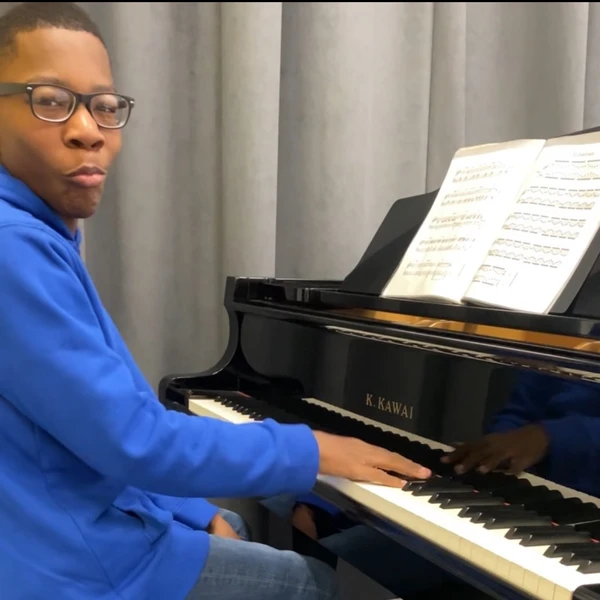
Piano
Reading
Music
Adventure
Humor
I read books multiple times per week
Eric Dalcour
1x
FinalistEric Dalcour
1x
FinalistBio
My primary life goal is to leverage my education to drive meaningful social impact. I am deeply passionate about the intersection of technology and equitable access, aspiring to develop educational resources that are universally accessible. My academic journey is a commitment to acquiring the skills necessary to build these platforms, ensuring that geography or economic status do not present barriers to quality learning.
In addition to my academic pursuits, music is a vital component of my identity and a key future commitment. It is more than a hobby; it is my primary medium for community engagement and a tool for fostering connection and understanding. Through performance and composition, I aim to create spaces for dialogue and shared human experience, using art to bridge divides that other areas cannot.
I am a great candidate for a scholarship because I embody a synthesis of analytical rigor and creative expression, all underpinned by a steadfast commitment to serving my community. My future commitments are not just personal ambitions; they are a blueprint for a life dedicated to positive, tangible change. A scholarship would be an investment in a vision that extends far beyond a single degree, powering a future where education and art work in concert to build a more connected and equitable world.
Education
Kashmere H S
High SchoolMiscellaneous
Desired degree level:
Bachelor's degree program
Majors of interest:
- Business, Management, Marketing, and Related Support Services, Other
- Audiovisual Communications Technologies/Technicians
- Music
- Architecture and Related Services, Other
Career
Dream career field:
Music
Dream career goals:
Scorenavigator Financial Literacy Scholarship
Growing up in a low-income home, my personal experience with finances was not defined by having a bank account or discussing investment portfolios, but rather by the tangible, daily realities of scarcity. Financial education was not taught in a classroom; it was learned through observation, necessity, and the anxious atmosphere that surrounded money.
Experiences with Finances in a Low-Income Home
In my household, money was associated with stress and limitations rather than freedom or growth. I grew up witnessing a "paycheck-to-paycheck" existence, where financial insecurity was a constant shadow. This environment meant that financial planning was limited to immediate, short-term needs—paying rent and buying food were the only priorities. I learned that money was something that disappeared quickly and rarely returned.
As a result, I developed a "scarcity mindset" early on, where I often felt inferior to peers who seemed to have abundance. I watched my parents struggle with financial decisions, sometimes relying on expensive alternative financial services rather than traditional banking. This taught me that lack of financial knowledge can make it harder to escape poverty. However, this experience was not entirely negative. The scarcity forced creativity, teaching me how to "do without" and fostering resilience—I learned how to make the most of what I did have, which is a valuable skill, but I also learned that I never wanted to live under such constant stress again.
Financial education was absent from my childhood. I did not learn about interest rates, credit scores, or the power of compounding interest until I was 17. My mother started to become very serious about finances and our future when she realized just how much covering her MBA and my upcoming degree would be. My mother vowed to be better for the both of us. The lack of financial literacy in my upbringing meant I had to "unlearn" habits of avoidant behavior—not looking at bank statements or ignoring debt because I was too overwhelmed. I realized that for many from low-income backgrounds, financial literacy is a barrier that keeps them and us from prospering.
Now that I have acquired financial education, I plan to turn those early lessons of scarcity into a life of stability and security. My plan involves several actionable steps:
Building an Emergency Fund: I will prioritize saving three to six months of living expenses to ensure that unexpected expenses do not force me back into a debt-driven cycle.
Active Budgeting and Tracking: I will move from a mindset of fear to one of engagement by using budgeting tools to track every dollar, ensuring I know exactly where my money is going.
Avoiding High-Interest Debt: Recognizing that predatory debt can destroy wealth, I plan to tackle any high-interest debt first.
Long-Term Investing: I will change the pattern of living only for today by starting to invest early, taking advantage of compounding interest, and ensuring I do not "raid" my future savings.
Educating Others: I want to break the cycle of generational poverty by passing this knowledge on to others in my community, showing that financial stability is possible even if one starts with nothing.
Growing up poor has taught me how to be resilient, but financial education has taught me how to be free. I will use this knowledge to ensure my future is built on a foundation of security, allowing me to move from a state of constant survival to one of long-term prosperity. I’m thankful my mother wasn’t like other low income families to drag my name and social through debt. She’s actually built me up and I just need to maintain it.
Nick Lindblad Memorial Scholarship
Music is far more than just entertainment—it is a critical tool for survival, identity, and growth.
During the high school years, music typically serves three fundamental roles: it acts as an emotional regulator during high-stress periods, a social currency that helps define peer groups, and a cognitive booster that supports academic performance.
High school is often a time of intense emotional volatility. Research shows that teens listen to music for an average of ~4 hours a day, often using it to "modulate" their mood. Upbeat tracks are used to energize before social events, while sad or aggressive music can provide a safe outlet for catharsis during difficult times. Biologically, listening to music has been proven to lower cortisol (stress hormone) levels, acting as a natural anxiety reducer.
The Badge of Identity: Musical preference is one of the first ways teens assert independence from their parents. Wearing a band/rap artist t-shirt or sharing a specific playlist signals "this is who I am" to the world.
Finding "Your People": Music creates subcultures (e.g., school bands, theater kids, metalheads, K-pop stans, rap stars, beat makers) that provide a sense of belonging. Joining a choir or band fosters deep social bonds through shared goals and discipline.
Social Signaling: Using headphones in public spaces (like the school hallway) is a universally understood signal for "I need space," allowing students to manage social battery and privacy.
Contrary to the idea that music is a distraction, active engagement in music education is strongly correlated with academic success. Students involved in music programs consistently outperform their peers in standardized testing and graduation rates.
SAT Impact: Music students score an average of 107 points higher on the SAT than non-music students.
Graduation Rate: 90.2% in schools with music programs vs. 72.9% in those without.
Cognitive Skills: Playing an instrument improves working memory and spatial-temporal skills, which directly aids in math and science comprehension.
For high school students, music is not just a background soundtrack—it is a neurological and social survival mechanism.
During these formative years, music acts as a primary tool for emotional regulation (lowering cortisol levels), a cognitive accelerator (boosting executive function), and a social beacon that defines peer groups. It physically alters the developing brain, creating stronger connections between the hemispheres.
Contrary to the stereotype of the distracted teen, engagement with music—especially playing an instrument—is one of the most reliable predictors of academic success. Research indicates that highly engaged music students are effectively one academic year ahead of their peers in math, science, and English.
-Morning
Mood Modulation: Students often use high-energy tracks to wake up and establish a positive baseline for the day, actively managing their dopamine levels before entering the school environment.
-School Day
The Privacy Shield: In crowded hallways or cafeterias, headphones serve as a "Do Not Disturb" sign. This creates a personal micro-environment, allowing introverted students to recharge their social battery amidst chaos.
-Evening
Emotional Processing: Sad or aggressive music allows for "safe" catharsis. By listening to lyrics that mirror their struggles, teens validate their emotions, which lowers cortisol (stress hormone) levels and aids sleep.
Music is the primary "badge" teenagers use to signal who they are to the world. Shared musical tastes form the foundation of peer groups (the "subcultures"), providing a crucial sense of belonging during a time of identity formation.
Rev. and Mrs. E B Dunbar Scholarship
In pursuit of a higher education in music, I have navigated several formidable obstacles that tested my resolve and commitment to my art. These challenges were not merely academic; they were financial, personal, and systemic, mirroring the struggles many aspiring artists face today.
One of the most significant hurdles was the sheer cost of education. Pursuing music at a high level requires not only tuition but also quality instruments, private lessons, sheet music, and travel for auditions and performances. Juggling multiple part-time performance jobs at churches while maintaining the rigorous practice schedule required of a serious music student led to severe burnout and financial stress. There were moments when I feared the pursuit of my passion was a luxury I could not afford. Overcoming this meant becoming a resourceful advocate for myself, diligently applying for every scholarship and grant opportunity and learning to manage a demanding schedule with intense discipline.
Beyond finances, I faced the subtle but pervasive challenge of skepticism. The arts are often undervalued in society, and I encountered well-meaning individuals who questioned the practicality and viability of a music degree. This external doubt sometimes fueled internal insecurities about whether my chosen path was "enough." I had to develop a strong sense of self-belief and a clear vision for my future, understanding that music is not just entertainment but a vital form of communication, history, and community building.
Finally, the transition to a highly competitive conservatory environment was an obstacle in itself. The pressure to achieve technical perfection while finding one's unique artistic voice can be overwhelming. I struggled initially with performance anxiety and comparison culture. Learning to overcome this involved shifting my focus from a fear of failure to a joy in the process of learning and collaboration, embracing vulnerability as a strength rather than a weakness.
Having overcome these hurdles, I am keenly aware of the power of education and the need for greater accessibility and support within the arts. My higher education has equipped me with the skills not just to perform, but to teach, advocate, and organize.
In the future, I plan to use my education to give back to my community by creating accessible, low-cost music education programs for underserved youth. I want to pay forward the mentorship I received, providing a safe space where young people can explore music without the barriers of high costs or societal skepticism. I envision developing community music initiatives, perhaps a non-profit organization or a series of workshops, that reach into local schools and community centers.
Furthermore, I will use my performance skills to bring music to people who might not otherwise experience live classical or contemporary music, such as the elderly in nursing homes or those in hospitals. By sharing music as an act of service, I hope to demonstrate its intrinsic value, foster empathy, and enrich the cultural landscape of my community, ensuring that the transformative power of music education is available to everyone, regardless of their background or financial situation.
Raise Me Up to DO GOOD Scholarship
The unique experience of being an only child raised by a single mother forged a specific worldview centered on deep interdependence, self-reliance, and a profound appreciation for connection. This dynamic meant my mother and I were not just parent and child; we were a unit, a compact team navigating life’s complexities with limited external support. Her sacrifices were magnified in my eyes because I was the sole focus of her efforts, instilling in me an immense sense of gratitude and responsibility that continues to shape my identity and future aspirations.
Being an only child in a single-parent household meant quiet evenings and intense focus. There were no siblings to buffer interactions or share the workload, leading me to develop a keen sense of observation and introspection. I became highly independent early on, learning to entertain myself, manage responsibilities, and sometimes act as a confidant for my mother when she needed support. This upbringing fostered resilience and adaptability, teaching me how to be comfortable in solitude while also deeply valuing meaningful, authentic relationships. I realized that stability isn't just financial; it's also about emotional presence and the strength of the bonds we forge.
These foundational experiences have intrinsically guided my future goals toward a purpose-driven life. While my career path remains open, the core mission is clear: to leverage my talents to foster community and provide emotional support systems for others, especially those who may feel isolated or unheard, mirroring the connection I shared with my mother.
My primary talent, discovered during those quiet moments at home, is music. It was our shared language and sanctuary. The piano became my outlet, a way to process the weight of responsibility and the quiet anxieties that come with growing up in such a unique family structure. Music bridged the silence of our home and offered an emotional depth that words sometimes could not reach.
In my future, I envision using this musical talent not just for personal expression, but as a powerful tool for social good. I aim to create programs that utilize music therapy and education to reach isolated individuals, be they inner-city youth struggling with limited resources or the elderly in care facilities who long for connection.
I see myself establishing non-profit initiatives that offer accessible music education in underserved communities, providing instruments and mentorship to only children or those in single-parent homes who, like me, need an outlet for their creativity and emotion. This work would not just teach scales and chords; it would build confidence, discipline, and a sense of belonging.
Beyond education, I hope to compose music that champions empathy and highlights the importance of human connection. I can picture organizing community music events and workshops designed to bring diverse groups of people together, using collaborative music-making to break down social barriers.
My upbringing as an only child taught me the profound impact one meaningful relationship can have. My future goal is to translate that lesson into action, using the universal language of music to help people feel less alone, foster strong community bonds, and honor the strength my single mother showed me every day.
Joieful Connections Scholarship
The journey toward higher education with ADHD has been a complex but transformative path, shaped by unique experiences, significant challenges, and hard-won accomplishments. These elements have collectively forged a resilience and a set of adaptive skills that I believe have prepared me well for the rigors of a music degree.
Living with ADHD often means experiencing the world at a different frequency. My experiences have been a continuous process of learning how to channel intense focus into specific areas while managing the peripheral noise. In high school, this translated into developing highly personalized learning strategies. I learned to break down daunting musical theory assignments into smaller, manageable chunks and to utilize sensory tools, like fidgets or specific background music, to anchor my attention during long practice sessions. These experiences taught me that my learning style is not a deficit, but a difference, requiring creative and intentional approaches to engagement and mastery.
The central challenge has been consistency and executive function. The structure required for musical discipline—daily, repetitive practice of scales, arpeggios, and repertoire—initially clashed head-on with my need for novelty and struggle with routine. There were countless days of frustration, where an hour of practice felt like an insurmountable mental hurdle. The accomplishment wasn't a sudden fix, but the slow realization that I could build structure tailored to my needs. I began using visual timers, scheduling practice in 25-minute "sprints" with short breaks, and tracking progress with tangible charts. Overcoming these challenges has instilled an immense sense of self-awareness and an ability to self-advocate, skills I know will be crucial in a demanding university environment.
I plan to major in music because it is more than just a subject; it is the organizational framework for my creativity and the most profound way I connect with the world. Music demands presence. When I am performing or composing, my ADHD brain's tendency to wander is harnessed into a singular, focused pursuit. The complexity of a symphony or the precision required in a jazz improvisation provides an optimal environment where my cognitive style thrives under pressure.
The field of music is fundamentally important to me because of its unique ability to transcend verbal communication and foster human connection. It is a universal language that can express the inexpressible and unite disparate communities. In a world often characterized by division and isolation, music offers a powerful antidote, a shared space for empathy and understanding.
Through my higher education and subsequent career, I hope to make an impact by utilizing music as a therapeutic and community-building tool. I envision establishing outreach programs or working within community music therapy settings to bring the transformative power of musical expression to underserved populations, including neurodivergent individuals and at-risk youth. I want to demonstrate that music education and engagement can build essential life skills—discipline, collaboration, emotional regulation, and self-esteem. My personal journey with ADHD has shown me the profound impact that a structured, passionate pursuit can have on one's life, and I am committed to sharing that gift, using the skills developed from my own challenges to help others find their voice and their focus in the world.
Richard W. Vandament Music Scholarship
My academic goals are ambitious. The pursuit of a music degree represents the formalization of my deepest passions and the strategic alignment of my academic and career aspirations. I intend to immerse myself in the rigorous study of music theory, composition, and ethnomusicology. My intention is to utilize my music education to become an innovative music producer, blending performance skills with latest technology and urban sound to help bring songs to life. While performance on my primary instrument, the piano, will be central to my studies, I am equally drawn to the intellectual pursuit of understanding how music functions as a cultural artifact and a historical record. I plan to delve into research on community music therapy and the neuroscience of musical engagement, aiming to publish research that validates the essential role of arts education in cognitive development and emotional well-being.
Music has fundamentally shaped who I am and what I aspire to be. It began as a coping mechanism when I was younger due to multiple hospitalizations but quickly evolved into a framework for understanding discipline, emotional intelligence, and collaborative effort. The complex interplay of harmony and rhythm taught me problem-solving; learning to perform taught me resilience. This journey solidified my academic goal: to deeply study the impact that sound and rhythm has on the mind, body, and soul.
My passion for music stems from its unique ability to capture the ineffable aspects of the human condition—joy, sorrow, triumph, and reflection—and transform them into a shared, immediate experience. I am passionate about music because it is a universal anchor in a turbulent world. It offers solace and structure, and I believe profoundly that sharing this gift is the highest calling I can answer.
My career goal is not merely to perform, but to create. I am passionate about music because I have witnessed its transformative power—how a simple melody can bridge communication gaps where words fail. This passion fuels my desire to contribute meaningfully to life.
To achieve these goals, I will be attending a 4-year university pursuing a Bachelor of Music in the fall of 2026, where I have been accepted into multiple prestigious institutions but have not made a final decision. Prior to this acceptance, I have auditioned and awarded third seat for All City Band in Houston Texas in which I currently perform for. I also auditioned for and was graciously accepted to composer/songwriter programs at AFA Chambers Music Academy in Houston Texas. Due to financial constraints, I had to decline the offer. I am rigorously auditioning for several top-tier institutions. I am pleased to share that I feel my outcome will be challenging but overall a blessing to partake in.
Corderius M. Webster Memorial Scholarship
My mom used to tell me, music started for me in the womb. I heard music and immediately started moving and kicking. After birth, I spent years in the NICU and one of the coping mechanism my mother used during visits was music therapy, especially after surgeries. As I got older and healthier, I felt a deeper connection with music and had to learn more of it.
As a kid, parents never really know exactly what instruments their children want’s to play so they experiment with multiple toy replicas. Not me! I played everything. I gave my mom the “blues” as she loves to say. My mom settled on a few instruments which were a piano and drums due my current age of 3yrs old and taught me how to read music. After looking back at old videos of her lessons, she has really taught me a lot with the just basic fundamentals.
After years of growth advancing, my mother started applying me performing arts intermediate schools. She believed in me so much that she knew I was capable of getting accepted, which I did. I spend my years advancing my piano skills while learning guitar percussion, and saxophone. Im proud to say, these skills will forever stick with me.
Moving along, high has been interesting. I’ve decided not to take the strict performing arts route and do general education with a specification in performing arts so I can participate in a school band. Most Performing Arts schools don’t have bands because they believe in the art of performing. So it must be a sold show. I love being able to bring diversity to the band. They are open to new ideas with our performances. I’m currently in my senior year as percussion section leader and I am also over new material. I bring jazz, classical, r&b, etc…anything to open their eyes and heart up to THE MUSIC.
Music has taken me from dark places, beeping sounds, full of pain and scared. Now a 18 yr old happy young and free with a future with hope and dreams. My plan in life is to produce music so that I can continue a history of making people feel good when they hear those sweet melodies and tunes. I wouldn’t miss the opportunity to share music with anymore wanting the chance to hear it, feel it. I want to motivate other youth to grab an instrument and play with their hearts.
Sola Family Scholarship
Tamikia is her name, but I couldn’t dare call her that in her face; she’s so strict. She is proud so to tell anyone that I’m her one and only son. She gave birth to me prematurely, weighing in 2lbs 3.3 ounces. My mom spent every night I was in the hospital by my side. Days, weeks, months, years….time, her faith did not diminish. My father was long gone, her job was long gone, everything was gone but she said she still had me. Eventually as I got better I was finally released from hospital care. Took 3yrs of my life but from all the pictures she took, me and my mom made the best of all of them.
Growing up is kind of blurry. I remember bits and pieces but more importantly how my mom was so scared to leave me. She didn’t work a “real job” for almost 10 years because I was always in and out the hospital. She only bartend at night when I was sleep. My grandmother would watch over me while she was gone. Every morning around 5am she would come home and wake me up with pancakes. She called it our breakfast date then she would teach me numbers, words, spelling, shapes, and for some odd reason French. Not sure when and where she learned French, but hey, she knew enough of it. When I was old enough for school, she made sure I went every day and helped me with all my homework. She even started back going to school herself. She later quit due to financial difficulties but she kept pursuing when she could. My mom’s main focus was me and has put all her dreams and desires to the side to ensure my health and wellbeing is taken into consideration. I use to think she was strict but I realized it’s just structure and balance. My mom’s see’s value in me that I don’t see in myself that’s why she pushes me hard where she sees my strengths and pushes even harder on my weaknesses to overcome them.
With all the trials and tribulations thrown my mom’s way, she never folded. She eventually got a “real job” as a truck driver. Not the ideal job for her, but a job. She finally completed her associates degree in human resource and moved up to a new position as transportation coordinator. Within another 2yrs she earned a new degree in Business and a new position at a new company as a salary employee. Within the next year, in December 2023 at age 40 my mother earned herself a masters degree in Business ERP. After all the most recent accomplishments, the strongest woman I know became very ill. My mother was diagnosed with Lupus and has been bedridden for a few months. This has broken me down so badly. It’s like the roles have reversed and I’m not sure what to do. All she says is “I taught you how to handle this already.” and “This light work!”
My mother is the example of a strong struggling young minority female who did not allow negative energy and downfalls to deter her. She has always taught me that my health, my financial status, my race, upbringing, my disabilities, nothing defines me but how I present myself here and now. Be a man with honor and integrity. Speak with wisdom and heart. Never ever give up.
Individualized Education Pathway Scholarship
Throughout my high school years and middle school years, learning to cope and manage my learning disabilities and behavior issues have been challenging. Not more so the learning disabilities, but having teachers who cared about me enough through a school year to want to work with my struggles.
Growing up, my mother always wanted the best education for me. Starting from middle school my mom would audition me for the best music programs in the Houston area because of my love of music. That all seemed fine until the prestigious music schools couldn’t handle the one kid with musical talent that had a background in bipolar disorder, ADHD, and learning disabilities. They were not ready to deal with me and at times to me. I would sit in class and lash out because of the neglect and never said a word to my mom. Things got very bad for me and I almost failed my grade level. I then told her what was happening, so she transferred me out to a new school. The new school was a struggle. Some teachers were trying to work with me and some were not. One teacher had an heated discussion with my mom saying I didn’t know my multiplication facts, and my mom looked at me at said “state all your multiplication facts” which I did to the teacher. Once things became clear, my mother was my advocate through every single situation and made sure the school system started to adhere to their IEP requirements, giving me a fighting chance to education that was fit for me. She held me accountable for my actions and behavior in school but she always made it clear that the school will honor their IEP. The one on one assistance I receive is always beneficial and makes me feel comfortable with what I’m learning. I love that I don’t have to feel overwhelmed like I do in a regular classroom setting.
In conclusion, I can honestly say IEP has helped me once it was implied because it was always there. If allowed, it will get overlooked. Having a good support systems and advocates are always great as well. I am now motivated to push myself more. I am a proud band member and jazz musician. I can take exams without anxiety, AP classes and make A’s, have a conversation amongst with peers without feeling (as kids say, “slow”), and overall just feel like a normal high school student. My overall goal is to challenge myself even more by moving forward and shooting for my music degree.