Hobbies and interests
Reading
Enam Akasreku
1x
Finalist
Enam Akasreku
1x
FinalistBio
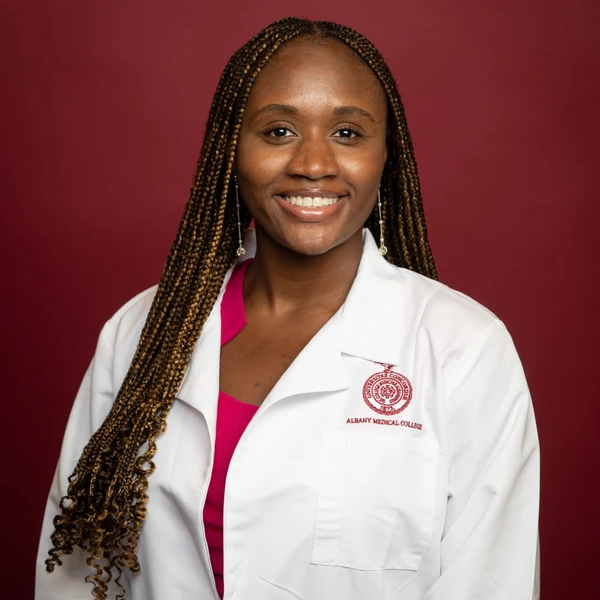
I am a first-year medical student at Albany Medical College passionate about women’s health, health equity, and advocacy for underserved communities. As a Black immigrant woman and aspiring physician, I am particularly interested in addressing disparities that disproportionately affect women of African descent, including uterine fibroids and reproductive health conditions. My experiences in clinical research, community advocacy, and patient-centered service have strengthened my commitment to combining medicine, research, and education to improve quality of life for patients. In the future, I hope to contribute to advancements in women’s health through clinical care, research, and public health advocacy.
Education
Albany Medical College
Doctoral degree program (PhD, MD, JD, etc.)Majors:
- Medicine
Johns Hopkins University
Bachelor's degree programMajors:
- Biological and Biomedical Sciences, Other
Pope John Xxiii High School
High SchoolCareer
Dream career field:
Medicine
Dream career goals:
OB/GYN
Research
Microbiological Sciences and Immunology
ID Care — Clinical Research Coordinator2023 – 2025
Public services
Volunteering
Albany Medical Center — NICU Cuddler2025 – Present
Future Interests
Advocacy
Volunteering
Philanthropy
Lauren Rebekah Uterine Fibroid & Endometriosis Research Scholarship
My grandmother has always been the greatest storyteller. As an 80-something-year-old Ghanaian woman, she has seen and experienced more than I could ever imagine. Whenever she talks to me, I sit down and listen to her every word. As a young girl, I remember her telling me about her history of fibroids. She described the discomfort, the bleeding, and the overall pain. These symptoms eventually resulted in her hysterectomy. Luckily, she already had two children at the time, but she always felt devastated by the fact that she could not have any more. At times, I wonder if increased fibroid awareness and research would have allowed for treatment options other than a hysterectomy for her.
Uterine fibroids affect millions of women, with a large proportion being women of African descent. As a Black immigrant woman with family and friends who have dealt with fibroids and the subsequent infertility, discomfort, and fear, I have become deeply passionate about this topic. I plan to contribute to the field of uterine fibroids through research, patient-centered care, advocacy, and education.
Working in HIV clinical research showed me how sustained investment in research can dramatically improve patient quality of life, particularly for diseases that disproportionately affect underserved communities. Treatments for uterine fibroids are often limited and drastic, with hysterectomies being one of the most common permanent solutions. I hope to participate in uterine fibroid research to help it reach the same level of innovation and progress that HIV research has achieved. I hope to contribute to treatments that can effectively manage or remove fibroids without making it impossible for women to have children if that is something they desire. I also hope to increase screening and education surrounding fibroids, as many women experience painful symptoms for years while believing that their suffering is normal. Earlier diagnosis and increased awareness could lead to fewer complications and improved outcomes for patients.
As a medical student, I look forward to contributing to studies focused on improving the identification, prevention, and treatment of uterine fibroids. As a future OB/GYN physician, I hope to serve not only as a clinician caring for women affected by fibroids, but also as a Principal Investigator conducting research that advances the field while educating patients about their health and treatment options.
I also look forward to advocating on behalf of women dealing with fibroids. As a medical student in Albany, New York, I have had the opportunity to meet and speak with lawmakers about important bills impacting community health. This experience has shown me the importance of physician advocacy and the meaningful impact it can have on patients’ lives. As a physician, I intend to continue working with lawmakers to advocate for increased funding and awareness for uterine fibroid research and women’s health initiatives. I also hope to continue educating both my patients and the broader public about fibroids and their impact.
Ultimately, I intend to become a physician who treats women with fibroids, advocates for them, and seeks out novel treatments to improve their quality of life. I hope to contribute to advances in care that provide women with opportunities and choices that previous generations, including my grandmother’s, did not always have.