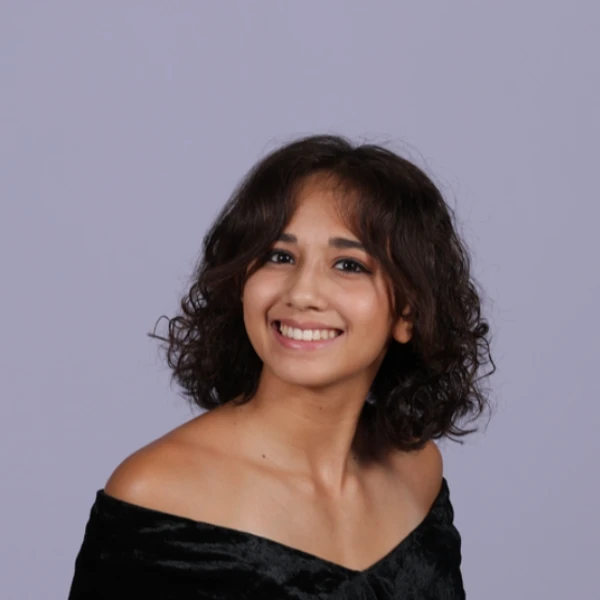
Hobbies and interests
Martial Arts
Swimming
Reading
Drama
I read books multiple times per week
Emma Borrego
3x
Finalist1x
WinnerEmma Borrego
3x
Finalist1x
WinnerBio
As a deaf and hard-of-hearing aspiring orthodontist, I bring firsthand insight into how communication barriers affect patient care—and I’m driven to ensure treatment is inclusive, empathetic, and accessible to all.
My practice of Brazilian Jiu-Jitsu has sharpened my self‑control, resilience, and mental focus—qualities shown to grow with BJJ experience and which I carry into both clinical learning and patient interactions.
I have a deep faith; I’m committed to serving others with integrity and excellence as I pursue my goal of becoming an orthodontist.
I identify as both Christian and Jewish, and I strive to honor and embrace the teachings, values, and traditions of both faiths in my daily life.
Education
FLORIDA SOUTHWESTERN COLLEGIATE HIGH SCHOOL
High SchoolGPA:
4
Miscellaneous
Desired degree level:
Bachelor's degree program
Majors of interest:
- Dentistry
- Biology, General
Career
Dream career field:
Dentistry
Dream career goals:
Own my own orthodontist bussiness
Front House or Grill
Empire Bagels2024 – Present2 years
Sports
Artistic Gymnastics
2018 – 20213 years
Mixed Martial Arts
2020 – Present6 years
Research
Biological and Biomedical Sciences, Other
Florida SouthWestern State College – Biology Laboratory — Student Researcher / Lab Participant2024 – 2024
Arts
none
Drawing2024 – 2025
Public services
Volunteering
Florida Southwestern Collegiate High School — Supported event setup/cleanup, assembled booths, and distributed promotional flyers to engage the community.2022 – PresentVolunteering
Charlotte County Humane Society — Animal care taker2022 – 2023Volunteering
Charlotte County Library — Assisted with children's storytime sessions and craft activities Maintained a quiet and welcoming environment for library users2024 – PresentVolunteering
Parrot Outreach — Care taker2022 – 2024
Future Interests
Advocacy
Politics
Volunteering
Entrepreneurship
Headbang For Science
Seeing my own smile change and gaining confidence during my orthodontic treatment made me realize how much a healthcare professional can impact someone’s life. At first, I was really nervous because of the pain and all the stories I had heard about braces. But when my treatment was done, I felt a huge sense of relief and confidence. That experience inspired me to pursue a career where I can combine science, care, and precision to support both physical and emotional well-being. I want to help patients feel good about themselves not just physically but emotionally too. A smile can change the way someone interacts with the world, and I want to give people that same confidence I felt.
My academic goal is to major in Biology on a pre-dental track and eventually become an orthodontist. I am drawn to understanding the human body, but what excites me most is using that knowledge to help people directly. Orthodontics is not just about straightening teeth it is about improving lives and boosting confidence. I plan to take all the required pre-dental courses like chemistry, anatomy, physiology, and biology while gaining hands-on experience by volunteering in dental clinics and shadowing orthodontists. I have also learned patience, leadership, and communication through coaching Brazilian Jiu-Jitsu and participating in community service which will help me connect with patients and support them in meaningful ways.
I need this scholarship because paying for college is a big challenge. Even though I have worked hard to maintain good grades and stay involved in my community the financial side of continuing my education is still stressful. This scholarship would allow me to focus more on my studies, practical experiences, and community involvement instead of constantly worrying about how to afford it all. It would give me the support and confidence I need to keep pursuing my dream of helping patients improve both their smiles and their emotional health.
Heavy Metal music has also been a big part of my life and has helped me deal with challenges. Being deaf people sometimes assume I cannot fully enjoy music but I experience it in a different way through vibrations, rhythm, and energy. Heavy Metal is the genre where I feel that the most. It is intense, powerful, and emotional, and it motivates me when I need a boost or a reminder to push through tough times.
Some of my favorite bands include Metallica, Slipknot, and Bring Me the Horizon. Their music talks about struggle and resilience which I relate to in my own life. My favorite Metal concert experience was being in a crowd full of people who shared the same passion. Even though I could not hear every detail perfectly I could feel the bass, the energy, and the excitement. I am also really excited to be going to Welcome to Rockville this May which is mostly a rock concert but has some heavy metal bands there too. I cannot wait to experience that energy and feel the music in person because it is always an incredible way to connect with others who share my love for heavy music.
Heavy Metal like my journey in school and my career goals reminds me that challenges do not hold me back they push me to grow stronger. This scholarship would help me continue that journey by supporting my education, hands-on experiences, and ability to make a difference in other people’s lives. With this support I can keep turning challenges into strengths whether it is helping someone feel confident about their smile or feeling the power of music that connects people in ways words sometimes cannot.
Julie Adams Memorial Scholarship – Women in STEM
A smile can change more than just how someone looks. It can change confidence, self-esteem, and how a person interacts with the world. Seeing my own smile improve and feeling more confident during my orthodontic treatment showed me how much a healthcare professional can impact someone’s life. That experience inspired me to pursue a career where I can combine science, care, and precision to support both physical and emotional well-being. I want to become an orthodontist, but I also see how connected orthodontics is to mental health. A smile is more than appearance. It affects confidence, self-esteem, and how people feel in social situations. By helping patients improve their smiles, I hope to help them feel more comfortable, more confident, and ready to face challenges in life.
At first I was nervous about the pain and challenges of braces because I had heard so many negative stories. When my teeth were finally straight, I felt confident and relieved. This experience made me grateful because it showed me how much human care matters. Without someone guiding a patient, even small problems can sometimes lead to bigger consequences. I learned that healthcare is not just about fixing something physically, it is about understanding how it affects a person emotionally and being there to support them.
I am fascinated by how emotional health and physical health are connected. My experience with braces showed me that even small changes, like aligning teeth, can have a big impact on how someone feels about themselves and how they interact with others. I want to explore this connection further in my career and learn how healthcare can support both the body and the mind. By helping people feel better physically, I hope to help them feel more confident, resilient, and ready to handle other areas of their lives.
I chose Biology as my major with a pre-dental track because it gives me the foundation I need for dental school and orthodontics. I am drawn to understanding the human body, but what excites me most is using that knowledge to help people directly. Orthodontics is not only about aligning teeth, but also about improving quality of life and emotional health. This perspective motivates me to work hard in my classes and look for opportunities to grow as a healthcare provider who supports both mental and physical well-being.
My plan is to complete my biology degree while taking pre-dental courses like Chemistry, Anatomy, Physiology, and Biology. I also plan to gain hands-on experience by volunteering in dental clinics, shadowing orthodontists, and learning from mentors. These experiences will help me develop technical skills while also strengthening my ability to connect with patients and understand their emotional needs. Coaching Brazilian Jiu-Jitsu and participating in community service have helped me build patience, leadership, and communication skills, all of which are important for working with patients and supporting their overall well-being.
Receiving this scholarship would make a big difference in my education. It would ease the financial burden of college and allow me to focus on my classes, practical experiences, and community involvement without worrying about money. More importantly, it would give me the confidence and support to continue pursuing my dream of helping patients improve both their smiles and their emotional health. This scholarship is not just an investment in my education; it is an investment in my ability to make a real difference in the lives of others.
Kalia D. Davis Memorial Scholarship
I’ve learned that life doesn’t always follow the path we expect, and strength isn’t always loud—it’s quiet, persistent, and built through action. I was born prematurely at thirty-two weeks, weighing just three pounds, and my first breaths were measured by machines rather than cradling arms. Growing up deaf, I’ve faced challenges that forced me to adapt, persevere, and advocate for myself. Learning to speak, read lips, and navigate a world that isn’t always designed for someone like me has taught me resilience, patience, and confidence. I’ve discovered that real strength is rising each time life knocks you down and using the obstacles you face to fuel growth, not fear.
Sports, particularly jiu-jitsu, have played a central role in shaping who I am. On the mat, I’ve learned that falling isn’t failure; it’s a chance to get up, adjust, and try again. I coach younger students, teaching not only technique but also discipline, respect, and perseverance. Watching them gain confidence and overcome challenges reminds me that leadership is about guiding others while growing alongside them. My experiences in jiu-jitsu have instilled in me the same work ethic and dedication that Kalia Davis exemplified—showing up every day, giving my best, and striving for excellence even when progress is slow or setbacks occur.
Service has been a cornerstone of my life because it allows me to put action behind my values. Since eighth grade, I’ve dedicated over 165 hours to volunteering and serving my community. I spent months helping at the Parrot Outreach Society, caring for birds, cleaning cages, and learning patience and responsibility. I guided children at the Punta Gorda Charlotte Library, assisting with activities, helping them explore books, and creating a positive environment for learning. I also supported school events like Haunted College, pickleball tournaments, and the school carnival, coordinating activities and helping make each event successful. Even coaching jiu-jitsu has been a form of service—investing time and energy to mentor younger students, build their confidence, and model discipline and respect. These experiences taught me that true service combines empathy, dedication, and a desire to leave others better than you found them.
Academically, I am currently dual enrolled in high school and college, on track to graduate this May with both my high school diploma and an associate’s degree. I plan to continue my studies to earn a bachelor’s degree in biology, which will allow me to pursue dental school and ultimately become an orthodontist. Achieving this goal requires focus, discipline, and support—qualities I’ve honed through my life experiences, athletics, and community involvement.
Receiving the Kalia D. Davis Memorial Scholarship would be an incredible honor and would help me continue this journey. It would support my education financially, allowing me to focus on my studies while continuing to serve my community, mentor younger students, and lead by example in athletics and school projects. This scholarship represents the values Kalia embodied—hard work, kindness, leadership, and a drive to excel—and receiving it would encourage me to continue striving for excellence in academics, athletics, and service. I want to honor her legacy by making a tangible difference in my community, investing in the lives of others, and pursuing my dreams with determination, heart, and purpose.
Proverbs 3:27 Scholarship
Character, service, and leadership are important to me because they reflect how I live my faith and follow God’s guidance. Proverbs 3:27 says, “Do not withhold good from those who deserve it when it is in your power to act.” This verse reminds me that I have a responsibility to use my time, talents, and resources to help others whenever I can. I am currently a high school and college dual-enrolled student, on track to graduate this May with both my high school diploma and an associate’s degree. Being deaf has shaped who I am, teaching me perseverance, self-advocacy, and patience. I’ve learned to confidently ask for what I need and communicate clearly, even in challenging situations, and I try to show the same understanding and care to others. To me, character is shown through actions—being honest, responsible, and treating people with respect, even when it’s hard. I try to live by these values every day, at school, at home, at work, coaching, and even with strangers.
Service has always been central to my life because it allows me to put God’s love into action. Since eighth grade, I have dedicated over 165 hours to serving my school and community. I coach jiu-jitsu, helping younger students gain confidence, learn discipline, and develop respect for themselves and others. I volunteered at the Parrot Outreach Society, caring for birds and learning patience and responsibility. At school, I helped set up events like Haunted College and pickleball tournaments, supporting my community and learning the value of teamwork. Most recently, I served at the Punta Gorda Charlotte Library, guiding children during activities and helping create a positive environment for learning. Each experience taught me that serving others is a way to live out God’s call to action and generosity.
Leadership, for me, isn’t about titles—it’s about stepping up to help others and guiding them toward success. During Hurricane Milton in 2024, I organized teammates to help a family recover from flooding. We worked side by side, stayed motivated, and made sure our efforts were organized. In jiu-jitsu, I coordinated fundraisers so teammates who couldn’t afford tournaments could still participate. At school, I helped organize events, delegate tasks, and ensure everyone knew their responsibilities. These experiences showed me that leadership requires responsibility, empathy, and humility—qualities that reflect God’s teachings about serving others.
If awarded this scholarship, I would use it to continue serving my community and growing in faith while supporting my academic journey. It would help me complete my bachelor’s degree in biology, which will prepare me for dental school and my ultimate goal of becoming an orthodontist. This scholarship would give me the resources and encouragement to stay focused on my studies while still finding time to mentor younger students and serve others. Beyond financial support, this scholarship is a way for me to live out Proverbs 3:27, applying God’s Word through action, service, and leadership. I want my efforts to reflect my faith and inspire others to act with generosity and compassion, using the gifts God has given me to make a meaningful difference—both in my community and in my future career helping patients.
Virginia Jeanette Drummond Kissane Women in STEM Memorial Scholarship
Seeing a patient smile with confidence after completing orthodontic treatment made me realize how powerful this work can be. That moment inspired me to pursue a career as an orthodontist, where I can combine science, precision, and care to make a real difference in people’s lives. Orthodontics is more than aligning teeth—it improves oral health, boosts confidence, and has a lasting impact on daily life. Knowing that I can help someone in such a tangible way motivates me to work hard and dedicate myself fully to this path.
I chose Biology as my major with a pre-dental track because it provides the scientific foundation I need for dental school and ultimately orthodontics. I have always been curious about the human body, and STEM education allows me to explore this curiosity in a structured and meaningful way. Learning about anatomy, physiology, and chemistry not only prepares me for future studies but also shows me how understanding science can directly improve health outcomes for others.
Beyond academics, I plan to gain experience in dental clinics and by shadowing orthodontists. Observing treatments and working with patients allows me to connect STEM principles to real-world applications, from understanding tooth movement to designing treatment plans. This hands-on experience shows me how STEM skills—like measurement, analysis, and problem-solving—directly translate into helping others. By applying scientific knowledge to improve oral health and boost confidence, I can see how STEM can have a meaningful, lasting impact on someone’s daily life.
My plan is to complete my biology degree while taking the required pre-dental courses such as chemistry, anatomy, and physiology. These classes will prepare me for the Dental Admission Test (DAT) and provide the scientific understanding necessary for dental school. Volunteering in dental clinics and observing orthodontists in action will give me practical experience, teaching me not only technical skills but also how to communicate with patients and make them feel comfortable. Combining science with empathy is what makes this work so rewarding.
Pursuing a career in orthodontics allows me to see STEM in action every day. From analyzing X-rays to designing braces and aligners, I will use scientific reasoning and technical skills to solve problems that directly impact patients’ lives. STEM is not just theory in a classroom—it is a tool to educate, heal, and inspire. By helping patients improve their health and confidence, I can make a tangible difference while continuing to explore my passion for science.
In conclusion, pursuing a biology degree with a pre-dental focus is my first step toward becoming an orthodontist. My STEM education will allow me to apply scientific knowledge, critical thinking, and practical skills to help others in meaningful ways. Combining my curiosity, dedication, and desire to serve, I am confident that this path will enable me to positively impact the lives of my future patients.
Rose Ifebigh Memorial Scholarship
My father taught me that the best lessons in life come from failure. At first, I thought success was supposed to be quick and straightforward, but my life has shown me something very different. I was born prematurely at just 32 weeks, weighing barely over three pounds and without a heartbeat. From the start, I had to fight to survive. I spent my earliest days in the NICU, and even after leaving, simple milestones like eating, crawling, and walking didn’t come easily. I had to learn everything twice. Those experiences shaped how I see challenges—not as setbacks, but as part of growth.
As I got older, I continued to face obstacles that required me to adapt. Before kindergarten, I was diagnosed as deaf and hard of hearing, and soon after, I developed juvenile rheumatoid iritis, which affected my vision. I learned how to read lips, use hearing aids, and rely on support systems to succeed in school. Being in an educational environment where I had to work differently from others taught me independence and resilience. It also taught me how to advocate for myself and not be afraid to ask for help. While I may not come from an international background, learning to navigate environments that weren’t built for me has given me a similar perspective—I’ve had to adjust, grow, and find my place.
Through my educational journey, I’ve gained a deeper understanding of both myself and others. I’ve learned that strength isn’t always loud. Sometimes it’s quiet, like showing up on hard days or continuing even when no one notices. I’ve also become more aware of how many people feel overlooked or underestimated. Because of my own experiences, I pay attention to those who might feel invisible. I understand what it’s like to struggle in ways others can’t see, and that has made me more patient, empathetic, and determined to create spaces where people feel included.
High school was another defining chapter in my growth. I attended a collegiate high school and set a goal to graduate in two years. While I was successful in my coursework, standardized testing became a major challenge. No matter how much effort I put in, my scores didn’t reflect my abilities. It was frustrating and discouraging, especially watching others succeed where I struggled. For a moment, I questioned whether my hard work would ever be enough.
That experience forced me to shift my mindset. I changed my study strategies, sought help from a tutor, and committed myself fully to improving. It wasn’t an instant transformation, but over time, small improvements added up. When I finally retook my exams, I walked in confident, knowing I had done everything I could. That moment taught me that persistence matters more than perfection.
My interest in science, especially pursuing a career in dentistry, is directly connected to my experiences. Growing up with medical challenges showed me how important compassionate and attentive care can be. I want to be someone who not only provides treatment but also understands patients on a deeper level—especially those who may feel unheard or overlooked. My goal is to make a meaningful impact by combining science with empathy.
Receiving this scholarship would support my goals by reducing financial barriers and allowing me to focus fully on my education. More importantly, it would invest in someone who understands resilience and is committed to using their experiences to help others. My journey has taught me how to keep going, even when things are difficult, and that mindset is something I will carry with me into college and beyond.
Ruthie Brown Scholarship
Right now, as a high school senior, I’m trying to do everything I can to keep my future student loan debt as low as possible. College is expensive, and I don’t want to start out already in a lot of debt. My main goal is to try my best to prevent borrowing more than I really need, and I’m willing to put in the work now to make that happen.
One way I’m doing this is by applying for scholarships every day. I try to submit at least one application daily. So far, I haven’t had much luck, even though I’ve applied to a lot, but I’m not giving up. I know scholarships are a big help with paying for school without having to take out loans, and I’m determined to keep trying until I start getting results. It can be frustrating when I don’t hear back, but I know each application I send is one more chance to reduce my debt and make college more affordable.
I also plan to work throughout college. Having a part-time job or doing work-study will let me earn money to help pay for living costs and some tuition. I know it won’t always be easy to balance work and school, but I’m ready to stay organized and focused. Working while in college will also teach me skills like time management, responsibility, and independence, which will help me in the future.
Budgeting is another big part of my plan. I want to keep track of my money and spend it carefully. That means knowing the difference between what I need and what I just want and making smart choices. By combining scholarship money, income from work, and careful budgeting, I hope to borrow as little as possible and keep my student loans under control.
Overall, my plan for handling student loan debt is simple: work hard, keep applying for scholarships, and be responsible with my money. I know I might still need to borrow some, but I want to start college with a plan to keep my debt as low as I can. I want to focus on school and my career without having student loans be a big problem later.
Even though it can be slow and sometimes discouraging, I know my effort now will pay off later. Every scholarship I apply for, every hour I work, and every dollar I budget carefully is a step toward making college more affordable. I’m committed to staying persistent, working hard, and making smart choices so I can graduate with as little debt as possible.
Resilient Scholar Award
My father taught me that the best lessons in life come from failure. Success is often portrayed as linear, but in reality, it moves more like a roller coaster. This belief is reflected in my own high school journey. I was selected to attend a collegiate high school and successfully navigated the challenging coursework. I was motivated to complete high school in just two years. However, when it came to standardized testing—specifically the ACT, SAT, and Accuplacer—I encountered many setbacks.
Testing comes naturally for some, but for me, it was a disheartening experience. I put in the time to study and properly prepare, yet I still fell short of achieving a desirable score. Many of my peers, who struggled with the demanding coursework, aced the testing portion. That was a heavy burden to carry. I was disappointed and realized that my honor roll grades alone wouldn’t be enough to meet the high standards required to graduate in two years.
At my lowest moment, I understood that tears weren’t going to change anything. I reflected on my father’s advice: failure is a fork in the road—a make-or-break moment—and it doesn’t define your inner strength. I stepped back and created a plan to overcome this enormous challenge. I reorganized my life to prioritize preparation. Effort and dedication gave me the opportunity to identify weaknesses in my study habits. Still, it wasn’t enough to push past the barrier.
Once again, I reassessed my learning strategies. After a conversation with my mother, I realized I needed outside help. On her advice, I brought in a tutor to help me identify my blind spots. This decision became a game-changer in my understanding of how to approach standardized testing.
The targeted instruction gave me clear explanations and practice strategies that became essential tools in my preparation. It wasn’t an overnight success—it was a slow grind. Each session helped me overcome small obstacles. But over the course of several months, those small wins added up to a mountain of progress. This period of my life was mentally and physically exhausting. I spent nights and weekends refining my skills through online tools and test prep, while my peers went out and had fun.
The sacrifice was painful, and I struggled to understand why success seemed so much harder for me. Life didn’t feel fair. My father reminded me that life isn’t fair—but you sacrifice now for a better future. I held onto that advice, and after what felt like an eternity, I finally got the chance to retake my standardized tests. It felt like the fight of my life.
Walking into that testing room, I felt like a warrior going into battle. The two hours felt endless. But when I walked out, I felt powerful—because I knew I had done everything possible to succeed. It was a defining moment when I learned that I had scored high enough to graduate high school early and begin college at the age of 16.
Discipline and hard work are timeless recipes for success. But I’ve also learned that asking for help and using available resources is just as crucial when facing obstacles. These experiences strengthened my belief that challenges are not roadblocks—they are opportunities for growth.
Standardized testing taught me more than academic content. It taught me life lessons. The most important one: failure isn’t the end. It’s the foundation for success.
Hazel & Olive Sweet Horizons Scholarship
My father always told me that the most important lessons in life come from failure. Success is often described as a straight path, but my experience has shown that it is much more like a roller coaster with setbacks, determination, and growth along the way. One of the biggest challenges I faced during high school was overcoming the difficulties I had with standardized testing while pursuing the goal of graduating early and beginning college at a young age.
I was selected to attend a collegiate high school and was motivated to complete my high school education in just two years. Academically, I was doing well. I maintained honor roll grades and kept up with the demanding coursework. However, when it came to standardized tests such as the ACT, SAT, and Accuplacer, I repeatedly struggled to reach the scores I needed.
Testing does not come naturally to everyone, and for me it was one of the most discouraging experiences of my academic journey. I studied for hours and prepared as much as I could, yet my scores did not reflect the effort I was putting in. At times it was difficult not to compare myself to my peers. Some classmates who struggled in class seemed to succeed easily on the tests, while I continued to face setbacks.
Eventually I reached a moment where I had to decide how I would respond. I remembered my father’s advice that failure is not the end—it is a turning point. Instead of allowing disappointment to define me, I stepped back and created a plan. I reorganized my schedule, dedicated more time to preparation, and began analyzing where my test-taking strategies were falling short.
Even with those changes, improvement was slow. After talking with my mother, I realized I needed guidance from someone with more experience in standardized test preparation. I began working with a tutor who helped me identify blind spots in my approach and develop more effective strategies. That decision made a significant difference.
Progress did not happen overnight. Each tutoring session helped me overcome small obstacles and slowly build confidence. I spent evenings and weekends practicing with online tools and refining my test-taking skills while many of my friends were spending their time differently. It required discipline and sacrifice, but it also strengthened my determination to reach my goal.
When the opportunity finally came to retake the exams, I walked into the testing room with a completely different mindset. I knew I had done everything possible to prepare. When I later learned that I had achieved the scores needed to graduate high school early and begin college at the age of sixteen, it became one of the proudest moments of my life.
That experience shaped who I am today. It taught me resilience, discipline, and the importance of asking for help when challenges feel overwhelming. Most importantly, it showed me that setbacks are not barriers to success—they are opportunities to grow stronger.
As I pursue higher education, I will continue to carry these lessons with me. College will challenge me academically and personally, but it will also give me the opportunity to keep growing, exploring my interests, and building the future I hope to create. The challenges I faced with standardized testing taught me that perseverance and hard work can turn failure into one of the most powerful foundations for success.
“I Matter” Scholarship
Hurricane Milton was the worst natural disaster I have personally experienced. In 2024, my friend’s house flooded, and I knew I had to help. I realized early on that I do not like to help alone. When someone is in need, I feel stronger and more confident when I have others beside me. I wanted to make a real difference, and I knew that working together would make the task less overwhelming and more effective.
I called my jiu-jitsu team and organized a few people to join me. On the way to my friend’s house, we stopped at Publix and bought sandwiches and drinks to keep us fueled for the day. When we arrived, the scene was heartbreaking. Clothes, furniture, and keepsakes were soaked and ruined by dirty water. The house was unrecognizable, and I could see the stress and sadness on my friend’s family’s faces.
We got to work immediately. We created a system to separate items that could be saved from those that had to be thrown away. I focused on staying positive and lifting everyone’s spirits. I cracked jokes whenever I could, and soon we were laughing together even in the middle of the chaos. That moment made me realize that joy can exist even in hard times. It is not about returning everything to normal immediately—it is about supporting each other and finding small moments of relief and hope.
As we worked, I noticed the exhaustion on everyone’s faces. The physical labor was tiring, and the emotional weight of seeing someone’s life disrupted added another layer of challenge. I reminded myself that even small actions mattered. Folding wet clothes, wiping mud off furniture, and organizing what we could save—all of it counted. Helping in this way required patience, teamwork, and empathy. I learned that sometimes leadership is not about giving instructions. It is about noticing what people need, encouraging them, and showing that they are not alone.
By the end of the day, we had cleared much of the flood damage, and the family could see a path forward. Their gratitude was overwhelming. Seeing their relief and knowing we had eased their burden, even a little, made all the effort worth it. That experience taught me that helping someone goes beyond doing a task. It is about being present, offering support, and lifting others up when they are facing the toughest moments of their lives.
That day also taught me something about myself. I realized that I am a leader who acts with empathy. I help others not just by guiding or instructing, but by showing care, boosting morale, and making sure people know they are not alone. The flood was devastating, but it gave me the chance to grow, to understand the power of teamwork, and to see the difference that compassion can make in someone’s life.
Mark Caldwell Memorial STEM/STEAM Scholarship
My dad always told me that the best lessons in life come from failure. People make success look like a straight line, but in real life, it is more like a roller coaster. I learned that the hard way in high school. I got into a collegiate high school and managed the coursework. I was determined to finish high school in just two years. But when it came to standardized tests, the ACT, SAT, and Accuplacer, I ran into serious setbacks.
Testing never came easy for me. I would study for hours and still fall short of the scores I wanted. Meanwhile, some of my classmates who struggled with classes were acing the tests. It was frustrating and discouraging. I realized that my honor roll grades alone were not enough to meet the high standards required to graduate early.
At my lowest point, I knew that crying was not going to fix anything. I remembered my dad’s advice. Failure is not the end. It is a fork in the road, a make-or-break moment, and it does not define who you are inside. I stepped back and made a plan. I reorganized my life to focus on test preparation. I studied harder, tracked my weak points, and adjusted my routines. Even with all that effort, I was still falling short.
After talking with my mom, I realized I needed extra help. On her advice, I brought in a tutor to help me find my blind spots. That decision changed everything. The tutor gave me clear strategies, step-by-step explanations, and practice methods that finally made sense. It was not an overnight success. Every session I overcame small obstacles. Over months, those small wins built into big progress. I spent nights and weekends studying while my friends were out having fun.
The sacrifices were hard. Life did not feel fair. My dad reminded me that life rarely is fair, but if you work hard now, the future will be better. I held onto that. Finally, I got the chance to retake my tests. Walking into the room, I felt ready. I had prepared for this moment. The two hours felt long, but I left feeling powerful because I had done everything I could. When I got my scores back, I had done it. I could graduate early and start college at 16.
I learned that hard work and discipline matter but asking for help and using resources is just as important. Challenges are not roadblocks. They are opportunities to grow.
Standardized testing taught me more than math or reading. It taught me life lessons. The most important lesson is that failure is not the end. It is the foundation for success.
Brian Moore Memorial Scholarship
Seeing my own smile transform during orthodontic treatment was a life-changing experience. The confidence I gained when my braces were finally removed showed me how profoundly a healthcare professional can impact someone’s life—not just physically, but emotionally. That experience inspired me to pursue a career where science, care, and precision intersect to support both physical and mental well-being.
My goal is to become an orthodontist, but I see my work extending far beyond aligning teeth. A smile affects confidence, self-esteem, and how people interact with the world. By helping patients improve their smiles, I hope to strengthen their emotional resilience, social confidence, and overall quality of life. Even small physical changes can ripple outward, influencing the way someone perceives themselves and faces everyday challenges.
I chose Biology as my major with a pre-dental track because it provides the foundational knowledge I need to succeed in dental school and in orthodontics. Courses in anatomy, physiology, chemistry, and biology excite me not only for what I learn about the human body but also for how I can apply that knowledge to make a tangible difference in people’s lives. Beyond academics, I plan to gain hands-on experience by volunteering in dental clinics, shadowing orthodontists, and learning from mentors. These opportunities will help me develop both technical expertise and empathy, ensuring I can address my patients’ physical and emotional needs.
My experiences outside the classroom—coaching Brazilian Jiu-Jitsu and participating in community service—have taught me patience, leadership, and effective communication. These skills are essential for connecting with patients, guiding them through challenging treatments, and helping them feel heard and supported.
Receiving the Brian Moore Memorial Scholarship would allow me to focus fully on my education and hands-on experiences without the constant worry of financial burden. More importantly, it would empower me to pursue my dream of improving lives through both physical care and emotional support. By dedicating myself to my studies, volunteering, and future clinical work, I aim to leave a lasting impact: helping people feel confident, resilient, and ready to thrive in every aspect of their lives. In this way, I will truly “Be More,” using my education and compassion to create positive, enduring change for the people I serve.
Our Destiny Our Future Scholarship
To me, making a positive impact starts with character—how I act, the choices I make, and how I treat others. I strive to be honest, responsible, and respectful in every interaction, whether at school, at work, while coaching, or even with strangers. I pay attention to the small things: keeping promises, showing up on time, and following through on commitments. I also focus on helping those who are struggling, listening to their concerns, and offering guidance when I can. Being deaf and hard of hearing has taught me patience, self-advocacy, and empathy, and I aim to create environments where everyone feels respected, included, and heard. I know that by living with integrity and compassion, I can positively influence the people around me.
Service has been central to how I make a difference. Since eighth grade, I have dedicated over 165 hours to volunteering, coaching, and organizing events in my school and community. Through coaching jiu-jitsu, I help younger students build confidence, learn discipline, and overcome challenges, showing that service is not just about hours but about investing in others’ growth. Volunteering with the Parrot Outreach Society taught me the value of patience and responsibility, while helping at my school and the Punta Gorda Charlotte Library allowed me to combine leadership, teamwork, and support for my community. Every experience has reinforced that consistent effort, empathy, and dedication can create real, meaningful change.
Leadership, to me, is about stepping up to guide others and working alongside them toward shared goals. During Hurricane Milton in 2024, I organized teammates to help a family recover from flooding. Coordinating the effort, keeping everyone motivated, and ensuring we worked efficiently taught me that leadership is guiding others with care and purpose, not just giving directions. Similarly, I coordinated fundraising efforts for my jiu-jitsu team to ensure all teammates could compete, showing that leadership is about inclusion and helping others succeed. In school, I applied these lessons by helping set up events, delegating tasks, and keeping teams organized. Leadership requires responsibility, collaboration, and empathy, all of which I hope to continue applying as I serve my community.
Through character, service, and leadership, I plan to make a positive impact by supporting others, inspiring teamwork, and contributing to projects that create meaningful change. Being part of the National Honor Society would allow me to continue growing while serving my school and community, giving me a platform to lead with purpose, help others reach their potential, and use my experiences to make a lasting difference. By living with honesty, responsibility, and empathy, I hope my actions inspire others to do the same, leaving a positive mark on the world around me.
Patricia Lindsey Jackson Foundation - Eva Mae Jackson Scholarship of Education
Growing up, faith was always around me, but it wasn’t always clear what I believed. My grandmother is a devout Christian and finds so much comfort and guidance in her faith. My dad is Jewish and often talked about his bad experiences in church, which made me question a lot of things. I didn’t know which side to take, or if I could even have my own faith.
As a kid, I would sit with my grandma at church on Sundays, listening to her talk about love, forgiveness, and helping others. I admired how sure she was in her faith and how it gave her strength during difficult times. She taught me that even in hard situations, faith can help you keep moving forward. But my dad’s words stuck with me too—he warned about judgment and hypocrisy in religious spaces. It was confusing, and it all came to a head at a family gathering when they argued about religion. I felt stuck in the middle, realizing that faith isn’t just about following someone else’s beliefs—it’s personal, and it shapes how I see the world.
That’s when I started figuring out my own path. I read scriptures, prayed, and reflected on what I truly believed. I realized faith isn’t about blindly following a church or someone else’s rules—it’s about following God and living with love, kindness, and integrity. My grandmother taught me the importance of compassion and perseverance, and my dad taught me to think for myself. Both helped me shape my spiritual path, one that makes sense to me and motivates me to live according to what I know is right in God’s eyes, not just what people say.
Faith guides how I approach school and my goals too. It gives me discipline and helps me stay grounded when things get difficult. When I feel stressed about tests, grades, or applying to college, faith reminds me to trust in God’s plan and take things one step at a time. It motivates me to help others, whether it’s through volunteering, tutoring, or supporting friends, and it keeps me focused on what I want to do in the future. Faith is my guide, helping me grow academically, socially, and personally while staying true to God’s teachings rather than only listening to what a church or others might say.
Looking ahead, faith will continue to guide me in college and beyond. It reminds me to stay kind, work hard, and live with integrity. I want to use the lessons I’ve learned—patience, empathy, and perseverance—to make a positive impact in my community and in whatever career I choose. Faith has helped me grow, think, and act in ways that feel real and personal to me. It’s not just about following a set of rules—it’s about following God, learning from Him, and living a life that reflects His guidance.
Route Tree Performance Higher Education Scholarship
Outside of school, I train in Brazilian Jiu-Jitsu, a martial art that challenges both my mind and body. I attend classes several times a week, focusing on techniques, sparring, and conditioning. Every session pushes me to improve, even when I struggle with a move or get submitted. These challenges have taught me patience, resilience, and the importance of persistence. Each time I overcome a difficulty, I gain confidence and a stronger sense of determination.
Jiu-Jitsu has impacted my life far beyond physical fitness. It has helped me stay disciplined, think clearly under pressure, and manage setbacks without giving up. Training with teammates has also taught me respect, communication, and how to support others while pushing myself to do better. These lessons have shaped my character and prepared me for challenges in school and in life.
I am thrilled to continue practicing jiu-jitsu as I begin my pre-dental studies at Nova Southeastern University this fall. Balancing training with academics will teach me time management and perseverance, skills that will be valuable both in college and in my future career. I hope to continue participating in tournaments and learning from instructors and teammates, building strength, discipline, and confidence along the way.
Brazilian Jiu-Jitsu is more than a sport to me—it is a part of who I am. It has shaped my character, taught me perseverance, and given me skills I can carry into every aspect of my life. Training has shown me that growth takes dedication and that challenges are opportunities to improve. I am excited to continue this journey at Nova, applying the lessons from jiu-jitsu to my academics, personal growth, and future career in dentistry.
Forever90 Scholarship
I learned what service meant before I ever had a word for it.
I was born at thirty-two weeks, three pounds, fragile and wired to machines. My first breaths were monitored. My first battles were silent ones. Growing up deaf with hearing aids and blurred vision meant I had to learn everything twice. I had to ask for help, ask for accommodations, ask to be heard. Service, for me, started there. It started in understanding what it feels like to need support — and how powerful it is when someone chooses to give it.
Because of that, I live a life of service in quiet ways. I mentor beginners in Brazilian jiu-jitsu, guiding them through movements that once felt impossible to me. I watch their hesitation turn into confidence. I show them that falling is not failure, that strength is built slowly, roll by roll. Sometimes I do not need many words. Patience, encouragement, and consistency speak louder. I know what it feels like to doubt your own ability. Service is helping someone else believe in theirs.
In school, service looks like advocacy. I speak up not just for myself, but for others who feel overlooked. I ask questions others are afraid to ask. I normalize accommodations. I make it easier for the next student who walks into the room needing support. Living with hearing loss taught me that access changes everything. When someone can fully participate, they can fully grow.
My education in biology, as a pre-dental student, is not just a career path. It is preparation for impact. Dentistry is about more than teeth. It is about restoring confidence, relieving pain, and serving people who may not have access to care. I want to build a practice rooted in compassion, especially for patients with disabilities who often feel anxious, unheard, or dismissed in medical settings. I understand sensory challenges. I understand what it feels like to sit in a chair and rely on someone else’s patience. That perspective will shape the kind of provider I become.
Service also means sacrifice. I have given up weekends to study, trained when I was exhausted, and pushed through failure when it would have been easier to stop. My father taught me that failure is a fork in the road, not the end of the story. That mindset allows me to keep moving forward — and to help others do the same.
I embody a life of service because I know what survival feels like, and I choose to turn it into purpose. My education is not just for personal success. It is a tool. It is the foundation that will allow me to advocate, heal, mentor, and lead. I plan to use what I learn not only to build a career, but to build access, confidence, and opportunity for others.
Service is not always loud. Sometimes it is quiet persistence. Sometimes it is showing up again. That is the life I live, and the life I will continue to build.
Sandra West ALS Foundation Scholarship
Being deaf has shaped my life in ways that are both challenging and rewarding. I was never formally taught ASL, so I’ve had to figure out how to communicate and learn on my own. I rely on lip-reading, notes, and technology to keep up in class and to talk with others. This has not always been easy, but it has taught me to be independent, resourceful, and persistent. Learning to adapt in a world that often doesn’t accommodate people like me has given me resilience and determination.
School has been both a struggle and a source of growth. I sometimes miss spoken instructions or discussions, so I’ve had to work harder to understand lessons. I’ve learned to ask questions in creative ways, take detailed notes, and advocate for myself. These challenges have taught me organization, patience, and effective communication. Despite the difficulties, I’ve been able to succeed academically and have become confident in navigating a classroom and community that isn’t always designed for deaf students.
This scholarship would have a huge impact on my education. It could help provide access to tools and resources that make learning more accessible, like assistive technology or tutoring. It could also help cover school expenses, so I can focus on my studies instead of worrying about costs. Most importantly, it would support me in overcoming barriers caused by being deaf and allow me to reach my full potential. With this help, I could pursue my goals in higher education and continue to grow as a student and as a member of the deaf community.
Even though I’m not part of ASL-specific organizations, I actively give back in ways that support other deaf or hard-of-hearing students. I mentor younger students, sharing strategies for navigating school and advocating for accommodations. I also help teachers and peers understand accessibility challenges and encourage more inclusive learning environments. By doing this, I hope to make it easier for others to succeed, just as I’ve worked hard to succeed despite my own challenges.
Receiving this scholarship would mean more than just financial support. It would recognize my perseverance, independence, and dedication to learning. It would also give me the tools and confidence to continue helping others in the deaf community. Being deaf doesn’t limit my abilities; it has taught me to be determined, adaptable, and creative in overcoming obstacles. This scholarship would empower me to continue turning challenges into opportunities and inspire me to give back to my community in meaningful ways.
I want to show that with the right support, deaf students can achieve great things. This scholarship would not only help me reach my educational goals but also allow me to continue helping others navigate similar challenges. My journey has not been easy, but it has shaped me into a strong, determined individual who is ready to take the next step in education and life.
Doing Hard Things My Way: Adaptive Athlete Scholarship
Being deaf has always been part of who I am, but it has never stopped me from doing the things I love. Training in Brazilian Jiu-Jitsu at Gustavo Machado BJJ in Punta Gorda has shown me that challenges are just a chance to figure out my own way forward. Every time I step on the mat, I’m reminded that hard work, focus, and determination can take me further than I thought possible.
At first, being deaf made training tricky. I couldn’t rely on verbal instructions, so I had to pay attention to every movement, every shift in weight, and every gesture from my instructors and partners. It was frustrating at first, but over time I realized that I was learning differently—and that made me stronger. I learned to trust my instincts, read people’s movements, and adapt on the fly. Those skills have helped me not just in BJJ, but in school, in life, and in everything I do. I have also learned to communicate effectively without relying on sound, whether it’s through gestures, eye contact, or paying closer attention to cues from the people around me.
For me, being an adaptive athlete isn’t about what I can’t do. It’s about mindset. Every time I master a new technique or roll with a partner, I prove to myself that limits are only what I make them. BJJ has taught me discipline, patience, and persistence. It’s shown me that even when things feel impossible, if I keep trying and find my own way, I can succeed. I’ve also learned to celebrate small victories, whether it’s finally perfecting a move or completing a challenging class. Each step forward reinforces the idea that hard work and determination pay off.
Sports have shaped my confidence and how I see the world. Being deaf makes me pay closer attention, think creatively, and work harder than most. It has made me proud of the way I push through obstacles. Being an adaptive athlete means facing challenges head-on, learning from them, and showing that I can succeed in my own way, no matter what. It also means helping others see that challenges don’t have to stop you. I hope that my journey can encourage other athletes, especially those with disabilities, to keep pushing themselves and believe in their abilities.
As I get ready for college, I plan to keep training, keep learning, and keep pushing myself. I want to grow as an athlete and as a person, and I want to show others that being different doesn’t mean being limited. I will keep doing hard things my way—on the mat, in the classroom, and in life. I am excited to see what challenges lie ahead and how I can continue to overcome them while inspiring others.
Being deaf hasn’t held me back. It has shaped who I am and how I handle challenges. I’ve learned to adapt, overcome, and move forward, and I’m excited to keep doing hard things my way while showing others that determination, focus, and creativity can turn obstacles into opportunities. My story isn’t just about sports; it’s about resilience, independence, and proving that I can meet any challenge head-on and succeed on my own terms.
Second Chance Scholarship
Seeing my own braces for the first time made me realize how much a smile can impact confidence. Even though I hadn’t seen patients, that personal experience made me think about how powerful orthodontic care can be. It inspired me to pursue a career as an orthodontist, where I can combine science, precision, and care to improve someone’s daily life. I want to give people the confidence and health benefits that come from a healthy, aligned smile, just like my braces helped me.
I chose Biology as my major with a pre-dental track because it provides the foundation I need for dental school and ultimately orthodontics. I’ve always been curious about the human body, but what excites me most is using that knowledge to help people directly. Orthodontics is more than aligning teeth—it’s about improving oral health, boosting confidence, and creating a positive impact on someone’s daily life. Knowing that I can make a difference in this way motivates me to work hard and dedicate myself fully to this path.
My journey hasn’t been easy. Being deaf presented challenges in school, and I struggled with state testing that didn’t account for my learning needs. I was born premature, and I’ve had to overcome physical obstacles that most people never face. Despite these challenges, I’ve pushed myself to excel academically and personally. I’ve also trained in jiu-jitsu, which taught me discipline, perseverance, and mental toughness—qualities I bring to my studies and life. These experiences have shaped me into a resilient, determined individual who refuses to let obstacles stand in the way of my goals.
So far, I’ve taken several steps to prepare for my career. I’m completing my biology degree while taking required pre-dental courses such as chemistry, anatomy, and physiology, which will prepare me for the Dental Admission Test and provide the scientific understanding necessary for dental school. I am also gaining practical experience by volunteering in dental clinics and shadowing orthodontists. Seeing treatments in action, observing patient care, and learning from professionals helps me develop both the technical and interpersonal skills I’ll need as a future orthodontist.
Receiving this scholarship would help me achieve my goals by easing the financial burden of my education. It would allow me to focus on learning, gaining experience, and preparing for dental school without being held back by financial stress. More importantly, it would give me the chance to continue growing as a person and a professional, so I can someday make a real difference in people’s lives.
I plan to pay this forward by mentoring and encouraging others who are pursuing their dreams, especially students from single-parent households or those who have faced significant challenges like I have. I want to help others find guidance, support, and the confidence to reach their goals. Just as I’ve been inspired by my family, teachers, and coaches, I hope to provide the same encouragement to someone else, showing them that hard work, resilience, and persistence can lead to success.
In conclusion, I am determined to make a meaningful change in my life by pursuing a career that allows me to help others every day. I have taken significant steps toward this goal through my education, personal challenges, and dedication to learning. With the support of this scholarship, I can continue moving toward my dream of becoming an orthodontist while also paying it forward to help others succeed. I hope to inspire, empower, and uplift those around me, just as I have been inspired, creating a lasting impact on my community and beyond.
Women in Healthcare Scholarship
Seeing my own smile change during orthodontic treatment showed me how much a healthcare professional can impact someone’s life. That experience inspired me to pursue a career where I can combine science, care, and precision to support both physical and emotional well-being. While my ultimate goal is to become an orthodontist, I have come to realize that healthcare is about more than fixing teeth. It is about helping people feel confident, resilient, and ready to face the world. A smile can affect self-esteem, social interactions, and overall emotional health. Being part of that transformation motivates me to dedicate myself fully to this field.
I was nervous at the beginning of my orthodontic journey. I had heard stories about pain and discomfort, and I was unsure what to expect. When my treatment was complete and I finally saw my straightened teeth, I felt a sense of confidence and relief I had never experienced before. That moment taught me the importance of human care and how even small actions can create meaningful change. I want to give that same sense of comfort and empowerment to my patients. I want to be the professional who not only improves someone’s physical health but also boosts their confidence and emotional well-being.
Choosing biology as my major with a pre-dental track allows me to gain the knowledge and skills I need to succeed in dental school and eventually in orthodontics. I am fascinated by how the body works, but what excites me most is using that knowledge to make a tangible difference in people’s lives. I have sought opportunities to grow outside the classroom, volunteering in dental clinics, shadowing orthodontists, and learning from mentors. These experiences help me develop technical skills while also strengthening empathy, patience, and communication—qualities that are essential for supporting patients’ emotional needs.
As a woman in healthcare, I hope to bring compassion, dedication, and leadership to my future workplace. Women in healthcare provide unique perspectives and strengths that improve patient care and create a more inclusive and supportive environment. I also want to inspire other young women to pursue healthcare careers and know that they can make a lasting impact through science, care, and perseverance.
Receiving this scholarship would allow me to focus on my education and practical experiences without being limited by financial concerns. It would support me in continuing to develop as a future healthcare professional who helps patients feel better physically, emotionally, and mentally. More than an investment in my education, this scholarship would be an investment in the lives I hope to impact as a woman in healthcare.
Learner Calculus Scholarship
Calculus is an essential part of the STEM field because it provides the tools to understand change, motion, and patterns in precise ways. For me, the importance of calculus became clear as I thought about my future career in orthodontics. Aligning teeth may seem simple, but it requires careful planning and calculations to move teeth safely and effectively. Calculus helps professionals understand rates of change and predict outcomes, which is critical in any career where precision and timing matter. Without these concepts, it would be difficult to ensure that treatments are both efficient and safe.
In orthodontics, every adjustment made to braces creates small shifts in teeth over time. Calculus allows orthodontists to model these changes, calculate the forces required, and predict how long it will take to reach the desired alignment. It is not just a set of abstract numbers, but a practical tool that connects science to patient care. My own experience with braces showed me how small, careful changes can make a huge difference in confidence and well-being. Calculus works the same way in STEM careers. By breaking down complex problems into smaller parts and analyzing how they change, professionals can create solutions that have meaningful, measurable results.
Learning calculus also strengthens problem-solving skills and critical thinking. In my STEM courses, I have learned to approach challenges step by step, analyze patterns, and make predictions based on data. These skills are directly transferable to my career. For example, when I coach Brazilian Jiu-Jitsu, I anticipate movements and respond strategically. Similarly, in orthodontics, I will need to anticipate how teeth respond to treatment, adjust plans, and make informed decisions to achieve the best results. Calculus teaches students to think logically and carefully, skills that are essential across all STEM fields, from engineering to computer science to healthcare.
Ultimately, calculus is more than just a math requirement; it is a foundation for understanding the world in a precise, measurable way. It allows STEM professionals to innovate, solve problems, and improve outcomes in their fields. As I continue toward a career in orthodontics, calculus will be an essential part of my education, helping me apply science and precision to improve the health and confidence of my future patients. Understanding calculus is not only about solving equations, but about learning how to approach complex problems, predict outcomes, and create meaningful change. This is why calculus is so important in STEM, and why I am dedicated to mastering it as part of my journey in healthcare and science.
Jessie Koci Future Entrepreneurs Scholarship
I plan to study orthodontics because I want my career to be about more than just teeth—I want it to be about confidence, access, and changing lives. Growing up, I noticed how something as small as a smile can completely change how a person sees themselves and how the world treats them. Orthodontics gives me the opportunity to help people feel confident enough to speak up, laugh freely, and stop hiding parts of who they are. That is why this field feels personal to me, not just professional.
What makes my goal different is that I don’t just want to work in an orthodontic office—I want to own one. Entrepreneurship fits naturally with orthodontics because running your own practice allows you to decide what kind of care you provide and who gets access to it. I want to build a practice that doesn’t just serve families who can easily afford braces, but also those who truly need them and might otherwise go without. Owning my own business would allow me to create programs that offer free or reduced-cost braces to children and teens whose dental issues affect their health, confidence, or ability to succeed socially and academically.
One part of my vision is choosing one or more kids each year who desperately need orthodontic treatment and providing it at no cost. For example, a child with severe crowding or jaw alignment issues might struggle with speech, eating, or bullying at school. Braces could completely change their daily life, but the cost often puts treatment out of reach. By owning my own practice, I would be able to write an essay with each patient about why they need braces and how it would impact their life, not just physically but emotionally. This approach turns orthodontics into a partnership, not just a procedure
I believe I will be successful as an entrepreneur because I combine empathy with discipline. Many people fail in business because they focus only on profit or give up when challenges appear. I plan to succeed by building trust within my community and staying committed to my values. To me, a successful life isn’t just about income or status—it’s about independence, impact, and knowing I used my skills to help people who needed it most.
Ultimately, my goal is to create an orthodontic practice that stands for something bigger than business. I want it to be a place where smiles are restored, confidence is built, and no one is turned away simply because of financial barriers. That is the kind of success that lasts.
From TBI Resilience to STEM Success Scholarship
Seeing my own smile change after completing orthodontic treatment showed me how powerful healthcare can be. Experiencing that confidence firsthand made me realize that I wanted a career that combines science, precision, and care to make a real difference in people’s lives. I remember feeling nervous before my braces were put on and excited yet unsure about the results. When the treatment was finished and I finally saw my new smile, I felt a confidence I had never experienced before. That feeling inspired me to pursue orthodontics, because I want to give other people the same life-changing experience I had.
I chose Biology as my major with a pre-dental track because I want a strong foundation in the sciences before dental school. I am fascinated by how the human body works, but what excites me most is using that knowledge to help people directly. Orthodontics is more than aligning teeth. It improves oral health, boosts confidence, and positively impacts daily life. Knowing I can help someone feel proud of their smile motivates me to work hard, take on challenges, and grow as a future healthcare professional.
My path has not been easy. I have a traumatic brain injury, and it has affected how I learn and process information, especially under pressure. Testing was one of the hardest challenges I have faced. I studied for the ACT, SAT, and Accuplacer for hours, but my scores did not reflect my effort. Many of my peers succeeded on tests while I struggled. At first I felt frustrated, disappointed, and even a little defeated. I realized that good grades alone were not enough to reach my goals. I had to find a new way to overcome this obstacle.
I took my father’s advice to heart. He taught me that failure is not the end, it is a turning point. I reorganized my schedule, focused on my weaknesses, and dedicated myself to consistent practice. I also asked for help from a tutor, who helped me identify strategies that worked with the way my brain processes information. Progress was slow and exhausting. I spent nights and weekends preparing while others spent time with friends. Each small improvement felt like a victory. Over months, those victories added up. When I finally retook my tests, I felt ready and capable. Receiving the scores I needed to graduate high school in two years and start college at sixteen was one of the most important moments of my life. It showed me that determination, strategy, and support can overcome even the most difficult challenges.
These experiences shaped how I approach my education today. I enjoy the challenge of STEM courses because they teach me discipline and critical thinking. Beyond academics, I gain experience by volunteering in dental clinics, shadowing orthodontists, and learning from mentors. Coaching Brazilian Jiu-Jitsu has taught me patience, leadership, and perseverance. Every skill I build now will help me be a better orthodontist in the future.
My goal is to become an orthodontist who not only excels scientifically but understands the struggles of patients and supports them through their treatment. My TBI and the obstacles I have overcome taught me resilience, empathy, and the importance of asking for help. I have learned that challenges do not define limits, they define strength. I want to use my skills, knowledge, and compassion to give other people the confidence and happiness I experienced after my own treatment.
STLF Memorial Pay It Forward Scholarship
Service has always been important to me because it gives me the opportunity to genuinely help others. Since finishing eighth grade, I have completed over 165 hours of service through volunteering, organizing events, and community outreach. Even experiences that did not officially count as service hours, such as coaching jiu-jitsu, became ways for me to give back. I spent countless hours helping younger students learn techniques, build confidence, and push through challenges while also teaching them discipline, respect, and teamwork. These experiences taught me that service is not about checking off hours, but about showing up consistently and caring about the people you are helping.
My first volunteer experience was with the Parrot Outreach Society in Punta Gorda during my freshman year. I volunteered every Saturday morning from August through January, spending one to three hours each week and contributing about thirty hours total. My responsibilities included cleaning cages, feeding and watering the birds, and assisting with daily care. This experience taught me patience and responsibility and showed me how small, consistent efforts can make a meaningful difference over time.
I also volunteered at school whenever I had the opportunity. I briefly joined Key Club and helped set up events such as Haunted College, the pickleball tournament, and the school carnival, all under the direction of Mrs. Palmer. Even though my time with Key Club was short, I took every chance to support my school community. These experiences helped me develop teamwork, organization, and a willingness to step in wherever help was needed.
The most impactful service experience for me was volunteering at the Punta Gorda Charlotte Library during the summer before my senior year. Under the guidance of Elizabeth Lee, I volunteered about ten hours a week organizing teen and children’s books, assisting with library projects, and helping during Toddler Tuesday activities. Over the summer, I completed around ninety hours. Working with children and helping create a welcoming space for learning was especially meaningful because it allowed me to combine leadership, patience, and service.
Leadership, to me, is about stepping up when something needs to be done and helping others succeed. One experience that reinforced this was during Hurricane Milton in 2024, when a member of my jiu-jitsu gym had their home flooded. I organized a group of teammates to help clean and salvage what we could. I made sure everyone stayed motivated, worked efficiently, and supported one another. That experience showed me that leadership through service means guiding others with empathy, staying calm under pressure, and working together toward a shared goal.
Service has shaped who I am by teaching me responsibility, compassion, and leadership. Being part of NHS would allow me to continue giving back alongside students who share these values. I am committed to leading through action and using my time and effort to make a positive impact on my school and community.
Brooks Martin Memorial Scholarship
Even though Terri Sinks and I were not biologically related, from the first time we met, she felt like family. My family had just moved to Florida from Colorado, and everything felt new and unfamiliar. I did not know anyone, and life felt lonely. Terri welcomed me with open arms, always smiling and caring. I started calling her my Florida grandma, and the name fit perfectly. She was someone I could rely on, share my thoughts with, and who made me feel safe and loved. Losing her on January 25, 2025, after a short illness was one of the hardest experiences of my life, but remembering how she shaped me helps me carry her legacy forward.
Terri did so much for me and my family. She celebrated our milestones, comforted us during hard times, and always included me and my best friends. I will never forget the cruise we went on together. It was magical, full of laughter, adventure, and moments where I felt truly seen and valued. Even though we were from different places, Terri and I shared so much in common. She was born in Colorado too, and I loved comparing our families and noticing the similarities. It made me feel connected in a way that went beyond friendship.
Terri loved gardening and animals, and she passed that love on to me. On the first anniversary of her passing, her husband Erik brought over a plant that my mom and I planted together. He said Terri would have wanted us to have it. In honor of her, we called it the Terri Tree. Planting and caring for it reminded me of her warmth, patience, and love for life. It is a daily reminder that her spirit lives on in the people she loved and the lessons she taught us.
Her impact goes beyond the fun times we shared. Terri taught me about kindness, generosity, patience, and resilience. She showed me that life is not just about what happens to you but about how you show up for the people you care about. Because of her, I strive to be someone others can rely on, whether through small gestures of care or being present during difficult times. Losing her also taught me to appreciate every moment and the people I love. Her presence inspired me to approach life with compassion, persevere through challenges, and value relationships above all else.
Her lessons influence the way I live and the goals I set. They push me to work hard, treat others with kindness, and approach challenges with patience and resilience. Whether it is in school, Brazilian Jiu-Jitsu training, or my future career as an orthodontist, I strive to honor Terri by giving my best, lifting others up, and living with integrity. Losing her was heartbreaking, but it taught me that love and guidance never truly disappear. They live on in the way we act, the choices we make, and the people we help. Terri Sinks will always inspire me to be a better person every single day.
Sunshine Legall Scholarship
Seeing myself grow and gain confidence through challenges has shown me the power of dedication, teamwork, and perseverance. These experiences have inspired me to pursue a career in orthodontics, where I hope to combine science, precision, and care to positively impact people’s lives. I am currently pursuing a Biology major on the pre-dental track because it provides the strong foundation I need for dental school. My interest in orthodontics began with my own dental treatment, where I experienced firsthand how improving a smile can boost confidence and change a person’s outlook. Knowing that I can one day help others feel that same confidence motivates me to work hard, stay disciplined, and take advantage of every learning opportunity.
Training in Brazilian Jiu-Jitsu (BJJ) at Gustavo Machado BJJ in Punta Gorda has been one of the most formative experiences in my life. Practicing BJJ has taught me discipline, patience, and resilience, both physically and mentally, while also developing focus, strategy, and composure under pressure. Because I am smaller, I often face opponents who are bigger and stronger. At my first NAGA tournament, I competed in heavier weight classes and won first place in both the Gi and No-Gi divisions. Beyond competition, coaching younger students has allowed me to share my skills, build confidence in others, and foster a supportive environment—experiences that strengthened my empathy, communication, and leadership. These lessons showed me that success comes not just from personal achievement, but from lifting others up along the way.
I have also applied these values to serving my community. During Hurricane Milton in 2024, my friend’s house was flooded, and I knew I had to help. I organized my BJJ teammates, and together we cleaned and sorted damaged belongings. I brought food and drinks to keep spirits high as we worked. Seeing the family’s gratitude reminded me that even small acts of service, when done with care and teamwork, can have a profound impact. That experience reinforced my belief in leading with empathy and reminded me that helping others is most meaningful when you show up fully and support those in need.
Being hard of hearing has shaped who I am as well. In school, I learned to advocate for myself, use assistive technology, and communicate effectively in challenging environments. These experiences strengthened my problem-solving skills, resilience, and empathy, and made me appreciate the importance of accessibility and understanding in any community I join.
Receiving this scholarship would remove financial barriers that might otherwise limit my ability to focus on academics, volunteering, and professional growth. With this support, I can continue pursuing opportunities that prepare me for dental school, gain practical experience in clinics, and deepen my community involvement. Most importantly, it would help me continue building the skills, confidence, and empathy necessary to one day inspire others through orthodontics—helping people feel proud of their smiles and confident in themselves. This scholarship is not just an investment in my education, but an investment in my ability to give back, lead with compassion, and make a lasting impact on the world.
Learner Tutoring Innovators of Color in STEM Scholarship
I chose to pursue a degree in STEM because science and healthcare give me the opportunity to directly improve people’s lives. As a deaf Hispanic student of Mexican background with plans to enter the dental and healthcare field, I have learned that access, representation, and compassionate care are just as important as technical skill. STEM is not only about knowledge for me. It is about using that knowledge to serve others and reduce barriers within healthcare.
My interest in STEM grew as I navigated school in environments that were not always designed for accessibility. As a deaf student, I often had to work harder to keep up with lectures, labs, and discussions. These challenges taught me how to problem solve, adapt, and advocate for myself. Instead of discouraging me, they strengthened my determination. STEM mirrors this mindset. When a problem arises, you analyze it, adjust, and persist until you find a solution. This way of thinking has shaped how I approach my education and my future career goals.
I plan to pursue a career in dentistry because oral health is closely connected to overall health, confidence, and quality of life. I am especially interested in working with underserved communities that may lack access to proper dental care. Growing up Hispanic with Mexican heritage, I have seen how cultural, language, and financial barriers can prevent families from receiving adequate healthcare. These experiences motivate me to become a provider who understands and respects the communities I serve.
As a Hispanic student in STEM, representation is extremely important to me. Many Hispanic students do not see themselves reflected in healthcare professions, which can make these careers feel out of reach. I want to change that. By entering the dental field, I hope to serve as a role model for younger students and show that Hispanic individuals belong in STEM and healthcare spaces. Representation builds trust, encourages education, and helps patients feel seen and understood.
I also hope to make an impact by promoting accessibility within healthcare. My personal experiences have made me deeply aware of how communication barriers can affect patient care. As a future healthcare professional, I want to help create environments where patients feel comfortable, informed, and respected. Whether through clear communication, inclusive practices, or advocacy, I want my work to reflect empathy and understanding.
Choosing STEM reflects my resilience, curiosity, and commitment to service. As a deaf Hispanic student of Mexican background pursuing dentistry, I bring a unique perspective shaped by perseverance and compassion. I believe diversity strengthens STEM and healthcare, and I am dedicated to using my education to improve access, representation, and care for the communities that need it most.
Simon Strong Scholarship
Everyone goes through tough times, and for me, one of the hardest challenges was learning how to navigate school as a deaf student. Things that might seem simple to most people, like following a lecture, joining a group discussion, or even talking to friends, were really difficult for me. At first, I felt frustrated, left out, and sometimes like I would never catch up. It was easy to compare myself to others and feel like I was falling behind, but over time I realized that I had a choice. I could let these challenges define me, or I could find ways to overcome them.
I knew I needed to adapt if I wanted to succeed. I started using every tool I could find, like speech-to-text apps, captioned videos, and extra help from teachers whenever I didn’t understand something. At first, asking for accommodations felt awkward. I worried that I was bothering people or making excuses, but I soon learned that speaking up for yourself is not a weakness—it is a way to take control of your own life. Advocating for myself gave me confidence and allowed me to focus on learning instead of feeling defeated.
It was not just school that was challenging. Social situations could be confusing and isolating. Miscommunications happened all the time, and I often felt invisible. It was difficult to make friends or be included in group conversations. I decided to focus on activities where I could feel included and work on my strengths, like martial arts and other hobbies where I could challenge myself and grow. In these spaces, I found people who respected me for what I could do, not what I couldn’t. These experiences taught me that challenges can push you to find places and people that truly support you.
Overcoming these challenges has shaped me in ways I never expected. I have become more persistent, patient, and creative. I approach problems by looking for solutions instead of letting frustration take over. I have learned to see obstacles as opportunities to grow, not as roadblocks. Facing adversity has also made me more empathetic. I understand what it feels like to struggle and feel left out, so I try to support others who are facing their own challenges.
If I could give advice to someone going through something similar, it would be this. Do not give up. Ask for help when you need it. Find tools, resources, and people who will support you. Be patient with yourself and celebrate small victories along the way. Every challenge you face is an opportunity to build strength, confidence, and resilience.
Adversity is never easy, but it can show you what you are truly capable of. My journey as a deaf student has taught me that challenges do not have to stop you. They can give you the courage and determination to move mountains you once thought were impossible. I have learned that the obstacles in life are not meant to limit us, but to help us discover our own power and potential.
Women in STEM Scholarship
I remember the first time I noticed the tiny patterns in a smile—the subtle curve of teeth, the way braces could reshape confidence. While other students took these things for granted, I was fascinated by the science behind it. Growing up deaf, I quickly realized that the world does not always communicate in ways that are easy to access. Instead of letting that slow me down, I learned to observe, experiment, and think creatively—skills that naturally drew me to STEM. Science has a universal language: it speaks through patterns, processes, and results. I love that I can engage with it fully, without limits, and even contribute perspectives that others might overlook.
My journey toward STEM has been hands-on. In addition to excelling in academic coursework, I coach jiu-jitsu students, volunteer with animal care organizations, and participate in community service projects. These experiences have taught me to analyze, adapt, and problem-solve in real time. For example, teaching a beginner student a complex jiu-jitsu move is much like performing a scientific experiment: you observe, adjust, and refine until the desired outcome is achieved. Both require patience, critical thinking, and a willingness to embrace mistakes as part of learning. Volunteering with the Parrot Outreach Society and helping at the Punta Gorda Charlotte Library reinforced this mindset: whether caring for animals or organizing resources, I learned that every task requires observation, problem-solving, and dedication.
I am particularly drawn to orthodontics, where science, creativity, and precision intersect to make a tangible impact on people’s lives. A smile is more than teeth—it is confidence, health, and self-expression. I hope to help patients feel proud of their smiles while applying biology, anatomy, and problem-solving skills in a practical, hands-on way. The meticulous nature of orthodontic work mirrors the careful planning and technique required in both my scientific studies and martial arts training. As a deaf woman in STEM, I also bring a unique perspective: I approach challenges creatively, advocate for accessibility, and can mentor others navigating barriers in education or communication.
Representation matters. I want to inspire other young women, especially those facing challenges in traditional learning spaces, to embrace STEM. I believe STEM is not just about acquiring knowledge; it is about applying it to create solutions, share ideas, and build communities where everyone can succeed. My voice, perspective, and determination can contribute meaningfully to that mission.
Receiving this scholarship would not only support my academic goals but also connect me to a community of women who are empowered by knowledge, driven by curiosity, and committed to making a difference. It would allow me to continue exploring science and orthodontics, further develop my skills, and contribute to my community in meaningful ways. STEM is my language, my tool, and my way to make a difference—and I am ready to use it.
God Hearted Girls Scholarship
Faith in God and His Son, Jesus, has been the cornerstone of my life, shaping how I see the world and guiding the choices I make. Jesus came to teach us love, compassion, and forgiveness, and His example has influenced how I face challenges, support others, and grow spiritually. Faith is not just belief—it is action, trust, and a commitment to live in a way that honors Him.
Even from my earliest days, I have experienced God’s presence in my life. Born prematurely at 32 weeks and weighing barely over three pounds, I faced the fragility of life from the start. The doctors’ determination to save me felt like an act of God’s grace, and it instilled in me a deep sense of gratitude and purpose. Later, discovering I was deaf and hard of hearing at the age of three or four presented another challenge. Through the love and support of my mother and grandmother, I learned to communicate and adapt. Their care reflected Jesus’ teachings, showing me how faith can guide both my own perseverance and the way we help others in need.
Family experiences also strengthened my spiritual growth. Growing up, I witnessed contrasting beliefs—my grandmother’s steadfast devotion to Christ and my father’s skepticism toward the church. At times, this created tension and confusion, but it also encouraged me to explore my faith deeply. Through prayer, reflection, and study of Scripture, I realized that faith is personal and transformative. Jesus’ message of love, patience, and service guided me to embrace both perspectives while forming a relationship with God that is uniquely my own. I learned that His love remains constant, even when life and people around me are imperfect.
Faith in Jesus also inspires my actions in everyday life. Coaching younger students in Brazilian Jiu-Jitsu and volunteering in my community—helping toddlers at the library and assisting at the Parrot Outreach Society—have allowed me to live out His teachings. I strive to encourage, mentor, and uplift others, reflecting the compassion, patience, and integrity that Jesus demonstrated. These experiences reinforced that faith is not only about belief but about service, and that supporting others in their growth is a way to honor God.
As I continue my educational journey, I plan to implement my faith by approaching challenges, interactions, and opportunities with the principles Jesus taught. I want to spread the Gospel, be a better person for Him, and create opportunities for others to learn about God and Jesus. At my next college, I hope to start events or programs that preserve and share faith, mentoring students, and fostering a community rooted in love, service, and spiritual growth. Faith motivates me to persevere through difficulties, seek guidance when needed, and contribute positively to those around me.
Faith in God and Jesus is the foundation of who I am and who I strive to be. By keeping Him at the center of my decisions, actions, and goals, I hope to honor His teachings, inspire others, and help people experience the hope, strength, and purpose that His love provides.
Joieful Connections Scholarship
I grew up noticing people who had the talent, the opportunity, and the skills to succeed but never reached their full potential. Watching them, I realized that success is not just about ability. It is about focus, persistence, and the willingness to overcome obstacles. That lesson became personal during my high school journey, particularly when I faced the challenge of standardized testing.
Selected to attend a collegiate high school with the goal of completing my diploma in just two years, I excelled academically, but the ACT, SAT, and Accuplacer tests proved much harder than I expected. Despite hours of study and preparation, I struggled to achieve the scores I needed. Seeing peers succeed while I continued to face challenges was discouraging, and I began to doubt whether I could reach my goal of graduating early.
At my lowest point, I remembered my father’s advice: failure is not the end, but an opportunity to grow. I decided to take control. I reorganized my life, prioritized preparation, analyzed my weaknesses, and dedicated nights and weekends to focused study. When my efforts alone were not enough, I sought outside help. On my mother’s advice, I brought in a tutor who helped me identify blind spots and refine my strategies.
Step by step, I overcame small obstacles, and over months those victories added up. Eventually, I retook my tests and achieved scores that allowed me to graduate high school at sixteen and begin college early. This experience taught me that discipline, perseverance, and seeking help are essential to overcoming challenges. It showed me that obstacles are opportunities to build resilience, patience, and determination, lessons that prepared me for higher education.
I plan to study biology as a pre-dental student because dentistry combines science, problem-solving, and hands-on skill while allowing me to make a meaningful difference in people’s lives. I am drawn to orthodontics because a smile is more than teeth, it is confidence, health, and self-esteem. I hope to open my own orthodontic practice one day, providing excellent care while creating a welcoming environment for patients of all ages. I want every patient to leave not only with a healthier smile but also with greater confidence. I also hope to build a team that prioritizes empathy, communication, and genuine care, ensuring families feel comfortable and supported throughout their treatment.
Beyond my future practice, I want to impact my community by mentoring and supporting others who face challenges similar to those I have overcome. Volunteering, coaching, and helping underserved populations access dental care have taught me the importance of compassion, dedication, and teamwork. I hope to inspire others to persevere, seek help when needed, and believe in their potential.
My experiences with academic challenges and personal growth have shown me that success comes from focus, resilience, and determination. I carry these lessons into my higher education journey and beyond, committed to making a positive impact in orthodontics and in my community. By combining technical skill, scientific knowledge, and empathy, I aim to transform lives one smile at a time.
Valerie Rabb Academic Scholarship
I entered the world as a fighter—born at just 32 weeks, weighing barely over three pounds, and without a heartbeat. Doctors worked tirelessly to bring me back to life, and though I don’t remember those first moments, knowing that someone refused to give up on me shaped the person I am today. That determination inspired me to face challenges head-on and instilled a lifelong desire to make a positive difference in the lives of others.
Growing up deaf and hard of hearing added another layer of adversity. Learning to communicate and adapt in a world not always designed for people like me required patience, resilience, and persistence. My mother guided me in lipreading and using hearing aids, while my grandmother ensured I was strong and healthy. These experiences taught me that challenges are opportunities to grow stronger, and that support and compassion from others can change the course of a life.
One of the most transformative ways I’ve applied these lessons has been through Brazilian Jiu-Jitsu (BJJ). Training in this martial art, which emphasizes strategy and technique over sheer strength, taught me discipline, focus, and the ability to stay calm under pressure. Competing in tournaments against opponents larger and stronger than me pushed me to embrace challenges and grow from every victory and defeat. Coaching younger students in BJJ became one of the most rewarding experiences of my life. Scheduling extra practice sessions, helping beginners gain confidence, and seeing them improve and even succeed in competitions showed me the power of leadership, empathy, and encouragement.
Beyond the gym, volunteering has reinforced these lessons. Caring for birds at the Parrot Outreach Society, assisting with library programs for children, and organizing school events have strengthened my sense of responsibility, teamwork, and compassion. I have seen firsthand how small acts of guidance and support can transform someone’s confidence, and I aim to bring that same mindset to my future career.
Dentistry is the perfect way for me to make a tangible impact. I vividly remember feeling self-conscious about my braces as a child, until an orthodontist told me, “A smile is more than teeth—it’s confidence you carry with you.” That advice stayed with me. Dentistry combines science, problem-solving, and hands-on work, but most importantly, it allows me to help people feel proud of themselves while improving their health. I hope to bring the same guidance, patience, and encouragement I’ve practiced in coaching to my future patients, helping them gain confidence and wellbeing with every smile.
I am finishing my associate’s degree and high school diploma at Florida Southwestern State College and plan to transfer to a four-year university to major in biology as a pre-dental student. Beyond academics, I am committed to developing leadership, resilience, and compassion through continued volunteering, mentoring, and community engagement. Every challenge I have faced—from my early health struggles, to growing up deaf to coaching and volunteering—has taught me perseverance, empathy, and the value of helping others succeed.
Dentistry is not just a career for me; it is a way to make a lasting, positive impact on people’s lives. By combining dedication, compassion, and problem-solving skills, I hope to help patients feel confident, supported, and cared for every day. My journey has shown me that resilience, kindness, and guidance can transform lives, and I am determined to carry these values into my future work, making a difference one smile at a time.
Dr. G. Yvette Pegues Disability Scholarship
Growing up deaf has profoundly shaped how I experience the world, communicate, and navigate challenges. From a young age, I realized that not everyone understands what it means to live with a disability. Classrooms, public spaces, and social settings often assumed I would fit into the standard way of doing things, and I quickly learned that I needed to advocate for myself to be seen and heard. These experiences taught me resilience, patience, and empathy. They also helped me recognize when others were struggling in ways that might not be visible because I know what it feels like to be overlooked.
My journey through school revealed both the challenges and opportunities of navigating life with a disability. While I was fortunate to have supportive family members and teachers who understood my needs, I noticed that many students with disabilities do not receive the same guidance or encouragement. Gaps in accessibility, representation, and resources can limit a student’s potential. Witnessing these inequities strengthened my desire to pursue education in healthcare, specifically orthodontics, so I can support underserved communities and provide care that is inclusive and attentive to diverse needs. Ultimately, my goal is to own my own orthodontic practice, creating an environment where patients feel seen, supported, and respected, regardless of their abilities or backgrounds.
Beyond academics, I have focused on community involvement, volunteering, and leadership. Through jiu-jitsu, Key Club, and local community events, I developed skills in teamwork, problem-solving, and mentorship. I take pride in sharing my knowledge with others, particularly younger students facing challenges at school or in life. Advocating for inclusion and equity is a responsibility I take seriously. Whether helping classmates understand accessibility tools, supporting peers in stressful situations, or modeling resilience, I strive to make a tangible difference in my community.
I plan to combine my education and personal experiences to create meaningful change. By pursuing higher education and a professional career, I hope to help communities that often lack resources, guidance, or attention. I want to ensure that people with disabilities are not overlooked and have access to the opportunities they deserve. Additionally, I aim to mentor others, raise awareness, and advocate for systemic improvements in accessibility and inclusion. Owning my own practice will allow me to directly implement these values and create a space that reflects both accessibility and excellence in care.
Living with a disability has shown me that challenges can become strengths. It has made me compassionate, observant, and determined. It has demonstrated the value of community, advocacy, and persistence. With the support of this scholarship, I can continue pursuing my education, strengthen my ability to serve others, and contribute to a world where people with disabilities are recognized, valued, and empowered.
Ava Wood Stupendous Love Scholarship
Acts of kindness and support have shaped who I am and how I approach the world. I have learned that even small gestures can make a lasting impact. My own life began with one of the most profound acts of care I have ever experienced. I was born at just 32 weeks, weighing barely three pounds, and without a heartbeat. The doctor refused to give up on me, giving me one last chance to survive. That single act of determination and compassion showed me that showing up for someone, even in a seemingly impossible situation, can change lives.
Throughout my childhood, my mom and grandmother continued to model care and persistence. My mom took me to every therapy session, practiced walking and talking with me, and taught me to advocate for myself when I learned I was deaf and hard of hearing. My grandmother carefully prepared feeding-tube meals filled with nutritious vegetables to help me gain strength. Inspired by their example, I strive to bring kindness into the lives of others. I mentor younger students in jiu-jitsu, helping them improve their skills and gain confidence. I also support classmates who struggle academically or socially, offering encouragement, guidance, and a listening ear.
I have also witnessed the power of connection on a larger scale. During Hurricane Milton in 2024, my friend’s house was flooded, and I wanted to help. I organized my jiu-jitsu team to assist, bringing sandwiches and drinks, and together we sorted belongings, cleaned, and restored order as much as possible. Seeing my friend’s gratitude and the team’s sense of shared purpose made me realize how collaboration amplifies the impact of kindness. It showed me that creating belonging and fostering inclusivity are just as important as offering direct help.
These experiences have shaped my values and my vision for the future. I understand that leadership is about empathy, patience, and showing up consistently for others. Whether coaching beginners in jiu-jitsu, volunteering in my community, or supporting friends during difficult times, I have learned that fostering connection and providing support can inspire growth and resilience in others.
I am committed to continuing these practices as I grow. Acts of kindness, community involvement, and authentic leadership are not just goals—they are a responsibility. I strive to uplift others, embrace differences, and create spaces where everyone feels seen and valued. By demonstrating compassion, courage, and perseverance, I aim to carry forward the legacy of love and inclusivity, making my school, my community, and my future endeavors more connected, supportive, and meaningful.
James T. Godwin Memorial Scholarship
My father served in the Air Force, and although he rarely talks about his military experiences, there is one funny story he always shares that I will never forget. Even after all these years, it remains one of his fondest memories from his time in the service. He tells it not because it is heroic or dramatic, but because it captures a moment of simple joy and mischief amidst the discipline and routine of military life.
He explained that one day, while stationed at a military camp, he was assigned to work in the food chow. This meant he had the responsibility of helping prepare and serve meals for the other soldiers. The job was necessary but not particularly glamorous. Among the standard meals and daily routines, there was always dessert, but rules were strict. The personnel working in the food area were not allowed to eat any of the treats they were serving. The desserts sat on a beautiful stand, staring back at the military men assigned to cook and serve them. The sight of them made it even harder to resist, as if the desserts themselves were daring the soldiers to take just one bite.
Despite these strict regulations, there was one day when my father encountered a cheesecake. According to him, it was a perfectly baked, golden dessert, and the aroma alone made it irresistible. No matter how disciplined he was on most days, that cheesecake was too tempting to resist. He described the anticipation, the way he waited until no one was watching, and then, almost in disbelief, he stuffed the entire cheesecake into his mouth. He chuckled as he told me how guilty he felt in that moment, but also how incredible it was to taste something so forbidden and delicious. That cheesecake, he said, was one of the most memorable experiences of his time in the Air Force.
I love this story because it shows a side of my father that I do not always see. He is often serious and disciplined, traits that were undoubtedly shaped by his military training, but this story reveals his playful and mischievous side. It also highlights the idea that even in strict environments, there are moments of joy, spontaneity, and personal rebellion that become cherished memories. For him, it was not about breaking the rules. It was about savoring a rare moment of freedom and indulgence.
Whenever my father tells this story, I can see the pride in his eyes. He is not proud of sneaking the cheesecake, but he is proud of the lesson it represents. Even in challenging situations, it is important to find small moments of happiness. He taught me that sometimes life is about balancing responsibility with enjoying the little pleasures, even if just for a fleeting moment.
This story has stayed with me because it is more than just about a cheesecake. It represents my father’s resilience, his ability to find light in serious circumstances, and the small, memorable joys that make life special. Whenever I think of him in uniform, I also think of that day in the food chow, sneaking a forbidden dessert, and I cannot help but smile along with him.
Immigrant Daughters in STEM Scholarship
Throughout my life, I have faced challenges that tested both my perseverance and my ability to take responsibility. One of the most significant struggles I encountered has been managing my journey as a deaf student while balancing rigorous academics, dual enrollment at Florida SouthWestern State College, and my commitment to jiu-jitsu. Being deaf presents unique obstacles, particularly in communication and accessibility. I have had to navigate situations where I could not rely on hearing to follow instructions or participate in discussions. However, I have learned to adapt by mastering lip-reading, actively seeking clarification when needed, and developing strategies to ensure I fully understand material in every class. These experiences taught me that persistence and creative problem-solving are essential tools for overcoming any obstacle.
Jiu-jitsu has been a crucial part of this journey. I currently hold a blue belt, which reflects my dedication, discipline, and ability to learn complex skills over time. Training in martial arts has not only strengthened me physically but also taught me the importance of perseverance, focus, and mental resilience. Competing in tournaments has required composure under pressure, while coaching younger students has developed my leadership skills. Teaching others has shown me how to communicate effectively, adapt to different learning styles, and foster confidence in those I mentor. These lessons extend beyond the dojo; they have improved my teamwork, problem-solving, and interpersonal skills in academic and social settings.
Balancing dual enrollment while attending high school added another layer of responsibility. I have had to manage college-level coursework alongside high school assignments, maintain deadlines, and participate in extracurricular activities. This experience strengthened my time management, self-discipline, and accountability. I learned to prioritize tasks, break down complex projects, and maintain focus under pressure. Each challenge reinforced my determination to succeed and shaped my understanding of what it means to be resourceful.
These experiences have profoundly influenced my goals as a student and future professional. My intended major is biology, and I am pursuing a pre-dental track. Both fields demand precision, dedication, and continuous learning—qualities I have cultivated through my struggles. My journey has also given me a deeper empathy for others who face obstacles, motivating me to be a mentor and advocate in my community. I strive to support those with challenges similar to mine, sharing strategies and encouragement that can make their paths more manageable.
In overcoming these challenges, I have learned that resourcefulness and responsibility are not just traits—they are habits. Whether adapting to communication barriers, managing academic rigor, or supporting others in martial arts, I have discovered my capacity to face difficulties head-on. These experiences have shaped the person I am today: a student who is determined, resilient, and prepared to contribute meaningfully to both my future profession and the wider community. I am confident that the lessons I have learned through perseverance, leadership, and adaptability will continue to guide me as I pursue my goals, proving that obstacles are not roadblocks, but opportunities to grow and excel.
Justin Moeller Memorial Scholarship
I’ve always been interested in how technology can make a real difference in healthcare and science. For me, the way technology is used in dentistry and biology is especially exciting tools like 3D imaging, digital scans, and advanced lab equipment make it possible to study the body and teeth in ways that weren’t possible before. These tools not only help doctors provide better care but also give students like me new ways to learn and explore. I want to understand and use these innovations to help others, particularly as an orthodontist, where attention to detail and careful planning are so important.
In school, I’ve tried to get hands-on experience with technology in science. In my biology classes, I’ve used digital microscopes, lab software, and online simulations to run experiments and analyze results. These experiences taught me how important accuracy and problem-solving are, and they showed me how technology can make research more effective and reliable. Even small things, like tracking data carefully or using programs to model biological processes, helped me see how science and technology work together. I hope to bring that same careful approach to dentistry, where precision really matters for patient care.
Outside the classroom, I’ve had experiences that combined technology with helping others. Volunteering at the library and assisting with school events gave me chances to help younger students use educational technology to learn science. Coaching kids in Brazilian Jiu-Jitsu taught me how to use simple technology to track progress, record sessions, and improve skills. Even though this isn’t directly related to biology, it helped me understand how technology can enhance learning and make tasks easier and more organized.
I’m especially excited about how technology is changing orthodontics. Tools like digital scanners, 3D-printed braces, and computer-aided treatment planning make treatments faster, more accurate, and more comfortable for patients. I want to learn how to use these tools to provide the best care possible. Using technology in this way isn’t just about making procedures easier—it’s about improving people’s confidence and health.
These experiences have strengthened my goal of becoming an orthodontist. I want to keep exploring the ways technology can improve care through my studies, volunteering, and research opportunities. I believe that when paired with dedication and compassion, technology can truly make a difference in people’s lives. I’m excited to be part of that and to use these tools to help patients, support my community, and continue learning every day.
Dream BIG, Rise HIGHER Scholarship
Education has given me direction, purpose, and the tools to overcome challenges I never thought I could. From a young age, life demanded that I fight for every step forward. I was born at thirty-two weeks, weighing just over three pounds, without a heartbeat, spending my first weeks in the NICU hooked up to machines instead of held in my mother’s arms. Every milestone—learning to eat, crawl, and walk—was a battle I had to fight twice, as if the world needed proof that I belonged here, that I was meant to live and not just survive. Those early struggles taught me that perseverance, determination, and the lessons I learn through effort are what shape my path, both in life and in education.
As I grew, challenges didn’t stop. I discovered I was deaf and hard of hearing and was later diagnosed with juvenile rheumatoid arthritis. These conditions forced me to adapt constantly. I learned to read lips, use hearing aids, and ask for help when I needed it. I had to advocate for myself every day—asking to sit at the front of the classroom or explaining what I needed to succeed. I realized that belonging wasn’t in applause or recognition; it was in showing up, speaking up, and proving to myself that I mattered. Each small victory taught me that education isn’t just about school—it’s about learning how to navigate the world, claim my place, and develop the resilience to face challenges.
High school brought a new set of obstacles. I attended a collegiate high school, intending to graduate in just two years. Academically, I excelled, but standardized tests—like the ACT, SAT, and Accuplacer—were a struggle. No matter how much I studied, I kept falling short of the scores I needed. Seeing peers succeed while I struggled was discouraging, and I doubted myself. But I remembered my father’s words: failure isn’t the end; it’s a fork in the road. How I responded mattered far more than the setback itself.
I stepped back and created a plan. I reorganized my life, prioritizing preparation, focus, and dedication. Yet even with discipline and hard work, progress was slow. On my mother’s advice, I sought outside help—a tutor who could guide me through my blind spots and teach me strategies I hadn’t considered. Slowly, session by session, small victories began to accumulate. Nights and weekends were spent studying while friends went out, but every sacrifice brought me closer to my goal. Each correct answer, each concept mastered, became proof that persistence and effort mattered.
Finally, the day came to retake my tests. I walked into the room, nervous but determined. When I left, I felt a quiet, profound sense of victory. Months of hard work, asking for help, and never giving up had paid off. I scored high enough to graduate high school early and begin college at sixteen. That experience taught me that success isn’t instantaneous or easy—it’s built step by step, through patience, grit, and courage. More importantly, it reinforced a lesson that has guided every aspect of my life: setbacks aren’t failures; they are opportunities to grow.
Education has also helped me discover my passions. I chose Biology as my major on the pre-dental track because I want to help people through the application of science. Learning how the human body works excites me, but what motivates me most is using that knowledge to make a tangible difference in people's lives. Volunteering in clinics and shadowing dental professionals has shown me how education and practice combine to improve people’s health and confidence. These experiences remind me that learning is not just for personal achievement—it is a tool to serve others and create real, positive impact.
The lessons I’ve learned—persistence, patience, asking for help, and celebrating small victories—extend far beyond academics. From surviving early medical challenges to advocating for myself in classrooms to transforming failure into success with standardized testing, I’ve learned that obstacles are not roadblocks; they are opportunities to grow stronger, smarter, and more resilient. Education has given me the skills, confidence, and direction to face challenges head-on and work toward a meaningful future.
I hope to use my education to help others see what’s possible, even when life is hard. Challenges will always come, but education has shown me that they can be steppingstones toward growth, understanding, and success. From my first breaths in a hospital incubator to walking across the stage as an early high school graduate, and now to pursuing college and my future career, education has been my guide. It has shaped not only what I know but who I am and who I hope to become.
Future Women In STEM Scholarship
Being able to see my own smile transform after orthodontic treatment as a child made me realize the power of healthcare in shaping confidence and well-being. That experience inspired me to pursue a career in dentistry, where science, precision, and care come together to make a tangible difference in people’s lives. From that moment, I became fascinated with the way skilled professionals can use knowledge of biology and anatomy to improve health and boost confidence.
I chose Biology as my major with a pre-dental track because it provides the foundation I need for dental school. I have always been curious about the human body, but what excites me most is using that knowledge to help people directly. Dentistry is more than treating teeth—it is about enhancing oral health, improving quality of life, and building trust with patients. I want to help patients feel proud of their smiles while guiding them to better oral health practices.
I plan to complete my biology degree while taking the required pre-dental courses such as chemistry, anatomy, and physiology. These courses will prepare me for the Dental Admission Test (DAT) and provide the scientific understanding necessary for dental school. Beyond academics, I plan to gain practical experience by volunteering in dental clinics and shadowing dentists. Seeing treatments firsthand and interacting with patients will help me develop the technical skills and empathy required in this profession.
One personal experience that reinforced my interest in dentistry was observing my own treatment. The care and patience of my orthodontist left a lasting impression. I saw how thoughtful communication, attention to detail, and persistence could completely transform a patient’s confidence. This experience motivated me to develop the same qualities—patience, meticulousness, and a commitment to helping others—as I prepare for a career in dental health.
Additionally, my fascination with science and problem-solving has always drawn me toward understanding the human body. I enjoy learning about anatomy, physiology, and biology, not just as academic subjects but as tools to make a real difference in people’s lives. My coursework and experiences have strengthened my interest in dentistry and confirmed that this career path aligns with my personal strengths and passion for helping others.
In conclusion, pursuing a biology degree with a pre-dental focus is my first step toward a career in dentistry. I am eager to combine my curiosity for science, desire to help others, and commitment to excellence. By improving patients’ oral health and confidence, I hope to make a lasting, positive impact on the lives of those I serve. My own experience as a patient showed me firsthand the meaningful difference a dentist can make, and that experience continues to drive my ambition to pursue this path.
Code Breakers & Changemakers Scholarship
My passion for STEM, especially biology, comes from always wanting to understand how things work on the smallest levels. I have always been the type of person who asks why—why our bodies grow, why cells divide, and how something as tiny as DNA can shape who we are. As I’ve learned more, my curiosity has only grown. Biology doesn’t just explain life—it connects everything. The more I study it, the more I feel certain that this is where I belong.
One of my biggest goals is to become an orthodontist and eventually own my own practice. What draws me to orthodontics is the balance between science and care. I want to help people feel confident in their smile, not just for looks, but because a healthy mouth affects a person’s health and overall life. I want to work hands-on, solve problems, and see the difference I make in real time. Owning a practice one day means I can create a place where people feel respected, understood, and safe.
Books have shaped a lot of this journey for me. Even simple science textbooks sparked something—I would find myself reading ahead or writing notes that weren’t assigned. Books helped me see biology not as something to memorize, but something that tells a story. One book that especially influenced my path was a dental health book I read during a school project. It showed real patient transformations, not just physical but emotional. Seeing how a smile could change someone’s confidence made me realize that orthodontics is more than just alignment—it’s life-changing.
But passion alone isn’t enough. I know the path to becoming an orthodontist is long, and it requires commitment, education, and support. This scholarship would be that bridge for me. It would allow me to focus fully on my classes and hands-on experience instead of stressing about how I will afford it. It would help me stay on track in my biology degree, which is the foundation I need for dental school. I want to dedicate my time to learning, lab work, volunteering, and gaining real experience—not juggling constant financial worry.
My vision is to not only become an orthodontist, but to eventually return to underserved communities and provide affordable care. Too many people grow up feeling insecure about their teeth because treatment is expensive. I want to change that. I want my work to be part of the reason someone smiles more, speaks up more, or believes in themselves a little more.
This scholarship doesn’t just help me pay for school—it helps me take real steps toward making that impact. It allows me to continue my education confidently and move closer to owning a practice where I can help others in meaningful ways. I am ready to work hard, stay determined, and continue growing in STEM. I’m passionate about this path because I know exactly who I want to become and why.
Zedikiah Randolph Memorial Scholarship
I am a deaf and hard-of-hearing student currently dual-enrolled at Florida Southwestern Collegiate High School. From being born prematurely at just 32 weeks, with little chance of survival, to learning to walk, eat, and speak while overcoming developmental challenges, I have learned resilience, patience, and determination. Milestones that seemed simple for other children—like crawling, walking, or eating—took extra effort, but with the guidance of my mother and grandmother, I learned to adapt, persevere, and advocate for myself. They supported me through countless therapy sessions and encouraged me to develop skills like lipreading and using hearing aids, teaching me that dedication and love can overcome even the toughest challenges. These experiences shaped not only my ability to navigate obstacles but also my desire to help others face theirs.
I plan to pursue a degree in Biology and follow the pre-dental track, ultimately becoming an orthodontist and opening my own practice. I have always wanted to help people, and orthodontics offers the unique opportunity to improve both oral health and confidence. Seeing someone’s smile transform under my care would not just change their appearance—it could empower them, boost their self-esteem, and positively influence the way they navigate their world. Beyond my career, I aim to create a scholarship program that provides children from low-income families with free orthodontic care. Applicants would submit a short essay about their financial need and how braces would impact their lives, giving families access to care they might not otherwise afford. I want to use my skills to make a meaningful, long-lasting impact in my community, helping individuals gain both health and confidence.
Deaf and hard-of-hearing individuals are significantly underrepresented in dental and healthcare professions, including orthodontics. By pursuing this field, I hope to serve as a visible example that hearing loss does not limit professional opportunities. I want to inspire other students from similar backgrounds to pursue healthcare careers, demonstrating that determination, resourcefulness, and a commitment to helping others can overcome barriers. Representation is important because it allows young people to see themselves reflected in careers they might have thought were out of reach.
Leadership and service have also been central to my growth. One of my most meaningful experiences was coaching younger students in Brazilian Jiu-Jitsu. Though I wasn’t an official instructor, I organized extra sessions to help beginners build skills and confidence. Through patience, one-on-one guidance, and empathy, I watched these students improve and support one another, learning that true leadership is about fostering growth, trust, and resilience.
These lessons—resilience, service, and dedication—continue to guide me. They motivate me to push through challenges, embrace responsibility, and seek opportunities to make a positive difference. I hope to carry them into my future career as an orthodontist, creating meaningful change for individuals and my community, while inspiring the next generation to pursue their goals with confidence, regardless of the obstacles they face.
Ed and Aline Patane Kind, Compassion, Joy and Generosity Memorial Scholarship
Through life’s storms—both literal hurricanes and the challenges that test me every day—I have learned that faith, family, and joy are the anchors that keep me steady and grounded. Growing up, my life has been shaped by challenges that taught me perseverance, compassion, and gratitude. From the very beginning, I faced obstacles that could have held me back, yet my faith in God, the support of my family, and the activities that bring me joy have guided me through every difficulty.
Faith has always been a central part of my life. I am Jewish and Christian, and I find strength and peace in prayer whenever I am going through a difficult time. Talking to God gives me a sense of calm and perspective, reminding me that everyone is loved, even those who make mistakes. I strive to live by that principle, showing respect to others regardless of their choices, and sharing my faith in ways that encourage and uplift rather than judge. My faith was especially important during Hurricane Ian. Although our home remained standing, the damage to our land and property was overwhelming, and relying on my faith helped me stay patient and focused as we worked to restore everything. I remember weekends spent with my family clearing debris, moving trees, and restoring our yard. That experience showed me how faith can guide action—through patience, hard work, and a commitment to helping others.
Family has always been at the heart of who I am. I am incredibly close to my mom, who has shaped my values and taught me to embrace an open and personal connection to faith. Unlike my dad, who tends to be more strict about religious practice, my mom encourages questions and thoughtful discussion, which has made my spiritual journey feel genuine and meaningful. This balance has inspired me to be reflective and to pursue my beliefs thoughtfully. Our family celebrates Passover in our own unique way, coming together to share stories from the Bible and watching depictions of Moses on TV. We also celebrate Hanukkah and Christmas, blending traditions and creating a sense of connection and joy. In addition to gaining spiritual lessons, I support my family by taking on daily responsibilities, including cooking, cleaning, and caring for my younger siblings. When I struggled with my SAT scores, my entire family supported me, helping me study and motivating me to succeed. That encouragement reinforced the importance of family, teaching me that love, patience, and support can help overcome almost any challenge.
Finding joy in life has also been essential to my growth. I have a passion for martial arts, particularly Brazilian Jiu-Jitsu, which has taught me discipline, confidence, and resilience. Swimming is another activity I enjoy, helping me stay physically active and clear my mind. Recently, I discovered a passion for attending concerts, especially punk shows, which leave me feeling energized, alive, and completely in the moment. These moments of joy balance the challenges of daily life, reminding me that it’s important to embrace happiness and pursue passions while continuing to work toward my goals.
These experiences—faith guiding my actions, family shaping my values, and joyful activities enriching my life—have all influenced who I am today and who I strive to become. They have instilled in me a sense of responsibility, empathy, and perseverance that I will carry into college and beyond. I hope to continue living with purpose, helping others, and sharing the values of respect, compassion, and faith wherever I go. My journey has not always been easy, but it has prepared me to face challenges with determination and to find strength in the love and guidance of my family, the lessons of my faith, and the moments that bring me joy.
Big Picture Scholarship
Life started as a challenge for me, and watching the story of a young girl who survived life-threatening illnesses made me feel like someone finally understood what it’s like to fight every day just to live. I was born 32 weeks early, weighing barely over three pounds and without a heartbeat, and my first weeks were spent in the NICU, hooked up to machines. Simple things that most kids do automatically—like eating, crawling, or walking—took me much longer, and doctors weren’t always confident I would catch up. But I learned early that progress doesn’t have to be fast; it just has to keep happening. Seeing her face incredible obstacles and push through reminded me of the perseverance I had to build from the very beginning, and it made me realize how much God’s presence and guidance have carried me through those early challenges.
Like her, my challenges didn’t stop after leaving the hospital. Before kindergarten, I discovered I was deaf, and not long after, I was diagnosed with juvenile rheumatoid arthritis, which affected my vision and learning. To keep up in school and life, I had to adapt—learning to read lips, use my hearing aids, and confidently ask for the support I needed. Her story reminded me that real strength doesn’t always look dramatic—it’s the quiet determination to keep going, to try again when things are hard, and to find solutions when life feels unfair. I also learned that faith can give hope when the path forward seems uncertain; believing that God has a plan for me has helped me face every obstacle with courage.
What hits me most is how she used her challenges as fuel to grow, and that’s something I relate to deeply. My early experiences taught me patience, empathy, and resilience, and I try to bring those qualities into everything I do. I notice students who are quiet or feel left out, and I make it a point to support them because I know how it feels to struggle quietly. Living with hearing loss, vision issues, and developmental delays has shaped me into someone who doesn’t just survive obstacles but tries to use them to make a difference for others. I believe God has given me these experiences to help me understand and support people in ways I couldn’t otherwise.
The biggest lesson I take from her journey is that hope and strength are choices we make every day, and that God is always with us, even in the quietest struggles. Showing up—even when no one is watching—and continuing to grow, adapt, and persevere matters more than any immediate success. That mindset has carried me this far, and it’s the same one I will carry into college. My challenges won’t stop me; they’ve taught me how to face life with patience, creativity, and determination, and how to lift others along the way, trusting that God is guiding me in every step.
No Limits Athletic Scholarship
WinnerI want to use this scholarship to help pay for college and dental school so I can become an orthodontist. Getting this scholarship would allow me to dedicate myself to school and grow the skills I need to help people in the future. I came into the world really early—just 32 weeks, weighing barely over three pounds, and without a heartbeat. From the start, life wasn’t easy. I owe my life to the doctor who refused to give up on me. Things that were easy for other kids—like eating, crawling, and walking—took me longer to learn. But my mom was always there. She took me to every therapy session and practiced with me every day. She never gave up on me, and I made sure I never gave up on myself.
I was also born deaf and hard of hearing. My mom taught me how to lipread, made sure I had hearing aids, and helped me get the support I needed to communicate and learn. My grandma helped too, making feeding-tube meals with healthy foods so I could get strong enough to grow. All of that taught me how important it is to keep going, care about others, and push through even when things are hard.
Brazilian Jiu-Jitsu (BJJ) has been a huge part of my life. It’s taught me discipline, strategy, and how to stay calm under pressure. Competing without my hearing aids makes me rely on focus and awareness. At my first NAGA competition, I had to enter heavier weight classes, and I ended up winning first place in both Gi and No-Gi divisions. Winning felt awesome, but proving to myself that I could push through challenges felt even better.
Through BJJ, I’ve been able to guide younger students, teaching them skills and motivating them to persevere through challenges. That showed me what leadership and teamwork really mean. The lessons I’ve learned on the mat—patience, focus, and determination—also help me in school and will continue to guide me as I become an orthodontist. This scholarship would let me keep chasing my goals, push my limits, and hopefully inspire others to do the same.
BJJ has made me stronger, more confident, and more determined. It’s taught me lessons I’ll carry with me forever—discipline, focus, and empathy. It’s also shown me the importance of community, and I want to bring that same encouragement everywhere I go.
Getting this scholarship would help me keep growing as both an athlete and a student while proving that determination, hard work, and resilience can overcome any obstacle.
Jimmie “DC” Sullivan Memorial Scholarship
Even though I’m hard of hearing, training in Brazilian Jiu-Jitsu (BJJ) at Gustavo Machado BJJ in Punta Gorda has had a profound impact on who I am. Practicing BJJ has taught me discipline, patience, and resilience—both physically and mentally—while helping me develop strength, technique, strategy, and composure in challenging situations. Countless hours on the mat have also boosted my confidence and determination, reinforcing the idea that hard work and focus can overcome obstacles.
Because I’m smaller, I often face opponents who are bigger and stronger. At my first NAGA competition, I competed in heavier weight classes. Even though it was intimidating, I didn’t back down. I ended up winning first place in both the Gi and No-Gi divisions. Holding my medal and sword on the podium is a moment I’ll always treasure. It showed me how determination, resilience, and preparation can help me achieve goals that initially seem impossible. BJJ has taught me that facing challenges head-on, rather than avoiding them, is essential to growth—both on and off the mat.
Beyond martial arts, I’ve actively contributed to my community through volunteering and school involvement. At the parrot outreach society, I would help clean bird cages, entertain the birds, and make bird toys. Volunteering at the local library allowed me to help younger students with reading and research, strengthening my skills in mentorship, guidance, and inspiring others to reach their potential. At school, I actively participate in clubs and student activities, mentoring peers and fostering a supportive environment that promotes collaboration, leadership, and personal growth. These experiences have strengthened my commitment to giving back, showing me that community involvement is just as important as personal achievement.
BJJ and my volunteer work have also shaped my long-term goals. The focus, patience, and care I have learned through training have inspired me to pursue orthodontics, a field where empathy, attention to detail, and problem-solving are essential. I hope to help patients, particularly children and those facing challenges, in a way that reflects the lessons I’ve learned from both martial arts and community service.
Through BJJ, volunteering, and school involvement, I have learned that success comes from dedication, collaboration, and resilience. I want to continue sharing these lessons, helping others gain confidence, overcome challenges, and build strong, supportive communities. By combining my passion for martial arts with my commitment to giving back, I aim to make a meaningful impact on the lives of those around me—showing that determination, empathy, and teamwork can truly change both individual lives and communities.
Sola Family Scholarship
Growing up, I was raised in a household where my mother carried the weight of most responsibilities. While my father was present in my life and occasionally helped, my mother was truly the backbone of our family. Even when my parents were separated for a time, my mother had custody of me, and I experienced firsthand the countless sacrifices she made to ensure my well-being. From feeding me through a G-tube when I was younger to taking me to therapy, she handled the work and challenges of raising me and my siblings almost entirely on her own.
Even during periods when my father had custody, he often relied on his mother to care for me, and I spent most of my time with her instead. Later, when my parents reconciled, my father worked as a police officer, and his demanding schedule meant we rarely saw him except on Sundays or Mondays. Meanwhile, my mother continued to handle the day-to-day responsibilities of our household—feeding us, cleaning up after us, taking us to medical appointments, school, and making sure we were cared for in every way. To this day, she continues to carry much of the responsibility, while my father contributes in smaller ways that, although helpful, fall short of the role I believe a parent should play.
Seeing my mom handle all of those responsibilities, even during challenging times, showed me how she always finds a way to get things done. It taught me resilience, patience, and a deep appreciation for the sacrifices people make for those they love. I learned that challenges are not roadblocks but opportunities to grow and rise above circumstances. Her example also gave me a vision for the kind of family I hope to have in the future—one where I can find a partner who is helpful, kind, and actively involved in raising children.
Her hard work inspired me to become more independent and proactive. I learned to take responsibility for my own needs and to help out around the house, realizing that even small contributions make a difference when someone is carrying a heavy load. I also became more aware of what other people go through and developed empathy, understanding that life can be complicated and that being kind and supportive really matters.
Growing up with my mom doing most of the work taught me more than just chores. It showed me how strong and determined someone can be, how important it is to care for others, and how much of an impact one dedicated person can have on a family. Those lessons still guide me today. They shape how I handle challenges, how I treat people, and how I think about my future. I try to carry my mom’s example with me, showing perseverance, compassion, and selflessness in my own life. I also hope that one day I can have a family where everyone is involved, caring, and supportive—just as I’ve seen my mom be throughout my life.
Sloane Stephens Doc & Glo Scholarship
I spent the beginning of my life in the NICU, connected to machines instead of being cradled in my parents’ arms. Even after leaving the hospital, I had to relearn basic skills—how to eat, crawl, and walk. Doctors doubted I would meet typical developmental milestones, but I never gave up. That early experience taught me resilience, patience, and the importance of taking life one step at a time.
Before kindergarten, I learned I was deaf and hard of hearing. To adapt, I taught myself to lipread, a skill that became essential for understanding conversations and communicating confidently. One of my earliest successes with lipreading came during a family gathering, when I could follow a conversation without feeling lost. That small victory boosted my confidence and showed me that perseverance and self-advocacy are just as important as academic success. Over time, I learned how to speak up for myself and trust that I belong in every room I enter. I also learned how to stay calm and composed when things didn’t go as planned.
These experiences shaped the way I see the world and interact with others. Growing up with hearing loss made me more aware of the hidden struggles many people carry silently. This awareness has taught me patience, empathy, and the ability to notice what others might miss. I understand what it feels like to be invisible or left behind, and I’ve learned how to think creatively, solve problems, and keep moving forward even when life feels unfair.
Alongside my personal growth, I have discovered my passion for dentistry, specifically orthodontics. I am driven not only to become a skilled orthodontist but also to own my own practice one day. Combining my desire to help people with my entrepreneurial ambitions motivates me to pursue dental school with determination. Dentistry, like life, requires precision, problem-solving, and creativity—skills I have honed through overcoming challenges in my own life. By owning a practice, I hope to create a welcoming, compassionate environment for patients while using my skills to improve smiles and build confidence in others.
Beyond school, I have applied my perseverance and leadership through volunteering at the Charlotte Library, assisting with toddler classes, and coaching young children in jiu-jitsu. These experiences have reinforced the importance of mentorship, service, and giving back to the community—values I hope to carry into my future career.
I am deeply thankful for my life because I refused to let challenges stop me—not because it was easy, but because I kept going, even when I felt overwhelmed or afraid. Every setback became a lesson, every challenge a chance to grow stronger. This mindset will guide me through dental school and my future practice, allowing me to serve others while building a career that reflects my dedication, resilience, and compassion.
Frank and Patty Skerl Educational Scholarship for the Physically Disabled
I came into the world early—just 32 weeks along, weighing barely over three pounds and without a heartbeat. From that moment, life demanded resilience. I spent the beginning of my life in the NICU, connected to machines instead of being cradled. Even after I left the hospital, I struggled to eat or drink on my own. For a while, a feeding tube kept me alive, and therapy became my daily routine. Milestones that seemed simple for other kids took me longer to reach. I had to learn everything twice—how to eat, how to crawl, how to walk. The doctors didn’t think I’d catch up, but I kept showing up to therapy and doing the hard work—not to prove anyone wrong, but because I’ve always believed I was meant to live a full life, not just survive.
Then more challenges came. Before I started kindergarten, I found out I was deaf and hard of hearing. Not long after, I was diagnosed with juvenile rheumatoid iritis, which made my vision worse and slowed down my learning even more. I had to find new ways to adapt—reading lips, wearing hearing aids, using tools and support systems just to stay on track. At first, I was surviving. But eventually, I learned how to speak up for myself, ask for what I needed, and trust that I belonged in every room I walked into.
I've learned from life how to maintain composure in the face of chaos. When things don't go as planned, which they frequently don't, I've learned to remain composed, take deep breaths, and keep going. I've come to understand that strength doesn't always have to be loud and evident. It can look like showing up on the hard days, listening more than speaking, or choosing kindness even when it’s not returned.
As I got older, I also became more aware of what people carry with them—the struggles they don’t always talk about. I became more patient, thoughtful, and determined to be someone who notices things that others might miss. I understand what it's like to feel undervalued or left behind. I've been there. And it used to make me feel insignificant, but now it makes me angry. I stopped evaluating myself against other people's capabilities. Although it hasn't always happened quickly, my growth has been genuine. I've discovered that success is more about turning up when no one is clapping and pushing through when no one is looking than it is about being at the top or shining on stage.
Living with hearing loss, vision issues, and early developmental delays changed how I view the world. It’s made me notice the students who sit quietly in class, who feel left out because they learn or experience life differently. I know what that feels like. Every time life threw something at me, I used it as fuel. I learned to think around problems, be creative when stuck, and keep going even when it didn’t feel fair. I don’t see my disabilities as setbacks anymore. They’ve given me strength—quiet, steady, and real. That mindset brought me this far, and I’ll carry it into college—and keep growing from it for years to come.
Autumn Davis Memorial Scholarship
Freshman year felt like being trapped inside my own head. Every day, my stomach twisted into knots, and I was sure I had some terrible bug. I sometimes experienced heartburn or chest pain. Doctors even put a tube down my throat to check, but the tests came back clean. The culprit wasn’t a virus—it was anxiety. The stress of attending a high-level high school, juggling mountains of homework, studying late into the night, and pushing myself harder than ever quietly took over my body. My mind and body were screaming for help, but I didn’t know how to listen.
This experience opened my eyes to the powerful and often invisible connection between mental health and physical well-being. I realized mental health isn’t just about emotions or mood—it deeply affects every part of life, including the body. For me, anxiety wasn’t just a feeling; it was a physical force that made me question my health and my future.
Going through that struggle taught me empathy in a way textbooks never could. I understand what it means to suffer silently, to feel pain that others can’t see or understand. It has made me more patient and compassionate, reminding me that everyone’s battle looks different. These lessons have shaped how I build relationships—rooted in trust, kindness, and a desire to truly listen.
Because of this journey, I am driven to become a dentist—a healthcare professional who cares not only for teeth but also for the overall well-being of patients. I want to help people like me who experience physical symptoms connected to mental health struggles. I want to be more than just a dentist; I want to be an advocate for holistic care—someone who looks beyond the mouth to understand the whole person and the story behind their pain or anxiety.
My dream is to transform how dental care addresses mental health, making emotional and psychological well-being a key part of treatment rather than an afterthought. By combining technical skill with genuine empathy, I hope to create a comfortable environment where patients feel understood and cared for, helping them reclaim their health and confidence. True healing begins when we treat both the body and mind as interconnected parts of a person’s overall health. I plan to continually educate myself on mental health issues and incorporate that knowledge into my practice, so I can be a trusted ally for my patients both inside and outside the dental chair.
GUTS- Olivia Rodrigo Fan Scholarship
Being a teenager is supposed to be about finding yourself and having fun, but for me, it's felt more like a quiet fight against loneliness, being left out, and never really being seen—especially as someone who’s deaf and hard of hearing. Olivia Rodrigo’s song “Vampire” from her GUTS album captures these difficult emotions in a way that deeply resonates with my own experience. The lyric that hits me hardest is:
“You only came to my wake to show off your halo.”
This lyric reflects the pain of feeling used, misunderstood, and invisible — feelings I know all too well. Growing up deaf and hard of hearing, I have often felt ignored or excluded, not only by peers but sometimes by my own family. I have been called names and slurs by family members, words that made me feel ugly and unworthy. Sometimes, I cried alone in my room at night, overwhelmed by the pressure to be better than everyone else — to prove my value.
One of the moments I felt most left out happened when a friend invited all my other friends to go to a fair. Since I live right across the street from her, she asked if I could take one of my friends home because she had an appointment and couldn’t. I agreed and took my friend home, thinking everything was fine. But an hour later, that same friend showed up with a group of my other friends to pick up the friend I had driven, and they all left me behind. That moment hurt deeply. I remember thinking, “Who does that?” It made me feel invisible and unimportant to people I trusted.
Despite moments like these, I have learned to wear a bright smile and pretend everything is okay. In social groups, I am often shy and quiet, afraid to speak up because I fear being left out or misunderstood. Yet inside, I carry a brightness and hope that I can still be seen for who I truly am. Olivia’s lyric reminds me of the people who come around only to look good, not because they genuinely care. It’s a powerful call-out to those who drain your energy without truly supporting you — the “vampires” in life.
“Vampire” is more than just a song about heartbreak; it’s about reclaiming your power after being hurt and ignored. For me, this realization was painful, but it also marked the beginning of my journey toward self-acceptance and strength. I am learning that I don’t need to meet anyone else’s expectations or hide my true self to be worthy of love and respect.
The lyric captures this turning point — the moment when you stop letting others define your worth and start protecting your own heart. Olivia’s raw honesty encourages me to acknowledge my pain, but also to move forward with courage. Even though I’ve never been in a relationship and sometimes feel alone, I know that my value does not depend on others’ opinions or acceptance.
In conclusion, the lyric “You only came to my wake, to show off your halo” from Olivia Rodrigo’s “vampire” speaks to the heart of my teenage experience: the struggle to be seen and valued despite feeling overlooked, hurt, and isolated. It reflects the pain of family rejection, the loneliness of being different, and the quiet strength it takes to keep going. This song reminds me that even in my darkest moments, I can reclaim my power and continue to shine, not because others expect it, but because I deserve to.
Wicked Fan Scholarship
I didn’t expect a Broadway show to teach me more about self-worth than any classroom ever had.
But when I was 16, sitting in a Punta Gorda theater on a December night with my closest friends, Wicked did exactly that.
It wasn’t freezing—Florida rarely is—but there was just enough chill in the air to make the moment feel special. We had rushed in, laughing and slightly late, thinking we were just going to see a good show. None of us knew that we were about to be completely changed by a story about two witches, a misunderstood world, and what it means to be different.
From the moment Elphaba appeared, I was captivated. She was bold, intelligent, and passionate—but constantly judged for things beyond her control. I saw myself in her. As someone who has faced challenges related to being hard of hearing and navigating an educational system not always built to understand that, I knew what it felt like to be seen through a distorted lens. Like Elphaba, I’d spent years trying to prove that being different doesn’t mean being less.
What made Wicked unforgettable wasn’t just its music or staging—it was its message. It told a truth that many of us don’t learn until we’ve been hurt by it: that people will create their own stories about you, no matter who you are. Elphaba taught me that the most powerful thing you can do is choose your own story and live it boldly.
I also saw strength in the friendship between Elphaba and Glinda—two girls who couldn’t have been more different, yet found connection through honesty, loyalty, and growth. It reminded me of the friendships I had with the girls sitting beside me in that theater. Like them, Glinda challenged Elphaba to open up, and Elphaba challenged Glinda to grow. That night, I saw how real connection comes from being exactly who you are, not who others expect you to be.
Since then, Wicked has stayed with me. It has inspired the way I advocate for myself, approach leadership, and view failure. When applying to colleges, requesting accommodations, or speaking up for what I believe in, I often think back to one line: “It’s time to try defying gravity.” It reminds me that standing tall in who I am is not only enough—it’s powerful.
Being a fan of Wicked isn’t just about loving a musical. It’s about finding a story that reflects your own in unexpected ways. For me, Wicked was a turning point—one that helped me step into myself fully and unapologetically.
And that’s why I’ll never forget that December night. I didn’t leave with just a Playbill—I left with a new understanding of what it means to rise.
Love Island Fan Scholarship
Love Island Challenge: “Heart Sync”
On Love Island, drama, connection, and entertainment rule. But what if we shook things up with a challenge that tested something deeper: emotional intuition and non-verbal connection? Welcome to Heart Sync—a brand-new challenge that ditches the typical trivia or physical games for a bold experiment in emotional bonding, teamwork, and chaos (obviously).
Here’s the setup: each couple is separated. One partner is dropped into the Serenity Chamber — think low lighting, candle scent diffusers, a heartbeat metronome ticking steadily, and zero distractions. The other? They're exiled into the Chaos Capsule, a soundproof cube with psychological warfare-level distractions: blaring neon lights, the shriek of simulated crowd noises, clips of Casa Amor betrayals, and even voiceovers from exes saying, “we need to talk.” It’s pure emotional turbulence.
Both Islanders are fitted with synchronized ECG monitors. Their mission? Get their heart rates within 3 beats per minute of each other for at least 60 seconds — without speaking, seeing, or knowing anything the other is doing. No instructions, no clues. Just trust, emotional attunement, and maybe a little desperation.
They’re given one shared tool: a red “pulse stone” that glows softly when held. If they both squeeze it at the same time — from across the villa — they’ll feel a faint warmth. It’s not enough to confirm anything, but it’s enough to wonder, “Are we in sync?”
The beauty (and madness) of this challenge lies in what it tests. Not strength, not trivia, not speed. It tests intuition, stillness, and the fragile thread of connection that exists in the quiet moments — the stuff most people overlook on reality TV. Can you slow your breathing just by thinking about someone else’s heartbeat? Can chaos make you forget your rhythm?
Plot twist: The couple with the lowest heart sync doesn’t just lose — they get a rude 6 a.m. wake-up call and are thrown into a high-stakes, exclusive recoupling round, where their connection (or lack of it) is put to the ultimate test.
But the winning couple? They’re rewarded with more than a Hideaway night. They got a 24-hour “Silent Date,” where no talking is allowed. Just eye contact, body language, shared cooking, and maybe a few awkward laughs. No fake flirting. No smug speeches. Just a test of what happens when love isn’t loud.
“Heart Sync” adds a layer to Love Island that nobody sees coming. It’s weird. It’s uncomfortable. It’s raw. And it’s real. Because sometimes, the biggest test of connection isn’t a kiss — it’s the silence in between, and who’s still there when the noise fades.
Individualized Education Pathway Scholarship
Throughout my life, being deaf and hard of hearing has presented unique challenges that have undeniably shaped who I am today. My educational journey has been marked by various obstacles associated with my Individualized Education Program (IEP) and learning disability, but each challenge has fostered resilience and growth in ways I could never have imagined.
In school, the primary hurdle I faced was communication. Often, I found myself struggling to hear the teacher’s voice amidst a classroom filled with noise. The feeling of isolation in such an environment was overwhelming. It taught me valuable skills, such as lip reading and self-advocacy. Lip reading became a crucial tool that allowed me to decipher spoken words, while self-advocacy empowered me to express my needs. As time progressed, I learned to articulate my requirements confidently and request accommodations essential for my success, like utilizing an FM system or choosing to sit at the front of the class. These adjustments significantly improved my ability to hear and engage in class discussions, transforming my educational experience from one of exclusion to participation.
Nevertheless, the challenges extended beyond the classroom walls. At home, communication barriers occasionally strained my relationships with family members who did not fully understand my hearing loss. These moments were undoubtedly difficult but served as pivotal lessons in resilience. I became creative in my methods of expression, finding alternative ways to convey my thoughts and feelings. This adaptability ultimately strengthened my communication skills, deepened my patience, and fostered a more profound connection with my family despite the challenges we faced.
Empathy became another vital component of my development during these formative years. Experiencing the hardships associated with my hearing impairment ignited a passion for advocacy within me. I recognized the urgency of raising awareness about the challenges faced by students with disabilities like mine. By sharing my story and participating in discussions, I aspire to contribute to a better understanding of the unique difficulties and needs of those who experience similar situations.
Looking ahead to college, I am motivated by the prospect of not only continuing my education but also enriching the university community with my diverse perspectives. My experiences navigating academic challenges as a deaf and hard-of-hearing student provide me with a unique lens through which I can view education and interaction. I believe that my background can help foster a more inclusive and understanding environment on campus, where differences are celebrated, and every voice is heard.
Moreover, my journey has transformed the challenges I once saw as hindrances into strengths. Through persistence and determination, I have acquired skills and insights that will prepare me to engage actively and compassionately in campus life. I am eager to collaborate with peers and educators to advocate for accessibility and inclusivity, ensuring that all students feel supported and valued regardless of their abilities.
In summary, the challenges I have faced due to my hearing disability have profoundly shaped my identity and educational aspirations. They have instilled in me a sense of resilience, empathy, and a commitment to advocacy. As I embark on my college journey, I carry these experiences with me, ready to contribute positively to the academic and social fabric of the university community.
Matthew E. Minor Memorial Scholarship
I’m Emma Borrego, a high school senior born deaf and hard of hearing in both ears. I take pride in wearing hearing aids and teaching myself lip reading—not just as tools for accessibility, but as bridges for communication and acceptance. Above all, these experiences taught me one essential lesson: no child should ever feel isolated, dismissed, or silenced—whether in person or online.
When I coach younger students in Brazilian Jiu‑Jitsu, I reinforce this principle every day. The dojo isn’t only a place to learn strikes or takedowns—it’s where respect, composure, and courage take center stage. I encourage the kids to believe that real strength comes from self‑worth and calm resolve—not dominance. In class, they learn to hold their heads high, to speak (or gesture) assertively, to step in when others falter, and to walk away before conflict escalates. In this culture, bullying loses its power; confidence becomes the shield.
I also focus on turning bystanders into allies. If I notice teasing or exclusion, I pause the session and ask the kids: “What happened? How’s everyone feeling? Have any of you thought about walking beside someone who seems left out—or asking for help?” With this strategy, stepping in becomes brave yet natural, compassionate yet calm.
Beyond the dojo, I’ve applied the same ethos. Years ago, I rallied my teammates to volunteer for neighbors after Hurricane Helene—serving meals, sorting donations, listening when people cried, laughing when they needed it. These moments helped me build the foundation of community care I bring whenever cruelty or loneliness strikes.
During summer months, I volunteered weekly at the Punta Gorda–Charlotte Library’s children’s section. I shelved books, helped kids and parents pick new titles, and facilitated toddler‑Tuesday, setting up activities and leading them. Each role taught me how small gestures—like clear communication, patience, and warmth—can make a big impact.
I teach hearing peers inclusive communication too: asking them to face me when they speak, slow down, use visual cues, or repeat themselves gently. Children, parents, and teachers gradually learn that a few small habits can prevent someone like me from becoming an accidental target.
My anti‑bullying approach blends compassion with realism, coaching with service. I mentor kids in self‑advocacy, emotional awareness, and situational empathy—skills born in martial arts and shaped by living between hearing and non‑hearing worlds. I show them that empathy without action is merely sentiment, but empathy with action becomes protection—for someone and from someone.
I help build communities where every child feels safe enough to be visible—and strong enough to stand up for others. That’s how we truly fight bullying: not with fists, but with heart, respect, and clarity.