Hobbies and interests
Music
Saxophone
Advocacy And Activism
Reading
Book Club
I read books daily
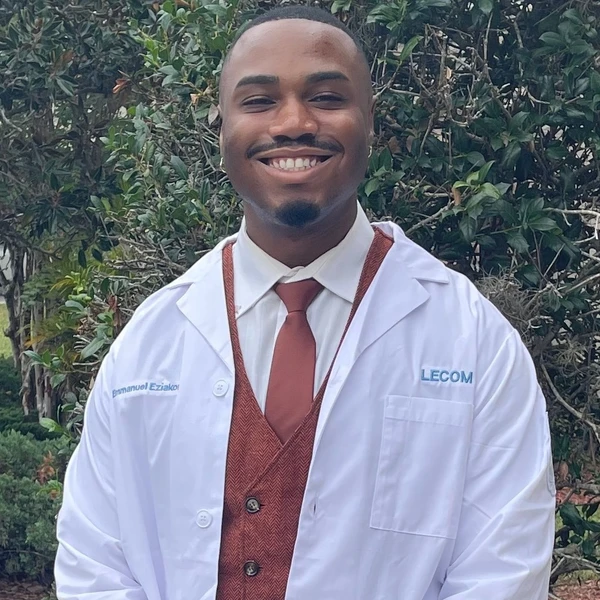
Emmanuel Eziakor
1x
Nominee1x
Finalist
Emmanuel Eziakor
1x
Nominee1x
FinalistBio
Understanding mental health disparities across communities has been both eye-opening and deeply personal for me. I have seen how stigma, limited access to care, and systemic barriers prevent many individuals and families from receiving the support they need. Witnessing these realities has strengthened my desire to become a physician who provides compassionate, trauma-informed care to underserved patients and communities.
I believe every patient has a story that deserves to be heard. Behind every diagnosis is a person whose experiences, environment, and circumstances shape their health and well-being. I want to become the type of physician who listens with empathy and sees the person beyond their symptoms. I am especially interested in the intersection of psychiatry and oncology, particularly how cancer impacts a patient’s mental and emotional health alongside their physical condition. I also hope to explore nutritional psychiatry and better understand how nutrition and lifestyle factors influence mental health and healing. By integrating these perspectives, I hope to support patients facing anxiety, depression, grief, and medical mistrust throughout their treatment journey.
Completing my first year at Lake Erie College of Osteopathic Medicine challenged me academically, strengthened my resilience, and reaffirmed why I began this journey. As I prepare to begin my second year, I feel even more grounded in my purpose and committed to advocating for patients and creating meaningful change in healthcare.
Education
Lake Erie College of Osteopathic Medicine
Doctoral degree program (PhD, MD, JD, etc.)Majors:
- Medicine
Miscellaneous
Desired degree level:
Doctoral degree program (PhD, MD, JD, etc.)
Graduate schools of interest:
Transfer schools of interest:
Majors of interest:
- Medicine
Career
Dream career field:
Mental Health Care
Dream career goals:
Psychiatrist or Oncologist
Duchenne Muscular Dystrophy Research Intern
Vertex Pharmaceuticals2023 – 2023Cancer Research Intern
Georgia Institute of Technology2020 – 20211 yearCancer Research Associate
Pfizer2023 – 20241 yearChiropractic Assistant
Healthsource Chiropractic2021 – 2021Cancer Research Intern
Vanderbilt University2019 – 2019Google Cloud Platform Research Intern
Genentech2022 – 2022
Sports
Football
Junior Varsity2016 – 20171 year
Research
Psychology, General
Kennesaw State University — Medical Mistrust Research Lead2024 – 2025Psychology, General
MD Anderson Cancer Center — Cancer Prevention Medical Student Researcher2026 – PresentBiological and Biomedical Sciences, Other
Vertex Pharmaceuticals — Duchenne Muscular Dystrophy Research Intern2023 – 2023Biological and Biomedical Sciences, Other
Georgia Institute of Technology — Cancer Research Intern2020 – 2021Biological and Biomedical Sciences, Other
Pfizer — Cancer Research Associate2023 – 2024Biological and Biomedical Sciences, Other
Vanderbilt University — Cancer Research Intern2019 – 2019
Arts
South Cobb High School
Music2017 – 2018
Public services
Volunteering
Sweetwater Mission Food Bank — Stocker2018 – 2019Volunteering
Children’s Cancer Center — Volunteer2026 – PresentVolunteering
American Psychiatric Association — Future Leaders in Psychiatry Program (FLIPP) Mentor2026 – PresentVolunteering
Morehouse College — Tutor and Mentor2020 – 2022Volunteering
Wellstar Cobb Hospital — Volunteer2017 – 2018Volunteering
United Negro College Fund — Volunteer Career Coach2023 – 2024Volunteering
Books for Africa — Book Sorter2019 – 2019Advocacy
Gideon's Promise — Department & Defender Development Volunteer2021 – 2021Volunteering
The Trevor Project — Crisis Counselor2023 – 2024Volunteering
Anambra State Association — Medical Assistant2018 – 2018
Future Interests
Advocacy
Politics
Volunteering
Philanthropy
Entrepreneurship
Sharra Rainbolt Memorial Scholarship
Rough. Red. Shiny. These are the words I use to describe the coral bead necklace passed down through my family. Traditional to Delta and Nigerian Igbo culture, coral beads are worn during celebrations such as weddings and festivals, symbolizing beauty, joy, and heritage. For my family, however, the necklace represents something much deeper. It is the last memento of my grandmother, who died of metastatic cervical cancer in Nigeria because she lacked access to adequate medical care. Though I never had the chance to meet her, her story profoundly shaped my life. She was deeply committed to helping her family have access to educational opportunities she never could reach. The necklace became a reminder of how devastating healthcare inequities can be.
On July 15, 2014, cancer became more than a distant family tragedy when my mother was diagnosed with breast cancer. As a child, I watched her vibrant energy slowly give way to fatigue and pain. I felt powerless as I witnessed the emotional, physical, and financial burden cancer imposed on my family. In an effort to help, I began researching breast cancer biology, treatment options, and the role nutrition and lifestyle factors play in cancer prognosis. What started as a search for hope evolved into a passion for medicine and cancer research.
Later that same year, on December 28, 2014, my uncle in Nigeria passed away from leukemia. His death reinforced another painful reality: survival often depends on access to healthcare. My family worked tirelessly to support him financially from abroad, but the treatment options available to him were limited by economic instability and inadequate healthcare infrastructure. Losing both my uncle and grandmother to cancers that may have been treatable elsewhere opened my eyes to the profound disparities in global healthcare.
These experiences inspired me to pursue research opportunities focused on breast cancer and neuroendocrine prostate cancer. Through my work, I have gained insight into the role of inflammation in cancer progression and the importance of developing innovative and accessible treatments. Research has shown me that medicine extends beyond treating disease alone; it requires understanding the emotional, psychological, and social factors that influence health outcomes.
For this reason, I am drawn to Osteopathic Medicine and its holistic philosophy of treating the mind, body, and spirit as interconnected components of health. I aspire to become an oncologist or psychiatrist who integrates evidence-based nutrition and lifestyle interventions into patient care to address both cancer prevention and mental health outcomes. Additionally, as a saxophonist, I hope to train in music therapy and incorporate it into my future practice as a creative therapeutic tool for healing and emotional support.
The coral beads that once symbolized loss now symbolize purpose. They remind me of my grandmother’s memory and my responsibility to improve the lives of others through medicine and research. This summer, I will continue pursuing cancer research through an internship at MD Anderson Cancer Center focused on tobacco cessation and cancer prevention efforts. I am excited to contribute to research that addresses preventable cancer risk factors and promotes healthier communities. In many ways, this opportunity feels deeply connected to my grandmother’s story. Her death from cervical cancer reflected the devastating consequences of limited healthcare access and inadequate preventive care.
The coral beads that once symbolized loss now symbolize purpose. They remind me of my family’s sacrifices, my grandmother’s memory, and my responsibility to improve the lives of others through medicine and research. My grandmother’s dream for future generations lives on through me. I am the fulfilled dream, the manifested plan, and the wish that came true.
Endeavor Public Service Scholarship
The line of patients stretched endlessly under Nigeria’s hot sun, many having waited hours for a brief consultation. I greeted an older man with a smile and explained the intake process to him. As he shared his concerns, I sensed more than just physical discomfort. There was hesitation in his voice, an unspoken weight of mistrust. Though he had seen doctors before, something deeper lingered: the feeling of not being fully seen or heard. His doubt reflected a broader reality. Many communities carry long-standing mistrust toward healthcare systems due to historical neglect, cultural misunderstanding, and systemic inequities.
That moment left an imprint on me and has shaped my commitment to public service. It echoed throughout my research on medical mistrust in African American men and prostate cancer, and it resurfaced during my time at Pfizer, where I worked on cancer therapies that may never reach the communities most in need due to persistent barriers. These experiences made it clear that true healing is impossible without trust, access to healthcare, and culturally competent care. They inspired me to pursue osteopathic medicine and public health, two fields that align with my desire to build patient-centered, holistic, and equitable healthcare systems.
Public service, to me, means restoring trust, especially in communities that have been historically underserved by medicine. Through my research on how discrimination contributes to medical mistrust, I have learned to center my therapeutic approach on individuals’ lived experiences and approach healthcare with empathy, cultural humility, and community partnership. I want to not only provide care but also work actively to dismantle the barriers that make healthcare inaccessible or ineffective.
My passion for public service also includes a focus on improving mental health outcomes in low-income and minority communities. I plan to integrate nutritional psychiatry and osteopathic manipulative medicine (OMM) into primary care to address chronic pain and nutritional deficiencies that often go untreated in these populations. The gut-brain connection, still underemphasized in traditional practice, offers promising avenues for healing. Addressing deficiencies in vitamins, minerals, and fatty acids can reduce depression and anxiety symptoms without immediately relying on medication. This is a particularly empowering option for patients who are wary of pharmacological interventions.
In the long term, I aim to open a primary care facility near Morehouse College, my alma mater. This neighborhood, like many low-income Black communities across America, has endured decades of disinvestment through redlining, segregation, and exclusion from quality care and housing. The consequences of high rates of chronic illness, food insecurity, and medical mistrust are not just statistics to me. They are lived realities I have witnessed and am determined to address. Through my clinic, I aim to provide affordable care, collaborate with local organizations to enhance access to nutritious foods and advocate for public health policies that genuinely benefit these communities.
A career in medicine is not just about diagnosing and treating illness but also about healing systems and rebuilding trust. With the skills I gain through my medical and public health education, I plan to serve as both a physician and an advocate, committed to addressing the conditions that contribute to health disparities.
Sharra Rainbolt Memorial Scholarship
My interest in cancer research began on July 15, 2014, the day my mother was diagnosed with breast cancer. As a child, I watched her health decline, her vibrant energy replaced by fatigue and pain. I felt powerless and unable to ease her suffering. In a desperate effort to help, I began researching breast cancer biology, treatment options, and the role of diet and exercise in cancer prognosis, hoping to find something that might make a difference.
Later that year, on December 28, 2014, my uncle in Nigeria passed away from leukemia. His diagnosis carried an added burden because of the economic instability and lack of access to adequate medical care in Nigeria. My family did everything we could to support him financially from abroad, but the treatment options available to him were limited. We have often regretted not being able to get him care in another country where cancer treatment is more advanced. His death was not just a personal loss, but also a painful reminder of the global disparities in healthcare.
These two experiences placed a heavy emotional and financial burden on my family. My mother’s treatment brought medical bills, transportation costs, and emotional strain. We were simultaneously supporting family overseas, often choosing between paying for my uncle’s care and covering our expenses. I watched my parents stretch every resource to make ends meet while shielding us from the mental turmoil they battled each day.
Despite the pain, these moments shaped who I am. They sparked in me a deep curiosity and a determination to research cancer. Since then, I have pursued research opportunities focused on both breast cancer and neuroendocrine prostate cancer. Through this work, I have gained insight into the role of inflammation in driving cancer growth and the importance of accessible and equitable healthcare. Every project I work on is driven by my family’s experience and a desire to prevent others from going through the same suffering.
Through it all, I have learned that resilience, compassion, and knowledge can emerge from adversity. I have seen how cancer affects not just the individual but the entire family, financially, emotionally, and mentally. My experience with cancer has inspired me to study Osteopathic Medicine, focusing on understanding the connection between the mind, body, and spirit and how these facets of our existence can be harnessed to improve health outcomes. I plan to become an Oncologist or Psychiatrist who utilizes nutrition to treat dietary deficiencies that contribute to poor mental health outcomes and an increased risk for cancer. Moreover, as a saxophonist, I hope to train in music therapy and integrate it into my therapeutic approach to offer my patients unique treatment options they may have never considered.
I am applying for this scholarship to begin my education and research at Lake Erie College of Osteopathic Medicine, where I plan to explore the efficacy of phytochemicals in preventing and treating cancer. With the help of this scholarship, I will be able to join the next generation of scientists and physicians who will think outside the box to enhance our understanding of cancer prevention and treatment. Thank you for considering my application!