Gender
Female
Ethnicity
Hispanic/Latino
Hobbies and interests
Public Health
Nursing
Pediatrics
Global Health
Medicine
Reading
Mystery
Thriller
Literary Fiction
I read books multiple times per week
LOW INCOME STUDENT
Yes
FIRST GENERATION STUDENT
Yes
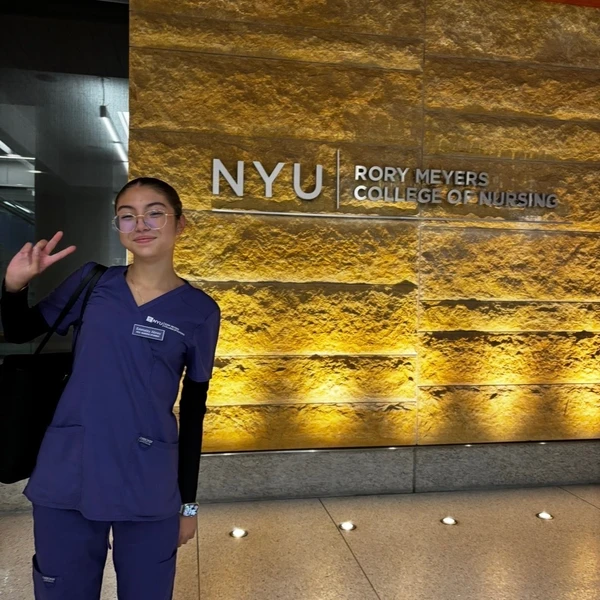
Emmaley Abreu
3x
Nominee3x
Finalist2x
Winner
Emmaley Abreu
3x
Nominee3x
Finalist2x
WinnerBio
My journey into healthcare has been deeply personal and far from traditional. At five years old, I was diagnosed with Type 1 diabetes. While most children were learning how to ride bikes or play outside without worry, I was learning how to check my blood sugar, count carbohydrates, and give myself insulin. Later, I was also diagnosed with celiac disease, which added another layer of challenges to everyday life. Growing up with chronic illness was often overwhelming, but it also shaped my perspective in profound ways. I learned early what it means to depend on compassionate healthcare providers, and I developed a deep empathy for others navigating difficult health conditions.
I am equally passionate about public health and global healthcare. As a volunteer with Culture Beyond Borders in Kumasi, Ghana, I gained firsthand experience addressing healthcare disparities. As Co-Social Media Director for Volunteers Around the World (VAW), I promote global health initiatives, an example would be when I went to a medical mission trip to Peru. These experiences, coupled with NYU’s global nursing courses, perfectly align with my goal to integrate public health and clinical care while advocating for equitable healthcare access.
Education
New York University
Bachelor's degree programMajors:
- Registered Nursing, Nursing Administration, Nursing Research and Clinical Nursing
GPA:
3.9
Curtis High School
High SchoolGPA:
4
Miscellaneous
Desired degree level:
Bachelor's degree program
Graduate schools of interest:
Transfer schools of interest:
Majors of interest:
- Registered Nursing, Nursing Administration, Nursing Research and Clinical Nursing
- Health Professions and Related Clinical Sciences, Other
- Public Health
Career
Dream career field:
Hospital & Health Care
Dream career goals:
Nurse Practitioner
Co-Social Media Director
Volunteer Around the World (VAW NYU Chapter)2024 – 20251 yearTeen Leader: K-2 Tutor
Read Alliance2019 – 20212 yearsSenior Teen Leader: K-2 Tutor Manager
Read Alliance2021 – 20232 yearsLicensed Practical Nurse
Nursing Home2023 – 20241 yearStudent Nurse Extern
NYU Langone2024 – 2024Licensed Practical Nurse
Hope Home Care2024 – Present2 years
Sports
Track & Field
Club2013 – 20163 years
Arts
Orchestra- Curtis High School/College of Staten Island
Music2017 – 2020
Public services
Volunteering
Geriatric Student Interest Group NYU — Events Coordinator2023 – 2025Volunteering
Volunteer Around the World — As an intern, I fundraised for our trip to Cusco, Peru, where we provided medical services to underserved communities. I attend training sessions to prepare for assisting in clinics under the supervision of licensed healthcare professionals.2024 – 2025Volunteering
Cultures Beyond Boarders — Volunteer in Kumasi, Ghana. Helped school officials and students cooking and sewing clothes for the neighboring communities and schools.2025 – 2025Volunteering
Salvation Army — Volunteer2019 – 2019
Future Interests
Advocacy
Volunteering
Entrepreneurship
Sara Jane Memorial Scholarship
From the time I was five years old, I had the responsibility of managing type 1 diabetes. Every day since then, I have had to monitor my blood sugars and insulin dosage. Dealing with diabetes has been a struggle. I remember the nurse’s office in every one of my schools was always the farthest away. Walking there with a blood sugar of fifty and dropping fast wasn’t ideal; I would feel my entire body shutting down from the lack of sugar and energy. My hands would start shaking and my vision would blur. With these symptoms, I struggled alone to the basement to find the nurse and ask for anything that could help me feel even slightly stronger. During those moments, I wished I had someone to guide and support me. That is why I want to become a nurse who helps those who need guidance during diagnosis and treatment.
I always knew modern medicine was the future. When I heard about a high school program that would allow me to obtain my practical nursing license (LPN) by age 18, I immediately took that opportunity.
As a nursing student completing clinicals in an underserved community, I met many people living with the same condition but without the same access to care. In my life, health has always been a priority; however, for many of the patients I encountered, it was not because it was not affordable. Individuals suffering from preventable complications such as hypertension, kidney failure, and amputations was extremely unsettling.
I quickly realized that lack of access to insulin was a major barrier in my community. That realization sparked my desire to make a meaningful difference in underserved populations through my future education and career.
As I continued my clinical experience, I became more proactive in supporting patients beyond bedside care. I began sharing information about programs such as the Lilly Diabetes Solution Center and Novo Nordisk NovoCare, which help cover the cost of insulin and related medications. Being able to provide patients with resources that could directly improve their quality of life was incredibly rewarding. These moments reinforced my belief that nursing is not only about treatment, but also about advocacy, education, and access.
When it came time to apply to college, I had no doubt about pursuing nursing. Now, as an NYU BSN student, I continue to serve my community through different roles such as Events Coordinator in the Geriatric Student Interest Group and as a student nurse extern at Langone Health. Through these experiences, I have worked with diverse patient populations and gained hands-on clinical exposure across multiple departments. My externship strengthened my clinical skills while deepening my empathy and understanding of patient care. Additionally, organizing events and participating in outreach initiatives has allowed me to collaborate with peers to support vulnerable populations, particularly older adults. These experiences have further solidified my passion for nursing and my commitment to service.
I fully believe that diabetes has shaped me into a resilient and self-aware individual. Over time, I learned how to manage my condition through discipline and consistency. Knowing that my life depending on such a small vial of insulin, helped me appreciate life even more. My chronic illness, gave me a deeper sense of empathy for others facing similar struggles. I no longer see my condition as just a hardship, but as a source of purpose that drives my desire to care for others. Nursing isn’t just a job to me but my life’s passion and mission to help those in need!
Let Your Light Shine Scholarship
I plan to create a legacy by changing the way communities that get overlooked get the care and support they deserve. For me getting into the field of nursing is not about landing a job it is about transforming how patients feel when they seek help. I want to become a nurse practitioner and one day open my office, where patients are treated like people, not just numbers.
As a Licensed Practical Nurse I have seen how some people, from minority groups, do not get the care they need. I have seen people having a time looking after themselves not because they are unwilling to they are just missing the right information or help. This has made me want to keep learning and growing in my field by becoming a Registered Nurse and getting more experience and then by becoming a Nurse Practitioner so I can help even more patients. I am aiming to create a practice that's all about stopping people from getting sick in the first place not just patching them up after they are already under the weather. I am aiming to set up a place where patients can chat openly with their caregivers about their health and make decisions on their care. In places care is only given when someone is already sick and I want to change that. I am aiming to break the pattern of people falling ill and not getting the support they deserve by making living choices and ensuring healthcare is accessible to the nurse practitioner and patients.
My reason for doing this is very personal. As a hispanic, first-generation college student in the healthcare setting, I know what it is like to navigate systems that were not made for me the woman in healthcare. I have seen how easy it is for people to feel ignored or discouraged not because they're not capable but because they do not have the support or representation they need. I want to be part of changing that through the care I give. The example I set for the patients and the nurse practitioner. What drives me is the ability to connect with people in ways. Whether I am taking care of a patient helping a coworker or volunteering in my community I approach each interaction with kindness and intention. Being a nurse has taught me that small moments of understanding and compassion can have an impact and I carry that with me everywhere I go to help the patients and the nurse practitioner.
At this time I do not want to limit myself to what's considered traditional or safe. My vision is to build something of my one day the nurse practitioner office. Opening my practice is not about growing professionally but about creating a healthcare space that reflects my values, where respect, cultural awareness and good care are the foundation for the patients and the nurse practitioner. For me success is not about what I achieve. About the difference I can make in peoples lives, the patients lives.
The legacy I hope to leave is one that will continue to help people long after I am gone, the patients and the nurse practitioner. Through my work I want to leave not a practice but a standard of care that prioritizes humanity, education and equity for the patients. I want people to feel that their health matters, their voice matters and that they deserve to be cared for with kindness and respect, by the nurse practitioner.
Ruthie Brown Scholarship
From vomiting on a plane coming from Puerto Rico to spending my entire childhood in doctor’s offices and hospital settings, I knew healthcare was going to play a major part in my life but couldn’t have imagined how it would become my life's passion. I was just five years old when I was diagnosed with type 1 diabetes, and unlike type 2 (the type my Hispanic family was more familiar with), it was more complicated. I remember the look of pure shock the nurse had when checking my blood sugar that first time before I was diagnosed, then her running out for help. My mom was terrified, and I didn’t know what was happening or why it was. I just remember how caring and kind the nurse was in my situation. The nurse was there for me when I was scared in the PICU, explaining my situation and reassuring my family while also bringing me cookies and treating me with compassion. This, for me, made nurses my heroes.
Once I was ready to start going to school, the school nurses became a part of my daily primary caregivers. With blood sugars ranging from 50 to 400, I was in their office very very often. I would help them organize ice packs and set up the office almost every day. Little did I know, I am now enrolled in the same BSN program that the school nurses who cared for me also went through. This realization came full circle in a way I never expected. Those times truly showed me how important healthcare, especially nursing, is in my life.
It wasn’t the physical relief from symptoms of diabetic ketoacidosis (such as vomiting, fatigue, and headaches) that I truly cherished from the nurses and doctors who cared for me throughout my life, it was the emotional care I received. With both of my parents working during the day, whenever I had hyperglycemic flares, it was the nurses keeping me company until my parents could come to me. They were the ones placing my IVs and the ones giving me extra cookies when my sugar dropped. These kind and caring people became role models in my life and have allowed me to appreciate the medical profession deeply. All these factors influenced my decision not only to pursue healthcare but to begin a career specifically in nursing.
Despite the emotional weight of my health, I’ve always carried a deep sense of responsibility not just to succeed, but to truly help others. Like many passions, it comes at a cost. During my first year of college, I worked three jobs and paid off over $26,000 in student loan debt. That summer, I worked 60 hours a week, and even when classes began in the fall, I kept working 20 hours weekly while balancing full-time coursework. Without working through school, I would be facing over $100,000 in debt by the time I graduate. This sacrifice hasn’t been easy at all, but it’s been deeply necessary.
Receiving the Ruthie Brown Scholarship would allow me to pay off my second year; a balance of over $13,000 with an interest of over 11% each semester. This help would be life-changing and relieve a significant weight from my shoulders. Instead of taking on even more hours at work to meet tuition deadlines, I would finally be able to shift my focus toward clinicals, exams, and patient care without the constant pressure of financial survival. Even though I’ve come this far through sacrifice and determination, this scholarship would allow me to move forward with stability and purpose.
Henry Respert Alzheimer's and Dementia Awareness Scholarship
I have seen a lot of strength in people who have Alzheimers. These people are very strong. I did not have anyone with dementia at home. I spent time with older people who had it. This changed the way I thought about things. I met with people who were taking care of people and I heard their stories. Each story showed me how people are connected to each other.
What I noticed is that dementia changes people in a way. I met people when I was learning and I saw how easy it is to forget things. People start to lose their independence. They forget faces they knew before. They forget what they talked about a little while ago. Simple things become hard for them to do. Someone who is usually happy might just sit there not knowing where they are. This is very hard for their families. It is very sad when someone does not know the people they love. It is like they are fading away piece by piece and this makes people very sad.
Even with all this being kind to people with dementia makes a big difference. If you look at them for a while and choose your words carefully this can make them feel safe. If you listen to them without rushing they can still feel seen even if they forget things. These moments are important. They show that even if people forget things they are still the person.
Watching these moments made me realize that patience is very important when taking care of people. The people who take care of them need to slow down and listen carefully especially when they are working with people who have dementia. What is important is the work that families do taking care of their loved ones every day. This is not easy. We should not forget about it.
Now I understand how every moment is important when I am taking care of people. Because of what I have seen I think it is very important to be kind and warm when people need help. One day someone will trust me with their fears and confusion. This trust means I need to speak up especially when others do not understand how hard it is to live with Alzheimers. Every small thing I do can make a difference. What I remember is the moments when just being there was more important than fixing anything.
Just because someone is confused does not mean they are not the person. I have learned that taking care of someone is not the same as fixing them. The moments that matter most are when people cannot talk anymore. We should always respect people even if they forget things. Love is not about curing people. About being, with them. It is important to see people even when they cannot do anything. Dementia taught me that we should value the person, not their condition. The person is still there even when they forget everything.
Losinger Nursing Scholarship
Growing up with Type 1 diabetes is what made me choose nursing. I was five years old when doctors told me I had it. Suddenly my daily routines included checking my blood sugar counting insulin amounts and watching out for emergencies that could happen without warning. Other kids worried about homework or playing outside; meanwhile I got used to needles counting carbs and having emergency kits. My life changed on and it was built around my health needs, which were supposed to last forever.
I remember walking in elementary school one foot in front of the other. The lights looked like streaks my fingers twitched at my sides and my body felt heavy like sand. Through I got short of breath and just wished for someone to be with me. Not to fix anything but just to be there. That feeling of panic taught me how fragile the line is between being in control and losing control. Even though I was close to getting care I felt far from feeling safe. That's how I see people now. I really see them.
Now I'm working as a licensed practical nurse while still studying. I want to offer the kind of care I once looked for myself. Because of what I've been through it's natural for me to get close to patients especially when they're dealing with long-term health issues. When I'm there beside them during moments of weakness it makes those moments meaningful. I help turn their hardships into something steady, quiet and real.
One reason I stay in nursing is that I want to stand by people when they need it most. Care is more than facts from a textbook. It's about kindness and knowing what to do. Moments matter, especially when someone feels lost in pain or fear. What keeps me going is being there not with skills but with real presence. Helping isn't about fixing; it's about seeing the person behind the symptoms.
What stands out most about care in medicine isn't just treatment. It's how someone feels seen beyond their symptoms. A warm glance, a voice. These small things carry weight when pain or fear take hold. Of focusing only on numbers or scans real connection happens through listening without rushing. Kindness shows up not in gestures but in pauses in nods in words chosen carefully. Each moment adds up. Not because its dramatic,. Because it acknowledges who the person truly is.
Illness tends to make people feel shaky inside exposed in ways they did not expect. Yet holding space. Really hearing someone staying calm when fear rises just being present through seconds. Changes how it feels to be unwell. Trust grows quietly when a person senses they matter beyond symptoms or charts. Then words flow easier choices become shared healing gains ground. Moments like these do not shout. They settle into bones.
Seeing life through hospital halls changed how I see trust. Moments after someone spots the device on my side stories begin to flow. Stories of blood sugar highs late-night checks fear at mealtime. Care shifts when they realize we both carry this weight daily. Understanding shows before words are spoken. Healing finds room where sameness lives. What matters often isn't skin on skin but showing up with real care. Being there means seeing the person behind the illness not symptoms. Sometimes a quiet moment speaks louder, than any treatment plan could.
Still moving forward in nursing I plan to hold on to what matters. Not just treating symptoms. Seeing people. This shapes how I show up each day. Care becomes different when hands-on knowledge meets presence. Healing grows easier when someone truly listens. Every small moment can say: you're seen you matter we walk together.
Lippey Family Scholarship
Staying alive sometimes takes priority over homework. At the age of five, I got a diagnosis that changed everything, there was no turning back. Blood sugar checks become routine, like brushing teeth or tying shoes. Insulin injections shaped each hour, every meal, all day long. My classrooms lessons would go on, but my mind listened for warning signs instead. A shaky hand meant trouble before anyone notices. Midway through class, my sugar would drop and changes how I handle schoolwork; my mind blurring and my heart racing. When testing, low blood sugar hit hard, shaking takes over my fingers, and my eye-sight gets hazy. Thinking slows, like wading through thick air, despite knowing answers just fine. Writing becomes clumsy, shaky lines forming words poorly. Frustration creeps in, seeing my test performance dip not because I did not know the material but due to things out of my control.
Getting to college means facing new hurdles. With no affordable housing near campus, I spend almost four hours every day on buses and trains instead. Tiredness from the trips piles up, making it harder to stay steady. When fatigue hits, my blood sugar can drop without warning, so I have had to pause mid-journey more than once just to eat something. Each unplanned stop stretches the trip further, landing me at lectures with little energy left to keep up. Even as I study, I hold down a job to pay for things like food and gear that help me manage my blood sugar through busy class schedules and rides across town. Juggling shifts, lectures, and a lifelong condition. Doing this all while borrowing money (loans) just to stay enrolled has made every single day a worry.
Still, I believe that those tough moments helped me grow in ways I did not expect. Facing daily demands of diabetes built toughness inside me, a steady routine, a voice for speaking up when things are unfair. Rather than letting barriers set boundaries, I found ways around them, kept walking ahead without stopping. Each step forward came from learning, adjusting, refusing to stay stuck.
Being who I am today comes from what I’ve lived through. Working as a Licensed Practical Nurse, my insulin pump tends to start conversations before I even speak. Patients managing diabetes seem to relax around me, sensing I’ve walked their path. They see the device on my body, then something shifts. Because of that, moments turn into real talk, not just routine checks. Knowing the struggle and being empathetic with my patients helps me stay present in ways textbooks never could teach.
Every step forward feels heavier when you're the first in your family to walk this path. Nursing school tests more than knowledge, it reveals strength shaped by late nights, tight budgets, and quiet struggles no one sees. Money decreasing every second, balancing class schedules and assignments, work shifts, and the moments when my body asks for rest I cannot give. This support would ease that weight just enough to breathe again. It means staying in class instead of clocking in. Staying focused instead of worn thin. One day soon, I will sit beside someone facing hurdles much like mine. When that moment comes, I’ll offer steady hands, but also an understanding that I can help them.
Tawkify Meaningful Connections Scholarship
Option 3:
The relationships which I have developed throughout my life have become my most essential need. Relationships have helped me achieve my personal growth while discovering my career path and understanding my true self. Type 1 diabetes has been a medical condition I have had since my childhood. I found that having people who support me during difficult times provides me actual support. My parents provided their complete support to me during my dangerous nights of hypoglycemia.
From the time I was five years old, I had the responsibility of managing type one diabetes. Everyday since then, I have had an immense amount of responsibility with having to monitor my Blood Sugars and Insulin dosage. Dealing with diabetes has been a struggle. I remember the Nurse’s Office in everyone of my schools growing up was always the farthest away. Walking there with a sugar of fifty and dropping fast wasn’t ideal; I would feel my entire body shutting down from the lack of sugar and energy. The physical signs being that my hands would start shaking and my vision blurring. With these symptoms, I struggled alone to the basement to find the nurse to ask for any type of sugar or carb to make me feel the slightest bit stronger. It was during those times when I wished I had someone to guide and help me manage. That is the reason why I want to become a nurse. Helping others like me who needed guidance during the time of diagnosis and throughout treatment is my life’s passion.I always knew modern medicine was the future. That is why when I heard of a High School program that would allow me to obtain a Practical Nursing License by the time I graduate, I leaped at that opportunity.
The nurses who I met during my childhood years became significant people in my life; providing me with medication and care while they checked my blood sugar levels. They provided me with explanations about my medical condition when I experienced confusion or fear. The staff members created an atmosphere of support which made me feel protected through their ongoing care. The people I met during my life who showed me compassion created a memory which I will always remember. The experience made me decide to train as a pediatric nurse practitioner because I want to provide medical care for sick children; to be that person for kids and their families.
I want to help kids with their illness’ and be there for them when they need someone to talk to. I fully believe that my relationships with people have helped me stay strong; since, I am also the first one in my family who will attend college. My medical condition requires treatment and I need to work at multiple jobs which makes my life challenging. I have discovered that I need assistance from others to accomplish my objectives. My family together with my mentors and friends provided me with help during my times of need. The people who work with me provide motivation to continue forward during difficult situations.
My future nursing work will depend on my ability to build professional relationships with others; such as working in places like the PICU or NICU where I can take care of kids who're really sick. I want to establish trust with their families while I assist them through their anxious moments. I would really like to understand how they are feeling and talk to them in a way that makes sense. My personal patient experiences have demonstrated to me how therapeutic power.
James T. Godwin Memorial Scholarship
My sister is one of the people I know she is amazing and so inspirational. Her strength and determination to help others is truly amazing. At eighteen years old my sister enlisted into the Navy. I was ten years old when my sister enlisted into the Navy but I still remember it like it was yesterday. My sister was my best-friend and my favorite person in the world. One of my memories about my sister was actually right after she returned from boot camp.
The first thing our family noticed when my sister returned was how fast my sister ate her food it was really insane. My sister finished her plate in less than three minutes while the rest of us were barely halfway through with it. We all looked at each other. Started joking asking if the Navy had been starving my sister because it takes us three minutes to eat one bite let alone a whole meal. My sister laughed and said that during boot camp my sister only had a minutes to eat or they would get the food taken away so my sister learned to finish her meals super quick.
That moment became a running joke in our family, where we would jokingly time how fast my sister ate to see if my sister could beat her record from boot camp. My sister never quite reached that speed again but it always makes us laugh every single time. Those moments really remind me of the discipline my sister learned through her service and let me appreciate all the effort by personnel like my sister.
Beyond the running joke my sisters commitment to helping others has always inspired me. After serving in the Navy my sister continued that mission of helping others by becoming a nurse. My sister now works in a hospital on a Med-Surg floor caring for patients every day. Seeing my sister dedicate her life to service both in the military and in healthcare has had an influence on me.
If I did not have Type 1 diabetes I believe I would have definitely followed directly in my sister’s footsteps and pursued service as well. However despite not being able to serve my sister’s example truly showed me that there are ways to serve and help others. My sister was truly one of the main reasons that I chose to pursue nursing. With nursing I can still dedicate my life to helping people and making a difference in my community.
Whenever I think about my sister’s time in the Navy I remember that funny dinner moment, when my sister finishes a meal in just minutes while the rest of us sat there amazed. It may seem like a moment but to me it represents the great life my sister has had filled with discipline, sacrifice and especially strength. All those qualities are what I admire much in my sister. It especially reminds me of how my sisters example shaped the path I'm, on today
Kalia D. Davis Memorial Scholarship
It wasn’t the physical relief from symptoms of DKA (such as vomiting, fatigue & headaches) that I truly cherished from the nurses and doctors that cared for me throughout my life, it was the emotional care that I received. With both of my parents working during the day, when I had hyperglycemic flares it was the nurses keeping me company, they were the ones placing in my IV’s, and the ones giving me extra cookies when my sugar dropped. The kind and caring nurses became role models in my life and allowed me to appreciate the medical profession. All these factors influenced my decision to not only pursue healthcare but to begin a career specifically in nursing.
I always knew healthcare was my future. That is why when I heard of a High School program that would allow me to obtain a Practical Nursing License by the time I graduate, I leaped at that opportunity. As a high school nursing student, living in an underserved community attending clinicals, I met many people affected by the same condition as me, but hadn’t had the same approach as I had to treatment. In my life, health is extremely important; however, in the patients I’ve met, health was not a priority because it wasn’t affordable. Seeing patient’s struggle in my community with the same health issues as myself because of finances was unsettling. Diabetes related Hypertension, Kidney Failure and even amputations could have been prevented if only insulin was made available. I saw that insulin access was the problem many faced in my community, and wished that I could help solve it.
When I continued my clinicals I had a new approach to help as many patients learn about all the opportunities available to them. I spoke about different support programs like the Lilly Diabetes Solution Center and Novo Nordisk NovoCare that would help pay for both insulin and diabetes related medicine. Helping my community is extremely rewarding by knowing that I can make a difference in the lives of people going through the same difficulties as myself.
Making a difference is my life’s passion, but it has been a hard journey. During my first and second years of college, I worked three nursing jobs and paid off over $20,000 in student loan debt. The summer between, I worked over 60 hours/week, and when classes began in the fall, I kept working 20 hours weekly while balancing my full-time pre-requisite coursework. Without work, I would be facing over $100,000 in debt by the time I graduate. Although working while in school has been quite difficult, everyday I am grateful for the chance I have to work as an LPN and attend RN school at NYU.
Receiving this Scholarship would significantly support my academic goals by relieving some financial burdens. It would provide me to fully dedicate myself to my studies without constantly worrying about the financial aspects of my situation, including my health. Nursing is my passion, however the low blood sugars after a 2 hour commute because I cannot afford dorm housing or tuition is starting to take a toll on my ability to study and prepare myself before classes. With this scholarship however, I would be able to spend more time studying and working towards my passion while also maintaining my health safely. As a nurse I understand that being a role model is extremely important which is why I believe that with extra help my situation will improve and push me to be a better person, a better role model, and most importantly a better nurse.
Robert F. Lawson Fund for Careers that Care
I remember how the Nurse’s Office was always the farthest away in every school I attended. There were days when my blood sugar would drop so low (down to fifty) where I could barely function. My body felt like it was shutting down, my hands trembling uncontrollably, and my head pounding as if it might burst. I could feel the energy draining from me with every step as I struggled to walk down the long, empty hallways to the nurse's office, which always seemed like a marathon away. There were no friends by my side, no one to lean on, just me, battling my own body as it betrayed me. By the time I reached the nurse, I could barely speak, desperate for anything; juice, crackers, a single piece of candy to bring my blood sugar back up.These experiences weren't rare, they were part of my daily life, a constant reminder of my illness. I was diagnosed with type 1 diabetes at five years old, and even though I was young, I had to grow up fast. The challenges of managing my condition were relentless. I had to learn to measure my carbs meticulously, calculate my insulin doses, and anticipate every little thing. Ranging from what I ate to how I felt, could send my blood sugar soaring or crashing. There were days when I’d inject my insulin and pray that I got the dose right because a slight miscalculation could send me spiraling into Diabetic Ketoacidosis (DKA), a dangerous fatal condition. The journey of living with diabetes as a child was incredibly isolating at times. I would often wonder, "Why me?" as I sat in the nurse's office recovering from another low, feeling weak and alone. But these moments, as tough as they were, shaped me. They instilled in me a sense of resilience and determination that has guided me throughout my life. These experiences deeply influenced my decision to become a nurse. The care and compassion I received from the nurses who helped me manage my condition were completely lifesaving. I knew from a young age that I wanted to be that source of support for others, especially children who, like me, were facing overwhelming medical challenges. I was drawn to the field of nursing because of the intimate, hands-on care it allows, and because I know firsthand how critical that support can be. Balancing my health while pursuing my education and working two demanding jobs has also required immense strength and determination. As a first-generation college student, the burden of student loan debt with high-interest rates has made every financial decision a desperate balancing act. Despite these challenges, I remain committed to my goal of becoming a Nurse Practitioner through NYU’s dual BSN/MSN program, specializing in pediatrics and eventually working in acute settings like the Pediatric Intensive Care Unit (PICU) or the Neonatal Intensive Care Unit (NICU). My personal experience with a chronic condition has given me a profound understanding of the vulnerability and resilience of young patients. I want to be the nurse who is there for them in their most critical moments. The one who not only provides the best possible medical care but also offers comfort, compassion, and understanding to both the children and their families. I know what it feels like to be on the other side of the stethoscope, to face a health crisis as a child and feel utterly helpless. I want to use that experience to connect with my patients, to let them know that I understand, and to fight for them with every ounce of determination I have
New Jersey New York First Generation Scholarship
WinnerFrom the time I was five years old, I had the responsibility of managing type one diabetes. Everyday since then I had an immense amount of responsibility with having to monitor my Blood Sugars and Insulin dosage. Dealing with diabetes has been a struggle. I remember the Nurse’s Office in everyone of my classrooms growing up was always the farthest away. Walking there with a sugar of fifty and dropping fast wasn’t ideal. I could feel my body shutting down from the lack of energy. My hands would start shaking and my head would pound. Alone, I struggled to the basement to find the nurse to ask for any type of sugar or carb to make me feel the slightest bit stronger. At that time I wished I had someone to guide and teach me how to manage. That is the reason why I want to become a nurse. Helping others like me who needed guidance during the time of diagnosis and throughout treatment is my life’s passion.
I always knew modern medicine was the future. That is why when I heard of a High School program that would allow me to obtain a Practical Nursing License by the time I graduate, I leaped at that opportunity. As a high school nursing student, living in an underserved community attending clinicals, I met many people affected by the same condition as me, but hadn’t had the same approach as I had to treatment. In my life, Health is extremely important; However in the patients I’ve met, health was not a priority because it wasn’t affordable. Seeing patient’s struggle in my community with the same health issues as myself because of finances was unsettling. Diabetes related Hypertension, Kidney Failure and even amputations could have been prevented if only insulin was made available. I saw that insulin access was the problem many faced in my community, and wished that I could help solve it. This sparked my desire to positively impact underserved communities like my own throughout my future education and career.
When I continued my clinicals I had a new approach to help as many patients learn about all the opportunities available to them. I spoke about different support programs like the Lilly Diabetes Solution Center and Novo Nordisk NovoCare that would help pay for both insulin and diabetes related medicine. Helping my community is extremely rewarding by knowing that I can make a difference in the lives of people going through the same difficulties as myself. From these experiences I believe that an education in Nursing can help me to continue to impact underserved communities throughout the country.
I aim to facilitate access to free insulin for dependent diabetics who lack the financial resources or time to manage their condition. This scholarship will help me achieve this goal and more by enabling me to pursue a nursing education that would otherwise be difficult to attain due to finances. I would be able to go to my dream school that has many opportunities including research programs and internships at their associated hospitals. Receiving this scholarship will allow me to have the fullest experience a college student can have and will assist in preparing me to get a license in the nursing field. Additionally, the opportunity of obtaining a job immediately after receiving my degree is exciting, as it would allow me to serve my community as soon as possible.