user profile avatar

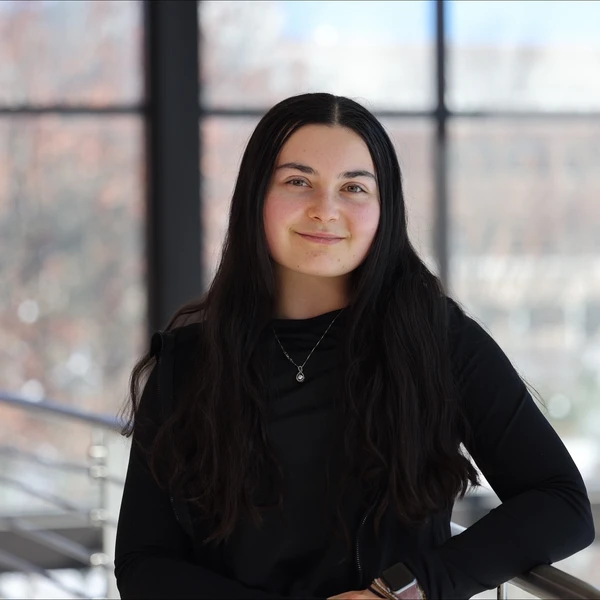
Emma Kamionka

1x

Finalist

1x

Winner

Bio

A Senior in my undergraduate. Soon to graduate with my Bachelor's of Science degree. I major in Psychology and plan to attend Pennsylvania State University at the Behrend campus in Erie, PA, for my Master's in Applied Clinical Psychology. As a woman in the neurodiversity community, I have developed a strong passion for understanding human behavior, which led me to pursue certification in applied behavior analysis (ABA) and gain hands-on experience as both a Behavioral Health Technician and Direct Support Professional working with individuals diagnosed with autism spectrum disorder. Through these roles, I have built skills in behavioral observation, intervention planning, collaboration, and communication while supporting clients’ developmental and interpersonal growth. My academic interests center on clinical behavior, cognitive neuroscience, and neuropsychology, with a focus on how environmental factors, stress, sleep, and neurological differences influence cognition and behavior, particularly in neurodiverse populations. I am especially interested in research involving cognitive assessment, neurodevelopmental disorders, and therapeutic approaches such as CBT and brain imaging techniques. I plan to pursue a master’s degree in applied clinical psychology at Penn State, where I can gain both research and practicum experience, and ultimately use my education to contribute to research, mentor others, and improve the quality of life and independence of individuals with cognitive and behavioral conditions.

Education

Pennsylvania State University-Penn State Erie-Behrend College

Master's degree program
2026 - 2028
  • Majors:
    • Clinical, Counseling and Applied Psychology
Commonwealth University of Bloomsburg

Bachelor's degree program
2024 - 2026
  • Majors:
    • Psychology, General

Luzerne County Community College

Associate's degree program
2022 - 2024
  • Majors:
    • Psychology, General
  • Not planning to go to medical school
  • Career

    • Dream career field:

      • Mental Health Care
    • Dream career goals:

      Clinical Neuropsychologist

    • Direct Support Professional

      Caregivers America
      2024 – Present2 years
    • Behavioral Health Technician

      Autism Behavior Services
      2024 – Present2 years

    Sports

    Softball

    Varsity
    2018 – 20224 years

    Field Hockey

    Varsity
    2018 – 20224 years

    Awards

    • Most improved Award

    Research

    • Psychology, General

      Bloomsburg University — Main Researcher/Independent Study
      2025 – 2026

    Public services

    • Volunteering

      Bloomsburg University — accepted students day assistant
      2026 – 2026

    Future Interests

    Advocacy

    Entrepreneurship

    Tawkify Meaningful Connections Scholarship
    I believe myself to have a meaningful relationship with my mother, and I believe this has led me to have a high sense of emotional intelligence. From a young age, I have always felt safe and provided for by my mom, and to this day, she always knows what to say when I am sad or fearful of a new change that will happen in my life. She understands my emotions because a lot of them she experiences and can relate to, because she is my mom, but also a woman. She has always supported me in my goals and encouraged me to take risks, but also acknowledges when I am spiraling and could use a break. I can always rely on her when I need to talk or just when I need a hug. I sometimes believe she knows me better than I know myself, but at this age in each other's lives, I value the teachings we learn from each other. Her wisdom has only amplified my level of emotional intelligence, and I hope to be half the woman and inspiration she is. This has inclined me to want to help and understand others. This need to help and understand others has led me to become a behavioral health technician. I have grown to know my clients well and their body language to know whether they are upset, happy, or somewhere in between. Having emotional intelligence has provided me with a sense of satisfaction that I want to continue to have when forming healthy, longer-lasting relationships. It comes naturally to me to understand and interpret others' emotions and to communicate with them. I am fascinated by human brain/behavior and mental processes, so I decided to major in psychology to develop my sense of emotional intelligence even more. Now that I am graduating this semester am looking back on how much I have grown regarding my awareness of my emotions and the emotions of others. I am motivated to continue understanding emotions, so after I graduate, I plan to complete my Master’s in applied clinical psychology and perhaps pursue a PhD. This will be a big change in my life because I will be moving out of my parents' house for the first time, I will be going to a new school and a new job, and it will all cost money. But my mom is there to support me throughout this transition every step of the way. She understands what it's like to move out and start new, but she plans to be my cheerleader in this next phase in my life and the rest to come. Her consistent support has allowed me to become the consistent supportive person I am today, and develop long-lasting relationships, one being one with my boyfriend. We have been together for over four years, and we plan to move in together this summer and continue our academic journeys together with as much emotional support as we can provide. Overall, with my mother providing a safe, understanding environment, I have also come to understand her and others' emotions, and this has led me to want others to help develop a good sense of emotional intelligence in their relationships with others and with themselves. Sometimes I do question whether being a psychologist is something I want to do, but I am reminded every day by the interactions I have with others and the need to develop secure attachments with them. Additionally, watching my clients grow and building the rapport I have with them cannot be matched by settling on another career path where I am isolated from human interaction. With this next chapter in my life, I am hopeful to develop new relationships with my cohort, professors, and future clients, and to maintain my secure relationships.
    Strong Leaders of Tomorrow Scholarship
    I consistently ask and answer innovative questions or challenge the status quo. As a teacher's assistant, I explore teaching techniques, assessment methods, and work with incoming psych majors through discussions, presentations, and tutoring. As a TA, I attended the Psych 101 course, held office hours weekly, presented to the Psych 101 class, and participated in the Bloomsbury University community. I also enjoyed planning and attending review sessions for exams, as I believe it helps students in a fun, engaging way. I love the relationships I formed with the other TAs, and it brings me hope that I will continue to form positive relations in graduate school and future work environments as well. As a TA, I felt proud to be in a position where I could help students succeed, and it has further sparked my curiosity about what it would be like to be a professor, since it’s something I’m interested in. I believe the different challenges faced during the semester have affected my experience in a positive way. I reminded me that things come up that we can't control. The only thing we can control is ourselves and the steps we take to get everything back up to speed. In the end, it always works out. It's great practice because when problems occur, we can consider them a time to learn and adapt to improve next time. I believe it benefits our brains, and even if we don’t like it in the moment, it can pay off in the long run. I like what this great professor once told me: if it seems hard, you're in the learner space, and it's your resilience that determines how long you are willing to remain there before finally “getting it”. So, what may have seemed negative is positive in disguise. One of the skills gained and practiced through the completion of the professional Development was getting the chance to teach a topic to the Psych 101 class I attend as a TA. It allowed me to teach a mass of people in a low-stakes environment so that when the high-stakes situation takes place, I will be more prepared for it. Getting the opportunity to present/teach to the class made me realize how capable I am regarding public speaking. Public speaking was not always my strongest suit, and I would become easily and highly anxious when I knew I needed to present. Now with lots of practice, I’m able to project my voice and explain concepts clearly to others, which I'm very proud of. Overall, being a TA a great experience. It allowed me to get a look behind the scenes of what it really takes for a class to not only function but thrive. I was gifted with so many tips and feedback that benefited me to feel more confident in assisting students, employment, and other future endeavors.
    Dr. DeNinno’s Scholarship for Mental Health Professionals
    As a woman in the neurodiversity community, my perspective has always felt distinct from the “norm,” and from a young age I was driven to understand, observe, and investigate human behavior. I’ve always been fascinated by researching clinical behavior, cognitive neuroscience, and neuropsychology, particularly how environments shape psychological and physiological processes, connections between stress and sleep, and cognitive assessment in intellectual disabilities and neurodevelopmental disorders. I am especially interested in sleep and potential cognitive vulnerability within obsessive-compulsive disorder (OCD), alongside the use of EEG, fMRI, and cognitive behavioral therapy. Additionally, I am intrigued by research in child development and attention deficit learning disabilities in individuals with ASD, as well as applied behavior analysis and neuropsychology. I also have interests in the impact of stressors on behavior and brain health, and the effects of sleep deprivation, diet, and physical activity on cognition, with a goal of improving intervention and therapeutic strategies. I strive to use the skills I acquire in a clinical setting to assess and inform patients with knowledge, awareness, and comfort to prevent and manage cognitive and neurological disorders. My long-term goal is to earn a PhD/PsyD and become a clinical psychologist with an emphasis in cognitive neuroscience. I believe graduate school will equip me with research training, knowledge, and hands-on experience such as conducting psychological assessments and evaluations. To prepare for a clinical psychology graduate program, I have developed skills in experimental methodology through multiple research experiences. I have worked with rats in mazes to measure learning speed, completed a systematic literature review analyzing aerobic and anaerobic exercise in older adults with dementia and Alzheimer’s disease, and developed empirical research proposals on physical exercise and cognitive decline. I also conducted empirical research on behavioral modification to reduce undesired stimming behaviors using positive reinforcement. Additionally, I designed a study investigating the durational effects of applied behavior analysis (ABA) on social skills in children with autism using a between-within design. Currently, I am conducting an independent research study on confidence in memory when participants are given misinformation under the supervision of Dr. Kontos. Through these experiences, I have strengthened my critical thinking, hypothesis generation, data analysis, and statistical skills using SPSS and Excel, while improving my ability to write APA-formatted manuscripts. I have learned that research presents challenges, but I am motivated to contribute my skills and expand knowledge to help improve the human condition. In addition to research, I have gained clinical experience by pursuing certification in applied behavior analysis (ABA) and working as a Behavioral Health Technician. For over a year, I have worked one-on-one with an adolescent with ASD using antecedent-behavior-consequence methods to document behavior. I have also worked as a direct support professional with an adult diagnosed with ASD, providing support, analyzing situations, and collaborating with staff, guardians, and specialists. In fieldwork, I developed and executed a pre-vocational structured work system for children with various learning disabilities. These experiences have strengthened my ability to build rapport, support development, collaborate with teams, and manage time effectively. As a member of the National Honor Society of Leadership and Success, I have participated in leadership roles, discussions, and teamwork. I also serve as a teacher’s assistant, where I assist with teaching techniques, assessments, and support incoming psychology majors. With my combined experience in research and clinical work, I aim to contribute to ongoing research, mentor future psychologists, and apply my skills in clinical settings. Ultimately, my goal is to advance knowledge in brain processes, raise awareness about prevention and management, and improve the quality of life and functional independence for individuals with cognitive, behavioral, and neurological conditions.
    Women in Healthcare Scholarship
    As a woman in the neurodiversity community, my perspective has always felt distinct from the “norm,” and from a young age I was driven to understand, observe, and investigate human behavior. I’ve always been fascinated by researching clinical behavior, cognitive neuroscience, and neuropsychology, particularly how environments shape psychological and physiological processes, connections between stress and sleep, and cognitive assessment in intellectual disabilities and neurodevelopmental disorders. I am especially interested in sleep and potential cognitive vulnerability within obsessive-compulsive disorder (OCD), alongside the use of EEG, fMRI, and cognitive behavioral therapy. Additionally, I am intrigued by research in child development and attention deficit learning disabilities in individuals with ASD, as well as applied behavior analysis and neuropsychology. I also have interests in the impact of stressors on behavior and brain health, and the effects of sleep deprivation, diet, and physical activity on cognition, with a goal of improving intervention and therapeutic strategies. I strive to use the skills I acquire in a clinical setting to assess and inform patients with knowledge, awareness, and comfort to prevent and manage cognitive and neurological disorders. My long-term goal is to earn a PhD/PsyD and become a clinical psychologist with an emphasis in cognitive neuroscience. I believe graduate school will equip me with research training, knowledge, and hands-on experience such as conducting psychological assessments and evaluations. To prepare for a clinical psychology graduate program, I have developed skills in experimental methodology through multiple research experiences. I have worked with rats in mazes to measure learning speed, completed a systematic literature review analyzing aerobic and anaerobic exercise in older adults with dementia and Alzheimer’s disease, and developed empirical research proposals on physical exercise and cognitive decline. I also conducted empirical research on behavioral modification to reduce undesired stimming behaviors using positive reinforcement. Additionally, I designed a study investigating the durational effects of applied behavior analysis (ABA) on social skills in children with autism using a between-within design. Currently, I am conducting an independent research study on confidence in memory when participants are given misinformation under the supervision of Dr. Kontos. Through these experiences, I have strengthened my critical thinking, hypothesis generation, data analysis, and statistical skills using SPSS and Excel, while improving my ability to write APA-formatted manuscripts. I have learned that research presents challenges, but I am motivated to contribute my skills and expand knowledge to help improve the human condition. In addition to research, I have gained clinical experience by pursuing certification in applied behavior analysis (ABA) and working as a Behavioral Health Technician. For over a year, I have worked one-on-one with an adolescent with ASD using antecedent-behavior-consequence methods to document behavior. I have also worked as a direct support professional with an adult diagnosed with ASD, providing support, analyzing situations, and collaborating with staff, guardians, and specialists. In fieldwork, I developed and executed a pre-vocational structured work system for children with various learning disabilities. These experiences have strengthened my ability to build rapport, support development, collaborate with teams, and manage time effectively. As a member of the National Honor Society of Leadership and Success, I have participated in leadership roles, discussions, and teamwork. I also serve as a teacher’s assistant, where I assist with teaching techniques, assessments, and support incoming psychology majors. With my combined experience in research and clinical work, I aim to contribute to ongoing research, mentor future psychologists, and apply my skills in clinical settings. Ultimately, my goal is to advance knowledge in brain processes, raise awareness about prevention and management, and improve the quality of life and functional independence for individuals with cognitive, behavioral, and neurological conditions.