user profile avatar

Emma Alcazar

1x

Finalist

1x

Winner

Bio

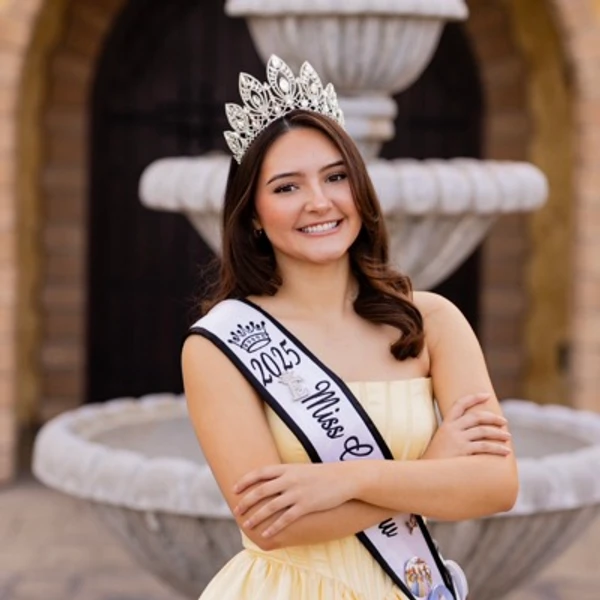
I am a first-generation, college-bound senior from Grandview, Washington, and I will be attending the University of Washington in the fall to pursue a career in teaching. I’ve maintained a 3.6 GPA through dual enrollment while staying deeply involved in my school community, serving two years in ASB and five years as a student leader and peer tutor, experiences that sparked my passion for education. As Miss Grandview 2025–2026, I represented my hometown at 32 ribbon cuttings and received two Grandview Chamber of Commerce awards in recognition of my community involvement. Outside of school, I love baking, watching rom-coms, and spoiling my cats. I am passionate about becoming a math teacher so I can give back to the community that raised me and inspire the next generation of students.

Education

University of Washington-Seattle Campus

Bachelor's degree program
2026 - 2030
  • Majors:
    • Engineering, General
    • Education, General
  • Minors:
    • Public Administration
    • Public Administration and Social Service Professions, Other
    • Public Policy Analysis

Yakima Valley College

Associate's degree program
2024 - 2026

Grandview High School

High School
2022 - 2026

Miscellaneous

  • Desired degree level:

    Bachelor's degree program

  • Graduate schools of interest:

  • Transfer schools of interest:

  • Majors of interest:

    • Education, General
    • Applied Mathematics
    • Mathematics
    • Educational Administration and Supervision
    • Educational Assessment, Evaluation, and Research
    • Mathematics and Statistics, Other
    • Biomathematics, Bioinformatics, and Computational Biology
    • Mathematical Economics
  • Not planning to go to medical school
  • Career

    • Dream career field:

      Education

    • Dream career goals:

      My long-term career goal is to become a teacher and eventually a school administrator in a rural or under-resourced district. After finishing my public health degree / math degree , I plan to enter a Master in Teaching program to earn my certification, with a focus on secondary science education. I aim to spend the first five to seven years of my career in the classroom, building strong instructional skills and mentoring students through college access programs. From there, I plan to move into instructional coaching, then assistant principal and principal roles, with the long-term goal of leading a district or running a nonprofit focused on rural education reform.

      Sports

      Golf

      Varsity
      2025 – 20261 year

      Public services

      • Volunteering

        Miss Grandview Scholarship program — Miss Grandview 2025-2026
        2025 – 2026
      • Volunteering

        Extramile tutoring — Tutor and student assistant
        2021 – Present
      • Volunteering

        Extramile mercantile — Student lead/ volunteer
        2021 – Present
      • Volunteering

        Extramile — Student leadership
        2021 – Present

      Future Interests

      Advocacy

      Politics

      Volunteering

      Philanthropy

      Entrepreneurship

      Williams Foundation Trailblazer Scholarship
      I come from a low income community where the people who need help the most are often the people least likely to ask for it. Mental illness is treated like a secret. Tutoring is treated like a luxury. Asking for resources is treated like weakness. I have grown up watching families, including my own, navigate hard things alone because the systems that were supposed to help either did not reach us or did not look like us. The projects I have started have all come from that same place. I cannot fix the system, but I can start filling the gaps where I see them. The first project I started was a peer tutoring effort that grew out of a study method I built for myself. I struggled in Spanish, badly, and I had to design my own system around discipline, organization, and memory just to keep up. Once I had it working, I started teaching it to classmates who were falling behind. The girl I started with was about to fail a vocabulary quiz and had convinced herself she was stupid. She was not. She just needed someone to sit with her and walk her through it. After her, there were more. I have spent the year quietly tutoring classmates in Spanish and other subjects, often the kids who would never sign up for formal tutoring because they could not afford it or were too embarrassed to ask. I did not call it a program. I just made myself available. The second project is more personal. I started using my own story, the depression I dealt with as a young kid, the therapy that helped me, and my brother's schizophrenia, as a tool for breaking the silence around mental health in my community. In a place where therapy is still seen as something other people do, telling my story openly is its own kind of intervention. I have talked about it at community events, in conversations with younger girls, and in moments where someone needed to hear that they were not alone. I have texted classmates I was worried about. I have sat with friends through panic attacks. I have sent people resources and walked them through how to ask their parents for help. None of this is glamorous work. It does not show up on a transcript. It is the work I am most proud of. The third has been using my pageant platform to push these conversations into rooms they would not normally reach. A title gives you a microphone for a year, and I decided early that I was not going to waste mine. I used appearances and events to speak about mental health, family, and the specific weight low income families carry when mental illness is part of the picture. I wanted the girl in the audience who has a brother like mine, or a mom like mine, to know that someone with a crown was talking about her life out loud. None of these projects were assigned to me. I started them because I saw people who needed something and I had a version of that something to give. That is the kind of work I want to keep doing for the rest of my life. Quiet, consistent, and aimed at the people the world tends to overlook.
      Ethel Hayes Destigmatization of Mental Health Scholarship
      My experience with mental health is not something I can separate from the rest of my life. It is woven through all of it. My older brother has schizophrenia, and our family has lived through hospitalizations, fear, and the long stretches in between where you are just trying to keep a household standing. I got depressed young, younger than most kids get the language for it, and therapy is one of the only reasons I am the person I am today. Mental health is not a topic to me. It is the lens through which I see almost everything. The clearest way it has shaped me is in the goals I have set for my future. I want to be a teacher, and I want mental health to be part of how I teach, not a side note. I know what it looks like to be the kid in the classroom who is falling apart on the inside and holding it together on the outside. I was that kid. So was my brother before things got worse. Teachers either see those kids or they do not, and the ones who see them can change everything. I want to be one of the ones who sees. I want my classroom to be a place where a struggling kid feels safe enough to tell someone, even if that someone is just me, even if all I can do is point her toward help. That is not a small goal. That is the whole goal. My relationships have been shaped by mental health in ways I am still noticing. I have learned how to listen. Really listen, not the kind of listening where you are just waiting to talk. When you grow up in a house where someone you love is unwell, you learn how to read a room before you walk into it. You learn how to tell when someone is having a hard day before they say a word. You learn how to ask the second question, the one after the polite first one, because the real answer is almost never in the first one. Those skills have made me a better friend than I would have been otherwise. People come to me when things are bad. I do not think that is an accident. I think people can feel when someone has the patience to sit with hard things without flinching. I have also learned, the hard way, where the limits of that are. I cannot fix anyone. I spent a long time as a kid believing that if I just loved my brother enough, or if I just was good enough, or if I just held everything together, things would be okay. That belief almost wrecked me. Therapy taught me the difference between loving someone and trying to save someone, and that difference has shaped every close relationship I have. I can show up for the people I love without setting myself on fire to keep them warm. I can sit with someone's pain without absorbing it as my own. Those are skills I had to learn, and I am still learning them. My understanding of the world has been shaped most of all by how mental health has changed how I see other people. I do not assume I know what someone is carrying. The rude classmate, the cashier who will not make eye contact, the friend who suddenly went quiet. I do not write any of them off the way I might have when I was younger. I assume there is something I cannot see. Most of the time, I am right. Once you have lived with mental illness in your family and in your own head, you stop believing in the version of the world where people are just being difficult. People are almost never just being difficult. People are usually carrying something. That belief is the foundation of how I want to move through my life. I want to be patient with people. I want to be the person who notices the kid in the back of the room. I want to teach in a way that takes mental health seriously instead of treating it like an inconvenience. And I want to be open about my own story, the depression and the therapy and the brother I love, because I know how much it would have meant to me, at twelve or thirteen, to hear an adult say it out loud and not be ashamed of it. I am not ashamed of it. I am going to keep saying it.
      Scorenavigator Financial Literacy Scholarship
      Here's a draft around 570 words, no dashes, opening with a story: I learned what an Explanation of Benefits was before I learned what a 401(k) was. I was probably ten years old, sitting at the kitchen table, watching my mom open envelope after envelope from the hospital where my older brother had just been admitted. Each one had a different number on it. None of them seemed to agree with each other. She would sigh, set them in a pile, and move on to the next one. That pile lived on our counter for months. That is what financial education looked like in my house. It was something you learned because you had to, in the middle of a crisis, without anyone explaining it to you. My family is not wealthy. We come from a low income community, and my parents have spent most of my life carefully stretching what they have. Add a child with serious mental illness to that picture, with the hospitalizations and medications and appointments that come with it, and you get a household where every financial decision carries weight. I watched my parents make choices I did not understand at the time but understand now. Which bill to pay first. Which one to call about. When to say no to something I wanted because something more important was coming. They never made me feel guilty for having needs. They just absorbed the pressure quietly. The hard truth is that I learned more about finances from watching my parents survive than I ever learned in a classroom. School taught me how to graph a parabola. It did not teach me how to read a pay stub, what a deductible was, what interest actually did to a balance over time, or how to file taxes. By the time I was a teenager, I knew more about medical billing than most adults, and almost nothing about saving or investing. That gap was not an accident. Kids in communities like mine are often left to figure it out the hard way, the same way our parents did. I have started closing that gap on my own. I ask questions. I look things up when I do not understand them. I have learned what a Roth IRA is, why starting early matters, what good debt and bad debt look like, and why financial literacy is not just about money but about freedom. The more I learn, the more I realize how much my family was navigating without a map, and how much smoother some of those years could have been if anyone had handed us one. The way I plan to use what I learn is twofold. First, I want to build a life that is steady. I want to be the version of an adult who knows where her money is going, who saves before she spends, and who is not one emergency away from a crisis. Especially because I want to be a teacher, and teaching is not a profession that hands you a financial cushion. I have to build my own. Second, I want to teach this to my future students. Real, practical financial literacy, woven into how I show up in a classroom. The kid sitting in the back of my room, watching her mom open those hospital bills, deserves to walk into adulthood with a map. I am going to make sure she has one.
      Teaching Like Teri Scholarship
      The first time I really tutored someone, it was a girl in my Spanish class who was about to fail a vocabulary quiz. We sat at a cafeteria table during lunch, and I watched her shoulders drop the second she opened her notebook. She was not stupid. She had told herself she was. That was the part I recognized, because I had told myself the same thing a hundred times. I pulled out the flashcard method I had built for myself, the one that finally made Spanish stick in my head, and we worked through it together. She got a B on the quiz. She cried a little. So did I, a little, after she left. That is when I knew. My drive to become a teacher did not come from a single dramatic moment. It came from a string of small ones like that. Helping classmates with homework before class started. Explaining a concept in a study group and watching someone's face shift from confused to confident. Sitting next to a friend during a hard chapter and walking her through it, sentence by sentence. Every time I have helped someone learn something they thought they could not learn, I have felt more like myself than I do almost anywhere else. I think the reason teaching pulls at me so strongly is that I know what it is like to be a kid who feels behind. I struggled. I have struggled in subjects that were supposed to come easily, and I have lived through stretches of school where I felt invisible. The teachers who changed things for me were not the ones with the flashiest lessons. They were the ones who noticed. The ones who pulled me aside and said, you can do this, and I will help you. I want to be that for someone else. I want to be the teacher a quiet kid in the back of the room remembers twenty years later as the person who saw her first. Tutoring is what showed me I am actually good at this. Not just willing, but good. I am patient in a way that surprises me. I can usually tell when someone is stuck because they do not understand the concept, versus when they are stuck because they have decided they are dumb. Those are two completely different problems, and they need two completely different responses. I have learned how to tell them apart. I have learned how to make a kid laugh in the middle of frustration, so the wall they have built comes down a little. Those are skills I want to spend my life sharpening. I also know I want to teach because of who I want to be at fifty, at sixty, at the end of my life. I do not want to look back and have spent my best years chasing something that only mattered to me. I want to have left fingerprints on people. Teachers do that. A good teacher shapes generations, quietly, one kid at a time. That is the kind of impact I want. I am going to be a teacher because someone needs to be that girl's tutor, and her brother's, and her best friend's, and on and on. I want it to be me.
      Patricia Lindsey Jackson Foundation - Eva Mae Jackson Scholarship of Education
      Faith is the quiet thing underneath everything else in my life. It is not loud. It does not always announce itself. But when I look back at the hardest seasons I have lived through, faith is what was holding the floor up. My older brother has schizophrenia, and our family has walked through hospitalizations, fear, and long stretches of not knowing what the next day would look like. I was very young when I started getting depressed, young enough that I did not have language for what was happening to me. Faith was there before I had words for any of it. I prayed before I understood what prayer was. I trusted God before I understood what trust was. Looking back, I think He met me in that not knowing. What faith has taught me, more than anything, is that I am not the center of my own story. That sounds small until you actually try to live it. When you believe that your life has a purpose larger than yourself, you stop measuring your worth by your grades, your appearance, your accomplishments, or how other people are treating you on a given day. You start measuring it by whether you are becoming the person God is asking you to become. That shift saved me when I was a kid who was too hard on herself, and it still saves me now. Academically, faith has shaped me in two ways. First, it has given me a reason to keep showing up even when I do not feel like it. School has had hard seasons for me, especially during the years when my family was in crisis. There were days when faith was the only thing that got me out of bed and back into a classroom. Second, faith has given me a why. I am not pursuing higher education to chase a paycheck or a title. I am pursuing it because I believe I have been given gifts, and I do not think gifts are given to be wasted. Education is how I sharpen what I have been given so I can use it for something that matters. My future goals are tied directly to my faith, even if they do not look obviously religious from the outside. I want to work with people, especially young people and families, who are dealing with mental health struggles like the ones my family and I lived through. I want to be the person in the room who makes it easier for someone to say they are not okay. I want to bring real, practical help, but I also want to bring the kind of presence that only comes from believing every person in front of you is loved by God. That is the kind of work I feel called to, and the only way I know to prepare for it is to get the education that lets me do it well. Beyond faith, the biggest push toward higher education has come from my family. My parents have carried more than most people will ever know, and they never once let it become an excuse for me. They told me, in words and in the way they lived, that education was the thing no one could take from me. My brother, in his own way, has pushed me too. Watching him fight to live a meaningful life with a serious mental illness has made me unwilling to waste the health and the chances I have. I think about that a lot. He cannot always do what I can do. So I am going to do it, for both of us. I also think about the people I have not met yet. The kids I will work with someday. The families who will sit across from me on the worst day of their lives. They are pushing me too, even though they do not know it. I want to be ready for them. I am going to college because I am going to be ready for them.
      Rev. Ethel K. Grinkley Memorial Scholarship
      Got it. Christian/Catholic heavy, and tie the community service piece into that faith framing. Here's a draft around 560 words, no dashes: My name is Emma, and the shortest honest answer to who I am is that I am someone who has been carried. Carried by my family through years when our house was heavy with my older brother's schizophrenia and his hospitalizations. Carried by a therapist who taught me, when I was very young and very depressed, that my mind was not my enemy. Carried by friends who stayed when I did not know how to ask them to. And carried, in a way I have only recently learned to name, by faith. I grew up believing that none of us are meant to walk through this life alone, and the older I get, the more clearly I see that belief was not just comfort. It was true. My faith is the foundation of how I move through the world. I believe that every person I meet is loved by God before I ever say a word to them, and that changes how I treat them. It means the classmate who is hard to get along with is still someone I am called to be patient with. It means the stranger having a bad day is still someone I am called to be kind to. It means my brother, on his hardest days, is not a problem to manage but a person to love. Faith does not make any of that easy. It makes it non negotiable. Love, for me, is the practice of that faith. It is the daily, unglamorous version of it. Sitting with a friend through a panic attack. Texting someone you have not heard from in a while because something told you to. Listening longer than is comfortable. Forgiving when forgiveness is not deserved, because none of us deserve the grace we have been given either. I try to love people the way I have been loved, which is to say imperfectly, but consistently, and without keeping score. Community service, for me, grows out of those same roots. It is not a separate category. It is what love looks like when it leaves your own circle. I have spent time helping at my church, supporting younger students who are struggling the way I once struggled, and showing up for people in my community who do not always have someone showing up for them. I am drawn especially to mental health, because I know what it costs when no one is paying attention, and I know what is possible when someone is. I want to be the person who pays attention. The impact I want to make in the world is not a big, single thing. I do not think most real change is. I want to be the kind of woman who walks into a room and makes it safer to be honest in. I want to work with kids and families who are going through the things my family went through, and tell them, with my whole life, that they are not alone and they are not broken. I want my faith to be visible not because I talk about it constantly, but because the way I treat people makes it obvious. I have been carried. I plan to spend the rest of my life carrying others, the way Christ carried me first.
      RonranGlee Literary Scholarship
      desire, aversion, and, in a word, whatever are our own actions. Things not in our control are body, property, reputation, command, and, in one word, whatever are not our own actions."Epictetus is not telling us to accept what we cannot change. That is the easy reading, and it is the one that has turned Stoicism into a self help slogan. What he is actually doing in this passage is far stranger and far more demanding. He is redrawing the boundary of the self. He is arguing that nearly everything we treat as part of who we are, including our own bodies, is not actually ours, and that almost all human suffering comes from claiming ownership over things that were never ours to begin with. The thesis of this essay is that the radical move in the opening of the Enchiridion is not acceptance. It is reclassification.Notice what Epictetus puts in each category. In our control he places opinion, pursuit, desire, aversion. Inner movements. The things that happen inside the mind. In the other category he places body, property, reputation, command. Read that list slowly. Property and reputation make sense. Most people, even today, would agree that you cannot truly control how others see you or whether your possessions stay yours. But body. That is the move that should stop a reader cold. Epictetus is telling us that our own body, the thing we live inside every second of our lives, is not ours in any meaningful sense. He puts it in the same category as your house and your reputation. Outside the self.This is not careless writing. Epictetus chose that word deliberately, and it is the key to the whole passage. If he were only making the obvious point that we cannot control the weather or other people, he would not have needed to include the body. The body is the test case. It is the place where the reader is most tempted to push back and say, but surely this is mine. And his answer is no. Your body gets sick without your permission. It ages without your permission. It can be injured, imprisoned, killed. None of those events ask you first. If something can be taken from you against your will, Epictetus is arguing, then it was never really yours. It was on loan.This is where the passage becomes uncomfortable in a way that the popular version of Stoicism has smoothed over. Epictetus is not offering comfort. He is offering a trade. He will give you total, unshakeable freedom over a small territory, but only if you give up your claim to the much larger territory you thought you owned. You can have absolute sovereignty over your judgments, your desires, your responses. But you have to surrender your grip on your body, your possessions, your reputation, and the people in your life. Not because those things do not matter, but because gripping them was an illusion in the first place.The reason this matters, and the reason Epictetus put it at the very start of the Enchiridion, is that he believes our suffering is almost entirely a category error. We suffer because we have placed our sense of self in things that the world can touch. When the world inevitably touches them, we feel like we ourselves are being damaged. A person loses their job and feels worthless. A person loses their looks and feels invisible. A person is insulted and feels diminished. Epictetus would say that none of these losses are losses of the self. They are losses of things that were always outside the self, mistakenly carried so close that they felt internal. Pull them back to where they actually live, and the wound stops being a wound.The hard part of this teaching, and the part that I think gets glossed over in modern Stoic writing, is that Epictetus is not asking for a small adjustment. He is asking for a complete reorganization of identity. Most of us, if we are honest, define ourselves by exactly the things he lists as not ours. We are our bodies. We are our accomplishments. We are how others see us. Strip those away and the version of self that remains feels almost too small to recognize. That smallness is the discomfort the passage is designed to produce. Epictetus wants you to feel that smallness, because the self that is left, the self made only of judgment and choice and inner response, is the only self that nothing can take from you.It is worth remembering who wrote this. Epictetus was born a slave. He was crippled, according to ancient sources, by a master who broke his leg. He had every reason to define himself by what had been done to his body and his circumstances, and every reason to feel that the self had been violated. The fact that he instead developed a philosophy in which the body was outside the self is not an accident. It was, I think, a survival. If your body and your circumstances are the self, then a person who has been enslaved and broken has lost the self. If they are not, then the self is intact no matter what is done to it. Epictetus did not arrive at this view from comfort. He arrived at it from a place where it was the only view that allowed him to remain a person.This is also why the popular reading of the passage as "accept what you cannot control" is not just incomplete but slightly insulting to what he is doing. Acceptance implies a thing happened to you and you are choosing not to fight it. Epictetus is making a stronger claim. He is saying that the thing did not happen to you in the first place. It happened to something adjacent to you that you had been confusing with yourself. There is no acceptance required, because there is no real damage to the self to accept. The damage was to the body, or the reputation, or the possession. Those things took the hit. You did not.Whether or not a modern reader can fully live by this view is a different question. I am not sure I can. Most of us are too attached to our bodies, our relationships, and our reputations to perform the kind of internal surgery Epictetus is asking for. But that does not make the passage less interesting. It makes it more so. The opening of the Enchiristion is not a piece of soft wisdom. It is a knife. It is meant to cut the self away from the things the self has been hiding in. Whether we use the knife or not, the point of reading him is to feel where he is pointing it, and to understand that the things he is cutting away are the things we have been calling ourselves all along.
      Richard Neumann Scholarship
      Spanish did not come naturally to me. I want to say that upfront, because a lot of these essays start with "I have always loved..." and that was never me. I struggled. Verb conjugations would not stick. Vocabulary slipped out of my head as fast as I put it in. I would understand something in class and then sit down at home an hour later and feel like I had never seen it before. The study system I built came out of necessity. I needed something that worked with my brain, not against it. It started with organization. Every night I broke my Spanish work into three categories. Vocabulary, grammar, and listening. Each one got its own section in my notebook, color coded. Vocabulary lived on physical flashcards I made by hand, because typing them did not stick the same way. Grammar got its own page where I would write out conjugation tables until my hand hurt, and then write them again the next day from memory. Memory was the hardest part. I learned that reviewing something once was not enough. I had to come back to it on a schedule. Day one, day three, day seven, day fourteen. If I missed a card, it went back to the start of the cycle. I borrowed the idea from spaced repetition apps, but the apps never quite stuck for me, so I made my own version on paper. Discipline was the thing that held it all together. None of the organization or memory work mattered if I did not show up to it every day. I made a rule for myself that thirty minutes of Spanish a day was not optional, not even on bad days. Especially not on bad days. I treated it the way you treat brushing your teeth. The system worked. Not because it was clever, but because it was consistent. That experience taught me something bigger than Spanish. It taught me that I can struggle with something and still get good at it, if I am willing to build the right structure around it. If I had real money and resources behind me, I would build something similar for my community. I grew up in a low income area where access to education was not the same as it was for kids one zip code over. The library was a long bus ride away. After school programs were limited. Tutoring cost money. Even getting to school sometimes meant walking long stretches on roads with no sidewalks. The first thing I would do is make our community walkable. Real sidewalks. Safe crosswalks. Lighting that actually works at night. Kids should not have to choose between getting to a library and getting home safe. The second thing I would build is a learning hub. One free, central space where students could come after school for tutoring, fast internet, quiet study rooms, and real food. I would staff it with tutors who look like the kids walking in. I would stock it with the things wealthier schools take for granted. SAT prep, college counseling, language learning materials, calculators, notebooks, printers that work. The third thing would be transportation. A small van or a partnership with the city, so no kid gets locked out of opportunity just because they cannot get there. What I built for myself in Spanish was a system that turned struggle into something manageable. That is what kids in my community deserve too. Not a handout. A system that meets them where they are.
      Learner Mental Health Empowerment for Health Students Scholarship
      My older brother has schizophrenia. I learned what that word meant before I really understood what it meant, if that makes sense. I was young when he was first hospitalized, and I remember the version of him before, and the version of him after, and trying to figure out how those two people were the same person. I remember my parents not knowing what to do. I remember how quiet our house got. I remember being scared, and not having anywhere to put that fear, because everyone around me was carrying their own. That experience shaped me in ways I am still figuring out. One of those ways was that I got depressed, really depressed, earlier than most kids do. I did not have the words for it then. I just knew that something was wrong and that I could not fix it on my own. My parents, even with everything they were already carrying, made sure I got into therapy. That decision probably changed my life. I am not exaggerating when I say it. Therapy taught me things I did not know I needed to learn. It taught me how to notice what I was feeling before it became something bigger. It taught me that thoughts are not facts. It taught me how to breathe in a way that actually calms my body down, how to write things out when my head gets loud, how to name what is happening instead of being swallowed by it. Those tools are still with me. I use them when school gets heavy. I use them when I think about my brother. I use them on days when nothing is even wrong, just to stay steady. Mental health matters to me because I know what it costs when it goes untreated, and I know what is possible when it does not. My brother is one person. I am another. Two very different stories in the same family. Both of us proved that mental health is not something you can just push through or pray away or wait out. The way I advocate now is mostly through being present for people. I have become the friend that people come to when things are bad. I do not think that is an accident. I listen first. I do not try to fix. I share the coping tools that helped me, like grounding exercises, journaling, going on a walk before reacting to something, and breaking a big feeling into smaller ones. Sometimes I just sit with someone and let them not be okay for a minute, because that is what I needed when I was their age. I also try to talk about therapy openly. I tell people I went, and that it helped, because in a lot of communities, including mine, that conversation does not happen. I have helped friends find resources. I have texted classmates I was worried about. I have told people I love that they are allowed to ask for help. I want to keep being that person. The one who makes it a little easier for someone else to be okay. Because someone did that for me, and it saved me.
      300 Bold Points No-Essay Scholarship
      1000 Bold Points No-Essay Scholarship
      Olivia Rodrigo Fan Scholarship
      “Got the things I want, it’s just not what I imagined” from “Making the Bed” by Olivia Rodrigo is a lyric that hits me hard every time I hear it. For most of my life, I have been someone who overcommits. I sign up for things, I chase leadership positions, I volunteer for stuff, and a lot of the time it has nothing to do with whether I actually want any of it. It has to do with the fact that someone else has it, or that it sounds impressive, or that I am scared of missing out. I have always had really bad FOMO, and for a long time I thought that was just ambition. I thought wanting more meant I was driven. But what I have slowly figured out is that wanting things for the wrong reasons does not feel like winning, even when you get them. There have been so many moments in my life where I worked really hard to get something, and then I finally got it, and I felt nothing. Or worse, I felt drained. I would look at this thing I had been chasing and realize it was not actually what I wanted at all. It was just what I thought I was supposed to want. I was putting my whole self into stuff that I did not really care about, and then I would wonder why I felt empty. The truth was that I was doing it for recognition, or for a title, or because I wanted people to look at me a certain way. None of those reasons were ever going to fulfill me. That lyric matters to me because it puts into words something I struggled to admit for a really long time. You can get exactly what you wanted on paper and still feel like you missed the point. Service that comes from wanting to be seen is not really service. Leadership that comes from wanting a title is not really leadership. I had to learn that the hard way, by collecting accomplishments that did not actually make me happy and realizing the problem was not the accomplishments. It was me, and the reason I was reaching for them. Now I try really hard to check myself before I commit to something new. I ask myself if I actually care, or if I am just scared of being left out. I ask if this is something I would still want if no one ever found out I did it. That question changed everything for me. The things that I do because I genuinely love them feel completely different from the things I used to do for recognition. They are harder in some ways, because there is no applause to keep me going. But they are also the only things that have ever made me feel like myself. I think this is what Olivia is getting at in that song. You can build the whole life you thought you wanted and still feel like a stranger in it. The fix is not getting more stuff or trying harder. The fix is being honest about what you actually want, and then having the guts to go after that instead. I am still learning how to do this. I still catch myself reaching for things out of habit or fear. But every time I choose something because I really, truly want it, from the deepest part of me, I feel a little more whole. That is the kind of life I am trying to build now, one honest choice at a time.
      Miley Cyrus Fan No-Essay Scholarship
      Post Malone Fan No-Essay Scholarship
      Sabrina Carpenter Superfan Scholarship
      I’ve been a fan of Sabrina Carpenter for years, and watching her career grow has honestly been one of the coolest things to witness as a young woman. What I love most about Sabrina is that she’s never tried to be anyone but herself. From her early days on Disney to where she is now as one of the biggest pop stars in the world, she’s stayed true to who she is, and that’s something I really admire. She’s funny, confident, talented, and unapologetically herself, and that energy is contagious. One of the biggest reasons her career has impacted me is because she shows what it looks like to take your time and trust your own path. Sabrina didn’t blow up overnight. She put in years of work, kept creating, kept performing, and kept showing up even when she wasn’t getting the recognition she deserved yet. Then “Espresso” hit and suddenly the whole world finally caught up to what her fans already knew. That story really resonates with me. As a first generation college student chasing big dreams, I’ve learned that things don’t always happen on the timeline you want them to. Sabrina’s journey reminds me that staying dedicated and trusting the process pays off, even when it feels like nothing is happening yet. I also love how Sabrina uses her platform. She’s playful and lighthearted, but she also speaks up for the things that matter to her. She’s open about being a woman in the music industry, about owning her voice, and about not letting anyone shrink her down to fit their box. That confidence has honestly inspired me to take up space too. As a young Latina from a small rural farming town, I’ve had moments where I felt like I had to make myself smaller to be accepted. Watching Sabrina own her power and her personality reminds me that I don’t have to do that. I can be soft and strong, fun and serious, ambitious and kind, all at the same time. Her music has also gotten me through a lot. There’s something about her songs that just feels like a hug and a pep talk at the same time. Whether I’m getting ready for a big day, studying late at night, or driving with my friends, her music has been the soundtrack to so many of my best memories. “Please Please Please” is one of those songs I can’t help but sing along to every time. Her ability to mix vulnerability with humor in her lyrics is what makes her stand out as an artist. She makes you feel seen and entertained at the same time, and that’s a rare gift. Beyond the music, Sabrina’s career has impacted me because she’s a reminder that young women can do hard things. She writes, performs, acts, tours the world, and still seems like the most down to earth person ever. She’s shown me that you don’t have to choose between being talented and being kind, or between working hard and having fun. You can do it all if you stay true to yourself and keep showing up. Sabrina Carpenter has impacted me by reminding me that my voice matters, my journey matters, and my timeline is exactly the way it’s supposed to be. She’s the kind of role model I’m grateful to have grown up watching, and her career will keep inspiring me as I chase my own dreams. She’s proof that staying yourself is always the right move.
      Arthur and Elana Panos Scholarship
      God has been the foundation of my entire life. My faith has shaped who I am, how I treat people, and how I move through the world. As a first generation student and the daughter of immigrant parents, there have been so many moments where I felt overwhelmed, lost, or unsure if I could really do everything I was dreaming of. In every single one of those moments, my faith is what carried me through. God has been the steady voice reminding me that I’m never walking through anything alone, and that has made all the difference. Growing up in a small rural farming community, life wasn’t always easy. My parents worked hard to give me opportunities they never had, and I always carried the weight of wanting to make their sacrifices mean something. There were times when school felt impossible, when being first generation felt isolating, and when I doubted if I belonged in the rooms I was trying to walk into. But my faith reminded me that God placed those dreams in my heart for a reason. He doesn’t call us to things He doesn’t equip us for. Every time I prayed through a hard season, I came out the other side stronger, more grounded, and more sure of the path I was on. My faith has also taught me how to love people the way Jesus loves us. Jesus lived a life of complete dedication to others. He served without complaining, He loved without conditions, and He saw people for who they truly were instead of who the world said they should be. That’s the kind of person I try to be in every relationship and every space I walk into. Whether I’m tutoring a student, mentoring a younger girl, or just being a friend to someone who’s struggling, I try to lead with the love Christ has shown me. My faith has taught me that no act of kindness is too small and no person is unworthy of being loved. I know my faith will continue to shape me as I move into my career. I plan to become an elementary school teacher and eventually a principal, and I want my faith to be the foundation of everything I do in that role. Teaching is a calling, not just a job. Every child who walks into my classroom will be a gift from God, and I want to treat them that way. I want my students to feel loved, valued, and seen the way Jesus sees them. I want my classroom to be a safe place full of patience, kindness, and the kind of steady love that reflects the love God has shown me my whole life. My faith will also keep me grounded during the hard parts of my career. Teaching isn’t easy. There will be tough days, exhausting weeks, and kids who need more from me than I think I can give. But I know that when I lean on God, He’ll give me the strength, patience, and grace to keep showing up. He’ll remind me why I started, and He’ll carry me through every challenge. God has helped me become the woman I am today, and He’ll continue to walk with me into every classroom, every leadership role, and every life I get the chance to touch. My faith isn’t just a part of my life. It’s the heart of it. And I plan to use my career to reflect that love back into the world, one student at a time.
      200 Bold Points No-Essay Scholarship
      400 Bold Points No-Essay Scholarship
      Bold.org No-Essay Top Friend Scholarship
      $25,000 "Be Bold" No-Essay Scholarship
      500 Bold Points No-Essay Scholarship
      Kristinspiration Scholarship
      Education is important to me because it’s the one thing nobody can ever take away. My parents are immigrants who never had the chance to go to school, and growing up, they always told me that education was the door to every opportunity I could ever want. I grew up in a small rural farming community in Washington, and as a first generation student, I learned really early that education wasn’t just a privilege, it was a way out, a way up, and a way forward for me and for my whole family. Every class I take, every late night I study, every step closer to a degree is me honoring the sacrifices my parents made so I could even sit in a classroom in the first place. Education matters to me because it gave me something I didn’t always have growing up: belief in myself. My teachers were the ones who saw something in me before I could see it in myself. They were the ones who told me I was smart, who pushed me to dream bigger, who reminded me that where I came from didn’t determine where I was going. Without education, I wouldn’t have any of the opportunities I have today. I wouldn’t have the dreams I have, and I wouldn’t be the person I am. Education has shaped every single part of my life, and that’s exactly why I want to give it back to the next generation. The legacy I hope to leave is one of impact. I want to be remembered as someone who poured into other people, who lifted up her community, and who made sure no kid felt small because of where they came from. I want to become an elementary school teacher and eventually a principal so I can be the person for other kids that my teachers were for me. I want to walk into a classroom every day and see every child the way I was once seen. I want to remind first generation kids, immigrant kids, and kids from small underserved towns like mine that they belong in every room they walk into. I also hope to leave a legacy within my own family. As the first one to go to college, I’m setting a new standard. I’m showing my younger cousins, my future kids, and the rest of my family that this is possible. My parents’ dream was always for their child to have an education, and I want to take their dream and carry it even further. I want their sacrifice to ripple through generations. I want my future kids to grow up knowing that college was never a question for them, because their mom made sure it never had to be. Most of all, I want my legacy to be one of love. I want people to remember that I cared. That I showed up. That I made them feel seen, supported, and capable. I want to leave behind classrooms full of kids who grew up believing in themselves because I believed in them first. I want to leave behind a community that’s a little stronger, a little prouder, and a little more hopeful because I came back to serve it. Education is the foundation of everything I want to build. It’s the bridge between where my family started and where the next generation is going. The legacy I hope to leave is a legacy of love, service, and impact, one that touches every life I get the chance to be a part of.
      Tom LoCasale Developing Character Through Golf Scholarship
      Winner
      The biggest life lesson I’ve learned through golf is that patience, perseverance, and personal dedication will always show in the end. Golf is one of those sports where you can’t fake your way through it. You can’t rely on a team to carry you, you can’t blame anyone else when things go wrong, and you can’t rush the process. It’s just you, the course, and whatever effort you’re willing to put in. That’s a lesson that has shaped me far beyond the sport itself. Golf taught me patience in a way nothing else really could. Some days you can swing perfectly and still end up in the rough. Some days everything clicks and you finally see the progress you’ve been working toward. The game forces you to slow down, breathe, and trust that the work you’re putting in will pay off eventually. I’ve learned that getting frustrated doesn’t help. Quitting doesn’t help. The only thing that actually moves you forward is staying patient with yourself and trusting the process. That mindset has carried over into every part of my life, from school to leadership to my goals for the future. Perseverance is another lesson golf hammered into me. There were so many moments where I wanted to give up, where I felt like I wasn’t getting any better, where the game felt impossible. But every time I pushed through those moments, I came out stronger. I learned that growth doesn’t happen on the good days. It happens on the hard days, when you choose to keep going even when nothing feels like it’s working. Life is going to throw a lot of hard days at me, especially as a first generation college student chasing big dreams, and golf taught me that I have what it takes to keep going no matter what. The biggest thing golf taught me though is that your own effort and personal dedication will always show. There’s no shortcut in golf. The people who put in the work get better. The people who skip practice don’t. It’s that simple. That lesson has shaped the way I approach everything in my life. I show up. I put in the work. I stay dedicated even when nobody is watching, because I know my effort will speak for itself in the end. Whether it’s in the classroom, in leadership, or in my future career as a teacher, I trust that dedication always pays off eventually. I plan to carry these lessons with me into my future as an educator. Becoming a teacher takes patience, perseverance, and dedication just like golf does. There will be days when teaching feels rewarding and days when it feels overwhelming, but I know how to keep showing up. I want to model these same lessons for my future students. I want to teach them that they don’t have to be perfect right away. They just have to be willing to keep trying, keep growing, and keep believing in themselves. I want them to know that the effort they put in now will absolutely show in the future, even if they can’t see it yet. Golf gave me more than just a sport. It gave me a mindset. It taught me how to stay calm when things get hard, how to keep going when I want to quit, and how to trust that my dedication will always lead me somewhere worth being. Those lessons will carry me through college, through my career, and through every challenge life throws my way.
      Tawkify Meaningful Connections Scholarship
      The most meaningful relationship in my life is the one I have with my parents. They’re the foundation of everything I am, everything I do, and everything I hope to become. My parents are immigrants who came to this country with almost nothing, hoping that one day their kids could have a life full of the opportunities they were never given. Watching them sacrifice for me my whole life has shaped me into the person I am today more than any other relationship ever could. My parents didn’t get to go to school. They didn’t have the chance to chase dreams the way I do. Instead, they worked. They worked long hours in a small farming community in the middle of Washington, doing whatever they had to do to make sure my siblings and I had food on the table, clothes on our backs, and a future worth fighting for. As a kid, I didn’t always understand the weight of what they were carrying. But as I got older, I started to see it clearly. Every early morning, every long shift, every moment they chose to give instead of take, it was all for us. That kind of love changes you. My parents taught me what it means to love through action. They never had the fancy words or the big speeches. Their love showed up in the little things. In packed lunches, in long drives, in quiet sacrifices they thought I didn’t notice. They taught me that real love isn’t loud. It’s faithful, steady, and dedicated. It shows up every single day, even when it’s tired, even when it’s hard. That’s the kind of love I try to give to the people in my life now, and it’s the standard I hold every relationship to. Because of my parents, I’ve learned to build connections with others through patience, humility, and genuine care. I don’t try to impress people or perform for them. I try to actually see them, the way my parents have always seen me. When I meet someone new, whether it’s a student I’m tutoring, a younger girl looking up to me, or a friend going through a hard time, I try to lead with the kind of love my parents poured into me. I try to listen, to be present, and to show up consistently. I’ve learned that people don’t always remember what you say, but they always remember how you made them feel, and my parents made me feel safe and loved my entire life. That’s the feeling I want to pass on to everyone I meet. My parents also taught me to value people for who they are, not what they have or where they come from. Growing up in a small immigrant community, I saw firsthand how people from all walks of life can come together and build something beautiful. My parents always treated everyone with kindness, no matter their background, and that shaped the way I move through the world. I genuinely care about people. I want everyone I encounter to feel seen and valued, and I think that comes directly from watching my parents do that for our community my whole life. This relationship is also the reason I want to become a teacher. My parents poured so much into me, and now I want to pour into the next generation of kids the same way. I want to be the teacher who notices the quiet kid in the back, who helps the student who’s struggling, who reminds first generation kids like me that they’re capable of so much more than they realize. The love my parents gave me wasn’t meant to stop with me. It was meant to keep going, to spread out, and to touch as many lives as possible. That’s what I plan to do with mine. The relationship I have with my parents has taught me that connection is built through love, sacrifice, and showing up. They’ve shown me that real relationships aren’t transactional, they’re a daily choice to keep loving someone with everything you have. I carry that lesson into every connection I build, and I’ll carry it into my classroom one day too. Everything I am is because of my parents, and everything I hope to become is built on the love they gave me.
      Forever90 Scholarship
      I embody a life of service through Christ. My faith is the foundation of everything I do, and it’s the reason I show up for the people around me the way I do. Jesus lived a life of complete dedication, pouring Himself out for others without ever asking for anything in return, and that’s the kind of love I want to reflect in my own life. He didn’t just preach about service, He lived it every single day, and He taught us that loving others is one of the greatest things we can do. That love and dedication is what inspires me to serve. For me, service isn’t something I do when it’s convenient. It’s a way of life. I’ve been involved in tutoring, leadership, and pageantry for almost six years, and through all of it, I’ve tried to lead the way Christ did. With patience, with humility, and with genuine love for the people I’m serving. Whether I’m helping a student through their homework, mentoring a younger girl in my community, or simply showing up for someone who’s having a hard day, I try to be the hands and feet of Jesus in every small moment. I believe that even the quietest acts of service can carry the loudest impact when they’re rooted in love. One of the biggest ways I live out my faith is through my work with kids. There’s something about pouring into the next generation that feels deeply tied to the kind of love Jesus showed. He always made room for the children, He always made sure they felt seen, and He always reminded everyone how valuable they were. I want to live that out in my own life by being the kind of person who lifts kids up, especially the ones who feel forgotten or overlooked. Every child deserves to feel loved, and I want to be a small reflection of God’s love in their lives. I plan to use my education to serve others by becoming an elementary school teacher and eventually a principal. Teaching isn’t just a career to me, it’s a calling. I want to walk into a classroom every day knowing that I have the chance to shape young lives, to encourage them, and to plant seeds of confidence and kindness that will grow with them forever. I want my students to know they’re valued, capable, and deeply loved. I want to serve them the way Christ has served me, with patience, grace, and unwavering dedication. My dream is to bring that same heart of service into rural and underserved communities like the one I grew up in. Small towns and immigrant families often get overlooked when it comes to education, and I want to be someone who fights for those kids. I want to use my degree as a tool to give back, to advocate for schools that need more support, and to make sure no child in my community grows up feeling like their dreams are too big for where they come from. At the end of the day, Jesus showed us that real love is shown through dedication, sacrifice, and serving others. That’s the standard I want to live by. My education is going to be the tool I use to serve, but my heart for service comes from my faith. I want my whole life to be a reflection of the love and dedication Christ has shown me, and I want every kid I teach to feel a piece of that love every time they walk into my classroom.
      Our Destiny Our Future Scholarship
      I plan to make a positive impact on the world by becoming a teacher and pouring everything I have into the next generation of kids, especially the ones who come from communities like mine. I grew up in a small rural farming town in Washington as the daughter of immigrant parents and a first generation student. I know what it feels like to grow up in a place where opportunities are limited, where people don’t always believe you can do big things, and where so many kids fall through the cracks just because nobody took the time to lift them up. I want to be the person who changes that for the next generation. For me, impact starts in the classroom. I want to become an elementary school teacher because that’s where everything begins. The way a kid feels about themselves in those first few years of school shapes the way they show up to learning for the rest of their lives. I want to be the teacher who makes kids feel seen, safe, and capable. I want my students to walk into my classroom and know that they matter, that their background is a strength, and that they belong in every room they walk into. If I can plant that seed in even one kid, I know it’ll grow into something bigger than me. But I don’t want to stop at teaching. My long term goal is to become a principal and eventually work for the Department of Education so I can make a bigger impact on the schools and communities that often get overlooked. Rural schools, low income schools, and underserved schools deserve the same resources, attention, and care as schools in big cities. Real change happens when someone who actually understands those communities has a seat at the table, and I want to be one of those people. I want to fight for the kids who don’t have anyone fighting for them yet. Outside of education, I plan to keep showing up for my community in every way I can. I’ve been involved in tutoring, leadership, and pageantry for almost six years, and I’ve learned that impact isn’t always about huge, dramatic moments. Sometimes it’s about sitting next to a kid who’s struggling with their homework and being patient with them. Sometimes it’s about using a platform to advocate for causes that matter. Sometimes it’s just about being a positive role model for younger girls who need to see someone who looks like them doing big things. All of those small moments add up, and I want to keep stacking them for the rest of my life. I also want my impact to extend to first generation students like me. I want to be living proof that being the first to do something isn’t a burden, it’s a privilege. I want to mentor kids who feel like they don’t have anyone to guide them through college, scholarships, or life in general. I want to be the person I needed when I was younger. At the end of the day, my plan to make a positive impact on the world isn’t flashy or complicated. I just want to pour into people. I want to teach, lead, advocate, and uplift the communities that raised me. If I can leave this world having helped even a handful of kids believe in themselves and chase a bigger future, then I’ll know my life meant something. That’s the impact I’m working toward, every single day.
      Sandy Jenkins Excellence in Early Childhood Education Scholarship
      My passion for early childhood education comes from a really personal place. As a first generation student and the daughter of immigrants, I know exactly how much of a difference a good teacher can make in a kid’s life. When I was little, I didn’t have parents who could help me with my homework or explain what was happening at school. English wasn’t always the language spoken at home, and a lot of the things other kids learned from their families, I had to learn from my teachers. My early elementary teachers were the ones who first told me I was smart, who made me feel like I belonged in the classroom, and who planted the seeds that made me believe I could one day go to college. That’s why I want to do the same for the next generation of kids. Early childhood is where everything begins. Those first few years of school are when kids decide if they like learning, if school feels safe, and if they think they’re capable. If a child has a teacher who makes them feel small or invisible at that age, it can shape the way they see themselves for years. But if they have a teacher who pours into them, makes learning fun, and tells them they’re capable, that confidence sticks with them forever. I want to be that second kind of teacher. I want to be the reason a kid grows up believing they’re smart, valuable, and full of potential. I’m especially passionate about early childhood education because I come from a small, underserved Latino farming community where so many kids don’t get the same head start that kids in bigger cities get. A lot of my friends growing up came from families who, like mine, didn’t have the resources or knowledge to help with school the way other parents could. I saw kids fall behind not because they weren’t smart, but because nobody at school took the time to really see them. I want to change that. I want to be the teacher who shows up for those kids, who meets them where they are, and who makes sure they never feel forgotten. I’ve already been working with kids through tutoring and volunteering for almost six years, and every single time I help a student finally understand something they’ve been struggling with, it reminds me why I chose this path. There’s nothing better than watching a kid’s face light up when they realize they can do it. That feeling never gets old, and it’s exactly the kind of moment I want to create every single day in my own classroom. I also believe early childhood teachers have a responsibility to make learning fun. Little kids learn best when they’re laughing, exploring, and being a little silly. I want my classroom to feel like a safe, happy place where kids can ask questions without being scared of getting it wrong, where mistakes are part of growing, and where every kid feels seen. At the end of the day, early childhood education is where the foundation of a child’s whole future is built. It’s the most important stage, and the kids who come from communities like mine deserve teachers who actually care about them. That’s why I’m so passionate about this. I want to give little kids the same gift my teachers gave me: the belief that they are capable of so much more than they realize, and the love of learning that will carry them through the rest of their lives.
      Hazel & Olive Sweet Horizons Scholarship
      One of the biggest challenges I’ve faced is being a first generation college student and the daughter of immigrant parents. My parents came to this country with almost nothing, hoping that one day their kids could have the opportunities they never did. They settled in a small rural farming town in the middle of Washington, where life isn’t easy and resources are limited. Growing up, I watched my parents work harder than anyone I’ve ever known, and I always carried this quiet understanding that their sacrifices were going to mean something through me. But being first generation came with a lot of struggles that nobody really talks about. I didn’t have anyone at home who could help me understand how college worked. I didn’t know what FAFSA was, what scholarships to apply for, what classes would set me up for success, or even what questions I was supposed to be asking. While other kids had parents who had already walked the path before them, I was figuring everything out on my own. There were moments where I felt completely lost, and honestly, moments where I wondered if college was even something I could realistically reach. On top of that, my community didn’t always feel like a place where higher education was the norm. A lot of kids in my town don’t go to college, not because they aren’t smart enough, but because they don’t have the resources, the guidance, or someone telling them they can. For a long time, I felt that same weight. I had to teach myself how to dream bigger than what I saw around me, and that’s not easy when you’re a kid trying to figure life out. This challenge shaped me into the person I am today. It taught me how to be resourceful, how to advocate for myself, and how to keep pushing even when nobody handed me a map. It taught me that my background isn’t a setback, it’s a strength. Being first generation made me resilient, and being the daughter of immigrants gave me a sense of purpose that I carry with me into every classroom, every leadership role, and every conversation about my future. I’ve learned to own where I come from instead of letting it make me feel small. Pursuing higher education is how I keep growing into the future I hope for. College isn’t just a personal goal for me, it’s a promise to my parents, my community, and my future students. Earning my degree means I’ll have the tools to walk back into a community like mine and actually make a difference. I want to become an elementary school teacher, eventually a principal, and one day work for the Department of Education so I can advocate for rural and underserved schools at every level. Higher education is what makes all of those dreams possible. But more than anything, college is going to help me become the kind of person who can lift others up. I want to be the teacher who tells first generation kids, immigrant kids, and kids from small towns that they belong in every room they walk into. I want to be living proof that where you start doesn’t decide where you end up. Every challenge I’ve faced has only made me more determined to build a future where the next generation of kids in my community has more support, more resources, and more belief in themselves than I ever did. That’s the future I’m working toward, and higher education is the bridge that gets me there.
      First Generation College, First Generation Immigrant Scholarship
      Being first generation isn’t something that defines me. It’s something I own. Growing up as the child of immigrants in a small farming community, I learned early that my background wasn’t a limitation, it was the reason I had to work twice as hard. My parents gave up everything so I could have the opportunities they never did, and every step I take toward higher education is a step I take for them too. I’m proud of where I come from. I’m proud of being first generation. I’m proud of being the daughter of immigrants. Those parts of me aren’t things I hide, they’re the foundation of who I am and the reason I push so hard to achieve more. That’s where my sense of purpose comes from. I want to help others, especially my future students, see their backgrounds the same way I see mine. Not as something to be ashamed of, but as a source of strength. I want to be the teacher who tells first generation kids, immigrant kids, and kids from underserved communities that they belong in every classroom, every college, and every dream they’ve ever had. My purpose is to lift others up the way my parents lifted me, and to make sure no kid ever feels small because of where they come from.
      Jacob Wise Memorial Scholarship
      The biggest roadblock I’ve faced in pursuing higher education is being a first generation student. My parents are immigrants who never had the chance to go to school, so when it came to figuring out college, I had to do it all on my own. I didn’t have anyone to walk me through applications, financial aid, scholarships, or even what classes I should be taking to set myself up for success. While other kids had parents who already knew how the system worked, I had to learn everything from scratch, sometimes the hard way. On top of that, coming from a low income, rural farming community made things even harder. My town doesn’t have the same resources or college prep opportunities that bigger cities do. A lot of kids around me didn’t see college as a real option, and honestly, there were moments where I questioned if it was a real option for me either. Money, access, and information were all things I had to fight for instead of just being handed. But every time things got hard, I reminded myself why I was doing this. My parents sacrificed everything so I could have the chance to chase a future they couldn’t. Giving up was never on the table. I decided to pursue a career as an elementary educator because I want to be the person I needed growing up. Teachers were the ones who changed my life. They were the first people who told me I was capable, the ones who saw something in me when I didn’t see it in myself. They believed in me before I even believed in me, and that completely shaped the way I look at my future. I want to do that for the next generation of kids in my community. Elementary school is where everything starts. It’s where kids first decide if they like learning, if school feels safe, and if they believe they’re smart enough to keep going. I want to be the teacher who helps kids fall in love with learning at that age, especially the kids who come from backgrounds like mine. I want them to walk into my classroom and feel safe, supported, and seen. I want them to know that no matter where they come from or what their family situation looks like, they belong in school and they’re capable of incredible things. Becoming an elementary educator isn’t just a career choice for me. It’s personal. It’s my way of giving back to the teachers who poured into me, to the community that raised me, and to the kids who deserve someone in their corner. Every roadblock I’ve had to push through has only made me more sure that this is exactly what I’m meant to do.
      Hines Scholarship
      College means everything to me. It means setting a new standard for my family and finally living up to the dreams my parents have carried with them their whole lives. My parents are immigrants who never got the chance to go to school themselves. They worked hard their entire lives so that one day their kids could have the opportunities they were never given. So when I walk onto a college campus, I’m not just walking there for me. I’m walking there for them too. Every class I take, every late night studying, every step closer to a degree is me making their sacrifices mean something. Growing up as a first generation student, I always knew college wasn’t going to just happen for me. It wasn’t something handed down or expected because everyone in my family had done it before. It was something I had to chase on my own. I had to figure things out, ask questions other kids already knew the answers to, and push myself constantly because I knew this opportunity was bigger than just me. College has always felt like a dream I had to earn, and now that I’m getting closer to it, it feels like I’m finally living out something my parents only ever got to imagine for me. What I’m trying to accomplish through college goes beyond just getting a degree. I want to become a teacher and give back to my community, which is a small, underserved Latino community in rural Washington. I know what it’s like to grow up in a place where resources are limited and where kids don’t always see people who look like them in front of the classroom. I want to change that. I want to be the teacher I needed when I was younger, the one who sees every kid, meets them where they are, and reminds them that their background isn’t a limit on what they can do. I want to serve students by meeting their needs first. Kids can’t thrive in school if they don’t feel safe, supported, or seen. So my goal isn’t just to teach lessons, it’s to build a classroom where every student feels like they belong and like they’re capable of more than they think. I want to pour into my community the same way it poured into me, and I want to be proof that first generation kids from small towns can do big things. To me, college is the bridge between where my family started and where we’re going. It’s how I turn my parents’ sacrifices into something tangible, and it’s how I start building a future where the next generation of kids in my community has even more opportunities than I did. That’s what college means to me, and that’s what I’m working toward every single day.
      WCEJ Thornton Foundation Low-Income Scholarship
      Higher education is the foundation for everything I want to do with my life. My dream is to become an elementary school teacher, eventually move into a principal role, and one day work for the Department of Education. None of those goals are possible without a bachelor’s, a master’s, and eventually a doctorate, which is why attending the University of Washington means so much to me. UW will give me the education and the opportunities I need to actually make a difference in the lives of kids and families across my state. I come from a small rural farming town in the middle of Washington. Growing up here, I saw firsthand how underserved communities like mine often get overlooked when it comes to education. Kids in big cities have access to resources, programs, and opportunities that kids in small towns just don’t. That never felt fair to me. I want to be someone who helps close that gap. I want to serve the kids in my community the same way kids in bigger cities are served, because they deserve every bit of the same chance to succeed. Becoming a teacher is where I want to start. Teachers were the people who changed my life. They were the ones who saw potential in me before I saw it in myself, and I want to do that for the next generation of kids in my town. From there, I want to grow into a principal role because principals are the ones who hold everything together. They support the teachers, who support the students, and that ripple effect is so powerful. If I can support the teachers, I know I can support the kids too. Eventually, I want to work for the Department of Education so I can advocate for schools at a bigger level. Rural schools, low income schools, and underserved schools deserve the same attention and resources as everyone else, and I want to be one of the people fighting to make sure they get it. Real change happens when someone at the top actually understands what it’s like at the bottom, and I want to be that person. The impact I hope to make goes beyond first generation students like me, even though they hold a special place in my heart because I know how hard it is to figure everything out on your own. I want every student, no matter their background, to feel like education is something worth fighting for. I want them to see someone who came from where they came from and made it, and I want that to push them to keep going when school feels hard. Higher education isn’t just about me getting a degree. It’s about giving me the tools to come back and pour everything I’ve learned into the community that raised me. That’s the impact I want to make, and UW is where that journey starts.
      Michael Rudometkin Memorial Scholarship
      To me, selflessness and leadership are basically the same thing. I’ve always believed that real leadership isn’t about being in charge or having a title, it’s about showing up for the people around you and putting their needs before your own. Service is leadership, and leadership is service. That’s the mindset I try to carry into everything I do, whether it’s pageantry, school, or just being a good community member. I’ve been involved in leadership and service work for almost six years now, ever since eighth grade. Through pageantry, I’ve had the chance to use my title to advocate for causes that matter to me and to be a role model for younger girls in my community. Through student leadership, I’ve worked to make my school a more welcoming place for everyone. And through tutoring, I get to do what I love most, which is helping other students believe in themselves. One example that really sticks with me is a student I work with at the student center I volunteer at. He’s been struggling in school and homework has always been tough for him. When we first started working together, you could tell he was frustrated and kind of over it. He didn’t think he could do the work, and that broke my heart a little because I know what it feels like to think you’re not smart enough. So I started showing up for him every week, sitting down with him, going through his assignments one problem at a time, and just being patient with him. Some days we barely got through one worksheet, but I never made him feel rushed or stupid for not understanding. Over time, I started to see him change. He stopped giving up so fast. He started actually trying problems on his own before asking me for help. He even started smiling when he got things right, which honestly meant more to me than anything. Watching him grow more confident reminded me why I do this in the first place. It was never about getting community service hours or putting something on a resume. It was about being there for someone who needed it. I think that’s what selflessness really looks like. It’s not always big, dramatic moments. Sometimes it’s just sitting next to a kid for an hour and helping him with his math, even when you’re tired, even when you have your own stuff going on. It’s choosing to show up because you know it matters to someone else. I want to keep living my life this way. Whether I’m wearing a crown, leading a meeting, or sitting at a tutoring table, my goal is always the same. I want to make people feel seen, supported, and like they’re not alone. My community has poured into me my whole life, and the least I can do is pour right back into it. To me, that’s what it means to be selfless.​​​​​​​​​​​​​​​​
      Women in Elementary Education Scholarship
      I’m about to be a first generation college student, and that title carries a lot of weight for me. My parents immigrated to this country and ended up settling in a small farming community where they worked hard so I could have opportunities they never did. Growing up in a town like mine, you learn pretty quick that resources are limited, but the people around you become your village. My teachers were a huge part of that village. They were the ones who pulled me aside and told me I was capable of more than I thought I was. They saw something in me before I could see it in myself, and that completely changed the way I looked at my future. That’s the kind of teacher I want to be one day. I want to walk into a classroom and see every kid the way my teachers saw me. I’ve been involved in tutoring and leadership since eighth grade, so almost six years now, and helping other students has honestly become one of my favorite things in the world. There’s something about watching a kid finally understand a concept they’ve been stuck on that just feels right. It reminds me why I want to do this with my life. One thing I’ve learned along the way is that students can’t fully focus on learning if their basic needs aren’t being taken care of first. If a kid is hungry, scared, or doesn’t feel safe, no amount of fun lesson plans is going to make math click for them. That’s why I think being a good teacher means caring about the whole student, not just their grades. I want my future classroom to feel like a place where kids actually want to be. A space where they feel safe enough to ask questions, mess up, try again, and just be themselves. But beyond safety, I want learning to be genuinely fun. I remember the teachers who made class feel like an adventure, the ones who turned a boring lesson into a game or let us be a little silly while still teaching us something real. Those are the lessons that stuck with me. I want to do the same for my students. Whether that’s singing the multiplication tables, doing science experiments outside, or turning a vocabulary lesson into a scavenger hunt, I want my kids to walk out of my classroom excited to come back the next day. Going into elementary education feels like a way to come full circle. The community that raised me deserves teachers who actually care about it, and I want to be one of them. Small farming towns and underserved areas like mine are often overlooked, but the kids growing up there have just as much potential as anyone else. They just need someone willing to invest in them. I want to be that person. I want to give back to the place that shaped me by making sure the next generation of kids feels seen, supported, and excited about learning.​​​​​​​​​​​​​​​​