Hobbies and interests
Reading
Reading
Adult Fiction
I read books multiple times per week
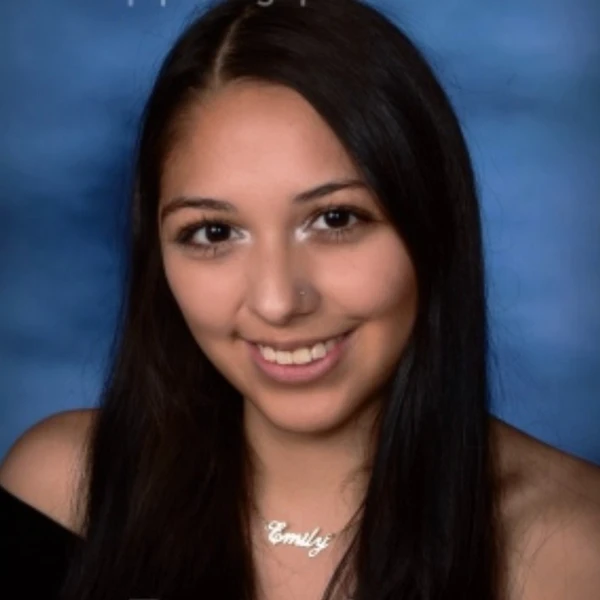
Emily Fernandez
1x
FinalistEmily Fernandez
1x
FinalistBio
Motivated third-year first-generation undergraduate student at The College of New Jersey, passionate about gaining hands-on experience in the psychology field. Actively seeking scholarships or internship opportunities to help fund my education. If you're looking for a dedicated and eager individual to receive your scholarship, I’d love to connect and explore potential opportunities!
Education
The College of New Jersey
Bachelor's degree programMajors:
- Psychology, General
Miscellaneous
Desired degree level:
Master's degree program
Graduate schools of interest:
Transfer schools of interest:
Majors of interest:
Career
Dream career field:
Mental Health Care
Dream career goals:
Licensed Therapist
Registered behavioral technician
Achievement Behavior Services2025 – Present1 yearLine Worker/ Cashier
Panera Bread2022 – Present4 yearsCashier
Gabriels Fountain Kitchen and Creamery2022 – 20231 yearHostess
Maggianos Little Italy2019 – 20223 years
Sports
Cheerleading
Varsity2019 – 20234 years
Public services
Volunteering
Bound Brook High School — Volunteer2022 – 2023
Future Interests
Advocacy
Politics
Volunteering
Philanthropy
Fishers of Men-tal Health Scholarship
“Follow me, and I will make you fishers of men.” (Matthew 4:19)
This verse has always resonated with me—not as a call to follow a church or tradition, but as a reminder that each of us is guided by a purpose, even in the midst of hardship. My journey has been profoundly shaped by mental health challenges: my own struggles, the generational wounds of untreated mental illness in my family, and the devastating loss of a loved one to suicide. These experiences have instilled in me not only resilience and empathy but a deep sense of calling: to serve, to heal, and to lead with compassion. I feel called to be a fisher of men in the mental health field, casting nets of hope, understanding, and care for those navigating their own dark storms.
As a first-generation, biracial Hispanic American student majoring in Psychology and minoring in Spanish at The College of New Jersey, my ambitions are intimately tied to my lived experiences. I aspire to become a licensed therapist who provides trauma-informed, culturally competent, and spiritually sensitive care to underserved and Spanish-speaking communities. My passion for mental health is rooted in my personal history. Raised by a single mother in a low-income household, I saw firsthand how financial and cultural barriers can block access to vital support. Untreated mental illness was a recurring theme in my family, and I myself grappled with anxiety and episodes of depression. Losing a loved one to suicide transformed my resolve into a calling: to dedicate my life to helping others heal.
My spirituality is not defined by weekly church attendance or ritual—it is defined by my conversations with God, my trust in His plan, and my belief that the universe has a purpose in every struggle. During my darkest moments, I often questioned why life seemed so heavy, why challenges persisted, creating the complex relationship I had with my faith. Over time, I realized that faith is not about perfection or having all the answers; it is about trusting that every experience, every hardship, has meaning and a role in shaping who we are meant to become.
This belief has transformed my understanding of mental health. Healing is holistic: mind, body, and spirit are inseparable, and mental health struggles are not character flaws but opportunities for growth, understanding, and compassion. My spiritual perspective guides me to meet future clients with empathy and patience, honoring their unique beliefs and journeys. I strive to create environments where people feel truly understood and valued as whole individuals—not merely as patients.
My experiences with mental health have profoundly shaped my relationships. My father, a Peruvian immigrant, left when I was two years old, leaving me with a sense of cultural disconnection and uncertainty about my identity. While this absence was painful, it also deepened my empathy for others. I know what it means to feel unseen or disconnected from community, and I bring this understanding to every relationship—whether with friends, family, or those I serve.
Losing a loved one to suicide and growing up amid untreated mental illness have taught me to approach relationships with greater care, patience, and presence. I have learned the power of showing up, listening deeply, and offering support without judgment. My relationship with God and my spirituality ground me, helping me sustain hope and perspective even during life’s most difficult moments.
As a behavioral technician in Applied Behavior Analysis (ABA) therapy, I witness daily the importance of these lessons. Supporting neurodivergent children and young adults demands empathy, patience, and individualized care. My commitment to truly listening, responding thoughtfully, and meeting people where they are comes directly from my lived experience with mental health challenges.
My career goals are deeply intertwined with my personal history and spirituality. I am determined to become a licensed therapist specializing in trauma-informed, culturally responsive care, with a focus on Spanish-speaking and underserved communities. Too often, people from minority and low-income backgrounds do not see themselves reflected among mental health professionals, creating barriers to seeking help. I want to change that—offering therapy that is inclusive, culturally sensitive, and grounded in the realities of my clients’ lives.
I am also committed to addressing the intersection of mental health and addiction, which remains a critical area of need. In my family and community, untreated mental illness has often led to unhealthy coping mechanisms. Addiction is too often mischaracterized as a moral failing, when it is, in fact, a response to pain and trauma. My spiritual outlook compels me to meet people with empathy and without judgment, providing care rooted in understanding and practical support.
Beyond clinical work, I hope to advocate for diversity and inclusion in mental health research and practice. Minority voices are underrepresented in the literature, limiting the effectiveness of treatments for diverse populations. I intend to amplify these perspectives and help ensure interventions are culturally, linguistically, and socioeconomically responsive. To me, this advocacy is as much a spiritual calling as it is a professional responsibility—to use my story and skills to bring light to those who feel unseen.
When I envision my future, I see myself casting a net wide enough to reach those who feel isolated, misunderstood, or unworthy of care. My spirituality, mental health journey, and academic training have prepared me for this work. I believe that God and the universe have set me on this path, and that my struggles have equipped me to guide others toward hope and healing.
The Fishers of Men-tal Health Scholarship is more than financial support—it is an affirmation of my purpose. With this opportunity, I will continue my education and advance toward my goal of becoming a therapist who blends evidence-based care with empathy, cultural competence, and spiritual sensitivity. My aim is to help others navigate pain, find hope, and build lives defined by resilience and meaning.
My journey with mental health has shaped my beliefs, deepened my relationships, and inspired my career aspirations. It has shown me that healing is possible, compassion is transformative, and every individual deserves holistic care—mind, body, and spirit. I walk this path with faith in God, trust in the universe, and a steadfast commitment to serve. One day, I hope to cast nets of healing that bring others safely to shore, helping them discover hope, connection, and the strength to continue their journey.
Joybridge Mental Health & Inclusion Scholarship
My name is Emily Fernandez, and I am a first-generation, biracial Hispanic American student pursuing a degree in Psychology with a minor in Spanish at The College of New Jersey. My career goal is to become a licensed therapist who provides trauma-informed, culturally responsive care to underserved and Spanish-speaking communities. My passion for mental health stems from personal experience—I have seen how deeply it shapes lives, including my own, and I believe healing should never be a privilege but a fundamental right.
My interest in mental health is both personal and academic in nature. Growing up in a low-income household raised by a single mother, I saw how financial and cultural barriers prevented my family and community from seeking the help they needed. Mental illness has long gone untreated in my family, and I have experienced both anxiety and depression myself. I also lost a loved one to suicide, a devastating experience that solidified my resolve to enter this field. I want to create spaces of safety, connection, and healing for those who feel unseen—because I know how isolating it can be when support feels out of reach.
I have also struggled with a deep disconnect from my Peruvian heritage, as my father has not been in my life since I was two years old. For years, this left me questioning my identity and my place in the world. Rather than let that fracture define me, I chose to reclaim it. Pursuing a Spanish minor is not only about mastering a language, but also about bridging cultural gaps for those who feel overlooked in healthcare settings. Too often, minority and immigrant families do not see themselves reflected in their providers, creating an additional barrier to seeking support. My goal is to become the therapist I needed when I was younger—someone who listens, understands, and validates the complex realities of cultural identity and mental health.
Currently, I work as a behavioral technician in Applied Behavior Analysis (ABA) therapy, supporting neurodivergent children and young adults. This role has given me hands-on experience in cultivating patience, empathy, and individualized care— skills I will need in my future. It has also deepened my awareness of the need for inclusive approaches in mental health—approaches that recognize not only neurodiversity but also the ways race, income, and culture impact treatment and outcomes.
My future goals extend beyond direct practice. I aim to contribute to advancing diversity in mental health research and clinical practice by advocating for the inclusion of diverse voices, including those from minority and low-income backgrounds, in studies and trials. Without representation, treatment models risk excluding the very communities most in need. I plan to help bridge this gap by amplifying perspectives often left out of research and by ensuring that clinical interventions are not one-size-fits-all, but responsive and sensitive to cultural and socioeconomic realities.
Mental health challenges can make pursuing higher education feel impossible, especially for students like me who balance financial pressures with personal struggles. Yet every obstacle I have faced has strengthened my determination to create change. My journey has taught me that resilience is not about enduring hardship in silence—it is about transforming that hardship into a catalyst for meaningful impact.
With this scholarship, I will be able to continue my studies and move closer to my dream of becoming a therapist who not only provides healing on an individual level, but also contributes to building a more inclusive and representative mental health system. I aspire to be part of the next generation of changemakers who dismantle barriers and help create a future where no one is left behind.
Catrina Celestine Aquilino Memorial Scholarship
My name is Emily Fernandez. I am a biracial Hispanic American, a first-generation college student, and a junior at The College of New Jersey. I am majoring in Psychology with a minor in Spanish and aspire to become a licensed therapist providing trauma-informed, culturally competent care to underserved and Spanish-speaking communities. Like Catrina Celestine Aquilino, I believe that no one’s birthplace or family background should determine their access to care, compassion, or dignity. My ambition is to make mental health support accessible to everyone, especially those who feel overlooked or silenced.
I was raised by a single mother who worked tirelessly to provide for me, instilling in me resilience and determination. My Peruvian father has been absent from my life since I was two, leaving me with a deep disconnect from my culture and identity. At times, I felt caught between two worlds. Instead of letting that separation define me, I chose to turn it into a source of strength. Pursuing a Spanish minor is not only about learning a language, but also about reclaiming a part of myself and bridging cultural and linguistic gaps for others who feel unseen. In many ways, I am seeking the care I needed for myself: belonging, understanding, and connection.
My educational journey has not been easy. As a low-income, first-generation student, I have faced financial barriers and moments when continuing my education felt impossible. During my sophomore year, I temporarily lost my Educational Opportunity Fund (EOF) scholarship due to a FAFSA error. I was advised to take a gap year, but I worked long hours while appealing my case. Eventually, I regained my aid, but not without losing housing, stability, and peace of mind. That experience proved I can endure challenges and advocate not only for myself, but for others who may not have the resources to fight the system.
My commitment to psychology is both academic and deeply personal. My family has long struggled with untreated mental illness, and I have experienced anxiety and depression myself. Losing a loved one to suicide further fueled my resolve to dedicate my career to mental health. For me, this field represents hope: the belief that healing is possible with the right support. My goal is to become the therapist I needed growing up—someone who listens, understands, and creates spaces where people feel seen and safe.
Currently, I am gaining direct experience as a behavioral technician in ABA therapy, working with neurodivergent children and young adults. This role has taught me patience, empathy, and the importance of individualized care. It has also deepened my commitment to making mental health resources more accessible, especially for families who face cultural or financial barriers.
I hope to make a positive impact by providing care that is not only evidence-based but grounded in compassion and cultural awareness. Whether through community clinics, crisis response teams, or private practice, I want people—regardless of income, background, or language—to know they are not alone.
Catrina Aquilino’s legacy inspires me because her life’s work embodied what I strive for: expanding the circle of care and justice beyond barriers of culture, class, and circumstance. This scholarship will help me break the cycles of silence, stigma, and disconnection, replacing them with empathy, healing, and hope. I am committed to carrying her legacy forward by ensuring that care, compassion, and dignity reach those who need them most.
Ethan To Scholarship
My story begins not in a classroom, but in a home shaped by untreated mental illness. From an early age, bipolar disorder, personality disorders, and anxiety surrounded me. The loss of a loved one by suicide reshaped how I understand life and healing. Rather than hardening me, these experiences motivated me to change the narrative—psychology became the path that chose me.
As a first-generation, biracial Hispanic American from a low-income background, my path to higher education was not easy. My single mother’s tireless work showed me the value of resilience and sacrifice. After a FAFSA error threatened my Educational Opportunity Fund scholarship, I fought to regain it—taking on long shifts, moving off campus, and finding my way through the system alone. I see myself as a lotus flower: rising from hardship, my education remains the light I reach for.
I chose psychology because it offers hope, the belief that healing is always possible. I know what it means to carry anxiety and depression quietly, regardless of outward appearances. Naming my struggles gave me strength, and my journey continues to inspire my dedication to helping others heal.
My goal is to become a licensed therapist who provides trauma-informed, culturally competent care to underserved communities, especially Spanish-speaking families who often face barriers to accessing mental health services. I want to work in both community and crisis settings, creating safe spaces for people to share their stories without fear of stigma or misunderstanding. I aspire to be the therapist I needed growing up, someone who listens, who understands, and who reflects both compassion and cultural awareness.
I am already gaining experience in the mental health field as a behavioral technician in ABA therapy, supporting neurodivergent clients as they work toward communication, social, and daily living goals. This role has taught me the importance of patience, empathy, and celebrating progress in all its forms. More importantly, it has shown me how even small steps toward healing can change someone’s life.
This scholarship represents more than financial support; it represents the belief that students like me, who have lived through mental health struggles, can transform those experiences into meaningful change. My lived reality, my academic journey, and my future goals are all connected by one mission: to bring hope and healing where it is most needed. I deserve this scholarship because I am not only committed to pursuing my degree, but also to using my resilience, empathy, and voice to honor those who felt unheard, including Ethan To, and the countless others whose struggles remind us why this work matters.
I Can and I Will Scholarship
My story begins not with a textbook, but with a childhood shaped by chaos and resilience. Mental health has never been a distant concept to me—it’s been a constant presence in my life. I grew up in an environment deeply impacted by generational trauma and untreated mental illness. From a young age, I was surrounded by the effects of bipolar disorder, personality disorders, and addiction. I also experienced loss by suicide, which left behind questions I still carry. These experiences could have hardened me, but instead, they planted the seeds of curiosity and compassion.
I’m currently a Junior Psychology major at The College of New Jersey, with a minor in Spanish. My academic path is not only driven by interest but by deep personal connection. I’ve seen what it means to suffer in silence, to be misunderstood, or to lack access to proper mental health care. I’ve also experienced anxiety and bouts of depression myself, though I consider myself fortunate that, with therapy and education, I’ve been able to build emotional resilience. I’ve worked hard to break cycles that have run in my family for generations—and that journey is what fuels my passion.
We often think of mental illness in terms of diagnosis, symptoms, or statistics. But for me, it has always been personal. I’m not sharing my family’s struggles for pity, but to explain the foundation of my purpose. These early experiences shaped how I see the world and the kind of impact I want to make in it. I realized I didn’t want to just survive these circumstances—I wanted to use them to help others survive their own. That meant studying psychology, understanding the science of the mind, and learning how to intervene effectively and empathetically.
What inspires me most about psychology is that it’s rooted in hope—the belief that healing is always possible. With every class I take and every theory I learn, I feel more equipped to give back. My goal is to become a therapist who works with all ages, particularly within underserved and Spanish-speaking communities. I believe everyone deserves care in a language and environment they feel safe in. Mental health support should not be a luxury or a last resort—it should be accessible, compassionate, and culturally aware.
I’m also passionate about working in crisis settings, such as hospitals or mobile response teams. I want to be the calm presence someone meets in their darkest hour. I know what it’s like to feel helpless, and I want to be the person who says, “You’re not alone, and this isn’t the end.”
As someone who’s been working since the age of 13, I’ve always had to be independent and resourceful. I come from a low-income background and am part of the EOF (Educational Opportunity Fund) program, which has helped open doors to education that once felt out of reach. Being able to study what I love is not something I take for granted. Scholarships like this one are part of what makes it possible for students like me to keep moving forward.
In the end, I’m pursuing this path not just to earn a degree—but to become the therapist I needed growing up. To offer what wasn’t always offered to me: safety, understanding, and a chance to heal. I want to bring sunshine to those who still feel stuck in the dark. Because I know what it’s like to be there—and I know what it takes to climb out.
Early Childhood Developmental Trauma Legacy Scholarship
Early childhood trauma is more than just a collection of painful memories, it fundamentally rewires the brain, shapes identity, and influences emotional development well into adulthood. Children exposed to neglect, abuse, or household dysfunction often carry invisible wounds that later manifest as anxiety, depression, and even physical illness. The Adverse Childhood Experiences (ACEs) study demonstrates a strong correlation between early trauma and long-term outcomes like substance abuse, suicidal ideation, and chronic depression. Trauma interrupts critical developmental windows, impacting emotional regulation, trust-building, and the nervous system’s growth.
These aren’t just facts I’ve learned in textbooks, they’re realities I’ve lived. I grew up in a home marked by instability and mental illness. With my father absent, my understanding of family was shaped by abandonment and chaos. My mother, a single parent, did her best to raise me and my siblings with limited resources. Mental illness was prevalent, including bipolar disorder, personality disorders, and undiagnosed conditions affecting nearly every adult in my life. As a child, I internalized fear and anxiety. I had no words for what I was experiencing, but through my studies, I’ve come to understand these as symptoms of early childhood trauma.
That understanding changed everything. Naming what I had gone through gave me the tools to begin separating my trauma from my identity. It didn’t define me, it informed me. And through that clarity, I found purpose.
Despite the hardship, I also witnessed incredible resilience in my family. This duality of pain and strength inspired my curiosity about the human mind and what it takes to truly heal. Today, I’m a junior at The College of New Jersey, majoring in Psychology and minoring in Spanish. I plan to become a licensed therapist focused on trauma-informed care in underserved communities like the one I came from, where trauma is often generational and mental health resources are scarce.
This past semester, I took a biopsychology course that deepened my understanding of how trauma physically reshapes the brain. I learned how prolonged stress in early childhood alters the amygdala, hippocampus, and prefrontal cortex—regions responsible for memory, fear, and decision-making. Seeing the science behind what I experienced growing up felt validating and empowering. Trauma isn’t just emotional, it’s biological. This knowledge shapes how I want to practice therapy: with empathy backed by science.
Through trauma-informed care, I aim to create safe, affirming environments where clients—especially children and teens—feel heard, supported, and validated. One of the most powerful lessons I’ve learned is that healing starts with safety and connection. If a child doesn’t feel safe, no amount of logic or redirection will help them thrive. I want to be the person who sees beyond behavior, understands the root of the struggle, and helps people rebuild from pain.
Currently, I work as a behavioral technician in ABA therapy, supporting neurodivergent clients as they work toward their goals. Seeing their progress brings me joy. My empathy and patience help me connect with them in meaningful ways, making them feel seen and supported.
Combining my psychology training with Spanish will also allow me to offer culturally competent care. Language should never be a barrier to healing. I want to remove as many barriers as possible—linguistic, systemic, and emotional. I also hope to work in crisis response and inpatient care, where early intervention can change lives.
This work is more than a career, it’s my calling. I never had a therapist who looked like me, spoke my language, or understood where I came from. I want to be that person for someone else. I’m committed to breaking cycles, building trust, and helping others find healing and hope.
Sloane Stephens Doc & Glo Scholarship
My story begins not with a textbook, but with a childhood shaped by chaos and resilience. Mental health has never been a distant concept to me; it’s been a constant presence in my life. I grew up in an environment deeply impacted by generational trauma and untreated mental illness. From a young age, I was surrounded by the effects of bipolar disorder, personality disorders, and addiction. I also experienced loss by suicide, which left behind questions I still carry. These experiences could have hardened me, but instead, they planted the seeds of curiosity and compassion within me.
I’m currently a Junior Psychology major at The College of New Jersey, with a minor in Spanish. My academic path is not only driven by interest but by a deep personal connection. I’ve seen what it means to suffer in silence, to be misunderstood, or to lack access to proper mental health care. I’ve also experienced anxiety and bouts of depression myself, though I consider myself fortunate that, with therapy and education, I’ve been able to build emotional resilience. I’ve worked hard to break cycles that have run in my family for generations, and that journey is what fuels my passion.
We often think of mental illness in terms of diagnosis, symptoms, or statistics. But for me, it has always been personal. I’m not sharing my family’s struggles for pity, but to explain the foundation of my purpose. These early experiences shaped how I see the world and the kind of impact I want to make in it. I realized I didn’t want to just survive these circumstances—I wanted to use them to help others survive their own. That meant studying psychology, understanding the science of the mind, and learning how to intervene effectively and empathetically.
What inspires me most about psychology is that it’s rooted in hope, the belief that healing is always possible. With every class I take and every theory I learn, I feel more equipped to give back. My goal is to become a therapist who works with all ages, particularly within underserved and Spanish-speaking communities. I believe everyone deserves care in a language and environment they feel safe in. Mental health support should not be a luxury or a last resort; it should be accessible, compassionate, and culturally aware.
I’m also passionate about working in crisis settings, such as hospitals or mobile response teams. I want to be the calm presence someone meets in their darkest hour. I know what it’s like to feel helpless, and I want to be the person who says, “You’re not alone, and this isn’t the end.”
As someone who’s been working since the age of 13, I’ve always had to be independent and resourceful. I come from a low-income background and am part of the EOF (Educational Opportunity Fund) program, which has helped open doors to education that once felt out of reach. Being able to study what I love is not something I take for granted. Scholarships like this one are part of what makes it possible for students like me to keep moving forward.
In the end, I’m pursuing this path not just to earn a degree, but to become the therapist I needed growing up. To offer what wasn’t always offered to me: safety, understanding, and a chance to heal. I want to bring sunshine to those who still feel stuck in the dark. Because I know what it’s like to be there—and I know what it takes to climb out.