1. Tell us about yourself.
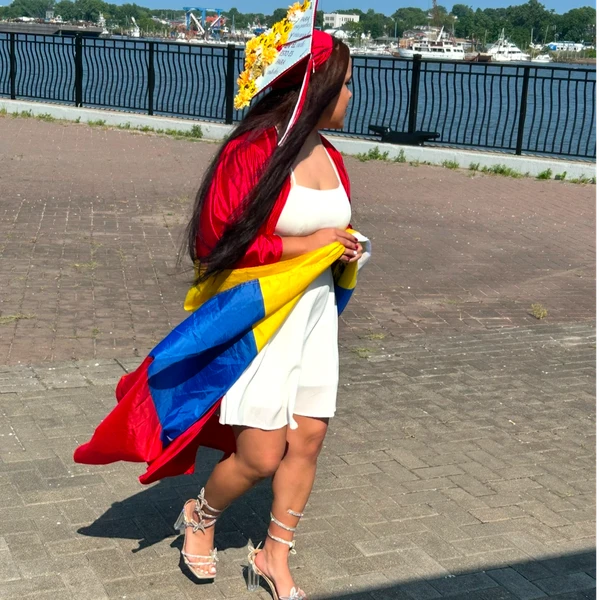
My name is Emily Ojeda, and I am a Venezuelan immigrant, a proud sister, a student, and a young woman deeply committed to personal growth and social impact. I arrived in the United States at age 15, leaving behind my mother and two younger sisters, driven by the hope of better opportunities. That journey changed everything. It challenged me to rebuild my life from scratch, to find my voice in a new language, and to discover strength in my own identity.
I care deeply about family, justice, and the emotional well-being of others. Having grown up in a country where access to mental health was limited, I saw firsthand how emotional struggles were often ignored or silenced. When I arrived in the U.S., I realized those same issues existed here, especially among immigrants and underserved communities. That personal experience drives my mission: to help create a world where mental health care is not a luxury, but a right.
I believe in starting small and dreaming big. I’ve cleaned streets in my neighborhood because I believe every act of care matters. I’ve acted in bilingual plays to help others feel seen and included. I’ve taken care of children, learning how to lead with love and patience. Every experience has taught me something about who I am: someone who listens deeply, works hard, and believes in healing through connection.
2. What’s a real-world issue you feel deeply connected to, and why?
The issue I feel most connected to is the lack of access to affordable and culturally sensitive mental health care, especially for immigrants and low-income families. As a young immigrant who came to the U.S. without speaking English, separated from my mother and siblings, I experienced firsthand the emotional toll of change, uncertainty, and isolation.
Many people like me face emotional struggles in silence because of stigma, fear, or lack of resources. In immigrant communities, mental health is often misunderstood, ignored, or treated as a weakness. That silence can be dangerous. It leads to depression, anxiety, and broken families. I believe everyone deserves a safe space to talk, heal, and feel understood.
My experiences losing my great-grandmother, becoming an older sister, leaving my family, and starting over in a new country taught me the importance of emotional support. These challenges helped me discover my passion: to fight for mental health care that reflects the diverse needs of every individual, especially those who often go unseen or unheard.
3. If you had the power to make a change in that area, what would you do?
If I had the power to make a change in mental health care, I would design a network of affordable, bilingual mental health centers focused on early intervention and culturally responsive care. These centers would be located in schools, community centers, and mobile units to reach the most vulnerable populations.
Each center would offer therapy in multiple languages, educational workshops for families to reduce stigma, and school programs that teach students how to manage stress and emotions. I would hire mental health professionals from diverse backgrounds, so patients can speak with someone who understands their culture and language.
I would also use technology to expand access. Mobile apps, text-based counseling, and virtual therapy platforms could help reach teens and adults in rural or underserved areas. Lastly, I would advocate for a policy change to require schools and local governments to invest in emotional education and care just as much as academic success. Real change starts when emotional health is seen as essential, not optional.
4. How did you choose your area of study, and what do you hope to do with it?
My interest in mental health and psychology came from lived experience. After moving to the U.S., I struggled emotionally, but I didn’t know how to ask for help. I saw other students like me suffer in silence. That made me want to understand the human mind, especially how trauma, change, and identity impact us.
I started researching mental health topics and realized how deeply connected this field is to science. Psychology, neuroscience, and behavioral health are all part of STEM, and they can be used to help people heal. I was inspired to pursue a field where science and compassion work together.
In the future, I hope to become a psychologist or a behavioral specialist who works with young people and immigrant families. I want to help create programs and tools that empower communities with the knowledge and support they need. My goal is to combine research with real-world service to build a more inclusive and healthy society.
5. What’s one goal you’ve set for yourself in the next 5 years, and how do you plan to get there?
One major goal I’ve set for myself is to graduate from college with a degree in Biology or a related STEM field and begin working directly with underserved communities. To get there, I plan to:
Stay focused and maintain strong academic performance throughout college.
Seek internships or volunteer work in mental health clinics or community programs.
Continue learning about policy, science, and cultural perspectives in mental health.
Build connections with mentors and professionals in the field.
Every step I take from schoolwork to community service is part of this larger goal. I am determined to use my education as a tool for healing and empowerment.
6. How has education helped you better understand yourself and your purpose?
Education has been my greatest tool for self-discovery. When I arrived in the U.S., I felt lost. I didn’t speak English, and I struggled to find where I belonged. But school became a space where I could challenge myself, grow, and discover what I care about.
Through classes, I learned that I love understanding how people think and feel. Through writing, I learned how to express my voice. Through science, I learned that helping others can also be rooted in research and facts. Education helped me see that I have the power to create change, not just for myself, but for my community.
7. How has your identity as a woman influenced the way you move through the world?
Being a woman has taught me strength, responsibility, and empathy. As the oldest sister in a family led by strong women, I learned how to lead and support others at a young age. I helped raise my sisters, care for children, and keep my family together during difficult times.
In many spaces, I’ve felt underestimated because I’m young, female, and an immigrant. But I’ve learned to speak up, to lead by example, and to use my voice. I’ve realized that being a woman in STEM or leadership isn’t a weakness, it’s a superpower. I carry my identity with pride because I know it makes me a more compassionate and powerful changemaker.
8. What does leadership mean to you, and how have you embodied it?
To me, leadership is about service, responsibility, and courage. It’s not just about having a title, it’s about taking action when it matters. I’ve shown leadership by helping my family, supporting younger students, cleaning my community, and caring for others without being asked.
I acted in bilingual plays to help bridge language gaps and bring people together. I volunteered to clean my school and community because I believe that small actions create big change. Leadership means showing up, doing the work, and inspiring others to believe they can do the same.
9. Describe a time you had to be resourceful or resilient. What did you learn from it?
The most defining moment of resilience in my life was when I moved to the U.S. at age 15. I had to leave my mother, sisters, language, and culture behind to start from zero. I had no choice but to adapt quickly, learn English, make new friends, understand a new school system, and support myself emotionally.
There were times I cried in silence, unsure of how to express what I was feeling. But I pushed forward. I used every obstacle as motivation. I learned that being resilient doesn’t mean never falling, it means getting back up, again and again, until you find your voice. That lesson has stayed with me in everything I do.
10. If awarded this scholarship, how would it help you pursue your dreams?
This scholarship would be life-changing. It would help relieve the financial burden on my family and allow me to focus on my education and goals without fear. It would also validate everything I’ve overcome, the sacrifices, the long nights, the challenges of starting over in a new country.
With this support, I would be able to pursue my studies in psychology or a related STEM field, seek internships, and get involved in community-based mental health programs. It would help me take the next step toward becoming a mental health professional who serves and uplifts others.
This isn’t just about a degree. It’s about building a life where I can give back, lead, and inspire. With your help, I will continue turning my story into a source of strength and transformation for others.