Hobbies and interests
Advocacy And Activism
Baking
Botany
Criminal Justice
Cooking
English
Government
Animals
Gardening
Journalism
Music
Movies And Film
History
True Crime
Social Justice
Legos
Politics and Political Science
Philosophy
Reading
Psychological Thrillers
Art
Philosophy
American History
Politics
Social Issues
Poetry
Biography
Classics
Law
History
I read books daily
Emily Moran
1x
NomineeEmily Moran
1x
NomineeBio
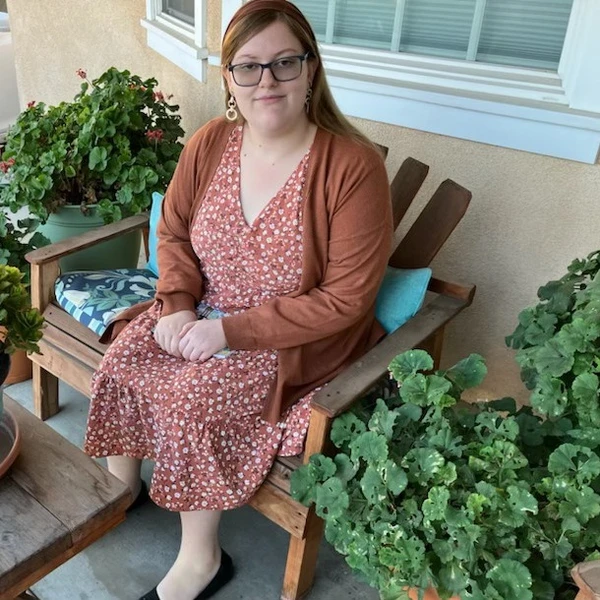
Hi, I'm Emily, and my biggest passion is activism. I like to educate myself on various topics and fight for what is equitable for everyone. I am passionate about women's issues, racial justice, and disability access.
I am majoring in Elementary Education this academic year. I am currently a member of the MICAH leadership program and the Dr. MLK leadership program, and I am active in community volunteering.
In the future, I plan to become a 2nd grade teacher.
Education
Saint Louis University
Bachelor's degree programMajors:
- Education, Other
Monrovia High
High SchoolMiscellaneous
Desired degree level:
Bachelor's degree program
Graduate schools of interest:
Transfer schools of interest:
Majors of interest:
- Religion/Religious Studies
- Theology and Religious Vocations, Other
- Education, General
Career
Dream career field:
Education
Dream career goals:
Becoming a 2nd grade teacher at a Catholic elementary school.
Intern
KGEM TV-Public Access Television2023 – 20241 year
Sports
Water Polo
Junior Varsity2021 – 20221 year
Awards
- No
Research
History and Political Science
Humanities Academy (Monrovia HS) — Solo Researcher and Research Paper Author (Junior Project/Thesis for Humanities Academy)2022 – 2023
Arts
Saint Louis University Campus Choir
Music2024 – PresentAnnunciation Church Choir
MusicNo2017 – PresentTheatre Conservatory
Stagecraft4 (2 minor and 2 major)2021 – 2022
Public services
Volunteering
Micah Program — Volunteer2024 – PresentAdvocacy
Dr. MLK Leadership Program — Volunteer and Scholar2024 – PresentVolunteering
Loyola Academy of St. Louis-Micah Program — Volunteer.2024 – PresentAdvocacy
Students For Free Speech — Founder and President2023 – 2024Public Service (Politics)
Young Legislators of the 41st District of California-Chris Holden — Student Member2024 – 2024Volunteering
Humanities Academy at my highschool. — Library Inventory, cleaning and maintaining the space, ridding shelves of outdated material.2022 – 2024Volunteering
Humanities Academy PageTurners — Student Volunteer2023 – 2023Volunteering
Annunciation Catholic Church Environment Program — Aid to older women in the program who were less physically able than myself.2021 – 2023Advocacy
Social Justice Club — Founder and President2022 – 2023
Future Interests
Advocacy
Volunteering
Philanthropy
JT Lampert Scholarship
I always knew I had the power to support others. Even on the other side of the planet! I help others through my social justice and advocacy efforts, and plan to do so in my career as well. For instance, something I already have done was to organize a fundraiser my junior year of high school for the Artsakh relief fund in Armenia. The blockade imposed on them by Azerbaijan made things like just getting water difficult, so I rallied my peers to help raise money for the cause. We raised $250 total.
But that is only one instance of me supporting others that way. Normally, my form is support is expressed by less present, but meaningful approaches. While I was in my high school newspaper club, I brought focus to social issues when I write about current events, and I highlighted student contributions to my high school campus, such as alumni efforts or school spirit practices. I also worked to support others by helping them to advocate for themselves. I created the Students for Free Speech to help students learn how to protect themselves against book bans.
I plan to use the skills I've acquired in these roles (leadership, communication, and advocacy) to enhance my career. I am already taking steps in my college career, such as joining two leadership programs and volunteering within the local community to help the less fortunate. I want to continue these charitable efforts, but I also want to use my professional career to help those in need in other ways. I plan to be an attorney, and I want to use my position for community efforts such as pro bono work or helping to defend those who cannot defend themselves.
In conclusion, I continue to use my skills and my education in order to create positive change. My future is going to be one of supporting others if I am able always, regardless of their background. I am going to use my job as an attorney to make the world better, one case, paid or unpaid, at a time.
A Man Helping Women Helping Women Scholarship
I am a student leader with aspirations to become a lawyer and work for the Department of Justice. I am a champion of many social and political causes, such as free speech rights and women's rights.
During my high school career, I joined many clubs to help my goal of becoming a lawyer and social leader, such as the Speech and Debate and the Wildcat Newspaper. I also founded two clubs of my own: the Students for Free Speech and the Social Justice Club.
I joined Speech and Debate officially my junior year, to practice the argumentative skills I would need to be an attorney. Ever since joining the Speech and Debate, I've been fascinated by the power of words and ideas to effect change. This fascination has in turn shaped my desire to pursue a career in politics and government. My academic journey has been a constant exploration of how historical events influence current events and ideologies.
Another club that helped me see how words and ideas can affect change was the Wildcat Newspaper. I saw in it how current events could be reported on by two different people, and come out looking completely different. I saw how opinion pieces could be potentially controversial, but how the author always stuck by their opinion and was willing to talk about it with others in a respectful manner. My time there inspired me to continue writing, but also to fight for free press and news that doesn't push political agendas.
My involvement in various clubs has allowed me to explore diverse perspectives and has taught me to be more understanding of viewpoints different to my own, and how to compromise with others. Initially, I struggled with viewpoints that differed from my own, but I decided to push myself out of my ideological comfort zone, and engage in civil discourse with others to better understand them. I came to realize that they were also people, and indeed, also entitled to individualistic opinions. Through these experiences, I've learned that making a positive impact on the world requires advocacy, action, and most importantly, communication.
Through my intended major, political science, I plan to dive deeper into understanding the complex interactions between individual rights and liberties and government responsibility. My goal is to then use this knowledge to enrich my career, and to be able to the both the perspective of the government and the governed in making wise political decisions that benefit Americans en masse rather than just helping a few.
Additionally, my commitment to making a positive impact extends beyond my career aspirations. When I was a leader of the Social Justice Club, I have organized workshops and campaigns to raise awareness about social issues, such as gender inequality and racial discrimination. These experiences have taught me the importance of community engagement and the power of collective action. I plan to continue this work by partnering with my peers in college and in my career, as well as with organizations that help to champion the rights of the people and work to enshrine these rights into law.
In conclusion, my journey so far has been a rollercoaster of learning how to be a leader, making friendships and connections, and looking towards the future with high expectations but practical goals. As I look forward to my future career in politics and government, I am excited about the opportunities to contribute to meaningful change. By combining my passion for social justice with my skills in compromise and communication, I am committed to making a positive impact on the world and everyone who lives in it.
Scholarship Institute’s Annual Women’s Leadership Scholarship
At first during high school, I lacked the real confidence to be a leader or to assert my own individuality in my leadership, especially as a young woman. However, as I became more interested in politics and social justice, I knew I had to make the issues I was passionate about known. So, I resolved to demonstrate leadership by founding and leading my own on-campus club. And that was how the Students for Free Speech came into existence.
The summer before my senior year, I noticed increased media censorship in public schools and I wanted to start the discussion about it at my school, and give my peers the expert advice and resources to fight free speech violations in and out of school. So I founded the club that August, and recruited as many people as I could, from all backgrounds and political ideologies. I found in them an equal love of social justice and a desire to protect constitutional rights. I saw them as equals, so I decided leading by example wouldn't be the primary mode of leadership I would use. I instead empowered them to take the lead with me in making positive change.
So, I started my mission along with my team. We held free book drives and encouraged more youth voter registration. It was little things we could do and grassroots efforts that we knew would help the populace. I took a lead in organizing with my high school, and the team helped with execution of events. Overall, they were a massive success and our efforts brought attention to our cause.
But there were also challenges to being a leader in the Students for Free Speech. Specifically, challenges with what "free speech" itself meant. Sometimes, people would show up at meetings, and we would believe they were there to make relevant commentary or simply observe. But in reality, they were only there to push our buttons and test our limits with hate speech. I knew the right to say those things was protected by law, but I also didn't want to enable any horrendous behavior. By working with my team and my advisor, we came to agreement that though those rights were protected, they had no right to be there just to disturb others.
My leadership that I try to exemplify now will almost certainly connect with my future. In college, I plan to take an active role in social justice causes and projects by way of my leadership program and my academics. I will be majoring in political science, which will help me develop my leadership skills in the context of eventually taking a political position in the federal government, which I want to do in the future.
I hope to apply my skills to make change through grassroots efforts, but also through legislation and practical political compromise if I assume elected or appointed public office. In the future, I want to work for the Department of Justice. And through that work, I hope to eventually rise the ranks to US Attorney General by my own merit. Once I am in that office, I can make even more change than I do now, and continue to inspire others in my mission of empowerment that makes leaders.
Peter and Nan Liubenov Student Scholarship
I am a social justice advocate for the rights and liberties of all people, which has pushed me to be a positive force in society now, and in my future career as an attorney.
My main issue I like to focus on is free speech, specifically the free speech rights of American minors. In modern society, the current social norms have proved a challenge as well as an aid. People want to see their constitutional rights protected and youth are bigger advocates than ever before. But there is also a lot of debate about what constitutes free speech in Gen Z, which can lead to divides in the debate on it. In addition, the digital age has complicated things by leading to more debate on what is and isn't free speech, what hate speech is, and what the internet should and shouldn't censor when it comes to young people.
I have tried to be a positive force for the cause presently by founding and leading the Free Speech Club during my senior year of high school. In it, I taught people how to protect themselves against free speech violations and book bans on and off their high school and college campuses. I stressed the importance of academic freedom and the right to speak what you believe. But the club also brought some controversy and some bad characters. Many people came to meetings just to test me about what free speech actually meant in terms of hate speech. I know that hate speech has been granted legal protection, but I feel that the consequences of uttering hate speech are entirely on who chose to utter it in the first place.
I argued with many people over this behavior, and my advisor helped mediate conflict and facilitate compromise alongside me. Despite these struggles, many people said they appreciated how I handled things, and that it made them think to be more understanding of differing opinions and personalities. One particular meeting conversation is memorable. Someone asked if we could talk about a famous serial killer during a meeting. I said yes, but why would he want to talk about someone like that and not someone who was good. He thought for a moment, said he didn't know, and changed he subject, seeming to truly reflect on the conversation.
I will be a positive force for the cause in the future by becoming an attorney in the Department of Justice, and hopefully working my way up to become the US Attorney General. In that position, I want to protect the right to free speech, but also work to ensure that the legal rights of hate speech are limited, and that an overall environment of compromise and kindness is achieved in American society. I want to tighten to definition on what is and is not free speech, and prevent speech that can lead to violence. I expect challenges to this from greater free speech purists. I can understand the worries of limiting free speech too much. But I plan to silence the debate with only one question. Why is the first thought you have when you hear the words free speech one of hate and anger towards others, and why do you feel the need to express your heinous views so openly and unapologetically?
But, until I start my career in a few years, I plan to continue being a positive force in college by advocating for the protection of free speech rights and the right to knowledge for American students while working with social norms and compromising with different social and political beliefs.
Kenyada Me'Chon Thomas Legacy Scholarship
If I could change the world, I would make free speech a universal protected human right because I have seen what happens when the right to free speech is not enforced in society, and how easily it can be disregarded.
My background has greatly influenced by beliefs about free speech. My mother and her family lived under the dictatorship of Saddam Hussein, where they had little freedom at all, much less freedom of speech. They fled to the United States, where their right to speak their minds was protected by law, a freedom they had never thought before could be codified.
I first became passionate about protecting free speech when I noticed the surge of book bans during and after 2020. I also noticed most book bans targeted minors in public schools like me, and how they were targeted against books which spoke out about societal issues like the BLM movement or gay rights. I found it ridiculous to censor book content in places of learning I knew were funded by the government, which had promised to protect the constitutional right to free speech. But I also worried that my town could be the next to institute such bans.
So, when I started my senior year of high school, I founded the Free Speech Club on campus. I wanted to educate my peers on current free speech violations and equip them with the tools to fight them on and off campus, and also when they moved on the institutions of higher education. So far, my work has been successful, and the final issue I addressed this school year was youth voter registration. Or, to vote for candidates who will protect your free speech rights.
The change I want to make to the world would have to start in one place. Likely my home country of the United States. First, leading US politicians in the legislative or executive branch would be petitioned by the citizenry for the change to be made. The idea would be that US politicians or ambassadors would then press the issue of free speech protections worldwide via the US's natural influence as a leading world power. Diplomatic negotiations with other world leaders by people working on behalf of the President would take place. Then, once a majority of leading countries and allies are on board with this action, the next step would take place.
In order to make the change of codifying free speech protections, an international coalition would need to be created. Or even better, a council of the United Nations. An amendment to the Universal Declaration of Human Rights would be drafted making it a violation of international law to restrict freedom of speech. Then, the UN would vote on it, and hopefully pass it, making it an international protection that allows people to exercise their human right.
I understand that this plan is ambitious, and that some of the countries who are the most notorious violators of free speech, like North Korea, are not UN member states. However, I believe that internationally overall, it will improve lives. People deserve the fundamental human right to free speech, and allowing for free speech allows for many other things in society, like freedom of religion or peaceful protests. Overall, I believe that if I could make this change to the world, the world and the people living in it would be better for it.
Hubert Colangelo Literacy Scholarship
Where my maternal family came from has greatly impacted my ideas about my education and what I want to accomplish in life. My maternal family has overcome many struggles, which have had generational impacts on me, making me more appreciative of life and the opportunities I have been granted to pursue higher education. My mother and her family have overcome displacement from religious persecution, have lived as refugees, have survived the Armenian Genocide, and have made a life in the United States with more freedom than they ever thought possible before they came here. The perspectives I have gained from the stories of my maternal family will prepare me for my future career because they have taught me the true meaning of justice and compassion in the legal field.
My mother is a first-generation immigrant college graduate who worked her way through school to become a businesswoman. She instilled in me the value of education from a young age, telling me to work hard to achieve my dreams, and to make my own way in the world. Because of her, I am now on the way to pursue a college education in political science.
I chose political science specifically because once I complete my degree, I wish to go to law school and become an attorney. Then, once I have the proper qualifications, I plan to work for the Department of Justice and eventually become US Attorney General. In that position, I know I can protect the freedoms my mother and her family were denied before they came to the United States, and help to ensure the continued prosperity of civil liberties and rights.
Dan Leahy Scholarship Fund
My assemblymember, Chris Holden, is someone I once only knew of, but now know and admire. I am currently in his Young Legislators program, so met him briefly. When he came to my school, I decided to come to his lecture for Humanities Academy to ingratiate myself further. Mr. Holden has been working in public service nearly his entire adult life, but admitted his struggles to those listening to his lecture about not understanding the path he was supposed to go on at first. He attended college and played basketball, which he thought he would do professionally. He said he greatly enjoyed his education, and while in college, he met people who encouraged him to run for public office for the city of Pasadena. And he did, lost, but ran again and won, and the rest became history.
At the end of his lecture, he asked around the room where we planned to go to college, and encouraged us seniors to savor our experience, because college is a good time to grow as a person. I admired his message. I talked to him a bit after the lecture (Amazingly, he also recognized me!) and told him of my desire to become a public servant and attorney. He was elated to see someone equally interested in becoming a leader, and told me to follow my dreams, and that if I ever needed a connection, to contact his staff running Young Legislators, and they would get back to him.
Before I'd even met and come to admire Chris Holden, I'd become an active participator in debate at my school. My motivation was simple: I wanted to become a lawyer, and I needed to know how to debate other lawyers. To my surprise, most people in debate weren't planning to become more effective lawyers like I was, but were simply there to improve public speaking, or make friends with other people who liked debate. I struggled in debate in the beginning, stuttering through speeches and struggling to make proper arguments amidst the practice heckles I was subjected to in order to harden my debate demeanor.
But over time, I came to love it. My mind was everywhere, learning to adapt to the ever changing intellectual discourse around me, and thinking on its feet. It was stressful, but it allowed me to channel my energy into something useful that I knew could help the profile of my school and myself. I learned to make oral arguments, prepare for rebuttals, advocate for an opposing viewpoint, and most importantly, how to public speak effectively.
Though I initially only thought of being a lawyer, with a public servant just being in the back of my mind, Mr. Holden strengthened my resolve to become a public servant. As it turns out, public servants also need the skills in debate! Mr. Holden told me when he argued for bills in the chambers of the California congress, he needed to make strong arguments and support them, and be able to answer any rebuttals. He also needed to sound confident in what he said, based on his public speaking ability.
So now, my real motivation for joining debate is to grow as a person to become a public servant worthy of those I serve.
Zamora Borose Goodwill Scholarship
I have always been deeply passionate about government, social justice, and the social sciences. I have also always been a lover of American history in particular. For my entire high school career, I have always played a role in civic or school involvement, such as founding and leading the Free Speech Club on campus, or participating in the Ralph Walker paid internship for the local public access TV station, KGEM. Because of these passions, my future educational goals are to major in political science, and eventually go to law school. Then, my future career goals are being an attorney and public servant in the Department of Justice, eventually working to become US Attorney General.
By majoring in political science, I hope to gain practical political training and a well-rounded education on different types of political beliefs. Having this education will then enable me to attend law school, so I can apply what I have learned as an undergraduate and my own personal values of inclusivity and tolerance of beliefs to my legal education. My academic goals will help my career because they will prepare me to work for the government and distinguish myself as a leader.
My values will help me in my career path because they will allow me to be an equitable leader in the Department of Justice. Some particular issues of social justice I want to address are expanding the number of Americans who vote, human trafficking, and women's rights. In my position as a leader of the legal sect, I want to encourage more young people to vote in US elections, and not just general elections. I want more of the youth voice to be heard than it is currently. And I believe that youth voice being heard will also allow me to address my other two issues, which many other young people like myself agree need to be addressed.
Human trafficking is something I have always felt passionately about. I spent my early teens reading about the Epstein case, and I was shocked about how long his reign of terror was allowed to go on for, particularly against minors on his island. The minute I get any political power, I plan to crack down on human trafficking. Furthermore, I want to use my influence in leadership to expand the rights of women, from their autonomy to their workplace rights and pay. I defining moment in my life that solidified my career choice was learning about the gender pay gap, and knowing that despite having a doctoral degree in the future, I will still be paid less than a man in my field. That grave injustice has pushed me to expand the profile of women in government.
In my chosen field, I want to leave a legacy of improved equality in America and to also encourage people to work for the government as civic leaders and public servants to create change. I want to contribute to American society at large with my work as Attorney General by making impactful changes to my country, expanding equality, and encouraging others to be active in government affairs.
John Young 'Pursue Your Passion' Scholarship
I first became interested in the idea of working in the government, as a historian and a politician, when I started high school. I saw the members of the Cabinet, and knew I wanted to be one of them. They were educated and graceful symbols of patriotism. But which one should I be? I didn’t know then, but I do now. I want to pursue a career in the Department of Justice because of my aspirations to become US Attorney General.
Lately, I have noticed trends of my early childhood repeated as I reach adulthood. A tense presidential election, a financial crisis, and a divided Congress. It made me question why we, though we have experienced recurring events like these so many times, have allowed the repeated cycles of history and politics to define our country’s future. In my future position as Attorney General, I plan to increase the public profile and philanthropic pursuits of the DOJ to help the people. As the highest legal power, the Department of Justice has a duty to keep others in line and protect citizens. In my position, I will make sure that happens. Whenever the court system acts out of order, I will publicly call them out on it. When lawyers attempt to use their positions for favors or personal gain, I will have them disbarred. And in terms of philanthropy, I will help people in my position now: the youth of America. I will try to establish an internship or scholarship fund and provide more online resources for young people and college students interested in law and working for the government.
The main reason I want to pursue this passion is because of my passion for civil liberties and rights as an American citizen. I have founded and led the Free Speech Club on my campus to protest in favor of free speech rights for students on both high school and college campuses. I have also founded and led the Social Justice Club to keep my peers and myself educated and accountable in regards to current events and our rights as Americans passed under civil rights legislation. These experiences have prepared me for a career in the DOJ because they have allowed me to interact with others who as passionate as I am, listen to opinions differing to mine and compromise via civil discourse, and allow me to see how decisions made at one time or in one place affect other decisions made around the world.
Overall, I want to impact people through my position as Attorney General by giving them their freedoms, helping ensure equality, and helping all Americans have a similar footing in finding government careers.
Empower Her Scholarship
Empowerment is the ability to make choices for yourself as a woman. In a world where I have observed that women are still seen as second-class citizens by many, having the rights to autonomy as a woman is crucial. Whether this is with choices they make in regards to healthcare, or the right to control certain aspects of their lives, like opening a credit card, starting a business, or buying a home. I am a lover of history, and it always shocked me how long it took women to earn these basic rights, and how short of time we have actually had them. To have autonomy of your health and self is the very definition of being empowered, and I want to use my voice as a woman to push an agenda of empowerment and autonomy once I enter my chosen career field.
Many people have influenced by stance on empowerment. I have been especially influenced by the female members of my family, particularly on my mother's side. Most of them are immigrant women or first generation Americans who have had to fight for their very right to live, and then thrive. They have raised families and started businesses, gone to college, and fought the patriarchal culture often found in Armenian communities.
In addition, literature has also changed by stance on feminism and what feminist ideals should be. I used to treat "The Feminine Mystique" and "The Second Sex" like how-to guides. They were the blueprint for my expression of feminism for a long time. But after reading to book "Against White Feminism" my sophomore year, I realized how exclusive the movement could be, and how the experiences of women of color could be ignored. In order to empower women further, we must make sure the movement includes all women, regardless of creed, race, or other identity.
Right now, there are moments in my life where I have felt a great need for female empowerment. Feminism is prominent, thankfully, but sometimes there are fights within the movement due to a misunderstanding of what feminism actually is: the right of a woman to make her own choices of how she lives her life and conducts herself, as well as the right of a woman to not have to explain her decisions. Women are friendlier to each other now, and less harsh towards one another in criticism, but there is still a lot of criticism of certain lifestyles. I have seen women judge other women for wanting to be stay at home wives and mothers, or for wanting to be career women and mothers simultaneously. I have seen women judge how other women dress and style their hair. I have seen women judge each other over the people they date, or for choosing not to date.
Really, the only solution to this need for female empowerment is the need to recognize that choice is apart of empowerment, for all women. Women's choices about their lives deserve to be respected regardless of what choices they make.
For my future career, I plan to be a lawyer. Specifically, a civil rights lawyer. After I have seen the rights of life, liberty, and property denied to women in a country as free as mine, it has strengthened my resolve to pursue this path. In that position, I want to advance women's equality and their rights under the law. I want to create a system where women and men can be true equals, and where women never have to worry about their rights being denied to them on the basis of their sex.
David Foster Memorial Scholarship
My junior year, I met Ms. Stengel, an English teacher and advisor of our school's newspaper. I had joined the newspaper club in order to pursue my hobby of writing. My first impressions of her during these first brief interactions of ours were that she was intelligent, perceptive, and ambitious. The summer before my senior year, I was pleasantly surprised to see her on my class schedule as my AP English Literature teacher.
During lunch on my first day of senior year, I walked around, looking for a classroom with AC to escape the August heat, when I stumbled across her open door. I walked inside and recognized her. She asked how I was doing and reacted with joy when I informed her I would be in her English class the very next period. We spent the next 30 minutes in deep conversation about literature we would be reading this school year. In that moment, we truly connected for the first time. She was the first teacher I felt I could be honest with about my ideological and intellectual views, and encouraged me to be more open with others, rather than hiding my true feelings.
Her approach to teaching is rigorous, but unique. I've never worked harder in an English class in my entire life, or read so many school-assigned books. But even the ones I disdained at first, like "Hamlet", were made interesting by her commentary and years of experience analyzing the deeper themes of the books. She can connect practically any real life scenario to literature, come up with ways to remember vocabulary, and engage my class and I in deep discussions as a class on even a non group work day. She inspired me to truly commit to my classes, especially my AP classes, and not just be in them for college credit, but to learn and savor the experience.
I will be honest and say I struggled in her class at first with writing specifically. For the AP exam, we practiced timed writes, or writing an essay in one hour based on prose, poetry, or a book we read. Initially, I was average, but it hurt because I knew had the potential to be better. I talked to her and we eventually come to the root of the problem: I overthought too much. I had a correct or strong interpretation of a passage, but would then worry I was wrong and change the direction of my writing, or have too many ideas that come too fast. She helped me refine my writing, but also taught me to not question or undermine my own intelligence by overthinking or self-doubt. Her assertion that I was indeed, intelligent, boosted my confidence.
Her values of kindness and creativity have also endeared her to me. She has a bright sense of fashion, and an active and colorful imagination. Her room is decorated with light up butterflies and garlands, but her kindness towards her students shows in the other decorations: their poems and projects lining the walls of all her classroom.
I have applied the lessons Ms. Stengel taught me mostly to my academic life, but also to my personal life. I have learned to speak up and made my voice heard, and to not be bothered by what others may have to say about me. But more than anything, I have become a strong, confident person, and grown to be ready to take on the world around me.
Big Picture Scholarship
"The Professor and the Madman" is a masterful movie which deeply impacted me due to its complex characters and their bond throughout the story, and the theme of understanding. The movie is about the creation of the Oxford dictionary, which seems like a bit of a boring premise at first, but it is the relationship between the titular professor and madman that makes it so unique. The story is also semi-biographical, based on a book of the same name chronicling a similar tale, but it was naturally dramatized for the movie version. The movie also includes acting titans Sean Penn and Mel Gibson, and the direction of Farhad Safinia. I consider it to be a modern classic. Released only a few years ago in 2019, it was the same masterful storytelling and character development you would confuse it for a movie made decades earlier.
The madman in the movie is committed to an asylum for murder, but not for the reason one may think. His madness grew slowly on him due to the horrors he saw as a medical doctor and his guilt over the death of patients. He is an educated gentleman like the professor, but he struggles with mental illness, which was little understand in the 1880s.
Meanwhile, the professor teachers at Oxford and is also highly educated, cultured, and wise about life. He is one of the main professors working on the dictionary, leading the overseeing committee, when he begins to receive a collection of fascinating words he never thought of before. 10,000 words, to be exact. He is deeply intrigued by the mysterious man sending him this wealth of knowledge, and their friendship blossoms over letters to one another. Then, the madman's true identity is revealed, as well as his location in the asylum.
But rather than end their friendship, the professor still wants to meet his friend in person and get to know how his mind works. The madman appreciates the connection once they do meet at the asylum, sharing more words with him that he collected, and telling him his process to find new words. The two grow even closer, and in spite of their many differences, form connections based on what they have in common. The professor grows more understanding of the mentally ill in the process, growing to see they are not inhumane, but simply people struggling that need generous treatment.
The first time I watched the movie, some of the themes flew over my head. The main reason I cherished that first watch was because my Dad was sharing the movie with me, and it was a time for us to connect. But on subsequent watches, I began to see how incredible the story was. It reinforced the idea in my mind that people are not black and white. That there is always a grey area and things going on underneath the surface that we may never know about or know the motivations behind. But we must always be kind even in the face of things we do not understand. More than anything, it taught me that the world as a whole needs empathy and kindness in the face of struggle to survive, and thrive.
Jonas Griffith Scholarship
Representative John B. Anderson: The Integrity of the Independent
November 4th, 1980, the 49th presidential election. Amidst the excitement of the so far landslide vote in favor of the popular Ronald Reagan, as well as the nervousness of Jimmy Carter and his Democrat peers about their looming defeat, there was a man who had also been there since the beginning, fighting for the presidency. Despite previously being one of the most conservative among the Republicans when he joined Congress in 1961, he rejected the political conservatism of the Republican Party by 1980. However, he also rejected the financial liberalism of the Democrats, and instead ran as an independent centrist moderate who rejected false campaign promises and said things other politicians would never say about the political climate and the economy, lest they risk their votes. Throughout the tides of popularity and controversy that surrounded his opponents, few paid him any mind at the time, and after the election, he faded into semi-obscurity after leaving Congress in 1981. But now, even in a political climate 44 years past the election of 1980, his message of honesty, hard work, and integrity reigns truer than ever before. Many more people are starting to appreciate a man, who even in those days, challenged sugar-coated politics. That man was John Bayard Anderson, representative of the 16th District of Illinois.
John B. Anderson’s run for the presidency was expected to be a difficult uphill battle from the start, even with local support in his hometown of Rockford, Illinois, but it was by far the most politically courageous act of his career. Despite being a grassroots candidate, he also obtained quite a bit of backing from not only moderate Republican allies, but Democrats and independents. Initially, when Anderson took a gamble on his presidential run, all was not well. He lacked the funds and public support outside of his district. But eventually, he maneuvered the systems of the media and political connections in his favor and got a steady approval rating and qualified for federal matching funds for his campaign. At this time, he was still running for the Republican nomination, as he had initially intended, and his approval rating increased dramatically after a notable Republican debate performance. He was the only candidate who answered all questions in a concise but honest manner. When he was asked about regrets in his career, Anderson said he regretted signing on to the Gulf of Tonkin resolution. Many appreciated his eloquent and innovative nature, particularly in regards to solving the ongoing energy crisis. But Anderson was starting to question if he still wanted to run as a Republican. He was facing troubles in the Republican primaries with his challengers but had also come to disagree with some ideas of the party, such as gun control legislation. Thus, he decided to change his status, and made the change from a Republican to Independent candidate.
Anderson’s most major event he attended as an independent candidate was the debate held by the League of Women Voters. Initially, it was planned that he, Ronald Reagan, and Jimmy Carter would debate one another, but Carter refused to attend with Representative Anderson there, so he debated Ronald Reagan alone instead. The first question was posed to him about inflation rates, and he said that he believed an election year tax cut was less optimal in comparison to federal fiscal restraint and specific budget cuts for the time being. He stated that he wanted to prevent the growth of the federal deficit or the monetization of inflation rates. However, he also stated he would want to implement tax incentives and community trusts in order to fund growing urban issues when the economy was a bit more stable. He stated his intent to improve the conditions of urban living and to help the poor in urban areas, especially youth, with emphasis on the Black and Hispanic communities. When asked about the energy crisis, he advocated for lifestyle changes in automotive use, land use, and consumption, saying the crisis wouldn’t be solved by promises of increased production. Anderson proposed a natural gas tax increase which would also have the added benefit of putting more funding towards Social Security. He proposed this measure as a way to challenge oil embargoes against the United States, and used to advocate for sending less American troops to the Persian Gulf for US oil concerns.
Anderson was asked about the current military situation, and said that he opposed the draft, but he also saw the need for a strong and competent military to protect the nation. He said that there needed to be more incentives for troops to stay in service, such as pay raises in order to counteract the struggle of American soldiers and veterans during the cost of living crisis. He ended the question round of the debate by answering a question about the role of religion in politics, stating there should be a separation of church and state and expressing regret for introducing and approving measures to break the separation of church and state in his early congressional days. Finally, in his closing remarks, he told the American people to think outside the two-party system, and to elect a candidate that would think past November.
Despite people liking Anderson’s ideals and integrity, Reagan had more popular support going into election day. But election day actually proved to be a good run for Representative Anderson, despite his loss. He came in 3rd place with an impressive 6.6% of the popular vote, by far one of the best showings from an independent candidate. After Anderson’s passing in 2017, his legacy was revived and attention brought to him again for the first time in decades, and his campaign platform was recovered and brought to the newspapers of the American people. And Americans came to appreciate this once unknown man, who defied the two party system, in order to bring awareness for making change in American political structures. They came to appreciate the integrity of the independent.
Student Life Photography Scholarship
RonranGlee Literary Scholarship
"Suddenly arrived, the terror will be great, the principal players in the affair are hidden away: and the lady in the hot coals will no longer be in sight, thus little by little will the great ones be angered."
-The Complete Prophecies of Nostradamus, Quatrain 65
This is by far one the most elusive predictions of Nostradamus. I have not been able to find any real explanation for it. As a fan of his, I have tried many times to dissect it.
I have come to the conclusion that this particular prediction of his relates to the downfall of monarchy in the modern world, specifically in the United Kingdom, due to political, economic, religious, and/or social unrest.
I believe this to be the case because of what Nostradamus might have seen during his lifetime in regards to the English monarchy and politics/religion. He was a contemporary of Henry VIII, and saw his reformation of the religious landscape of England from Catholic to Anglican. Nostradamus, a sympathetic Catholic, saw how the common people reacted to the following religious reform and persecution after this change, and likely foresaw the role it would play in the future of the country and the people's attitudes towards the monarchy.
He saw the persecution of Catholics throughout the centuries to come as well, including Irish Catholic penal codes which banned voting and property rights, and the rights to religious education. Many of these measures were directly endorsed by the British monarchy as well. In the UK, there is now greater religious diversity, but Catholics still face discrimination. It has loosened a bit in recent years, such as when the monarchy decided to end its ban on intermarriage with Catholics. But there are still glaring examples of it. Remember, remember the fifth of November, where Guy Fawkes is burned in effigy.
In addition, political and social issues surrounding the monarchy have become a bigger issue as it has been realized that the royal family holds racist attitudes towards members like Meghan Markle and classist attitudes due to their wealth and influence. In addition, they have a tendency to politically meddle by "royal vetting" laws that they do or don't want passed, particularly bills affecting their own power. Both King Charles and Queen Elizabeth have done this, overstepping their boundaries as constitutional monarchs.
Despite all the terrible attributes of the monarchy and the question of an archaic system belonging in the modern world, many subjects of the crown support the monarchy due to its impact on tourism and revenue. But now, the republican groundswell is getting stronger, particularly among youth, due to economic crises across the UK while the royals live in palaces and want for nothing. King Charles is also considered to be old, out of touch, and a womanizer by the people. Could the support for abolition of the monarchy over politics and religious discrimination be so great that Nostradamus himself predicted it centuries ago? I think it is.
Naturally, not everyone wants to see the end of the monarchy. "Suddenly arrived, the terror will be great, the principal players in the affair are hidden away:" could mean a sudden abolition of the monarchy by parliament, which Nostradamus could have foreseen, as he also knew of parliament's existence in England and how it would likely last throughout the centuries. Terror would result from the people not knowing what to do after the status quo has been abolished, or the royal family could be in terror over losing everything, or the potential of having to flee the country. The principal players being hidden away could refer to the fact that now that monarchy is being abolished, it would mean the end to many things: colonial history and commonwealth occupation, political meddling, and taxpayer funded salaries. It could also mean the end to the real estate scene, as the royals own many land rich trusts.
As for the lady in hot coals no longer being in sight, I'm choosing to interpret "hot coals" as gemstones. Nostradamus could have been referring to Queen Elizabeth II, famous for her expensive tastes in fashion, and the face of the monarchy for so long. Perhaps, after her death, all support for the monarchy could fade without her influence. As King Charles spends more time reigning, more of his mother's objects around the kingdom labelled with her seal and likeness will be removed, erasing part of her image. And the national anthem is now "God Save the King" not "God Save the Queen". Maybe Nostradamus predicted that after Elizabeth's passing, the monarchy would fall apart is all the issues came collapsing in on each other.
After the people choose to abolish the monarchy, by way of referendum or other methods, the "great ones", or other European monarchies, will be gradually angered because if the UK could abolish their monarchy, what's stopping their people from ending the monarchy in their country. Perhaps it could even crumple to the point of mass civil unrest or international conflict?
In conclusion, I believe Nostradamus could have predicted the downfall of the British monarchy due to the continuity he saw of political and religious warfare and unrest.
Sunshine Legall Scholarship
My main academic goals are to gain practical, technical knowledge of my chosen major, political science, and to join extracurriculars and become involved in the community. I want to join knowledge of the technical side of politics so I can have a better understanding of what makes up to field as a whole when I eventually move on to make a career in law and government. In college, I wish to take courses about the more intricate parts of politics, such as iron triangles or the bureaucracy. I also want to partake in research about these intricacies, and how they impact ordinary Americans' lives. I want to become involved in the community through extracurriculars not only to meet new people and learn new things, but to polish my skills in leadership and network building. I hope to collect many academic achievements and recognitions from my goals as well.
I want to first achieve my professional goals by majoring in political science as an undergrad, while also studying history and economics. I wish to build my resume for my career after college by partaking in internships, such as Washington, DC positions in government offices. I want to build my network and connections with people who share my ambition and hunger to know more about the world. Despite it not being apart of my field, I also want to get certified in an AI course, so I can understand how it will eventually work in the legal field and how it might complicate the laws we currently live under.
I also have many challenges I want to overcome to best achieve my goals. For instance, I will admit that despite experiences in extracurriculars like Speech and Debate club that were meant to increase my confidence and skills in public speaking, I am still very reserved. I am willing to step out of my comfort zone, but I do not like public speaking. I know I have to overcome this fear if I want a career in government, and I am hoping what I experience as I work my way up to my goals will help me achieve that. I also want to refine my problem solving skills in the context of legal issues. I tend to see problems as black and white, but I acknowledge that sometimes, I have to start seeing a grey area and nuances to make the best informed decisions.
These goals have pushed my community involvement by encouraging activism and critical thinking. I have given back to my community by volunteering and extracurricular involvement. I am a member of the Humanities Academy on campus, on we recently hosted a highly selective program called PageTurners, where we volunteered at local elementary schools to help improve literacy. I was able to rekindle my love of literature after a brief reading slump, and also teach the kids how to love reading, rather than loath it. I have also continued this literacy work in my extracurricular involvement. I am founder and president of the Free Speech Club on campus, and have held several free book drives through my campus library to promote literacy and to educate about book bans and how to fight them.
These experiences have inspired me to make a difference in our world by pushing me to fight for causes I believe in, and in particular, free speech rights. In a climate where book bans are becoming more and more common, I want to make a difference by fighting the war on knowledge and ensuring equitable access to literature for everyone in the United States.
Redefining Victory Scholarship
Throughout my life, I have always wanted to achieve success without knowing what it meant for the longest time. I used to see success as what I could do to advance others, which is true to some degree. But as I have grown up, I have realized success is a more personal matter. Through my experiences with personal challenges such as health struggles and my academic challenges such as adapting to new classes, I have become more resilient. With that change in outlook, my definitions of success have also changed.
In my academic life, success is achieving high grades and honors, but also being involved in my academic environment as I leader and aid to my peers. I want to lead clubs and organizations on campus in line with the clubs I already lead, such as the Students for Free Speech or the school newspaper. I also want to be a helpmate to my peers, such as volunteering to be a tutor or help with writing skills. In addition, I want to gain practical skills from my education that I can apply to my career, such as communications and civics skills.
On the note of professional success, I would define it as building a resume and discovering true passion in my line of work. I want to gain work experience throughout my time as an undergraduate by working as an intern or employee for offices within my chosen line of work: law and government. My dream career steps would be jobs in government offices in the capitol such as the Department of Justice or the Department of Homeland Security. I want to apply the practical skills from my education to my line of work and gain expertise from my mentors in my chosen field as I propel myself to a career in government.
In my personal life, success will be seen in the form of financial security, less health complications, and a loving support system. As someone entering higher education for almost the next decade of my life, I worry about how I will pay for it all. I want to build my own success and not owe money to anyone or have outstanding debts. I have also struggled with health issues due to having the endocrine disorder PCOS, but I taking steps to mitigate my symptoms, such as working out and adopting a vegan lifestyle. I am hoping that in the long term definition of success, these remedies will work effectively. My support system would most likely be comprised of family and close friends. While I intend to work very hard, I also want to enjoy life and bond with other people to create friendships that will last me for a long time. I plan to stay in close contact with my twin brother, and of course, my parents. As they will retired by the time I am done with my graduate degree, I plan to move close to them to care for them and enjoy their company and advice. I also wish to start a family of my own in the future, which will serve as a source of both tenderness and challenges from time to time, but will help me to grow as a person in the end.
When I achieve ultimate success, it will be in the form of making a difference in the world around me. This will be most visible through a professional lens, as I want to work my way up to my ultimate career goal: US Attorney General. From that position, I want to help reform the justice system to help the American people. For instance, I would create a system were there are quicker trials and sentencing, particularly with serious crimes were many victims would be brought in the testify. Shortening the overall time of the process would lead to less need to force harmful, constant recollections of those testifying.
This scholarship will help me achieve all my goals because it will help me to pay for my education, which will enable me to have more financial security, it turn allowing me to spend less time worrying about paying for my college degree, and more time getting involved in campus life and deepening my connections in my personal life. I would be able to achieve my best quality of life from this opportunity, which will allow me to life up to my definitions of personal success.
Snap EmpowHER Scholarship
My entire life, I have by surrounded by strong, confident women in my family who always fought for their causes and inspired me to fight as well. At the same time, I have always been captivated by historical women and feminists who advocated for women's rights to make a better world for the women who come after them. Now that I am about to enter college to major in political science and planning to pursue a career in law and public service, I am prepared to use my skills in activism and compromise in order to contribute to women's empowerment. My ultimate career goal is the work for the Department of Justice in DC and become US Attorney General. I have chosen this career path because I want to serve the American people and advance the liberties in the Constitution, but also the civil rights of those historically underrepresented. As someone who is a woman and of Armenian descent, which is historically underrepresented in government, I feel it is my duty to encourage diversity in government and legal fields.
What excites me about being a lawyer is my ability to fight for justice, and what excites me about being a public servant is the prospect of giving back to my community and encourage others to serve the public in a way that is productive and useful. The impact I want to have in my field is encouraging other young women to become lawyers and to end the systemic bias and harassment tactics used against female lawyers. I also want to advocate for a justice system that helps women, such as harsher penalties for assault against women and girls, and speedier trials so that victims do not have to relive the worst day of their lives over and over again.
I have already done several things to encourage female empowerment, such as advocating for Iranian women and Armenian women back when I was leading the Social Justice Club. I organized a fundraiser to aid relief efforts for women in both Iran and Artsakh. I have also advocated currently for women in Gaza to be given greater humanitarian rights through school newspaper. I have also written feminist poems in the paper. In college, I plan to continue fighting for women around the world by increasing my efforts against human trafficking, child marriage, and genital mutilation. I want to increase the confidence of women in higher education and encourage them to empower other women rather than tearing them down. I have faced challenges throughout my past and current efforts, mostly from boys my age in my classes or just in my grade. Yet I have remained firm in what I believe. However, I have also listened to their viewpoints and debated them. Sometimes, they don't change their mind, but I always feel grateful that I got to communicate with them as they communicated with me. I plan to advocate with tolerance and communication in the future as well, to ensure a equal environment for all.
In conclusion, I am passionate about law and public service, and I want to use my chosen field in the Department of Justice and my education to help women and girls around the world and in the United States be guaranteed the freedom to live their lives free of harassment and to be secure in their rights and liberties.
San Marino Woman’s Club Scholarship
In school, I am a scholar of the Humanities Academy, where I volunteer in my community and enjoy a rigorous and enlightened educational pathway based in history, English, and the arts. I have volunteered at the local elementary school to help improve literacy for first grade students. I have volunteered in the school library with textbook cataloging and digitization efforts. I have taken 7 AP courses and 2 honors courses, including several STEM courses to challenge myself. I have taken AP Biology and Honors Chemistry, and am currently taking AP Environmental Science. I have an AP scholar award for my scores and a 4.0 GPA for my grades in my classes. In addition, I completed a research project through the academy on American feminist history, which was 25 pages.
I am a club founder and president twice over, first with the Social Justice Club and then with the Students for Free Speech. In my clubs, I have encouraged philanthropy and commitment to public service. Through the Social Justice Club I held a fundraiser for the relief efforts of civilians in Artsakh. By way of the Students for Free Speech I have held multiple free book drives to encourage education and community literacy. I am also a secretary and prolific writer for the school newspaper. My articles range from my personal favorite, the opinion piece, to recipes and music reviews. I am a member of Speech and Debate and have participated in the 2023 Ethics Bowl at Chapman University.
Frederick and Bernice Beretta Memorial Scholarship
I have always adored animals and been an animal rights activist and promoter of vegetarianism. I’m personally a bit more inclined towards humanities, the one STEM topic that I can go on about for hours is animal behavior. The way they act is so interesting and at times, unpredictable. But that is the beauty of it. You never know what may happen and the interesting things they may do. I first became aware of a particularly impactful animal scientist in an unlikely way: a feminist history graphic novel. Her name is Dr. Temple Grandin. And her research is something I continue to study and try to expand on to this day, years after I first discovered it.
Grandin, an animal scientist and behaviorist who has Asperger’s, recognized that the livestock she worked with had triggers and sensitivities once unexplored by humans, similar to those of autism. These sensitivities included fears of the dark, light, and sound sensitivity. All these factors caused farm animals great stress and confusion from their birth to their eventual slaughter or death. Her work has greatly changed both how society views various animal industries and animals themselves, as well as how fast food businesses obtain and sell their products. But I have a question: Can we apply this same logic used on livestock to wild animals?
We can start at zoos. Animals who are still wild, but have been raised in captivity alongside human observers. These animals show a lot of similar characteristics and sensitivities to livestock. Many dislike loud noises. Many stay in the shade or hide behind parts of their enclosure to escape sunlight. During the night, some animals remain under a heating lamp or light fixture so as to escape the dark. All these animals have the same basic emotions and motivations as livestock. If we find what bothers them, we can help them, with the added benefit of making zoos more cognizant of the welfare of their animals. Potential challenges do emerge, however. One major issue is that these sorts of wild animals are more predictable than the traditional wild animal that is in greater need of habitat-specific conservation, rather than enclosure breeding programs or zoological studies. Which actually brings up a benefit and potential solution.
If we know how they behave, we can help bring them back. Animal behaviorism greatly aids in conservation efforts. It can help us know what stresses an animal (and potentially keeps it from reproducing), and how to best mitigate or outright reduce that stressor. It can help us crack the code on conservation, and best help the creatures of our planet perform their duties that keep our Earth healthy.
I have always been a lover of humanities, yet Temple Grandin has brought me out of my shell to love the sciences. She has shown me new paths of how I can connect my activist work to animal rights and how I can explore my curiosity and love of animals.
Gregory Chase Carter Memorial Poetry Scholarship
Oh, what a perfect day!
A Saturday in the middle of May
The Sun is out and the little ones are out to play
It's not too hot and not too bright
The sky is clear, no cloud in sight
My soul is clear of anxious fright
I got to wake up past eight AM today
And plan my day in my own perfect way
I feel no tension or unease coming out of my house
To see the world as it abounds
With glorious greenery and clean fresh air
I walk through the streets praising my daily blessings
That I may live this way today
I walk with a smile on my face
Waving to the babies in strollers
And the elderly people when their dentures
I make my way to the local library with plenty of books to read
Quiet adoration from me of the paper come from seed
And covered with the ink of so many writers minds
Their muses coming from their hearts and going into mine
I get to enjoy the weather inside those tranquil walls
And read the books I want to read
So I see not pitfalls
I find the motivation to study for my tests
The AP exams and the midterms make my mind spin
And once it is all over I put my brain to rest
And I keep working, working, working on my novel of the day
The Monk and The Bride, the tragedy tied
Will I release it one day?
The Sun is setting, time to go home
My mother picks me up
I kiss her a kiss and we drive home
The suburbs quiet with no sounds that make me jump
I go inside and hug my Dad home from a day at work
I check in on brother coding with some strange-looking words
I settle in and cook my dinner, mixing the pots up
Smells of herbs and garlic make my soul feel right at ease
In this tranquil place that I call home
My kitchen, where time just seems to freeze
Once dinner is cooking in the oven, I go back to my room
To keep my writing going and to study to my doom
Once dinner is ready I accompany Dad to the couch
We say our prayers and eat
The show he puts on drones on and causes me to slouch
So he changes the channel to some comedy show
And we laugh, don't you know?
Tasteful comedy and hearty laughter
After such a hearty meal
I enjoy my simple luxury
A shower, and time alone with me
A brush my teeth and go to bed
With only pleasant thoughts in my head
Oh, what a perfect day!
And you know what else, tomorrow is Sunday
I get to sing the words I pray
Oh, how lucky I am to exist everyday
Ryan T. Herich Memorial Scholarship
I am a young activist who is passionate about government and politics, and protecting individual rights. My main interests are free speech rights for minors and ending human trafficking. I am president of the Free Speech Club and through that position I have provided a platform for civil discourse and tried to give my peers tools to fight free speech violations in high school and beyond, especially in institutions of higher education. In such institutions, money can buy compliance in the ignorance of history and the political climate of the day. I have made it clear we must fight the war on knowledge and peaceful protest. When I was president of the Social Justice Club, I raised awareness of human trafficking problems near the California-Mexico border and within the state itself. I brought attention to the low penalties for such crimes in the state of California and gave steps to identify the signs of human trafficking.
I became interested in political science and history when I first became interested in the idea of working in the government, as a historian and a politician. I saw the members of the Cabinet, and knew I wanted to be one of them. They were educated and graceful symbols of patriotism. But which one should I be? I didn’t know then, but I do now. I want to pursue political science because of my aspirations to become US Attorney General. I know that practical political training will best enable me to thrive in law school and pass the bar exam, as well as become an accomplished lawyer. And in order to understand politics, one must understand history. The lessons learned from history are crucial to being a good, just politician. If we do not know the mistakes of our past, we are doomed to repeat them.
The main event that pushed me to the historical side of government was learning about Watergate. I was shocked at how corruption can be so easily unseen unless there is a slip that reveals its existence. Then I realized the same thing is happening today and it's time to change things. I have noticed trends of my childhood repeated as I reach adulthood. A tense presidential election, a financial crisis, and a divided Congress. It made me question why we, though we have experienced recurring events like these so many times, have allowed the repeated cycles of history and politics to define our country’s future.
I plan to work for the Department of Justice until I may reach the position of Attorney General. Then, I plan to increase the public profile and philanthropic pursuits of the DOJ to help the people. As the highest legal power, the Department of Justice has a duty to keep others in line and protect citizens. In my position, I will make sure that happens. Whenever the court system acts out of order, I will publicly call them out on it. When lawyers attempt to use their positions for favors or personal gain, I will have them disbarred. When congresspeople act contrary to the interests of the people, I will use the bully pulpit to expose corruption.
And in terms of philanthropy, I will help people in my position now: the youth of America. I will try to establish an internship or scholarship fund and provide more online resources for young people and college students interested in law and working for the government. For these goals, pursuing political science is the best course of action as it will equip me with the skills necessary to do so.
Monroe Justice and Equality Memorial Scholarship
In order to improve relations, there must be honest discussions about police brutality in African American communities and how implicit bias can impact carrying out one’s duties as an officer. This doesn’t necessarily mean a day of multicultural and culturally sensitive job training, but instead means more active community involvement outside of the job and a required implicit bias test.
First, being involved in the community will allow the officer to interact with diverse groups of people. It allows officers to interact with African Americans who have been in the area for a long or short time, rich, middle class, or poor. Community involvement also means moving into every area of the city, town, or county the officer is serving, including the so-called “ghettos” or “rough sides of town”. In reality, an officer should be taught these areas of historically higher minority crime and poverty exist out of desperation and a history of Black economic discrimination and redlining, and they should be sensitive to that fact. They should acknowledge not all crime among minorities is present in these communities alone, or stereotype the people living in them as criminals, but they should know why such communities exist and how to combat their problems. Interacting with people living in these areas is especially crucial. It allows law enforcement to hear the perspectives of African Americans who were raised in that environment where law enforcement abuses and misunderstandings are common. It allows them to sympathize on a human level with those who have experienced police brutality. If an officer knows who they are representing in the community, who is suffering in the community, and who they can prevent suffering for in the community, it will enable them to make informed decisions and bridge the schism between law enforcement and African Americans.
Second, implicit biases must be tested before an officer even begins their job. They must take a test and read their results. They do not have to discuss them with others, but they should introspect on why they think a certain way. When did that stereotype get in their head? Why do they automatically assume that a bad characteristic in one African American is the case for all African Americans? An officer should know what they think before they go on the job to prevent racism and brutality because if implicit bias is left unchecked, it can be dangerous. Acknowledging that potentially racist biases are there and fixing them can save everyone in the community pain, fear, and death of them revealing themselves in the line of duty.
This issue is especially important to me because my town has a history of racial divides and police violence. The most devastating example of this was in 1971. A 13-year-old African American boy was arrested in my town for shoplifting. He and the arresting officer, a white man, got into a verbal altercation. He took the boy to the station and locked him in a holding cell. Hours later, he was found hanging inside with his pants as the noose. The official story was that he had hung himself, but many suspected the arresting deputy, who was known to be underhandedly racist. He did not face any charges, and the boy’s family received no compensation or an apology for the likely lynching of their child. The story stayed with me because I was his age when I first heard it, and it inspired me to learn more about Black history, which taught me about bias. Ever since, I have been determined to become a civil rights lawyer, and protect the rights of all.
Vegan Teens Are The Future Scholarship
I decided to become a vegan for health, religious, and ethical reasons. Veganism is important to me because I love animals of all kinds and always have. And after I read books on animal rights and the cruel nature of industrial farming, I began to realize that the slaughterhouse and dairy industries were built like a business, not caring about the wellbeing of fellow living beings. I saw clearly how animals were treated like merchandise, thrown away if they weren't useful for profit. I saw how they were mutilated by having beaks and wings clipped, or being branded with hot iron. In addition, I also read Temple Grandin's book on farm animals and how they are more complex in behavior than we think. After that, I began to realize going vegan was the moral thing to do, if not for my own peace of mind and the safety of the knowledge I wasn't hurting animals.
I also thought it fit in line with my religious values. I am an Armenian Catholic, so I'm not required to go vegan by any means. But to me, animals are God's creations and most priests and nuns follow a vegetarian lifestyle, so it fit very well. In addition, I had health concerns that prompted the change. I have PCOS (polycystic ovarian syndrome) which causes insulin resistance, among other issues. Fats found in meat and animal products made my symptoms of my PCOS (fatigue, weight gain, and dizziness) worse, so I stopped eating them and felt an immediate change. I was happier and more energetic, and I lost a healthy amount of weight. Overall, I felt much better.
My dreams and plans for my future are to found a vegan club when I go to college. Both for education and vegan movement promotion but also for fun and community building on campus. I want to cook good food with my fellow members, make good conversation, and most of all, make lifelong friends who share my values. I also want to advocate for the change to veganism in college for others, be it in academic, religious, or community circles. I want to use my experiences to show people how veganism can really be life changing, for your health and for the world. I want to show them to facts about veganism. How it is better for the planet long-term, how it is less expensive, how it affects your health, and how it inspires innovation and creativity in the food realm.
Fernandez Scholarship
Right out of high school, for my college career, I want to go to an undergraduate school that offers me opportunities in political experience and social activism I might not have had access to otherwise. When I go to law school, I want to experience pro bono law and learn how to navigate the government and bureaucracy.
But ultimately, when I get out of college and into the career world, I want to do something valuable with my life that I enjoy and that will help others, and also be remembered fondly for my contributions in my lifetime. I want whatever I contribute to also help enrich the generation that comes after me. I have always been interested in the law, and I have desired to become a lawyer or work in the government for a long time. Early on, when I was little, I didn't realize that being a lawyer also meant being a public servant. But when I realized, I saw the key advantage this held for myself and others. My true goal is to commit my life to public governmental service in the Department of Justice, and eventually work my way up to become US Attorney General. In that position, I hope to institute legal reforms and foster bipartisan cooperation and a more strict separation of church and state. Some of the legal reforms I have in mind that I hope will help others and make the legal system easier to navigate for the public are cash bail reform, an end to overincarceration and prevention of people recommitting crimes, an end criminal stereotyping of ethnic minorities, and reforms to incarceration of minors and how they are treated in a prison setting.
The way I want to institute these reforms is by changing mindset through logical arguments, and present them as they are: reforms that will benefit everyone, or at least the common man. Cash bail reform is the main thing I'd want to change and focus on to help others because it favors the rich and keeps people tied up in the legal system for a longer time than necessary (also potentially wasting court resources and time, etc.), especially if their offense was a minor/nonviolent crime. The second main issue I would want to make sure I cover is the juvenile system. Who gets charged for what and what the limits are when it comes to prison sentences and age of the prisoner. Defining who can be tried as an adult and for what reason, how to protect and help minors who become criminals due to a difficult home situation, and to ban the solitary confinement of those under the age of 18.
To sum up, if I get into a position of power, which I hope to work towards, I want to leverage my influence to do these things and more. I want my life to leave a permanent, positive impact and the US and the world as a whole.
Alicea Sperstad Rural Writer Scholarship
Writing is important to me personally because I express my creative side by writing, and use it to explore and make sense of the world around me. I have written many different works, ranging from nonfiction to short stories to songs. However, my latest writing journey revolves around the ever-relevant opinion piece. I am deeply committed to social justice and peace, but sometimes the sheer depravity and suffering in the world around me becomes too much to bear. My writing is a way to vent but also think deeply. I can write an opinion piece which helps me organize my thoughts and calm down, and make sense of the situation. Sometimes I publish them in my school's newspaper, "The Wildcat". I value my work and see it as important because my peers read it and ask me about it, thus allowing us to engage in civil conversation and discourse and better understand the world and each other.
My writing influences my decisions inside and outside the classroom because it makes me more sensitive and sympathetic to the plight of others, and allows me to relate my own experiences to those I write about so I can clarify my ideas and draw connections. For example, my family is from Iran, but we are not Muslims. Nevertheless, as a woman I can feel the plight of those persecuted under the morality police and theocratic regime. And as someone who has heard stories from my family about how difficult it was to live in Iran then and now, I know I can call for change by understanding the continuity of history and the human right to freedom.
Ultimately, when I become a writer, I want to write political and social columns for newspapers, either national or at my college. I want to continue my mission of advancing the human rights of written and spoken expression and freedom, as well as debate. I want to practice my activism in a way that sparks conversation, rather than arguments. Writing is a tool and skill of the human mind, and when it is used correctly, it can help to uphold and maintain the world and humanity itself. As a woman, that importance is not lost on me, and I hope it will never be lost on anybody else, regardless of how they may identify. When women write, we don't just write stories, we write history, too.
Gary "G" Goldstein Scholarship
The biggest challenge I have overcome so far is a diagnosis of PCOS (polycystic ovarian syndrome), which changed my life completely, but ultimately for the better. PCOS is an disruptive endocrine disorder that causes insulin resistance and slow metabolism, among other things. For a majority of my life, I've been on the chubby side, but never understood why that was the case for a long time. I was put on diets, made to exercise more, and was always given that disappointed look from the doctor when I didn't get results like they had hoped for. I was worried and angry at myself, because I wanted to be healthy and not get to the point where I was at risk of being a diabetic. I had grown up around family who struggled from Type 2 diabetes, and saw how hard their lives were. So I tried harder, but still nothing really happened. Then, when I was 14 years old, I finally got a diagnosis and my world turned upside down, but this was a welcome change.
I wasn't losing weight because my body needed to be worked out a certain way I hadn't been taught before and I needed to cut out certain foods in order to regulate my blood sugar. I was also put on the proper medication. After I made those changes to my lifestyle, it was like night and day. I was happier, more fit and more vigorous, now bursting with energy compared to fatigue.
I learned a few things for this: 1) Don't be so hard on yourself when things go wrong or don't work out the first time you try, 2) Take care of your health in sustainable long-term ways, and 3) Always, always trust what your body is telling you it needs to survive and thrive.
Disney Channel Rewind Scholarship
"Twenty Feet Under the the Seas/Walk the Plank"
It was the 79th day of summer vacation, and Phineas and Ferb just figured out what they were gonna do today. They were going to build a ship and sail out to to sea, nothing but the waves to stop their fun. So, it was off to the races (swimming races?). Isabella and Fireside Girls came for a visit as they were building the base. Baljeet was there to help as well. "Hey, Phineas? Whatcha doin'?" she asked. "Building a ship, we're going pirating! You guys can come if you want." "Well, you'll need some sails, and we need our sewing badge.." Thus, they had some sails, and the base had been built into a glorious ship, with Baljeet's calculus-based input of course. Today, Buford couldn't make it. Something about going for a training session at Wedgie's. Perry chirped something, but Phineas replied, "Sorry, Perry, but I don't think ocean water is good for a platypus, you guys like freshwater. I'll take you to the pond later, okay?"
Just as they secured the ship, Candace walked out. "You guys as so busted! Mom!" But the ship was already ready to set sail. Now they just had to get it into the water. "Ferb, we need the catapult!" And poof, there it was! Before Candace could even get their mom outside, they were flying into the ocean, and hit. Somehow, the ship wasn't broken. Everyone cheered and enjoyed the ocean views.
But all of a sudden, actual pirates ransacked and boarded the boat. "Argh! Walk the plank, children! This is our turf now!" Thankfully, Phineas found some old helmets and when the dove off the edge, they could swim just fine. Actually, it was really nice down here, almost like the human world. All of sudden, they heard a monotone sassy voice. "Woah, who are they?" Everyone turned around in shock. "Woah, a talking fish!" Phineas said. "Um, yeah, I can talk. I'm not stupid." the fish said. "What's your name. I'm Phineas, and this is my brother, Ferb." "I'm Shellsea. You know, you humans actually don't seem that bad, I'm actually kinda underwhelmed."
"Shellsea? Who are these guys?" Her friend Bea had now approached. "This is Phineas and Ferb, and..who are you all again?" Everyone said their name and waved. "You guys seem nice. But don't humans usually stay above water?" Bea asked. "We would, but we were made to walk the plank. Even though we do like being down here, we want to get back up soon." Baljeet explained. "Ugh, those pirates are the worst, they literally litter. Leaving their trash everywhere." Shellsea groaned. "We can get you back up there, but we'll give you guys a tour first since you're down here anyway." Bea said. Everyone was excited and they went out on their excursion.
(Cue montage of local fair, restaurant (somehow they can eat underwater?), and the water park.)
"Well, guess you guys have to go now, huh?" Bea said. "Yeah, but we can come back later!" Isabella said. "Alright. Shellsea, where's the catapult?" "I gotchu girl." Hey, they have one, too! "When you get up there, kick those pirates butts." Shellsea said. Every human is launched up into the air and surprisingly, right back on the ship. They proceed to get into an epic pirate battle and retake their turf, then sail back to shore, and hitchhike back home, ending another wonderful, unbusted summer's day.
Spider-Man Showdown Scholarship
Tobey Maguire is my favorite Spider-Man because his portrayal of Peter/Spider-Man feels the most natural and realistic. First, there is his appearance, which is probably the closest to how Peter would actually look. Maguire is youthful but matured, naturally a bit jaded after the events of "Spider-Man". He's still an awkward teenager at the beginning of the story, who's still learning how to dress and part his hair. But his confidence naturally develops throughout as he learns how to harness his newfound powers and turns into Spider-Man, and he begins to dress more mature and develop his own unique style, both in and out of the spider suit.
Second, there is his personality. Maguire nails Peter's initial awkwardness, especially around his crush, Mary Jane. His personality at the beginning is hilarious yet still relatable to those who have been in that phase before. He also nails the impulsivity most teenagers have, and the grief it causes him later when Uncle Ben passes away. But he also shows how Peter grows from it and matures, using these feelings as a catalyst for a pursuit of justice and securing a media job with J. Jonah Jameson.
Finally, there is his heroism. He is personally connected to some of the villains through personal or professional relationships, but always puts the safety of others first, especially those he loves, and he never really seems to resent them for it, showing how he grows and becomes more selfless. For example, his relationship with the Green Goblin shows how he often his to make sacrifices and worry about those he loves just because he is a superhero, but he tells his admired former professor he take the risks any day.
In conclusion, Tobey Maguire is the most organic and overall best Spider-Man because he best portrays Peter's personality and how it changes, the style of a super vs. a teenage boy, and how heroism can come at a cost, but a real super would never use that as a reason to stop saving the world.
Minecraft Forever Fan Scholarship
When I started playing Minecraft about 7 years ago, it quickly became clear to me that Creative Mode was my favorite part of the game. Whenever I got home from a long day of 5th-grade math, I loved to make little houses and farms and raise my beloved pet dogs, Barbie and Spot. And now I've gotten so proficient I can practically build mansions and forests the size of national parks, complete with ponds of axolotls and fish.
But I think the reason creative mode resonates with me the best even today is because I've always wanted that reality, the domestic agrarian bliss that Minecraft provides. That reality where I could simply exist, spending my days gardening, building with the warmth of the Sun on my back, and exploring my surroundings. Now that I'm older and with a better understanding of the workings of my world, it's an escape so I can live that way. In Minecraft, I don't have to think about politics, money, or making people happy at the expense of myself. In Creative Mode, I'm just a farmer who loves the quiet calm of the forest.
My ultimate goal whenever I play is to let my creativity have free reign for this sort of alternate universe I've made for myself. Want to put a Glo-Squid in a fish tank? Sure. Want to make a farm in the middle of the desert? Okay! It's a way of nurturing that little child who just wanted to make things. And I think that little girl would be very proud of what she can build today, and how far Creative Mode has come.
Barbie Dream House Scholarship
My Barbie Dream House would be located in the more rural area of California because that would mean I could still enjoy California weather but be away from the hustle and bustle of city life. It would be on a large piece of land so that I could have a big fenced in yard for my dog to play in. The backyard would also include a greenhouse so I could garden my favorite heirloom plants. The house facade would be in the colonial style. It would be a light blue to give it a beach house appearance with white accents to make the blue stand out. It would have a large driveway and garage.
As for the inside, it would be in the 70s style. Lots of cool and warm tones contrasting one another to make the house interesting. The living room would have a conversation pit, so the house would feel more intimate. The kitchen would have two ovens so I can cook for large family gatherings. In a way, it would mirror my childhood kitchen with warm yellow tones and DIY projects like my Dad's spice rack he made after reading "Sunset". The bathrooms would have larger baths so that I could relax in the bath after long days, and they would have cool colors like blue with sea themed decorations. The dining room would be nice and intimate, but with a large table, so potluck-style dinners won't be a hassle. My bedroom would be the standout of the main part of the house with light pink tones or decorated wallpaper. It would be minimalistic inside, since my only requirement is to have a comfortable bed. And an absolute must in all of these rooms is big windows to let in sunlight.
There would be bric-a-brac strewn and houseplants strewn about the house, just neat little interior decorations I've collected over the years. I would have houseplants like the snake plant and pothos so the air would be clear in the house. The bric-a-brac would just be there to decorate and bring me joy. Some of it might be unconventional, like my recreation of "American Gothic" with Golden Retrievers or my brother's semi-cubist portrait of me.
Finally, the most important part of the house would be the indoor library. It would be in a Victorian style with warm accents to make the room comforting. The shelves would be managable to reach, so no ladders would be needed. There would be cedar shelves so the room would have a unique smell inside. I would organize the books by color, not genre, so what you're getting is a surprise. And then when you pick your book at random, you can curl up on the couch in the library, and enjoy the dream house-and a good read.
I Can Do Anything Scholarship
My dream version of my future self is financially secure, healthy despite my struggles with PCOS, and working my dream job in politics, making a name for myself.
Barbara Cain Literary Scholarship
My main goal whenever I pick up a book is usually to build on the knowledge I already have. What I have learned from books is that all people have a writer inside them when they are impassioned to put pen to paper, and maybe I could further my own goal of being a writer as well.
It started with poetry. I went on a bit of a poetry craze at the beginning of the pandemic when I started going to the library more to have something to do. I discovered poets like Sylvia Plath, Oscar Wilde, and Maya Angelou. In even their longest or shortest writings, I could feel their genuine emotion. Be it anguish, joy, love (romantic or otherwise), or just sadness. That's when I realized the true power of writing, and how it makes people more human. It was a window into somebody's soul, the most intimate thing about them. After I explored classical poets, I began to find more unconventional musical poets like Jim Morrison or Stevie Nicks. Then I realized they were even more raw, because their poetry was more than just literature: it was song.
Then it became about social issues. I would read poetry that tackled more serious topics. This included the work of people like James Baldwin, Emily Dickinson, and Langston Hughes. And that's when I realized something even greater. Without their writing, these people might not have even been mentioned as a part of history, or just been relegated to footnotes. But the fact that they had a passion for the issues they wrote about and that they decided to let others see that passion is what made them and their work famous and influential.
It was around this time I began writing my own poems and essays, refining them constantly and wanting to send them to editors at places like the Los Angeles Times or Scholastic, but always backing out at the last minute. Because a part of me was scared of the emotion that writing would inevitably show and the impact it would have. But now I'm not as scared as I empower myself more in my writing (and through my reading journey), and I am currently working on a novel, "Land of the Free". Maybe I'll publish it one day, maybe not. But what matters is that like my favorite writers, I was real with what I said. And that is what makes it uniquely mine and uniquely powerful.
Book Lovers Scholarship
If I could have everybody read just one book, it would be "The Bell Jar" by Sylvia Plath. It is revolutionary in its depiction of mental health, sexuality, and feminist ideology in an oppressive patriarchal society. The book follows Esther, who goes through a depressive episode as she reaches a crossroads in her life, trying to decide her future with the few choices she is given as a woman. She compares her state of mental instability to being in a bell jar, which represents her being cut off from the outside world. And as the book goes on, she is affected more and more by this depression, until she is institutionalized by her family and given painful electric shock therapy, the same as Plath was given for her depression before she took her own life.
Another main theme of the book is sexuality, which Plath explores through Esther's quest to lose her virginity, even if she is not married, which was scandalous at the time. However, it doesn't happen with the person she thinks it will happen with, either, which causes her more confusion and sadness. Not to mention that when she does lose her virginity, it goes horribly wrong for her. This is a large part of Plath's feminist thought in the book as well. Plath explores through an intellectual lens the hatred she has for the roles she was forced into, in both art and life. She craves more for herself but knows she might never achieve it, and she uses Esther to express her sadness and rage at the society she was bound to. Many have interpreted this as her describing a falling apart in her relationship with Ted Hughes, who likely abused her emotionally.
In conclusion, "The Bell Jar" is a modern classic that remains relevant even as our society has grown out of the 1950s roles for women and is more accepting of talks of mental health. Because truthfully, all three of the things Plath discussed are still taboo subjects to a certain extent, even in the newer generations. And the fact that Plath was there to break the stigma 60 years ago is all the more reason for the activists of today and the future to continue the fight to break it themselves.
Aspiring Musician Scholarship
Music has shaped the way I view the world by allowing me to see windows into other people's souls, and to empathize with their true emotions and thoughts about life through lyricism comparable to poetry. I truly realized the value of music and poetic lyricism at church. When I was in elementary school, the Director of Music at my Catholic church, Miss Francine, moved in a couple of houses over from my own house. As neighbors, we began to chat and get to know each other. One day, she asked me if I wanted to join the choir, and not really knowing what I was signing up for, I did. I could not have had any idea how much that would alter my life. My love for music grew exponentially, and I grew to love singing and classical Catholic songs. For me now it wasn't just a matter of music sounding good or being good to dance to, but what it made me feel.
I didn't notice lyricism until I was a bit older, but when I did my first instinct was to ask Dad, who had also joined choir by this point, what he thought about the lyrics of songs. He asked Miss Francine about the true meaning of our church songs, and she explained that songs were equivalent to sung prayer. That might have seemed obvious, but that explanation did change things. Whenever I sang or listened to music after that, be it religious music or not, I focused on what the artist was singing more. Soon I realized under cheery songs can have depressed subtexts, or vice versa. Not everything was as it seemed. It was a revolution of song to me, a poetic uprising in my mind. Soon, I began to focus more on emotion. Songs made me feel things now, and I could cry to songs just as much as I could smile at them. As I grew older I began to relate to some themes about loss, coming of age, being a woman, and living in America. And as my love of reading grew around the same time of these feelings, I read books on music.
Those books read like poetry, like the things I read in school. They conveyed stories of human emotion effortlessly. My favorite of those books was Jim Morrison's. Understood with the context of his troubled life, his work had all the more value to me. Because it was him, the real him. And truly that is what music is all about, viewing the world not through your mind, but seeing the experiences of others, hearing what they have to say, and sometimes coming through a moral at the end. To me, the moral of most songs would be: People exist on a spectrum, and we are all different from one another in some way. But in the end, music allows us to have more similarities than differences. It unites people, and that is what makes it so special and powerful to so many.