user profile avatar

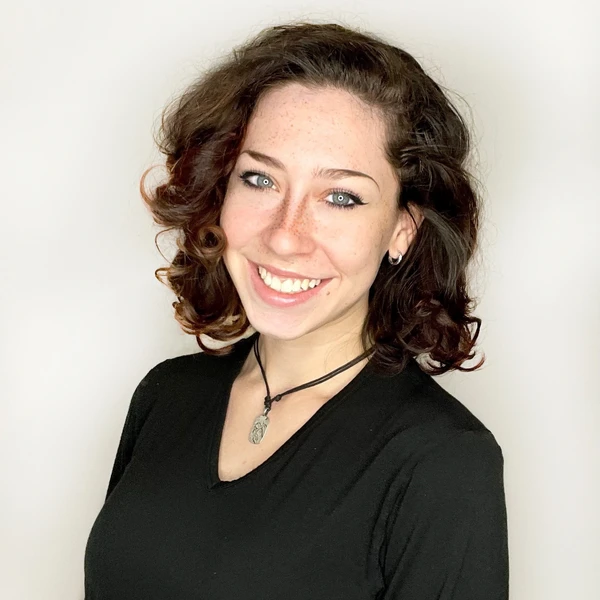
Emily Jaswal

1x

Finalist

1x

Winner

Bio

Welcome to my profile! My name is Emily Jaswal. I am a biracial woman from New York who thrives at the intersection of business and creativity. My perspective is shaped by my experience as the owner and operator of a secondhand clothing business, alongside my work as a classical musician, photographer, and seamstress. I graduated from Fordham University in 2025 with a Bachelor’s degree, double majoring in American Studies and Music, and earned a 4.0 GPA in both fields. I was also selected as one of six undergraduate music students to complete coursework at The Juilliard School, where I also maintained a 4.0 GPA. Before, during, and after my undergraduate studies, I have grown my online sustainable clothing business, VUpcycled, surpassing 3,000 sales across Depop, Whatnot, and Shopify. I am deeply committed to combating climate change through sustainable fashion. My senior thesis in American Studies examined sociopolitical dynamics among clothing sellers and platforms such as Depop and Whatnot, further strengthening my interest in ethical entrepreneurship at the intersection of sustainability, creative industries, and social impact. Beginning August 2026, I will return to Fordham University as a Gabelli School of Business M.S. in Management student where I will develop the strategic, operational, and leadership skills needed to scale a modern, digitally driven clothing business, deepen sustainability practices, and advocate for climate-conscious change through creative and ethical frameworks. I am seeking financial support to help me reduce the immense cost of tuition!

Education

Fordham University

Master's degree program
2026 - 2027
  • Majors:
    • Business, Management, Marketing, and Related Support Services, Other
Fordham University

Bachelor's degree program
2022 - 2025
  • Majors:
    • Music
    • Multi/Interdisciplinary Studies, Other

Miscellaneous

  • Desired degree level:

    Master's degree program

  • Graduate schools of interest:

  • Transfer schools of interest:

  • Majors of interest:

    • Business, Management, Marketing, and Related Support Services, Other
    • Entrepreneurial and Small Business Operations
  • Not planning to go to medical school
  • Career

    • Dream career field:

      Apparel & Fashion

    • Dream career goals:

      I am passionate about sustainability and fashion, and already run my own online clothing business, VUpcycled. My dream is to scale this project into something massive -- a global platform that empowers sellers, consumers, and sustainable clothing manufacturers to do their part in combatting climate change.

    • Violin and Viola Instructor

      Private Instructor
      2018 – Present8 years
    • Owner/Operator

      VUpcycled Clothing
      2021 – Present5 years

    Research

    • Psychology, Other

      Fordham University - Humanities Department — Primary Researcher and Presenter
      2025 – 2025
    • Computer Systems Networking and Telecommunications

      Fordham University - American Studies Department — Author and Primary Researcher
      2024 – 2025

    Arts

    • The Juilliard School

      Music
      Selected as one of six Fordham Undergraduate students to study at Juilliard’s Extension Program on a full scholarship. Maintained a 4.0 GPA.
      2023 – 2024
    • Mamaroneck High School

      Photography
      Selected as a featured artist for a gallery showing of conceptual self-portraiture photography in February of 2020. Recognized by the Arts Department and principal of the school and awarded the school’s Photography Award in both 2019 and 2020.
      2017 – Present
    • Fordham University Symphony Orchestra

      Music
      Biannual university performances at Leonard Theater on Fordham University’s Rose Hill Campus, Annual performances at Fordham’s Baccalaureate Catholic Mass & Spring Commencement Ceremonies
      2023 – 2025

    Future Interests

    Advocacy

    Volunteering

    Philanthropy

    Entrepreneurship

    Shape the News No-Essay Survey Scholarship
    1000 Bold Points No-Essay Scholarship
    Future Green Leaders Scholarship
    Winner
    At sixteen years old, I learned in my high school AP Environmental Science class that the vast majority of the clothing Americans donate or discard does not simply disappear, or get rehomed via charity organizations. There is simply too much mass-production, overconsumption, and as a result, textile waste for that to be a reality. Instead, roughly 90% of these garments get shipped overseas, where they overwhelm local waste systems. The improper disposal, open burning, and dumping of these clothes expose vulnerable communities to toxic chemicals and airborne carcinogens, leading to heightened risks of cancer, respiratory disease, and other severe health issues. As the daughter of a Punjabi-American immigrant, I was particularly disturbed to learn that countries like India frequently bear the burden of textile waste generated elsewhere. What Americans often discard without a second thought can become environmental, and therefore, human killers. And that realization changed the way I viewed both fashion and business. Around this same time in high school, my weight began to fluctuate due to medication changes. I could no longer fit my clothes. Rather than accepting waste as an unavoidable consequence of fashion consumption, I taught myself how to sew – purchasing a $20 used sewing machine on Facebook Marketplace, and watching YouTube tutorials. I began tailoring and redesigning the clothing that no longer fit me. What started as a personal creative outlet evolved into VUpcycled, the sustainable clothing business I founded to give unwanted garments a second life. Through sourcing, repairing, photographing, and selling thousands of pieces of clothing, I witness firsthand how much value is discarded simply because our systems prioritize convenience over protecting the planet. My experience as a young entrepreneur has taught me that environmental problems are rarely caused by a lack of awareness. Most consumers don’t go out seeking to contribute to pollution or overflowing landfills, but the reality is that we are guilty of doing so. But…why do we do it? The challenge is that sustainable choices are often more expensive, less accessible, or more time-consuming than unsustainable ones. This is why I believe sustainability must be at the center of business models themselves. Businesses determine how their products are manufactured, how resources are used, and whether items are designed to be discarded or designed to last – not just for the sake of growing profit and building credibility, but for the sake of consumers' lives. At Fordham University’s Gabelli Graduate School of Business, I aim to develop the strategic, operational, and leadership skills necessary to address textile waste challenges on a larger scale, but also participate heavily within Fordham’s Responsible Business Center, advocating for more sustainable and ethical business practices, particularly within the fashion industry. I am ready to further my knowledge on how to build organizations that make sustainable choices easier, more affordable, and more accessible for consumers. My long-term goal is to create scalable solutions that reduce textile waste and advance a circular economy. I envision a digital platform that simplifies repairing, reselling, donating, and upcycling clothing, helping keep usable garments out of landfills. I also hope to develop partnerships that transform discarded textiles into stuffed animals and furniture that benefit underserved communities, creating environmental and social impact simultaneously. When I think about the future, I do not simply want to participate in the transition to a more sustainable economy – I want to help lead it. Because for me, sustainability is not just a professional interest. It is a responsibility, an opportunity, and the legacy I hope to leave behind.
    Marilynn Walker Memorial Scholarship
    Being a woman entering the male-dominated world of graduate business education is one of the most intimidating steps I have ever taken. Yet what feels even more daunting is the alternative: accepting a world where innovative, driven, and creative individuals continue to face unnecessary barriers to opportunity. Women like Marilynn Walker refused to accept that alternative. Her life demonstrates that persistence, education, and courage can create lasting change, and her example inspires me to pursue that same path. As a teenager, I struggled with medication-induced weight fluctuations and a deep dissatisfaction with my body. Finding clothing that fit properly and made me feel confident often felt impossible. I learned that fashion is not always designed to make women feel seen, empowered, or comfortable in their own skin. Frustrated at this reality, I taught myself how to sew at age sixteen and began tailoring and upcycling my own clothing. What began as a personal solution soon evolved into something much larger. I launched VUpcycled, an online sustainable clothing business focused on giving garments a second life while helping customers – particularly women and members of minority communities – find clothing that makes them feel confident and authentic. While simultaneously pursuing dual undergraduate degrees in American Studies and Music, maintaining a 4.0 GPA, and commuting an hour each day by train to campus, I managed every aspect of the business myself: sourcing, repairing, photographing, and selling thousands of garments, preventing them from ending up in landfills. As I reflect on my journey, I think about Marilynn Walker's own determination. Like me, she commuted by public transportation while pursuing her education. Like me, she chose to enter spaces where women were underrepresented. Most importantly, she understood that education is not simply a credential, but a tool for creating opportunities, solving problems, and expanding what is possible for future generations. My entrepreneurial experience has revealed a larger opportunity: the need for sustainable and ethical fashion solutions that are both affordable and accessible. Through Fordham University's Master of Science in Management at the Gabelli School of Business, I will gain the strategic, financial, and operational expertise necessary to transform my ideas into scalable, impactful ventures. The program's emphasis on leadership, innovation, and responsible business practices will equip me to address environmental challenges while creating meaningful economic opportunities for others. My long-term vision extends far beyond a single business. I hope to create a digital marketplace that simplifies donating, selling, repairing, and upcycling clothing, making sustainable fashion accessible to a broader audience. I also plan to develop a textile recycling initiative that transforms fabric waste into stuffed animals for children in hospitals and furniture for underserved families throughout New York City. Marilynn Walker’s remarkable journey, from the ground floor of American Express to a pioneering leadership role at Visa International, demonstrated what becomes possible when talent is matched with perseverance. She pursued higher education in Computer Science and Engineering at a time when women were even more significantly underrepresented in those fields, and she built a career that expanded opportunities for those who followed. Her story reminds me that barriers are not permanent, they are challenges to be confronted and transformed. My graduate education will provide the foundation I need to scale my vision into sustainable enterprises that empower individuals, strengthen communities, and reduce environmental waste. Like Marilynn Walker, I hope to use education not only as a means of personal advancement, but as a force for broader impact. If awarded this scholarship, I will carry forward her legacy by building businesses that create opportunity, champion inclusion, and leave the world better than I found it.
    Neetu Watumull Scholarship Program Managed by Rupa Shah
    Everything I do – academically, professionally, and spiritually – is driven by the desire to make my ancestors proud. Most people are surprised when they learn that I am half Indian. I am a white-passing woman: my mother is of Irish-Italian descent from Cleveland, Ohio, while my father is Punjabi-American. But when I share my father’s story, it becomes clear how deeply my Indian heritage has shaped who I am. My father immigrated to the United States at seven years old. Although he and his younger sister were born in Nottingham, England, both of his parents and two of his siblings were born in Punjab, India. When the family arrived in New York, all six of them lived together in a single room in Brooklyn – no bedrooms, no living room, just one cramped space they called home. My father did not speak English when he entered school and was bullied because of his accent and background. At home, he also witnessed the mental health struggles that affected his family: all three of his siblings live with bipolar disorder, and my grandfather battled clinical depression while working two full-time jobs to support his children. Despite these hardships, my father and his siblings became first-generation college graduates. They took on debt because they believed education was the path toward opportunity and stability. My father studied business and built a successful career, but he often tells me that he regrets never pursuing graduate school. Now, as I prepare to begin graduate business school myself, I feel immense pride in continuing the journey that my family sacrificed so much to begin. My Indian heritage empowers me not only through resilience, but also through responsibility. As I learned more about the environmental impact of the global fashion industry, I became deeply disturbed by the fact that the United States sends millions of tons of textile waste to countries including India each year. At sixteen years old, I founded a sustainable clothing business, VUpcycled, focused on reducing textile waste and promoting ethical fashion. Since then, I have scaled my business immensely, redirecting thousands of used garments from ending up overseas in landfills and waste markets. I am beyond excited to attend graduate business school to deepen my understanding of sustainable and ethical business practices so I can continue growing my company responsibly. However, the cost of higher education is significant. My sister is also a full-time student pursuing dual degrees in engineering and physics with plans to continue to graduate school, and my family cannot fund both of our educations without substantial debt. Receiving this scholarship would help alleviate that burden and allow me to continue pursuing an education that honors both my family’s sacrifices and my Indian heritage.
    Bold.org No-Essay Top Friend Scholarship
    Miley Cyrus Fan No-Essay Scholarship
    Ethel Hayes Destigmatization of Mental Health Scholarship
    At the age of only nine, before I even understood what mental health meant, I understood what it felt like to not want to exist – sitting alone at a peanut-free lunch table, having peanut butter and jelly sandwiches waved in my face, watching kids hand out Valentine’s to everyone in class but me, sitting alone at recess folding paper cranes, and wondering what made me so easy to overlook. I truly felt like an outsider. I was bullied and excluded for being “different” – I played the violin and viola at an oddly high level, competed in chess, and didn’t fit the mold of what my peers considered “cool”. While others bonded over sports and social events, I learned early on what it meant to feel invisible. At fourteen, that isolation deepened when I was diagnosed with clinical depression and anxiety. Around the same time, I developed severe, unexplained skin reactions. My face was constantly swollen, itchy, and inflamed, and I spent years seeing specialists who struggled to identify the cause. I was a test monkey, enduring endless trials of medications and treatments. As a teenage girl navigating the pressures of appearance in the age of Instagram, this took a profound toll on my self-worth. Mirrors were my enemy – I was terrified of them. My primary coping mechanism was to turn to music – and thankfully, this served as a distractor from my depressive thoughts. I hated myself physically and emotionally, but thrived musically. The same year of my mental health diagnoses, I performed a solo viola concerto at Carnegie Hall in a glamorous black full length dress, with skin-test patches on my back. Finally, at age sixteen, a doctor gave me the answer to the cause of my skin reactions: I had a rare allergy to propylene glycol – a synthetic liquid chemical found in everyday products like cosmetics, soap, processed food, and medications. Ironically, some of the medications I’d been prescribed for my mental health had been worsening my skin reactions, creating a cycle that would have been impossible to escape had I not learned of the allergen. This prolonged experience revealed to me how deeply interconnected physical and mental health are, and how easily complex struggles can be misunderstood. New allergen-free medications caused weight fluctuations, and by this point, broken down, and angry at yet another uncontrollable change to my appearance, I began to resist through creative problem solving. I could not afford to buy a whole new wardrobe in another size, so I taught myself how to tailor my clothes using a $20 secondhand machine, and YouTube tutorials. Not only did this make me feel empowered physically, the hands-on nature of sewing served – much like violin and viola – as a resistor to my depressive symptoms. I moved from basic tailoring into the territory of more complex upcycling – thrifting damaged garments, deconstructing, and reconstructing fabrics into new pieces. What started as a personal solution grew into a sustainable clothing business focused on upcycling and self-expression. Through this work, I finally found confidence, creativity, and connection. Today, my business has reached thousands of customers and stands as a reflection of my belief that individuality should be celebrated, not hidden. My mental health journey has also transformed my relationships; I approach others with empathy, knowing that everyone carries struggles that are not always visible. I still play the violin and viola, and now tutor K-12 students in my community. I dedicate lessons not only to helping my students improve their musicianship skills, but also help them recognize and improve their self-love and self-worth via their own methods of creative expression. Ultimately, my experiences growing up taught me that adversity can be transformed into genuine purpose. They have given me the drive to create, to lead, and to help build a more inclusive and understanding world. I am seeking scholarship assistance because I want to pursue graduate study in business to expand my knowledge of ethical entrepreneurship, leadership, and sustainability. I feel empowered to grow my business into a platform that empowers others right back – especially those who feel marginalized – to express themselves, be creative, and never ever fear the mirror.
    300 Bold Points No-Essay Scholarship
    200 Bold Points No-Essay Scholarship
    400 Bold Points No-Essay Scholarship
    $25,000 "Be Bold" No-Essay Scholarship
    500 Bold Points No-Essay Scholarship
    Finance Your Education No-Essay Scholarship