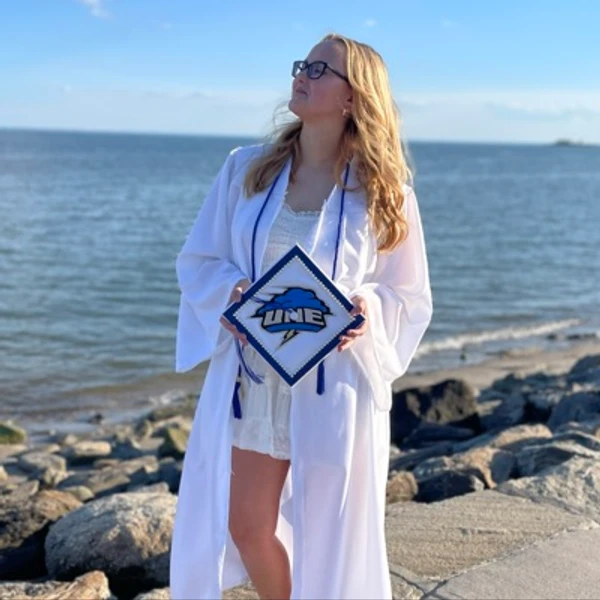
user profile avatar

Emilia Onofrio

1x

Finalist

1x

Winner

Bio

Curiosity has always led me to the ocean. I plan to pursue marine science because I believe protecting our oceans begins with education and research. Despite living with AMPS, celiac disease, and hypermobility, I have never let challenges define my future. Instead, they have taught me resilience, perseverance, and compassion. I hope to inspire younger generations to care for the environment while contributing to marine conservation through science and community outreach. My goal is to leave the world healthier than I found it, one discovery and one person at a time.

Education

Fairfield Ludlowe High School

High School
2022 - 2026

Miscellaneous

  • Desired degree level:

    Bachelor's degree program

  • Majors of interest:

    • Marine Sciences
  • Not planning to go to medical school
  • Career

    • Dream career field:

      Marine Biology

    • Dream career goals:

    • Lifeguard

      Red Cross
      2023 – Present3 years

    Sports

    Swimming

    Varsity
    2017 – Present9 years

    Arts

    • Lenihan

      Dance
      2013 – 2023

    Public services

    • Volunteering

      The Maritime Aquarium at Norwalk — Guest Engagement
      2023 – 2026
    HeySunday Green Minds Scholarship
    Growing up, I have always felt a strong connection to the ocean. Whether I was exploring tide pools, learning about marine animals, or simply spending time near the water, I became fascinated by how every part of an ecosystem works together. That curiosity has grown into a passion for marine science and conservation. I hope to build a career where I can protect marine ecosystems while helping others understand why they matter. By combining scientific research with education, I want to contribute to a healthier, more sustainable world for future generations. One of the reasons I am so passionate about environmental science is because I have seen how important healthy ecosystems are to both people and wildlife. Our oceans regulate the climate, provide food, and support countless species, yet they continue to face threats from pollution, habitat destruction, and climate change. Seeing these challenges motivates me to be part of the solution. I want to dedicate my career to protecting marine environments so they can continue to thrive for generations to come. As I pursue a degree in environmental science, I hope to focus on marine conservation and restoration. I want to participate in research that helps protect endangered species, restore damaged habitats, and improve our understanding of ocean ecosystems. I am especially interested in finding practical solutions that balance environmental protection with the needs of coastal communities. I believe that science is most powerful when it leads to real-world action, and I hope my work will contribute to lasting, positive change. While research is important, I believe education is just as essential. Many people care about the environment but do not always understand how their everyday choices affect it. One of my biggest goals is to make marine science engaging and accessible, especially for younger students. I hope to work with schools, aquariums, conservation organizations, and community programs to inspire curiosity about the ocean and encourage the next generation to become environmental stewards. Even helping one student discover a passion for conservation could create a ripple effect that lasts for years. I also believe that solving environmental challenges requires collaboration. Scientists, educators, policymakers, and local communities all play important roles in protecting our planet. I hope to work alongside people from different backgrounds, learning from their perspectives while contributing my own knowledge and passion. Together, we can develop creative solutions that benefit both nature and society. When I think about the future, I picture healthy oceans filled with thriving marine life and communities that understand the importance of protecting them. I know that achieving this vision will take dedication, innovation, and persistence, but I am excited to be part of that effort. Through research, conservation, and education, I hope to make a meaningful contribution to a healthier, more sustainable world and inspire others to care for the environment as deeply as I do.
    Sloane Stephens Doc & Glo Scholarship
    The impact I want to make is helping people understand that protecting our oceans means protecting our future. I believe education is one of the most powerful ways to inspire change, and I hope to use my future career in marine science to help others appreciate and protect marine life. By combining scientific research with community outreach, I want to encourage people—especially young students—to get involved in conservation and make choices that have a positive impact on our planet. My passion for marine science comes from a lifelong curiosity about the ocean and the incredible diversity of life it supports. The ocean provides food, oxygen, and habitats for countless species, yet it faces growing threats from pollution, climate change, and habitat destruction. I want to be part of the solution by studying marine ecosystems and helping develop ways to protect them. At the same time, I know that research alone isn't enough. Real change happens when people understand why conservation matters and feel empowered to make a difference in their own communities. I am inspired by scientists, educators, and conservationists who dedicate their lives to protecting the environment while sharing their knowledge with others. They have shown me that meaningful change doesn't always come from one big action—it comes from consistently using your passion and skills to help others. Their example motivates me to build a career where I can contribute through both research and education. My own experiences have also shaped the person I am and the impact I hope to have. Living with Amplified Musculoskeletal Pain Syndrome (AMPS), celiac disease, and hypermobility has taught me resilience, patience, and perseverance. There have been days when chronic pain or physical limitations made even simple tasks difficult, but those experiences have taught me how to adapt and keep moving forward. They have also given me a deeper sense of empathy and a greater appreciation for supporting others as they face their own challenges. As I continue my education, I want to give back by volunteering at beach cleanups, participating in conservation programs, and creating educational opportunities for young people. I hope to visit schools, aquariums, and community events to teach children about marine ecosystems and show them that small actions—like reducing plastic waste or joining a local cleanup—can have a lasting impact. If I can inspire even one child to care about the environment, that passion could grow into something that benefits future generations. Receiving this scholarship would help me continue pursuing these goals by easing the financial burden of college and allowing me to focus on my education and future career. It would bring me one step closer to becoming a marine scientist and educator who uses science not only to protect the environment but also to inspire others to do the same. I want my success to be measured not only by the research I contribute but also by the people I inspire along the way. By sharing my knowledge, encouraging others to care for our oceans, and showing that challenges do not have to define a person's future, I hope to make a lasting difference for my community and for generations to come.
    Women in STEM Scholarship
    Ever since I was a kid, I've been fascinated by the ocean. I've always wondered about the animals that live beneath the surface, how marine ecosystems stay in balance, and what we can do to protect them. Over the years, that curiosity has grown into a passion for marine science and a clear goal of building a career in STEM. To me, STEM is about more than research and solving problems—it's about using knowledge to make a real difference in people's lives and in the world around us. My path to STEM hasn't always been easy. I live with Amplified Musculoskeletal Pain Syndrome (AMPS), celiac disease, and hypermobility. These conditions affect my daily life and have taught me resilience, patience, and adaptability. Some days, pain and fatigue make even simple tasks challenging, but I've learned not to let those obstacles define me. Instead, they've strengthened my determination and shown me that setbacks can become opportunities to grow. Living with chronic health conditions has also made me appreciate the impact of science in a very personal way. I've seen how research, innovation, and medical advancements improve people's lives, and that has inspired me to ask questions, look for solutions, and become part of that process myself. I want to use science to tackle environmental challenges, especially those affecting our oceans. As I prepare to enter a STEM field, I also hope to encourage more girls to see themselves in science. While opportunities for women have expanded, many young women still hesitate to pursue STEM because they don't always feel like they belong. I want to help change that by sharing my experiences and showing that challenges don't have to stand in the way of your goals. If I can inspire even one student to follow her curiosity with confidence, I'll know I've made a difference. My dream is to become a marine scientist who not only conducts research but also helps others understand why ocean conservation matters. I want to protect marine ecosystems from pollution, habitat loss, and climate change while educating communities about the importance of preserving them. I believe education is one of the most effective tools for conservation because people are more likely to protect what they understand and value. What excites me most about STEM is that there is always more to learn. Every new discovery has the potential to improve lives, solve important problems, or protect our planet. I want to contribute to that progress by asking meaningful questions, conducting research, and finding solutions that have a lasting impact. Receiving this scholarship would help me continue my education and move closer to my goal of becoming a marine scientist. More than financial support, it would be an investment in my future and the work I hope to do. I want to use my education to protect our oceans, inspire future scientists, and show that curiosity, perseverance, and compassion can create meaningful change.
    Michael Rudometkin Memorial Scholarship
    To me, selflessness means helping others simply because it’s the right thing to do—not because you expect something in return. I think it’s found in the small, everyday choices that make someone else’s life a little better. Whether it’s offering support, sharing what you know, or giving your time, those actions add up and strengthen the people and communities around us. I try to live by that belief every day through my passion for marine conservation and by encouraging others to care for the environment. One of the ways I give back is by volunteering at beach cleanups. Every piece of trash removed from the shoreline helps protect marine life and keeps our oceans healthier for future generations. Picking up litter may seem like a small task, but every plastic bottle, fishing line, or bag removed is one less hazard for wildlife. I also enjoy talking with younger children and community members during these events about why keeping our beaches clean matters. Seeing people realize that their individual actions can make a difference reminds me that meaningful change often starts with something small. My desire to help others is also shaped by my own experiences. I live with Amplified Musculoskeletal Pain Syndrome (AMPS), celiac disease, and hypermobility. Living with chronic pain and physical challenges has taught me perseverance, but it has also given me a deeper sense of empathy. I’ve learned that many people are carrying struggles that aren’t visible, and a little kindness can go a long way. Because of that, I try to be patient, encouraging, and willing to help however I can. Whether it’s listening, lending a hand, or simply being there for someone, I believe those moments matter. These experiences have also strengthened my goal of pursuing a career in marine science. I want to study marine ecosystems while helping others understand why protecting them is so important. One of my biggest goals is to educate younger generations about conservation and inspire them to appreciate the ocean. If more people understand how their everyday choices affect the environment, they’ll be more likely to take action to protect it. Sharing that knowledge is one of the most meaningful ways I can continue serving my community. To me, selflessness isn’t about one extraordinary act. It’s about choosing, day after day, to make a positive difference however you can. Through volunteering, educating others, and facing my own challenges with resilience, I’ve learned that even the smallest acts of kindness can have a lasting impact. As I continue my education, I hope to use my knowledge and experiences to make a difference for both people and the environment. I want to lead by example, inspire others to care for the world around them, and show that compassion and perseverance can create meaningful change. Receiving this scholarship would allow me to focus on my education and prepare for a career dedicated to protecting our oceans while inspiring future generations to do the same.
    Marcia Bick Scholarship
    Many students face challenges that make it harder to achieve their goals. Some struggle financially, while others deal with personal or medical obstacles. Through my own experiences, I've learned that success isn't about having an easy path—it's about staying determined, adapting when life changes, and refusing to give up. That's why I believe students from disadvantaged backgrounds deserve opportunities like scholarships. They have already shown the resilience and dedication needed to make the most of them. Throughout my life, I have managed several medical conditions, including Amplified Musculoskeletal Pain Syndrome (AMPS), celiac disease, and hypermobility. Each affects my daily life in different ways. Some days, chronic pain makes it difficult to concentrate or participate in activities. I also have to carefully manage my diet because of celiac disease and be mindful of my physical limits due to hypermobility. While these challenges aren't easy, they have taught me resilience, patience, and the importance of advocating for myself. Rather than letting my health define me, I've focused on my education and the future I want to build. I've learned to adapt, ask for help when I need it, and keep moving forward even when things are difficult. Those experiences have strengthened my determination and shown me that setbacks don't have to stand in the way of success. They have also inspired me to pursue a career where I can make a meaningful difference. I plan to study marine science because I want to help protect our oceans and inspire others to care about them too. I'm especially interested in educating younger generations about marine conservation because I believe that understanding the importance of healthy ocean ecosystems encourages people to make more environmentally responsible choices. I hope to contribute to scientific research while also sharing what I learn with others so future generations understand why protecting our oceans matters. Receiving this scholarship would ease the financial burden of college and allow me to focus more fully on my education instead of worrying about expenses. It would also give me opportunities to gain hands-on experience, participate in research, and continue working toward my goal of making a positive impact through marine science and conservation. The challenges I've faced have shaped me, but they have never defined what I'm capable of achieving. They have taught me perseverance, adaptability, and the value of hard work. With the support of this scholarship, I'll continue pursuing my education and use what I learn to make a lasting difference for both people and the environment.
    Bold.org No-Essay Top Friend Scholarship
    $25,000 "Be Bold" No-Essay Scholarship
    100 Bold Points No-Essay Scholarship
    200 Bold Points No-Essay Scholarship
    300 Bold Points No-Essay Scholarship
    400 Bold Points No-Essay Scholarship
    Finance Your Education No-Essay Scholarship
    Jules Ehlers-Danlos Syndrome Resilience Scholarship
    Living with Amplified Musculoskeletal Pain Syndrome (AMPS), celiac disease, and hypermobility has shaped both who I am and the goals I hope to achieve. Each condition presents its own challenges, but together they have taught me resilience, adaptability, and perseverance. They have shown me how to advocate for myself, listen to my body, and find ways to succeed even when obstacles stand in my way. Although these experiences have not always been easy, they have helped me grow into a more determined and thoughtful person. There are times when chronic pain, a strict gluten-free diet, and limited mobility make everyday activities more difficult than they are for most people. Simple tasks can require extra planning, and some days demand more patience than I would like to admit. Rather than allowing these challenges to define me, I have learned to adapt, ask for help when I need it, and continue pursuing the things I love. I have discovered that strength does not always look like pushing through without struggle; sometimes it looks like adjusting, resting, and trying again. These experiences have strengthened my determination and taught me to appreciate every opportunity to learn, grow, and contribute to my community. My experiences have also inspired me to study marine biology because I want to use science, conservation, and education to protect our oceans. I have always been fascinated by marine life and the complex ecosystems that exist beneath the surface. The ocean is not only beautiful, but essential to the health of our planet, and I want to play a role in preserving it for future generations. I hope to make science engaging and accessible for young people through aquarium education programs, marine outreach initiatives, and research that helps conserve marine ecosystems. By sharing my passion for the ocean, I want to inspire others to understand its importance and become active stewards of the natural world. I believe that education is one of the most powerful tools for conservation, and I want to help others feel connected to the ocean in the same way I do. Living with invisible disabilities has also taught me empathy in a way that I will carry with me for the rest of my life. I understand that many people face challenges that are not immediately apparent, and I strive to create an inclusive and supportive environment wherever I go. Because I know what it feels like to have others overlook or misunderstand a struggle, I try to be more patient, more compassionate, and more aware of the needs of those around me. These experiences have shown me the importance of kindness, understanding, and flexibility, especially in spaces where people may be dealing with hardships that are not visible on the outside. My disabilities have not held me back—they have made me stronger, more determined, and more compassionate. They have taught me that persistence, curiosity, and resilience can help overcome even the most difficult obstacles. I hope to carry these qualities into my study of biology and my future career, using science, conservation, and education to protect our oceans while inspiring others to care for the incredible ecosystems they sustain.
    TRAM Resilience Scholarship
    Living with Amplified Musculoskeletal Pain Syndrome (AMPS), celiac disease, and hypermobility has shaped both who I am and the goals I hope to achieve. Each condition presents its own challenges, but together they have taught me resilience, adaptability, and perseverance. They have shown me how to advocate for myself, listen to my body, and find ways to succeed even when obstacles stand in my way. Although these experiences have not always been easy, they have helped me grow into a more determined and thoughtful person. There are times when chronic pain, a strict gluten-free diet, and limited mobility make everyday activities more difficult than they are for most people. Simple tasks can require extra planning, and some days demand more patience than I would like to admit. Rather than allowing these challenges to define me, I have learned to adapt, ask for help when I need it, and continue pursuing the things I love. I have discovered that strength does not always look like pushing through without struggle; sometimes it looks like adjusting, resting, and trying again. These experiences have strengthened my determination and taught me to appreciate every opportunity to learn, grow, and contribute to my community. My experiences have also inspired me to study marine biology because I want to use science, conservation, and education to protect our oceans. I have always been fascinated by marine life and the complex ecosystems that exist beneath the surface. The ocean is not only beautiful, but essential to the health of our planet, and I want to play a role in preserving it for future generations. I hope to make science engaging and accessible for young people through aquarium education programs, marine outreach initiatives, and research that helps conserve marine ecosystems. By sharing my passion for the ocean, I want to inspire others to understand its importance and become active stewards of the natural world. I believe that education is one of the most powerful tools for conservation, and I want to help others feel connected to the ocean in the same way I do. Living with invisible disabilities has also taught me empathy in a way that I will carry with me for the rest of my life. I understand that many people face challenges that are not immediately apparent, and I strive to create an inclusive and supportive environment wherever I go. Because I know what it feels like to have others overlook or misunderstand a struggle, I try to be more patient, more compassionate, and more aware of the needs of those around me. These experiences have shown me the importance of kindness, understanding, and flexibility, especially in spaces where people may be dealing with hardships that are not visible on the outside. My disabilities have not held me back—they have made me stronger, more determined, and more compassionate. They have taught me that persistence, curiosity, and resilience can help overcome even the most difficult obstacles. I hope to carry these qualities into my study of biology and my future career, using science, conservation, and education to protect our oceans while inspiring others to care for the incredible ecosystems they sustain.
    No Limits Athletic Scholarship
    I started swimming competitively in fifth grade, and at the time, it was just something I enjoyed doing after school. I liked the structure of practice, the quiet focus of being underwater, and the feeling of improving over time. What I did not realize then was that swimming would become one of the most constant and defining parts of my life. That became especially clear during my freshman year of high school, when I developed a chronic illness. Suddenly, something that had always felt natural became difficult. There were days when getting through a full practice felt nearly impossible, and I had to relearn how to listen to my body while still pushing myself. It was frustrating and, at times, discouraging. But instead of losing my connection to the sport, swimming became even more important to me. It gave me structure when everything else felt uncertain, and it became a place where I could clear my head and feel like myself again. In a time that could have pulled me away from the water, it instead became my lifeline. As I grew more confident both in and out of the pool, I took on a leadership role as a captain of my high school swim team. That experience changed how I viewed the sport. Swimming was no longer just about my own races or personal goals. It became about supporting my teammates, setting an example, and helping create an environment where everyone felt motivated and included. Being a captain taught me how to lead by consistency and attitude, not just performance. Around the same time, I started lifeguarding and teaching swim lessons. What began as a summer job quickly turned into something much more meaningful. I have now worked multiple swim teaching jobs, teaching swimmers of all ages and skill levels. Through that, I have seen firsthand how important water safety and confidence in the water can be. Teaching has allowed me to pass on not just technical skills, but also a sense of comfort and enjoyment in the water. It is incredibly rewarding to watch someone go from being nervous to genuinely excited to swim. Looking ahead, I plan to continue swimming at the club level at the University of New England. Even as my life changes and I move into a new environment, I know swimming will remain a constant. I also hope to continue teaching lessons, because sharing my love for the water is something I care deeply about. Outside of the pool, I am also a casual sailor, which has only strengthened my connection to the water. Whether I am swimming laps, teaching a lesson, or out on a boat, the water has always been a place where I feel grounded. Swimming has shaped my life in ways I never expected when I first joined in fifth grade. It has challenged me, supported me, and given me opportunities to lead and give back. At this point, always smelling like chlorine has become part of who I am, and I would not have it any other way. More than anything, I hope to continue inspiring others and sharing the same sense of confidence and belonging in the water that swimming has given me.
    Cynthia Vino Swimming Scholarship
    Winner
    I started swimming competitively in fifth grade, and at the time, it was just something I enjoyed doing after school. I liked the structure of practice, the quiet focus of being underwater, and the feeling of improving over time. What I did not realize then was that swimming would become one of the most constant and defining parts of my life. That became especially clear during my freshman year of high school, when I developed a chronic illness. Suddenly, something that had always felt natural became difficult. There were days when getting through a full practice felt nearly impossible, and I had to relearn how to listen to my body while still pushing myself. It was frustrating and, at times, discouraging. But instead of losing my connection to the sport, swimming became even more important to me. It gave me structure when everything else felt uncertain, and it became a place where I could clear my head and feel like myself again. In a time that could have pulled me away from the water, it instead became my lifeline. As I grew more confident both in and out of the pool, I took on a leadership role as a captain of my high school swim team. That experience changed how I viewed the sport. Swimming was no longer just about my own races or personal goals. It became about supporting my teammates, setting an example, and helping create an environment where everyone felt motivated and included. Being a captain taught me how to lead by consistency and attitude, not just performance. Around the same time, I started lifeguarding and teaching swim lessons. What began as a summer job quickly turned into something much more meaningful. I have now worked multiple swim teaching jobs, teaching swimmers of all ages and skill levels. Through that, I have seen firsthand how important water safety and confidence in the water can be. Teaching has allowed me to pass on not just technical skills, but also a sense of comfort and enjoyment in the water. It is incredibly rewarding to watch someone go from being nervous to genuinely excited to swim. Looking ahead, I plan to continue swimming at the club level at the University of New England. Even as my life changes and I move into a new environment, I know swimming will remain a constant. I also hope to continue teaching lessons, because sharing my love for the water is something I care deeply about. Outside of the pool, I am also a casual sailor, which has only strengthened my connection to the water. Whether I am swimming laps, teaching a lesson, or out on a boat, the water has always been a place where I feel grounded. Swimming has shaped my life in ways I never expected when I first joined in fifth grade. It has challenged me, supported me, and given me opportunities to lead and give back. At this point, always smelling like chlorine has become part of who I am, and I would not have it any other way. More than anything, I hope to continue inspiring others and sharing the same sense of confidence and belonging in the water that swimming has given me.