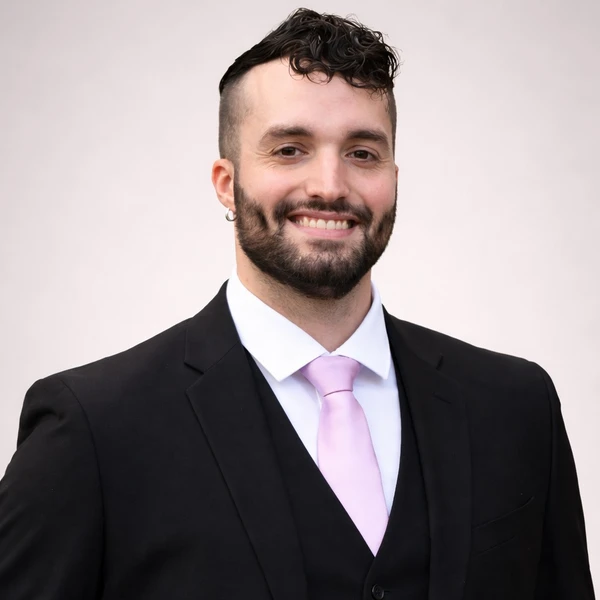
Emanuel Luciano
1x
Finalist
Emanuel Luciano
1x
FinalistBio
MSW Student at the University of West Florida | Biomedical Sciences Graduate | Holistic Health Advocate
I am currently pursuing my Master of Social Work (MSW) at the University of West Florida after earning my Bachelor’s degree in Biomedical Sciences. My background in biomedical studies gave me a strong foundation in understanding physical health, while my work in social work reflects my passion for supporting individuals through emotional, mental, and social challenges.
I am passionate about healing the whole person, mind, body, and spirit. I believe that true wellness comes from addressing both physical and psychosocial needs. My interests include mental health, holistic wellness, and improving access to compassionate, person-centered services.
Education
The University of West Florida
Master's degree programMajors:
- Social Work
University of South Florida-Main Campus
Bachelor's degree programMajors:
- Biological and Biomedical Sciences, Other
Career
Dream career field:
- Social Work
Dream career goals:
To create plastic retainers for individuals who finished braces treatment.
Rowe Orthodontics2025 – Present1 yearAs a student intern I was expected to acquire initial intake information as well as with aiding in the therapeutic process.
More Life Center for Wellness2026 – Present8 monthsMedical Assistant
Prestige Medical Group2021 – 20243 years
Sports
Soccer
Varsity2016 – 20204 years
Public services
Volunteering
Arise Church — Youth and young adults leader2023 – 2026
Sloane Stephens Doc & Glo Scholarship
I want to build a place where faith is not used to silence pain, culture is not used to excuse it, and no one is made to feel ashamed for needing help.
I am currently pursuing a Master of Social Work at the University of West Florida and expect to graduate in May 2027. My long-term goal is to become a Licensed Clinical Social Worker, open a Christian counseling practice with my wife, and become a public speaker who helps bridge mental health, cultural expectations, and Christian values. I want to serve individuals and families facing addiction, anxiety, depression, trauma, instability, and the quiet struggles people often hide because they fear judgment.
My vision is deeply personal. I grew up watching my mother do whatever was necessary to provide for my siblings and me when my father did not. She worked multiple jobs, traveled long distances, and sometimes went without food so that we could eat. When we lost our home because the mortgage could not be paid, she still found a way to keep us moving forward. She taught me that love is not merely something we say; it is sacrifice, perseverance, and showing up when life becomes difficult.
My wife inspires me in a different but equally important way. She shares my desire to create a life centered on faith, service, and healing. Together, we hope to build a practice where people can receive professional care without feeling that they must separate their mental health from their culture or spiritual identity.
My own experiences have also shaped the change I want to create. Recovery from drug and alcohol addiction taught me how easily pain can hide behind a functioning appearance. It also taught me that healing requires both compassion and accountability. People do not need to be reduced to their worst decision; they need safe spaces where they can tell the truth, accept responsibility, and believe that change is still possible.
I have already begun this work through youth and young-adult ministry, serving people from fifth grade through their twenties. I also helped establish ARISE en Español, a Spanish-speaking ministry created to reach Hispanic families in a language and cultural context that felt familiar. In ministry, I encountered individuals struggling with pornography, substance use, shame, and isolation. Those conversations showed me how often people remain silent because they are unsure whether they will be understood. My current internship, alongside my graduate education, is helping me develop the clinical skills needed to respond with wisdom rather than good intentions alone.
I will use my education to create culturally responsive, faith-informed counseling and community outreach for underserved youth, Hispanic families, and individuals facing mental-health and addiction challenges. I also hope to speak in churches, schools, and community settings where these conversations are often avoided. I want people to understand that seeking therapy is not a lack of faith and that Christian compassion should make room for honesty, treatment, and restoration.
The future I want to shape is one where people can ask for help before they reach a breaking point. I want my work to reflect the values my mother lived, the future my wife and I are building, and the God who taught me that brokenness does not have to be the end of anyone’s story.
Elijah's Helping Hand Scholarship Award
Mental health has impacted my life by teaching me that a person can be visibly functioning and quietly falling apart at the same time.
For a long time, I thought strength meant silence. I believed that if I kept showing up, kept moving forward, and kept looking fine from the outside, then maybe whatever I was carrying inside would lose its power. But pain does not disappear simply because it is hidden well. It follows you into your thoughts, your relationships, your choices, and the way you begin to see yourself. In one of the darkest seasons of my life, that hidden pain became impossible to outrun. I struggled with mental health challenges and substance abuse while trying to convince the world, and myself, that I was still okay.
That season changed me deeply. It forced me to confront the gap between appearance and reality. From the outside, I may have looked functional. Inside, I was unraveling under the weight of pressure, shame, fear, and the exhaustion of trying to carry everything alone. What I learned through that experience is that mental health struggles are not always loud. Sometimes they look like irritability. Sometimes they look like disconnection. Sometimes they look like smiling in public and collapsing in private. Living through that taught me to see people differently. It made me slower to judge, quicker to notice, and more aware of how much suffering can hide behind the words “I’m fine.”
Recovery reshaped my understanding of strength. I used to think strength meant enduring pain without letting anyone see it. Now I believe strength is telling the truth about what hurts. It is asking for help when shame tells you to stay silent. It is choosing healing one difficult day at a time. My faith became central in that process. It reminded me that brokenness was not the end of my story and that my hardest chapter did not have to define the rest of my life. Slowly, I began to rebuild through honesty, support, accountability, and the willingness to let others walk with me.
Because of that journey, mental health is no longer an abstract issue to me. It is personal. It is the reason I care so deeply about the spaces people enter when they are hurting. It is the reason I am pursuing social work and mental health-related work. I want to be the kind of person who can sit with someone in their pain without reducing them to it. I want to help create environments where people feel safe enough to be honest, supported enough to keep going, and reminded that needing help does not make them weak.
Mental health has impacted every part of my life, but it has also clarified my purpose. It taught me that people are more than their worst season, more than the pain they carry, and more than the battle they are trying to survive. If my own struggles have given me anything, it is this: a deeper compassion, a stronger sense of purpose, and the determination to help others believe that healing is still possible.
Michael Rudometkin Memorial Scholarship
I embody selflessness by trying to make room for people when life has left them feeling alone.
To me, selflessness is not always something dramatic. It is not always a grand gesture or a public act that everyone notices. More often, it is the quiet decision to step outside of yourself long enough to truly see another person; to slow down, to listen, to stay present, and to give someone your heart when they need it most. That is the kind of selflessness I strive to live out, and it has shaped both the way I serve others and the path I am pursuing.
One of the clearest examples of this came through a conversation I will never forget. A college student named Joel opened up to me about walking for hours, reaching a highway, and thinking about ending his life. In that moment, nothing felt scripted. There was no perfect answer waiting for me, no polished response that could magically fix his pain. What I had was my presence, my honesty, and the choice to meet his vulnerability with my own. So I opened up. I shared fears and experiences I had kept hidden from most people, because I understood that what he needed first was not distance or advice, but human connection. That conversation became a turning point. He eventually became open to seeking help, and today he is moving forward with his future. That moment taught me that selflessness sometimes means setting aside your own discomfort so someone else can feel less alone.
Another moment that deeply shaped me happened in a clinical setting. An eleven-year-old boy came in for wound care after a golf cart accident left him with severe injuries and two broken femurs. On paper, I was there to measure wounds and assist with treatment. But when I looked at him, I did not only see a patient. I saw a frightened child carrying more than his body should have had to carry. As we talked, I learned he loved video games. I shifted the conversation away from his injuries and toward Mario games and shared interests, giving him a moment to feel like himself again instead of just “the injured kid.” His face lit up. That experience reminded me that helping someone is not only about meeting physical needs. Sometimes it is about restoring a little joy, dignity, and normalcy in the middle of fear.
I have carried that same mindset into my church community and my work with youth and young adults. I try to be someone who listens without rushing, checks in when people seem off, and creates space for honesty. Selflessness, for me, is rooted in attentiveness. It is asking, “What does this person need from me right now?” and then being willing to respond with patience, compassion, and presence.
These experiences reflect who I am because they show what I believe at my core: people are more than the hardest moment they are living through. I want to continue embodying that belief through social work, where I can serve others not only with care, but with the kind of human connection that helps people feel seen. If selflessness means giving something of yourself for the good of another person, then I hope to spend my life doing exactly that.
Ethel Hayes Destigmatization of Mental Health Scholarship
My experience with mental health has shaped my life by teaching me that a person can be breaking apart and still look as though they are holding everything together.
For a long time, I believed that strength meant staying functional. If I could keep showing up, keep working, keep smiling, and keep meeting expectations, then maybe I could outrun whatever was happening inside of me. From the outside, I often looked as though I was moving forward. Internally, I was carrying pressure, shame, fear, and pain I did not know how to name. That disconnect between appearance and reality became one of the truths mental health taught me: suffering is often far quieter than people expect it to be.
Growing up, I had already learned that pain does not always announce itself. My family lived through financial hardship, instability, and the kind of stress that settles into a home and changes its emotional climate. Even as a child, I sensed the heaviness the people I loved carried. I watched them keep going through exhaustion, disappointment, and uncertainty, often without the space to fully fall apart. That taught me early that people can be hurting deeply while still managing to do what life demands of them. Later, when my own mental health began to unravel, I recognized that same pattern in myself.
During one of the darkest seasons of my life, my internal struggles became entangled with substance abuse. What began as an attempt to escape pain slowly became another source of it. Addiction did not appear in my life as recklessness for the sake of recklessness. It came from pressure I did not know how to carry, emotions I did not know how to process, and a growing disconnection from myself. That experience transformed my understanding of the world. I no longer see mental health struggles as weakness, lack of discipline, or something that happens only to people who have “lost control.” I see them as profoundly human. I see how easy it is for someone to be misunderstood when what they truly need is support. I see how much pain can hide behind the sentence, “I’m okay.”
That shift in understanding changed my beliefs first. Before living through it, I think part of me still believed that people should simply push harder, pray more, or get themselves together. My own struggle humbled me. It taught me that healing is rarely that simple. Healing requires truth, support, accountability, patience, and often the courage to ask for help when shame is telling you to stay silent. My faith became central in that process. It did not erase the difficulty of what I was facing, but it gave me something stronger than denial. It gave me language for hope. It reminded me that brokenness was not the end of my story and that pain, however deep, did not have to become my identity.
Mental health has also profoundly shaped my relationships. When I was struggling, I became less open, less present, and less honest with the people who loved me. Pain tends to isolate. It makes you want to hide, to minimize, to protect others from your reality while drowning in it yourself. For a while, I mistook that hiding for strength. Recovery taught me otherwise. It taught me that real relationships cannot grow where truth is absent. Learning to be honest about my struggles changed the way I love people now. I listen differently. I pay attention to what is not being said. I no longer assume that someone is fine just because they function. I have become more patient, more compassionate, and more aware that people often reveal their pain indirectly long before they ever speak it clearly.
That is also how mental health shaped my goals. My experiences did not simply make me want to “help people” vaguely; they gave that desire weight and direction. I am pursuing graduate training in mental health and social work because I want to become the kind of person I once needed: someone who can sit with pain without flinching, speak truth without shaming, and help others believe healing is possible even when they cannot yet imagine it for themselves. I want to work with individuals and families facing addiction, emotional distress, and life instability, especially those trapped by stigma or silenced by shame. I do not want to offer distant sympathy. I want to offer informed care, lived empathy, and the kind of presence that makes honesty feel safe.
My experience has also shaped the kind of communities I hope to serve. As someone from Puerto Rico and from a low-income background, I understand how easily people can fall through the cracks when mental health support feels inaccessible, culturally distant, or too intimidating to trust. I know that pain can be intensified when people are carrying financial strain, language barriers, or the belief that they must endure. Because of that, I want my future work to create spaces where people feel respected, understood, and not reduced to their hardest moment.
My journey with mental health has changed the way I understand the world itself. It has made me see that people are carrying invisible battles while trying to look normal enough to survive. It has taught me that strength is not the absence of struggle, but the willingness to face it honestly. It has shown me that healing often begins not with answers, but with being seen.
Mental health did not just interrupt my life; it clarified it. It reshaped my beliefs, deepened my relationships, and gave my goals an urgency they would not otherwise have had. If my struggle has given me anything, it is this: the conviction that people are more than their worst season, more than the pain they hide, and more than the chapter they are fighting to survive. That belief now shapes the life I am building and the kind of person I hope to be for others.
Learner Math Lover Scholarship
I love math because it has always felt like proof that confusion can become clarity.
What I admire most about math is that it does not reward panic; it rewards patience. At first, a problem can look impossible, like a wall of numbers, symbols, or steps that do not seem to fit together. But then, little by little, something begins to make sense. A pattern appears. A rule clicks. What felt overwhelming becomes something you can work through. I love that feeling. Math has taught me that not understanding something right away does not mean I am incapable; it often means I need to slow down, think differently, and trust the process.
I also love math because it is honest. In a world that can feel emotional, unpredictable, and messy, math offers a kind of stability. There is something deeply satisfying about knowing that logic matters, that details matter, and that one small step can change everything that follows. Math reminds me that solutions are often built, not stumbled upon. That lesson reaches far beyond the classroom.
What makes math especially meaningful to me is that it has shaped the way I approach life itself. Math taught me how to break down what feels overwhelming into manageable parts. It taught me discipline, problem-solving, and the ability to stay with a challenge long enough to understand it. Even when the answer is not obvious, math encourages persistence instead of defeat. That mindset has helped me in school, in difficult seasons of life, and in the way I think about serving others.
I think people sometimes describe math as cold, but I have never experienced it that way. To me, math is creative. There can be elegance in the way an equation balances, beauty in the way patterns repeat, and satisfaction in the way different methods can still lead to truth. It is a language of structure, but also of possibility.
I love math because it trains both the mind and the character. It teaches precision, humility, and resilience. More than anything, it reminds me that even complex problems can be solved when we are willing to stay present, think carefully, and keep going. That is a lesson I carry with me everywhere.
Tawkify Meaningful Connections Scholarship
One of the most meaningful relationships in my life has been the relationship I have with my mother. She is the person who taught me that love is not always loud, dramatic, or easy to recognize at first. Sometimes, love looks like sacrifice. Sometimes, it looks like exhaustion. Sometimes, it looks like a woman carrying more than she should ever have to carry and still finding a way to make the people around her feel safe.
Growing up, I watched my mother hold our family together through financial hardship, housing instability, and the daily strain of trying to provide for her children with very little support. There were moments in my childhood when life felt fragile, when I could sense how much pressure rested on her shoulders even if I did not yet have the language to describe it. What stayed with me most was not only how much she struggled, but how she kept loving through it. She kept showing up. She kept giving. She kept making room for us, even when life gave her very little room for herself.
That relationship shaped me in ways I am still uncovering. My mother taught me that real connection is not built only in easy seasons. It is built in consistency, in presence, and in the quiet decision to remain tender even when life has given you reasons to harden. Watching her taught me that people often carry invisible burdens, and that one of the most meaningful things we can do for each other is to notice. To check in. To sit with someone in their pain without making them feel like a problem to be solved.
Because of her, the way I build connections with others is rooted in attentiveness. I try to listen for what people are not saying as much as for what they are. I try to make people feel safe enough to be honest. In my friendships, my church community, and the ways I support others, I have learned to value presence over performance. People do not always need perfect words. Often, they need someone willing to stay.
That lesson has also shaped my professional goals. I am pursuing social work because I want to build the kind of relationships that help people feel seen, supported, and less alone. My mother showed me what it means to carry others with love, and that example changed the way I understand service. To me, helping people is not just about providing resources or solutions. It is also about dignity. It is about how you make someone feel when they are struggling. Do they feel rushed, judged, and overlooked? Or do they feel respected, heard, and worth caring for?
The relationship I have with my mother taught me that human connection can steady a person even when life feels uncertain. It taught me that the strongest people are often the ones who keep loving in the middle of hardship. Most of all, it taught me that relationships do not just shape who we are; they shape the kind of refuge we become for others.
If I understand human connection today, it is because I first learned it from her.
Elijah's Helping Hand Scholarship Award
Mental health has impacted my life by teaching me that a person can be visibly functioning and quietly falling apart at the same time.
For a long time, I thought strength meant silence. I believed that if I kept showing up, kept moving forward, and kept looking fine from the outside, then maybe whatever I was carrying inside would lose its power. But pain does not disappear simply because it is hidden well. It follows you into your thoughts, your relationships, your choices, and the way you begin to see yourself. In one of the darkest seasons of my life, that hidden pain became impossible to outrun. I struggled with mental health challenges and substance abuse while trying to convince the world, and myself, that I was still okay.
That season changed me deeply. It forced me to confront the gap between appearance and reality. From the outside, I may have looked functional. Inside, I was unraveling under the weight of pressure, shame, fear, and the exhaustion of trying to carry everything alone. What I learned through that experience is that mental health struggles are not always loud. Sometimes they look like irritability. Sometimes they look like disconnection. Sometimes they look like smiling in public and collapsing in private. Living through that taught me to see people differently. It made me slower to judge, quicker to notice, and more aware of how much suffering can hide behind the words “I’m fine.”
Recovery reshaped my understanding of strength. I used to think strength meant enduring pain without letting anyone see it. Now I believe strength is telling the truth about what hurts. It is asking for help when shame tells you to stay silent. It is choosing healing one difficult day at a time. My faith became central in that process. It reminded me that brokenness was not the end of my story and that my hardest chapter did not have to define the rest of my life. Slowly, I began to rebuild through honesty, support, accountability, and the willingness to let others walk with me.
Because of that journey, mental health is no longer an abstract issue to me. It is personal. It is the reason I care so deeply about the spaces people enter when they are hurting. It is the reason I am pursuing social work and mental health-related work. I want to be the kind of person who can sit with someone in their pain without reducing them to it. I want to help create environments where people feel safe enough to be honest, supported enough to keep going, and reminded that needing help does not make them weak.
Mental health has impacted every part of my life, but it has also clarified my purpose. It taught me that people are more than their worst season, more than the pain they carry, and more than the battle they are trying to survive. If my own struggles have given me anything, it is this: a deeper compassion, a stronger sense of purpose, and the determination to help others believe that healing is still possible.
Charles B. Brazelton Memorial Scholarship
My “awkward” thing is that I have spent most of my life translating.
Sometimes that has meant literal translation. I grew up in Puerto Rico, so Spanish is my first language, and as I got older, I often found myself helping people move between Spanish and English. But translation, for me, has never only been about words. It has also been about tone, emotion, silence, and trying to make one world understandable to another.
That made me feel different growing up. There is something awkward about always living half a step between places. You learn to pause before speaking. You replay sentences in your head. You wonder whether what came out is exactly what you meant, or whether part of you got lost somewhere between languages. There were moments when I felt self-conscious, misunderstood, or like I had to work harder to prove I belonged in spaces that did not sound like home. And when you are the one people turn to for help translating, you grow up quickly. You learn that words can carry pressure, urgency, and responsibility.
For a long time, I thought that made me strange. Now I think it made me attentive.
Because I have spent so much of my life translating, I notice things other people sometimes miss. I pay attention to what people mean, not just what they say. I notice hesitation, discomfort, the sentence someone starts but does not finish. I understand that a person can be fluent in a language and still feel invisible. I understand that silence can say just as much as speech.
That part of me shows up everywhere. It shows up in my relationships, where I have often been the one people open up to. It shows up in my faith, where I have learned to sit with people in difficult moments without rushing them. It shows up in my work and in the path I am pursuing now. I want to become a social worker because, in many ways, it feels like an extension of what I have always done: helping people feel understood.
What makes me stand out is not that I have all the right words. It is that I know how much courage it takes when someone cannot find them. Living between languages taught me how to listen deeply, how to move with empathy, and how to be a bridge in places where people feel divided, overlooked, or alone.
So yes, my awkward thing is that I have always been translating. But over time, I have realized it is also one of my greatest strengths. It taught me that understanding another person is not a small thing. Sometimes, it is the first step toward helping them feel seen.
Julie Holloway Bryant Memorial Scholarship
I grew up in Puerto Rico and Spanish is my first language. For much of my life, I did not think of being bilingual as a talent. I experienced it first as responsibility.
Learning to live between Spanish and English meant learning early that language is about much more than vocabulary. It is about belonging. It is about access. It is about whether a person feels confident, respected, and understood. Like many bilingual children, I often found myself helping others navigate conversations, systems, and spaces that were not built for them. In those moments, I learned that language can carry more than meaning; it can carry pressure, urgency, and the quiet fear of getting something wrong when it matters most.
That was one of the hardest parts of being bilingual. There is a unique weight that comes with thinking in one language and being expected to perform, explain, and succeed in another. There were times I felt self-conscious, behind, or frustrated by the gap between what I wanted to express and what I could immediately say. And there is a kind of maturity that comes from translating for others before you are fully ready. It teaches you responsibility, but it also shows you how isolating life can feel when language becomes a barrier instead of a bridge.
At the same time, being bilingual has shaped some of the best parts of who I am. It has taught me how to listen carefully, how to move between different worlds, and how to notice what people mean even when they struggle to say it. Living between languages has made me more adaptable, more empathetic, and more aware of how deeply language is tied to culture and identity. Some things feel more honest in Spanish. Some opportunities came through English. Learning to hold both has taught me that people are often carrying much more than what they say out loud.
That understanding has influenced the direction of my life. After graduation, I plan to work in the mental health field as a social worker, supporting individuals and families facing addiction, emotional distress, and life instability. I want to serve people who often feel overlooked, especially Hispanic individuals and families who may face stigma around mental health, language barriers, or difficulty accessing care. I want to be the kind of professional who helps people feel understood not only linguistically, but culturally and emotionally.
Being bilingual taught me that words can open doors, but they can also become walls when people are left to navigate life without support. I know what it feels like to live between languages, and I know the strength it takes to keep moving forward in spaces where your first language is not the one everyone values most. That is why I want to spend my career helping make care feel more human, more accessible, and more compassionate.
For me, being bilingual has never only been about speaking two languages. It has been about learning how to carry two worlds; and how to help others cross between them.
Learner Mental Health Empowerment for Health Students Scholarship
Mental health is important to me as a student because I have learned that a person can look productive on the outside while quietly falling apart on the inside. For a long time, I believed success meant pushing through everything in silence. If I could still show up, still complete my work, still look “fine,” then maybe I could outrun what I was feeling. But mental health does not disappear just because it is ignored. It follows you into the classroom, into your concentration, into your sleep, into your sense of worth. It shapes how you learn, how you connect, and how you survive. That is why mental health is not, to me, a side issue in education. It is part of the foundation. When a student’s mind is overwhelmed, hurting, or exhausted, every other part of life feels heavier.
This matters to me so deeply because it became personal. During one of the darkest seasons of my life, I struggled with mental health challenges and substance abuse while trying to keep moving forward. From the outside, I may have looked functional, but inside I was unraveling. That experience changed the way I see students and people in general. It taught me that pain is often invisible, and that some of the people who seem “strong” are actually carrying battles no one sees. It also taught me that healing begins when shame loses its grip and honesty becomes possible.
Because of that, I advocate for mental health first by trying to be the kind of person who makes honesty feel safe. In my home, in my friendships, and in my church community, I try to create space for real conversations instead of superficial ones. I do not believe advocacy is only public campaigns or big speeches. Sometimes it is checking in when someone seems distant. Sometimes it is listening without trying to fix everything. Sometimes it is sharing enough of your own story to let someone know they are not the only one struggling.
I have also advocated for mental health through my work with youth and young adults in my church community. Many people, especially young people, feel pressure to appear okay even when they are overwhelmed. I try to encourage openness, accountability, and the understanding that asking for help is not a weakness. It is wisdom. My own recovery taught me that healing requires truth, support, and the courage to let others in. That belief shapes the way I show up for people now.
As a student, mental health matters to me because education means very little if we lose ourselves while trying to achieve it. As a future social worker, I want to keep advocating by helping create spaces where people feel seen, supported, and worthy of care. I want to be part of a culture that stops rewarding silent suffering and starts honoring honest healing. To me, that is what real empowerment looks like.
Joshua’s Light: Suicide Awareness & Resilience Scholarship by Solace Mind®
I am pursuing a master’s degree in mental health because I know how convincing pain can look when it hides behind the appearance of functioning.
For a long time, I looked as though I was moving forward. Internally, I was struggling with mental health challenges and substance abuse while trying to carry pressure, shame, and fear in silence. That season of my life changed the way I understand suffering. It taught me that people can be hurting deeply while still showing up to class, smiling in conversation, and telling the world they are fine. Living through that reality made mental health personal to me. It is the reason I no longer see emotional distress as weakness or addiction as a moral failure. I see both as deeply human experiences that require compassion, honesty, and support. That understanding is what led me to pursue graduate training in mental health.
My recovery also taught me the importance of self-advocacy. I had to stop hiding, tell the truth about what I was carrying, and choose help even when shame told me to stay silent. Self-advocacy has meant asking for support, building routines that protect my well-being, strengthening my faith, and being honest about when I am struggling instead of pretending I can handle everything alone. It has also meant believing that my life and health are worth protecting. That mindset now shapes the way I approach mental health work: healing begins when people feel safe enough to be honest and supported enough to keep going.
My approach to suicide awareness and prevention is grounded in that same belief. I think one of the most dangerous parts of emotional suffering is how invisible it can become. People often hide their pain because they fear being judged, dismissed, or becoming a burden. I want to be the kind of mental health professional who notices, listens carefully, asks direct and compassionate questions, and treats every cry for help as something worthy of immediate care. To me, suicide prevention begins long before a crisis point. It begins by reducing shame, creating spaces where people can speak openly, and making support feel accessible rather than intimidating.
In my future work, I hope to serve underrepresented communities, especially Hispanic and low-income populations, where stigma, language barriers, and limited access to care can make seeking help even harder. As someone from Puerto Rico and from a low-income background, I understand how easily people can fall through the cracks when support systems are confusing or out of reach. I want to provide culturally responsive care that helps people feel seen, respected, and not alone in what they are carrying.
My lived experience did not just influence my decision to pursue this degree; it gave it weight. I am pursuing mental health because I want to become the kind of professional who meets pain with compassion, responds to struggle with dignity, and helps people believe that needing help does not make them weak; it means they are still fighting to live.
Dr. DeNinno’s Scholarship for Mental Health Professionals
I am pursuing a graduate degree in mental health because I know what it means for pain to go unseen.
Some of the deepest suffering does not announce itself. It hides in silence, in irritability, in distance, in the way a person keeps functioning while quietly falling apart. I learned that early. Growing up in Puerto Rico, my family lived with financial hardship, instability, and the kind of stress that settles into everyday life and changes the emotional climate of a home. Even as a child, I could feel how heavy life was for the people I loved. I watched burdens being carried without many words, and I began to understand that struggle is not always visible. Sometimes it looks like endurance. Sometimes it looks like survival.
That understanding became painfully personal later in my own life. During one of the darkest seasons I have ever faced, I struggled with substance abuse while trying to appear as though I was still moving forward. From the outside, I may have looked functional, but inside I was unraveling. Recovery forced me to confront more than my behavior. It forced me to confront the pain beneath it; the pressure, the shame, the fear, and the parts of myself I had spent too long trying to outrun. It taught me that healing is not simply a matter of “trying harder.” Healing requires honesty, support, accountability, and the presence of people who know how to meet pain without judgment.
That experience changed the direction of my life. It changed the way I see mental health, addiction, and the people who carry invisible battles every day. I no longer see emotional suffering as something abstract or distant. I see it as deeply human. I know how easy it is for a person to be misunderstood when what they really need is support. I know how much courage it takes to ask for help. And I know how life-changing it can be when someone responds with compassion instead of condemnation.
That is why I am pursuing graduate training in mental health. I do not want to serve people with compassion alone; I want to serve them with competence. I want the clinical knowledge, ethical formation, and practical skills to support individuals and families facing addiction, trauma, emotional distress, and life instability. I want to be equipped to help people in ways that are informed, culturally aware, and lasting.
As someone from a low-income background and the first in my family to pursue a graduate degree, this path means more to me than personal advancement. It is a chance to transform what I have lived through into something that can bring healing to others. For me, this degree is preparation for work I know is deeply needed, work that helps people feel less alone in what they are carrying and more hopeful about what healing can look like.
I am pursuing a graduate degree in mental health because I believe people are more than the hardest chapter of their lives. I want to become the kind of professional who helps them believe that too.
Deanna Ellis Memorial Scholarship
My experience with substance abuse changed my life by dismantling the person I pretended to be and forcing me to become someone honest.
For a long time, I lived under a quiet but relentless pressure to succeed. I had grown up watching hardship settle into everyday life; financial stress, instability, and the kind of pain families learn to carry without speaking about it too much. I wanted a future that looked different. I wanted security, purpose, and a life that did not feel so fragile. But instead of learning how to carry that pressure in a healthy way, I tried to outrun it. What began as escape slowly became addiction.
That experience changed my beliefs first. Before living through it, I think part of me still believed addiction happened “out there,” to other people, to people who had somehow lost their way. But addiction stripped me of that distance. It taught me that substance abuse is often far less about recklessness than it is about pain; pain people do not know how to name, grief they do not know how to carry, shame they are desperate to silence. It changed the way I see others. I no longer see addiction as a character flaw or a lack of willpower. I see it as a human struggle that demands truth, compassion, and real support. That shift has shaped the way I move through the world: with less judgment, more tenderness, and a deeper awareness of how much people can hide behind the words “I’m fine.”
Substance abuse also changed my relationships. Addiction makes isolation feel normal. It teaches you how to hide in plain sight, how to smile while unraveling, how to keep people close enough not to worry but far enough not to know the truth. During that season of my life, I became less present, less open, and less trustworthy, not because I stopped loving the people around me, but because addiction made honesty feel threatening. Recovery changed that. It taught me that real love cannot grow where truth is absent. Healing began when I allowed myself to be known, not as the version of me that looked okay, but as the one who needed help. That process deepened my relationships by teaching me humility, accountability, and the courage to let others walk with me. My faith was central in that transformation. It reminded me that I was not beyond restoration and that my worst chapter did not have the final word.
Most importantly, substance abuse transformed my career aspirations. It took my desire to help others and made it deeply personal. I am pursuing social work because I want to be the kind of person I once needed: someone who can sit with pain without flinching, speak truth without shaming, and help others believe healing is still possible. I want to serve individuals and families affected by addiction and mental health struggles, especially those who feel trapped by silence, stigma, and shame. I do not want to offer distant sympathy. I want to offer informed care, lived empathy, and the kind of support that helps people rebuild their lives with dignity.
Substance abuse did not end my story. It clarified it. It taught me that people are more than the worst thing they have done, more than the pain they carry, and more than the chapter they are trying to survive. That belief now shapes what I value, how I love, and the future I am committed to building.
Bulkthreads.com's "Let's Aim Higher" Scholarship
What I want to build is the kind of place people walk into carrying shame and leave carrying hope.
I grew up in Puerto Rico in a home marked by financial hardship, instability, and the kind of stress that settles into everyday life. When money is short and housing feels uncertain, even ordinary moments carry weight. I remember watching my family stretch what little we had and seeing how heavy life could become when support was limited. As a child, I often felt powerless, wishing I could do something to make life easier for the people I loved. That feeling stayed with me, but so did a deeper desire: to one day build for others what my family often needed most; support, stability, and hope.
As I got older, that desire became personal in a different way. During one of the darkest seasons of my life, I struggled with addiction while trying to keep moving forward. From the outside, I may have looked fine, but inside, I was falling apart. Recovery forced me to face my pain honestly and rebuild my life piece by piece. It taught me something I will never forget: healing does not begin when people are judged, silenced, or told to hide their struggles but when people feel safe enough to tell the truth and are met with compassion, accountability, and hope.
My faith has been at the center of that transformation. It reminded me that brokenness is not the end of a person’s story and that even the hardest chapters of life can be redeemed. Through faith, I came to understand that the future I want to build is one rooted in restoration; a future where people feel seen, valued, and not defined by their worst moment.
That is why I am pursuing social work. I want to build spaces where individuals and families facing addiction, mental health challenges, and instability can find real support. I hope to do that through my education, direct service, and one day through programs or counseling spaces that offer compassionate, culturally aware care. As someone from Puerto Rico, I am especially passionate about serving Hispanic communities, where language, culture, and stigma can make asking for help even harder.
Building this future will change me by allowing me to turn pain into purpose. It will strengthen my community by creating spaces where honesty is met with help and where people are reminded they are not alone. What I want to build is more than a profession. I want to build a place where people can begin again, and believe, maybe for the first time in a long time, that their lives can be rebuilt too.
Special Needs Advocacy Inc. Kathleen Lehman Memorial Scholarship
My name is Emanuel Luciano, and my path toward social work has been shaped by both personal hardship and a deep desire to serve others. I was born in Puerto Rico and raised in a household where financial instability and limited access to healthcare were constant challenges. Much of my family’s resources were dedicated to supporting my siblings, one with arthritis and another with a learning disorder. As a child, I witnessed how difficult it was for families with special needs to navigate systems that often felt overwhelming and inaccessible.
One of the most defining moments of my childhood occurred when my family was evicted from our home. I remember watching my mother plead for more time, trying to protect us despite having so little control over the situation. In that moment, I felt completely powerless. That experience stayed with me and shaped how I view the world. It showed me how fragile stability can be and how deeply families depend on support systems that do not always meet their needs.
As I grew older, those early experiences gave me a deeper awareness of inequality and the challenges faced by vulnerable populations. However, my own journey was not without setbacks. During my academic years, I struggled with drug and alcohol addiction as a way to cope with stress and pressure. What began as an escape gradually became something that affected my health, my focus, and my sense of direction. My turning point came during a hospitalization that forced me to confront the reality of my situation. In that moment, I realized that if I did not change, I would lose not only my future but also the opportunity to help others. Through intentional changes in my daily life and a renewed commitment to my faith, I began the process of recovery. My faith became a foundation that helped me rebuild discipline, find purpose, and believe that change was possible.
As I recovered, I felt a growing desire to give back. I became involved in mentoring youth and young adults in my community, many of whom face challenges related to mental health, family instability, and identity. Through these experiences, I learned that meaningful support begins with understanding and connection. Being able to share my story has allowed me to connect with others in a genuine way and offer encouragement rooted in empathy. In my future career as a social worker, I plan to focus on supporting individuals with special needs and their families, particularly those facing barriers related to mental health and access to care. I want to help families navigate resources, advocate for better support systems, and create environments where individuals feel seen and valued. I am especially passionate about working with underserved communities, including Hispanic families, where cultural and language barriers often make accessing care even more difficult.
My goal is to combine direct support with advocacy. I hope to contribute to programs that not only provide care but also address the systemic challenges that families face. Whether through counseling, resource coordination, or community outreach, I want to help create pathways for stability and growth. My faith continues to guide my approach, reminding me to serve others with compassion, humility, and respect. It has taught me that everyone deserves dignity and that even the most difficult experiences can lead to purpose. Ultimately, I strive to be the person I once needed; a source of support, understanding, and hope for individuals and families navigating difficult circumstances. My experiences drive my commitment to social work, and I will use my education/story to create lasting impact for individuals with special needs.
Christian Fitness Association General Scholarship
One of the most significant challenges I faced during my academic journey was a battle I tried to hide from everyone around me. On the outside, I was a student working toward my goals, attending classes and completing assignments. But internally, I was struggling with drug and alcohol addiction that was slowly taking control of my life. For years, I had carried a deep pressure to succeed. Growing up in a household marked by financial hardship, instability, and limited resources, I believed that my future depended entirely on my ability to “make it out.” I felt responsible for building a better life, not only for myself, but for my family. Over time, that pressure turned into stress, and that stress turned into something I did not know how to handle. Instead of asking for help, I turned to substances as a way to escape the weight of my thoughts and the fear of failure.
At first, I told myself I was in control. I convinced myself that I could balance both my responsibilities and my habits. But little by little, I began to lose myself. My focus in school declined, my motivation faded, and I became disconnected from the goals that once gave me purpose. I was no longer working toward a future; I was simply trying to get through each day. The moment everything changed is one I will never forget. I found myself in a hospital bed, forced to face the reality I had been avoiding. For the first time, there was no distraction, no way to hide, no excuses left. I remember thinking, “This is not who I am supposed to be.” In that moment, I felt both fear and clarity. I realized that if I continued down that path, I would lose everything, not just my education or my dreams, but my life. That moment became my turning point.
Recovery was not immediate, and it was not easy. It required me to rebuild my life from the ground up. I had to confront habits, thoughts, and patterns that I had relied on for years. I began by creating structure in my daily life, focusing on my health, developing discipline, and holding myself accountable for my actions. But the most transformative change came through my faith. During this time, I began to seek God in a way I never had before. I started attending church consistently, not out of routine, but out of a genuine need for guidance and healing. In my lowest moments, when I felt broken and uncertain, my faith gave me something to hold onto. It reminded me that my life still had purpose, even when I could not see it myself. Instead of defining myself by my mistakes, I began to see myself as someone capable of growth, redemption, and change. Through my faith, I learned that transformation is not about being perfect, but about being willing to change. I learned to replace shame with accountability, fear with trust, and isolation with community. I surrounded myself with people who encouraged me, challenged me, and reminded me of who I was becoming, not who I had been.
As I grew stronger, I returned to my academic journey with a completely different mindset. School was no longer just about success; it became an opportunity to prepare myself to serve others. I approached my studies with discipline, intention, and gratitude. Every assignment, every class, and every challenge became part of a bigger purpose. At the same time, I felt called to give back. I became involved in mentoring youth and young adults, many of whom were facing pressures, doubts, and struggles similar to my own. Being able to share my story allowed me to connect with them in a real and meaningful way. I was no longer speaking from theory; I was speaking from experience. I understood what it felt like to feel lost, and I wanted to help others realize that they were not alone. This experience reshaped my understanding of both hardship and purpose. I learned that challenges do not define us; our response to them does. My struggle with addiction taught me resilience, humility, and the importance of seeking help. More importantly, it gave me a deep sense of empathy for individuals facing mental health and substance use challenges, which is what now drives my passion for social work.
Today, I stand in a place I once thought was impossible. Not because my journey was easy, but because I chose to face it. I chose to grow. I chose to change. And through my faith, I found a renewed sense of purpose. Receiving this scholarship would not only support my education but would also allow me to continue walking in that purpose. I am committed to using my experiences to serve others, especially those who feel trapped, overlooked, or without hope. I want to help individuals rebuild their lives, just as I have worked to rebuild mine. My story is not one of perfection, but of transformation. It is that transformation grounded in resilience, faith, and service that I will carry with me as I continue my journey in social work and beyond.