user profile avatar

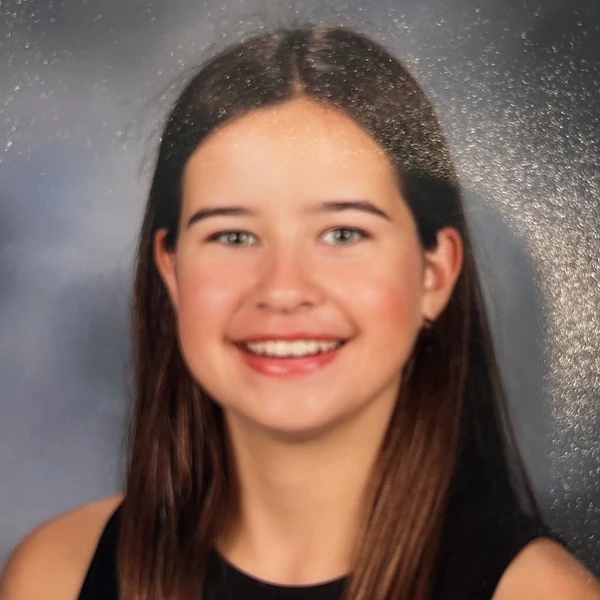
Elliott Zimmerman

1x

Finalist

Bio

Ellie Zimmerman is a senior at San Ramon Valley High School in Danville, California. She is a two-year low brass section leader in the marching band, a student-athlete in basketball and track, and an active community volunteer. Ellie has worked with younger athletes as a coach and serves with organizations including Special Olympics. She plans to study anthropology with a focus on archaeology. Ellie is especially interested in the intersection of science, culture, and storytelling, and is passionate about building inclusive communities and helping others grow.

Education

San Ramon Valley High

High School
2022 - 2026

Miscellaneous

  • Desired degree level:

    Doctoral degree program (PhD, MD, JD, etc.)

  • Majors of interest:

    • Anthropology
  • Not planning to go to medical school
  • Career

    • Dream career field:

      Education

    • Dream career goals:

      Teacher or Professor

      Sports

      Track & Field

      Varsity
      2023 – Present3 years

      Awards

      • Student of the Month

      Basketball

      Junior Varsity
      2022 – 20264 years

      Awards

      • Coaches' Award 2025

      Arts

      • San Ramon Valley Marching Band and Music Program

        Music
        2022 – Present

      Public services

      • Volunteering

        Music Mentors — Mentor, tutor
        2022 – 2025
      • Volunteering

        Coaching- Basketball, Soccer and Tennis — Coach
        2022 – Present
      • Volunteering

        Special Olympics — Youth Activation Committee Member, Coach and Volunteer
        2024 – 2026

      Future Interests

      Advocacy

      Volunteering

      Vivian Srouji Memorial Scholarship
      As I finish high school, and prepare to attend UC Berkeley this fall, I’ve been thinking about what has shaped me most. I keep coming back to the communities that helped me to grow and gave me the chance to help others grow too. As a two-year low brass section leader and trombone player in the SRVHS Marching Band, I inherited a group that was uneven in skill and disconnected after the pandemic. Some students were new, others were not fully committed, and we did not feel like a team. I focused on small, intentional changes: pairing rookies with veterans, setting goals for each show, and building systems for communication and accountability. I am grateful for that experience because it taught me how to build belonging on purpose, how to lead across differences, and how consistency and care can turn a group into a community. That same lesson showed up in sports, but in a more personal way. I grew up with a developmental coordination disorder, so basketball and movement never came easily to me. I needed extra reps, more time, and different ways of learning a skill. Over time, through persistence and support from coaches and teammates, I stopped seeing that as a limitation. I learned to break skills into smaller steps, to stay after practice, and to measure progress in effort as much as outcome. I played three years of basketball at SRV and four years of track, and I no longer think of myself as someone with a limitation. I think of myself as someone who learned how to work. That mindset shaped how I show up for others. Coaching middle school athletes and working with younger players, I try to meet people where they are and find ways to help things click. I am grateful for the challenge that forced me to develop that patience and creativity, because it changed not only how I improve, but how I lead. I am also grateful for the opportunity to explore what I want to learn. I entered high school thinking I would be an engineer, but after attending two selective STEM programs for women, I realized something was missing. I was drawn to problems, but I wanted a deeper connection to people, culture, and stories. That led me to anthropology and archaeology. Last summer, at the Center for American Archaeology Field School in Illinois, I was assigned a one-by-two meter excavation unit. I spent long days digging, sifting dirt, and searching for evidence of human activity. I loved the work, the physical effort, the science, and the collaboration, but most of all the feeling that each small discovery connected me to a larger human story. That experience helped me see the kind of work I want to pursue in the future. Finally, I am grateful for the chance to serve and to be part of my community. Volunteering at Alamo Care Home, where my grandfather lived with advanced Parkinson’s, I learned that what matters most is presence, taking a walk, finishing a puzzle, or sitting in conversation, even when it circles or pauses. Through working as a coach and member of the Youth Activation Committee for the Special Olympics, I learned to listen first and adapt so others can succeed. These experiences have shaped how I define impact, not as something large or visible, but as something consistent and human. Underlying all of this is my family, who have supported me, challenged me, and given me the confidence to find my own path. They have taught me to care deeply. I am most grateful for them.