Hobbies and interests
Yearbook
Tutoring
Taekwondo
Swimming
Studying
Sustainability
Chinese
STEM
Spending Time With Friends and Family
Engineering
Research
Reading
Exploring Nature And Being Outside
Mandarin
Mentoring
National Honor Society (NHS)
Board Games And Puzzles
Spanish
3D Modeling
Reading
Academic
Adventure
Action
Classics
Fantasy
Education
Environment
Young Adult
Science
Science Fiction
Speculative Fiction
Literary Fiction
Literature
Realistic Fiction
Mystery
Novels
Reference
I read books multiple times per month
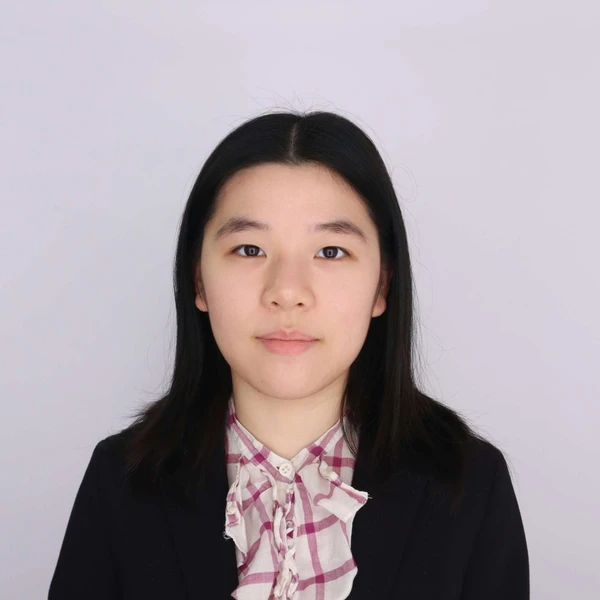
Ellie Chan
Ellie Chan
Bio
During my academic journey, I hope to learn more about STEM and explore other aspects of the world to become a well-rounded, contributing person to society. In college, I want to double major in different types of engineering since I enjoy problem-solving and want to create useful, efficient products to improve the quality of life for people around the world as well as help solve pressing global issues. To explore my interests as well as better prepare for my future, I am taking multiple AP classes during high school, both in STEM and in the humanities.
Outside of my professional pursuits, I love to read and swim. I especially enjoy reading dystopian and science fiction books since they explore a wide variety of possibilities, which I find fascinating. At the same time, I also love to read science articles since I love analyzing why and how the world works the way it does.
By learning more about the multifaceted world, I aspire to use my critical thinking skills through STEM to contribute to society in a meaningful way.
Education
Binghamton University
Bachelor's degree programMajors:
- Mechanical Engineering
Millennium High School
High SchoolMiscellaneous
Desired degree level:
Doctoral degree program (PhD, MD, JD, etc.)
Graduate schools of interest:
Transfer schools of interest:
Majors of interest:
- Engineering, General
- Mechanical Engineering
Career
Dream career field:
Mechanical or Industrial Engineering
Dream career goals:
Engineering and Clean Energy
Elementary Students Summer Tutor
JEI Learning Center2023 – 2023
Sports
Swimming
Club2013 – 20229 years
Awards
- Outstanding Student Award (multiple times)
- Most Improved
Research
Chemistry
Binghamton University: First-Year Research Immersion Program - Clean Energy Stream — Undergraduate Student Researcher2024 – 2025
Public services
Volunteering
Middle School Library — Organized and shelved books in different genres, kept shelves clean and neat, assisted students by locating books, helped librarian with projects to improve the library2018 – 2020
Future Interests
Advocacy
Volunteering
Barbara Cain Literary Scholarship
Books have always been my own personal worlds, ways of exploring new possibilities and stories. Within the wide, wondrous universe of books, two of my favorite genres have always been science fiction and dystopian fiction. I love how these genres overlap to weave important morals into engaging stories, exploring interesting possibilities while also teaching crucial lessons. Although some people may see dystopian fiction and science fiction as unreal worlds that are irrelevant to our real worlds, these fictional genres actually provide us with invaluable wisdom regarding issues that we, people in the real world, need to be aware of.
Some of the most astute advice and critical warnings we should heed come from these genres. For instance, Veronica Roth’s “Divergent” taught me to face my fears bravely and to cherish the memories of those we love. Its divided world warned me against the dangers of categorizing people, reinforcing the importance of recognizing the different aspects of people’s personalities. The characters’ relationships and shared values also taught me about the need to work for what I believe is right, even when the situation might make it seem nearly impossible.
Another dystopian science fiction series, Marie Lu’s “Legend,” taught me to recognize the value of sacrifices, especially when made for love. Additionally, its society’s social issues, including tremendously wide class divides, unfair power distribution, and lack of openness to progressive ideas, are weaved into the story, emphasizing the harm that these flaws can cause when not effectively prevented.
After reading more science fiction and dystopian fiction about so many horrific worlds that our society is creeping ever closer to, their lessons have given me more ideas on how to prevent our own world from becoming those kinds of terrifying societies, provided that we work efficiently to solve our issues now. Although some might not realize it, these fictional worlds actually share frightening parallels with our own world. We can’t change our past problems, but we can use our shining potential and rightful actions to improve our world’s current conditions.
In reality, I know the stories I’ve read so far are only part of our books’ wisdom on various topics. There are still more lessons I can learn from reading more books, and I’m glad of that, since that will help me further prevent our world from falling into the traps that caused so many twisted, appalling worlds. It is difficult, but we need to defeat the challenges that face us in order to reach the future we want, a future that isn’t run by unjust rules that destroy the lives of the very people they’re meant to serve and protect, especially without giving them a fair way to improve their lives or speak out against their oppression.
Other than allowing me to learn from books, my profound love of reading drew me to volunteer in my elementary school library and my middle school library. I wanted to help others enjoy the worlds of books, so I volunteered my time before classes in the morning and during lunch to help keep the library organized. During this time, I was also able to have deeper, more thought-provoking conversations with like-minded people who recognize the importance of reading and have the same love for books that I do. Now, in high school, I do the same when helping my 10th grade English teacher organize our book closets.
As I continue to enjoy reading and learning from more books, I hope to volunteer in libraries as I grow older so that more people can discover the worlds that books offer us and learn from their lessons.
Bright Lights Scholarship
Throughout my life, I have always enjoyed all my classes in school. Having such a love for learning allowed me to better recognize the value of everything I learn in school, both in terms of knowledge and of skills. However, it has also made it somewhat harder for me to decide what career I want to pursue. Thankfully, further deep reflection has illuminated a path through my uncertainty. Now, I am surer than ever that I want to pursue engineering.
In STEM, the ability to use knowledge and reasoning to implement practical, innovative solutions for critical issues around the world is inspiring. In my opinion, STEM gives us the hope and means to create a better future. I want to be a part of the effort to improve our world, and I think I could best make those contributions through the field of engineering.
My first glimpse of what I could accomplish in engineering came many years ago, in the form of an engineering kit for a mechanical lock box. That lock box unlocked a new intellectual world for me, one that I was completely fascinated with. How did the different parts of the lock box work together to perform its purpose? Why does the way the lock box is built allow it to function? How does each individual piece contribute to the overall final product? The scientific concepts behind the function of this engineering product captivated me, leading me to want to learn about more complex engineering.
As a result of my passion for engineering, I plan to double major in different types of engineering in college. I am preparing for this in high school by taking as many AP classes as I am allowed to. Since I am not yet sure about which types of engineering I want to pursue, I am doing my own research, in addition to deepening my knowledge of engineering options through schoolwork, to make a decision.
I have also participated in online coding programs that have allowed me to learn more about various areas of computer science, including web development, cybersecurity, cryptography, and data science. Although I don’t plan to major in computer science, I would like to utilize computer science in my career in some way. These programs have piqued my interest in robotics and AI, which could be a way for me to implement some forms of computer science in engineering. As a female looking to join a largely male-dominated field, the support I’ve received from the people I’ve had the fortune to meet through these programs has also given me the bravery to show leadership in more aspects of my life, which I hope to continue applying in my college experience and beyond.
I think robotics and AI, combined with different types of engineering, have the potential to make significant contributions in helping to solve pressing global issues. Depending on which types of engineering I decide to pursue, I could make different impacts on the world. The main options I’m considering include mechanical engineering and aerospace engineering; some minors I’m considering include robotics, AI, and computer science. I am also open to other STEM areas of study that could improve the results of engineered products in creative ways, and will expand my options as I discover them.
This scholarship would help lessen the financial burden of college, allowing me to better focus on my passions and enhance the effectiveness of their real-life applications. Engineering will build a path into our future, and I hope to be one of the people leading the building of that bridge.
Lauren Czebatul Scholarship
In the past, I always thought that in order for something to be considered volunteering, it had to be something really outstanding with a wide-reaching impact, something one went out of their way to do. However, as I reflected more deeply on what is considered volunteering as well as the importance of volunteering, I realized that not only do I have more experience volunteering than I initially thought, but also that my volunteering experiences have changed my mindset, allowing me to learn important life lessons while helping others at the same time.
My first times volunteering were in elementary school, when I volunteered to help organize our school’s library during my lunch as well as monitor kindergarten classes in the morning and during their lunch. Becoming a library helper and a monitor of younger classes allowed me to give back to my school community in different ways. For the library, I helped keep our library organized and neat, making the space easier to use. For monitoring, I helped the teachers take care of the children in the morning and during lunch, enabling teachers to use their time more effectively. I did have less time to eat my own lunch, but in my opinion, it was worth it to be able to help.
Similarly, in middle school, I volunteered to help the school library as well as help my teachers in the morning and during lunch. I created a schedule to evenly and fairly distribute my time among all the teachers I could help, in addition to continuing to help in library crew. As a result, I had less time with my peers, but I was able to be productive with my time, learn more, and help give back to my school community.
At the time, I didn’t really think of these experiences as volunteering, since they were things I could easily help with and enjoyed doing. Now, though, I’m glad that my time was well spent in volunteering and helping the people around me.
Volunteering helped me confirm through experience that looking out for others, even when it might seem at my expense, wasn’t a bad quality to have. Although some might say that I should watch out for myself first, I have always believed that I have a responsibility to care for others, and I am happy to do so.
Having a younger sister has influenced my personality significantly in this way. Knowing that I was responsible for taking care of her gave me a stronger sense of responsibility for helping other people. It was this mindset that I carried into volunteering, this feeling of wanting to care for others, help them, and do anything I can to make the world better, even though it might seem small or insignificant. Volunteering has helped teach me that even seemingly insignificant actions can send a ripple through the universe, leaving a reminder to appreciate people’s acts of kindness and to continue being kind to the world.
In terms of college, this scholarship would help lessen the financial burden of college, especially since I plan to double major in different types of engineering. I believe that effectively using different types of engineering will allow us to help a wider range of people more meaningfully, improving the quality of life for populations around the world. As I advance in my life academically, professionally, and personally, I hope that my passion for engineering as well as my desire to help others will help more people see what we are capable of accomplishing, provided that we understand the true value of giving back.
WCEJ Thornton Foundation Low-Income Scholarship
To be honest, I’ve never thought of myself as having achieved anything particularly impressive, especially with the standards I set for myself. Looking back on my life so far, though, I realize that through my never ending hard work and continued diligence, I have made some accomplishments. Although I set high expectations for myself, I realize that it is also important to acknowledge the progress I have made, especially in areas that I’ve made significant improvements in. For me, one of the most important areas in which I’ve improved is public speaking.
In my opinion, public speaking has always been one of my particularly weak skills. A mixture of factors has contributed to this throughout my life, but my participation grades in school have been one of the most obvious indicators of my lacking public speaking skills. Even though I know that efficient verbal communication skills are vital for both academic and professional success, I was still too afraid of judgment from my peers to try to participate more often. I didn’t think they cared about what I had to say about some topics in class discussions, and I was scared that they would judge any thoughts I voiced out loud to them, especially since they might not understand my nuanced opinions about certain ideas. When I can’t even articulate my ideas confidently to a small class of my peers, how am I going to succeed in college, where my classes might have hundreds of people? I was scared, but I didn’t know how to break through that. Nothing I’d tried so far had worked, and I didn’t know what other strategy I could try.
Luckily, I’ve had a particularly useful opportunity to work on my public speaking skills recently. In 10th grade, we had a speech unit in ELA, where the unit project was that we had to write and deliver a speech to our class. When my ELA teacher first announced it, I was terrified. At the same time, though, I wanted to use this time to take chances and make significant progress in this problem that had plagued me for so long. After all, I knew the only way to improve in something is to keep trying different strategies, be willing to make mistakes, and work on fixing those mistakes. As a result, I told myself that no matter what, I would deliver my speech to the class. I was getting closer and closer to college, without much visible progress in public speaking. I couldn’t afford to allow myself to hide from this challenge anymore.
I rehearsed my speech countless times, as many times as I could before it was time for me to deliver my speech. As expected, my hands were freezing cold, but I did deliver my speech to the class! It was actually a lot less intimidating than I’d anticipated; I think all the practice I did contributed to that.
This experience taught me that as long as I unwaveringly dedicate myself to solving a challenge facing me, I will eventually defeat it. However, it is also acceptable to accept other people’s help. I’m grateful that my teachers and close friends supported me in the process of preparing to deliver the speech; otherwise, I don’t think it would have been nearly as bearable or enjoyable of an experience. I do generally prefer to learn alone, and I still do, but in this case, I’m particularly glad they were there to help me.
I know my progress in public speaking doesn’t seem particularly significant, especially when compared to the public speaking skills of my peers, but I think it is a long-awaited step in the right direction.
I still have a long way to go (both in public speaking and in other aspects of my skills), but I can build on my progress so far and keep taking steps forward. Every step counts; as long as I continue to work towards my goals, I will eventually reach them.
Equally as important, if not more, I will continue to keep moving forward without falling into the trap of thinking I’ve already made enough progress to stop working hard.
In the future, I hope to keep defeating the obstacles in my way, and learn even more about myself from those victories. Academically and professionally, I aspire to use my passion for engineering to solve the more practical problems we face, as well as help provide others with the means and confidence to overcome their own challenges.
Learner Education Women in Mathematics Scholarship
Math has always been a reliable, logical way for me to view situations in life. The rational approach that math applies to such a wide variety of problems is both fascinating and reassuring. At the same time, math provides a lot of food for thought in terms of intellectual, thought-provoking ideas and concepts. Some of my particular favorites include the concept of differently sized infinities, and what I know as the 100 lightbulbs riddle. These kinds of riddles use logical relationships between various aspects of a situation, similar to the way normal math problems do, just with an added level of logical reasoning. They may seem intimidating and difficult at first, but once mathematical reasoning is applied, they become much easier to solve. This approach can be applied to life situations too; when a problem that seems complicated comes up, think about it rationally. Steps to simplify the situation will make it much more manageable.
All the math I learn in school is interesting as well, furthering my education and hone the way I think about the world. Quadratics are one of my particular favorite topics. I love how there’s logic involved in figuring out which factoring method would be best to use to factor a quadratic, or that I can use the square points to find the vertex. For factoring in general, it’s so pleasing to be able to use reasoning, with ideas including difference of squares and perfect square trinomials, to factor what may seem like a complicated polynomial or term into something that looks easier to work with.
Geometry is also useful in many situations outside of situations that only involve math. For example, geometry can be used to find the surface area of shapes in real life, which can then be applied for engineering purposes. The physics of motion involves shapes as well, so mathematics is important in analyzing the motion of any object.
The logical relationships that math implements also help me solve problems in other STEM classes. For instance, in math, “delta” (Δ) means “change in.” That change, however, has to be carefully considered in context, especially in more complicated situations. An equation I learned in AP Chemistry is q=mCΔT, where ΔT is the change in temperature of a chemical reaction. In general, to measure the change in any measurement, we would do the final measurement minus the initial measurement. However, this is not necessarily the case. Even though ΔT is always the change in temperature, it isn’t always the final temperature minus the initial temperature. Depending on whether the chemical reaction is endothermic or exothermic, ΔT could be either final - initial or initial - final. Mathematically, though, another way to solve this equation while always using final - initial would be to add a negative sign when ΔT is supposed to be initial - final. Since the negative sign would be outside the parentheses of initial - final, it would give the same mathematical answer as using final - initial.
Using mathematical reasoning to help solve more complicated problems emphasizes the importance of math in our world. Principles of mathematics that have shaped my understanding of the world are highly applicable in so many aspects of the world, allowing me to better understand why things in the world are the way they are while also maintaining a curiosity to further understand the ideas and concepts behind other wonders of our universe. I plan to use my inquisitive nature to pursue different types of engineering in college, and I hope to use my passion in engineering to help solve critical global issues.
Learner.com Algebra Scholarship
Math is everywhere in our world, from our ever-present electronic devices to the very earth we live on. In order to gain a better understanding of our multifaceted world, it is important to understand how math works and the logic behind it. How do we use math to solve real-life problems? How can we apply mathematical concepts to make our lives easier?
Every subject in the STEM field involves some kind of math, and especially since STEM jobs are undoubtedly on the rise, math is becoming increasingly important to learn. Even outside of STEM, math still has its applications, and can be used to find interesting patterns. In business analytics, for example, one needs math in order to understand the meaning and significance of different types of graphs. In everyday life, the many functions of our phones that make our lives easier utilize some kind of math, and the scientific rules that govern our universe definitely involve math. Not everyone needs to completely understand super complex math ideas, but everyone should at least be able to do basic math and understand the logic that could be behind more complicated ideas.
Algebra is especially helpful in working towards this goal since it connects to the relationships between different variables, which is particularly useful for STEM subjects. In physics, for example, various equations state the relationships between different variables, so with enough information, one can use algebra with those equations to simplify the process of finding any unknown quantities. With the algebraic connections between variables in different equations, it is much easier to solve problems involving more nuanced situations. Rearranging equations to isolate unknown quantities, setting equations equal to each other, and being able to cancel shared values are just part of the wide range of possibilities algebra provides us with.
One of the reasons I love learning all types of math is that it is always logical. No matter how confusing a problem may seem, math and logic can always be used to reason it out. There are also really interesting ideas that come from math, some of which include the Collatz Conjecture, the concept of differently-sized infinities, Zeno’s Dichotomy Paradox, and Gödel’s Incompleteness Theorem. All of these logic puzzles play with math ideas that may seem simple at first, but can actually be teased into more thought-provoking, nuanced situations.
The applications of math in other STEM subjects are fascinating as well, especially when subtleties and really cool connections appear. For instance, I learned about graphs and how to find the areas of different shapes a long time ago, but in Physics, I learned that the area under a velocity vs time graph is the distance traveled. This connection captivated me. The connection between the units of velocity and time made sense, but the fact that it also showed in the area under the graph was amazing. Math was a part of AP Chemistry too; to me, it was somewhat surprising at first that the equation to find the pH of a buffer involved a logarithm. As I gained a deeper understanding of why this was, this application of math fascinated me, just as similar interesting uses of various math skills and knowledge continue to do.
The logical approach math uses to solve such a wide variety of problems can also teach a vital skill and life lesson: when unsure of what to do in a situation, think logically and solve the problem one step at a time. Solutions may be real or imaginary, but they are all solutions nonetheless; it’s just a matter of which ones the question requires.
E.R.I.C.A. Scholarship
Several years ago, when I got my first engineering kit, a mechanical lock box, my interest in engineering flamed to life. I had always enjoyed putting puzzles together, but I had never built a functioning product almost from scratch before, and the prospect of being able to create something useful unlocked a new passion in me.
When I opened the kit and saw all the materials inside, my eyes immediately lit up, widening in wonder and excitement. I reverently removed all the pieces with careful fingers, studying them before organizing them by shape and size. As I observed the pieces, I considered how the different properties of each piece would influence its function in the overall product. Each piece’s size, shape, and material gave me information about its purpose in the final device. Before even opening the instruction booklet, my mind was already thinking about how the pieces could fit together and how each part would work to contribute to the entire object. Questions fired rapidly in my brain. How do each little hole and groove on the pieces play into making the whole product work? In what ways does the order in which the pieces are put together matter? Why would that allow the product to function? What scientific concepts are behind the working product? How does the process of changing ideas, a plan for a product on paper, into physical pieces occur? I was intrigued, trying to figure out how to get a final product from individual pieces. It was another kind of puzzle for me to solve, an especially fascinating kind.
Once I started building the lock box, I completely lost track of time. Every aspect of it pulled me into what felt like a newly discovered world, one I wish I had found earlier. I read through the instructions and put the different pieces of the lock box together, stopping to teach myself whenever the instructions explained a scientific concept I didn’t know. It was these explanations that allowed me to learn more about the scientific concepts behind the product, why each piece was important to building the product, and how the product itself worked. Why does it work? How does it work? I loved all the details and logical thinking involved in putting the product together.
As the last piece clicked into place, I marveled at the accomplishment. It worked! It was amazing how all the different pieces formed a functioning product. I was fascinated, analyzing yet again how all the pieces were combined as I carefully turned the lock box around in my hands, studying it from multiple angles, the same way I had done with the pieces. This was undoubtedly the most enjoyable, rewarding project I had ever embarked on, and I wanted more.
From then on, I was completely enthralled. The mechanical lock box was just the beginning, the igniting flame of my passion for engineering. The next kit, an electric pencil sharpener, couldn’t arrive fast enough for me, even if it was teleported almost instantaneously.
As I continue to learn about STEM, both through AP classes and my own online research, I hope to better prepare myself to double major in different types of engineering in college. I aspire to use my knowledge to become an engineer and build efficient products to improve the quality of life for people around the world. Even though I know the path will be difficult, I also know with absolute certainty that my love for learning how something works will never diminish, and that will help me put together the products of the future.
Book Lovers Scholarship
Science fiction and dystopian fiction explore worlds that could be, even if they don’t exist in our real world, don’t yet exist, or hopefully will never exist. Some people may think that books from these genres are fictional and have no real bearing on our society’s well-being. However, these books impart important lessons, and we should listen to their wisdom.
One book from these genres that I think is increasingly important for members of our society to read is “Fahrenheit 451” by Ray Bradbury since it conveys that technology has many harmful effects and reduces the amount of independent thought in a society that exercises unfair control over the masses. In Bradbury’s world, books are banned and firemen burn any houses where books are found, while the government uses technology to brainwash the population into inaction. Montag, a fireman, originally enjoys his job of burning books. However, when he realizes the government’s purpose behind banning books and using technology, to manipulate the public, he becomes more aware of the knowledge that books hold, illegally hiding some in his own house to read. After learning that the way society uses technology can force people into a state of stagnation, where they live empty, meaningless lives, Montag finally rejects the government’s attempts to control his thinking, freeing himself from the intellectually numbing methods they implement. Montag’s experiences demonstrate that censorship through book banning and the use of technology to keep people ignorant are extremely detrimental to individuals as well as the state of society as a whole. Books should be valued and protected, not ruthlessly destroyed in the unforgiving flames of fire or human manipulation.
Especially since we live in a world where technology is becoming more dominant and book banning is, unfortunately, becoming more prevalent, “Fahrenheit 451” displays disturbing parallels to our current state.
Hopefully, “Fahrenheit 451” will never come to life in our world, but it is up to us to determine that. In order to prevent our society from twisting into Bradbury’s oppressive dystopian society, we must educate ourselves about the dangers of losing our individuality in the escape that technology might seem to provide, as well as the importance of knowledge and independence of thought to combat the ignorance of conformity. In our increasingly digital world, it is vital to remember the importance of the wisdom that books hold and to make responsible choices regarding our technology use.
Learner Math Lover Scholarship
To me, math has always been a logical way to view and make sense of the world. In math, there is always a logical connection between things, even though it may not seem obvious at first. I love the way math incorporates so many different topics and concepts, as well as the intriguing connections that can be made when math intersects with other subjects.
In PreCalculus this year, we learned about the Intermediate Value Theorem, which states that if a function is continuous between two points, all the y-values between those of the two points have to be included. However, one classwork question used the IVT with speed, which actually doesn’t work. Having learned in Physics that speed is quantized (similar to packets of energy), I knew that not every value in between two speeds is reached. My friend (also in Physics) and I had a riveting conversation about this with our PreCalculus teacher after class. This intersection of Physics and PreCalculus fascinated us!
I genuinely enjoy learning about math and want to understand more about why it works, as well as explore the many possibilities that come to life with it. In my opinion, the questions that are challenging and truly difficult for me are the most rewarding. I gain so much more from the struggle of solving a tricky question than from quickly solving an easy question in my head.
This is part of what led me to join my school’s Math Team. The questions we do in Math Team are exactly what I enjoy, problems I have to truly think about in order to accurately answer, that require true understanding of mathematical concepts, and leave me in awe at what math can do.
Math isn’t always about arriving at the correct answer(s). It’s about the process of getting to the answer and what you do to reach it. How does it work? Why does it work? Those are the questions that truly matter. Numbers alone won’t always unlock everything, but logic almost certainly will, and that is the root of math.
Math also has practical applications in almost any field. As long as there is some kind of data involved, math is crucial to understanding its meaning. As I prepare to tackle more STEM topics in APs and for engineering in college, I look forward to learning about even more thought-provoking intersections between the subjects I love.
Big Picture Scholarship
“Have fun storming the castle!”
To be honest, I almost never watch movies. I have always preferred books over movies, and I am still perfectly content with this opinion of mine. However, my one exception to this, and the only movie I have ever willingly rewatched, is “The Princess Bride.” This movie had a very unexpected effect on me, one that continues to impact me today.
In 8th grade, my US History & Government teacher would always dismiss our class by saying “Have fun storming the castle!” I was curious about where the quote was from, and since she told us that it was from a movie, I searched it up. To this day, I am so glad that I did. I didn’t know it at the time, but that search would change my opinion on movies.
Once I saw that the quote was from the movie “The Princess Bride,” and that the movie was based on a book, I found the book online. I read the book first, wanting to compare it to the movie, and enjoyed it. Then, I watched the movie. It was actually really enjoyable, unexpectedly so. It was so, so amazing and so, so funny! In fact, I loved it so much that when I finished watching it the first time, my immediate reaction was, “That was such a good movie. Let’s watch it again!” I excitedly clicked the rewatch button, anticipating another 1 hour and 38 minutes of enjoying the story on screen. That afternoon, I laughed so hard, harder than I remember having laughed in a long time, that tears started forming in my eyes; I had to make a conscious effort to keep my eyes from closing in my laughter so that I could take in every detail on the screen and remember it. I knew I would want to remember it, to laugh and smile about in the future.
Despite my general favoritism towards books, I thought the Princess Bride movie was equally as good as, if not better than, the book. This was rare for me, and it opened my mind to more ways of thinking that I have been able to apply to aspects of my life.
Even though I still do not watch movies often, the “Princess Bride” movie made me realize that trying something new can have rewarding effects, even though it might not always seem so. As a result, I have continued to push myself outside of my comfort zone to become a more well-rounded person. At the same time, I always have the pleasant, vivid memories from my times watching the movie over and over to think back on as a form of encouragement.
I haven’t rewatched “The Princess Bride” in quite a while, but it still has a lasting effect on me. Even now, almost four years since my first exposure to “The Princess Bride,” I still clearly remember the lessons it taught me. Now, when going into situations that may seem hopeless or bleak at first, I carry with me resourcefulness, humor, and courage, similar to Westley’s when he faced the Fire Swamp. I carry with me Inigo’s persistence and determination when challenges temporarily keep me from reaching my goals. Even Prince Humperdinck’s caution (as much as I dislike him) has found a place with me.
I can continue working towards my goals and move forward to continually improve myself as well as the community around me, even when something may seem “Inconceivable!”
Of course, I remember to enjoy myself when solving problems, and always “Have fun storming the castle!”
I Can Do Anything Scholarship
In the future I envision for myself, I have learned and am still learning more about the countless topics that interest me, as well as using my knowledge in an engineering job to create useful, efficient products to improve the quality of life for people around the world; when I’m not contentedly and dutifully providing for my family, I can spend quality time with my family, meet up with my friends sometimes, and have time to read (ever more captivating dystopian series that will pull me wholeheartedly into their fictional worlds and fascinating articles about the mysteries of the universe).
North Star Dreamers Memorial Scholarship
Ever since I was young, I have always been interested in why the world works the way it does. My endless questions about why something is the way it is, or how something can be changed to affect something else, might have been a little overwhelming for my parents. Even as a young child in Pre-K, I loved to do puzzles, using logic to put the pieces together into a satisfying final product. Throughout my childhood, I have always enjoyed logic games, riddles, and other activities that involve strategic, creative thinking.
When my family and I visited the New York Hall of Science for the first time, all the new ideas I learned about fascinated me. I had never heard of the Ames room or known about the many ways one’s perception of an object can be altered. The science playground, which had a climbing rope built with many shapes, set off a chain of questions in my brain. How did the people who designed the climbing rope decide which shapes to use and where they should go? What does that have to do with the kind of rope they used to build the structure? How are weight and other forces taken into account to keep the young climbers on it safe?
My young self knew that I didn’t yet have all the knowledge I needed to answer all my questions in a way that would satisfy my analytical mind, but I was determined to figure them out. I would use my knowledge to piece together an answer, no matter how long it would take or how much advanced science and math I would have to learn. To me, the Hall of Science was an unexplored horizon of inspiring possibilities; it nourished my mind with a wide variety and depth of scientific facts until the next academic encounter I had with STEM outside of school.
Wanting to expand the scope of my knowledge, I applied for Girls Who Code programs, which so far have allowed me to learn more about computer science, cryptography, cryptography, and different coding languages, as well as how they connect to other STEM areas. My next GWC program, which is this summer, will be about data science, another area of STEM I didn’t know much about before.
As of right now, taking AP Chemistry in my junior year of high school has allowed me to go more in-depth about topics I enjoyed learning about in 10th-grade Chemistry. Taking Physics as an elective this year also helped me learn more about a branch of science that I hadn’t been exposed to often, which allows me to draw more complex connections between scientific ideas. I am especially excited that I have been accepted into AP Physics and AP Calculus BC for my senior year since these classes will help feed my curiosity, better equipping me to learn, as well as apply, the concepts I learn to design more efficient products.
I want to be an engineer in the future, and although I am not yet sure which type(s) of engineering I will go into, I know that I want to develop or improve products that will enhance people’s lives. This scholarship will help me with my career goals by lessening the financial burden of college, allowing me to focus more on my studies and amplify the benefits of their real-world applications. Science has so much potential; we just need to figure out how to harness it effectively and ethically. Once we accomplish that, we can create products that advance ourselves and the world we live in.