
Northeastern University
Bachelor's degree program
2022 – 2026
Majors:
- Journalism
- English Language and Literature, General
I read books daily.
I read books daily.
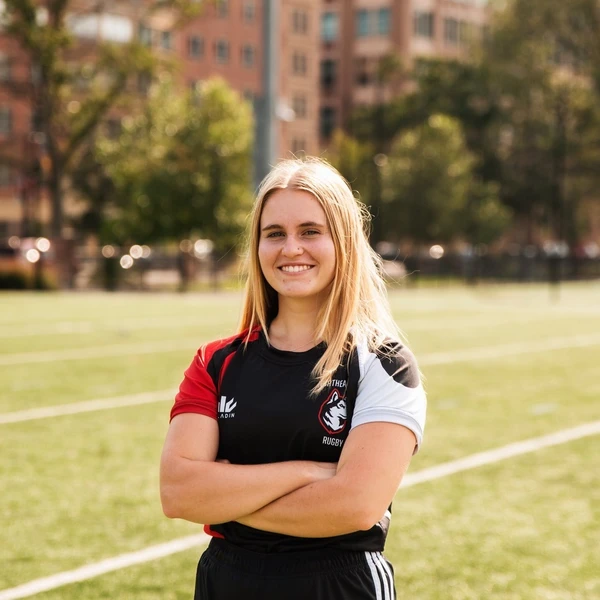
I am an honors college student at Northeastern University, where I have been recognized on the dean's list every semester in college. Being a combined major of English and Journalism has helped me to explore my various passions while also working to solidify and expand my writing skills. I am also pursuing a minor in Spanish and a minor in Sports, Media, and Communication. Outside of the classroom, I play rugby for NUWRFC, which has taught me time management skills in balancing school and athletics. I currently serve as the VP and have won the 2023 CRAA D1 15's national title, the 2025 NCR D1 7's national title, and the 2025 D1-AA NCR 15's national title.
Bachelor's degree program
2022 – 2026
High School
2017 – 2021
Sports · Giants Community Fund
Jan 2023 – Jan 2023
Sports · Northeastern University Office of Club Sports
Jan 2025 – Present
Public Relations and Communications · Northeastern University College of Science
Jan 2025 – Jan 2025
Non-Profit Organization Management · Alumni Association of Mills College
Jan 2021 – Jan 2025
Club · 5 awards
2022 – Present
Varsity
2021 – 2022
Club
2011 – 2021
Junior Varsity · 1 award
2017 – 2020
Varsity · 1 award
2017 – 2018
Digital Transgender Archives · Library and Archives Assisting
2023 – 2024
Northeastern University · Public Policy Analysis
2024 – Present
WRBB Sports Radio · Photography
2022 – Present
El Cerrito High School · Music
2017 – Present
Volunteering · independent
2020 – 2020
Advocacy · The Practice Space
2019 – Present