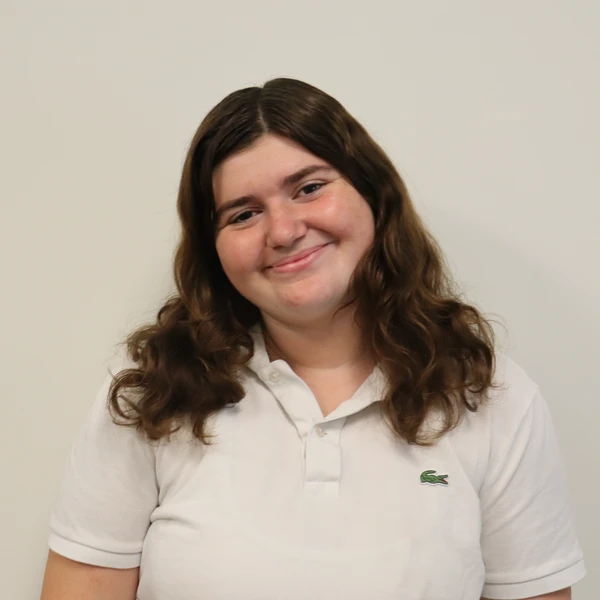
Pasadena, CA
Hobbies and interests
Sports
Journalism
Reading
Coding And Computer Science
Information Technology (IT)
Reading
Historical
I read books multiple times per week
Ella Bilu
Ella Bilu
Bio
My name is Ella B., and I am from California. I am a student at Duke University studying public policy, journalism, and statistics. Though not always overtly connected, my experiences in research, reporting, and storytelling have shown me that journalism, analytics, and history work well in conjunction.
In high school, I served as Editor-in-Chief of our newspaper, competed in four varsity sports, and tutored students in writing and historical thinking. Outside of school, I work part-time at a swim club and serve as president of my youth group.
My involvement also extends to community service. I helped lead an annual food drive at my school that collects over 2,000 items each year, and I’ve spent summers volunteering at a local summer school. As part of my Girl Scout Gold Award project, I dedicated more than 125 hours to teaching youth about politics, voting, and advocacy. I visited local public and private schools to host educational booths and launched an online monthly newsletter covering recent political news.
Now in college, I'm a sports editor for The Duke Chronicle, a member of my dorm's council, a women's leadership scholar, and a student researcher at the public policy school.
I believe education is life’s greatest opportunity. I am eager to pursue a college-level education and possibly attend graduate school. As college becomes increasingly expensive, I am actively seeking ways to help fund my tuition, which brings me to Bold.org.
Education
Duke University
Bachelor's degree programMajors:
- Journalism
- Public Policy Analysis
Westridge School For Girls
High SchoolMiscellaneous
Desired degree level:
Bachelor's degree program
Graduate schools of interest:
Transfer schools of interest:
Majors of interest:
- Data Science
- Journalism
- Public Policy Analysis
Career
Dream career field:
Sports
Dream career goals:
Sports Journalism
Teacher's Assistant
Pasadena Temple and Center2021 – 20254 yearsGrill Front Counter/Office
Gerrish Swim and Tennis Club2022 – Present4 years
Sports
Swimming
Varsity2022 – 20253 years
Soccer
Varsity2021 – Present5 years
Awards
- Co-Captain
- Coach's Award x3
Track & Field
Varsity2022 – Present4 years
Awards
- 3rd in League for Discus
Golf
Junior Varsity2021 – 20221 year
Awards
- Captain
Football
Varsity2023 – Present3 years
Awards
- Captain
- Player-Voted Tiger Award
- CIF Playoff Appearance
Research
Public Policy Analysis
Duke University, Sanford School of Public Policy — Research Assistant2025 – Present
Arts
Cow House Studios
Photography2023 – 2023
Public services
Volunteering
Westridge Service — Grade-level Service Representative2021 – 2025Advocacy
Girl Scouts of Greater Los Angeles — Founder2021 – 2022Public Service (Politics)
Girl Scouts of Greater Los Angeles — Founder of Project2023 – 2024Volunteering
Partnership for Sucess — Mentor2021 – Present
Future Interests
Advocacy
Politics
Volunteering
Philanthropy
Entrepreneurship
Special Needs Advocacy Inc. Teresa Politano Memorial Scholarship
As my eyes watched my hometown of Altadena burn on an emergency news broadcast, my brain began to conjure the stories I could write to preserve our community’s story.
On January 7, my life and city changed for the worse when the Eaton Fire devastated our town, ravaging through my physical and metaphorical backyard.
In times of crisis and community distress, I turn to what I know best—journalism—to write truthful and empathetic stories, raising awareness on trauma and important news. After a few days of intense reporting—reaching out to friends to share testimonies, attending relocated gatherings days after the fire, and typing away after rounds of edits—I produced several meaningful articles memorializing the hurting community the fire destroyed.
At my high school’s newspaper, I launched an emergency edition, rallying my entire staff to join me in reporting efforts. I also submitted to and published my work in an international publication focused on cultural news, where I highlighted the destruction of a long-standing religious building. With a capacity to act in ways many others could not at the moment, I knew I had to report for good.
I was able to do so because my journalism journey began six years earlier. In pursuit of meaningful ways to share my growing voice, I joined my school’s newspaper, Spyglass. Publishing stories about everything from pedagogy to athletics to my opinion on school policy, I solidified myself as the most published journalist in school history, now having written more than 110 articles.
Eager to insert my voice into editorial and marketing practices, I reinvigorated the paper’s social media presence, becoming the first-ever social media manager. At the same time, I became an editor; I served as the editor-in-chief of our publication of more than 60 students, grades 6-12, in my senior year.
My writing has been published and re-published in more than a dozen publications—some magazines, some online sites, some with millions of readers a year. But what matters to me is not the awards I receive or the number of clicks my headlines get, but the impact I can create by reporting on the truth.
Now at The Duke Chronicle, I’ve seen, on the highest level, how reporting on institutional wrongdoing, athletic success, and even personal interest stories can transform a community. People react to coverage, both negative and positive, and I see it as my duty to continue producing such content. In a time where misinformation runs rampant and society needs news to inspire and inform them, I recognize the importance of good-faith journalism.
As I study journalism and public policy in school, I hope to keep telling stories about education legislation, women’s athletics, and everything in between. I don’t know exactly where my future in reporting will take me, but I do know I will continue to report with honesty, integrity, and ambition. The same excitement to ask, write, and edit that drove me into the newsroom in seventh grade follows me to this day.
DK Memorial Sports Broadcasting Scholarship
At The Duke Chronicle, we write our sports stories live. That means when the buzzer sounds to end a game, we have a story already written and ready to be shared with the world. The timeliness of our journalism is both crucial to our readers and incredibly challenging as a reporter.
Since my first year of high school, I have been developing my skills in sports journalism, trying to convert pivotal plays into inspiring grafs, reflect fan sentiments in brief details and capture the game’s key storylines in a concise article.
As a lifelong athlete — I competed on four varsity sports teams in high school — and an eager writer — I led my high school’s paper as Editor-in-Chief — my connection with sports journalism is, on the surface level, an obvious spark. But as I have spent more time thinking about why I mesh so well with the discipline, I believe it is the reporting’s synthesis of critical analysis, key facts and raw emotion. There is no one pulse of sports journalism. Articles about athletics revolve around all three of those elements, and by covering the full truth, sports journalists can empower the athletes they write about and bring a game closer to deserving fans.
This season, I had the privilege of covering Duke women’s basketball, a team I found to be gritty, passionate, and talented. Knowing a lot about basketball before I went into the season, but little about the group of athletes in front of me, I worked to develop relationships in the sports writing community and paid keen attention to both the culture and skill that I was watching. This helped me keep the content I produced diverse and insightful.
Still, I found moments of my reporting tenure excitingly difficult. As I traveled with the team to cover their ACC championship campaign, I had to write the aforementioned live story of the final game as it went to overtime. Stressed and thrilled at the same time, I loved how sports journalism tested all of the growth from my freshman year in one nail-biter of an article.
The Blue Devils narrowly edged out Louisville, and right then and there, I had earned my first experience reporting on a Duke championship. Despite my impartiality as a reporter, I was happy to have my work be a part of history.
It is moments like these, as well as the sports community itself, that make me so excited to pursue sports journalism in my future. As I work to help my family pay for college and dedicate hours each week to my classes, I still carve out time for the thing I care most about in life: reporting.
I am especially keen on continuing to report on women’s sports. Women athletes have seen their sports climb to new heights, and I know some of the success they now enjoy is because of meaningful reporting about their accomplishments. When I wrote an article announcing Duke guard Taina Mair’s selection as the 14th overall pick in this year’s WNBA draft, I understood the magnitude of what I was writing about.
Though sports are an always-changing field, I am confident that we will always need storytellers to lift up sports narratives. From spotlighting women’s new feats every day to reporting on how fans build, and everything in between, I am excited to continue building a career for myself in sports journalism. I only hope that in every story I write and every relationship I build, I can embody the same kindness and dedication to sports that David Kim did in his life.
Ashby & Graff Educational Support Award
Selling an idea and selling a property are not that different. John Graff makes that clear in the second chapter of Real Insights, and my experiences encouraging civic engagement in the lives of youth do the same. During my junior and senior years, I spent more than 125 hours visiting local public and private schools, all with the goal of teaching teens about politics, voting, and advocacy. Through infographics, quizzes, and motivational candy, I spoke with more than 400 students about their representatives and rights, all while trying to sell them on one idea that could define the rest of their lives: participate civically in your community.
In an age of apathy and general disinterest, I made it my mission to challenge the narrative that politics and civics are boring. As a student now pursuing a major in Public Policy, I hope to one day shape legislation that strengthens our civics curriculum. Making immediate or long-term change will not be easy, a difficulty I acknowledge and have already faced.
But through reading Mr. Graff's insights and connecting his lessons to my own experiences, I’m reminded how successful leaders “sell” what they believe in and push through obstacles. Whether it’s avoiding unrealistic expectations or simply not knowing your stuff, confidence and perseverance define successful professionals. More importantly, they take initiative.
I took initiative when I found out that half my eligible peers weren’t registered to vote. I’ll take initiative again when that same issue reappears or when students can’t name their two U.S. senators. Working alongside like-minded peers in college, I hope to collaborate with students and faculty to refine the government curriculum we teach. Standing at the front of the movement, knowledgeable, confident, and clear in purpose, I’m ready to lead.
Throughout my project, I found that each time I returned to a school or spoke to the same student again, their confidence in civics had grown. I saw their sense of empowerment increase in real time. I believe that with an engaged and inspired youth, the sky’s the limit for our country. The more involved we are as a society, the more we can do for ourselves and one another.
The path ahead will not be easy, but thinking back to Mr. Graff’s key advice, I know I’m ready for what’s to come.
Marcus Stroman Scholarship
Duke is a mindset. It’s a concept I articulated in my application essays and one I’m ready to embrace this fall.
After four years of hard work—playing four varsity sports, leading two publications as Editor-in-Chief, earning my Girl Scout Gold Award for community service, and participating in countless extracurriculars—on March 31, I opened my portal to read the best word of my life: “Congratulations!” I had been admitted to my dream school, Duke University.
When I visited Duke for the first time in October, I noticed the campus’ embedded balance, the quality that most drew me in. It wasn’t just the modern cafeteria architecture synthesized with the Gothic style of the main chapel. It was the array of students, conversing or studying side by side, sometimes doing both. It was my tour guide’s display of both confidence and humility, neither overpowering.
Being a Blue Devil means you can be “both,” no matter which two facets of life you’re engaging in—academics, athletics, social, or service. Marcus Stroman, a legendary Duke alum and athlete, embodied this as he pursued academic and athletic excellence simultaneously, later using his career to better the lives of in-need youth.
I realized my approach to life and Duke’s approach to education and empowerment align. Both the institution and I are marked by our ambition toward excellence and willingness to do it all. As a member of the Class of 2029, I plan to major in Public Policy while minoring in journalism and statistics.
Like Marcus, I hope to use my education to give back. I’m particularly interested in a career shaping legislation that expands civic education for youth. The more educated future generations are, the more empowered they’ll be to serve and lead.
The months leading up to this academic dream, though, were not easy. Just days after submitting my application, on January 7, my life and community irrevocably changed.
Around 6:30 p.m., I watched the hills a mile from my house catch fire. Twenty minutes later, my family had evacuated to a Target parking lot. Our only view back home came from local newscasts, which panned from ablaze landmarks we recognized to my very own street.
The days and months that followed the Eaton Fire were defined by a complex mix of grief, hopelessness, and community support. For many, their homes and businesses—testaments to their life’s work—were destroyed. Though still affected, my family was lucky. While our backyard and garage sustained considerable fire damage, our house remained standing.
I used the privilege of still having a home and the emotional capacity that came with it to act. As a longtime leader in my school, Jewish, and city communities, I leaned on my skills and connections to write an article for an international publication about the burning of our local synagogue. I hoped to share the story of one of Altadena’s heartbroken communities.
At school, I helped facilitate an all-school assembly where students could share testimonies and promote volunteer opportunities. I also led a day of service for 500 students. In three separate rooms, students assembled hundreds of care kits with hygiene supplies, native seeds, and food to be delivered to fire victims.
For a community that has given me so much, stepping up when I could finally reciprocate that support felt only natural.
Unfortunately, the fires have taken a financial toll on my family. Insurance covered most damage, but not all. Most notably, I lost my job for six months—thousands of dollars I planned to contribute toward college.
Though the road won’t be easy, I’ll meet challenges ahead with the resilience the Eaton Fire gave me.
Chi Changemaker Scholarship
When my friends told me they thought politics was too “confusing” or “irrelevant,” I made it my mission to change that narrative, starting a project dedicated to teaching youth about politics, voting, and advocacy.
To gauge my community’s knowledge, I conducted a survey and received over 65 replies from local high schoolers. I learned that few eligible students were registered to vote, and self-confidence in political knowledge was low. From there, I identified three key areas to address: civic education, voter registration, and connecting youth with opportunities to get involved.
First, I wanted my education to be sustainable. I hosted 15+ booths at local schools with infographics, quizzes, and candy to motivate learning. These pop-ups tackled all three pillars of my project. I educated, registered teens to vote, and promoted civic opportunities.
Second, I wanted my education to be actionable. At my school, I led two workshops for around 40 attendees, teaching students how to write persuasive letters to elected officials. Through my teachings, around 20 of those students sent letters to the State Assembly, expressing support for a Green Amendment.
Extending beyond physical outreach, I worked in my web development class to code a website with a list of civic engagement opportunities, tutorials on writing letters to elected officials, and an archive of my newsletters. From the beginning, I emphasized accessibility in my project’s core, and by adding this digital component, education was not just limited to the teens at the schools I visited.
Through the countless opportunities I created for students, I saw real impact in my target demographic. In a concluding survey, I identified that I almost doubled the number of eligible pre-registered voters (going from 33% to 60%) and over 90% of participants rated their political knowledge as 3/5 or higher after engaging with my project.
In college, I hope to connect with other like minded students to expand my resources to local high schools. Whether we be promoting voter registration or teaching simple concepts like the electoral college, I am confident the team we assemble can continue to help combat civic apathy, one high school we visit at a time.